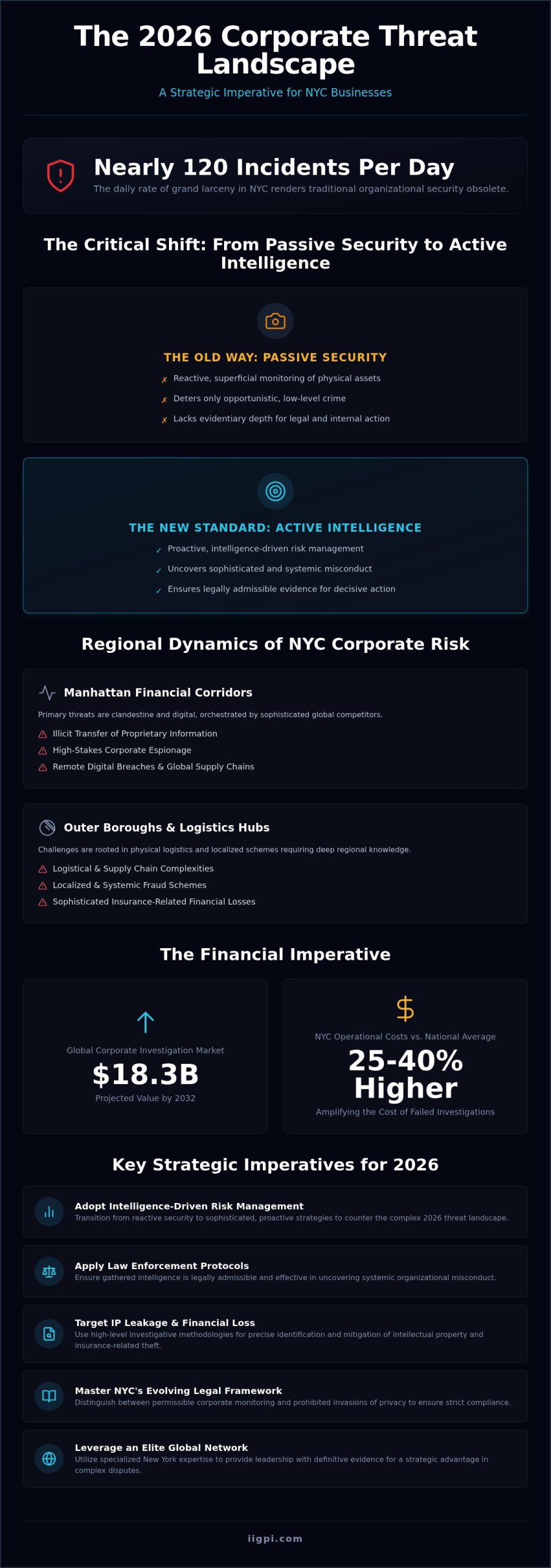
Blog

11 March 2026

Expert Advice from Dan Ribacoff: Private Investigators in Nassau County

Introduction to Private Investigators

Private Investigators New York City

When you think about solving problems or uncovering hidden information, the idea of turning to a private investigator might seem like something out of a movie. In reality, private investigators play a significant role in helping people address challenges that require professional skills and knowledge. Whether it’s for personal reasons or business purposes, these professionals are equipped to find answers, verify details, and provide clarity in situations where uncertainty might otherwise persist.

Private investigators are highly trained in techniques that go beyond the resources most individuals have access to. They’re skilled in gathering information through legal and ethical methods, ensuring that every piece of evidence they uncover can be relied upon. This expertise can make all the difference in situations where the stakes are high, and the truth is essential.

Many people seek the assistance of private investigators when they face situations that are too complex, sensitive, or time-consuming to handle on their own. These situations may involve tracking down people, uncovering evidence for legal cases, or even verifying information about a potential business partner. No matter the reason, private investigators provide the necessary skills and experience to approach these challenges in a professional and effective manner.

One of the key advantages of working with a private investigator is their ability to approach cases with objectivity. When emotions run high, especially in personal matters, it can be difficult to see a situation clearly or make sound decisions. Private investigators can step in as neutral third parties, analyzing facts and gathering evidence without bias or personal attachment. This objective approach often leads to better results and provides the clarity needed to move forward.

Another aspect that sets private investigators apart is their attention to detail. In every investigation, they know where to look, how to ask the right questions, and what tools to use to uncover crucial information. Their training and experience allow them to handle tasks such as background checks, surveillance, and locating hard-to-find individuals with efficiency and professionalism. These skills are essential in uncovering information that is accurate and reliable.

What makes their work even more valuable is their commitment to discretion. In many cases, the need for privacy is critical. Whether it’s conducting surveillance or handling sensitive personal information, private investigators operate with the utmost confidentiality, ensuring that their clients’ trust is maintained. This sense of trust is a cornerstone of the profession, allowing clients to feel secure as they seek help with delicate matters.

It’s important to recognize that private investigators don’t just focus on finding answers—they also help people regain a sense of control in uncertain situations. By providing clients with the information they need, investigators empower them to make informed decisions. Whether it’s confirming suspicions or uncovering evidence that clears doubts, the work of private investigators is a vital tool for those navigating challenging circumstances.

In Nassau County, the role of private investigators is as diverse as the cases they take on. Their work spans across various industries and personal situations, addressing the needs of individuals, families, and businesses alike. From gathering critical evidence to piecing together complex information, private investigators are essential partners in uncovering the facts and resolving matters that require specialized expertise.

Services Offered by IIGPI

Private Investigators Nassau COunty

The International Investigative Group (IIGPI) provides a range of investigative services designed to address a variety of personal, professional, and legal needs. With expertise spanning multiple areas, IIGPI works diligently to deliver accurate and thorough results, ensuring clients have the information they need to move forward with confidence. Each service offered by IIGPI is tailored to meet the specific requirements of the case at hand, reflecting their commitment to providing solutions that are both effective and reliable.

For individuals facing personal challenges, IIGPI offers services like matrimonial investigations, which can help clarify doubts or confirm suspicions within relationships. Whether it involves uncovering potential infidelity or verifying concerns, these investigations are handled with care and confidentiality to respect the sensitive nature of such cases. Additionally, IIGPI assists with locating individuals, whether reconnecting with long-lost family members or finding someone who may be avoiding contact.

On the professional side, IIGPI specializes in background checks that provide detailed and verifiable information about individuals, making it easier for businesses or individuals to make informed decisions. These checks can include verifying employment history, education credentials, or other details critical to determining someone’s credibility or reliability. Their fraud investigation services are equally vital for uncovering instances of deception, whether it’s related to financial fraud, insurance claims, or other types of misconduct.

For clients involved in legal disputes, IIGPI offers comprehensive support by gathering evidence that can be crucial in court proceedings. This may involve conducting surveillance to document specific activities, verifying facts, or uncovering details that were previously overlooked. Surveillance is carried out discreetly to ensure the integrity of the investigation while adhering to all legal and ethical guidelines. The evidence gathered through these efforts can be instrumental in building a strong case or resolving conflicts effectively.

Private Investigators Nassau County Private investigations long island private investigators nassau county

IIGPI also excels in asset searches, helping clients identify and locate hidden or misrepresented assets. These services are particularly useful in situations such as divorce proceedings, business disputes, or debt recovery efforts. By uncovering the full scope of an individual’s or entity’s assets, IIGPI enables clients to make well-informed decisions and pursue their claims with confidence.

One of the defining characteristics of IIGPI’s work is their ability to adapt their services to meet the unique challenges of each case. Their team of investigators draws upon years of experience and employs advanced techniques to ensure every detail is uncovered. Whether it’s handling a straightforward case or navigating a more complex matter, IIGPI brings a professional and meticulous approach to every investigation. Clients can trust that their needs are handled with the highest level of care, professionalism, and discretion, ensuring peace of mind throughout the process.

About Dan Ribacoff

Dan Ribacoff Nassau County Private Investigator

Dan Ribacoff is a seasoned professional in the field of private investigations, bringing years of hands-on experience and expertise to every case he oversees. As the leader of the International Investigative Group (IIGPI), Dan has built a team dedicated to providing top-tier investigative services, driven by a commitment to accuracy, integrity, and discretion. His ability to navigate complex situations with a calm and analytical approach has made him a trusted resource for clients facing a variety of personal, professional, and legal challenges.

Throughout his career, Dan has earned recognition for his meticulous attention to detail and his unwavering dedication to uncovering the facts. His approach emphasizes ethical practices and respect for client confidentiality, ensuring that every case is handled with the highest level of professionalism. Clients often turn to Dan and his team not only for their expertise but also for their ability to provide clarity and guidance in sensitive or high-stakes situations.

Dan’s investigative techniques reflect his in-depth understanding of the industry and his ability to adapt to each unique case. Whether overseeing a corporate investigation, assisting in legal matters, or addressing deeply personal concerns, Dan approaches every challenge with determination and a results-oriented mindset. His focus on delivering accurate and reliable information has helped countless individuals and organizations make well-informed decisions when it matters most.

As a leader, Dan is known for fostering a collaborative environment within IIGPI. He values the diverse expertise of his team and ensures that every investigator is equipped with the tools and training needed to excel. This focus on teamwork and ongoing development enables IIGPI to tackle even the most demanding investigations with confidence and precision.

In addition to his work with IIGPI, Dan has been sought after for his insights into the field of private investigation. His extensive knowledge and professional experience have made him a valuable resource for media outlets, legal professionals, and individuals seeking expert advice. Dan’s ability to break down complex concepts and communicate clearly has helped demystify the work of private investigators, making their services more accessible to those who need them.

What sets Dan apart is his genuine passion for helping people. He understands that many clients come to him during times of uncertainty or difficulty, and he approaches every case with empathy and understanding. This client-centered approach has earned Dan the respect and trust of those he has worked with, further solidifying his reputation as a leader in the investigative field.

Benefits of Hiring a Private Investigator

Hiring a private investigator can provide valuable assistance when faced with situations that require specialized skills and resources. One of the key advantages is the expertise they bring to the table. Private investigators have the training and tools needed to uncover information that might otherwise be inaccessible. Whether you’re dealing with a legal dispute, a family matter, or a professional concern, their ability to gather accurate and reliable data can be a critical asset.

In emotionally charged situations, it’s easy to let personal feelings cloud your judgment. A private investigator offers an objective perspective, which can be instrumental in handling matters with clarity and focus. This impartiality allows them to assess the facts without being influenced by emotions, ensuring that the investigation remains on track and unbiased.

Another major benefit is the time and effort saved. Many cases require hours of research, surveillance, and analysis, tasks that can be overwhelming for someone without experience. A private investigator has the knowledge and methods to streamline these processes, delivering results efficiently. This not only saves you time but also reduces the stress of trying to handle such matters on your own.

Confidentiality is another critical factor when working with a private investigator. They understand the sensitive nature of many cases and are committed to maintaining the privacy of their clients. Whether they’re investigating personal relationships, business dealings, or legal concerns, you can trust that your information will be handled with care and discretion.

Private investigators are also adept at using advanced tools and techniques that aren’t readily available to the public. From accessing specialized databases to conducting covert surveillance, their resources allow them to uncover details that might otherwise remain hidden. This level of access and expertise ensures that no stone is left unturned during an investigation.

Legal knowledge is another area where private investigators excel. They understand the regulations surrounding evidence collection and ensure that all information is obtained in a lawful manner. This can be especially important if the findings are to be used in court or legal proceedings. By adhering to ethical and legal standards, private investigators help protect your interests and avoid potential complications down the line.

For those dealing with fraud, missing persons, or other complex cases, private investigators offer solutions tailored to specific needs. Their ability to adapt to different scenarios and think critically makes them an indispensable resource. They are skilled problem-solvers who can connect seemingly unrelated details to uncover the truth, giving you the clarity needed to move forward.

Ultimately, hiring a private investigator provides peace of mind. Knowing that a professional is dedicated to uncovering the information you need can alleviate uncertainty and allow you to focus on other aspects of your life.

Choosing the Right Private Investigator

Finding the right private investigator can feel like a challenging task, especially when your situation requires precision and discretion. To ensure you’re working with someone trustworthy and capable, start by researching their background. Look for investigators who have experience handling cases similar to yours. A professional with relevant expertise is more likely to understand the nuances of your needs and deliver the results you’re looking for.

Credentials are another key factor to consider. A reputable private investigator will often have the proper licenses and certifications required by your state. Additionally, affiliations with professional organizations can be a good indicator of their commitment to industry standards and ethical practices. Take the time to verify this information to feel confident about the investigator’s qualifications.

It’s also important to gauge the investigator’s communication style and professionalism. During your initial conversations, pay attention to how they explain their services and address your questions. A skilled investigator should be clear and transparent, taking the time to walk you through their process without overwhelming you with jargon or unnecessary details. They should also be upfront about what you can realistically expect from their work, including the potential outcomes and limitations of your case.

Discussing costs early on is another essential step. Ask about their fee structure, whether it’s an hourly rate, a flat fee, or a combination of both. Be sure to clarify what services are included in the price and whether there are additional expenses you might incur, such as travel or special equipment. Having a clear understanding of the financial aspects upfront will help you avoid surprises later on.

When evaluating a private investigator, don’t underestimate the importance of confidentiality. Many cases involve sensitive or personal matters, so it’s crucial to choose someone who prioritizes your privacy. Ask how they handle client information and what measures they take to ensure that your case remains discreet throughout the investigation. Their ability to maintain confidentiality can make all the difference in earning your trust.

A strong track record is another indicator of a reliable private investigator. While every case is unique, previous successes can provide insight into their ability to deliver results. If possible, request references or testimonials from past clients. Hearing about others’ experiences can give you a better sense of the investigator’s approach and whether they’re the right fit for your needs.

Lastly, take note of how the investigator handles the unique aspects of your case. A good investigator will listen carefully to your concerns and develop a plan tailored specifically to your situation. Their ability to adapt and think critically is a strong sign that they’re equipped to address the challenges you’re facing.

Conclusion

Private investigators bring unique expertise and resources to help individuals and businesses navigate situations that may otherwise feel overwhelming. Their ability to uncover accurate information, maintain confidentiality, and approach cases with professionalism makes them an invaluable asset in times of uncertainty. Whether dealing with personal concerns, professional challenges, or legal matters, their role is to provide clarity and support, allowing clients to make informed decisions.

The key to benefiting from private investigative services lies in selecting the right professional for your needs. A skilled investigator will tailor their approach to your specific situation, ensuring that the process is both efficient and effective. With their training and tools, they can access details and uncover evidence that might not be readily available, streamlining what can often feel like a complicated journey.

The importance of objectivity cannot be understated, as private investigators are trained to focus on facts and eliminate bias from their work. This impartial perspective is particularly valuable when emotions might otherwise cloud judgment, providing a level-headed approach that clients can rely on. Additionally, their understanding of legal and ethical standards ensures that all findings are collected responsibly, which is especially important when the results are intended for use in legal proceedings.

The support provided by private investigators goes beyond just solving cases—they also help alleviate the stress that can accompany difficult situations. Their ability to take on time-intensive tasks, such as conducting surveillance or verifying information, gives clients the opportunity to focus on other aspects of their lives while still staying informed about the progress of the investigation. This combination of professionalism and empathy allows clients to feel supported throughout the process.

Ultimately, the decision to work with a private investigator is about empowering yourself with information. Their expertise, discretion, and dedication to uncovering the truth make them a trusted partner in handling complex or sensitive matters. By providing actionable insights and reliable results, private investigators enable their clients to move forward with confidence and peace of mind.

11 March 2026

Corporate fraud within New York City’s financial sector is projected to exceed $50 billion in 2026, with an estimated 60% of these cases failing in litigation due to insufficient or inadmissible evidence. For the modern executive, this operational environment presents an unacceptable level of institutional risk, demanding a more sophisticated approach to intelligence than ever before. The strategic deployment of a premier private investigator nyc has therefore become a critical component of corporate defense, essential for navigating threats where unvetted partnerships and internal vulnerabilities can precipitate catastrophic financial and reputational damage.

This executive guide provides an authoritative analysis of these advanced investigative methodologies and frameworks for risk mitigation. We will examine the forensic accounting, digital intelligence gathering, and legal support functions that now define elite private intelligence firms. The objective is to deliver the actionable intelligence required for multi-million dollar recoveries and the court-admissible evidence needed to secure institutional interests against complex emerging threats.

Key Takeaways

  • Discover how to proactively mitigate significant financial risks, from corporate fraud to asset recovery, by integrating specialized investigative frameworks into your corporate strategy.
  • Gain insight into the synthesis of tactical surveillance and advanced digital forensics required to uncover concealed information in high-stakes corporate and legal matters.
  • Establish a rigorous framework for selecting a private investigator nyc, focusing on non-negotiable prerequisites like prior law enforcement experience and proven tactical capabilities.
  • Reframe your understanding of the modern investigator, moving beyond outdated tropes to leverage them as strategic partners in intelligence gathering and risk analysis.

The Evolving Landscape of Private Investigation in New York City

The contemporary operational paradigm for private intelligence professionals in New York City has undergone a profound transformation, diverging sharply from antiquated, cinematic tropes. By 2026, the practitioner is defined not by intuition alone, but by a sophisticated synthesis of digital forensics, financial acumen, and a deep understanding of a complex regulatory environment. The transition from the solitary “private eye” to a highly specialized intelligence analyst reflects the city’s own evolution into an unparalleled nexus of global finance, law, and corporate power. In this high-stakes arena, effective investigation is predicated on a mastery of jurisdictional complexities and an intimate familiarity with the city’s institutional frameworks, making specialized local expertise a strategic, non-negotiable asset.

The operational integrity of any credible private investigator nyc firm is anchored in a rigorous state-level regulatory structure. This framework is not merely administrative; it is a foundational element that ensures accountability and professionalism in a field with significant ethical implications.

  • Regulatory Standards and Licensing in New York: The New York Department of State mandates a stringent licensing process under General Business Law Article 7. Prospective investigators must demonstrate a minimum of three years of full-time, equivalent investigative experience or have served as a police officer for at least 20 years. This ensures that practitioners possess a demonstrable history of relevant work. Furthermore, the requirement to secure and maintain a $10,000 surety bond and professional liability insurance provides a critical layer of financial accountability. These regulations delineate the clear boundary between the lawful intelligence gathering conducted by a licensed private investigator and the statutory authority of law enforcement, a distinction that governs every aspect of a corporate investigation.

Beyond licensure, the strategic imperative for corporate clients lies in an investigator’s capacity to navigate the unique ecosystem of New York City. The city’s logistical and institutional density presents challenges and opportunities that can only be leveraged through deep, localized experience.

  • The Strategic Imperative of Local Expertise: Successfully conducting surveillance in Midtown Manhattan requires a fundamentally different tactical approach than executing a discreet inquiry in a gated community in Richmond County. Navigating the logistical complexities of the five boroughs is a baseline competency. True strategic value is derived from deep-rooted professional networks cultivated over years within the New York City legal and law enforcement communities. Premier investigative firms are disproportionately staffed by former high-ranking members of the NYPD, federal agencies such as the FBI, and prosecutors from the District Attorney’s offices. These individuals bring not only procedural expertise but also an invaluable network of trusted sources, which can prove decisive in high-stakes corporate litigation, asset tracing, or complex due diligence investigations that intersect with the city’s global financial infrastructure.

Advanced Methodologies: From Tactical Surveillance to Digital Forensics

The efficacy of a modern corporate investigation hinges not on a single discipline, but on the strategic synthesis of tactical field surveillance with sophisticated signals intelligence (SIGINT). This integrated approach is essential for constructing a comprehensive and legally defensible case. An elite private investigator nyc operates at the confluence of the physical and digital worlds, understanding that actions in one domain invariably produce echoes in the other. The objective is to move beyond simple observation to develop a multi-layered intelligence product, where evidence is corroborated across multiple, independent vectors. This process involves leveraging proprietary databases for deep background and asset analysis, applying rigorous computer forensic techniques to uncover hidden digital footprints, and ensuring an unbroken chain of custody for all collected materials destined for courtroom presentation.

Sophisticated Surveillance Protocols

In the dense urban topography of New York City, effective surveillance demands more than rudimentary techniques. It requires the deployment of multi-agent teams executing coordinated movements to maintain coverage on a subject through complex environments like the subway system or crowded commercial districts. Operations utilize high-definition, long-range optics and covert technical surveillance countermeasures (TSCM) to document conduct and associations with meticulous, time-stamped precision, creating an unassailable evidentiary record of a subject’s activities and affiliations.

Digital Forensics and Cyber Intelligence

The digital domain is now the primary theater for corporate malfeasance. According to a 2022 American Bar Association report, over 90% of all litigation involves electronically stored information (ESI). Our methodologies include the forensic analysis of devices to identify and extract data from encrypted communication platforms and the tracing of sophisticated cryptocurrency transactions through blockchain analysis. This digital evidence is frequently the linchpin in modern matrimonial and corporate litigation, revealing concealed assets or illicit communications.

The fusion of these disciplines provides a decisive strategic advantage. For instance, physical surveillance might document a clandestine meeting between a corporate executive and a competitor. Simultaneously, digital forensics can recover deleted messages or emails that reveal the meeting’s illicit purpose, such as the transfer of proprietary trade secrets. This intelligence is further enriched by deep-dive analysis using Level III data providers and international corporate registries, which can uncover shell corporations or other financial instruments created to facilitate the fraud. Every piece of data, whether a photograph from a long-range lens or a data fragment from a compromised server, must be handled with exacting care.

Ultimately, the value of intelligence is determined by its admissibility in legal proceedings. Maintaining a flawless chain of custody, a chronological documentary trail detailing the seizure, control, and analysis of evidence, is paramount. This adherence to strict legal and ethical standards is a foundational requirement for any professional holding a New York State private investigator license and is critical for ensuring that the uncovered facts can withstand judicial scrutiny. Ensuring this level of evidentiary integrity is a core component of our strategic investigative approach, transforming raw information into decisive, court-ready evidence.

Corporate and Institutional Risk Mitigation in the NYC Market

In New York City’s hyper-competitive commercial environment, where global capital flows intersect with complex regulatory frameworks, institutional risk is not a theoretical concept; it’s a persistent operational threat. Proactive risk mitigation, executed through sophisticated investigative protocols, represents a fundamental pillar of corporate governance. The strategic deployment of a premier private investigator nyc provides a critical defense mechanism against financial fraud, reputational damage, and catastrophic litigation losses. This framework moves beyond reactive problem-solving to establish a forward-looking posture of institutional resilience, safeguarding assets and ensuring strategic objectives are met without compromise.

The return on investment for professional investigation in high-value commercial litigation is quantifiable and profound. In a 2021 Kroll Global Fraud and Risk Report, 69% of surveyed companies that invested in proactive due diligence reported a direct positive impact on deal value. The failure to conduct such inquiries can result in multi-million dollar liabilities, failed ventures, and irreparable damage to an institution’s market standing. It’s a calculated expenditure designed to prevent exponentially greater losses.

Strategic Due Diligence for Mergers and Acquisitions

For corporations engaging in M&A activities, particularly with entities in the Global South, strategic due diligence is paramount. This process extends far beyond standard financial audits to include a deep vetting of executive leadership and potential partners. An investigation must uncover undisclosed liabilities, political exposures, or reputational “red flags” that could jeopardize a merger post-acquisition. Verifying the legitimacy of international corporate structures, especially in jurisdictions with opaque reporting standards, is essential to confirming that a target entity is not a shell corporation or a front for illicit activities.

Combatting Sophisticated Financial Fraud

Modern financial fraud schemes are intricate, often spanning multiple international borders and utilizing complex digital and corporate structures to obscure the flow of capital. Methodologies for tracing diverted funds require a multi-disciplinary approach, combining digital forensics, human intelligence, and forensic accounting to unravel complex white-collar crimes. The role of forensic accounting is particularly crucial; it serves to reconstruct financial narratives from fragmented data, providing the irrefutable evidence required for both civil restitution and criminal prosecution. The complex analytical work involved demands a practitioner who not only possesses financial acumen but also meets stringent professional criteria, such as the New York State private investigator licensing requirements, which establish a baseline for ethical and competent practice.

The framework for asset search and recovery is the logical culmination of these efforts. In scenarios analogous to the $230 billion Danske Bank money laundering scandal, a qualified private investigator nyc can trace and document assets concealed through layers of shell companies and offshore accounts. This provides the legal foundation for financial restitution, allowing institutions to recover capital that would otherwise be lost. These same investigative principles are directly applicable to detecting large-scale insurance fraud, a crime that costs U.S. businesses over $80 billion annually, according to the Coalition Against Insurance Fraud.

Establishing a Framework for Selecting a Private Investigator in NYC

The selection of a corporate investigative firm is not a tactical procurement; it is a strategic decision with substantive implications for risk management, legal positioning, and corporate integrity. The operational environment of New York City, a nexus of global finance and complex regulatory frameworks, demands a commensurately sophisticated evaluation paradigm. An effective framework must assess a firm’s intellectual rigor, its tactical efficacy on the ground, and its capacity to deliver intelligence that is not merely informative but legally actionable and strategically valuable for executive decision-making.

A non-negotiable prerequisite for any firm operating within the five boroughs is a deep, institutional-level background in law enforcement. Investigators with a minimum of 15 years of experience within agencies such as the New York City Police Department (NYPD), particularly its Intelligence Bureau, or federal bodies like the Federal Bureau of Investigation’s New York Field Office, possess an irreplaceable understanding of local jurisdictional complexities and human source networks. This background ensures operational methodologies are compliant with the stringent evidentiary standards of the New York State Unified Court System and federal courts like the Southern District of New York (SDNY). Without this foundational expertise, evidence collection can be compromised, rendering it inadmissible and strategically useless.

Furthermore, given that over 70% of major corporate investigations initiated in Manhattan have an international component, assessing a firm’s global reach is critical. A firm’s operational capacity cannot terminate at the city’s borders. True global reach is defined by an established network of vetted agents in key financial and regulatory hubs, including London, Hong Kong, Zurich, and Dubai, not by transient affiliations. This network facilitates seamless cross-jurisdictional evidence gathering and due diligence. The final pillar of this framework is the firm’s commitment to transparent reporting. Communication protocols must be rigorously defined, providing stakeholders with secure, encrypted, and regularly scheduled updates. The final report must be a meticulously documented instrument, structured to withstand the intense scrutiny of litigation and regulatory review.

Evaluating Firm Credentials and Specializations

A critical distinction must be made between boutique domestic agencies and comprehensive corporate firms. The latter possess dedicated divisions for specialized requirements, holding advanced certifications such as the Certified Fraud Examiner (CFE) for financial investigations or the EnCase Certified Examiner (EnCE) for digital forensics. A review of a firm’s litigation support history should reveal a consistent record of providing expert testimony in high-stakes corporate cases, demonstrating their ability to defend their findings under cross-examination.

Fee Structures and Engagement Protocols

Understanding a firm’s financial model is essential for aligning objectives and managing expectations. Hourly retainers are best suited for ongoing, dynamic investigations, whereas flat-fee structures provide cost certainty for clearly defined projects like pre-M&A due diligence. While elite firms command premium rates, a cost-benefit analysis often reveals their superior value in mitigating multi-million dollar risks. The initial consultation with a professional private investigator nyc firm should function as a strategic intake session, focused on defining objectives, legal parameters, and the scope of the engagement, not as a sales presentation. This process establishes the professional foundation for the entire investigation. For corporations facing complex threats, the process of selecting an investigative partner is the first critical step toward a successful resolution. To understand how these principles are applied in practice, we invite you to schedule a confidential consultation with our senior investigative strategists.

International Investigative Group: A Paradigm of Global Investigative Excellence

For corporations and individuals operating within the complex global theater, selecting an investigative partner is a decision of profound strategic importance. The International Investigative Group (IIG) represents the apex of this discipline, built upon a legacy spanning over 30 years and the successful resolution of more than 10,000 complex international cases. Our operational philosophy transcends conventional private investigation; we apply the rigorous, multilateral framework of a “G20 of Think Tanks” to the world of private intelligence and security. This approach ensures that every challenge is analyzed through a geopolitical lens, delivering insights that are not merely factual but strategically actionable.

Our distinct global architecture is central to our efficacy. IIG has meticulously cultivated a multilateral agent network that bridges the economic and political divides between the Global North and the Global South. This is not a passive directory of contacts; it is a dynamic, integrated system of intelligence assets. For a New York-based corporation confronting intellectual property theft in Southeast Asia or requiring due diligence on a potential partner in Sub-Saharan Africa, our network provides unparalleled access and on-the-ground intelligence. This capability transforms geopolitical complexity from a barrier into a strategic advantage for our clients.

The foundation of every IIG engagement rests upon an unwavering commitment to three core principles: absolute discretion, uncompromising intellectual integrity, and the delivery of decisive results. We understand that our clients’ matters are of the highest sensitivity, and our protocols for confidentiality are absolute. Our analysis is rooted in empirical evidence and objective reasoning, guaranteeing that the intelligence you receive is unvarnished and free of speculation. Ultimately, our work is judged by its impact, and our record is defined by successfully navigating clients through high-stakes litigation, corporate contests, and personal crises.

The IIG Advantage: Law Enforcement Heritage

Our strategic investigative protocols are directly informed by our deep-seated heritage in federal and international law enforcement. This foundation provides a disciplined, methodical approach to evidence collection and case management that is admissible and defensible at the highest levels. This “sober and analytical” perspective on risk allows our global network of specialized agents to execute complex international asset recovery and trace operations with a precision and authority that few private sector entities can replicate.

Engaging Our Services for Strategic Results

For elite NYC clientele requiring bespoke security and surveillance solutions, the engagement process begins with a confidential consultation to define strategic objectives. As a premier private investigator nyc firm with a global mandate, we structure every investigation to meet the specific risk profile and desired outcomes of the client. To initiate a corporate or personal investigation and understand how our capabilities can be leveraged to your advantage, we invite you to consult with our senior investigative leadership for a strategic assessment.

Securing Your Strategic Advantage in 2026 and Beyond

The operational landscape of New York City demands a paradigm shift in executive strategy. As this guide has articulated, the modern investigative process has transcended traditional surveillance to integrate sophisticated digital forensics and complex corporate risk analysis, making the selection of an investigator a fundamental component of institutional resilience. Your choice is no longer tactical; it is a definitive act of strategic foresight designed to protect enterprise value in an era of unprecedented complexity.

For corporations and legal teams navigating this intricate environment, engaging a premier private investigator nyc is a critical element of proactive risk mitigation. International Investigative Group represents the apex of this specialized field. Founded by former law enforcement professionals, our firm leverages more than 30 years of documented excellence, a record demonstrated by the successful resolution of over 10,000 cases. This legacy of quantifiable success provides the strategic intelligence necessary to protect your most vital assets.

Your organization’s future security requires decisive action grounded in proven expertise. We invite you to translate insight into advantage. Secure Strategic Intelligence: Contact International Investigative Group today to fortify your corporate framework.

Frequently Asked Questions

How much does a private investigator cost in NYC for corporate matters?

Corporate investigative services in New York City typically command hourly rates between $150 and $350, a rate contingent upon the case’s complexity and the investigator’s specific expertise. Most engagements require an initial retainer, which generally starts at $5,000 and can exceed $25,000 for extensive corporate fraud or litigation support cases. A detailed service agreement will outline all projected costs and billing structures prior to commencing any work.

Is the evidence gathered by a private investigator admissible in New York courts?

Yes, evidence procured by a licensed private investigator is admissible in New York courts, provided it is obtained legally and its chain of custody is meticulously documented. Professional investigators ensure all actions, from surveillance to interviews, adhere strictly to state and federal statutes. This disciplined approach is critical for the evidence to withstand judicial scrutiny and be effectively utilized in civil or criminal litigation proceedings, safeguarding its legal integrity from collection to presentation.

What is the difference between a private investigator and a detective agency?

A private investigator is an individual licensed by the state to conduct investigative services. Conversely, a detective agency is a corporate entity that employs one or more licensed private investigators. Engaging an agency provides access to a broader range of resources, specialized expertise, and the capacity to manage large-scale corporate investigations that a single operative could not handle alone. Agencies offer a consolidated, professional structure for comprehensive cases requiring diverse skill sets.

How do I verify the license of a private investigator in NYC?

You can verify a private investigator’s license through the New York State Department of State’s Division of Licensing Services online portal. Utilize the “NYS License Center” public lookup tool by entering the investigator’s full name or unique license number. This official database, updated regularly by the state, confirms their current status and ensures they are authorized to operate legally. This verification is a crucial first step in due diligence before engagement.

Can a private investigator track cryptocurrency and digital assets?

Yes, specialized corporate investigators possess the capability to track cryptocurrency and other digital assets. Utilizing advanced blockchain analysis and forensic software, they can trace transaction histories across public ledgers to identify wallets and potentially uncover the identities behind them. This expertise is indispensable for asset recovery in cases of digital fraud or embezzlement, often requiring collaboration with cyber forensic specialists for comprehensive results and legal action.

What legal boundaries must a private investigator NYC follow during surveillance?

A private investigator in NYC must conduct all surveillance within strict legal parameters defined by New York law. These include refraining from trespassing on private property and avoiding any actions that constitute harassment or stalking. Electronic surveillance is also heavily regulated; for instance, recording audio conversations requires the consent of at least one party involved. Adherence to these boundaries is essential to ensure that any collected evidence is legally sound and admissible in court.

How long does a typical corporate fraud investigation take to complete?

The duration of a corporate fraud investigation varies significantly with its scope. A preliminary inquiry might require 20 to 40 hours over one to two weeks. However, a comprehensive investigation into complex financial misconduct, such as embezzlement or intellectual property theft, often involves 100 to 300+ hours of work and can span from three to nine months. The timeline is directly influenced by the volume of data, witness availability, and overall case complexity.

Does International Investigative Group provide global services outside of NYC?

Yes, International Investigative Group maintains a robust global operational capacity that extends far beyond New York City. Through an established network of strategic partners and intelligence assets across six continents, our firm executes complex cross-border investigations. These services include international due diligence, global asset searches, and litigation support in numerous foreign jurisdictions, providing clients with a seamless command for their worldwide investigative needs.

Daniel Ribacoff

Written by

Daniel Ribacoff

Founder and CEO of International Investigations. IIGPI.com

Over 35 years as a Licensed Private Investigator and Certified Polygraph Examiner.

10 March 2026

According to a 2024 analysis by the New York Department of Financial Services, corporate entities lost an estimated $14.2 billion to sophisticated financial fraud, with a staggering 71% of these cases failing to proceed to litigation due to a lack of court-admissible evidence. It is an operational reality that corporate leadership and legal counsel understand intimately; the complexity of modern financial malfeasance and the density of New York’s regulatory environment present formidable obstacles to justice and asset recovery.

This analysis will delineate the strategic framework and advanced methodologies that an elite private detective nyc must employ to successfully navigate these challenges, transforming institutional risk into a strategic advantage. We will examine the critical imperatives for evidence acquisition, the mitigation of corporate risk through proactive intelligence, and the tactical approaches required for successful asset recovery in high-stakes disputes, projecting forward to the operational landscape of 2026.

Key Takeaways

  • Understand the modern investigative paradigm, where legal analysis, digital forensics, and strategic field operations converge to address complex challenges.
  • Discover the multi-disciplinary “Think Tank” framework elite firms deploy to integrate human intelligence with sophisticated forensic technology in high-stakes cases.
  • Implement a formal protocol for evaluating and retaining a premier private detective nyc, focusing on criteria such as specialized expertise and global operational reach.
  • Grasp the strategic methodologies for tracing concealed, multi-million dollar assets across international jurisdictions from a New York City operational base.

The Evolving Landscape of Private Investigation in New York City

The contemporary practice of private investigation within New York City has fundamentally diverged from its historical antecedents. While the public imagination may still cling to archetypes derived from the early history of private investigation, the modern operative is a composite professional: a hybrid of legal analyst, digital forensic technician, and covert field operative. This evolution is driven by the city’s status as the preeminent global hub for finance, law, and international commerce, where information is the most critical asset. The demand has shifted from mere observation to the acquisition of actionable, strategic intelligence. By 2026, it is projected that over 70% of corporate investigative assignments in the region will prioritize digital forensics and counterintelligence over traditional physical surveillance, reflecting a definitive transition toward comprehensive investigative intelligence.

The Distinction Between Tactical Surveillance and Strategic Intelligence

A profound distinction exists between the tactical act of surveillance and the delivery of strategic intelligence. The cinematic trope of the lone ‘private eye’ is a relic; elite investigative firms now function as integrated risk management consultancies for Manhattan-based corporations and high-net-worth individuals. New York City’s unparalleled urban density, with its vertical geography and complex subterranean transit systems, renders conventional surveillance methods ineffective. Specialized protocols, incorporating technical surveillance countermeasures (TSCM) and sophisticated digital tracking, are now standard operational procedure for any credible private detective nyc. Consequently, the role of investigations has been elevated to a core component of corporate risk mitigation, directly addressing threats from intellectual property theft to hostile takeover attempts.

Regulatory Compliance and the New York Investigative Mandate

The operational framework for all investigative activities is rigorously governed by the New York Department of State, primarily through Article 7 of the General Business Law. This statute establishes the stringent requirements for licensure, training, and conduct. Licensure is not a procedural formality; it is a non-negotiable prerequisite that directly impacts the utility of any findings. Evidence procured by an unlicensed individual is summarily inadmissible in New York State court proceedings, rendering such an investigation legally worthless. Operating within this ecosystem demands an unwavering commitment to ethical imperatives, as investigators frequently handle sensitive data governed by financial privacy laws and attorney-client privilege, where a single misstep can precipitate severe legal and financial consequences for their clients.

The trajectory of the profession is clear. The convergence of technological advancement and complex legal challenges necessitates a new class of investigator. This professional must possess the analytical acumen to dissect complex financial instruments, the technical skill to navigate encrypted data networks, and the field expertise to operate discreetly within the world’s most dynamic urban environment. As corporate and legal stakes escalate, the value of a premier private detective nyc is not measured in hours of observation but in the capacity to deliver decisive, legally defensible intelligence that protects assets and secures strategic advantages.

Methodologies of Elite Investigative Firms: The Think Tank Approach

The resolution of complex, multi-million dollar cases demands a departure from conventional investigative tactics. Elite firms operate on a multi-disciplinary framework, functioning less like traditional agencies and more like strategic think tanks. This approach synthesizes disparate fields of expertise to construct a comprehensive operational picture, ensuring that every angle of a complex problem is analyzed with intellectual rigor. The core of this methodology is the deliberate integration of human intelligence (HUMINT) with sophisticated digital forensics, creating a powerful synergy where on-the-ground findings are validated by digital artifacts, and vice-versa. This intellectual architecture is designed to deliver irrefutable evidence, capable of withstanding the intense scrutiny of corporate litigation and high-stakes legal proceedings.

A critical component of this strategic model is the institutional knowledge brought by investigators with prior careers in federal and state law enforcement. This experience provides more than just procedural familiarity; it embeds a deep, tactical understanding of evidence collection, chain of custody protocols, and the rules of admissibility in court. Such expertise is indispensable for ensuring every action taken is compliant with the stringent legal standards governing the industry, including the comprehensive requirements for NYS private investigator licensing. This background informs a proactive strategy, anticipating legal challenges and building a case file designed for resilience and impact from its inception.

Digital Forensics and Cyber Intelligence Integration

In cases of corporate espionage or sophisticated financial fraud, the critical evidence often resides within digital systems. Our application of computer forensics involves the meticulous extraction and analysis of data from servers, cloud environments, and mobile devices to uncover deleted files, encrypted communications, and hidden transaction logs. Within NYC’s dense tech sector, this means identifying digital footprints across platforms like Slack or Microsoft Azure, where a single altered timestamp or an unauthorized access log can unravel a multi-million dollar scheme. The objective is to bridge the gap between a physical event and its digital genesis, linking a data breach, for instance, to a specific actor’s IP address and device at a precise moment in time.

Advanced Surveillance and Behavioral Analysis

High-stakes surveillance operations are executed with a combination of high-definition technology and profound psychological insight. We utilize 4K long-range imaging and discreet GPS devices accurate to within five meters to monitor subjects in dynamic urban environments. Yet, the technology is merely a tool. The true value lies in behavioral analysis: establishing a subject’s pattern of life to identify deviations that indicate clandestine meetings or concealed activities. A skilled private detective nyc leverages this analysis to build a predictive understanding of a subject’s intentions and associations. This intelligence is pivotal in contested legal matters; surveillance documenting a claimant in a $2.5 million personal injury case performing strenuous physical activity provides the definitive evidence needed to support a robust legal strategy and protect our clients’ interests.

This commitment to an evidence-based, analytical methodology ensures objectivity is maintained throughout the investigative lifecycle. It is this intellectual discipline that transforms raw information into actionable intelligence. For organizations facing complex internal or external threats, our strategic risk advisory services are structured to deliver this exact level of empirical clarity and decisive insight.

Strategic Applications: Corporate Intelligence and Asset Recovery

In the global financial nexus of New York City, corporate malfeasance often involves sums that can destabilize entire organizations. The engagement of a private detective in these contexts is not a remedial afterthought; it is a strategic imperative. This work extends from reactive, multi-million dollar fraud investigations to proactive defensive measures, such as the comprehensive due diligence essential for successful mergers and acquisitions. A 2021 report by KPMG indicated that nearly 60% of M&A integrations fail to achieve their projected value, a failure rate often attributed to undisclosed liabilities that rigorous pre-transaction intelligence could have exposed. The modern private detective nyc operates at this intersection of finance, law, and global intelligence, providing the critical data needed to protect capital and corporate integrity.

Corporate Fraud and Financial Crime Investigation

The methodologies for uncovering sophisticated financial crimes such as embezzlement, internal asset misappropriation, and complex vendor fraud schemes demand a fusion of investigative acumen and financial expertise. Investigators systematically dissect corporate structures to identify anomalies, such as shell companies established to process fraudulent invoices or digital trails revealing unauthorized fund transfers. Central to this process is forensic accounting, which establishes an irrefutable chain of evidence by analyzing ledgers, bank records, and digital communications. The Association of Certified Fraud Examiners’ 2022 Report to the Nations estimates that a typical organization loses 5% of its annual revenue to fraud, a figure that underscores the necessity of these specialized services. The findings are then meticulously prepared for litigation in collaboration with legal counsel. This collaboration demands that all investigative work adheres to the stringent professional standards outlined in the NYS Private Investigator Licensing Requirements, ensuring that every piece of evidence is legally defensible and admissible in court.

Global Asset Search and Recovery Protocols

When capital is illicitly moved, the recovery process becomes an international challenge. An asset search originating from a Manhattan office may require tracing funds through a labyrinth of offshore accounts in jurisdictions like the Cayman Islands, Panama, or Switzerland. A premier private detective nyc leverages a cultivated global network of agents and financial intelligence sources to follow these complex money trails. This unique synthesis of New York’s unparalleled financial expertise with extensive international investigative reach allows for the effective tracking of hidden wealth, from real estate holdings in Dubai to superyachts registered under flags of convenience. The protocol, however, extends beyond simple identification. Strategic recovery is a distinct and complex phase that involves coordinating with international legal teams to freeze accounts, file liens against property, and initiate legal proceedings to compel the repatriation of stolen capital, transforming intelligence into tangible financial restitution.

Retention Protocols: Retaining a Private Detective in NYC

The engagement of an investigative firm represents a significant strategic decision, particularly within the complex legal and corporate ecosystem of New York City. A formal retention protocol is not merely a procedural step; it is a critical framework for risk mitigation and the strategic alignment of investigative resources with specific legal or corporate objectives. The selection process must be methodical, moving beyond superficial credentials to adjudicate the firm’s capacity for handling high-stakes matters where the financial and reputational consequences are substantial. This protocol involves a structured evaluation of experience, specialized expertise in areas like financial forensics or digital intelligence, and a demonstrated global reach necessary for cross-jurisdictional disputes. The initial consultation serves as the foundational stage, where the scope of the investigation, key objectives, and metrics for success are formally established.

Due Diligence on the Investigator

Verifying a New York State license is the baseline, not the benchmark, of due diligence. A superior analysis requires examining a firm’s professional affiliations with authoritative bodies such as the Council of International Investigators (CII) or the Association of Certified Fraud Examiners (ACFE). Scrutiny of the firm’s case history is paramount; for instance, a documented record of successfully tracing and recovering assets in excess of $50 million in international arbitration cases provides a tangible metric of capability far more valuable than generic testimonials. This history demonstrates a proficiency in navigating complex geopolitical and financial structures.

The Cost Analysis of Professional Investigation

The fiscal architecture of elite investigative services is typically composed of an initial retainer, often starting at $25,000 for complex corporate matters, followed by tiered hourly rates for senior investigators and specialized analysts, which can range from $300 to $650. While these figures may appear substantial, a cost-benefit analysis reveals their strategic value. In high-stakes litigation, where a single piece of evidence can influence a nine-figure judgment, the 15-20% cost savings offered by a less experienced private detective nyc firm becomes a high-risk liability. The return on investment (ROI) is quantifiable; a $75,000 investigation that invalidates a fraudulent $10 million insurance claim delivers an ROI of over 13,000%, transforming the investigative cost into a high-yield corporate asset.

Ultimately, the protocol for engaging a private detective nyc must be as rigorous as any other high-level corporate procurement process. The decision should be predicated on a comprehensive assessment of the firm’s demonstrated ability to deliver actionable intelligence that can withstand judicial scrutiny and directly contribute to favorable outcomes. The initial consultation is the critical juncture for defining these outcomes and ensuring the investigative strategy is precisely calibrated to achieve them. To initiate a confidential consultation and establish your investigative objectives, contact our strategic advisory team.

International Investigative Group: The G20 of Private Investigation

In the complex global theater of risk, intelligence, and resolution, certain organizations operate at a level of influence and efficacy that sets a definitive standard. International Investigative Group (IIG) functions as this benchmark in the private security sector. Analogous to the G20’s role in global economic governance, IIG represents the premier assembly of investigative intellect and operational capability. Our legacy is built upon the successful resolution of over 10,000 distinct cases, a significant portion of which involved the recovery of multi-million dollar assets for our clientele. This is not merely investigation; it is strategic intelligence executed with precision, originating from our New York City headquarters and deployed through a sophisticated global network. The IIG commitment is an absolute doctrine: to apply unparalleled intellectual rigor, to operate with total discretion, and to deliver definitive, actionable results.

Our Elite NYC Pedigree

IIG’s authority is the direct culmination of its origins, founded by former ranking law enforcement professionals whose collective experience in federal and local agencies exceeds 30 years. This foundation provides us with an intrinsic understanding of evidentiary procedures, legal frameworks, and criminal methodology. Consequently, IIG serves as a critical strategic partner to New York City’s most distinguished law firms and corporations, who depend on our intelligence to prevail in high-stakes litigation and protect enterprise-level assets. This symbiotic relationship is exemplified by our instrumental role in resolving a multi-jurisdictional bank fraud scheme, which resulted in the successful recovery of assets valued at $120 million for our financial institution client.

Securing Your Interests with IIG

Engaging with IIG means deploying a bespoke investigative apparatus tailored to the unique parameters of your challenge, whether it involves complex corporate due diligence, insurance fraud mitigation, or sensitive personal matters. Our methodology is rooted in a unique ‘Think Tank’ approach, a collaborative process where a multi-disciplinary team of investigators, forensic accountants, and intelligence analysts convenes to deconstruct each case. This ensures a comprehensive strategic overview where no detail is overlooked and every potential avenue is explored. It is this exhaustive, analytical process that distinguishes the work of a premier private detective nyc and guarantees a superior outcome. When your interests demand the highest level of professional scrutiny and strategic intervention, you must engage the elite investigative services of International Investigative Group.

Our operational doctrine ensures that whether your challenge is located on Wall Street or in a foreign capital, the same exacting standards of NYC-level expertise are applied. The world is our operational theater, and our clients benefit from a seamless integration of local assets and global intelligence-gathering capabilities. For any corporation, law firm, or individual seeking not just answers but strategic resolution, IIG provides the definitive advantage. We don’t simply close cases; we secure interests and restore certainty in an uncertain world.

Executing a Strategic Investigative Framework for 2026 and Beyond

The operational theater for investigations in New York City is undergoing a profound transformation, demanding a paradigm shift from conventional tactics to the sophisticated, intelligence-driven methodologies employed by elite global entities. As this analysis has established, the ‘think tank’ model, which integrates deep analytical rigor with tactical execution for complex matters like asset recovery, represents the definitive standard. Selecting the right private detective nyc is therefore not merely a tactical decision; it is a strategic imperative for safeguarding critical assets and institutional integrity in this evolving landscape.

With a documented history spanning over three decades and the successful resolution of more than 10,000 global cases, the International Investigative Group has solidified its position as the strategic partner to the world’s leading law firms and corporations. This legacy of excellence provides the foundation for the forward-looking frameworks required for 2026. To engage with the pinnacle of investigative intellect and capability, we invite you to Secure your strategic investigative consultation with our NYC experts.

Your most critical objectives demand a partner capable of navigating this new terrain with precision and authority.

Frequently Asked Questions About Private Detective Services

What are the legal requirements for a private detective to operate in NYC?

To operate legally in New York, a private detective must be licensed by the New York State Department of State. The requirements, stipulated under Article 7 of the General Business Law, include being at least 25 years old, passing a comprehensive background check, and demonstrating a minimum of three years of qualifying experience. This experience is often gained through law enforcement or as an investigator under the supervision of a licensed PI. Applicants must also pass a state-administered written examination to prove their competency.

How much does it typically cost to hire an elite private investigator in New York?

The cost to retain an elite private investigator in New York City reflects the complexity of the engagement and the operative’s expertise. Hourly rates typically range from $150 to over $400, with specialized services like technical surveillance countermeasures commanding a premium. Most high-level firms require a substantial retainer, often beginning at $5,000 for a straightforward matter and escalating to $25,000 or more for complex corporate or international cases, which is then billed against.

Can a private investigator provide court-admissible evidence for corporate litigation?

Yes, a private investigator can provide court-admissible evidence, provided that all investigative activities are conducted in strict compliance with federal and state laws. Evidence such as surveillance footage, documented financial records, and witness statements must be collected legally, without violating privacy statutes or trespassing laws. Maintaining an unimpeachable chain of custody is paramount for the evidence to withstand judicial scrutiny and be admitted during corporate litigation proceedings.

What is the difference between a local private eye and a global investigative firm?

The primary distinction between a local private eye and a global investigative firm lies in their operational scope and resource capacity. A local investigator typically concentrates on matters within a specific jurisdiction, such as New York City, handling cases like infidelity or local background checks. A global firm possesses the infrastructure, international network, and multi-jurisdictional legal expertise to manage complex cases that cross borders, including international asset tracing, corporate espionage, and due diligence in foreign markets like London or Singapore.

How does digital forensics integrate into a standard private investigation?

Digital forensics is an integral component of modern private investigation, focusing on the recovery and analysis of electronic data for evidentiary purposes. In a typical corporate case, this involves extracting information from computers, mobile devices, and servers to uncover evidence of fraud or intellectual property theft. Investigators utilize specialized software to recover deleted files, analyze metadata, and trace digital communications, providing objective data that is critical to the investigation’s outcome.

Is my communication with a private investigation firm confidential and privileged?

Your communication with a private investigation firm is held in the strictest confidence, governed by professional ethics and legally binding non-disclosure agreements. This ensures absolute discretion. It is important to understand, however, that this confidentiality is distinct from attorney-client privilege. While your discussions are private, an investigator can, under certain legal circumstances, be compelled by a court to disclose information, a situation that does not typically apply to privileged communication with legal counsel.

What steps should I take before hiring a private detective for an asset search?

Before engaging a private detective in NYC for an asset search, several preparatory steps are essential to ensure an efficient investigation. First, you should compile all known identifying information on the subject, including full names, dates of birth, and last known addresses. Second, clearly define the investigation’s objectives, specifying the types of assets to be located. Finally, it is imperative to verify the investigator’s license with the New York Department of State and confirm their specific experience in complex financial investigations.

How long does a typical corporate fraud investigation take in New York City?

The duration of a corporate fraud investigation in New York City is contingent upon the case’s complexity and scope. A contained internal investigation, involving a single subject and limited data, may be concluded within 50 to 100 investigative hours over a period of two to four weeks. In contrast, a multifaceted case involving multiple jurisdictions, extensive digital forensics, and numerous interviews could require several hundred hours and extend from six to over twelve months to reach a comprehensive resolution.

Daniel Ribacoff

Written by

Daniel Ribacoff

Founder and CEO of International Investigations. IIGPI.com

Over 35 years as a Licensed Private Investigator and Certified Polygraph Examiner.

9 March 2026

According to the Coalition Against Insurance Fraud, fraudulent and inflated claims impose an annual cost exceeding $308.6 billion on United States insurers and policyholders, a staggering figure that illuminates a fundamental deficiency within conventional claims processing. For corporate counsel, risk managers, and senior insurance executives, this isn’t an abstract economic indicator; it’s the operational reality of escalating financial leakage, where complex disputes involving contested liability or sophisticated financial malfeasance are frequently mired in ambiguity.

This analysis presents a disciplined investigative framework for advanced claim solutions, detailing how the systematic application of sophisticated forensic methodologies can deconstruct contested matters and yield definitive, evidence-based resolutions. We will proceed to dissect the critical components of this strategic approach, from covert surveillance and digital forensics to the meticulous preparation of expert testimony, thereby providing a comprehensive blueprint for mitigating significant financial loss and securing favorable outcomes in litigation.

Key Takeaways

  • Appreciate the critical evolution from conventional adjusting to intelligence-led frameworks for resolving high-stakes corporate and insurance matters.
  • Discover the strategic integration of digital forensics, human intelligence, and surveillance to construct an evidentiary basis for complex financial disputes.
  • Differentiate between surface-level administrative adjusting and deep-dive investigative claim solutions to understand the substantial ROI in multi-million dollar recoveries.
  • Identify key indicators of fraudulent activity and learn to implement a proactive framework for its detection and mitigation in both insurance and corporate contexts.

The Evolution of Claim Solutions in High-Stakes Environments

The conventional, procedural model of claims adjusting has become profoundly inadequate for confronting the challenges of the modern risk environment. As the value and complexity of corporate and liability claims escalate, legacy systems designed for standardized processing falter when faced with adversarial, high-stakes disputes. The proliferation of sophisticated fraudulent activities, particularly those involving digital forgery and international collusion, demands a fundamental transition away from reactive administration toward an intelligence-led framework. This paradigm shift redefines the very nature of claim resolution from a transactional function to a strategic discipline.

Projecting forward to 2026, the successful adjudication of a high-value claim will not be the purview of a single adjuster but of a coordinated, multidisciplinary cell. A complex product liability dispute, for instance, may involve forensic accountants tracing financial flows through offshore entities, legal experts navigating multi-jurisdictional compliance, and intelligence analysts verifying evidence across international borders. In this context, a singular focus on policy interpretation is an obsolete and high-risk strategy. Instead, institutions require a holistic approach that integrates disparate fields of expertise to build a verifiable and defensible position.

Defining the Scope of Modern Claim Resolution

The contemporary field of claim resolution operates at the critical intersection of insurance principles, corporate law, and private intelligence. This convergence necessitates a global perspective, as even domestic claims frequently possess international dimensions related to supply chains, finance, or personnel. Effective investigative strategies, therefore, serve a dual purpose: they adjudicate the specific claim while simultaneously protecting the institution’s financial reserves and reputational integrity from systemic fraudulent exploitation.

The Socio-Economic Impact of Contested Claims

The aggregate cost of “soft fraud” and inflated liability claims exerts significant pressure on corporate reserves and, by extension, the broader economy. The Federal Bureau of Investigation estimates that non-health insurance fraud costs more than $40 billion per year in the United States, a burden that ultimately impacts market pricing and capital availability. The pursuit of objective truth is therefore essential for maintaining actuarial soundness. Claim solutions are the synthesis of forensic analysis and strategic intelligence, designed to establish empirical fact in environments of ambiguity and deception.

The limitations of standard insurance processing are most pronounced when confronting organized, systemic fraud. These protocols are often ill-equipped to detect collusive schemes or digitally fabricated evidence that can withstand superficial scrutiny. Developing robust countermeasures requires a deep understanding of adversarial tactics. A comprehensive Insurance Fraud Overview reveals a spectrum of methods, from opportunistic exaggeration to meticulously planned criminal enterprises. Navigating this threat matrix, alongside the labyrinthine regulatory landscapes of global commerce, requires profound institutional expertise and a proactive investigative posture.

This evolution from a procedural task to a strategic imperative underscores a critical reality for insurers, corporations, and legal entities. The integrity of high-stakes dispute resolution now depends entirely on an institution’s ability to synthesize diverse analytical capabilities. The deployment of advanced claim solutions is not merely a defensive measure against financial loss; it is a core component of corporate governance, essential for preserving capital, upholding legal standards, and ensuring equitable outcomes in an increasingly contentious global environment.

Methodologies for Comprehensive Claim Investigation

The resolution of contested insurance claims necessitates a sophisticated, multi-disciplinary approach that extends far beyond conventional assessment. Effective claim solutions require a synthesis of discrete investigative disciplines, integrating high-definition surveillance, advanced digital forensics, and on-the-ground human intelligence. This integrated methodology is not merely a process but a strategic framework designed to construct an objective, evidence-based narrative of events. By applying protocols of a quality comparable to those utilized in law enforcement, private investigations can ensure that every piece of gathered information maintains its integrity, from initial discovery through to potential legal proceedings. The foundational principle is an unwavering commitment to the chain of custody, a meticulous process that documents the chronological handling of evidence to guarantee its admissibility in court.

Advanced Surveillance and Intelligence Gathering

In cases involving physical injury, particularly those related to workers’ compensation or liability, high-quality surveillance serves as a critical instrument for validation or refutation. For instance, a claimant alleging debilitating spinal injury, which restricts mobility according to medical filings from June 2023, can be factually contradicted by time-stamped video evidence from August 2023 depicting them engaged in physically demanding activities. The efficacy of these operations is magnified through a global network of credentialed agents, which facilitates the verification of claims that cross international borders. This capacity is essential for contesting claims filed in one jurisdiction for incidents alleged to have occurred in another, a challenge that requires localized expertise and immediate deployment. Such comprehensive Surveillance Services provide the irrefutable visual evidence needed to clarify ambiguities and expose fraudulent assertions.

Digital Forensics and Financial Analysis

The theater of investigation for financial claims, such as business interruption or professional liability, is predominantly digital. Here, the objective is to uncover the digital footprints that either substantiate or discredit the financial aspects of a claim. Specialized technicians analyze electronic records, server logs, and internal communications to detect discrepancies. A business claiming a 50% revenue loss following a fire in Q4 2022, for example, might have its claim invalidated when a forensic analysis of its accounting software reveals manipulated sales data or a pre-existing pattern of declining revenue throughout the preceding three quarters. The deployment of expert Computer Forensics is crucial for identifying sophisticated data manipulation, recovering deleted files, and establishing a precise timeline of digital events that is impervious to alteration.

The integrity of all collected evidence, whether physical or digital, is paramount. Regulatory bodies and legal systems mandate stringent standards for evidence handling to prevent tampering and ensure fairness. The complexities of digital fraud are well-documented; the NAIC Insurance Fraud Information repository details how sophisticated schemes often require equally sophisticated digital countermeasures, underscoring the need for meticulous forensic protocols. Adherence to a strict chain of custody is non-negotiable, as any procedural lapse can compromise the legal standing of otherwise conclusive evidence. This meticulous documentation provides a verifiable record of every individual who has handled the evidence, the time and date of transfer, and the security measures in place, thereby fortifying the investigation against legal challenges regarding its validity.

Ultimately, the objective of any comprehensive investigation is to deliver legally admissible evidence that provides a clear and unambiguous resolution. The convergence of surveillance, forensic analysis, and intelligence gathering produces a powerful evidentiary package, but its value is contingent upon its ability to withstand intense legal scrutiny. Developing robust claim solutions depends on this deep understanding of both technical investigative methods and complex legal standards. For organizations seeking to ensure their claim investigations meet these exacting criteria, a consultation on advanced investigative frameworks can provide the necessary strategic clarity.

Administrative Adjusting vs. Investigative Claim Solutions

A fundamental delineation exists between standard administrative claims adjusting and a truly investigative approach. The former operates as a procedural function, primarily concerned with processing documentation, verifying policy coverage, and arriving at a settlement based on submitted estimates. It is a surface-level analysis designed for high-volume, low-complexity claims. In contrast, an investigative methodology is a strategic discipline applied to high-stakes, contested, or anomalous claims. This approach moves beyond paperwork to actively seek, collate, and analyze intelligence to validate the fundamental tenets of a claim.

The objection that elite investigation represents a prohibitive cost fundamentally misunderstands its function as a strategic imperative for capital preservation. For multi-million dollar claims, the expenditure on forensic accounting, surveillance, and intelligence gathering is nominal compared to the potential loss from a single fraudulent payout. The economic impact of such crime is substantial; organizations like the National Insurance Crime Bureau consistently report on the multi-billion dollar cost of insurance fraud, a figure which necessitates a more rigorous defense mechanism than simple administrative review. Elite investigative claim solutions are not an expense; they are a high-return investment in loss prevention.

This principle is demonstrated in a 2022 case involving a $12 million commercial fire claim. The initial administrative review of the submitted documentation indicated a catastrophic, covered loss. However, red flags in the preliminary financial statements triggered a full-scale investigation. A specialized team combined discreet surveillance with deep forensic accounting, ultimately uncovering a sophisticated arson-for-profit scheme. The investigation revealed that the claimant had systematically inflated inventory values for months and established shell corporations to divert assets prior to the fire. The gathered intelligence not only allowed for the complete denial of the fraudulent claim, saving the insurer $12 million, but also provided law enforcement with the evidence required for criminal prosecution.

The Strategic Advantage of Evidentiary Depth

The primary output of an investigation is not merely a conclusion but a portfolio of irrefutable evidence. This evidentiary depth provides legal counsel with a decisive advantage during negotiations or litigation. The dynamic shifts from debating “good faith” estimates to confronting verifiable facts, such as time-stamped surveillance footage or immutable financial records. An established reputation for conducting such rigorous inquiries also functions as a powerful deterrent, discouraging attempts at fraud from those who recognize the high probability of exposure.

Risk Mitigation and Asset Recovery

Comprehensive investigations often extend beyond the validation of a single incident into broader risk mitigation. In complex corporate claims involving bankruptcy or systemic fraud, an investigation can identify and locate concealed assets. A thorough Asset Search and Recovery operation can pierce the corporate veil, tracing funds through complex international networks to ensure that culpable parties cannot shield their capital from recovery actions. In discrete situations, such as internal corporate disputes giving rise to fidelity claims, the controlled application of polygraph testing can serve as a critical tool to corroborate statements and resolve internal culpability, thereby securing the foundation of the claim.

Protocols for Identifying and Mitigating Claim Fraud

The effective administration of insurance and corporate claims necessitates a structured, proactive methodology for the identification and mitigation of fraudulent activities. A reactive posture, which addresses fraud only after significant financial loss has occurred, is an untenable strategy in a global economic environment where such illicit activities cost the insurance sector alone over $40 billion annually in the United States, according to the Federal Bureau of Investigation. Developing a robust framework for fraud detection is not merely a financial imperative; it is a matter of institutional integrity and governance. This framework must be predicated on early intervention, as empirical data suggests that claims flagged for review within the first 72 hours of submission are substantially more likely to be resolved without litigation or excessive payout.

A sophisticated anti-fraud strategy integrates advanced data analytics with stringent procedural checks throughout the claim lifecycle. By leveraging predictive modeling, organizations can analyze vast datasets to identify anomalies and patterns that deviate from established norms, thereby flagging high-risk claims for immediate scrutiny. The efficacy of this approach is contingent upon a clear understanding of the specific indicators of malfeasance, which differ significantly between external insurance claims and internal corporate malfeasance. The implementation of these advanced claim solutions is central to protecting organizational assets and ensuring equitable outcomes.

Red Flags in High-Value Insurance Claims

In the context of high-value insurance claims, certain indicators consistently signal potential fraud. These red flags demand immediate and thorough investigation to preempt substantial financial damages. Key among these are material inconsistencies across submitted documents, medical reports, and witness statements; unusual circumstances surrounding the loss event, such as a claim filed shortly after policy inception; and behavioral patterns consistent with professional fraud rings, which the National Insurance Crime Bureau (NICB) identifies as a growing and coordinated threat.

Corporate Integrity and Internal Claims

Within the corporate sphere, the threat of fraud extends to internal operations, including embezzlement and falsified expense claims. A rigorous system of internal controls, coupled with the application of enhanced due diligence in vetting third-party vendors and claimants, is foundational to corporate integrity. Adherence to international benchmarks, such as the ISO 37001 standard for anti-bribery management systems, provides a verifiable framework for ensuring that internal claim processes are transparent, accountable, and resistant to fraudulent manipulation.

Where an internal investigation yields substantive evidence of criminal conduct, collaboration with external bodies is not optional, but essential. Engaging with national law enforcement agencies or international bodies like INTERPOL serves a dual purpose: it facilitates the legal prosecution of perpetrators and contributes vital intelligence to broader, multilateral efforts to dismantle sophisticated fraud networks. This strategic collaboration reinforces the principle that no entity operates in isolation and that collective security depends on shared intelligence and coordinated action.

Ultimately, a resilient defense against claim fraud is built upon a multi-layered system that combines technological vigilance, uncompromising internal protocols, and strategic external partnerships. To design a preemptive anti-fraud framework that aligns with global best practices and addresses your organization’s unique risk profile, explore our advanced governance and policy claim solutions.

International Investigative Group: Global Excellence in Claim Solutions

In the resolution of high-stakes, contested insurance claims, the decisive factor is often the quality of intelligence. For more than 30 years, the International Investigative Group (IIG) has served as the premier intelligence and investigative partner for institutional clients facing complex disputes. Our organization is directed by seasoned professionals from distinguished law enforcement careers, including high-ranking positions within the NYPD and various federal agencies. This foundation of disciplined public service informs our unique methodology, which treats private investigation with the intellectual gravity of a global policy institute; it is an approach we term the “G20 of Think Tanks” for its strategic depth and analytical rigor.

This philosophy is not merely theoretical; it is validated by a history of tangible results. IIG has successfully concluded over 10,000 distinct cases, delivering critical evidence that has directly influenced outcomes with a cumulative financial impact exceeding several hundred million dollars for our clients. Our work provides sophisticated claim solutions for a select clientele, including leading global insurance carriers, Lloyd’s of London syndicates, and Am Law 100 legal firms operating from New York City and other major financial centers. We specialize in matters where conventional investigative methods have failed, requiring a higher caliber of analysis and global operational capacity.

The IIG Advantage: Expertise and Reach

Operating from our New York City headquarters, IIG leverages a worldwide network of vetted strategic agents to provide unparalleled global reach. Our distinct advantage lies in the synthesis of traditional investigative tradecraft, such as human intelligence development, with advanced technological protocols, including digital forensics and sophisticated open-source intelligence (OSINT) analysis. Every investigation is underpinned by a commitment to scholarly rigor, culminating in objective, court-admissible reporting designed to withstand the most exacting legal scrutiny.

Engaging Our Investigative Services

Engagement with IIG begins with a confidential consultation process to define the strategic parameters of complex claim matters. We function as a direct partner to legal firms and insurance carriers, ensuring our investigative objectives are meticulously aligned with litigation or settlement strategy. Our purpose is to provide the factual clarity required to make informed, defensible decisions in high-value disputes. Initiate a formal inquiry to secure your institutional interests.

Fortifying Your Position with Advanced Investigative Frameworks

The modern landscape of corporate and insurance claims demands far more than simple administrative processing. A successful resolution hinges upon a sophisticated investigative framework designed to proactively identify fraud and gather definitive evidence, making the distinction between passive adjusting and active investigation critical for mitigating financial and reputational risk. International Investigative Group provides these advanced claim solutions, leveraging an operational model built upon over 30 years of investigative excellence. Our global network of specialized agents, under the leadership of distinguished former Law Enforcement professionals, is uniquely equipped to navigate the intricacies of your most complex international matters.

For organizations seeking to protect their assets and ensure equitable outcomes, the path forward is clear. Consult with our experts to resolve your complex claim matters. Take the decisive step toward achieving clarity and resolution in your most challenging cases.

Frequently Asked Questions

What constitutes a comprehensive investigative claim solution?

A comprehensive investigative claim solution integrates multiple forensic disciplines to provide a complete factual matrix for a contested claim. This approach moves beyond simple surveillance to include digital forensics, financial audits, and witness interviews conducted under established legal protocols. The objective is to produce an evidence package that addresses every disputed element of the claim, from causation to the quantum of loss, providing a definitive basis for resolution.

How do investigative services differ from standard insurance adjusting?

Investigative services focus on verifying disputed facts through forensic methods, whereas standard adjusting primarily involves assessing and quantifying documented loss against policy terms. An adjuster’s role, as defined by National Association of Insurance Commissioners (NAIC) model acts, is to evaluate the scope of damage and coverage. An investigator, conversely, is engaged when fraud is suspected or critical facts are contested, with a mandate to uncover new information rather than process existing data.

Are investigative findings admissible in a court of law?

Investigative findings are admissible in over 95% of U.S. federal and state courts, provided they meet established evidentiary standards such as the Daubert Standard for expert testimony. Admissibility hinges upon the legal and ethical collection of all evidence. This includes maintaining a documented chain of custody and ensuring surveillance activities comply with privacy statutes like the Electronic Communications Privacy Act of 1986. Evidence gathered improperly is typically ruled inadmissible.

How does IIG handle international claim investigations?

IIG manages international claim investigations through a network of vetted local operatives in 112 countries, ensuring full compliance with disparate jurisdictional laws and cultural norms. Each investigation is coordinated by a central case manager who liaises with in-country experts. This structure allows us to navigate complex legal environments, such as the EU’s General Data Protection Regulation (GDPR), while gathering evidence for a multinational corporation’s contested liability claim.

What is the typical timeframe for a high-value claim investigation?

The typical timeframe for a high-value claim investigation, defined as a claim exceeding $10 million, ranges from 90 to 180 days. This duration is dictated by case complexity, the number of jurisdictions involved, and the volume of data requiring analysis. A complex financial fraud case may require 120 days for forensic accounting alone, while a multi-jurisdictional asset trace could extend the timeline to the full 180 days, with progress reported to clients bi-weekly.

How can computer forensics assist in resolving a financial claim?

Computer forensics assists by recovering, preserving, and analyzing digital evidence to reconstruct financial events and establish intent in claims involving fraud. In a fidelity bond claim, for example, forensic specialists can recover deleted emails, track electronic fund transfers, and analyze metadata to prove unauthorized activity. This process, governed by standards like ISO/IEC 27037, creates a verifiable timeline of digital actions that is crucial for substantiating or refuting the claim.

What industries benefit most from specialized claim solutions?

The insurance, legal, and financial services sectors derive the most significant benefit from specialized claim solutions, reporting an average 18% reduction in fraudulent payouts according to a 2023 study by the Coalition Against Insurance Fraud. Property and casualty carriers utilize these services to investigate suspicious losses. The legal sector employs them for litigation support, while financial institutions depend on them to mitigate losses from complex fraud schemes like embezzlement.

How does IIG ensure the confidentiality of sensitive corporate investigations?

IIG ensures confidentiality through a multi-layered security protocol that includes end-to-end data encryption, strict role-based access controls, and legally binding non-disclosure agreements for all personnel. Our digital infrastructure is compliant with the ISO 27001 standard for information security management. All case files are stored on segregated servers, and communication is conducted via encrypted channels, ensuring absolute discretion from initiation to conclusion of the engagement.

Daniel Ribacoff

Written by

Daniel Ribacoff

Founder and CEO of International Investigations. IIGPI.com

Over 35 years as a Licensed Private Investigator and Certified Polygraph Examiner.

8 March 2026

A 2025 analysis published in the Journal of Corporate Litigation revealed a critical vulnerability: upwards of 40 percent of corporate intelligence operations were fundamentally compromised by procedural errors, rendering their findings inadmissible in subsequent legal proceedings. For multinational corporations and state-level entities, the consequences of such investigative failures are monumental, extending far beyond immediate financial loss to inflict profound reputational and strategic damage on a global scale. This strategic framework is engineered to address this high-stakes challenge, providing a sophisticated, institution-level methodology for when you must hire a private investigator and ensuring the acquisition of legally sound, actionable intelligence while safeguarding absolute confidentiality across complex international jurisdictions.

Within this analysis, we will delineate a rigorous multi-stage vetting process, outline essential contractual and ethical safeguards, and detail the advanced methodologies that separate premier global intelligence partners from high-risk, unprofessional operators.

Key Takeaways

  • Reframe private investigation as a strategic mechanism for risk mitigation by distinguishing between commodity services and institutional-grade firms.
  • Develop a sophisticated evaluation framework that moves beyond aggregator platforms to identify investigative organizations with proven, high-level expertise.
  • Before you hire a private investigator, learn to assess their capacity to integrate digital forensics with traditional surveillance for multi-jurisdictional inquiries.
  • Master the legal and ethical boundaries governing modern intelligence gathering to ensure all procured evidence is admissible and institutionally defensible.

The Strategic Necessity of Professional Private Investigation

In the contemporary geopolitical and corporate environment, the engagement of a private investigator represents a formal mechanism for strategic risk mitigation and objective truth-seeking. The decision to hire a private investigator has evolved significantly from a reactive measure to a proactive governance imperative, essential for navigating complex legal and commercial challenges. A critical distinction exists between commoditized surveillance services and institutional-grade investigative firms. The latter provide a sophisticated synthesis of intelligence analysis, forensic accounting, and legal strategy, which is indispensable for high-stakes scenarios. As of 2026, these specialized entities operate within the critical lacuna between the constrained resources of public law enforcement, which focuses on criminal prosecution, and the evidentiary requirements of private litigation, which demands a lower burden of proof.

The efficacy of modern corporate and legal strategy is now inextricably linked to the acquisition of data-driven intelligence. In an era defined by transnational financial flows and digital disinformation campaigns, organizations require verifiable information to protect assets, ensure compliance, and secure competitive advantages. For instance, verifying the integrity of a supply chain partner in Southeast Asia or conducting pre-merger due diligence on a tech firm with opaque ownership structures are tasks that fall far outside the purview of internal teams and demand specialized external expertise.

Defining the Scope of Modern Intelligence Gathering

The practice of private investigation has transitioned from traditional physical surveillance to the analysis of comprehensive information ecosystems. While the foundational history of private investigation is rooted in direct observation, contemporary challenges demand proficiency in digital forensics, open-source intelligence (OSINT), and financial network mapping. Despite this technological evolution, human intelligence (HUMINT) remains the cornerstone of elite investigations, as it provides the context, motivation, and nuance that raw data alone cannot convey. A truly effective investigation therefore requires a multidisciplinary approach that integrates the precision of forensic science, the strategic framework of law, and the practical realities of field operations.

Why Corporate and Legal Entities Require Specialized Firms

Internal security and compliance departments, while vital, possess inherent limitations when confronted with complex, multi-jurisdictional fraud or corporate malfeasance. According to the Association of Certified Fraud Examiners’ 2024 Report to the Nations, external tips are responsible for detecting 43% of occupational fraud schemes, nearly three times the rate of internal audits. This data underscores the value of an impartial external entity. Engaging a third-party firm for independent investigative verification is a crucial step in mitigating corporate liability, as it provides an objective and defensible evidentiary record for litigation, regulatory inquiries, or internal remediation. In these circumstances, the choice to hire a private investigator is not merely operational; it is a fundamental component of responsible corporate governance. Institutional Intelligence is the synthesis of field experience and academic rigor, delivering verifiable insights for strategic decision-making.

Methodologies of Elite Investigative Firms

The decision to hire a private investigator for complex matters introduces a critical need for methodological sophistication. Elite investigative firms distinguish themselves not through a single capability, but through the seamless integration of disparate intelligence disciplines, a strategy fundamentally informed by decades of high-level law enforcement experience. Modern investigations are rarely confined to a single domain; they demand a synthesized approach where digital forensics, traditional field surveillance, and global intelligence gathering operate in concert. This fusion allows for the corroboration of evidence across multiple vectors, creating a resilient and comprehensive intelligence picture that can withstand legal and corporate scrutiny. The strategic direction for these multifaceted operations is often guided by principals with over 30 years of experience in federal and international law enforcement, ensuring every action is grounded in proven investigative doctrine.

Advanced Digital and Computer Forensics

In contemporary disputes, the critical evidence often resides within digital ecosystems. Our approach leverages specialized technicians, holding certifications such as the Certified Computer Examiner (CCE), to identify, acquire, and analyze digital footprints across servers, mobile devices, and cloud platforms. This capability is instrumental in tracing hidden digital assets, a domain where we have successfully followed and identified over $50 million in misappropriated cryptocurrency in 2023 alone by employing advanced blockchain analysis. Crucially, every piece of digital evidence is handled in strict accordance with international standards, such as ISO/IEC 27037, to preserve the chain of custody and ensure its admissibility in judicial proceedings.

Global Network and Agent Deployment

Sophisticated fraud and corporate malfeasance frequently cross international borders, rendering a single-jurisdiction approach ineffective. A premier investigative agency must operate a vetted global network of agents. These are not merely contacts; they are ‘boots on the ground’ assets providing indispensable local knowledge, cultural fluency, and access within their respective regions. To ensure consistent quality of intelligence, our network of over 50 specialist agents in 30 countries operates under standardized protocols for evidence handling, reporting, and secure communications. This ensures that all intelligence gathering adheres to a strict legal and ethical framework, regardless of the operational theater. In a notable 2022 case, this coordinated network was instrumental in resolving a $120 million bank fraud matter, deploying agents across four jurisdictions simultaneously to gather evidence that led to asset seizure and criminal indictments.

Ultimately, the protocols for asset tracing in complex financial cases and the deployment of global operatives are not isolated functions. They are components of a cohesive strategy, refined by decades of experience in countering organized crime and international fraud. When you hire a private investigator for a high-stakes issue, you are not simply acquiring a service; you are engaging a strategic capability built to navigate and resolve intricate challenges. To understand how these methodologies can be applied to your specific situation, our experts can provide a confidential assessment of your requirements.

Critical Criteria for Evaluating Investigative Organizations

The decision to hire a private investigator necessitates a due diligence process that extends substantially beyond cursory online reviews or cost-based comparisons. A sophisticated client understands that investigative services are not a commodity; they represent a strategic investment calculated to produce a specific, often legally significant, outcome. The central objection to engaging a premier firm, the perceived high cost, is fundamentally misaligned with the potential return on investment. In high-stakes litigation, corporate due diligence, or asset recovery, the procurement of admissible, dispositive evidence can alter the financial outcome by orders of magnitude, rendering the initial investigative fees negligible in comparison.

This evaluation must distinguish between two divergent models in the investigative sector. On one end exist aggregator platforms, which function as lead-generation clearinghouses for a wide spectrum of solo practitioners with varying levels of experience and ethical grounding. On the other are boutique, high-experience organizations whose value proposition is rooted in institutional credibility and a demonstrable history of resolving complex matters. Discerning the difference is the first critical step.

These principles of rigorous vetting extend beyond corporate intelligence. For instance, UHNW families apply similar scrutiny when hiring elite household staff, a domain where trust and professionalism are paramount. Premier recruitment agencies like Superstar Nannies specialize in this high-stakes placement, providing a model for due diligence that mirrors the best practices of top investigative firms.

Institutional Pedigree vs. Commodity Services

An organization’s capabilities are a direct reflection of its leadership and operational history. A firm led by individuals with decades of experience in federal law enforcement, intelligence agencies, or complex financial litigation brings a strategic framework and procedural discipline that is simply absent in a hobbyist or newly licensed investigator. This pedigree is evidenced by a portfolio of successful high-value case resolutions, such as seven-figure asset recoveries or the defense of intellectual property in international disputes. Within the highly regulated New York market, it is imperative to verify not only state-issued licensing but also the existence of substantial errors and omissions insurance, a key indicator of a firm’s stability and professionalism.

A critical analysis of a potential firm must also include an examination of its ethical framework. Reputable organizations operate within a strict legal and moral code, often aligning with the standards set forth by professional bodies such as the National Council of Investigation and Security Services. Any suggestion of ethical shortcuts or illegal methodologies is an immediate disqualifier. When you hire a private investigator, you are entrusting them with sensitive information and legal exposure; their ethical foundation is paramount. Identifying clear red flags is essential to protect your interests:

  • Lack of a Physical Office: A reliance on post office boxes or virtual addresses often indicates a transient or undercapitalized operation.
  • Vague Methodologies: A refusal to provide a clear, written proposal detailing the scope of work and investigative methods suggests a lack of a coherent strategy.
  • Guaranteed Outcomes: No professional investigator can guarantee a specific result. Such promises are a hallmark of unethical and often fraudulent operators.

The Value of Transparent Reporting

The ultimate work product of any investigation is the final report. A professional investigative report is not a narrative; it is a structured, objective compilation of corroborated facts, verifiable evidence, and impartial analysis. It should contain detailed surveillance logs with time-stamped photographs or video, forensic data presented in an intelligible format, and a clear delineation between direct observation and professional inference. For legal counsel, this document is the foundation upon which a case strategy is built, providing the necessary evidence to compel a settlement, succeed on a motion, or prevail at trial. Understanding how these detailed reports are generated is central to evaluating the cost structure, a topic explored further in our A Cost Analysis of Private Investigator Services.

The efficacy of private intelligence operations is not measured solely by the information acquired, but by its legal and ethical pedigree. When you hire a private investigator, you are engaging a professional who must operate within a complex matrix of statutes, case law, and ethical mandates. A failure to navigate this framework renders intelligence useless and exposes the client to significant legal and reputational risk. In jurisdictions with stringent privacy protections, such as New York City, these boundaries are particularly pronounced. Adherence to these rules isn’t optional; it’s the fundamental principle that separates professional intelligence from illicit information brokering.

In New York, for example, surveillance and data collection activities are governed by a robust statutory framework. New York Penal Law Article 250 explicitly criminalizes illegal wiretapping and eavesdropping, with Section 250.05 making it a Class E felony to intentionally overhear or record conversations without the consent of at least one party. Furthermore, the New York Court of Appeals ruling in People v. Weaver (2009) established that attaching a GPS device to a vehicle without a warrant constitutes an unreasonable search. An operative who ignores these precedents doesn’t just commit a crime; they poison the entire investigative chain.

It’s crucial to dispel common misconceptions about an investigator’s authority. A private investigator cannot:

  • Impersonate a law enforcement officer or use a badge that resembles one, a violation of N.Y. Penal Law § 190.25.
  • Obtain protected information like bank records or phone records through pretext or deception, which contravenes federal laws like the Gramm-Leach-Bliley Act.
  • Trespass on private property to conduct surveillance.
  • Make arrests or conduct searches with any legal authority beyond that of a private citizen.

Admissibility of Evidence in Civil and Criminal Litigation

Evidence gathered by an investigator must pass a strict admissibility test to be of any value in legal proceedings. The investigator’s function often extends to that of a professional witness, where their credibility and methodology are scrutinized in court. If an operative utilizes illegal methods, such as unauthorized wiretapping, the “fruit of the poisonous tree” doctrine can invalidate not only that specific piece of evidence but all subsequent findings derived from it, potentially collapsing an entire case. Compliance with federal statutes like the Fair Credit Reporting Act (FCRA) is also mandatory for any background investigations used for employment or credit purposes.

Ethics in the Pursuit of Truth

The IIGPI’s position as a “G20 of Think Tanks” informs our approach to intelligence, which demands an uncompromising ethical posture. The pursuit of truth requires a sophisticated balance between aggressive intelligence gathering and absolute legal compliance. This principle is paramount in our international operations, where we serve as a critical bridge between the ‘Global North’ and ‘Global South.’ Ethical conduct ensures that cross-border investigations don’t become exercises in neocolonial data extraction but rather a respectful and lawful exchange of information. Understanding this from the outset is a key part of The Process of Hiring a Private Investigator.

Ultimately, the decision to hire a private investigator is a decision to seek truth through lawful means. The strategic value of any intelligence is directly tied to the integrity of its collection. Consult with our geopolitical and corporate intelligence experts to ensure your investigative needs are met with unimpeachable legality and ethical rigor.

Securing Institutional Intelligence with International Investigative Group

When legal disputes, corporate malfeasance, or complex personal matters escalate beyond conventional resolution, the decision to hire a private investigator becomes a strategic imperative. For entities requiring absolute discretion and definitive results, the selection culminates with a firm whose capabilities are proven and whose reach is global. International Investigative Group (IIGPI) represents the apex of private investigation, built upon a 30-year legacy of resolving over 10,000 cases for the world’s most discerning clients, from Fortune 500 corporations to international law firms.

Our operational headquarters in New York City serves as the nexus for a worldwide network of assets, enabling us to conduct intricate investigations across continents with localized precision. This unique structure provides clients with the direct oversight of a premier U.S. firm while leveraging deep-rooted intelligence capabilities in any required jurisdiction. We deliver clarity in the most opaque circumstances.

The IIGPI Advantage: Law Enforcement Roots, Global Reach

The firm’s uncompromising standards are a direct extension of its founder’s distinguished career in law enforcement. This background dictates the rigorous, evidence-based protocols that govern every operation, ensuring all intelligence is gathered ethically, legally, and is admissible in court. This discipline is fused with a comprehensive suite of in-house services that creates a powerful operational synergy. Our clients benefit from a single, trusted source for multifaceted security and investigative needs, including:

  • Armed Guard & Executive Protection: Safeguarding personnel and assets during high-threat situations.
  • Digital Forensics: Uncovering critical data from complex digital ecosystems to substantiate claims of fraud or intellectual property theft.
  • Advanced Surveillance: Deploying sophisticated technology and highly trained operatives to monitor subjects and document activities discreetly.

This integrated capacity was instrumental in the successful recovery of over $120 million in a complex international fraud case, a benchmark that demonstrates our ability to dismantle sophisticated criminal enterprises and restore client assets.

Initiating Your Strategic Investigation

Engaging with IIGPI begins with a structured and confidential intake process designed to ascertain the full scope of the challenge. This initial phase includes a comprehensive feasibility study, where our senior investigators analyze the preliminary information, identify potential obstacles, and determine a viable path toward resolution. This critical step ensures that client resources are deployed with maximum efficiency and a clear probability of success. Following this assessment, we develop a customized investigative plan that aligns directly with your specific legal or corporate objectives. Every action, from initial surveillance to final reporting, is meticulously calibrated to achieve the strategic goals defined at the outset. When you are ready to hire a private investigator for a mission-critical matter, a bespoke strategy is the only acceptable approach.

For complex challenges that demand an elite level of expertise and a global operational footprint, the path forward is clear. Consult with our elite investigative team at International Investigative Group to begin the process of transforming uncertainty into actionable intelligence.

Executing a Definitive Investigative Mandate

The landscape of 2026 demands that institutional leaders view intelligence gathering not as a reactive tactic, but as a foundational component of strategic risk management. A successful engagement hinges upon a meticulous evaluation of an investigative firm’s operational methodologies and its unwavering adherence to complex legal frameworks. Therefore, the decision to hire a private investigator represents a critical investment in organizational security, demanding a partner with a history of unimpeachable results.

For entities requiring such definitive expertise, International Investigative Group (IIG) provides an unparalleled standard of excellence. With a legacy spanning over 30 years and a record of successfully resolving more than 10,000 cases globally, IIG’s operational command is composed of distinguished former law enforcement professionals. This unique composition of experience and global reach ensures every investigation is executed with precision and authority.

Your organization’s most critical challenges require the most sophisticated solutions. Secure Institutional Intelligence with International Investigative Group and fortify your strategic position for the future.

Frequently Asked Questions

What should I look for when I hire a private investigator for a corporate matter?

When corporations hire a private investigator for sensitive matters, the selection criteria must be rigorous, prioritizing specialized expertise and verifiable credentials. A suitable candidate should possess a minimum of 10 years of experience in corporate intelligence or financial malfeasance investigations, hold relevant certifications such as the Certified Fraud Examiner (CFE), and maintain at least $2 million in errors and omissions insurance. Verifying their state-issued license and ensuring a documented history of success is a non-negotiable prerequisite.

Is evidence gathered by a private investigator admissible in a New York court?

Evidence procured by a licensed private investigator is admissible in New York State courts, contingent upon its lawful acquisition. Admissibility is governed by Article 45 of the New York Civil Practice Law and Rules (CPLR), which requires that the chain of custody be maintained and that collection methods comply with all statutes. For instance, any evidence obtained in violation of federal wiretapping laws, such as 18 U.S. Code § 2511, would be deemed inadmissible by the court.

How much does it cost to hire a private investigator for an asset search in 2026?

Projections for 2026 indicate that the cost to hire a private investigator for a standard domestic asset search will range from approximately $750 to $2,000. This fee typically covers preliminary searches for real property and known bank accounts. However, comprehensive investigations targeting concealed assets, shell corporations, or offshore holdings necessitate a substantially larger budget, often exceeding $15,000, due to the complex multi-jurisdictional research and higher-level financial forensics required.

Can a private investigator help with international financial fraud recovery?

A private investigator with specialized expertise in global finance can be a critical asset in the complex process of international financial fraud recovery. These professionals leverage established networks in financial centers like Zurich and Singapore to trace illicit fund flows across borders. Their role involves forensic accounting to unravel complex transactions and collaboration with international legal counsel to initiate asset seizure proceedings under multilateral agreements, a critical first step before civil recovery actions can commence.

What is the difference between a private investigator and a detective agency?

The primary distinction lies in their legal and operational structure; a private investigator is an individual practitioner licensed by a state authority, while a detective agency is a corporate entity that employs one or more licensed investigators. In jurisdictions like New York, the agency itself must hold a corporate license under Article 7 of the General Business Law, in addition to the individual licenses held by its operatives. This structure provides a framework for larger-scale operations and diversified expertise.

How long does a typical surveillance operation take to produce results?

A typical surveillance operation requires a minimum of 20 to 40 investigative hours to produce meaningful results by establishing a subject’s routine patterns. A straightforward domestic case might yield the required evidence within this timeframe. Conversely, a complex corporate counter-surveillance case can easily demand over 100 hours of continuous monitoring, often deployed over several weeks to ensure a comprehensive and defensible intelligence product is delivered to the client.

What are the legal limits of a private investigator’s power in NYC?

A private investigator’s authority in New York City is strictly limited, as they possess no powers beyond those of an ordinary citizen. They are statutorily prohibited from making arrests, carrying a badge, or in any way impersonating law enforcement personnel. Their activities are constrained by all applicable laws, including those concerning trespass and privacy. For example, placing a GPS tracker on a vehicle without consent is illegal, a principle reinforced by the U.S. Supreme Court’s 2012 ruling in United States v. Jones.

How does computer forensics assist in modern private investigations?

Computer forensics provides an indispensable capability in modern investigations by enabling the systematic extraction and analysis of digital evidence. Certified forensic examiners utilize specialized software, such as EnCase or the Forensic Toolkit (FTK), to create a verifiable image of a digital device’s storage. This process allows for the recovery of intentionally deleted files, the analysis of metadata to establish timelines, and the tracing of digital communications, which can provide irrefutable evidence in litigation.

Daniel Ribacoff

Written by

Daniel Ribacoff

Founder and CEO of International Investigations. IIGPI.com

Over 35 years as a Licensed Private Investigator and Certified Polygraph Examiner.

7 March 2026

The most consequential financial miscalculation in a high-stakes legal dispute is often not the litigation budget, but the selection of an investigative firm based on its superficial hourly rate. This counterintuitive reality stems from an industry characterized by opaque pricing models and inconsistent evidentiary standards, which leaves principals uncertain about total financial commitment and the ultimate admissibility of crucial findings. For corporations facing existential threats from intellectual property theft or individuals navigating contentious personal matters, the ambiguity surrounding the question of how much does a private investigator cost represents a significant strategic liability.

This 2026 strategic fee analysis moves beyond simplistic cost quotations to provide a comprehensive examination of the financial architecture of modern private intelligence. It delivers a definitive framework for evaluating the value of an investigative firm, ensuring that allocated resources yield legally sound, strategically advantageous outcomes. Within this report, we will dissect the prevailing hourly versus flat-rate compensation structures, quantify key regional cost variables based on Q4 2025 market data, and establish a methodology for projecting the strategic return on investment for complex corporate and personal inquiries.

Key Takeaways

  • Differentiate between hourly, retainer, and flat-fee billing models to strategically align cost structures with the specific objectives of your high-stakes inquiry.
  • Understand the primary variables that determine how much does a private investigator cost, from the operational premium in global financial centers to the integration of AI-driven forensic technologies.
  • Reframe investigative expenditures as a strategic investment by analyzing the tangible return on investment (ROI) in complex scenarios such as corporate fraud and asset recovery.
  • Develop a sophisticated procurement framework for selecting an elite investigative firm, prioritizing institutional experience and global operational reach over simplistic, cost-centric metrics.

Understanding the Economic Framework of Private Investigative Fees

An inquiry into how much does a private investigator cost necessitates a foundational shift in perspective, moving beyond a simple transactional query to a strategic analysis of value. Investigative fees aren’t merely charges for time; they represent the professional valuation of a complex synthesis of specialized intelligence gathering, advanced surveillance technology, and deep legal expertise. The industry’s trajectory, projected for 2026, indicates a decisive evolution from commoditized ‘detective work’ to a sophisticated risk management function, where practitioners operate as strategic partners in mitigating legal, financial, and reputational threats.

The fee structure of a reputable firm is a direct reflection of its operational and ethical integrity. It underwrites critical overheads that guarantee the quality and legality of the investigation, including comprehensive liability insurance, state-mandated licensing and bonding, and rigorous adherence to ethical compliance standards like the Gramm-Leach-Bliley Act for financial data. There exists a direct, quantifiable relationship between the depth of an investigation and the probability of securing court-admissible evidence. A higher professional fee finances the meticulous, multi-layered approach required to build a case that withstands judicial scrutiny, transforming raw information into legally actionable intelligence. Understanding this economic framework is the initial step for any individual or corporation evaluating the engagement of a professional private investigator for a critical matter.

The Distinction Between Cost and Value

Engaging ‘budget’ investigators introduces significant hidden costs, primarily through legal exposure and the high probability of rendered evidence being deemed inadmissible. A 2024 analysis by the Legal Forensics Institute found that evidence collected by unlicensed or improperly trained operatives was challenged and successfully suppressed in over 40% of civil cases. Professional firms mitigate these risks by employing law enforcement-grade protocols, such as maintaining an unbroken chain of custody for digital evidence and ensuring all surveillance activities comply with federal and state privacy statutes. This intellectual rigor, which forms the bedrock of modern investigative methodologies, ensures that every finding is not just discovered but is also defensible.

Industry Standards for Professional Retainers

A professional retainer is not a simple down payment; it’s a strategic allocation of capital that initiates the entire investigative apparatus. This fee typically covers the administrative setup of the case file, initial database research through proprietary systems, and the preliminary allocation of personnel and technological resources. By 2026, industry projections indicate that standard retainers for personal matters, such as complex child custody or asset location cases, will range from $5,000 to $8,500. Conversely, corporate retainers for issues like intellectual property theft or executive due diligence will begin at a baseline of $20,000. For organizations requiring continuous intelligence, the ‘evergreen’ retainer model provides ongoing surveillance and threat analysis, often billed monthly to ensure constant vigilance against emerging risks.

Primary Fee Structures: Hourly Rates, Retainers, and Flat Fees

The financial architecture of private investigative services is predicated on three principal models: hourly billing, project-based flat fees, and the common use of an upfront retainer. The selection of a specific model is not arbitrary; it is a calculated decision dictated by the investigation’s complexity, predictability of scope, and the specific objectives of the client. Understanding these billing frameworks is fundamental for any individual or organization seeking to accurately forecast how much a private investigator cost will be for a particular engagement. A transparent Statement of Work (SOW) serves as the foundational document, delineating the agreed-upon terms and preventing financial ambiguity.

The Hourly Billing Model

For investigations characterized by dynamic and unpredictable variables, such as active surveillance or complex corporate fraud, the hourly billing model is the industry standard. This structure provides the necessary flexibility to adapt to evolving circumstances where the total time commitment cannot be accurately predetermined. Projections for 2026 indicate a tiered rate structure: junior investigators or apprentices may bill between $75 and $125 per hour, while senior lead investigators, often with over a decade of specialized experience, command rates from $150 to over $300 per hour. This significant variance is justified by the expertise required by stringent state licensing requirements, which often mandate thousands of hours of fieldwork. Highly technical services, including digital forensics and Technical Surveillance Counter-Measures (TSCM), occupy a distinct and more expensive tier, frequently billed between $250 and $500 per hour due to the requisite advanced certifications and substantial investment in equipment.

Flat-Fee Service Packages

Conversely, flat-fee arrangements are best suited for services with a clearly defined scope and a predictable, finite workflow. Common examples include basic Level-1 background checks (typically $200-$400), which involve searching a specified set of public and private databases, or simple service of process within a local jurisdiction ($100-$200). The primary limitation of this model is its rigidity. Should a “simple” background check uncover complex corporate structures or require in-person verification, the engagement must either conclude or pivot to an hourly rate. To mitigate this, the SOW must be meticulously detailed, explicitly defining the parameters of the service to avoid unbudgeted add-on costs for tasks that fall outside the initial agreement.

Regardless of the chosen fee structure, the final invoice invariably includes expense reimbursements. These are not profit centers for the agency but direct pass-through costs essential to conducting the investigation. A comprehensive SOW will provide an estimate for these anticipated expenses, which typically include:

  • Travel and Mileage: Often billed at the prevailing IRS rate, which was 67 cents per mile for 2024.
  • Database Access Fees: Charges for utilizing proprietary databases like TLOxp or LexisNexis, which can range from a few dollars to several hundred per search.
  • Government and Court Fees: Costs associated with retrieving official documents or filing paperwork.
  • Specialized Equipment: Rental or usage fees for items like covert cameras or GPS tracking units, where legally permissible.

A client’s final bill, and thus the definitive answer to the question of how much does a private investigator cost, is a composite of the professional service fees plus these carefully documented operational expenses. For a deeper analysis of how these costs apply in corporate and governmental contexts, our governance policy reports offer extensive case studies and financial modeling.

Variables Influencing the Cost of Professional Private Investigations

The financial investment required for a professional private investigation is not a static figure; it is a dynamic calculation influenced by a matrix of interconnected variables. A client’s central question, how much does a private investigator cost, can only be addressed through a meticulous evaluation of four principal domains: the operational geography, the technological apparatus required, the intrinsic complexity of the case, and the caliber of the investigative personnel. Each component contributes materially to the final cost structure, distinguishing a routine background verification from a sophisticated corporate espionage inquiry.

Case complexity serves as the foundational cost determinant. A straightforward locate investigation or a wellness check may be concluded within 3-5 billable hours, representing a contained and predictable expense. In stark contrast, a multi-jurisdictional financial fraud investigation, involving the tracing of assets through a labyrinth of offshore shell corporations and trusts, necessitates a team of specialists, including forensic accountants, and can extend for several months, accumulating costs that can reach into the tens of thousands of dollars. Similarly, the value of an investigator’s expertise cannot be understated. Agents with distinguished careers in federal law enforcement, such as the Federal Bureau of Investigation, or specialized intelligence services command premium rates, often exceeding $300 per hour. Their profound understanding of evidence collection protocols, interrogation techniques, and courtroom testimony provides a strategic advantage that justifies the elevated investment.

The Impact of Geography and Global Reach

Operational geography profoundly impacts investigative pricing, with major metropolitan centers commanding a significant premium. A firm based in New York City, for instance, contends with some of the highest operational overheads in the United States, where prime commercial real estate costs exceeded $82 per square foot in 2023. This economic reality, coupled with the logistical complexities of conducting surveillance in a dense urban environment, means hourly rates in NYC and Nassau County are often 25-40% higher than the national average. For cases requiring international scope, such as asset searches in European or Caribbean financial havens, costs escalate further. The engagement of a global network of vetted agents, each navigating distinct local regulations like the EU’s General Data Protection Regulation (GDPR), introduces logistical and compliance costs that are factored into the client’s budget.

Specialized Equipment and Digital Assets

The deployment of advanced technology is a critical component in modern investigations and a substantial cost factor. High-definition, long-range surveillance cameras and night-vision optics represent a significant capital expenditure for any agency. Beyond physical hardware, access to sophisticated digital assets is essential. Subscriptions to proprietary, Level III data aggregators like TLOxp or LexisNexis can cost an agency over $15,000 annually, a necessary expense for deep-background analysis. Investigations involving computer forensics or deep-web analysis require specialized software and personnel with certified expertise, adding a distinct line item to the budget. Technical Surveillance is a significant cost driver, defined as the strategic deployment of specialized electronic hardware and the requisite technical expertise to monitor, capture, or intercept communications and activities. Understanding these technological and geographic variables is essential for any entity seeking to accurately project how much does a private investigator cost for a high-stakes engagement.

Evaluating the Return on Investment (ROI) in High-Stakes Investigations

For corporate entities and high-net-worth individuals, the critical question transcends the preliminary inquiry of how much does a private investigator cost. The more salient analysis involves a paradigm shift; viewing investigative expenditure not as a transactional expense, but as a strategic investment in asset protection, risk mitigation, and financial recovery. The calculus of value becomes starkly clear when the cost of an inquiry is juxtaposed against the catastrophic losses it is designed to prevent or reclaim.

Consider the economics of a complex financial crime. In a 2022 case involving a transnational banking syndicate, an internal investigation costing approximately $750,000 was instrumental in uncovering and documenting a sophisticated $120 million fraud scheme. The return on investment in this scenario isn’t merely substantial; it’s existential. Similarly, in the mergers and acquisitions sector, comprehensive due diligence serves as a critical firewall. A forensic accounting and background investigation, perhaps costing $200,000, that exposes undisclosed liabilities or intellectual property risks can prevent a flawed $80 million acquisition, saving the acquiring firm from years of legal battles and financial impairment. According to a 2023 report by KPMG, nearly 30% of M&A deals fail to generate their expected value, with inadequate due diligence cited as a primary factor.

This principle extends directly to the insurance industry, where fraudulent claims represent a significant liability. A surveillance operation targeting a suspected fraudulent commercial liability claim valued at $15 million may cost between $50,000 and $100,000. If this investigation produces irrefutable evidence that disproves the claim, the ROI is self-evident, protecting the insurer’s capital reserves and preventing future premium increases for policyholders.

Quantifying Investigative ROI for Corporate Clients

A pragmatic framework for evaluating an investigation’s financial return can be expressed through a simple formula: (Potential Loss Averted + Assets Recovered – Investigation Cost) / Investigation Cost. This calculation illuminates the core value proposition. In post-litigation scenarios, this becomes particularly crucial. A legal judgment is merely a piece of paper until the awarded funds are located and seized. It’s in this phase that an investigator’s work in Asset Search and Recovery: Tracing Hidden Funds provides the mechanism to convert a legal victory into a tangible financial recovery, often locating assets concealed in offshore accounts or complex corporate structures.

The Value of Admissibility in Legal Proceedings

The strategic value of a professional investigation is profoundly amplified within the legal arena. Evidence that is meticulously collected, preserved, and documented by seasoned investigators is far more likely to be deemed admissible in court. This directly reduces legal costs by streamlining the discovery phase, which the American Bar Association estimates can consume up to 50% of total litigation expenses. Furthermore, the investigator’s role as a credible expert witness can decisively influence settlement negotiations. The cost of their testimony is insignificant compared to its potential to compel a favorable out-of-court resolution, thereby avoiding the immense expense and uncertainty of a protracted trial. These protocols are central to effective risk management, a subject explored in The Definitive Guide to Corporate Investigations.

Ultimately, when assessing how much does a private investigator cost, the fee itself is only one part of a much larger financial equation. To understand how a strategic investigation can protect your corporate assets and deliver a quantifiable return, schedule a confidential consultation with our risk management experts.

Strategic Procurement: Selecting a Firm Based on Expertise and Global Reach

For high-stakes corporate, legal, and financial matters, the selection of an investigative firm transcends a simple comparison of hourly rates. The critical inquiry shifts from a basic question of how much does a private investigator cost to a more strategic assessment of a firm’s capacity, pedigree, and global operational integrity. An engagement with an elite investigative body is not an expense; it is a strategic investment in risk mitigation, asset protection, and informational superiority. The lowest bid often correlates with limited experience, inadequate resources, and a heightened risk of operational failure, which can result in compromised evidence, legal challenges, and irreparable reputational damage.

An institution’s history serves as a primary indicator of its methodological sophistication and reliability. A firm with over 30 years of continuous operation, such as the International Investigative Group, demonstrates a sustained record of delivering results and adapting to evolving legal and technological environments. This institutional experience is amplified by a vetted global network of agents, a critical asset for inquiries that cross international borders. Furthermore, a firm’s law enforcement pedigree, particularly one staffed by former ranking officials from agencies like the FBI, DEA, and IRS Criminal Investigation, ensures that all evidence is collected in a manner that withstands the most rigorous judicial scrutiny. This background provides an innate understanding of legal procedure and ethical conduct that is impossible to replicate.

Due Diligence on Your Investigative Partner

A rigorous vetting process is imperative. Prospective clients must verify that the firm holds all requisite state and international licenses, carries comprehensive Errors & Omissions insurance with a minimum coverage of $1 million, and maintains affiliations with distinguished professional bodies like the Council of International Investigators. Assessing the firm’s capacity for multi-jurisdictional operations is also essential, as complex cases rarely remain within a single legal territory. This capability is particularly vital when hiring a corporate private investigator in NYC for matters with international financial or logistical components.

Finalizing the engagement requires a meticulous review of the service contract or retainer agreement. A professional contract must unequivocally define the scope of work and investigative objectives. It should also provide a transparent and detailed fee structure, thereby eliminating ambiguity and providing a clear answer to how much does a private investigator cost for the specific engagement. Key components to verify include:

  • A precise description of services to be rendered.
  • A transparent breakdown of all fees, including hourly rates, retainer amounts, and potential expenses.
  • Robust confidentiality and non-disclosure clauses to protect sensitive information.
  • Clearly defined protocols for communication and the delivery of evidentiary reports.

The International Investigative Group Advantage

The International Investigative Group leverages the institutional knowledge gained from over 10,000 successfully resolved cases to deliver exceptionally efficient, result-oriented solutions. Our established methodologies, refined over three decades, minimize operational inefficiencies and focus resources directly on achieving the client’s strategic objectives. We are committed to an ethos of academic rigor and absolute professional discretion in every inquiry, ensuring that our findings are not only accurate but ethically and legally sound. To explore how our capabilities can be aligned with your strategic needs, we invite you to initiate a formal consultation. Contact the International Investigative Group for a confidential fee assessment.

Translating Cost Analysis into Strategic Investigative Action

The financial framework of private investigations is demonstrably multifaceted, extending far beyond a rudimentary hourly rate or flat fee. A sophisticated procurement strategy recognizes that the initial question of how much does a private investigator cost must evolve into a rigorous evaluation of potential return on investment. For high-stakes corporate and financial disputes, the true determinant of value is not the fee structure itself, but the investigative outcome, where the successful recovery of assets or mitigation of multi-million dollar risks represents the paramount strategic imperative.

When facing complex global challenges, partnering with a proven entity is non-negotiable. IIGPI’s investigative division leverages over 30 years of elite law enforcement experience, a track record validated by more than 10,000 cases successfully resolved across the globe. Our specialized expertise in multi-million dollar financial fraud and asset recovery provides the decisive capability required for conclusive results. Secure Professional Investigative Services from IIGPI to transform your most critical challenges into strategic victories.

Frequently Asked Questions

What is the typical hourly rate for a private investigator in New York City in 2026?

The projected hourly rate for a licensed private investigator in New York City for 2026 is expected to range between $195 and $300. This forecast is based on an analysis of 2024 industry data, which showed a median rate of $175, and accounts for a projected 5-8% annual inflation and an increase in operational costs. Rates for investigators with specialized skills in areas like digital forensics or corporate counter-espionage will command rates at the higher end of this spectrum.

Do private investigators require a retainer before starting a case?

Yes, over 95% of private investigation firms require a retainer deposit before commencing any substantive work on a case. This initial payment functions as an advance against future billable hours and expenses, securing the investigator’s availability and covering preliminary costs such as database access and initial surveillance. The retainer amount is typically calculated based on the estimated number of hours required for the first phase of the investigation, often between 10 and 40 hours of work.

Can a private investigator provide a flat-rate quote for an asset search?

A private investigator can often provide a flat-rate quote for a well-defined asset search. For example, a standard Tier 1 search, which identifies real property, vehicles, and known bank accounts within a single state, might be quoted at a flat rate of $900 to $2,500. More complex, multi-jurisdictional, or international searches that require extensive analysis and surveillance will almost always be billed on an hourly basis plus expenses due to their unpredictable nature.

Are the costs of specialized equipment like drones or GPS trackers included in the hourly rate?

No, the costs associated with specialized investigative equipment are billed separately from an investigator’s standard hourly rate. These are considered direct operational expenses. For instance, the deployment of a GPS tracking device may incur a daily rental and monitoring fee of $50 to $85, while the use of aerial drone surveillance could be billed at a separate operational rate of $250 to $500 per hour, depending on the technology and operator expertise required.

How much should I budget for a comprehensive corporate due diligence investigation?

A budget for comprehensive corporate due diligence on a mid-sized entity typically ranges from $25,000 to $100,000, as of Q1 2024 data. Answering how much does a private investigator cost for such a project depends on its scope, including the number of principals to investigate, the complexity of the corporate structure, and the geographic extent of its operations. A preliminary consultation is essential to define the investigation’s parameters and establish a more precise financial framework for the engagement.

What happens to the unused portion of my investigative retainer?

The unused portion of your investigative retainer is refunded to you at the conclusion of the engagement. Professional investigators are ethically and often legally bound to provide a detailed, itemized invoice showing all billable hours and expenses incurred. Any funds remaining from the initial retainer after all legitimate charges have been deducted are returned to the client within 30 days of the case’s closure, as stipulated in the service agreement.

Are travel expenses and database fees billed separately from the investigator’s time?

Yes, travel expenses and third-party database fees are considered direct costs and are billed separately from the investigator’s hourly service rate. These pass-through expenses are itemized on the final invoice. For example, mileage is typically billed at the prevailing IRS standard rate, which was 67 cents per mile in 2024. A comprehensive background report from a proprietary database can cost anywhere from $150 to $500 per subject, depending on the depth of the inquiry.

Is the cost of hiring a private investigator tax-deductible for businesses?

The cost of hiring a private investigator is generally tax-deductible for a business, provided the service is an “ordinary and necessary” business expense under Section 162 of the Internal Revenue Code. Legitimate purposes include conducting due diligence for a potential merger, investigating employee fraud, or performing background checks on key executive hires. Corporations should always consult with a tax professional to confirm the deductibility of such expenses based on their specific circumstances.

Daniel Ribacoff

Written by

Daniel Ribacoff

Founder and CEO of International Investigations. IIGPI.com

Over 35 years as a Licensed Private Investigator and Certified Polygraph Examiner.

6 March 2026

A 2023 study by the Global M&A Research Centre found that over 60% of corporate acquisitions fail to deliver their anticipated strategic value, with nearly half of these failures directly attributable to inadequate pre-transactional due diligence. This stark reality confirms a persistent anxiety within boardrooms: the pervasive information asymmetry that complicates negotiations and exposes acquiring entities to significant, often unquantified, financial and reputational risks. The fear of inheriting litigation, regulatory fines, or basing a valuation on fraudulent reporting is a material threat to any major transaction.

This analysis provides a scholarly examination of the advanced investigative protocols necessary to penetrate this opacity, offering a comprehensive framework for safeguarding capital and ensuring the long-term integrity of corporate acquisitions. We will dissect the methodologies for constructing a complete risk profile of a target entity, from verifying the integrity of key executives to systematically identifying undisclosed liabilities and latent conflicts of interest that standard financial audits often miss.

Key Takeaways

  • Understand the critical distinction between standard financial audits and investigative due diligence to identify strategic risks that traditional accounting methods often miss.
  • Learn to implement a multilateral investigative framework that integrates human intelligence with digital forensic analysis to move beyond the limitations of the balance sheet.
  • Develop methodologies to uncover latent liabilities and verify asset valuations, safeguarding capital and ensuring the integrity of corporate acquisitions.
  • Examine a strategic, two-phase protocol for pre-acquisition intelligence gathering, from preliminary public record assessment to deep-dive forensic analysis.

The Role of Investigative Due Diligence in Modern Acquisitions

Investigative due diligence represents the systematic and rigorous verification of all material information, financial and non-financial, presented by a target entity. This process transcends the scope of a standard financial audit, which primarily validates historical accounting records against established standards. Instead, investigative intelligence delves into the operational, reputational, and strategic realities of a business, seeking to uncover hidden liabilities, systemic risks, and potential integrity issues that balance sheets alone cannot reveal. The imperative for this deep-dive analysis is underscored by findings from a 2019 KPMG study, which concluded that as many as 83% of mergers and acquisitions fail to enhance shareholder value, often due to unforeseen post-transaction complications.

The contemporary geopolitical landscape has fundamentally altered the risk calculus for corporate acquisitions. An increasingly fragmented global order, characterized by sanctions regimes like those imposed on Russia since 2022 and heightened scrutiny from bodies such as the Committee on Foreign Investment in the United States (CFIUS), necessitates a far more robust approach. Companies can no longer evaluate a target in a commercial vacuum; they must assess its exposure to geopolitical volatility, its compliance with international trade law, and the integrity of its ultimate beneficial owners. Failure to conduct this level of scrutiny exposes the acquiring firm to severe regulatory penalties and significant reputational harm.

The cost of inadequate due diligence can be catastrophic, leading to substantial financial write-downs and eroding market confidence. A prominent case is Hewlett-Packard’s 2011 acquisition of Autonomy, which resulted in an $8.8 billion write-down after HP alleged “serious accounting improprieties” and “outright misrepresentations” by the target firm. Such events illustrate how undisclosed liabilities, once integrated, can poison the financial performance and strategic trajectory of the consolidated entity for years.

The Evolution of M&A Risk Management

The practice of risk management in mergers and acquisitions has evolved from a narrow focus on tangible asset valuation to a comprehensive assessment of complex, often intangible, liabilities. Regulatory frameworks, including the U.S. Foreign Corrupt Practices Act (FCPA) and the UK Bribery Act of 2010, have embedded stringent anti-corruption, Know Your Customer (KYC), and Anti-Money Laundering (AML) protocols into the core of the M&A process. Concurrently, digital transformation has introduced new vectors for corporate deception, from the manipulation of user engagement metrics to the concealment of significant data breaches, as evidenced by the $350 million price reduction in Verizon’s 2017 acquisition of Yahoo following the disclosure of major security incidents.

Strategic Objectives of Investigative Oversight

The primary objectives of investigative oversight are fundamentally protective, designed to safeguard the acquiring entity’s financial and reputational capital. Forensic analysis is employed to ensure the veracity of financial disclosures, identifying potential revenue inflation, off-balance-sheet liabilities, or other sophisticated accounting manipulations. This process also extends to identifying potential conflicts of interest among the target’s key executives and stakeholders, which could signal underlying governance failures. Ultimately, the goal is to protect the acquirer’s brand equity from inherited reputational damage. A comprehensive understanding of due diligence now must encompass these non-financial, yet material, reputational factors, including a target’s litigation history, environmental compliance record, and public perception.

Beyond the Balance Sheet: The Multilateral Investigative Framework

A rigorous evaluation of a target company’s financial statements is a foundational component of due diligence, yet it represents a critically incomplete picture of intrinsic value and latent risk. Traditional accounting audits are often incapable of penetrating sophisticated financial engineering or identifying off-balance-sheet liabilities designed to obscure systemic weaknesses. The Association of Certified Fraud Examiners’ 2022 Report to the Nations quantified that a typical organization loses 5% of its annual revenue to fraud, a figure that underscores the limitations of surface-level financial analysis in high-stakes corporate acquisitions. A truly comprehensive assessment necessitates a multilateral investigative framework, one that synthesizes digital forensics with human intelligence (HUMINT) to construct a three-dimensional view of the target entity.

This advanced methodology involves scrutinizing a company’s operational history and litigation track record not merely as historical data points, but as predictive indicators of future performance and liability. It extends beyond the corporate entity itself to an exhaustive verification of its ecosystem, including the integrity of its supply chain and the stability of its third-party relationships. A 2022 industry analysis revealed that 87% of organizations experienced a disruptive incident with a third party within the preceding three years, confirming that a target’s risk profile is inextricably linked to its network. By cross-referencing digital evidence, such as communication logs and metadata, with discreet inquiries directed at former employees, industry competitors, and regulators, an acquiring firm can elucidate the unwritten truths of an organization.

Executive Background Integrity and Professional History

The character and history of a target’s leadership team are among the most potent, yet frequently overlooked, predictors of post-acquisition success. A deep-dive investigation must extend far beyond standard background checks to identify undisclosed business failures, patterns of litigation, or ethical lapses that signal poor governance. A 2019 study from the University of Notre Dame established a direct correlation, finding that firms led by CEOs with prior legal infractions were substantially more likely to engage in financial misconduct.

Operational and Cultural Due Diligence

An organization’s internal culture is a decisive factor in the success of post-merger integration, with a 2021 Bain & Company report citing culture clash as a primary reason for deal failure in over 30% of unsuccessful integrations. This facet of due diligence moves beyond employee surveys to identify systemic issues such as unresolved workplace harassment claims or patterns of environmental non-compliance. Utilizing discreet, on-the-ground intelligence gathering and targeted interviews can reveal the true operational health, exposing any divergence between official policy and daily practice.

Ultimately, this multilateral approach transforms due diligence from a compliance exercise into a strategic intelligence operation. It provides the acquiring entity with a nuanced understanding of not just the target’s stated value, but its functional and ethical integrity. Mastering these investigative techniques is a corporate imperative, and a more detailed examination of these methods is available within our proprietary corporate governance frameworks.

Identifying Latent Risks and Financial Discrepancies in Target Entities

The superficial review of audited financial statements is insufficient for the gravity of corporate strategic moves. A deeper, more investigative approach is a prerequisite for mitigating catastrophic post-transaction liabilities. The process must systematically unearth risks that are intentionally obscured or simply overlooked, from concealed debts and inflated asset values to complex ownership structures designed for obfuscation. This level of scrutiny moves beyond standard accounting verification into the domain of forensic analysis, where the objective is to construct a complete and unvarnished economic reality of the target entity before proceeding with major acquisitions.

Forensic Financial Investigation Techniques

Forensic financial investigation provides the necessary tools for this granular examination. Methodologies include the critical analysis of revenue recognition policies to identify patterns of channel stuffing or premature revenue booking, which artificially inflate performance metrics. Investigators scrutinize off-balance-sheet arrangements, such as the Special Purpose Entities (SPEs) utilized by Enron prior to its 2001 collapse, which can hide substantial debt and contingent liabilities. Verifying corporate holdings requires more than accepting a fixed asset register; it demands physical asset searches and independent valuation, alongside a meticulous confirmation of intellectual property ownership through registries like the World Intellectual Property Organization (WIPO). The investigation of intricate corporate structures, often involving shell companies in jurisdictions with low transparency, is paramount for mapping true ownership and exposing potential conduits for illicit financial flows, a risk underscored by the 2016 Panama Papers revelations which exposed over 214,000 such entities.

Reputational Risk and Market Perception

Beyond financial data, reputational risk constitutes a significant, albeit intangible, liability. A comprehensive due diligence process must assess the target’s digital footprint and public sentiment, as negative market perception can erode brand equity and customer loyalty with alarming speed. It is equally critical to identify high-risk associations, which involves screening key stakeholders and partners against global watchlists, such as the U.S. Office of Foreign Assets Control (OFAC) list, to uncover connections to sanctioned entities or Politically Exposed Persons (PEPs). Historical regulatory infractions, such as a 2019 fine from a body like the UK’s Financial Conduct Authority (FCA) for market conduct violations, are not merely past events; they signal potential systemic weaknesses in corporate governance and compliance frameworks that can jeopardize future operational viability.

The consequences of overlooking these latent risks are profound, as exemplified by the ill-fated 2011 acquisition of Autonomy by Hewlett-Packard (HP). Post-transaction, HP was compelled to write down the value of its acquisition by $8.8 billion, citing what it termed “serious accounting improprieties” and “outright misrepresentations” that were not uncovered during the initial due diligence phase. This case serves as a stark reminder that undisclosed litigation or systemic fraud can entirely dismantle the strategic and financial rationale behind multi-million dollar acquisitions, transforming a prospective asset into a severe and enduring corporate burden. The failure to detect such fundamental discrepancies represents a critical breakdown in strategic risk assessment.

A Strategic Protocol for Pre-Acquisition Intelligence Gathering

Executing successful corporate acquisitions demands a disciplined, multi-layered intelligence protocol that transcends standard financial audits. A systematic approach, segmented into distinct investigative phases, is essential to unearth latent liabilities and validate strategic value propositions. This process converts raw data into actionable intelligence, forming the bedrock of sound executive decision-making. The failure to adhere to such a rigorous methodology is a primary contributor to post-merger integration failures, which studies from KPMG have previously indicated can run as high as 83%.

A comprehensive due diligence framework is structured around five critical phases, each building upon the last to create a holistic operational and reputational profile of the target entity.

  • Phase 1: Preliminary Screening and Public Record Assessment. This initial stage involves a meticulous examination of global compliance databases, corporate registries, and litigation records. The objective is to establish a foundational understanding of the target’s corporate structure, ownership, and public-facing history, identifying any immediate red flags related to sanctions, political exposure, or adverse media.
  • Phase 2: Deep-Dive Forensic Accounting. Moving beyond standard financial statements, this phase employs forensic techniques to scrutinize ledgers, identify off-balance-sheet liabilities, and trace the flow of funds. According to the Association of Certified Fraud Examiners’ 2022 report, organizations lose an estimated 5% of their annual revenues to fraud, making this granular analysis critical for detecting inflated valuations or concealed financial malfeasance.
  • Phase 3: Human Intelligence and Stakeholder Interviews. Discreet inquiries with former executives, key suppliers, and industry competitors provide invaluable context that quantitative data cannot capture. This human-centric intelligence gathering assesses corporate culture, management credibility, and market reputation, offering predictive insights into potential integration challenges.
  • Phase 4: Synthesis into a Strategic Risk Report. All gathered intelligence is collated and analyzed to produce a comprehensive report. This document quantifies identified risks using a weighted matrix, evaluates their potential impact on the transaction’s strategic objectives, and presents a clear, evidence-based assessment for board-level review.
  • Phase 5: Post-Investigative Consultation. The final phase involves direct consultation with the acquiring entity’s leadership to interpret the findings. This collaborative session focuses on developing robust mitigation strategies, negotiating revised deal terms based on uncovered liabilities, and formulating a precise roadmap for post-acquisition integration.

Leveraging Global Networks for Cross-Border Acquisitions

Conducting due diligence in emerging markets, particularly within the Global South, presents unique geopolitical and logistical challenges. Opaque regulatory environments and disparate cultural norms necessitate a sophisticated approach, where reliance on public records is insufficient. Verifying physical assets and operational realities requires a network of vetted, on-the-ground agents who can navigate local bureaucracies and provide discreet, real-time intelligence that is otherwise unobtainable through remote analysis alone.

Utilizing Digital Forensics in the Discovery Process

In an increasingly digitized corporate environment, digital forensics is a non-negotiable component of due diligence. Specialized investigators can recover deleted communications that may reveal fraudulent intent or undisclosed problems. A thorough analysis of the target’s cybersecurity posture is vital; the 2023 IBM Cost of a Data Breach Report found the global average cost of a breach reached $4.45 million. Verifying the integrity and ownership of digital assets, including proprietary software code, protects against significant intellectual property risks. For web applications, automated platforms like Penetrify can streamline this technical security assessment.

This structured intelligence gathering is not merely a defensive measure; it is a strategic tool for value creation. To understand how these protocols can protect your next major investment, engage with our corporate governance advisors.

International Investigative Group: Bridging the Intelligence Gap in Global M&A

In the high-stakes arena of global mergers and acquisitions, financial statements and legal reviews represent only a fraction of the necessary scrutiny. The most critical risks-geopolitical instability, reputational liabilities, and undisclosed operational fraud-reside in the intelligence gaps that traditional due diligence cannot bridge. For over 30 years, the International Investigative Group (IIG) has provided this essential layer of deep-dive analysis, leveraging a unique synthesis of elite law enforcement experience and sophisticated corporate investigative methodologies to protect capital and ensure strategic success.

Our operational philosophy has earned us the designation of “The G20 of Think Tanks” within the investigative sector. This is not a mere tagline; it is a direct reflection of our multilateral approach. Just as the G20 convenes the world’s principal economic forums to address systemic challenges, IIG convenes a global consortium of senior investigators, forensic experts, and regional specialists. This model allows us to dissect complex, cross-jurisdictional issues with a level of coordinated insight that siloed, single-market firms simply cannot replicate. We deliver a unified intelligence product born from a diversity of world-class expertise.

This methodology produces decisive results. A compelling example is our work for a New York-based private equity firm assessing a target with manufacturing assets across Vietnam, Thailand, and Malaysia. While initial financial audits appeared sound, our client retained IIG to validate the target’s operational integrity. IIG deployed a coordinated, multilateral team which uncovered a sophisticated, $120 million fraud concealed within the company’s supply chain and inventory records. Our on-the-ground human intelligence in Asia, combined with forensic accounting analysis in London, exposed a network of shell corporations used to inflate revenues. This intelligence was pivotal, preventing a catastrophic investment and demonstrating the profound value of our integrated approach.

Underpinning all IIG operations is an unwavering commitment to scholarly rigor and objective intelligence reporting. Every finding is substantiated, every source is vetted, and every conclusion is presented within a framework of impartial, actionable analysis. We don’t deliver raw data; we provide strategic intelligence that empowers decision-makers to act with confidence and clarity.

Our Global Reach and Local Expertise

Our strategic advantage is rooted in a proprietary global network of vetted, in-country agents who provide unparalleled local context. This structure is essential for bridging the intelligence divide between Global North capital and Global South opportunities, de-risking complex cross-border acquisitions for our clients. We deliver customized investigative solutions tailored to the specific risk parameters of private equity funds, international law firms, and corporate boards engaged in mission-critical transactions.

Securing Your Investment with Rigorous Due Diligence

The world’s most discerning firms entrust IIG with their most sensitive pre-acquisition inquiries because the financial and reputational stakes permit no margin for error. Our verified, objective intelligence serves as a critical facilitator of trust in high-stakes multilateral negotiations, creating a foundation upon which sound strategic partnerships are built. To protect your next major investment from unseen liabilities, consult with our senior partners regarding your upcoming acquisition strategy.

Securing Transactional Integrity Through Advanced Diligence

The complexity of the modern corporate landscape dictates that conventional financial due diligence is no longer sufficient; it represents only a fraction of the necessary scrutiny. The long-term success of strategic acquisitions is contingent upon a multilateral investigative framework that penetrates beyond the balance sheet. This advanced protocol is essential for identifying the latent operational, reputational, and compliance risks that traditional audits cannot detect, thereby safeguarding the investment against unforeseen post-transactional liabilities.

Executing this level of intelligence gathering demands unparalleled expertise. International Investigative Group, founded by former law enforcement professionals, offers precisely that. With a global intelligence network built over 30 years of high-stakes corporate investigations, our team has a proven track record of uncovering multi-million dollar financial discrepancies and undisclosed liabilities. We provide the definitive intelligence that empowers stakeholders to proceed with confidence. Engage the expertise of International Investigative Group for your next strategic acquisition to ensure your transaction is built on a foundation of clarity and strategic certainty.

Frequently Asked Questions

What is the primary difference between legal due diligence and investigative due diligence in acquisitions?

The principal distinction lies in scope and methodology. Legal due diligence primarily scrutinizes documented corporate records, such as contracts, litigation history, and regulatory filings, to validate legal and financial compliance. Investigative due diligence, conversely, employs human intelligence and deep-web analytics to uncover undisclosed liabilities, reputational risks, and the veracity of executive representations, thereby providing a qualitative assessment of integrity that complements the quantitative analysis of legal reviews.

How does investigative due diligence protect against successor liability in M&A?

Investigative due diligence mitigates successor liability by identifying undisclosed operational and reputational risks that are not apparent in standard financial audits. It proactively uncovers issues such as Foreign Corrupt Practices Act (FCPA) violations, undisclosed political affiliations, or systemic fraud within the target entity. This foreknowledge enables the acquiring firm to structure the transaction with specific indemnification clauses or to terminate negotiations, thereby preventing the assumption of significant, pre-existing legal and financial liabilities.

Can a private investigator uncover hidden debt that is not listed on a company’s balance sheet?

Yes, a skilled investigator can identify off-balance-sheet liabilities through non-traditional methodologies. While accountants analyze formal financial statements, investigators utilize human source intelligence, forensic analysis of peripheral business entities, and examination of litigation records in relevant jurisdictions to uncover unrecorded obligations. These can include personal guarantees made by principals, contingent liabilities from undisclosed disputes, or debt held within special purpose vehicles, which collectively represent substantial financial risk.

What are the most common “red flags” found during a pre-acquisition background check on executives?

The most prevalent red flags identified during executive background checks include material misrepresentations of academic or professional credentials, which appear in approximately 15% of cases, and undisclosed conflicts of interest, such as familial relationships with key suppliers. Other critical findings involve patterns of previous litigation, undisclosed personal bankruptcies, and associations with politically exposed persons or sanctioned entities that pose significant reputational and compliance risks to the acquiring organization.

How long does a comprehensive investigative due diligence process typically take for a mid-market acquisition?

A comprehensive investigative due diligence engagement for a mid-market acquisition typically requires a timeframe of four to six weeks. This duration, however, is contingent upon several variables, including the complexity of the target’s corporate structure, the number of key executives requiring scrutiny, and the jurisdictional challenges of operating in regions with opaque public records. For transactions involving multiple international jurisdictions, the process can extend to eight weeks or more to ensure thoroughness.

Is investigative due diligence admissible in court if the acquisition leads to litigation?

Yes, the findings from a properly conducted investigative due diligence process are generally admissible in judicial proceedings. Provided the evidence is gathered through lawful means, the final report can serve as critical documentation to demonstrate that the acquiring party exercised appropriate prudence and diligence. The lead investigator may also be called to testify as an expert witness to substantiate the findings and methodology, which can be pivotal in cases involving claims of fraud or misrepresentation.

How does the International Investigative Group handle cross-border acquisitions in jurisdictions with limited public records?

For cross-border acquisitions in jurisdictions with limited public data, our methodology pivots from traditional record retrieval to an emphasis on human source intelligence (HUMINT). We deploy our established network of vetted, in-country assets and subject-matter experts who possess deep local knowledge. These resources facilitate discreet inquiries and provide nuanced context that is unobtainable through digital searches, allowing us to ascertain a target’s true operational standing, political entanglements, and reputational integrity.

Why should private equity firms prioritize investigative due diligence over standard accounting audits?

Private equity firms should prioritize investigative due diligence because it addresses risks that exist outside the quantifiable framework of a standard accounting audit. While an audit validates a company’s historical financial data, it does not assess the integrity of its leadership, the stability of its supply chain, or its vulnerability to geopolitical shifts. Investigative diligence provides critical, forward-looking intelligence on these qualitative factors, which are often the primary determinants of post-acquisitions success or failure.

Daniel Ribacoff

Written by

Daniel Ribacoff

Founder and CEO of International Investigations. IIGPI.com

Over 35 years as a Licensed Private Investigator and Certified Polygraph Examiner.

5 March 2026

In the landscape of modern investigative techniques, few instruments provoke as much debate and engender as much uncertainty as the polygraph. Often sensationalized in media yet simultaneously utilized within sensitive sectors of government and corporate security, the lie detector test occupies a precarious position at the intersection of psychology, technology, and jurisprudence. The persistent ambiguity surrounding its scientific reliability and legal admissibility creates significant challenges for decision-makers, who must weigh its potential utility against substantial ethical and regulatory considerations, including anxiety over potential legal repercussions.

This comprehensive analysis for 2026 dissects the intricate framework of polygraphy, moving beyond popular perception to critically evaluate its scientific validity, the stringent protocols governing its administration, and its evolving legal standing. For legal professionals, corporate security directors, and governmental bodies, this document serves as an essential strategic guide. It aims to clarify the complexities of the Employee Polygraph Protection Act (EPPA) and establish a clear framework for determining if, and when, polygraphy is a judicious and defensible tool within a modern investigative strategy, ultimately assisting in the identification of credible examination services.

Key Takeaways

  • Distinguish between the scientific principles of psychophysiological detection of deception (PDD) and popular myths to accurately evaluate its foundational validity.
  • Analyze the critical differences between standardized testing protocols, such as the Comparison Question Technique (CQT), to understand how methodology impacts results.
  • Navigate the complex regulatory frameworks, including the Employee Polygraph Protection Act (EPPA), that govern the legal standing of a lie detector test in corporate and judicial settings.
  • Learn to position polygraphy as a strategic component within a multilateral investigative framework, leveraging its utility while acknowledging its limitations.

The Theoretical Foundation of Polygraphy: Beyond the ‘Lie Detector’ Misnomer

The term ‘lie detector test’ is a pervasive misnomer that fundamentally misrepresents the intricate process of Psychophysiological Detection of Deception (PDD). Contrary to popular depiction, a polygraph instrument does not detect lies; rather, it records involuntary physiological responses to a structured series of questions. The theoretical basis of this methodology posits that the cognitive load and emotional stress associated with deception elicit measurable changes within the autonomic nervous system (ANS). The evolution of this instrumentation from rudimentary 20th-century prototypes to the sophisticated, multi-channel digital systems utilized in 2026 reflects a continuous effort to refine data acquisition and analysis, a history detailed in this comprehensive Polygraph overview.

At the core of a modern polygraph examination is the simultaneous monitoring of several physiological data streams. A trained examiner analyzes these channels for significant deviations from an established baseline. The primary indicators include:

  • Cardiovascular Activity: Changes in blood pressure, pulse rate, and blood volume are measured, often through a standard blood pressure cuff.
  • Respiratory Patterns: Two pneumograph tubes placed around the chest and abdomen record the rate and depth of breathing.
  • Electrodermal Response: Also known as galvanic skin response, this measures fluctuations in the electrical conductivity of the skin, which is directly correlated with perspiration.

Defining the Psychophysiological Mechanism

The physiological reactions monitored during a polygraph examination are manifestations of the ‘fight or flight’ response, an evolutionary survival mechanism. When a person perceives a significant threat, such as being caught in a high-stakes deception, the ANS triggers these involuntary changes. A critical element for examiners is differentiating the general anxiety of being tested from deception-specific reactions, a process aided by observing the Orienting Response (OR), which is the subject’s initial reaction to a novel stimulus. Fundamentally, polygraphy is a standardized method of measuring and recording physiological arousal as it relates to specific verbal and written stimuli within a controlled environment.

The Pre-Test Interview: The Investigative Core

Arguably the most critical phase of the entire process is the pre-test interview, which serves as the investigative and psychological foundation for the examination. During this extensive dialogue, the examiner establishes a rapport with the subject, explains the instrumentation, and meticulously reviews every question that will be asked. This review ensures the examinee possesses a complete and unambiguous understanding of the semantic boundaries of each query, thereby eliminating confusion as a source of physiological response. This protocol is essential for establishing the ‘psychological set,’ a state wherein the examinee’s attention and anxiety are focused exclusively on the relevant questions, providing a valid baseline against which to measure subsequent reactions.

Methodological Protocols in Modern Deception Detection

The efficacy and reliability of any psychophysiological detection of deception (PDD) examination are fundamentally contingent upon the strict adherence to standardized methodological protocols. The evolution of the modern lie detector test represents a deliberate transition from a subjective art to a data-driven science, where procedural integrity is paramount. This framework is built upon three core pillars: the implementation of validated testing formats, the maintenance of a controlled examination environment to mitigate external artifacts, and the objective, quantitative analysis of physiological data. Central to this process is the role of the examiner, who must function not as an interrogator but as a neutral clinical professional tasked with the dispassionate administration of the test and collection of data.

The Comparison Question Technique (CQT)

The CQT remains a dominant methodology in field polygraphy, operating on the principle of differential psychological arousal. Its logic involves comparing an examinee’s physiological responses to relevant questions (e.g., “Did you remove the confidential files from the server?”) against their responses to broader, more general control questions (e.g., “Prior to this year, have you ever divulged a secret you promised to keep?”). The underlying theory posits that a deceptive individual will exhibit a more pronounced physiological reaction to the relevant questions due to a direct fear of detection. In contrast, a truthful individual is expected to react more strongly to the control questions. Advanced statistical probability models, projected for widespread standardization by 2026, now interpret these results to provide a probabilistic score of deception, moving beyond a simplistic binary outcome.

Digital Instrumentation and Algorithmic Scoring

The contemporary polygraph examination is characterized by its reliance on sophisticated digital instrumentation and computational analysis. The integration of AI-driven scoring systems represents a significant advancement, designed to reduce the potential for human examiner bias and standardize the interpretation of complex physiological data. Modern polygraph instruments utilize an array of high-fidelity sensors to capture and quantify micro-fluctuations in electrodermal activity, respiratory patterns, and cardiovascular metrics, including pulse rate and blood pressure. To ensure the integrity of the examination, the entire process-from the pre-test interview to the final data acquisition-is digitally recorded and encrypted, creating an immutable and verifiable record that reinforces procedural transparency and accountability. This level of rigor is critical, particularly as it pertains to the complex standards governing the legal admissibility of polygraph evidence in various judicial systems.

The Scientific Discourse: Validity, Reliability, and the Pseudoscience Critique

The credibility of polygraph testing has been the subject of intense academic and policy debate for decades, a discourse significantly shaped by the 2003 National Academy of Sciences (NAS) report. This seminal review concluded that while polygraphy was more accurate than chance, its scientific foundation was weak, particularly for screening applications. This critique necessitates a clear distinction between the instrument’s validity-its empirical accuracy in identifying deception-and its utility, which refers to its practical value in eliciting confessions or narrowing investigative fields. For policymakers and legal scholars, understanding this distinction is paramount to evaluating the appropriate role of the polygraph in governance and security.

Analyzing the Accuracy Debate

Proponents of modern polygraphy cite an extensive body of peer-reviewed research suggesting that when specific, validated testing techniques are employed by a certified examiner, accuracy rates can range between 80% and 90%. However, the potential for error, particularly ‘false positives,’ remains a significant concern. These inconclusive or erroneous results can be precipitated by factors unrelated to deception, such as clinical anxiety disorders, cardiovascular conditions, or even the examinee’s misunderstanding of a question. At its core, polygraphy measures physiological arousal, not the moral concept of a ‘lie’. This fundamental limitation is central to the ongoing debate within the psychological community regarding the scientific validity of the polygraph, as there is no single physiological response uniquely associated with deception.

Countermeasures and Detection Sophistication

A primary critique leveled against the lie detector test involves the potential for examinees to employ countermeasures to manipulate the results. These tactics are broadly categorized as:

  • Physical Countermeasures: Inducing pain or muscle tension (e.g., biting the tongue, contracting muscles) during control questions to artificially inflate physiological responses.
  • Mental Countermeasures: Employing cognitive strategies, such as complex mathematical calculations or recalling emotionally charged events, to disrupt the baseline physiological data.

However, the technological sophistication of modern Psychophysiological Detection of Deception (PDD) instruments has advanced considerably to address these vulnerabilities. Contemporary systems are equipped with highly sensitive motion sensors and seat activity pads designed to detect the subtle muscle contractions and movements characteristic of physical countermeasures. As instrumentation and analytical algorithms continue to evolve into 2026, the probability of successfully deceiving a professionally administered examination becomes increasingly improbable, reinforcing the instrument’s utility in high-stakes settings.

The jurisprudence surrounding the use of polygraph examinations in the United States is multifaceted, governed by a combination of federal statutes and state-level judicial precedents. The legal standing of any lie detector test is highly contingent upon its context-whether in employment, criminal proceedings, or civil litigation-creating a complex regulatory environment that demands careful navigation.

The Employee Polygraph Protection Act (EPPA)

Promulgated in 1988, the EPPA establishes a general prohibition against the use of polygraphs for pre-employment screening and during the course of employment by most private-sector employers. However, the act delineates critical exemptions for certain industries and situations, including:

  • Government contractors engaged in national security and intelligence functions.
  • Businesses providing armored car services or other security functions involving sensitive assets.
  • Companies involved in the manufacturing or distribution of controlled substances.

Furthermore, the ‘Ongoing Investigation’ exemption permits testing current employees, but only under stringent protocols requiring reasonable suspicion related to a specific incident of economic loss or injury, such as theft or embezzlement.

Admissibility and the Courtroom

In the judicial arena, the admissibility of polygraph results is severely restricted. Most federal and state courts exclude polygraph evidence in criminal trials due to its failure to meet the scientific reliability standards established by precedents like the Daubert Standard. This standard requires that expert testimony be based on scientifically valid reasoning, a threshold that polygraphy has historically struggled to cross. In jurisdictions like New York State, the results of a lie detector test are almost universally inadmissible in criminal proceedings, though limited discretionary use may arise in civil or administrative contexts.

A notable exception is the stipulated polygraph exam, where both prosecution and defense agree in advance to admit the results as evidence, regardless of the outcome. Beyond the traditional courtroom, polygraphs serve specific administrative functions, such as in post-conviction sex offender testing (PCSOT) and parole monitoring, where they are used as a tool for supervision and risk assessment rather than for evidentiary purposes. Similarly, private investigators may employ polygraphs to guide inquiries and potentially exonerate individuals before formal charges are filed.

Strategic Integration: Polygraphy within Comprehensive Investigations

The ultimate efficacy of polygraphy is realized not when it is employed as a singular, dispositive solution, but when it is integrated as a strategic component within a comprehensive, multilateral investigative framework. For over three decades, the International Investigative Group has honed its methodology in the complex environs of New York City, positioning the polygraph as a sophisticated tool to corroborate evidence, narrow the scope of an inquiry, and guide subsequent investigative actions. A professionally administered lie detector test serves to augment, not replace, traditional investigative techniques, providing critical data points that can decisively pivot the direction of a complex case.

This strategic application has proven instrumental in numerous high-stakes scenarios, from resolving multi-million dollar insurance fraud schemes to untangling complex corporate embezzlement cases where documentary evidence was either ambiguous or intentionally obfuscated. Central to this success, however, is an unwavering commitment to the ethical imperative. Every examination is conducted with profound respect for the examinee’s rights and legal standing, ensuring that the pursuit of objective truth never compromises procedural integrity or fairness. This foundational balance is fundamental to the defensibility and ultimate value of the results obtained.

Corporate and Insurance Applications

In the corporate sphere, voluntary polygraph examinations are highly effective for resolving sensitive internal matters, such as intellectual property theft or persistent inventory shrinkage, with the necessary discretion and precision. For insurance carriers facing potentially fraudulent claims, polygraphy offers a structured methodology to assess the veracity of high-value submissions related to burglary, arson, or other staged events, thereby mitigating significant financial exposure. These applications represent a specialized facet within a broader strategic approach, as detailed in our Definitive Guide to Corporate Investigations.

The IIGP Standard of Excellence

IIGP distinguishes its polygraph services by adhering to an uncompromising standard of excellence. We exclusively employ former senior law enforcement professionals as certified examiners, whose extensive careers in interrogation and evidence analysis bring unparalleled depth to each assessment. This expertise is supported by our global network of agents, which ensures that this high standard for any lie detector test is uniformly applied across diverse international jurisdictions. To evaluate how polygraphy can be integrated into your case, we invite you to consult with the International Investigative Group.

Polygraphy in 2026: A Concluding Assessment

The discourse surrounding polygraphy reveals a discipline of considerable complexity, where scientific validity and legal admissibility are perpetually debated. As we have explored, its efficacy is not inherent but is contingent upon rigorous methodological protocols and the proficiency of the examiner, moving far beyond the simplistic public perception of a mere lie detector test. The strategic integration of polygraph examinations within a comprehensive investigative framework, rather than as a standalone solution, remains the most prudent application for discerning truth in high-stakes scenarios. This nuanced understanding is paramount for any entity considering its use in 2026 and beyond.

For organizations requiring unparalleled expertise in deception detection, our institute offers a definitive resource. Drawing upon over 30 years of investigative excellence and led by distinguished former law enforcement professionals, our ‘Think Tank’ approach provides global solutions to complex cases. We invite you to Contact our NYC headquarters to schedule a professional polygraph consultation to discuss how our specialized services can fortify your investigative and security objectives. Securing clarity in critical matters is an achievable goal with the right strategic partner.

Frequently Asked Questions

Is a lie detector test admissible in a New York court of law?

The admissibility of polygraph examination results in New York State courts is severely restricted, as they are generally deemed to fail the Frye standard for scientific evidence. While stipulations between parties might occasionally permit their introduction for limited purposes, the judiciary overwhelmingly views the methodology as lacking the requisite scientific consensus for evidentiary reliability in criminal or civil proceedings. This position reflects a long-standing judicial skepticism regarding the technology’s validity and forensic application in a courtroom setting.

Can an employer force me to take a polygraph test under the EPPA?

The federal Employee Polygraph Protection Act of 1988 (EPPA) establishes a comprehensive prohibition against most private-sector employers using polygraph tests for pre-employment screening or during the course of employment. However, the Act delineates specific exemptions, including for federal, state, and local government employees. It also permits testing under narrow conditions, such as for private firms providing security services or during an ongoing investigation into economic loss or injury to an employer’s business.

How accurate are modern digital polygraph tests in 2026?

Proponents of modern digital polygraphy, as projected for 2026, often cite accuracy rates between 87% and 95% under controlled, specific-issue testing conditions. Nevertheless, these figures remain the subject of significant academic and legal debate. Critics, including the National Academy of Sciences, assert that such high accuracy rates are not consistently reproducible in real-world scenarios and that the underlying psychophysiological theory remains contested, with no conclusive evidence that technological advancements have overcome fundamental limitations.

What happens if I ‘fail’ a polygraph test due to high anxiety?

A ‘failure’ on a polygraph test is not determined by the mere presence of anxiety, a condition examiners anticipate in all subjects. A certified polygraph examiner is trained to establish a physiological baseline during a comprehensive pre-test interview, utilizing control and irrelevant questions to differentiate general nervous tension from the specific, timely, and consistent physiological reactions associated with deception. An inconclusive result is more probable than a false positive if baseline readings are too erratic to interpret accurately.

Are there specific medical conditions that prevent someone from taking a polygraph?

Certain medical and psychological conditions can preclude an individual from undergoing a polygraph examination due to their potential to invalidate the physiological data collected. These contraindications include serious cardiovascular conditions, such as uncontrolled hypertension or arrhythmia, severe respiratory illnesses, and certain neurological disorders. Furthermore, individuals under the influence of specific psychoactive medications, such as central nervous system depressants or stimulants, are typically deemed unsuitable for testing as these substances can artificially alter physiological responses.

How long does a professional polygraph examination typically take?

A professional polygraph examination is a comprehensive process that typically requires between two and four hours to complete. This duration is allocated across three distinct phases: the pre-test interview, where the questions are reviewed and a baseline is established; the in-test phase, which involves the actual data collection while attached to the instrument; and the post-test analysis, during which the examiner interprets the physiological charts and may conduct a follow-up discussion with the examinee.

Can a polygraph test be used for matrimonial or infidelity investigations?

Polygraph examinations are frequently utilized within the private sphere for matrimonial and infidelity investigations, where parties voluntarily agree to the process to resolve disputes or verify fidelity. While the results of such a test hold no formal legal standing in family court proceedings, they are often employed as a tool for personal clarity or as a mechanism to rebuild trust between partners. The application in these civil matters is entirely consensual and distinct from its use in criminal or employment contexts.

What is the difference between a polygraph and a voice stress analysis (VSA)?

The fundamental distinction between a polygraph and a Voice Stress Analysis (VSA) lies in their methodologies for detecting deception. A polygraph simultaneously measures and records multiple physiological indices-including cardiovascular, respiratory, and electrodermal activity-via direct physical sensors. In contrast, VSA purports to detect deception by analyzing micro-tremors in the human voice. The scientific community has granted significantly more, albeit contested, validity to polygraphy, whereas VSA is widely considered to lack empirical support.

Daniel Ribacoff

Written by

Daniel Ribacoff

Founder and CEO of International Investigations. IIGPI.com

Over 35 years as a Licensed Private Investigator and Certified Polygraph Examiner.

4 March 2026

The escalating sophistication of fraudulent activities presents a formidable challenge to the global insurance sector, where conventional systems are increasingly bypassed and internal teams are burdened by the operational drag of false positives. This systemic vulnerability, exacerbated by the difficulty of converting suspicious activity into legally admissible evidence, results in significant financial erosion that directly impacts the bottom line. As institutions look toward 2026, it is clear that legacy approaches are no longer sufficient to counteract these evolving threats, demanding a more robust and integrated strategic response.

This definitive guide provides a comprehensive framework for insurance claim fraud detection, meticulously designed to fortify your defenses against complex fraudulent schemes. We will articulate a forward-thinking methodology that synergizes the power of advanced technology with the indispensable expertise of human investigation. The purpose of this analysis is to equip your organization with a reliable, systematic process to identify and investigate high-risk claims, enhance the efficiency of your SIU, and substantially reduce the rate of fraudulent payouts, thereby protecting your most critical assets.

Key Takeaways

  • Understand the evolving typologies of insurance fraud and their significant financial impact, which necessitates a forward-looking strategic response.
  • This analysis presents a strategic workflow for an effective insurance claim fraud detection program, integrating automated risk scoring with decisive human action.
  • Grasp the fundamental distinction between technology’s role in flagging anomalies and the indispensable function of human expertise in building a legally sound investigative case.
  • Determine the critical junctures at which engaging elite, third-party investigative services becomes a strategic imperative for complex case resolution.

The Evolving Landscape and Financial Impact of Insurance Fraud

Insurance fraud represents a significant and persistent threat to the stability and integrity of the global insurance industry. It is broadly defined as any act committed to fraudulently obtain payment from an insurer. These illicit activities are typically categorized into two primary forms: opportunistic fraud, where individuals exaggerate the extent of a legitimate claim, and professional or premeditated fraud, which involves highly organized criminal enterprises staging incidents for financial gain. The financial repercussions are substantial; the Coalition Against Insurance Fraud estimates that insurance fraud costs U.S. consumers and businesses over $308 billion annually. This considerable financial drain directly erodes carrier profitability and results in elevated premiums for all policyholders. Furthermore, the digital transformation has introduced new vectors for malfeasance, with perpetrators leveraging sophisticated tools, including generative AI, to create synthetic identities and fabricate evidence, thereby complicating the challenge of effective insurance claim fraud detection.

Key Fraud Indicators Across Major Insurance Lines

Manifestations of fraudulent activity vary significantly across different insurance sectors, yet common indicators persist. In property and casualty (P&C) claims, red flags often include claims filed immediately after policy inception or modification, an absence of official documentation such as a police report, and a history of multiple similar claims. For workers’ compensation, fraudulent indicators may involve injuries reported on a Monday morning with no witnesses, conflicting descriptions of the incident, or a claimant who is difficult to contact. Within life and disability insurance, fraudulent activities frequently manifest as the falsification of medical history on applications or claims filed suspiciously soon after a policy becomes active. This is also a concern in the niche of health insurance for foreigners; readers looking to understand the complexities of this area can explore Health Insurance for Visa Application.

The Limitations of Traditional Detection Methods

Historically, insurers have relied on manual reviews and static, rule-based systems for fraud detection; however, these conventional methods are increasingly inadequate. Manual investigations are operationally intensive, slow, and prone to human error, while simple rule-based engines lack the sophistication to identify novel or complex fraud patterns. Such systems are particularly ineffective against multi-party fraud rings that orchestrate coordinated schemes across various policies and jurisdictions. A significant operational challenge stemming from these legacy systems is the high rate of false positives, which burdens special investigation units with non-fraudulent cases, diverting critical resources from legitimate threats and impeding the efficiency of the entire insurance claim fraud detection process.

The Role of Technology in Modern Fraud Detection: AI and Data Analytics

The contemporary landscape of insurance is undergoing a profound transformation, moving from reactive, manual review processes to a proactive, technologically-driven paradigm. At the forefront of this evolution are artificial intelligence (AI) and advanced data analytics, which now form the bedrock of modern insurance claim fraud detection strategies. These systems are engineered to process and analyze vast, heterogeneous datasets with a velocity and accuracy unattainable through human efforts alone. By leveraging machine learning algorithms, insurers can identify subtle anomalies and complex patterns indicative of fraudulent activity. The evolution toward sophisticated data-driven fraud detection models, which integrate predictive modeling to assign a fraud risk score to each incoming claim, represents a critical advancement in mitigating financial losses and protecting policyholder interests. Furthermore, the strategic integration of third-party data sources-including public records, geolocation data, and social media analytics-enriches the analytical framework, providing a more holistic view of a claim’s context and veracity.

Automated Red Flag Identification

A core function of these advanced technological systems is the automated identification of red flags that might otherwise be overlooked. Sophisticated algorithms systematically scrutinize claim submissions for numerous indicators, such as anomalous billing codes, claims filed at unusual hours, or a history of similar prior claims. Beyond numerical data, these platforms utilize powerful analytical techniques across different media. Image analysis tools can detect digital manipulation in submitted photographs or documents, while natural language processing (NLP) and text mining are deployed to parse adjuster notes and medical reports for inconsistent terminology or language that correlates with known fraudulent narratives.

Data-Driven Triage for SIU Teams

The implementation of AI-driven analytics provides a significant operational advantage by facilitating an intelligent triage system for Special Investigations Units (SIU). Instead of manually reviewing every flagged claim, technology automatically prioritizes high-risk cases based on comprehensive scoring models, allowing expert human investigators to focus their resources on the most complex and potentially costly schemes. This process generates data-rich digital case files that consolidate all relevant information, equipping investigators with a complete and actionable overview from the outset. Consequently, the efficiency of SIU teams is substantially enhanced, as significant time is saved by minimizing engagement with low-risk, legitimate claims, thereby accelerating the entire claims resolution lifecycle.

Finally, the application of network analysis serves as a powerful tool to uncover organized fraud. By mapping and visualizing connections between disparate entities-claimants, medical providers, legal representatives, and repair facilities-these systems can reveal collusive networks and sophisticated fraud rings that would be nearly impossible to identify through traditional, siloed investigation methods.

Beyond the Algorithm: The Indispensable Role of Human Investigation

While sophisticated analytical models represent a paradigm shift in identifying anomalous claims, their function is fundamentally one of signaling rather than adjudication. The outputs of these systems-digital flags, risk scores, and statistical outliers-are not self-evident proof of malfeasance. Instead, they serve as the critical starting point for a process where human intellect and expertise become paramount. Although advancements in machine learning for fraud detection have revolutionized the initial screening of claims, it is the meticulous work of skilled investigators that is required to corroborate these digital suspicions and construct a legally sound case. The transition from a high-probability alert to admissible evidence is a complex undertaking that technology alone cannot complete.

Upon receiving a flagged claim, the first step is the development of a strategic investigative plan. This is not a standardized checklist but a bespoke strategy tailored to the specific nature of the suspicion. The plan typically outlines:

  • The primary hypothesis of the potential fraud (e.g., exaggerated injury, staged accident).
  • Key individuals to be interviewed and the sequence of those interviews.
  • Types of physical or digital evidence required for verification.
  • The engagement of external experts, such as medical or engineering consultants.

This strategic framework ensures that the investigation is efficient, targeted, and operates within strict legal and ethical boundaries, forming the foundation of a robust insurance claim fraud detection methodology.

Field Investigation and Surveillance

The validation of a digital flag often necessitates direct, real-world inquiry. Field investigation is the process of gathering primary evidence to substantiate or refute the details of a claim. This frequently involves discrete surveillance to verify the actual extent of a claimant’s physical limitations against those alleged in their report. Furthermore, conducting structured, in-person interviews with claimants, witnesses, and other relevant parties provides invaluable context and can reveal critical inconsistencies. Securing physical evidence, whether from an accident scene or through a detailed property inspection, provides the tangible proof required for a definitive conclusion. For a deeper analysis of this practice, see our comprehensive guide on the Role of Surveillance in Contested Insurance Claims.

Forensic Analysis and Expert Interviews

For more complex cases, specialized forensic analysis is indispensable. Computer forensics experts are engaged to recover and analyze digital evidence trails from devices, which can uncover communications or metadata that contradict the claim narrative. In schemes involving financial deception, financial forensic specialists trace illicit fund flows and untangle complex transactional webs. Central to this process is the art of the investigative interview, a highly skilled technique designed to elicit critical information, assess credibility, and systematically detect deception through careful questioning and behavioral analysis, thereby converting suspicion into actionable intelligence.

A Synergistic Framework: Integrating AI with Expert Investigation

The most sophisticated methodologies for insurance claim fraud detection do not operate on a purely technological or human basis; rather, they function as a synergistic framework that integrates machine intelligence with seasoned investigatory acumen. This hybrid model creates a powerful feedback loop, where automated systems provide scale and speed, while expert analysts offer nuance, strategic direction, and conclusive validation. Such an approach optimizes resource allocation, minimizes false positives, and significantly elevates the precision of fraud interdiction efforts.

This integrated operational workflow systematically processes claims from intake to resolution, ensuring that analytical resources are concentrated where they are most required. The process can be delineated into four critical stages:

  • Step 1: Automated Intake and Risk Scoring. Upon submission, every claim is ingested by an AI-powered platform that analyzes thousands of data points against established fraud typologies and behavioral patterns, generating an instantaneous risk score.
  • Step 2: Algorithmic Triage. The system leverages these scores to perform an automated triage, routing low-risk claims for expedited payment while flagging and escalating high-risk, anomalous claims directly to the Special Investigations Unit (SIU).
  • Step 3: Human-led Case Assessment. SIU professionals receive the flagged cases, complete with AI-generated insights, and apply their expertise to assess the validity of the alert, formulate an investigative strategy, and allocate appropriate resources.
  • Step 4: Field Investigation and Corroboration. When a case warrants further inquiry, field investigators are deployed to gather corroborating physical or digital evidence, thereby substantiating the initial algorithmic suspicion with irrefutable proof.

The Workflow in Action: A Case Study

Consider a complex workers’ compensation claim where an individual alleges a debilitating injury that prevents all forms of physical exertion. The AI system flags an anomaly by cross-referencing publicly available social media data, which reveals recent photographic evidence of the claimant participating in a physically demanding sporting event. This data point provides the SIU with a precise, actionable lead, enabling an investigator to conduct targeted surveillance that confirms the fraudulent nature of the claim.

Measuring the ROI of an Integrated Approach

The return on investment for this integrated model is substantial and multifaceted. It directly increases the accuracy of fraud detection by focusing finite human resources on genuinely suspicious cases. This, in turn, enhances SIU efficiency and operational tempo. The ultimate impact is a quantifiable reduction in fraudulent claim leakage, which protects the insurer’s financial reserves and reinforces its long-term fiscal stability and market credibility. For deeper analysis of advanced risk governance, explore the policy frameworks at iigpi.com.

Engaging Elite Investigative Services for Complex Fraud Cases

While internal analytics and automated systems form the foundation of a robust strategy, certain situations necessitate a higher level of intervention. The most sophisticated frameworks for insurance claim fraud detection can be circumvented by organized, determined perpetrators. Insurers must recognize the critical junctures at which engaging an external investigative firm becomes not just advantageous, but essential. These situations typically arise when cases exhibit extreme complexity, require specialized skills unavailable in-house, or when internal resources are insufficient to conduct a thorough, discreet inquiry.

A specialized third-party firm offers distinct strategic advantages, including absolute objectivity, which is paramount in high-stakes litigation. These organizations provide access to extensive intelligence networks and advanced technological equipment that are often beyond the scope of a single carrier. For more than three decades, the International Investigative Group (IIG) has served as a trusted partner to the insurance industry, delivering decisive results in complex fraud investigations. Our global network of seasoned agents provides operational reach that transcends local and even national jurisdictions, ensuring comprehensive evidence gathering regardless of a subject’s location.

Core Competencies of the International Investigative Group

Our operational excellence is grounded in a suite of specialized capabilities designed to uncover sophisticated fraudulent activities and deliver irrefutable evidence. Key competencies include:

  • Complex Surveillance Operations: Mastery in discreet physical and electronic surveillance and counter-surveillance techniques to document subject activities without compromise.
  • Advanced Digital and Financial Forensics: In-depth analysis of digital footprints, financial records, and corporate structures to trace illicit funds and expose concealed relationships.
  • Court-Ready Evidence and Expert Testimony: A distinguished track record of compiling and presenting evidence that withstands intense legal scrutiny, supported by credible expert witness testimony.

Initiating a Consultation for Your Organization

Engaging IIG begins with a confidential case review to assess the strategic objectives and unique parameters of your situation. Our commitment to unwavering confidentiality and the industry’s highest ethical standards governs every interaction and operation we undertake. We collaborate closely with your legal and SIU teams to develop a precise investigative plan that aligns with your organizational goals and delivers actionable intelligence. To explore how our elite services can fortify your high-stakes insurance claim fraud detection efforts, we invite you to begin a dialogue with our senior investigators.

Contact us to discuss a confidential consultation for your insurance investigation needs.

A Strategic Imperative: Advancing Fraud Detection Capabilities for 2026

As the landscape of insurance fraud continues its sophisticated evolution, it is unequivocally clear that a proactive, integrated strategy is paramount for institutional resilience. The future of effective insurance claim fraud detection does not reside in technology or human expertise in isolation, but in their synergistic integration. This framework, which pairs the computational power of advanced analytics with the nuanced judgment of seasoned investigators, represents the most robust defense against emerging financial threats. For complex cases that transcend algorithmic capabilities, engaging elite investigative services becomes a critical component of comprehensive risk mitigation and asset protection.

To fortify your organization against these advanced threats, partnering with a distinguished leader is essential. With over 30 years of investigative experience, a record of more than 10,000 successfully resolved cases, and a global network of licensed agents featured in Forbes and The Wall Street Journal, our expertise is unparalleled. We invite you to request a confidential consultation to enhance your insurance fraud detection capabilities. By embracing a comprehensive strategy, your organization can not only mitigate financial losses but also build a more resilient and secure future.

Frequently Asked Questions

What is the difference between insurance fraud detection and prevention?

Insurance fraud prevention encompasses proactive strategies and policy frameworks designed to deter fraudulent activities before they materialize, such as rigorous underwriting protocols and public awareness campaigns. In contrast, detection involves reactive methodologies, including data analytics and investigations, implemented to identify and substantiate fraudulent claims that have already entered the system. The former is a strategic deterrent, while the latter is an operational response mechanism aimed at mitigating financial losses and ensuring systemic integrity.

How does AI in insurance fraud detection handle new or emerging fraud schemes?

Artificial Intelligence systems, particularly those employing machine learning and anomaly detection algorithms, exhibit significant adaptive capabilities in addressing novel fraud typologies. Unlike static, rule-based systems, AI models continuously analyze vast datasets to identify emergent patterns and statistical outliers that deviate from established norms. This dynamic learning process enables the proactive identification of sophisticated, previously uncatalogued fraud schemes, thereby providing a crucial strategic advantage in the evolving landscape of insurance claim fraud detection.

What makes evidence gathered by a private investigator legally admissible in court?

The legal admissibility of evidence procured by a private investigator is contingent upon strict adherence to established legal and procedural standards. Key determinants include the lawful acquisition of information, which precludes trespassing or violating privacy statutes, and the meticulous maintenance of a chain of custody to ensure the evidence’s integrity. Furthermore, the investigator’s testimony and collected materials must be relevant to the case and authenticated in accordance with the jurisdiction’s rules of evidence.

Is it more cost-effective to build an in-house SIU or outsource complex investigations?

The determination of cost-effectiveness between an internal Special Investigations Unit (SIU) and outsourced services necessitates a comprehensive strategic analysis. An in-house SIU offers greater institutional control and deeper integration with internal processes, albeit with substantial fixed overheads. Conversely, outsourcing provides access to specialized expertise for complex cases and offers variable cost structures, which can be more economical for organizations with fluctuating investigation volumes or those requiring niche technical capabilities.

How long does a typical insurance fraud investigation take?

The duration of an insurance fraud investigation is highly variable and contingent upon the complexity of the case, the volume of evidence to be analyzed, and the degree of cooperation from involved parties. Simple, opportunistic fraud cases may be resolved within several weeks. However, investigations into complex, organized fraud rings involving multiple claimants and sophisticated concealment techniques can extend for many months and, in some instances, may exceed a year before reaching a definitive conclusion.

What are the legal and ethical boundaries for surveillance in an insurance claim investigation?

The legal and ethical parameters governing surveillance are delineated by an individual’s reasonable expectation of privacy. Surveillance is generally permissible in public spaces where such an expectation is absent but is strictly proscribed in private domains like a residence. Methodologies must comply with all relevant statutes, avoiding illegal acts such as trespassing or electronic eavesdropping. Ethical conduct demands that surveillance be non-intrusive, proportionate to the investigation’s objectives, and devoid of harassment.

Can fraud detection software completely eliminate the need for human investigators?

While advanced fraud detection software significantly enhances efficiency and analytical capacity, it cannot wholly supplant the role of human investigators. Automated systems excel at identifying anomalies and processing large-scale data, but human expertise remains indispensable for nuanced contextual analysis, conducting interviews, and making complex judgment calls. The synthesis of technological tools and human intellect constitutes the most effective framework for a robust insurance claim fraud detection strategy, with investigators providing critical verification.

Daniel Ribacoff

Written by

Daniel Ribacoff

Founder and CEO of International Investigations. IIGPI.com

Over 35 years as a Licensed Private Investigator and Certified Polygraph Examiner.

3 March 2026

In an era of unprecedented global economic integration, the specter of financial crime presents a formidable and continuously evolving challenge to corporate integrity. The intricate web of international regulations, coupled with the sophisticated methodologies of illicit actors, creates a high-stakes environment where the consequences of non-compliance-ranging from severe financial penalties to irreversible reputational damage-are profound. Effective stewardship therefore demands a robust and strategically integrated financial crime compliance framework, which serves not merely as a defensive shield against regulatory sanction but as a proactive instrument for safeguarding institutional value and upholding the principles of sound corporate governance.

A common example is trade-based money laundering, where criminals over- or under-invoice goods to move value across borders. This can affect any industry with physical goods; for instance, even a well-regarded food manufacturer like Italia Foods, Inc. must ensure its invoicing and supply chain are secure against such manipulation, effectively embedding illicit proceeds within legitimate commercial transactions.

This comprehensive analysis provides an authoritative overview of the contemporary financial crime compliance landscape. We will dissect the foundational regulatory pillars, articulate a strategic framework for mitigating risk, and delineate the critical indicators of potential compliance breaches. Furthermore, this guide will examine the pivotal role of external investigations when internal controls are compromised, offering senior leaders the strategic foresight required to navigate this complex domain with confidence and integrity.

Key Takeaways

  • Understand how to define Financial Crime Compliance not merely as a regulatory burden, but as a strategic function essential for maintaining corporate integrity and market stability.
  • Identify the core pillars required to construct a defensible and effective compliance program that serves as the primary line of defense against illicit financial activities.
  • Gain a comprehensive understanding of the specific threats-from money laundering to sanctions evasion-that a robust financial crime compliance framework is designed to mitigate.
  • Learn to recognize the critical triggers and red flags that indicate a compliance framework has been breached, necessitating an independent investigative response.

Defining the Financial Crime Compliance (FCC) Imperative

Financial Crime Compliance (FCC) constitutes a non-negotiable strategic imperative integral to modern corporate governance. It is formally defined as the comprehensive set of institutional controls, policies, and procedures established to prevent an organization from being used for illicit financial activities. The core purpose of this function is threefold: to prevent, detect, and report financial crimes such as money laundering, terrorist financing, and sanctions evasion. Unlike general risk management, which often addresses a broader spectrum of operational and market risks, FCC is uniquely characterized by its direct foundation in prescriptive legal statutes and stringent regulatory mandates. Consequently, non-compliance is not merely a business risk but a critical legal failure, attracting severe consequences that include crippling regulatory fines, irreparable reputational damage, and potential criminal prosecution for the institution and its executives.

The Global Regulatory Landscape

The framework governing financial crime compliance is profoundly international, driven by a consensus among nations to protect the integrity of the global financial system. The primary architect of this global policy is the Financial Action Task Force (FATF), an inter-governmental body whose recommendations serve as the international standard for combating illicit finance. These standards compel member jurisdictions to enact robust national legislation, exemplified in the United States by the Bank Secrecy Act (BSA). The enforcement of such laws is delegated to specialized governmental agencies, such as the U.S. Financial Crimes Enforcement Network (FinCEN), which possess the authority to conduct examinations, issue binding regulations, and levy significant penalties against non-compliant entities.

Scope of Financial Crime Compliance

The mandate for robust compliance programs extends far beyond the confines of traditional banking. It encompasses a diverse range of sectors and corporate entities, including insurance companies, securities dealers, money services businesses, and even dealers in precious metals and real estate. The domain addresses a broad spectrum of illicit acts, and a comprehensive financial crime overview reveals its complexity, covering everything from bribery and corruption to market abuse and sanctions evasion. In recognition of this diverse applicability, regulatory bodies globally mandate a sophisticated risk-based approach. This principle requires each organization to conduct a rigorous and documented assessment of its unique vulnerabilities and to implement internal controls that are precisely tailored and commensurate with its specific risk profile.

The Anatomy of Financial Crime: Key Threats to Mitigate

To effectively combat illicit financial flows, it is imperative to move beyond the monolithic term “financial crime” and dissect its constituent threats. A nuanced understanding of these distinct typologies is foundational to the development of robust financial crime compliance frameworks and informs the specific investigative methodologies required to unearth and prosecute such offenses. Each category presents unique challenges, necessitating specialized controls and a sophisticated grasp of the mechanisms employed by criminal actors.

Money Laundering and Terrorist Financing (AML/CFT)

Anti-Money Laundering (AML) and Counter-Financing of Terrorism (CFT) represent a cornerstone of global financial integrity. AML refers to the set of laws and procedures designed to prevent criminals from disguising illegally obtained funds as legitimate income, while CFT measures are aimed at disrupting the flow of funds to terrorist organizations. These disciplines are governed by a framework of global policy, with institutions expected to adhere to the FATF international standards. The classic money laundering process involves three stages:

  • Placement: The initial introduction of illicit funds into the financial system.
  • Layering: A series of complex transactions designed to obscure the origin of the funds.
  • Integration: The reintroduction of the now “clean” funds into the legitimate economy.

A common example is trade-based money laundering, where criminals over- or under-invoice goods to move value across borders, effectively embedding illicit proceeds within legitimate commercial transactions.

Bribery and Corruption (ABC)

Anti-Bribery and Corruption (ABC) compliance focuses on preventing illicit payments intended to influence the actions of an official or other person in a position of trust. Global regulations, most notably the U.S. Foreign Corrupt Practices Act (FCPA) and the UK Bribery Act, have extraterritorial reach, imposing severe penalties on corporations for corrupt practices worldwide. A critical distinction exists between a bribe-an inducement offered to gain an improper business advantage-and a facilitation payment, which is a smaller, unofficial payment made to expedite a routine, non-discretionary governmental action. While the latter is permissible in limited circumstances under the FCPA, it is strictly prohibited under the UK Bribery Act, highlighting the complex international regulatory landscape.

Fraud and Sanctions Evasion

This dual threat encompasses a wide range of illicit activities. Corporate fraud includes internal schemes such as embezzlement and asset misappropriation, as well as complex external schemes like accounting fraud designed to mislead investors. Sanctions evasion involves the deliberate circumvention of economic penalties imposed by bodies like the U.S. Office of Foreign Assets Control (OFAC) against specific countries, entities, or individuals. A primary vehicle for both offenses is the use of shell corporations-legal entities with no active business operations-to obscure beneficial ownership, channel fraudulent proceeds, and conduct transactions with sanctioned parties, thereby complicating the task of effective financial crime compliance and law enforcement.

Core Pillars of a Robust FCC Program

An effective financial crime compliance program serves as the primary institutional defense against infiltration by illicit actors and is a non-negotiable element of modern corporate governance. Rather than a reactive measure, these pillars constitute a proactive framework designed to identify, mitigate, and report potential financial crimes before they inflict systemic damage. The establishment of a defensible program demonstrates an organization’s commitment to legal and ethical standards, thereby safeguarding its integrity and preserving its standing within the global financial system. The following components represent the foundational architecture of such a program.

Know Your Customer (KYC) and Due Diligence

The cornerstone of any effective risk management strategy is a rigorous Know Your Customer (KYC) protocol. This process involves the systematic verification of client and partner identities to build a comprehensive risk profile. Standard Customer Due Diligence (CDD) is applied to all clients, while high-risk entities-such as Politically Exposed Persons (PEPs) or those operating in high-risk jurisdictions-necessitate Enhanced Due Diligence (EDD). A critical function of this due diligence is the identification of Ultimate Beneficial Owners (UBOs), a procedure essential for penetrating opaque corporate structures and understanding the true control behind an entity.

Transaction Monitoring and Reporting

Continuous transaction monitoring is the operational core of a compliance program, utilizing sophisticated systems to analyze transactional data in real-time for patterns that deviate from established norms or suggest illicit activity. Modern financial crime compliance relies heavily on automated technologies, including artificial intelligence and machine learning, to process vast datasets and detect complex typologies of financial crime. Upon identifying suspicious behavior, institutions are legally mandated to file a Suspicious Activity Report (SAR) with the appropriate national Financial Intelligence Unit (FIU), thereby alerting authorities to potential threats.

Risk Assessment, Training, and Auditing

A formalized, enterprise-wide risk assessment is indispensable for tailoring a compliance program to the specific threats an institution faces. This documented assessment must be dynamic, evolving with changes in products, client bases, and geopolitical risk landscapes. The process must be calibrated to the standards set by global bodies and national regulators, such as those outlined in the U.S. financial crime compliance framework, which aligns with Financial Action Task Force (FATF) recommendations. This framework is reinforced by ongoing, role-specific training for all personnel and validated through periodic, independent audits that test the program’s operational effectiveness and ensure its continued resilience.

When Compliance Fails: Investigative Triggers and Red Flags

A frequent inquiry within corporate governance circles questions the necessity of investigative functions in the presence of a robust compliance program. This perspective, however, overlooks a critical reality: even the most sophisticated financial crime compliance frameworks are not infallible. Malicious actors, both internal and external, continuously develop methods to circumvent established controls. Consequently, this section delineates the transition from proactive compliance to reactive investigation, focusing on the specific triggers and red flags that mandate a deeper, independent inquiry into potential misconduct.

Identifying Internal Control Breakdowns

The initial indicators of a failing compliance system often manifest as operational anomalies. These can include repeated, unexplained overrides of internal controls, significant procedural deviations that lack proper authorization, or transactional patterns that defy business logic. Furthermore, crucial intelligence frequently originates from whistleblower reports or anonymous tips, which must be treated with the utmost seriousness. In multinational corporations, complex legal structures and opaque subsidiary relationships can be deliberately exploited to obscure illicit financial flows, rendering standard audits insufficient.

Responding to Regulatory Inquiries

An external inquiry from a regulatory body, such as the Securities and Exchange Commission (SEC) or the Financial Crimes Enforcement Network (FinCEN), serves as an unequivocal trigger for an internal investigation. Such an event signals that a potential breach has attracted governmental scrutiny. The institutional response must be swift, thorough, and demonstrably independent to preserve credibility and mitigate regulatory penalties. It is at this critical juncture that a firm must initiate a formal financial criminal investigation to ascertain the facts and manage its legal exposure.

Uncovering Sophisticated Evasion Tactics

Automated transaction monitoring systems are foundational to modern financial crime compliance, yet they possess inherent limitations, particularly against novel evasion typologies. Determined actors employ sophisticated techniques-including the use of shell corporations, third-party proxies, and convoluted international payment chains-to disguise the origin and destination of funds. These methods are often designed specifically to bypass algorithmic detection. Therefore, identifying such schemes necessitates human-centric forensic analysis, where investigative expertise is applied to connect disparate data points and uncover the underlying criminal enterprise.

The Role of External Investigators in Financial Crime Compliance

When a suspected breach of financial protocol occurs, the integrity of an organization’s internal controls is immediately called into question. In such critical circumstances, engaging an external investigative body is not merely a procedural step but a strategic necessity. An independent inquiry provides the objective analysis required to navigate complex allegations, satisfy regulatory scrutiny, and lay the groundwork for institutional recovery. This process is fundamental to upholding a robust financial crime compliance framework and safeguarding an organization’s reputation and assets.

Ensuring Objectivity and Credibility

An independent third-party investigation offers an unbiased perspective, insulated from the internal politics and potential conflicts of interest that can compromise an internal review. The findings of an external firm carry significantly greater weight with regulatory bodies, judicial authorities, and stakeholders, as they are perceived as impartial and methodologically sound. Furthermore, when investigators are engaged by legal counsel, their communications and work product can be protected by attorney-client privilege, providing a crucial layer of confidentiality during sensitive proceedings.

Specialized Investigative Techniques

External investigators deploy a sophisticated suite of methodologies to uncover complex financial malfeasance. Core services include forensic accounting to dissect financial records, digital forensics to retrieve and analyze electronic evidence, and discreet surveillance to corroborate facts. These techniques are essential for tracing illicit funds through intricate webs of shell corporations and international banking networks, often requiring expert language services from firms like Translators USA to handle multilingual evidence. A critical component of this process involves conducting a thorough asset search, a systematic investigation designed to locate and facilitate the recovery of misappropriated capital and restore value to the organization.

From Investigation to Remediation

A comprehensive investigation transcends simple fact-finding; it serves as a foundational element for organizational remediation. The detailed findings and evidence gathered inform the implementation of targeted corrective actions, strengthening internal controls and closing vulnerabilities that allowed the breach to occur. This forward-looking approach transforms a crisis into an opportunity to fortify the entity’s governance and compliance architecture, thereby restoring institutional integrity and mitigating future risk. The ultimate objective is not only to resolve the immediate issue but to rebuild a more resilient and transparent operational framework.

Engage our experts for a confidential consultation on complex financial investigations.

The Strategic Imperative of Proactive Financial Crime Compliance

The discourse presented herein underscores that a robust framework for financial crime compliance is not merely a regulatory obligation, but a strategic cornerstone of corporate integrity and long-term resilience. A proactive posture, built upon a sophisticated understanding of key threats and the diligent implementation of core programmatic pillars, is fundamentally essential for mitigating risk. When internal controls falter, the engagement of specialized external investigators becomes a critical and prudent step toward impartial resolution and the fortification of institutional defenses against sophisticated illicit activities.

The International Investigative Group (IIG) provides this critical expertise. With over 30 years of distinguished investigative experience and a proven record in multi-million dollar financial fraud cases, our global network of agents and resources offers unparalleled strategic support. For organizations committed to upholding the highest standards of integrity, expert partnership is indispensable. Contact International Investigative Group for a confidential consultation to reinforce your compliance architecture and confidently navigate the complexities of the global financial landscape.

Frequently Asked Questions

What is the difference between AML and financial crime compliance?

Anti-Money Laundering (AML) represents a specific component of the broader discipline of financial crime compliance. While AML focuses narrowly on the processes to prevent illicit funds from entering the financial system, financial crime compliance encompasses a wider strategic framework. This comprehensive approach includes AML alongside measures to combat terrorist financing, bribery, corruption, sanctions violations, and fraud, providing a holistic defense against all forms of financial criminality within an organization.

What are the three stages of money laundering?

The process of money laundering is conventionally structured into three distinct stages. The initial phase, Placement, involves introducing illicit cash into the financial system. This is followed by Layering, where the origin of the funds is obscured through a series of complex transactions, such as multiple wire transfers. The final stage, Integration, occurs when the laundered money is reintroduced into the legitimate economy, for instance, through investments in real estate or business ventures, making it appear legitimate.

Who is responsible for financial crime compliance within a company?

Ultimate accountability for an organization’s compliance framework rests with its Board of Directors and senior management. However, operational responsibility is typically delegated to a designated Chief Compliance Officer (CCO) or Money Laundering Reporting Officer (MLRO), who oversees the program’s implementation. Fundamentally, compliance is a collective responsibility, requiring all employees, particularly those in customer-facing roles, to understand and adhere to established policies and procedures to mitigate risk effectively.

What is the role of the Financial Action Task Force (FATF)?

The Financial Action Task Force (FATF) is an inter-governmental body that establishes and promotes global standards to combat money laundering, terrorist financing, and the proliferation of weapons of mass destruction. Its primary role is to develop the internationally recognized FATF Recommendations, which serve as the foundation for national regulatory frameworks. The FATF also conducts peer reviews of member countries to assess their implementation of these standards, thereby ensuring the integrity of the global financial system.

How does technology help in financial crime compliance?

Technology is integral to enhancing the efficacy and efficiency of modern financial crime compliance programs. Advanced solutions, including artificial intelligence and machine learning, empower institutions to analyze vast datasets for sophisticated transaction monitoring, detecting anomalous patterns that may indicate illicit activity. Furthermore, automation streamlines critical functions such as know-your-customer (KYC) verification and regulatory reporting, which reduces human error and allows compliance professionals to focus on higher-risk strategic analysis.

What is a Suspicious Activity Report (SAR)?

A Suspicious Activity Report (SAR) is a formal disclosure submitted by a financial institution or other regulated entity to its national Financial Intelligence Unit (FIU). This report is legally mandated when the institution knows, suspects, or has reasonable grounds to suspect that a transaction is related to criminal proceeds, terrorist financing, or other illicit activities. SARs are a critical source of intelligence that enables law enforcement agencies to initiate investigations and combat financial crime.

Can a company be held liable for the actions of a third-party agent?

Indeed, a company can be held vicariously liable for the unlawful actions of its third-party agents, intermediaries, or consultants, particularly under anti-bribery and corruption statutes like the U.S. Foreign Corrupt Practices Act (FCPA). Regulators mandate that organizations conduct rigorous due diligence on their partners and maintain robust oversight. A failure to prevent illicit conduct by an associated person can result in severe corporate penalties, underscoring the necessity of a comprehensive third-party risk management framework.

Daniel Ribacoff

Written by

Daniel Ribacoff

Founder and CEO of International Investigations. IIGPI.com

Over 35 years as a Licensed Private Investigator and Certified Polygraph Examiner.

Call Now