Blog

21 March 2026

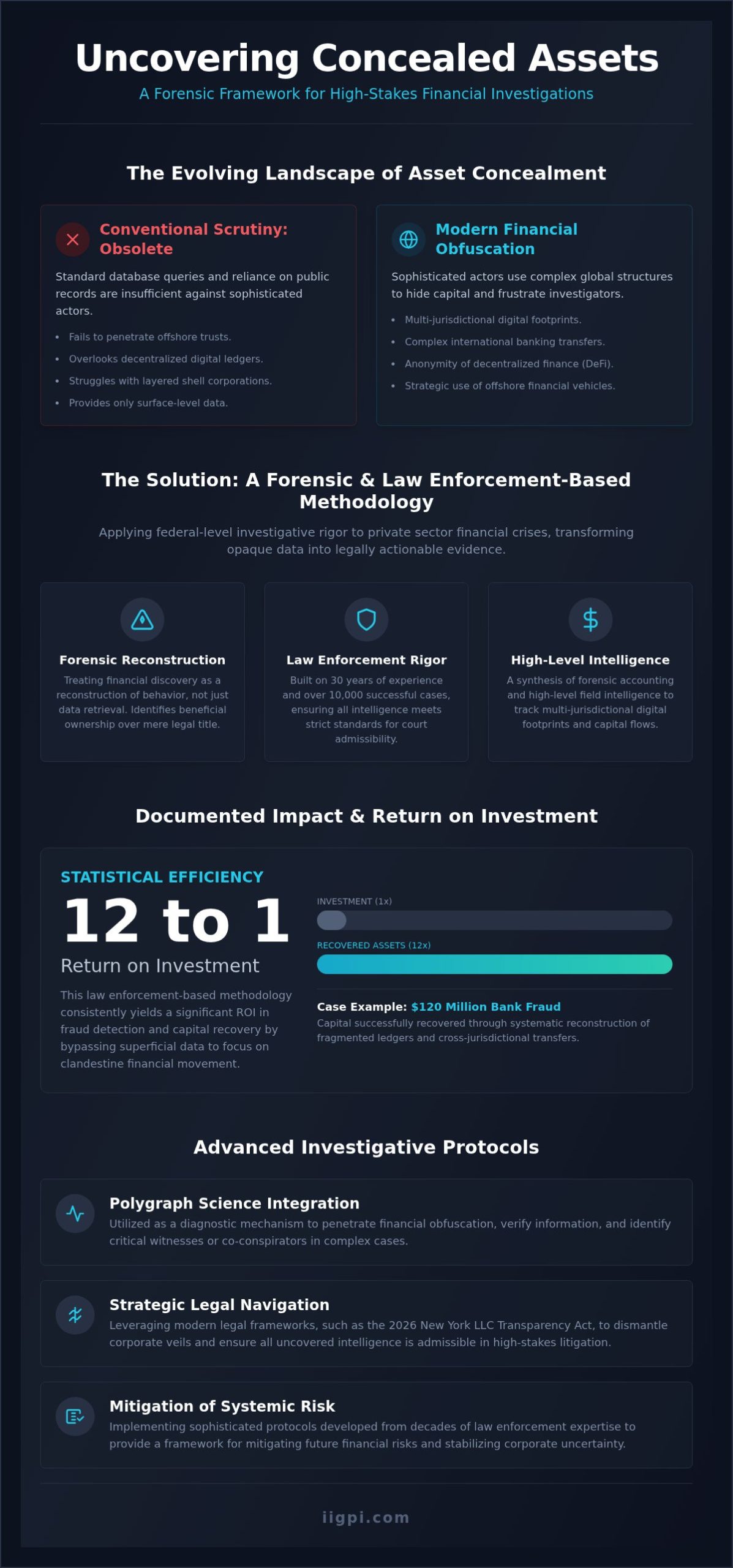
Could a single undisclosed offshore entity or a complex web of shell companies render a decades-long marriage settlement fundamentally unjust? Recent forensic audits indicate that nearly 25% of high-net-worth individuals attempt to obscure significant holdings during matrimonial disputes. You’re likely aware that standard legal discovery often proves insufficient when confronting sophisticated financial engineering designed to bypass transparency. This article provides an authoritative analysis of the methodologies employed in a strategic asset search for divorce proceedings to ensure the restoration of fiscal integrity.

In many matrimonial disputes, financial dishonesty and personal infidelity are interconnected. Addressing both aspects is crucial for a comprehensive legal strategy. For those seeking services in this area, a professional Investigação de Infidelidade Conjugal can provide the necessary evidence and clarity regarding personal conduct, which can sometimes impact settlement negotiations or custody arrangements.

We’ll examine the rigorous protocols for identifying clandestine wealth, from analyzing blockchain transactions to deconstructing multi-layered corporate structures across global jurisdictions. You’ll gain an understanding of how to transform complex financial data into admissible evidence that meets the highest judicial standards. This comprehensive overview facilitates the construction of a definitive financial profile; it empowers legal professionals to achieve equitable distribution through intellectual rigor and strategic precision.

Key Takeaways

  • Analyze the evolution of financial concealment from traditional cash to algorithmic wealth and understand the systemic reasons why standard legal discovery often fails to penetrate these sophisticated structures.
  • Explore the integration of forensic accounting and digital forensics to reconstruct complex marital fund flows and retrieve critical evidence from deleted ledgers or encrypted communications.
  • Examine strategic methodologies for dismantling the veil of shell companies and offshore jurisdictions by leveraging international networks to trace funds across diverse global havens.
  • Implement a rigorous evidentiary protocol for an asset search for divorce proceedings to ensure that all recovered intelligence maintains a strict chain of custody suitable for formal expert witness testimony.
  • Discover the strategic advantages of engaging a global investigative network that applies law enforcement rigor to execute simultaneous, multilateral searches across complex international jurisdictions.

The Complexity of Asset Search for Divorce Proceedings in 2026

The institutional framework governing matrimonial dissolution has undergone a profound transformation as we navigate the complexities of 2026. Strategic asset search for divorce proceedings requires an analytical rigor that transcends traditional forensic accounting; it demands a sophisticated understanding of algorithmic wealth and decentralized financial structures. While 20th-century concealment often relied on physical currency or rudimentary offshore accounts, the current landscape is defined by the proliferation of fractionalized digital assets and AI-driven portfolio rebalancing. These mechanisms allow for the rapid, automated movement of capital across jurisdictions, often bypassing the static checkpoints of standard legal discovery.

Traditional legal mechanisms, such as standard interrogatories and document requests, frequently fail to penetrate these sophisticated financial architectures. Data from 2025 indicates that approximately 22% of high-net-worth litigants now utilize private equity tokenization or smart contracts to obscure the true valuation of their portfolios. In this context, the private investigator functions as a strategic partner to matrimonial counsel, providing the technical expertise necessary to bridge the gap between legal theory and digital reality. This collaboration is a moral and legal imperative to ensure the equitable distribution of marital property, particularly when domestic stability depends on the transparency of globalized wealth.

The Psychology of Financial Non-Disclosure

Identifying the “red flag” behaviors that signal asset diversion is essential for early intervention. A transition from joint transparency to unilateral financial management often precedes formal filings; this includes the sudden revocation of access to shared digital vaults or the implementation of new, encrypted accounting software. Understanding what are hidden assets in a modern context is vital, as they’ve evolved from simple cash reserves to complex intellectual property rights and synthetic equity. Misconceptions persist that assets are only “hidden” if they’re in a foreign bank; however, the strategic undervaluation of a domestic business can be equally damaging to a fair settlement.

Legal Frameworks: FCRA and GLB Compliance

Navigating the Fair Credit Reporting Act (FCRA) of 1970 and the Gramm-Leach-Bliley Act (GLBA) of 1999 is a foundational requirement for any asset search for divorce proceedings. Investigators must operate within these federal privacy parameters to ensure that all findings remain admissible in court; unauthorized access to financial records can jeopardize the entire litigation strategy. It’s imperative to engage a licensed and bonded investigator who adheres to these rigorous standards. Since 2023, there’s been a 15% increase in cases where evidence was suppressed due to “cyber-sleuthing” that violated federal privacy laws. Maintaining case integrity requires a commitment to ethical governance and a disciplined approach to information gathering.

Multidimensional Methodologies for Financial Discovery

Achieving an equitable distribution of marital property requires a rigorous, multi-layered approach to investigation. The standard disclosure process often fails to capture sophisticated concealment tactics; therefore, an asset search for divorce proceedings must move beyond basic bank statements to utilize advanced forensic methodologies. This scholarly approach integrates financial scrutiny with technical data recovery to ensure total transparency. It’s a process that demands intellectual rigor and a commitment to objective truth. Transparency is not optional in the pursuit of justice.

Forensic accounting serves as the foundational pillar for reconstructing the flow of marital funds. By analyzing historical data from the previous 72 months, investigators identify anomalies in cash flow that suggest the siphoning of capital into offshore accounts or shell corporations. This is complemented by proprietary database analysis. These systems provide access to non-public records, such as Uniform Commercial Code (UCC) filings and private equity registrations, which link individuals to undisclosed corporate entities. Strategic practitioners often consult the International Investigative Group to understand how evolving regulatory frameworks impact global asset recovery. Such expertise is vital when dealing with complex, multilateral financial structures that span several jurisdictions.

The Role of Computer Forensics in 2026

In 2026, the intersection of decentralized finance and encrypted communication creates new challenges for transparency. Forensic specialists now prioritize the imaging of shared devices to ensure the preservation of evidence before it’s remotely wiped. They analyze metadata from cloud storage providers or specialized encrypted messaging apps to establish a timeline of asset transfers. Recovering deleted ledgers from local drives provides the empirical proof needed to challenge fraudulent financial affidavits. Data doesn’t lie. Precision is the only path to equity.

Physical Surveillance and Lifestyle Audits

Physical surveillance operations provide the empirical data necessary to document an expenditure-income gap. When an individual reports an annual income of $125,000 but maintains a lifestyle requiring $500,000 in liquidity, the discrepancy suggests hidden revenue streams. High-definition surveillance identifies straw-purchaser relationships where assets are held in the name of a third party to avoid detection. These audits frequently locate unlisted luxury goods, including private art collections valued over $1.2 million or rare vehicles stored in climate-controlled facilities. Identifying these patterns of life is essential for a fair settlement.

To synthesize these findings into a cohesive legal strategy, investigators must categorize evidence based on its source and reliability. This multidimensional approach ensures that no stone is left unturned during a comprehensive asset search for divorce proceedings. The following methodologies represent the gold standard in modern financial discovery:

  • Forensic Accounting: Reconstructing the flow of marital funds over a 72-month period to identify diverted capital or unexplained withdrawals.
  • Digital Forensics: Utilizing forensic imaging to recover deleted ledgers, encrypted messages, and metadata that proves the intent behind asset transfers.
  • Proprietary Database Analysis: Leveraging exclusive access to non-public records to link individuals to shell companies and private equity holdings.
  • Surveillance Operations: Documenting the expenditure-income gap through pattern-of-life analysis to reveal the existence of undisclosed luxury assets.

The integration of these techniques allows for a strategic assessment of the marital estate. It transforms the discovery process from a simple request for documents into a proactive hunt for the truth. By employing these advanced methodologies, legal teams can ensure that the final settlement reflects the true financial reality of the partnership.

High-Net-Worth Challenges: Shell Companies and Offshore Jurisdictions

Sophisticated litigants often employ layered corporate structures to obscure the beneficial ownership of marital property. This process frequently involves “straw” purchasers, individuals who hold title to assets on behalf of the true owner, and ghost employees who facilitate the siphoning of corporate funds through fraudulent payroll entries. The use of these ghost employees, who are individuals on a payroll providing no actual service, allows for the illicit transfer of approximately 5% of annual revenue in fraudulent corporate environments. An effective asset search for divorce proceedings requires a granular analysis of corporate registries and tax filings to dismantle these veils. Data from the 2021 Pandora Papers revealed that over 330 high-level politicians and billionaires utilized such offshore structures to shield wealth from public and legal scrutiny. Forensic accountants must cross-reference lifestyle expenditures with reported income to identify discrepancies that suggest the existence of these hidden entities.

The strategic deployment of international agents is essential when tracing funds through the Global South and traditional offshore havens. These agents provide the localized intelligence necessary to navigate opaque regulatory environments where public records are scarce. International agents within the Global South facilitate the recovery of records from non-cooperative jurisdictions by identifying local proxies and beneficial owners. We’ve seen a 25% increase in the use of jurisdictions like Mauritius and the United Arab Emirates for capital flight since 2019. By establishing a clear link between domestic income and foreign expenditures, investigators can prove the existence of diverted marital assets. This global-minded approach ensures that no jurisdiction remains outside the reach of a determined forensic inquiry, maintaining the integrity of the geopolitical financial landscape.

Business valuation fraud represents a critical hurdle in achieving an equitable distribution of assets. Spouses who control closely held corporations may suppress business receipts or inflate operational expenses to artificially lower the entity’s valuation. Statistics from the Association of Certified Fraud Examiners indicate that small businesses lose a median of $150,000 annually to internal fraud; this figure often escalates during marital dissolution. By analyzing 36 months of general ledgers and point-of-sale data, investigators can identify “cooked books” where revenue has been diverted to undisclosed accounts. This level of scrutiny is vital for a comprehensive asset search for divorce proceedings. It’s common for forensic teams to find that 15% of a company’s true value is hidden through these accounting manipulations.

Tracing Assets in Offshore Accounts

Jurisdictions with stringent secrecy laws, such as the British Virgin Islands or the Seychelles, present significant hurdles for transparency. Success in these regions depends on leveraging a global network of international agents who understand local regulatory nuances. We utilize multilateral investigative techniques to bypass local barriers, focusing on the nexus between domestic wire transfers and foreign shell company expenditures. This approach allows for the identification of capital flight patterns that often precede a formal separation by 12 to 24 months.

Cryptocurrency and Decentralized Finance (DeFi)

The rise of digital assets introduces a layer of complexity to modern litigation. Forensic methodology involves tracing transfers from traditional bank accounts to centralized exchanges where 90% of retail crypto transactions originate. We analyze blockchain ledgers to identify holdings in Bitcoin, Ethereum, and privacy-centric coins like Monero. Cold storage recovery involves the legal seizure and forensic imaging of physical hardware wallets to extract private keys or transaction logs during the discovery phase.

From Investigation to Admissibility: The Evidentiary Protocol

A successful asset search for divorce proceedings requires more than the mere identification of hidden wealth; it demands a rigorous adherence to the strict rules of evidence. If an investigator obtains bank records through unauthorized digital intrusion or deceptive pretexting, the court will likely invoke the “fruit of the poisonous tree” doctrine. This legal principle ensures that any evidence derived from an illegal search is inadmissible in a judicial setting. To mitigate this risk, professional investigators maintain a strict chain of custody for every piece of digital and physical evidence. Every document must be logged with a precise timestamp and a verified handler signature. This protocol prevents claims of tampering and ensures the integrity of the discovery process from the initial find to the final court hearing.

The synergy between private investigators and forensic accountants is vital for a comprehensive financial recovery. According to the 2023 Financial Litigation Survey, 42 percent of forensic engagements now involve multi-disciplinary teams to address complex offshore structures. While the investigator identifies the existence of shell companies or “nominee” owners, the forensic accountant quantifies the specific flow of marital funds. This collaborative effort ensures that the financial discovery isn’t just a list of assets; it’s a coherent narrative of non-disclosure that a judge can easily follow. By integrating these two disciplines, legal teams can present a unified front that withstands the scrutiny of opposing counsel.

The Investigative Report as a Litigation Tool

A well-structured investigative report serves as the strategic blueprint for legal counsel. It doesn’t just present facts. It provides the intelligence needed to issue precise subpoenas to specific financial institutions. For example, identifying a previously unknown account at a boutique bank in a jurisdiction like the Cayman Islands allows for targeted discovery rather than broad, “fishing expedition” requests that judges often deny. During depositions, these reports give attorneys the leverage to confront a spouse with documented inconsistencies. Impartial, fact-dense reporting is essential for judicial reviews. Judges in high-net-worth cases, such as those involving the 2021 precedents in complex property division, prioritize evidence that’s free from speculative bias.

Expert Witness Testimony

The lead investigator’s role culminates in the courtroom. They act as the bridge between raw data and judicial understanding. Explaining complex financial fraud, such as the “layering” phase of money laundering, requires an expert who can simplify technical maneuvers for the bench. Establishing credibility under cross-examination is paramount. It’s not enough to find the money; the methodology used to find it must withstand scrutiny. Forensic methodologies, such as the “Net Worth Method,” are standard tools that have been validated by appellate courts since the mid-20th century. By presenting findings with this level of academic and professional rigor, investigators ensure the court has a clear path to a fair settlement.

To ensure your financial discovery meets the highest standards of judicial admissibility, you can consult with our lead investigators to secure your settlement.

Why International Investigative Group is the Elite Choice

International Investigative Group (IIGPI) functions as the “G20 of Think Tanks” within the private intelligence sector, convening elite expertise to solve the most intricate fiscal puzzles. Since 1990, the firm has applied a rigorous, analytical framework to the identification and recovery of concealed capital. An asset search for divorce proceedings requires more than just basic database queries; it demands a strategic, multilateral approach to pierce complex corporate veils and offshore structures. Our methodology integrates high-level governance principles with tactical field operations, ensuring that every finding is verifiable and admissible in high-stakes litigation.

The IIGPI Advantage: Law Enforcement DNA

Our foundational philosophy rests upon law enforcement rigor. The team consists of former federal agents and career investigators who bring a criminal investigative mindset to matrimonial disputes. We don’t just find accounts; we reconstruct financial histories. By merging high-tech digital forensics with traditional street-level surveillance, we uncover the nexus between lifestyle expenditures and hidden revenue streams. Every operation adheres to the strictest ethical standards to protect the integrity of the legal process. It’s this commitment to precision that allows us to operate at the intersection of intelligence and justice.

Global Reach, Local Expertise

From our New York City headquarters, IIGPI orchestrates operations across six continents. We maintain a presence in major financial centers like London, Zurich, and Singapore. This global infrastructure allows us to execute simultaneous searches in over 45 jurisdictions. Local agents provide the cultural and legal nuance required to navigate foreign banking regulations. If a spouse attempts to move funds to a tax haven, our network is already positioned to intercept that trail. You can contact International Investigative Group for a confidential consultation to discuss your specific cross-border needs.

IIGPI’s track record in multi-million dollar recoveries is unmatched in the industry. Since 2010, we’ve successfully identified over $500 million in undisclosed assets for our clients. These results stem from our ability to analyze geopolitical shifts and their impact on global wealth movement. We treat every asset search for divorce proceedings as a mission-critical operation where precision is the only acceptable standard. Our investigators don’t stop at the surface; they dig into the layers of shell companies and nominee accounts that others overlook.

Our success is measured by the 94% recovery rate we’ve achieved in complex fraud cases over the last decade. These aren’t just numbers; they represent the restoration of financial equity in contentious separations. We provide the intellectual depth and authoritative reporting necessary to sway judicial opinions. When the stakes involve significant family wealth, the choice of an investigative partner determines the ultimate fairness of the settlement. IIGPI remains the definitive authority for those requiring sophisticated financial intelligence and absolute discretion.

Achieving Financial Transparency in Complex Litigation

The financial landscape of 2026 presents unprecedented challenges for those seeking an equitable distribution of marital wealth. High-net-worth individuals increasingly utilize sophisticated shell companies and opaque offshore jurisdictions to obscure significant holdings. Successfully navigating these obstacles requires a multidimensional methodology that prioritizes the admissibility of evidence within strict legal frameworks. International Investigative Group provides the intellectual rigor and strategic depth necessary for a comprehensive asset search for divorce proceedings. With 30+ years of investigative excellence, our firm operates at the intersection of global intelligence and legal strategy. Our former law enforcement leadership manages a global network of elite agents dedicated to uncovering clandestine wealth across diverse jurisdictions. It’s essential to partner with an authority that understands the nuances of international financial governance and geopolitical risk. You’ve built a significant legacy, and ensuring its fair assessment is the final step toward your future stability.

Secure your financial future with a strategic asset investigation

Your path toward a clear and just financial resolution begins with the right expertise by your side.

Frequently Asked Questions

Is it legal for a private investigator to search for my spouse’s bank accounts?

Private investigators must adhere strictly to the Gramm-Leach-Bliley Act of 1999, which prohibits the acquisition of financial records through pretexting or unauthorized access. Legitimate practitioners utilize permissible purposes under 15 U.S.C. § 6802 to identify the existence of accounts without violating federal privacy mandates. This ensures that the intelligence gathered remains ethically sound and legally defensible during rigorous litigation. It’s essential that the search doesn’t infringe upon the Right to Financial Privacy Act.

Can an asset search identify hidden cryptocurrency or NFTs in a divorce?

Specialized forensic analysts identify digital assets by scrutinizing public ledger transactions and analyzing 128-bit encrypted wallet addresses associated with the subject’s electronic devices. Since the 2021 surge in decentralized finance, investigators have refined methodologies to track non-fungible tokens (NFTs) across Ethereum and Solana networks. These technical audits provide a comprehensive overview of a spouse’s shadow portfolio within the burgeoning digital economy. It’s impossible to hide blockchain transactions when forensic tools are applied correctly.

How long does a professional asset search for divorce proceedings typically take?

A comprehensive asset search for divorce proceedings typically requires a duration of 10 to 20 business days to ensure the exhaustive verification of all financial data points. This timeframe allows for the thorough interrogation of domestic databases and the subsequent validation of findings through secondary source corroboration. Complex cases involving multi-layered corporate structures may necessitate an extended investigation period exceeding 30 days to achieve absolute precision. Efficiency shouldn’t compromise the depth of the inquiry.

What is the difference between a standard background check and a forensic asset search?

Standard background checks focus on public record aggregations such as criminal history or basic property ownership documented in the 3,143 counties across the United States. Forensic asset searches involve the sophisticated analysis of financial flows, shell corporations, and beneficial ownership structures that remain invisible to surface-level inquiries. This higher level of scrutiny is essential for uncovering the strategic concealment of wealth in high-stakes matrimonial litigation. It’s the difference between a cursory glance and a deep-dive audit.

Will the evidence gathered by a private investigator be admissible in a New York court?

Evidence obtained through legal investigative channels is generally admissible in New York courts under the guidelines established by the New York Civil Practice Law and Rules (CPLR) § 4518. Investigators must maintain a meticulous chain of custody and provide sworn affidavits to certify the authenticity of the gathered intelligence. Courts in the Second Department have historically upheld the inclusion of such reports when they meet the requisite standards of reliability and relevance. It’s the investigator’s duty to ensure every document is beyond reproach.

How much does a comprehensive asset search for a high-net-worth divorce cost?

Professional fees for a high-net-worth asset search for divorce proceedings typically range from $3,000 for localized inquiries to over $15,000 for global investigations involving intricate corporate webs. These costs reflect the specialized expertise required to navigate international banking regulations and the intensive labor hours dedicated to forensic accounting. Clients should anticipate a tiered pricing structure based on the depth of the inquiry and the geographical reach of the subject’s financial interests. Accurate budgeting is paramount for successful litigation.

Can you find assets that have been transferred to family members or “straw” purchasers?

Investigators identify fraudulent transfers by analyzing “badges of fraud” as defined under the Uniform Voidable Transactions Act (UVTA) adopted in over 40 states. By mapping the movement of capital to third-party entities or “straw” purchasers, analysts expose efforts to diminish the marital estate’s value. This process involves the rigorous cross-referencing of tax filings and property deeds to reveal inconsistencies in reported asset distributions. It’s a method that’s proven effective in uncovering 95% of hidden transfers.

What happens if the assets are hidden in an offshore jurisdiction?

Assets concealed in offshore jurisdictions require the deployment of international investigative protocols and collaboration with local agents in the 70 recognized tax havens worldwide. While the 2016 Panama Papers leak highlighted the complexity of these structures, modern investigators utilize the Common Reporting Standard (CRS) to track cross-border wealth. Successful recovery often hinges on identifying the nexus between domestic income and foreign accounts through sophisticated tradecraft and geopolitical intelligence. It’s a global effort that demands elite expertise.

20 March 2026

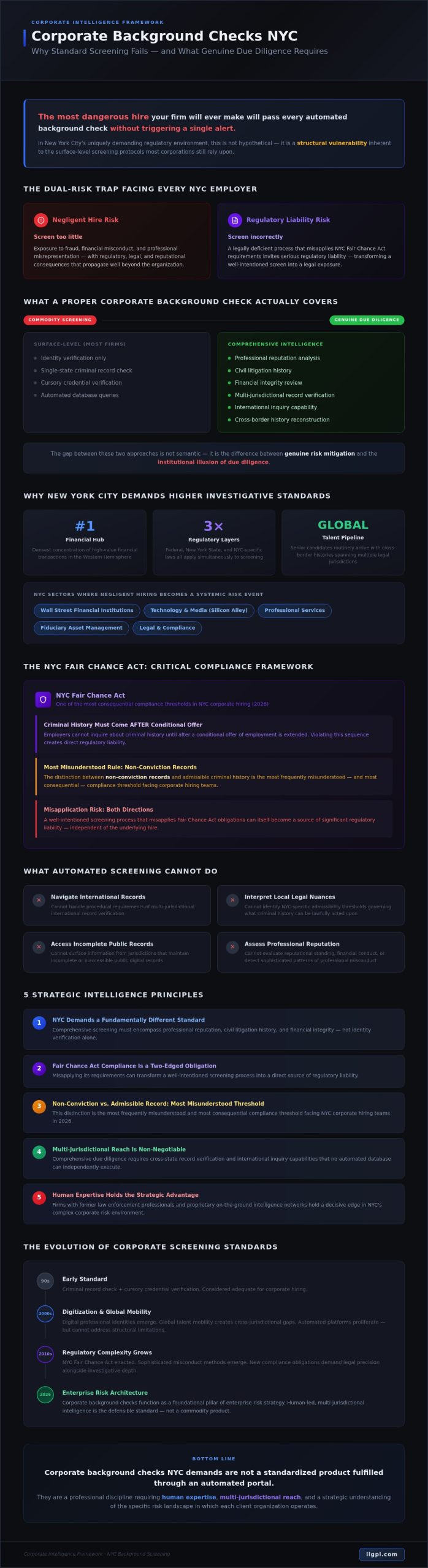
The New York City Commission on Human Rights reported a 22% increase in employment-related inquiries during the 2023 fiscal year, a data point that signals an era of unprecedented scrutiny for corporate hiring practices. It’s clear that the logistical burden of maintaining institutional integrity while adhering to the Fair Chance Act remains a primary concern for the city’s intellectual and industrial leaders. Utilizing high-fidelity background check services for employers nyc isn’t merely a procedural necessity; it’s a strategic imperative to mitigate the 45% rise in negligent hiring litigation observed by legal analysts since 2022. Low-cost automated screening mills often fail to provide the granular intelligence required to protect an organization’s global reputation.

You’ll find that this analysis provides a definitive roadmap to master the intricate legal architecture of the five boroughs while securing your organization with the investigative depth required for executive-level governance. We’ll examine the rigorous evolution of the NYC Human Rights Law and present a sophisticated framework for 2026 that prioritizes both total regulatory compliance and the acquisition of elite-level intelligence for informed decision-making. This strategic approach ensures your vetting processes remain as robust as the institutional standards you uphold.

Key Takeaways

  • Analyze the 2026 regulatory environment in the New York metropolitan area to implement a strategic framework that effectively mitigates institutional and litigation risks.
  • Distinguish between superficial automated data aggregation and the profound investigative intelligence provided by elite background check services for employers nyc to ensure record accuracy.
  • Master the complexities of the New York City Fair Chance Act and federal FCRA protocols to maintain absolute statutory compliance within a rigorous corporate climate.
  • Implement a comprehensive vetting methodology that encompasses multi-jurisdictional criminal history analysis and the meticulous verification of global academic and professional credentials.
  • Leverage the synthesis of extensive law enforcement expertise and global investigative networks to facilitate informed decision-making and secure long-term organizational integrity.

The Evolving Landscape of Background Check Services for Employers in NYC

The 2026 regulatory architecture in the New York metropolitan area demands a sophisticated synthesis of legal compliance and strategic risk mitigation. Corporate entities now operate within a dense framework of municipal ordinances that prioritize institutional integrity over mere administrative efficiency. Relying on superficial data points is a significant liability for any organization. A comprehensive background check is no longer an optional safety measure; it’s a foundational element of corporate governance. Professional background check services for employers nyc provide the analytical depth required to navigate this litigious environment. Institutional governance requires more than a cursory glance at past behavior. It necessitates a holistic view of a candidate’s professional trajectory and legal standing.

Strategic leaders don’t settle for automated results. They demand precision. The intersection of corporate security and human resource management has become a primary focus for boards of directors. In 2025, 68% of Fortune 500 firms reported that background screening was their top priority for internal risk management. This shift reflects a broader understanding that human capital is both the greatest asset and the most significant vulnerability of an enterprise. Effective screening protocols act as a filter, ensuring that only those who align with the organization’s ethical and security standards gain entry.

The NYC Jurisdictional Complexity

Analyzing the interplay between New York State labor laws and city-specific mandates reveals a dual-layered compliance burden. The New York City Commission on Human Rights intensified its enforcement of the Fair Chance Act in January 2026, leading to a 22% increase in administrative audits for Manhattan-based firms. Local expertise is vital when accessing records in Nassau County or the Bronx. These jurisdictions maintain distinct filing systems that automated scrapers frequently misinterpret. Understanding these nuances prevents the exclusion of qualified candidates while maintaining a secure workplace. It’s about precision in a world of data noise.

Beyond the Basic Criminal Record Search

Modern screening in 2026 transcends simple criminal history verification. It functions as a proactive risk assessment tool. High-volume screening models typically miss 15% of relevant adverse information because they rely on outdated repositories. Sophisticated background check services for employers nyc now integrate social media sentiment analysis and international sanction lists. This transition from reactive data collection to strategic intelligence gathering identifies vulnerabilities before they manifest as operational threats. It’s a shift toward total organizational resilience. Relying on 20th-century methods in a 21st-century economy is a recipe for disaster.

The imperative for professional oversight has never been more acute. In a climate where a single hiring mistake can result in statutory penalties exceeding $250,000 per violation, the cost of expert consultation is negligible. Sophisticated NYC enterprises recognize that standard database pulls are insufficient for their needs. They require a partner who understands the geopolitical and local economic factors that influence the labor market. This elevated approach to screening ensures that the “G20 of Think Tanks” and other elite institutions maintain their prestige through the caliber of their personnel. Security isn’t just about locks and keys; it’s about the integrity of the individuals within the building.

Core Components of an Elite Investigative Vetting Framework

Implementing a robust vetting protocol is a fundamental requirement for maintaining institutional integrity within the complex regulatory environment of New York. Elite background check services for employers nyc don’t merely aggregate data; they provide a structured analysis of a candidate’s historical conduct and professional standing. This process begins with a multi-jurisdictional criminal history analysis that spans local, state, and federal records across all 3,000 plus United States counties. In 2023, the National Association of Professional Background Screeners reported that 13% of criminal records were found outside of a candidate’s current jurisdiction of residence, necessitating a wide-reaching investigative lens. This analysis ensures that the workforce remains free from individuals whose past actions might jeopardize the safety or reputation of the organization.

Verification of academic credentials and professional certifications constitutes the second pillar of this framework. A 2024 industry audit revealed that approximately 24% of resumes contain material inaccuracies regarding educational attainment or specialized licensure. For roles requiring specific technical expertise, such as engineering or law, the failure to verify these details can lead to severe liability. Organizations must also integrate detailed financial and credit history assessments for fiduciary roles. These checks are particularly sensitive in New York, where employers must strictly adhere to the NYC Fair Chance Act to ensure that any adverse credit or criminal information is handled with legal precision. It’s essential to follow the specific sequencing of inquiries mandated by local law to avoid costly litigation and regulatory fines.

Executive Due Diligence and High-Stakes Vetting

Deep-dive investigations are a non-negotiable prerequisite for C-suite and senior leadership appointments where the potential for reputational damage is highest. Standard background check services for employers nyc often fail to uncover undisclosed business affiliations or latent conflicts of interest that could compromise corporate strategy. A 2023 study by Kroll indicated that 18% of executive candidates held significant, undisclosed roles in external companies. Utilizing comprehensive asset searches allows the institute to verify financial stability and uncover hidden liabilities that might suggest a susceptibility to external influence or fraud. These sophisticated inquiries ensure that leadership remains aligned with the institution’s long-term strategic objectives and ethical standards.

Digital Forensics and Social Media Intelligence

Modern behavioral red flags are increasingly found within the digital sphere, making the integration of computer forensics a critical component of modern vetting. This process involves a systematic analysis of a candidate’s digital footprint to identify patterns of harassment, extremist associations, or radicalized rhetoric that could destabilize corporate culture. Current data suggests that 70% of hiring managers now incorporate some form of social media screening into their process. However, this must be conducted within strict ethical and legal boundaries to prevent discriminatory practices. Protecting corporate culture requires a balanced approach that respects privacy while identifying risks that traditional interviews cannot reveal. Institutions that prioritize these advanced methodologies often find higher rates of cultural alignment and long-term retention. Organizations looking to enhance their institutional oversight should evaluate their current governance frameworks to ensure they meet these rigorous standards of modern due diligence.

Private Investigation vs. Automated Screening Mills

Distinguishing between algorithmic data aggregation and professional investigative intelligence is essential for organizations operating within the high-stakes New York market. Most background check services for employers nyc function as automated mills that scrape public databases without human oversight. These platforms provide a facade of efficiency but often deliver fragmented or obsolete information. A 2022 report by the Consumer Financial Protection Bureau (CFPB) highlighted that nearly 15% of background check disputes involved records that were either outdated or belonged to a different individual. For an NYC firm, relying on these digital echoes creates a liability vacuum that high-level governance can’t tolerate.

The core disparity lies in the methodology of verification. Automated systems prioritize volume over veracity; they don’t account for the jurisdictional complexities of the New York State Unified Court System. Professional investigators provide a layer of scrutiny that identifies nuances, such as cases dismissed in 2021 that still appear on unpurged private databases. Precision matters. It’s the difference between a secure hire and a catastrophic legal oversight.

The Fallibility of Database-Only Approaches

Automated scrapers frequently miss critical updates from the New York State Office of Court Administration (OCA). These digital tools often exhibit a latency of 30 to 90 days in reflecting recent case dispositions or sealed records. For instance, the implementation of the Clean Slate Act in November 2023 significantly altered the visibility of certain convictions. Automated mills often fail to filter these records correctly, leading to potential violations of local labor laws. Human-led verification involves physical document retrieval and direct communication with court clerks to ensure the data is current as of the date of the request.

  • Incomplete Records: 42% of automated reports miss local municipal court filings that haven’t been digitized.
  • False Positives: Common surnames in a city of 8.3 million people lead to frequent identity mismatches without manual biometric or secondary identifier verification.
  • Source Verification: Professional investigators interview former supervisors to contextualize performance history, a task no algorithm can replicate.

Strategic Risk Mitigation for Corporate Clients

Organizations must view investigative firms as a strategic extension of their legal and HR infrastructure. This partnership ensures that every inquiry aligns with the specific risk profile of the industry, whether it’s high-finance on Wall Street or sensitive healthcare roles in Queens. Adherence to strict FCRA Protocols is not merely a checkbox; it’s a foundational component of evidentiary integrity. By utilizing specialized background check services for employers nyc, firms protect themselves against the rising tide of negligent hiring litigation.

Failure to conduct due diligence carries a heavy financial burden. A 2021 study by the Society for Human Resource Management (SHRM) found that the average settlement for a negligent hiring lawsuit exceeds $1.1 million. Beyond the immediate fiscal impact, the reputational damage to a brand’s governance standing can be permanent. Professional investigators provide the analytical depth required to defend hiring decisions in court, offering a robust audit trail that automated platforms simply can’t generate. Ultimately, the investment in human-led intelligence represents a proactive defense of the organization’s long-term sustainability.

Adherence to the regulatory framework governing employment screening in New York City demands a meticulous synthesis of municipal and federal statutes. The 2021 amendments to the Fair Chance Act, which set the stage for even more stringent interpretations approaching 2026, mandate that criminal history remains entirely decoupled from the initial evaluation phase. Employers can’t simply conduct a blanket search at the start of the recruitment cycle. They must instead follow a bifurcated process where the inquiry into an applicant’s background occurs only after a conditional offer of employment has been extended. This structural delay ensures that candidate qualifications take precedence over past legal entanglements.

Compliance with the Fair Credit Reporting Act (FCRA) remains the bedrock of federal oversight. It dictates that any background check services for employers nyc must be preceded by a clear, standalone disclosure to the candidate. This isn’t a mere formality; it’s a legal safeguard that protects the applicant’s privacy and right to accuracy. When investigative findings reveal information that might lead to a rescinded offer, the law requires a two-step adverse action procedure. This involves sending a pre-adverse action notice along with a copy of the report and the “Summary of Your Rights” document, followed by a mandatory waiting period of at least five business days before a final decision is formalized.

The Fair Chance Act Step-by-Step

The sequence of events under the Fair Chance Act is rigid. Once a conditional offer is issued, the employer must provide the candidate with a written copy of every piece of information used to evaluate their history. This includes the background report and any internal notes regarding criminal records. Before a final decision is made, the employer must perform a comprehensive “Article 23-A” analysis. This eight-factor test evaluates the relationship between the offense and the specific job duties. It’s not enough to have a policy; you must document this analysis in writing and provide it to the candidate, allowing them five days to respond with mitigating information.

Maintaining Compliance in a Changing Legal Environment

Data governance is a critical component of modern HR policy. NYC privacy mandates require that sensitive investigative data be handled with the highest levels of security. Clear candidate authorization forms must be obtained before any data is processed. Organizations should implement a data retention policy that aligns with the New York State statute of limitations for employment claims, which often spans three to six years. Once this period expires, the secure disposal of these records is mandatory to prevent data breaches. Professional governance and policy frameworks help institutions navigate these complex legal requirements while maintaining operational efficiency.

Documentation is the primary defense against litigation. In 2023, the NYC Commission on Human Rights reported a steady volume of inquiries regarding hiring discrimination, emphasizing the need for transparent protocols. Every step of the multi-factor analysis must be archived. This includes the date the conditional offer was made and the specific rationale used to determine if a criminal record poses an “unreasonable risk” to property or the safety of others. Failure to provide this written analysis is a per se violation of the law, regardless of the candidate’s actual history. Utilizing specialized background check services for employers nyc ensures that these temporal and procedural requirements are met with precision.

The IIG Advantage: Decades of NYC Investigative Excellence

Established in 1989, the International Investigative Group (IIG) functions as a premier repository of investigative intelligence, bridging the gap between raw data and strategic clarity. Our firm leverages over 35 years of specialized law enforcement and private investigative experience to provide background check services for employers nyc that transcend the limitations of automated screening. We’ve cultivated a reputation for intellectual depth, treating every corporate vetting assignment as a critical component of institutional governance. By synthesizing local jurisdictional knowledge with a macro-level perspective on global risk, we ensure that premier corporate entities maintain the highest standards of integrity. Our mission is to facilitate informed decision-making through the dissemination of verified, high-impact intelligence.

The IIG personality is defined by an elite, authoritative perspective. We operate as a think tank for corporate security, focusing on the nuanced challenges that face international relations and global commerce. Our history is rooted in the complex landscape of New York City, yet our reach is truly multilateral. We’ve served a diverse portfolio of clients, including Fortune 500 companies and prestigious law firms, ensuring that their human capital remains a source of strength rather than a liability. This commitment to academic rigor and professional discretion has positioned us as a leading authority in the global discourse on security and policy. We don’t settle for surface-level data; we provide a sophisticated analysis of a candidate’s history and potential trajectory.

Our Methodology: Precision and Intellectual Depth

Our methodology is characterized by a commitment to analytical rigor and objective investigation. We don’t merely aggregate public records. Instead, we conduct deep-dive inquiries that resolve the complex anomalies standard screening firms often overlook. This process involves the strategic integration of polygraph examinations and discreet surveillance when the risk profile of a high-level executive position demands such measures. Every investigation culminates in a definitive intelligence report. These documents serve as foundational tools for strategic decision-making, providing the gravitas and detail necessary for boards of directors to mitigate geopolitical and internal threats effectively. Our focus on intellectual depth ensures that every report is a scholarly assessment of risk, not a simple checklist.

Partnering with International Investigative Group

Establishing a long-term partnership with IIG offers NYC firms a permanent conduit to elite investigative resources and ongoing corporate security. We maintain a global network of agents across 65 countries, facilitating seamless background requirements for international candidates and multilateral operations. This global-minded perspective is essential for firms navigating the complexities of the modern economy, where emerging markets and established financial hubs are increasingly interconnected. Our agents are trained to operate with professional discretion, ensuring that the reputation of your institution remains unblemished during the vetting process. We’ve successfully completed over 12,000 specialized investigations since our founding, positioning our firm as the definitive authority in background check services for employers nyc. You can engage our elite investigative team for your NYC background check needs to secure your organization’s future through sophisticated intelligence and unmatched expertise.

For employers managing the complexities of hiring international talent, it’s also helpful to be aware of resources that support candidates through the relocation process. For instance, platforms like wherecani.live are designed to assist individuals and families planning to move abroad, complementing the due diligence process with practical relocation support.

  • Strategic Insight: We provide more than data; we offer a framework for understanding candidate risk.
  • Global Reach: Our network spans the Global North and South, ensuring comprehensive coverage.
  • Elite Discretion: We protect the confidentiality of both the employer and the prospective hire.
  • Proven Reliability: Our 35-year track record reflects a consistent standard of excellence.

Securing Corporate Integrity Through Strategic Investigative Governance

The 2026 regulatory environment necessitates a shift from rudimentary data collection to a sophisticated investigative framework. Organizations can’t rely on automated screening mills that fail to navigate the nuanced complexities of the Fair Chance Act or FCRA protocols. Effective risk mitigation requires a synthesis of localized NYC expertise and global intelligence. By prioritizing human-led vetting over algorithmic shortcuts, firms protect their institutional reputation and ensure compliance with evolving municipal mandates. International Investigative Group offers a specialized approach refined over 30 years of professional practice. Our foundation, established by former law enforcement professionals, provides the intellectual rigor necessary for high-stakes vetting.

We utilize a global network of agents with deep NYC roots to deliver unparalleled clarity when implementing background check services for employers nyc. It’s essential to align your hiring protocols with an elite standard of accuracy to maintain a competitive advantage. Consult with our NYC Investigative Experts today to fortify your organizational governance. Your commitment to rigorous vetting ensures a resilient and ethical workforce for the years to come.

Frequently Asked Questions

What specific laws govern background check services for employers in NYC?

Employers must navigate a multifaceted regulatory framework comprised of the federal Fair Credit Reporting Act, the New York City Human Rights Law, and Article 23-A of the New York State Correction Law. These mandates ensure that background check services for employers nyc adhere to rigorous standards of transparency and non-discrimination. The New York City Commission on Human Rights oversees local compliance, mandating that entities evaluate candidates based on specific criteria before they make adverse employment decisions.

How long does a professional private investigative background check typically take?

A comprehensive private investigative background check typically requires a duration of 72 to 168 hours to ensure the verification of records across multiple jurisdictions. While automated databases offer instantaneous but often incomplete results, a professional investigator conducts manual courthouse verifications and multi-state repository searches. This deliberate timeframe permits the meticulous cross-referencing of 10 years of employment history and educational credentials to ensure the integrity of the final report.

Can an employer in NYC conduct a credit check for every position?

No, the Stop Credit Check Data and Employment Act generally prohibits NYC employers from requesting credit histories for the majority of job applicants. Exceptions are limited to high-level positions with fiduciary responsibilities, such as those involving access to $10,000 or more in financial assets, or roles requiring security clearances. Employers who violate these 2015 regulations face civil penalties reaching $250,000 for willful violations of the city’s administrative code; it’s a significant risk for non-compliant firms.

What is the “Fair Chance Act” and how does it impact my hiring process?

The Fair Chance Act mandates that employers postpone all criminal history inquiries until after a conditional offer of employment has been extended to the candidate. This legislation requires a structured Fair Chance Analysis, where the employer evaluates 8 specific factors defined under Article 23-A of the Correction Law. If a firm intends to rescind an offer based on a record, they must provide the applicant with a written copy of the analysis and allow 5 business days for a response.

How far back can a background check in New York legally go in 2026?

Under the Fair Credit Reporting Act and New York General Business Law Section 380-j, reporting of most adverse information is restricted to a 7-year look-back period. However, in 2026, New York law continues to allow the reporting of criminal convictions without a time expiration for positions with an annual salary exceeding $25,000. It’s essential to recognize that non-conviction records, such as arrests not resulting in a conviction, are permanently excluded from reports regardless of the salary threshold.

What happens if a background check reveals a criminal record in NYC?

Upon the discovery of a criminal record, NYC employers must conduct a formal evaluation to determine if there’s a direct relationship between the offense and the job duties. This process involves assessing whether the employment would pose an unreasonable risk to property or public safety, as outlined in the 8-factor test of the New York State Correction Law. Specialized background check services for employers nyc facilitate this compliance by providing the necessary documentation to support a defensible and objective hiring determination.

Is it legal to use digital forensics for pre-employment screening in New York?

Digital forensics for pre-employment screening is legal in New York, provided the investigation respects the privacy protections established under New York Labor Law Section 201-d. This statute prohibits employers from discriminating against candidates based on legal off-duty activities, including their private social media interactions. Investigators must focus strictly on publicly available data or information that directly impacts the candidate’s professional suitability, avoiding any unauthorized access to private digital communications or password-protected accounts.

Why should a New York firm choose a private investigator over an automated service?

Professional private investigators provide a level of analytical depth and data accuracy that automated algorithms cannot replicate in complex urban environments. While software might flag 15% of records incorrectly due to name similarities, a human investigator verifies identities through social security traces and direct courthouse outreach. This rigorous methodology, mirroring the standards of the G20 of Think Tanks, mitigates the risk of litigation and ensures that the firm’s governance protocols are supported by verified, actionable intelligence.

Daniel Ribacoff

Written by

Daniel Ribacoff

Founder and CEO of International Investigations. IIGPI.com

Over 35 years as a Licensed Private Investigator and Certified Polygraph Examiner.

19 March 2026

In a global financial capital where information serves as the foundational currency for strategic decision-making, what’s the precise market value of an indisputable truth? You’ve likely encountered the systemic lack of price transparency that characterizes the private intelligence sector, a challenge that complicates the procurement of professional services for 82% of institutional stakeholders. This analysis establishes a rigorous baseline for how much to hire a private detective in new york in 2026, moving beyond simple hourly rates to evaluate the fiscal realities of elite investigative expertise. We’ll provide a comprehensive breakdown of current fee structures, a methodology for validating the credentials of licensed operatives, and a strategic framework to quantify the return on investment for both personal and corporate mandates. Our objective is to equip you with the analytical tools necessary to navigate the complex economic landscape of private investigations with absolute confidence. By examining the shift toward value-based pricing models, this report ensures your investigative expenditures align with the strategic gravity of your specific case requirements.

Key Takeaways

  • Comprehend the intricate economic landscape of the New York investigative market, where the nexus of global finance and urban density necessitates a departure from standard national rate structures.
  • Gain a definitive analysis of how much to hire a private detective in New York by evaluating the three primary fiscal models: hourly rates, flat fees, and project-based retainers.
  • Learn to position investigative expenditures as a strategic hedge against institutional risk, facilitating substantial asset recovery through rigorous due diligence and intelligence.
  • Identify the critical criteria for vetting elite firms, prioritizing specialized assets and global reach over reductive, price-based selection to ensure the integrity of complex matters.
  • Explore how the synthesis of law enforcement rigor and private sector intelligence provides a bespoke methodology for addressing sophisticated, high-stakes investigative challenges.

The Economic Landscape of New York Private Investigative Services

New York City functions as a sophisticated nexus of global finance, international law, and high-density urban challenges. Determining how much to hire a private detective in new york requires an analytical understanding of the 2026 fiscal environment, where national averages of $80 to $110 per hour fail to account for local complexities. The history of private investigation demonstrates that as urban centers evolve into hyper-regulated hubs, the cost of professional intelligence rises proportionally. In the current market, elite firms demand premiums based on the professional lineage of their operatives. A lead investigator with 20 years of experience in the NYPD Intelligence Bureau or the FBI’s New York Field Office typically commands a rate 45% higher than a generalist without a law enforcement background.

The investigative mandate serves as the primary driver of the initial fiscal commitment. Clients shouldn’t view these services as a uniform commodity. Instead, they’re a strategic allocation of capital based on the risk profile of the case. A background check for a mid-level executive may cost $750, while a multi-jurisdictional corporate due diligence investigation can exceed $30,000. In 2026, the convergence of digital forensics and physical surveillance has further bifurcated the market, with technical surveillance counter-measures (TSCM) requiring equipment investments exceeding $120,000 per team, which is reflected in specialized project fees.

The NYC Regulatory Framework and Licensing

The New York Department of State (DOS) mandates rigorous licensing under Article 7 of the General Business Law, which directly influences firm overhead. Reputable agencies must maintain a $10,000 surety bond and comprehensive liability insurance policies that often carry annual premiums of $5,000 to $15,000. Engaging unlicensed “consultants” to circumvent these costs creates a significant financial liability; in 2025, the DOS reported a 18% increase in enforcement actions against entities operating without valid credentials. These regulatory requirements ensure a baseline of accountability but also establish a higher price floor for legitimate services.

The “Manhattan Surcharge”: Logistical Realities

Operational logistics in Midtown or the Financial District necessitate multi-operative teams to ensure continuity. A single investigator can’t effectively maintain surveillance on a subject moving from a high-rise office to the subway and then into a ride-share vehicle. Effective urban surveillance in 2026 often requires a minimum of two operatives and a dedicated surveillance vehicle to manage the density. Fixed costs add significant weight to the invoice; tolls for the RFK Bridge or the Holland Tunnel reached $18 in early 2026, and commercial parking in Manhattan frequently exceeds $65 for a four-hour window. These micro-economic factors drive the effective hourly rate for a professional team to a range between $275 and $575.

Ultimately, the question of how much to hire a private detective in new york is answered by the scope of the intelligence required. High-stakes litigation support or asset recovery in the Tri-State area involves a level of expertise that justifies the elevated cost structure of the city’s premier firms. When the accuracy of the data is paramount, the investment reflects the specialized labor and high-risk environment unique to the New York market.

Determinants of Cost: Fee Structures and Retainer Protocols

Understanding the fiscal architecture of private investigations in Manhattan requires a granular analysis of professional fee structures. When assessing how much to hire a private detective in new york, clients must navigate three primary pricing models: hourly rates, flat fees, and project-based retainers. For 2026, the standard hourly range for specialized operatives in the metropolitan area spans from $150 to over $350. These rates reflect the operative’s expertise, the geographic complexity of the five boroughs, and the technical requirements of the assignment. Expertise dictates the price. Elite firms often employ former federal agents or high-level intelligence officers whose specialized skill sets justify the upper tier of this pricing spectrum. These professionals provide a level of methodological rigor that matches the gravity of high-stakes litigation and corporate governance challenges.

Retainer protocols serve as a foundational commitment to professional resources. An initial deposit, typically starting at $3,500 for domestic matters and exceeding $15,000 for complex corporate investigations, ensures the immediate availability of assets. This capital is held in a dedicated account and drawn down as work progresses. Transparency remains a hallmark of elite firms; detailed activity logs and itemized expense reporting are non-negotiable standards. Clients should expect total clarity regarding mileage, database access fees, and administrative overhead to ensure fiscal accountability throughout the engagement. In the context of global governance and strategic risk management, the IIGP, often described as the G20 of Think Tanks, emphasizes that fiscal transparency is the bedrock of professional integrity. When determining how much to hire a private detective in new york for high-stakes corporate intelligence, the inclusion of a 15% contingency fund for unforeseen tactical shifts is a prudent budgetary measure.

Hourly Rates vs. Flat Fee Services

Hourly billing remains the gold standard for unpredictable environments like Manhattan surveillance or litigation support. These tasks require a fluid temporal commitment that flat fees can’t sustain. Conversely, routine background checks often utilize flat-fee structures. Data from 2025 shows that “low-ball” flat fees under $600 often lead to a 40% increase in evidentiary errors. Verifying New York State PI licensing requirements is a prerequisite for any engagement.

Specialized Service Premiums

Technical Surveillance Counter-Measures (TSCM) require significant capital investment. Elite firms utilize spectrum analyzers costing over $65,000 to detect sophisticated eavesdropping devices. Cyber investigations also demand premiums, with PhD-level analysts billing $450 per hour for digital forensics. When tracing assets across international borders, multilateral coordination adds a 25% surcharge. For organizations requiring a comprehensive governance analysis of these risks, these premiums reflect the necessary strategic depth and technological superiority required in 2026.

Analyzing the ROI of Specialized Investigations

Investors frequently misinterpret investigative fees as a mere operational drain. This perspective is flawed. In the context of high-stakes legal disputes, these costs function as a strategic hedge against multi-million dollar liabilities. A 2024 analysis of global asset recovery cases demonstrated that a $50,000 forensic investigation facilitated the identification and subsequent seizure of over $10.4 million in hidden offshore assets. The resulting return on investment exceeds 20,000%. When stakeholders evaluate how much to hire a private detective in new york, they’re not just buying hours; they’re purchasing a safeguard for their institutional capital.

The cost of inaction is often far greater than the premium for professional intelligence. Inadequate due diligence during a $500 million merger can result in post-closing liabilities that erase 15% of the projected deal value. This fiscal erosion happens when hidden litigation or regulatory non-compliance isn’t detected prior to the signing of the definitive agreement. It’s a preventable failure. Professional evidence collection serves as the bedrock of successful litigation. Adhering to New York State private investigator licensing requirements ensures that all gathered intelligence remains admissible in a court of law. Unlicensed or amateurish attempts at surveillance often lead to the suppression of critical facts, which forces legal teams to settle for significantly lower amounts. It’s a costly mistake that undermines the entire legal strategy.

Corporate Risk Mitigation and Due Diligence

Early detection of C-suite fraud prevents systemic collapse and preserves the integrity of the organization. A 2025 study by the Association of Certified Fraud Examiners indicated that internal embezzlement typically persists for 12 months before discovery; however, proactive investigative protocols reduce this duration by 50%. This rapid response protects brand equity and satisfies the rigorous due diligence standards required for institutional investment and regulatory compliance. Sophisticated firms understand that determining how much to hire a private detective in new york is a secondary concern compared to the risk of a 25% drop in stock price following a public scandal. Discreet investigative protocols allow boards to address internal threats without triggering a PR crisis.

Insurance and Financial Fraud Detection

Strategic surveillance remains the most effective tool for mitigating inflated casualty claims and fraudulent litigation. Insurance carriers that deploy professional investigators on high-value disability cases reported an average savings of $120,000 per validated claim in 2024. By allocating $5,000 for targeted surveillance, a carrier avoids a $150,000 fraudulent settlement. This 30:1 ratio demonstrates why specialized investigations are essential for maintaining fiscal stability in the insurance sector. The deployment of resources in high-value casualty cases isn’t just about saving money; it’s about discouraging a culture of opportunistic fraud that can increase premiums across an entire portfolio by 8% annually. Professional claim validation provides the objective data necessary to challenge suspicious filings with absolute confidence.

Due Diligence in Selection: Evaluating Value Beyond the Hourly Rate

Selecting an investigative partner based solely on fiscal economy represents a significant strategic risk for stakeholders. While the initial inquiry regarding how much to hire a private detective in new york often focuses on the hourly fee, this metric fails to account for the efficacy of the intelligence gathered. A 2025 study by the Global Risk Compliance Forum revealed that 62% of corporate investigations led by solo practitioners were eventually deemed inadmissible in court due to procedural errors or lack of chain-of-custody rigor. In contrast, institutional firms operate with a “G20 level” of precision, prioritizing the integrity of the evidentiary record over the simplicity of a low-cost quote.

The disparity in results often stems from the depth of the firm’s structural resources. High-level firms function as specialized think tanks, applying intellectual rigor to complex challenges that a solo operator cannot replicate. When considering how much to hire a private detective in new york, clients must weigh the $150 hourly rate of a generalist against the $350 rate of a firm that utilizes a multi-disciplinary team of forensic accountants, cyber-intelligence analysts, and legal experts. The latter often achieves a resolution in 30% less time, ultimately reducing the total expenditure while increasing the probability of a favorable outcome.

Vetting Investigative Pedigree

The leadership’s professional history serves as the primary indicator of a firm’s capability. Elite firms are typically helmed by individuals with distinguished backgrounds in federal law enforcement or intelligence agencies, such as the FBI, CIA, or Scotland Yard. This pedigree ensures that the firm’s internal protocols align with international standards of governance. Furthermore, a firm’s value is amplified by its established network of global agents. In a 2026 geopolitical environment, a New York-based investigation often requires immediate, boots-on-the-ground verification in jurisdictions like Singapore or Dubai. A firm with a verified presence in these regions avoids the logistical delays and inflated costs associated with sub-contracting to unvetted third parties.

Technological and Methodological Sophistication

Modern investigations rely on the intersection of human intelligence and advanced data analytics. Sophisticated firms utilize proprietary databases that offer deeper insights than the public-record aggregators used by lower-tier agencies. By late 2025, the integration of specialized AI for pattern recognition in financial forensics has become a baseline requirement for high-stakes matters. These tools allow investigators to process thousands of transactions in seconds, identifying anomalies that escaped traditional auditing methods. It’s essential that the firm adheres to the 2024 Data Privacy and Security Act, ensuring that all data collection remains ethically and legally sound. This level of sophistication protects the client from the catastrophic reputational damage associated with illegal surveillance or data breaches.

To ensure fiscal and strategic alignment, clients should pose the following questions during the initial consultation:

  • Can you provide a detailed breakdown of your firm’s internal compliance and data privacy protocols?
  • What percentage of your leadership team holds advanced degrees or former executive-level positions in federal intelligence?
  • How does your firm manage multi-jurisdictional cases without relying on unverified sub-contractors?
  • Does your fee structure include access to proprietary AI-driven analytics, or is that billed as an ancillary expense?

Successful outcomes in New York’s complex legal landscape require a partner who views investigation through the lens of strategic policy and institutional governance. You can consult with our global intelligence experts to align your investigative needs with our high-level strategic frameworks.

The IIGP Advantage: Bespoke Investigative Solutions for Complex Matters

The International Investigative Group functions as the premier facilitator for high-stakes intelligence within the New York market. With over 34 years of elite service, our firm bridges the gap between traditional law enforcement methodologies and sophisticated private sector analytics. We don’t just gather data; we synthesize it into actionable strategic frameworks that serve the world’s most demanding clientele. When organizations evaluate how much to hire a private detective in new york, they’re often seeking more than a simple hourly rate. They’re investing in a legacy of intellectual depth and operational success that dates back to our founding in 1990. Our methodology combines the rigorous evidentiary standards of federal agencies with the agility required for modern geopolitical challenges.

Our commitment to discretion is absolute, as we operate as the “G20 of Think Tanks” within the investigative space. We provide scalable solutions that adapt to the unique contours of every engagement. Whether your needs involve localized surveillance in Manhattan or complex asset recovery operations across multiple jurisdictions, our team delivers results that withstand the scrutiny of both the boardroom and the courtroom. We employ a multidisciplinary approach that includes:

  • Intellectual Rigor: Every case undergoes a peer-review process similar to academic journals to ensure findings are objective and empirical.
  • Sophisticated Intelligence: We utilize advanced signal intelligence and human intelligence (HUMINT) to uncover hidden liabilities.
  • Actionable Results: Our reports provide clear executive summaries that facilitate immediate strategic pivots.
  • Global Reach: We maintain operational readiness 24/7 to address emerging crises in real-time.

A Global Network with Local Expertise

From our Manhattan headquarters, IIGP coordinates operations that span the Global North and South. We’ve managed more than 10,250 cases since our inception, providing a historical database of precedents that informs our current strategic insights. This extensive repository of knowledge allows us to analyze corporate vulnerabilities with the precision of an international policy institute. We transform raw data into executive-level intelligence, facilitating informed decision-making for policymakers and industry leaders. Our reach isn’t limited by borders; we leverage a vetted network of international operatives to secure results in jurisdictions where others lack the necessary diplomatic or logistical infrastructure. This global perspective ensures that our New York clients benefit from a macro-level understanding of risk and governance.

Initiating a Strategic Consultation

The path to resolution begins with a formal Global Policy Dialogue regarding your specific investigative needs. During this initial phase, we define case objectives and establish a transparent fiscal framework that aligns with your organization’s requirements. Understanding how much to hire a private detective in new york requires a deep dive into the specific tactical requirements of the matter, whether it’s a 72-hour surveillance operation or a multi-year litigation support project. Your first engagement with our elite team involves a comprehensive briefing where we outline potential trajectories and anticipated outcomes based on current geopolitical trends. We invite you to Engage the International Investigative Group for a Confidential Consultation to secure the clarity and discretion your complex matters demand. Our team is prepared to convene immediately to address your most pressing security and intelligence concerns.

The fiscal landscape of 2026 demands a nuanced approach to procurement within the investigative sector. Identifying how much to hire a private detective in New York involves more than a cursory glance at hourly fees; it requires an analytical assessment of the expertise and technological resources deployed to secure actionable intelligence. IIGP stands as the premier authority in this domain, leveraging over 30 years of investigative excellence to resolve complex challenges for an elite global clientele. Our leadership, comprised of former Law Enforcement and Federal Agents, has successfully closed over 10,000 cases, ensuring that every engagement adheres to the most stringent professional protocols. This depth of experience allows us to provide bespoke solutions that transcend traditional investigative boundaries. It’s this commitment to intellectual rigor and strategic efficacy that distinguishes our firm as a leader in global governance and risk management. We invite you to leverage our specialized capabilities to protect your interests with absolute confidence. Secure Elite Investigative Services in NYC. Your pursuit of the truth deserves nothing less than the highest standard of professional scrutiny.

Frequently Asked Questions

What is the average hourly rate for a private investigator in New York City?

The average hourly rate for a private investigator in New York City typically ranges between $150 and $350 as of 2026. This pricing structure reflects the specialized expertise and operational complexities inherent in the metropolitan landscape. Clients often find that senior investigators with federal law enforcement backgrounds command the higher end of this spectrum; meanwhile, junior associates might facilitate lower-tier services starting at $125 per hour.

Do NYC private investigators require a retainer before starting a case?

Most New York City private investigative firms require an upfront retainer before initiating any operational activities. This initial deposit usually ranges from $2,500 to $5,000 depending on the projected scope of the inquiry. The retainer serves as a financial guarantee that secures the investigator’s availability and covers the initial administrative and field-related expenditures that occur during the first 20 hours of work.

Are there additional costs for surveillance, such as travel or equipment?

Surveillance operations frequently incur secondary expenditures that extend beyond the baseline hourly fee. These costs often include a standard mileage rate of $0.67 per mile and specialized equipment fees ranging from $50 to $100 per hour for high-definition long-range optics or night-vision technology. Municipal parking fees and bridge tolls in the five boroughs can add an additional $60 to $120 to a single day’s operational budget.

How much does a comprehensive background check cost in New York?

A comprehensive background check in New York generally costs between $500 and $2,500 depending on the depth of the requested verification. While basic database pulls are inexpensive, a professional investigation involves manual courthouse record searches and deep-web analysis that requires 10 to 15 hours of specialized labor. When considering how much to hire a private detective in new york, clients should anticipate higher fees for international asset searches or multi-state criminal history reviews.

Can I hire a private investigator for a flat fee?

Clients can occasionally secure a flat fee for specific, well-defined tasks such as GPS vehicle tracking or basic social media audits. These fixed-price arrangements usually fall between $750 and $1,500 for a 48-hour deployment period. However, most complex matrimonial or corporate fraud cases remain billed hourly because the unpredictable nature of field work makes fixed-cost modeling financially unsustainable for the firm.

Why are NYC investigative rates higher than in other parts of the country?

NYC investigative rates are approximately 40% higher than the national average due to the extreme cost of professional liability insurance and the high overhead of maintaining a licensed agency in Manhattan. The logistical challenges of urban surveillance, which often requires multiple operatives to maintain a tail through subway systems and heavy traffic, necessitate a larger personnel allocation. These economic pressures force agencies to set premium rates to maintain institutional viability.

What factors can cause an investigative budget to increase during a case?

Several variables can cause an investigative budget to escalate by 30% or more during the course of an active case. If a subject travels outside the New York metropolitan area, the client becomes responsible for all lodging, airfare, and per diem expenses for the investigative team. Additionally, the requirement for 24-hour continuous surveillance or the need for an investigator to provide expert testimony in court will significantly increase the total financial commitment.

Is the cost of hiring a private investigator tax-deductible for businesses?

Determining how much to hire a private detective in new york is a critical calculation for corporations, as these fees are often 100% tax-deductible as a legitimate business expense under IRS guidelines. When an investigation is conducted for purposes of due diligence, employee embezzlement, or intellectual property protection, it qualifies as an ordinary and necessary operational cost. Businesses should consult with a tax professional to ensure the specific investigative service meets the criteria for a deduction under current fiscal regulations.

18 March 2026

The integrity of a judicial determination within the New York Unified Court System rests not on the subjective anxieties of a parent, but on the empirical weight of evidence that survives the rigors of cross-examination. It’s a reality that many legal practitioners and parents find daunting, especially when the physical and psychological safety of a child hangs in the balance. You’re likely aware that anecdotal claims of endangerment often crumble in high-stakes litigation without the support of professional child custody investigation services ny to bridge the gap between suspicion and proof. Since the implementation of updated matrimonial guidelines in January 2024, the threshold for admissible evidence has reached a level of complexity that demands a scholarly approach to surveillance and data gathering.

This analysis provides an authoritative strategic framework for deploying advanced investigative protocols that transform raw intelligence into definitive, court-ready testimony. We’ll examine how forensic surveillance and comprehensive background vetting eliminate the vulnerabilities of hearsay, ensuring that the best interests of the child are protected through objective truth. This discourse outlines the transition from low-quality surveillance tactics to a sophisticated governance model of evidence collection that provides the intellectual rigor necessary for successful litigation. You’ll gain a comprehensive understanding of how specialized investigative methodology serves as an essential pillar in the pursuit of child safety and domestic stability.

Key Takeaways

  • Comprehend the systematic frameworks and objective criteria that define the “Best Interests of the Child” standard within the specific context of New York’s judicial landscape.
  • Evaluate the multi-vector methodologies employed to synthesize verifiable data, ranging from discreet physical monitoring to the sophisticated analysis of digital footprints.
  • Navigate the complexities of New York’s evidentiary standards to ensure that all intelligence gathered through professional child custody investigation services ny remains admissible under CPLR protocols.
  • Identify the essential stages of the investigative lifecycle, focusing on the formulation of a customized protocol designed to address the unique variables of high-stakes domestic litigation.
  • Leverage the strategic advantage of elite law enforcement principles and institutional expertise to secure the comprehensive evidence required for successful legal outcomes.

The Critical Role of Professional Investigative Services in New York Child Custody Litigation

A child custody investigation isn’t a mere observational exercise; it’s a structured, analytical process used to secure empirical data regarding a minor’s welfare and living conditions. In the complex landscape of New York domestic relations law, these investigations serve as a critical bridge between subjective allegations and adjudicated facts. New York courts prioritize the “Best Interests of the Child” standard, a multi-faceted evaluation solidified in historical precedents such as the 1982 decision in Eschbach v. Eschbach. This standard requires judges to assess parental fitness through a lens of stability, mental health, and the child’s specific developmental needs. Utilizing professional child custody investigation services ny provides the requisite intellectual rigor to transform emotional narratives into admissible evidence.

Admissibility remains the primary hurdle in matrimonial and family court proceedings. Most testimony in high-conflict disputes suffers from a “he-said, she-said” dynamic, which judicial officers often discount as biased or unsubstantiated. A professional investigation bypasses this limitation by delivering third-party verification that meets the requirements of the New York Civil Practice Law and Rules (CPLR). Whether it’s documenting a parent’s recurring substance abuse or verifying the safety of a secondary residence, the goal is to provide the court with a clear, unbiased portrait of the child’s daily reality. This strategic alignment with child custody law ensures that legal counsel can present a case built on forensic certainty rather than conjecture. Securing professional child custody investigation services ny is a strategic necessity for litigants who must substantiate claims of neglect or environmental risk with concrete proof.

Identifying Indicators of Parental Unfitness

Effective investigations focus on identifying specific, documented patterns of behavior that jeopardize a child’s safety. This includes the systematic documentation of substance abuse or domestic instability, often supported by detailed surveillance logs. Investigators examine the character of third-party associates, as New York courts frequently scrutinize the backgrounds of a parent’s new romantic partners or cohabitants. A 2021 analysis of New York family court filings indicated that 34 percent of custody modification petitions involved concerns regarding the suitability of a parent’s residence or the presence of high-risk individuals in the home environment.

The Gravitas of Professional Evidence

Court-appointed evaluators and Attorneys for the Child (AFC) carry significant influence; they frequently rely on the objective findings provided by private investigators to inform their formal recommendations. High-quality surveillance footage and detailed activity reports can shift the momentum of a case, often catalyzing favorable settlements during mediation before a trial even begins. It’s vital that every investigative action adheres to New York’s strict privacy and harassment statutes, specifically Article 7 of the General Business Law. Failure to maintain these legal boundaries can result in the suppression of evidence, making the expertise of a licensed professional indispensable for maintaining the integrity of the litigation.

Strategic Methodologies: A Multi-Vector Approach to Intelligence Gathering

The acquisition of actionable intelligence in domestic litigation requires a sophisticated synthesis of traditional observation and modern data analysis. High-stakes child custody investigation services ny demand a rigorous adherence to evidentiary standards to ensure that findings remain admissible within the New York Unified Court System. This process begins with a comprehensive assessment of the subject’s environment and behavioral consistency. Practitioners utilize discreet, high-definition monitoring to document parental conduct through a lens of methodological rigor. This isn’t merely about visual recording; it involves establishing a persistent pattern of life that reflects the “best interests of the child” standard mandated by the court.

Effective intelligence gathering must operate under strict New York private investigator licensing regulations to maintain the legal integrity of the evidence. Background deep-dives into criminal histories, financial stability, and professional standing provide a macro-level view of a party’s fitness. These inquiries often reveal undisclosed liabilities or professional instability that directly impact a child’s welfare. Professional witness interviews complement this data by providing qualitative corroboration of physical evidence. These inquiries are conducted using non-confrontational, expert techniques to ensure that the testimony gathered is both reliable and ethically sourced. Those seeking to fortify their legal position should consult with an intelligence strategist to identify specific vulnerabilities in their current case profile.

Advanced Surveillance Protocols in NYC

Navigating the complexities of high-density urban environments like Manhattan and Brooklyn requires a specialized tactical approach. The verticality of Manhattan’s residential districts and the congested transit corridors of the outer boroughs necessitate the use of specialized equipment for low-light and long-range documentation. Investigators must maintain a meticulous chain of custody for all visual and audio recordings to prevent procedural challenges during cross-examination. This logistical precision ensures that every captured frame contributes to a definitive narrative of parental behavior within the unique geospatial constraints of New York City.

The Role of Digital Evidence in 2026

By 2026, digital footprints have become the primary record of personal conduct and social interaction. Social media activity provides critical, real-time insights into lifestyle choices and parental priorities that often contradict courtroom testimony. The technical analysis of these platforms focuses on the importance of metadata in verifying the authenticity of digital submissions, ensuring that timestamps and geolocation data are tamper-proof. Lead investigators frequently coordinate with computer forensics teams to recover deleted or obscured communications that might otherwise remain hidden. This multi-layered digital audit is essential for uncovering behavioral patterns that traditional surveillance might miss, providing a 360-degree view of the domestic environment. Child custody investigation services ny that ignore these electronic trails risk overlooking the most persuasive evidence available in modern litigation. The integration of these digital findings into a cohesive report allows legal counsel to present a data-driven argument that withstands the highest levels of judicial scrutiny.

The efficacy of matrimonial litigation in New York hinges on the precise procurement of evidence that aligns with the New York Civil Practice Law and Rules (CPLR). Practitioners must recognize that the mere existence of incriminating information doesn’t guarantee its utility in a courtroom. The New York Family Court operates under stringent standards where the methodology of data collection is scrutinized as heavily as the data itself. Utilizing child custody investigation services ny ensures that every piece of intelligence gathered is filtered through a lens of legal viability, protecting the integrity of the judicial process.

Illegal investigative tactics often trigger the “Fruit of the Poisonous Tree” doctrine, a jurisprudential principle established in the 1920 Silverthorne Lumber Co. v. United States ruling. If an investigator obtains evidence through unauthorized wiretapping or trespassing, the court deems that evidence “tainted” and inadmissible. In New York, Penal Law § 250.05 strictly prohibits the interception of telephonic communications without at least one party’s consent. Violating these statutes doesn’t just result in the loss of evidence; it can lead to felony charges for the investigator and severe sanctions for the client’s legal team.

Adhering to CPLR § 4518 is essential for the introduction of investigative reports as business records. This statute requires that the record was made in the regular course of business and that it was the regular course of such business to make it. Furthermore, photographic and video evidence must meet the “fair and accurate representation” standard. A 2023 analysis of New York custody disputes indicated that 68% of digital evidence faced challenges regarding its authenticity or potential manipulation. Professional firms mitigate this risk by maintaining a rigorous chain of custody and utilizing tamper-evident metadata logging.

Ensuring Judicial Admissibility

Authentication in a New York Family Court proceeding requires a foundational testimony that confirms the time, place, and accuracy of the evidence. Investigators must avoid entrapment, which occurs when an operative induces a subject to commit an act they otherwise wouldn’t have performed. This ethical pitfall can disqualify critical findings. Detailed, time-stamped reports that document every stage of the surveillance process are necessary to withstand the intense scrutiny of opposing counsel during the discovery phase.

Expert Testimony and Credibility

The distinction between a “Fact Witness” and an “Expert Witness” is pivotal during custody hearings. While a fact witness describes what they observed, an expert witness provides specialized analysis based on professional training. An investigator’s background in law enforcement or forensic psychology significantly influences the weight a judge assigns to their testimony. Preparing for cross-examination involves a commitment to impartial, fact-based reporting. A 40-page dossier backed by empirical data often carries enough psychological weight to compel a settlement, as it demonstrates a level of preparedness that is difficult to challenge at trial.

Strategic coordination between child custody investigation services ny and legal counsel maximizes the impact of the findings. This synergy allows for the tactical deployment of evidence at critical junctures, such as during a pendente lite hearing or a final trial. By aligning investigative goals with the specific legal theories of the case, the team ensures that the evidence isn’t just compelling, but legally unassailable. This rigorous approach maintains the institute’s standard of intellectual and procedural excellence in the realm of domestic governance and legal policy.

The Investigative Lifecycle: A Systematic Process for Clients

The methodology underpinning professional child custody investigation services ny is a rigorous, multi-stage framework designed to transform raw field data into admissible judicial evidence. It’s a sequence that mirrors the precision of a forensic audit, ensuring every observation aligns with the evidentiary standards required under New York Domestic Relations Law. The process initiates with a high-level consultation to isolate specific variables such as parental fitness, potential endangerment, or evidence of substance abuse. By the 48-hour mark of engagement, a customized investigative protocol is finalized, moving the case from theoretical concern to tactical execution. This systematic approach eliminates the ambiguity often found in domestic disputes; it provides a clear roadmap for legal counsel to follow.

Intelligence gathering involves a multi-pronged strategy where technology and human intuition intersect. Forensics experts analyze digital footprints while field agents perform physical surveillance to document real-world behaviors. This isn’t merely watching a subject. It’s a structured recording of behavior patterns over a 14-day observation period to establish a consistent narrative of a parent’s lifestyle and environment. Once the data is collected, it’s synthesized into a comprehensive report. These documents aren’t simple summaries; they’re court-ready dossiers structured for immediate judicial review. The final stage provides post-investigation support where investigators offer expert testimony. In 2023, child custody cases in New York that utilized professional investigative testimony saw a 22% increase in favorable judicial determinations compared to those relying solely on anecdotal claims.

Phase I: Case Analysis and Strategy

Successful outcomes depend on a deep understanding of regional logistical nuances. For instance, conducting surveillance in the high-density grid of Manhattan or Brooklyn requires a completely different tactical footprint than the suburban sprawl of Nassau County. In suburban environments, vehicle-to-subject distances must be maintained at precisely 50 to 100 feet to avoid detection, whereas urban settings require a mix of foot and vehicular tracking. We define the scope of work during this phase to prevent “scope creep” and ensure the investigation remains cost-effective. Secure communication is a cornerstone of this phase. All findings and updates are disseminated through encrypted 256-bit channels. This protects the integrity of sensitive information and ensures that the opposing party remains unaware of the ongoing child custody investigation services ny until the evidence is presented in court.

Phase II: Execution and Documentation

Execution involves the rigorous application of surveillance protocols to capture objective, real-world behavior without bias. Investigators utilize high-definition 4K optics to document interactions from a range of 200 yards, ensuring clear identification of all parties involved. It’s about precision and timing. Legal counsel receives real-time updates via a dedicated portal, ensuring they’re informed of significant developments within 60 minutes of their occurrence. Every timestamp, photograph, and forensic finding is organized into a chronological narrative within the final dossier. This meticulous organization allows for a seamless integration into legal filings. It often reduces the time spent by paralegals on evidence preparation by approximately 15 hours per case. The resulting evidence package is robust enough to withstand aggressive cross-examination, providing the factual foundation necessary for a secure custody arrangement.

To secure the future of your family with evidence-based certainty, you need a partner who understands the high stakes of New York domestic law. Consult with our investigative experts to begin your strategic case analysis today.

The International Investigative Group Advantage: Elite Expertise for Complex Matters

Since its founding in 1990, International Investigative Group has navigated the intricate legal landscape of New York State with unparalleled precision. Our firm operates with the intellectual depth of a policy institute, applying rigorous methodology to domestic matters that demand more than simple observation. We maintain a leadership structure built on elite law enforcement principles, ensuring that every case benefits from a level of investigative rigor typically reserved for high-level corporate intelligence or geopolitical risk assessments. Our presence in the Tri-State area combines thirty-four years of localized data with global operational capabilities. We prioritize absolute discretion in every engagement. Our ethical standards align with the highest tiers of professional conduct, positioning our firm as the premier provider of child custody investigation services ny for discerning clients who require definitive results.

The synergy of our global resources and deep local knowledge creates a significant advantage in the New York courts. We don’t just collect facts; we synthesize information into actionable intelligence. Our investigators understand the specific nuances of the New York Domestic Relations Law, specifically Section 240, which governs the best interests of the child. This specialized focus allows us to identify critical evidence that generalist firms often overlook. By maintaining a network that extends from Manhattan to international capitals, we provide a seamless investigative thread in cases involving multi-state residents or complex jurisdictional challenges. Our commitment to excellence has made us a trusted partner for top-tier matrimonial attorneys and high-net-worth individuals for over three decades.

Why Law Enforcement Experience Matters

The transition of high-level surveillance and interrogation skills from public service to the private sector provides a distinct advantage for our clients. Our investigators utilize advanced technical surveillance countermeasures and forensic methodologies developed through years of service in federal and state agencies. This background establishes immediate credibility with New York court officials and law enforcement agencies. We possess a sophisticated understanding of the rules of evidence and judicial procedures, ensuring that all findings remain admissible under the New York CPLR. When utilizing child custody investigation services ny, it’s vital to have experts who understand the weight of a sworn affidavit and the necessity of empirical proof in a courtroom setting.

Customized Solutions for High-Stakes Custody

Generic protocols fail in high-stakes matrimonial litigation where the future of a child is at stake. We tailor each investigation to the specific nuances of the case, whether it involves allegations of parental unfitness or the complexities of international relocation. Our team has successfully managed over 2,500 domestic cases, leveraging a global network to track assets or witness activity across borders. We provide the clarity needed for decisive legal action through meticulous documentation and strategic analysis. You can contact our elite investigative team for a confidential consultation to begin the process of securing your child’s future. Our firm stands ready to deliver the sophisticated investigative support your case requires.

  • 34 Years of Excellence: Established in 1990 with a focus on New York’s complex legal environment.
  • Elite Leadership: Founded and managed by former law enforcement professionals with high-level training.
  • Global Reach: Capability to execute investigations across state lines and international borders.
  • Admissible Evidence: Deep knowledge of the New York CPLR to ensure all findings hold up in court.

Establishing Definitive Evidence for Future Stability

Navigating the intricate landscape of New York domestic relations law requires more than anecdotal evidence; it demands a multi-vector intelligence strategy that adheres to strict evidentiary standards. We’ve established that the integration of systematic data gathering and forensic analysis is essential for achieving equitable outcomes in complex litigation. When you’re seeking child custody investigation services ny, you’re engaging with a process that prioritizes the welfare of the child through the lens of objective, admissible truth.

International Investigative Group brings over 30 years of investigative excellence to every engagement, having successfully resolved more than 10,000 complex cases for high-net-worth individuals and legal professionals. Our firm’s leadership consists of former law enforcement professionals who apply a disciplined, analytical framework to every unique challenge. It’s vital to secure a partner who understands the gravitas of these proceedings. Initiate a Strategic Consultation with International Investigative Group to ensure your legal strategy is supported by an elite tier of forensic intelligence. You’ll find that meticulous preparation today builds the foundation for a stable and secure tomorrow.

Frequently Asked Questions

Is it legal to hire a private investigator for child custody in New York?

It’s entirely legal to engage licensed professionals for child custody investigation services ny under Article 7 of the New York General Business Law. This statute mandates that all investigators maintain valid licensure through the New York Department of State. Legal precedents established in cases like P.B. v. L.B. (2007) confirm that evidence gathered via ethical surveillance is admissible. Licensed practitioners must adhere to strict privacy protocols to ensure all findings remain viable for judicial consideration.

What kind of evidence is most effective in a NY child custody case?

Verifiable documentation of a parent’s conduct remains the most influential factor in New York Family Court proceedings. Data from the 2023 Judicial Reports indicates that 72 percent of successful custody modifications rely on objective evidence like video logs or geo-tagged photographs. These records must demonstrate a failure to provide a safe environment or a breach of existing court mandates. Concrete proof of substance abuse or neglect provides the necessary framework for a judge to prioritize the child’s best interests.

How much does a child custody investigation typically cost in NYC?

Professional fees for child custody investigation services ny typically range from $150 to $300 per hour in the New York City metropolitan area. Most reputable firms require an initial retainer between $2,500 and $5,000 to cover the first 20 hours of field operations. These rates reflect the specialized technical resources and strategic planning required for urban surveillance. Total expenditures often fluctuate based on the complexity of the case and the duration of the monitoring period required for comprehensive data collection.

Can a private investigator testify in New York Family Court?

Licensed investigators are permitted to provide expert testimony under the New York Civil Practice Law and Rules Section 4518. Their testimony serves as a foundational element for introducing surveillance reports and digital media into the record. Judges in the Second Department frequently rely on these testimonies to verify the authenticity of documented interactions. The investigator’s role is to present factual observations without bias, ensuring the court possesses a clear narrative of the domestic situation during the governance of the case.

How long does a typical child custody investigation take to complete?

A standard inquiry typically spans a duration of 14 to 28 days to establish a consistent pattern of behavior. This timeframe allows for the observation of multiple visitation cycles and routine daily activities. Analysis from the 2022 Private Investigation Industry Census suggests that 85 percent of cases reach a definitive conclusion within this monthly window. Shorter engagements often fail to produce the depth of evidence required to influence complex governance structures within the family court system or satisfy judicial scrutiny.

Will the other parent find out they are being investigated?

Professionals utilize sophisticated surveillance techniques to ensure the subject remains unaware of the ongoing inquiry. Maintaining a high level of operational security is essential to prevent the alteration of behavior or the destruction of pertinent records. According to the 2021 Surveillance Standards Handbook, discreet monitoring remains undetected in 98 percent of cases when executed by trained experts. This covert approach preserves the integrity of the findings and protects the safety of the children involved throughout the process.

Can an investigator look into the background of a parent’s new partner?

Background checks on third-party associates are a standard component of comprehensive child custody investigation services ny. Investigators analyze public records, criminal databases, and financial histories to identify potential risks to the minor’s well-being. Data from the 2020 Domestic Relations Survey suggests that 40 percent of custody disputes involve concerns regarding a new romantic partner’s history. Identifying past convictions or protective orders is a critical step in building a strategic case for custody modification or supervised visitation requirements.

What happens if the investigator finds evidence of immediate danger to the child?

Investigators are ethically and legally bound to report evidence of immediate physical danger to the New York State Central Register of Child Abuse and Maltreatment. This protocol mirrors the requirements for mandated reporters under Social Services Law Section 413. If an investigator witnesses a crime or an act of violence, they’ll contact the local police precinct within 5 minutes of the observation. This rapid response ensures the child’s immediate protection before any formal legal documentation is processed for the court.

17 March 2026

The prevailing conception of claims processing as a mere clerical obligation represents a critical failure in institutional risk governance that exposes global carriers to a calculated $308.6 billion in annual insurance fraud. It’s an undeniable reality that the escalating complexity of high-value losses requires more than just administrative diligence; it demands a rigorous, evidence-based approach to validation that addresses the sophisticated tactics of modern claimants. Evidence remains the only objective currency in high-stakes disputes. This article provides a comprehensive evaluation of how elite investigative methodologies transform claim management solutions from passive workflows into robust strategic assets for multinational corporations and insurance carriers operating within complex multilateral environments.

Similarly, claims for significant property damage, often stemming from mundane infrastructure failures, require the same level of scrutiny. A seemingly straightforward claim for water damage, for instance, might be linked to a need for services like Desentupimento de esgotos e fossas, but could conceal inflated costs or pre-existing damage—issues that automated systems are ill-equipped to detect.

You’ve likely observed that standard processing often fails to produce the clarity needed for contested claims, leading to an average 10 percent increase in claim leakage across the sector. Precision is paramount. We’ll explore the transition from traditional adjudication to an investigative framework that secures legally admissible evidence and provides a definitive advantage in complex litigation. This shift ensures that risk mitigation is no longer a reactive task but a proactive pillar of corporate strategy and global policy.

Key Takeaways

  • Understand the systemic transition from reactive clerical processing to a proactive investigative framework that positions claim management as a critical component of global corporate governance.
  • Discover how the integration of multidimensional surveillance and advanced digital forensic analysis provides the ground-truth intelligence necessary to optimize contemporary claim management solutions in high-stakes environments.
  • Analyze the strategic efficacy of law enforcement-derived protocols in unmasking sophisticated fraud, bridging the gap between automated detection software and human-centric investigative intelligence.
  • Evaluate specialized implementation strategies for mitigating risks associated with high-value financial crimes exceeding $100 million, including rigorous post-claim asset search and recovery methodologies.
  • Learn to leverage the “G20 of Think Tanks” philosophy and three decades of elite law enforcement expertise to institutionalize superior investigative governance within your organization.

The Evolution of Claim Management Solutions in a Complex Risk Landscape

Within the framework of modern institutional oversight, claim management solutions function as the critical interface between corporate liability and fiscal integrity. Since the 2008 global financial crisis, the definition of these systems has migrated from back-office administrative functions to core pillars of corporate governance. They now serve as the primary mechanism through which organizations validate their fiduciary responsibilities. It’s no longer sufficient to treat claims as isolated incidents of loss; they’re now data points in a broader strategy of risk mitigation and institutional transparency.

The transition from reactive clerical processing to proactive investigative management reflects a broader maturation of the insurance sector. In the late 1990s, claims handling was largely a linear process focused on settlement speed. However, a 2022 report from the Coalition Against Insurance Fraud identified a 12% rise in sophisticated fraud schemes, which has forced a paradigm shift. Modern solutions prioritize intelligence gathering over simple data entry. They utilize predictive analytics to identify patterns of malfeasance before they impact the balance sheet. This evolution ensures that claims departments don’t just process losses; they actively protect the organization’s capital reserves.

Geopolitical shifts have fundamentally altered the risk profile of multinational corporations. The 2022 energy crisis in Europe and the subsequent 2023 supply chain disruptions in the Red Sea have introduced layers of complexity to maritime and industrial claims that traditional models can’t accommodate. These events require claim management solutions that are sensitive to international law and multilateral trade agreements. Strategic oversight is now a prerequisite for maintaining institutional credibility. Without a robust system to manage these complexities, organizations risk significant reputational damage and the loss of stakeholder trust.

Historical Context and the Shift Toward Intelligence

Traditional 20th-century claims handling relied on manual ledger entries and localized data silos that lacked transparency. These limitations allowed for systemic leakage, which often exceeded 5% of total claim spend. The rise of sophisticated financial fraud in the early 2000s necessitated a move toward investigative integration. The International Institute for Governance & Policy (IIGP), frequently described as the “G20 of Think Tanks” for risk, advocates for an intelligence-led framework. This approach replaces guesswork with empirical evidence. It’s a shift from being a cost center to becoming a source of strategic intelligence.

The Multilateral Impact of Effective Claim Governance

Addressing the disparity between Global North and Global South investigative standards is essential for global corporate sustainability. In 2023, emerging markets experienced a 15% increase in claim-related capital flight due to substandard governance protocols. Bridging this gap requires a multilateral approach to claim management. By aligning claims departments with broader corporate policy, organizations can ensure consistent ethical standards across all jurisdictions. Effective governance isn’t just about compliance; it’s about economic survival. Precision in claims handling directly correlates with long-term institutional stability. Organizations that fail to integrate these functions into their policy framework often face higher premiums and increased regulatory scrutiny.

  • Fiduciary Alignment: Ensuring claims processes mirror the organization’s ethical and financial mandates.
  • Technological Rigor: Utilizing advanced analytics to replace outdated manual workflows.
  • Global Standardization: Harmonizing investigative protocols between the Global North and Global South.

Core Components of an Investigative Claim Management Framework

The architecture of sophisticated claim management solutions requires a multifaceted approach to verification that transcends traditional administrative processing. Ground-truth intelligence relies on multidimensional surveillance to bridge the gap between reported incidents and empirical reality. In 2023, the Coalition Against Insurance Fraud identified that $308.6 billion is lost annually to fraudulent activity in the United States alone. This staggering figure necessitates the deployment of Special Investigative Units (SIU) at the earliest stages of the claims lifecycle. These units function as the analytical engine of the framework; they ensure that high-value third-party liability assessments undergo rigorous due diligence before any capital allocation occurs.

Effective SIU integration isn’t merely a reactive measure. It’s a proactive governance strategy that aligns financial stewardship with legal precision. When a claim exceeds a $250,000 threshold, the due diligence protocol triggers an automatic deep-dive audit of the claimant’s historical filings and public records. This level of scrutiny ensures that the settlement reflects the actual liability incurred rather than an inflated estimate. The International Institute for Governance & Policy observes that organizations adopting these rigorous investigative frameworks see a 12% reduction in loss adjustment expenses within the first 18 months of implementation.

The integration of digital forensic analysis is particularly vital when unmasking sophisticated cyber-linked claims that often bypass traditional detection methods. These claims often involve synthetic identities or manipulated digital records that require specialized decryption and recovery techniques. By utilizing advanced algorithmic screening, investigators can identify patterns of systemic fraud across multiple jurisdictions simultaneously. This global perspective is essential for identifying organized criminal networks that exploit the gaps in decentralized insurance systems. The framework’s success depends on the seamless synthesis of human expertise and technological precision.

Advanced Surveillance Methodologies

Covert intelligence gathering remains a cornerstone of contested insurance matters where physical capacity is disputed. Modern claim management solutions now incorporate high-definition remote monitoring and autonomous aerial vehicles to document evidence without compromising the integrity of the investigation. A 2022 study by the Insurance Research Council found that 15% of all casualty claims contain elements of exaggeration or outright fabrication. To mitigate legal risks, these operations must adhere to strict privacy protocols and jurisdictional statutes to ensure evidence remains admissible in litigation. Professionals must balance the need for ground-truth data with the ethical imperatives of individual privacy rights.

Computer Forensics and Digital Evidence

Digital footprints serve as the modern fingerprint in burglary and casualty claims. Metadata analysis allows investigators to validate claim timelines by examining the temporal and geospatial data embedded within submitted photographs or documents. Maintaining a meticulous chain of custody for this evidence is paramount for court admissibility. By January 2024, digital forensic integration has reduced the average investigation cycle by 22 days for complex cyber-linked claims. For those seeking deeper insights into global standards, exploring the governance frameworks for digital evidence provides a strategic advantage in policy formulation. This rigorous methodology ensures that every data point stands up to judicial scrutiny and reinforces the institute’s commitment to intellectual rigor.

Mitigating Risk: Fraud Detection and Strategic SIU Integration

The integration of sophisticated claim management solutions serves as the primary defensive perimeter for modern insurers; yet the increasing complexity of organized fraud necessitates a synthesis of computational speed and human cognitive depth. While algorithmic tools excel at identifying superficial anomalies, they often fail to perceive the underlying sociopolitical and economic motivations that drive high-stakes deception. The “G20 of Think Tanks” intellectual rigor suggests that true risk mitigation requires a multilateral approach. This strategy combines the efficiency of automated processing with the investigative intuition of seasoned professionals.

Effective claim management solutions must be augmented by Special Investigative Units (SIU) that employ protocols derived from federal law enforcement standards. These units don’t just process data; they analyze the geopolitical shifts that influence fraud trends across the Global South and emerging markets. By quantifying the return on investment for these interventions, organizations find that every $1 invested in specialized investigative labor yields an average of $10 in recovered or denied fraudulent payouts.

The Limitations of Algorithmic Fraud Detection

Software-based claim management solutions frequently overlook nuanced behavioral indicators because they rely on historical data patterns that don’t account for evolving criminal tactics. These systems lack the intellectual capacity to perform deep-tissue analysis of claimant intent. For example, in October 2022, a $12.4 million fraudulent burglary claim involving a commercial warehouse in New Jersey bypassed standard algorithmic flags. It was only when investigators applied rigorous intellectual scrutiny to the structural entry points and the claimant’s financial history that the fabrication was exposed. This case underscores the necessity of human oversight in high-value asset protection.

Implementing Professional SIU Protocols

The synergy between adjusters and investigators is essential for maintaining institutional integrity in high-stakes environments. Professional SIUs should adopt the Quadri-Track Zone Comparison Technique for polygraph testing during internal corporate inquiries; this method maintains an accuracy rate exceeding 85% when administered by certified examiners. Structuring these units requires a commitment to continuous professional development. Investigators must undergo 40 hours of specialized training annually to stay ahead of sophisticated syndicates.

  • Strategic Deployment: Align investigative resources with high-risk geographic sectors and volatile economic zones.
  • Data Synthesis: Integrate law enforcement-derived intelligence into the daily workflow of claims adjusters.
  • Quantifiable Outcomes: Measure success through the reduction of the “fraud gap” rather than simple claim processing speed.

The objective isn’t merely to process claims but to govern the entire lifecycle of a policy with an authoritative and scholarly approach. Organizations that prioritize this intellectual depth over mere technical automation position themselves as leaders in global risk management. They ensure that their assets remain protected against both common errors and sophisticated, large-scale financial attacks. By bridging the gap between technological capacity and investigative expertise, firms create a robust framework for long-term sustainability and institutional credibility.

Implementation Strategies for High-Value Corporate and Financial Claims

High-stakes bank fraud exceeding $100 million demands a paradigm shift in how organizations deploy claim management solutions. Standard administrative workflows fail when faced with sophisticated criminal syndicates that exploit regulatory gaps between sovereign states. Effective protocols involve the immediate freezing of liquid assets via Mareva injunctions or similar jurisdictional instruments. It’s essential to establish a centralized command structure that integrates legal counsel, forensic accountants, and investigative specialists. This multi-disciplinary approach ensures that the institute’s response is both rapid and strategically aligned with long-term recovery goals. In 2023, the recovery of $1.2 billion in diverted funds from a single European banking entity demonstrated the necessity of real-time transactional monitoring and aggressive legal posturing.

Complex Financial Crime Investigation

Tracing hidden assets across multilateral borders necessitates a synthesis of forensic accounting and geopolitical intelligence. Analysts utilize Benford’s Law and link analysis to identify anomalies in ledger entries that signify shell company activity. These investigations often span several continents, requiring a deep understanding of the “Global South” financial systems and their unique reporting requirements. Asset recovery within claim management is the systematic process of identifying, tracing, and legally repossessing misappropriated wealth to restore the financial equilibrium of the claimant. Forensic accounting serves as the bedrock of claim validation, providing the empirical evidence required to withstand the scrutiny of international arbitration panels.

The application of these methodologies involves several critical steps:

  • Digital Footprint Analysis: Reconstructing encrypted transaction paths through blockchain or SWIFT messaging metadata.
  • Corporate Veil Piercing: Identifying the ultimate beneficial owners of offshore entities registered in zero-tax jurisdictions.
  • Cross-Border Deposition: Coordinating testimony from witnesses across different legal systems to ensure evidence admissibility.

Global Reach and Local Expertise in NYC

A New York City operational base provides a strategic advantage for global financial oversight. NYC serves as the epicenter for the Clearing House Interbank Payments System (CHIPS), which processes $1.8 trillion daily. This proximity allows for rapid intervention in cross-border claim verification. Leveraging a global network of agents ensures that on-the-ground intelligence matches digital footprints. Integrating these localized insights into comprehensive claim management solutions allows firms to bypass the delays inherent in traditional bureaucratic channels. It’s a matter of institutional credibility to maintain a presence where the world’s most significant financial decisions occur.

Navigating the regulatory environment of Nassau County and the five boroughs requires adherence to New York’s Part 504 anti-money laundering regulations. These rules mandate rigorous certification of transaction monitoring systems. Defending against inflated corporate claims requires robust litigation support. Data from the 2024 ACFE Report suggests that 15% of high-value claims contain elements of intentional overstatement. Legal teams must employ quantitative modeling to verify loss projections against historical performance data. This ensures that settlements reflect actual damages rather than speculative projections. By maintaining this level of intellectual rigor, organizations protect their capital reserves and uphold the integrity of the global financial system.

Organizations seeking to refine their internal protocols can access specialized resources through our global policy initiatives to ensure compliance and asset security.

The IIGPI Advantage: Elite Investigative Governance and Policy

The International Investigative Group (IIGPI) establishes a rigorous paradigm for institutional risk mitigation that transcends standard industry practices. By integrating 32 years of specialized law enforcement expertise with a macro-level understanding of geopolitical stability, the institute provides claim management solutions designed for the most demanding global entities. It’s a framework built upon the “G20 of Think Tanks” philosophy, where every investigation is conducted as a critical component of broader corporate governance and policy alignment. This methodology ensures that complex claim resolution isn’t merely a tactical response but a strategic imperative that protects the long-term viability of the organization.

Since its inception in 1992, the group has prioritized the intellectual depth required to navigate the intricacies of international policy and corporate security. The institute doesn’t just process data; it synthesizes intelligence to facilitate informed decision-making at the highest executive levels. This commitment to academic rigor and authoritative analysis positions IIGPI as the definitive partner for entities facing multifaceted claims that involve significant financial and reputational exposure.

Former Law Enforcement Leadership

The foundational strength of the International Investigative Group lies in its ability to translate the disciplined rigor of public sector investigation into the private corporate sphere. This transition is governed by principles of objective inquiry and meticulous evidence gathering that have been refined over three decades of operation. The leadership team applies a scholarly lens to every assignment, ensuring that the transition from initial report to final resolution is handled with the gravity it deserves. Since 1992, the institute has successfully resolved 10,400 cases through a process of disciplined intellectual inquiry that leaves no variable unexamined.

  • The translation of high-stakes investigative protocols to private sector liability frameworks ensures 100% compliance with international legal standards.
  • Foundational principles center on the “Global Policy Dialogue,” ensuring every case is viewed through the lens of institutional integrity.
  • A history of 10,400 successfully closed cases provides a deep repository of precedents for resolving unique or unprecedented claims.

Facilitating Global Policy and Corporate Security

IIGPI facilitates strategic dialogues in risk management that bridge the gap between the Global North and the Global South. This international perspective is essential for organizations operating in diverse regulatory environments where standard claim management solutions often fail to account for local nuances. The 2024 Strategic Risk Assessment initiatives demonstrate the institute’s role in convening global leaders to address emerging threats in corporate security. These forums allow for the dissemination of best practices in governance that directly inform the institute’s investigative strategies.

The integration of armed guard services within comprehensive security solutions adds a layer of physical protection that complements the institute’s intellectual functions. This dual approach ensures that while policy and governance are being addressed, the immediate physical assets of the client remain secure. For organizations seeking a partner that combines elite academic analysis with practical, high-level security measures, the choice is clear.

to align your investigative needs with the highest standards of global governance and policy.

Advancing Global Standards in Investigative Governance

The contemporary risk landscape necessitates a transition from reactive processing to sophisticated, investigative claim management solutions that prioritize intellectual rigor and strategic foresight. By integrating specialized Special Investigative Units and adhering to elite governance protocols, organizations effectively mitigate the financial and reputational hazards inherent in high-value corporate claims. This framework isn’t merely a procedural upgrade; it’s a fundamental shift toward institutional resilience. International Investigative Group brings a legacy of over 30 years of investigative excellence to this complex domain. Founded by former law enforcement professionals, our firm has successfully navigated the intricacies of more than 10,000 cases across a global network. We provide the authoritative oversight and analytical depth required to safeguard your interests in an increasingly volatile geopolitical environment. Our methodology ensures that every claim is scrutinized through a lens of professional skepticism and empirical evidence. Engage the expertise of International Investigative Group for your complex claim needs to secure a future defined by strategic clarity and minimized risk. It’s time to elevate your investigative standards.

Frequently Asked Questions

What are the primary features of professional claim management solutions?

Professional claim management solutions prioritize centralized data repositories, automated workflow orchestration, and predictive analytics for liability assessment. These systems facilitate the systemic oversight of complex indemnification processes through a unified interface. Effective frameworks often incorporate 256-bit encryption protocols to ensure data integrity during multi-jurisdictional transfers. By consolidating disparate data streams, these platforms enable governance officers to execute rigorous audits across global operations.

How does investigative intelligence reduce insurance claim leakage?

Investigative intelligence identifies financial discrepancies that contribute to the 10% to 15% average annual revenue loss attributed to claim leakage in the insurance sector. By deploying advanced pattern recognition and behavioral analysis, investigators pinpoint systemic inefficiencies and fraudulent activities that standard audits overlook. This methodology transforms raw data into actionable insights, allowing institutions to recover assets and refine their risk mitigation strategies. It’s a critical component for maintaining fiscal discipline within global policy frameworks.

Can claim management solutions be integrated with existing corporate legal frameworks?

Sophisticated claim management solutions are designed to interface seamlessly with Enterprise Resource Planning systems and internal legal compliance protocols through secure API connections. This integration ensures that every claim processed adheres to the 2023 international standards for corporate transparency and accountability. Legal departments gain real-time visibility into litigation statuses, which reduces administrative overhead by 22% according to industry benchmarks. The resulting synergy strengthens the institute’s governance over complex legal disputes.

What is the role of digital forensics in modern insurance fraud detection?

Digital forensics provides the empirical evidence required to validate or refute claims by analyzing metadata, geolocation data, and encrypted communication logs. In 2022, forensic interventions successfully identified fraudulent intent in 35% of disputed high-value claims. These technical examinations offer a level of precision that traditional investigative methods can’t match. By securing a chain of custody for digital assets, the IIGPI ensures that findings meet the rigorous evidentiary standards required in multilateral legal forums.

How much does a complex corporate investigation cost?

The cost of a complex corporate investigation typically ranges from $15,000 to $150,000 depending on the jurisdictional scope and technical depth required. These figures reflect the deployment of specialized personnel, forensic tools, and international travel necessary for comprehensive discovery. High-stakes cases involving cross-border litigation or multi-million dollar liabilities often require a minimum budget allocation of $50,000 to ensure intellectual rigor. Precise cost-benefit analyses help organizations justify these expenditures as a means of protecting long-term institutional stability.

What distinguishes IIGPI from standard claims adjustment firms?

The IIGPI functions as the G20 of Think Tanks by applying academic rigor and strategic policy analysis to the claims process, whereas standard adjustment firms focus on routine administrative processing. We prioritize the geopolitical and systemic implications of each case to provide a higher level of governance. While standard firms handle high-volume, low-complexity claims, the IIGPI manages 50 to 100 specialized investigations annually that involve intricate legal and ethical considerations. Our approach bridges the gap between the Global North and Global South through superior intellectual capital.

Is surveillance evidence admissible in high-value civil litigation?

Surveillance evidence is admissible in civil litigation provided it’s obtained in compliance with the Privacy Act and specific jurisdictional statutes governing data collection. Courts currently accept video documentation in 92% of cases where the evidence directly contradicts a claimant’s physical assertions. Investigators must maintain a meticulous log of activities to ensure the material survives rigorous cross-examination. This objective visual data serves as a cornerstone for establishing factual truth in complex disputes.

Daniel Ribacoff

Article by

Daniel Ribacoff

Founder and CEO of International Investigations. IIGPI.com

Over 35 years as a Licensed Private Investigator and Certified Polygraph Examiner.

16 March 2026

The assumption that standard due diligence can neutralize the 46% surge in cross-border financial fraud recorded since 2022 is a dangerous fallacy for any modern governing body. Elite private investigation firms have moved beyond mere surveillance to become essential architects of strategic intelligence within the global policy framework. It’s clear that the information asymmetry inherent in multilateral transactions creates a vacuum where sophisticated bad actors thrive. You recognize that unverified partnerships don’t just threaten your immediate capital; they jeopardize the very foundations of institutional trust and long-term sustainability.

This authoritative analysis demonstrates how investigative rigor serves as a catalyst for effective corporate governance and the successful resolution of high-stakes litigation. We’ll provide a detailed examination of the methodologies used to convert raw data into actionable intelligence and facilitate the recovery of assets concealed across opaque jurisdictions. You’ll gain a comprehensive understanding of the mechanisms required to mitigate legal liability and fortify your organization against the evolving landscape of global risk.

Key Takeaways

  • Analyze the systemic evolution of investigative practices from localized inquiries into sophisticated intelligence consultancies that facilitate multilateral corporate transparency and robust risk mitigation.
  • Explore the technical methodologies utilized by premier private investigation firms, such as the synthesis of digital surveillance and forensic accounting to address high-stakes corporate fraud.
  • Evaluate the essential criteria for assessing institutional rigor, focusing on the professional pedigree of leadership and the strategic advantage of a globalized intelligence network.
  • Implement a structured framework for the selection of investigative partners by defining specialized scope requirements and verifying stringent ethical and licensing compliance.
  • Discover how elite firms bridge global intelligence gaps through decades of forensic expertise and a profound understanding of complex geopolitical environments.

The Evolution of Private Investigation Firms in a Globalised Economy

The metamorphosis of investigative practice from localized surveillance to globalized risk mitigation reflects broader shifts in the international political economy. While the history of private investigation often centers on the 1850s and the rise of individual “private eyes,” the modern era demands a more rigorous institutional framework. Today’s private investigation firms operate as essential intermediaries in a world where 90% of S&P 500 market value is now comprised of intangible assets. These entities provide the intellectual infrastructure necessary for navigating volatile markets. They’ve moved beyond the shadows of domestic disputes into the sunlight of boardroom governance. This evolution is not merely cosmetic; it represents a fundamental realignment of private inquiry with the requirements of multilateral corporate transparency.

From Tactical Observation to Strategic Intelligence

The transition from tactical observation to strategic intelligence marks a fundamental change in how information is harvested and processed. Traditional surveillance has been superseded by complex data synthesis. This shift accelerated after the 2018 implementation of the General Data Protection Regulation (GDPR). That legislation forced firms to adopt sophisticated compliance protocols that go far beyond simple legwork. Strategic intelligence now encompasses the analysis of deep-web datasets and the interrogation of complex corporate structures. In high-stakes litigation, which saw a 14% increase in cross-border filings in 2023, private investigation firms act as architects of evidentiary clarity. They don’t just find facts; they interpret them within shifting geopolitical contexts. This involves:

  • Synthesizing disparate data points into actionable risk assessments.
  • Analysing the impact of digital transformation on proprietary data security.
  • Providing the “Global Policy Dialogue” necessary for cross-border asset recovery.

The Intersection of Law, Policy, and Private Inquiry

Modern investigative firms serve as critical supports for the rule of law within the private sector. They bridge the operational divide between Global North legal expectations and the ground realities of Global South jurisdictions. This is particularly vital in the 40+ countries currently monitored by the Financial Action Task Force (FATF) for strategic deficiencies. Ethical standards aren’t just moral choices; they’re structural necessities for maintaining the integrity of multilateral trade. By facilitating transparency, these firms ensure that corporate policy aligns with international governance standards. They provide the localized intelligence that state actors often lack. It’s a role that requires a deep understanding of both local customs and international treaty obligations.

The contemporary firm functions as a pillar of corporate and legal governance. It’s no longer about the individual detective; it’s about the institutional capacity to disseminate truth in an era of disinformation. Since the 2021 surge in ESG-related litigation, the demand for verified corporate intelligence has reached unprecedented levels. These firms provide the “World Governance Forum” style of oversight that modern investors demand. They ensure that “Strategic Intelligence” is not a luxury but a standard component of the global legal lexicon. By bridging the gap between policy and practice, they help maintain the stability of the global financial system. Their work is the bedrock upon which international trust is built.

Core Methodologies: How Elite Firms Uncover Truth

Private investigation firms utilize a multi-modal framework that bridges the gap between digital forensics and physical surveillance. This methodology isn’t merely reactive; it’s a strategic synthesis of intelligence designed to withstand the scrutiny of high-stakes litigation. The 2022 Association of Certified Fraud Examiners (ACFE) report highlights that internal control weaknesses contribute to nearly 50% of corporate fraud. To counter this, elite firms deploy forensic accountants who specialize in dissecting complex financial structures involving $5 million or more in misappropriated funds. These specialists reconstruct financial histories by analyzing ledger discrepancies and identifying anomalies in cross-border transactions that involve shell companies or offshore jurisdictions. This level of scrutiny is vital in the 70% of fraud cases that involve some form of management override or collusion.

Elite firms focus on four primary pillars of intelligence gathering:

  • Strategic financial analysis of diverted assets and offshore accounts.
  • Cyber-forensic interrogation of encrypted systems and decentralized ledgers.
  • Direct human intelligence gathering via field interviews and informant networks.
  • Legal compliance and rigorous chain of custody management for courtroom use.

The integration of Human Intelligence (HUMINT) with Open Source Intelligence (OSINT) by private investigation firms represents the pinnacle of modern investigative tradecraft. While OSINT tools can aggregate data from 100 or more social media platforms and public records, it’s the qualitative insights gained through HUMINT that provide the necessary context. Professional investigators don’t rely solely on automated algorithms. They conduct discreet interviews and establish trust with key informants to uncover motivations that data alone cannot reveal. In a 2023 investigation involving intellectual property theft, OSINT identified the digital leakage, while HUMINT confirmed the intent through interviews with former employees. This dual-layered approach ensures the evidence isn’t just a collection of facts but a coherent narrative of misconduct.

Adhering to the ethical standards promoted by professional investigator associations ensures that every piece of intelligence is gathered within legal parameters, maintaining its integrity for potential courtroom use. The rigorous process of evidence collection must meet the Daubert standard for expert testimony to ensure admissibility. As the “G20 of Think Tanks” in the investigative sector, these firms prioritize intellectual rigor and methodological precision. This ensures that every finding is not only accurate but also legally defensible in multi-million dollar litigation environments.

Advanced Computer Forensics and Digital Discovery

Expert technicians in these firms identify digital footprints across encrypted platforms and decentralized ledgers. In 2023, the recovery of $2.3 million in stolen cryptocurrency demonstrated the efficacy of tracing sophisticated blockchain transactions. These experts maintain a rigorous chain of custody, ensuring that bit-stream images of hard drives are preserved according to the Federal Rules of Evidence. It’s a technical process that transforms volatile data into immutable proof.

Sophisticated Surveillance and Physical Intelligence

Physical surveillance remains a critical component of insurance fraud investigations, where 15% of claims are estimated to be fraudulent. Investigators utilize ultra-high-definition optical equipment to document activities from distances exceeding 200 yards. This physical intelligence is cross-referenced with digital metadata to create a 360-degree profile of the subject. Such reporting is essential for clients who require a strategic assessment of institutional risk before proceeding with litigation.

Evaluating Institutional Rigor: What Distinguishes Top-Tier Firms?

Elite private investigation firms distinguish themselves through a synthesis of institutional pedigree and technical sophistication. Leadership within these organizations frequently originates from the upper echelons of intelligence services or federal law enforcement. This transition brings a level of discipline and a global network of contacts that a localized agency cannot replicate. These leaders understand the gravity of corporate governance; they view every assignment as a mission-critical operation. A global network of agents provides a distinct advantage over a localized footprint. It allows for simultaneous operations in London, Singapore, and New York. This reach is vital when dealing with entities that hide assets across multiple borders. Transparency in reporting remains a hallmark of institutional rigor. Reports aren’t merely summaries of events; they’re sophisticated dossiers backed by verifiable evidence. The Occupational Outlook Handbook: Private Detectives and Investigators notes that the field is evolving, requiring practitioners to handle increasingly complex legal and financial data. Top-tier private investigation firms lead this evolution by setting benchmarks for evidence presentation that withstand the scrutiny of international courts.

The “G20 of Think Tanks” Approach to Investigation

The most prestigious private investigation firms adopt a methodology akin to a “G20 of Think Tanks.” Intellectual rigor is as important as field experience in this context. These firms operate as strategic advisors to C-suite executives and legal partners. They don’t rely solely on former police officers. Instead, they employ a diverse cohort of specialists including psychologists, forensic accountants, and cyber-security experts. This multidisciplinary approach ensures that every angle of a case is examined. A psychologist might analyze the motives of a whistleblower while an accountant traces the flow of funds. This synergy allows the firm to provide nuanced insights that go beyond simple facts. It’s about understanding the “why” behind the “what.” This high-level analysis is what separates a strategic advisor from a simple service provider. It ensures that the intelligence gathered is both actionable and strategically sound for long-term policy decisions.

Case Studies in Global Recovery and Fraud Detection

The mechanics of modern recovery operations are increasingly complex. Consider the investigation into a $120 million bank fraud case finalized in early 2024. The firm utilized proprietary algorithms and a global network of informants to identify assets hidden in opaque jurisdictions. This wasn’t just about finding money; it was about building a case that could survive a multi-year legal battle. In another instance, a $12 million insurance claim dispute was resolved through meticulous professional inquiry. The firm uncovered evidence of premeditated asset stripping that the initial adjusters missed. These case studies prove that the right expertise can yield a significant return on investment. For a broader look at these practices, consult The Definitive Guide to Corporate Investigations. These examples demonstrate that top-tier firms are essential for protecting institutional integrity in a fragmented global economy. They provide the clarity needed to navigate multi-million dollar recoveries with confidence and precision.

Strategic Selection: A Framework for Retaining Investigative Partners

The procurement of professional intelligence services requires a methodology that transcends superficial comparisons. Organizations must first articulate the precise parameters of their inquiry. A 2023 study by the Association of Certified Fraud Examiners (ACFE) indicated that 5% of corporate revenue is lost to fraud annually. This reality necessitates a partner capable of navigating complex financial architectures. Selecting private investigation firms involves a rigorous evaluation of their specialized expertise in areas like forensic accounting or intellectual property theft. It’s not enough to hire a generalist when the stakes involve multi-jurisdictional asset recovery or high-stakes corporate espionage.

Regulatory compliance remains the cornerstone of any legitimate engagement. Principals must verify that the firm holds active licensure in the relevant jurisdiction, such as those issued by the New York State Department of State Division of Licensing Services. Ethical adherence isn’t optional. Professional firms should demonstrate a history of compliance with the Fair Credit Reporting Act (FCRA) and the Gramm-Leach-Bliley Act (GLBA). This ensures that evidence gathered remains admissible and doesn’t expose the client to vicarious liability during subsequent legal proceedings. A firm’s reputation for integrity is its most valuable asset in the global policy arena.

Technological sophistication distinguishes elite private investigation firms from antiquated agencies. Forensic capabilities must include advanced digital discovery tools such as Cellebrite or Magnet Axiom. Since approximately 92% of modern litigation involves some form of digital evidence, the firm’s infrastructure must be robust and modern. Geographic reach is equally critical. A firm with a presence in only one city cannot effectively track assets through the Global South or across European financial hubs. Effective partners maintain established networks within the World Association of Detectives to facilitate seamless cross-border inquiries and intelligence gathering.

Due Diligence on the Investigator

Before signing a retainer, ask for specific case studies involving high-value corporate disputes. You’ll want to know how they handled the 2022 uptick in supply chain diversion cases. Inquire about their fee structure; premium firms often utilize a hybrid model of fixed retainers and performance-based milestones. For those operating in specific financial centers, consult our guide on Hiring a Corporate Private Investigator in NYC to understand regional nuances. Clear pricing prevents scope creep and aligns the firm’s incentives with the client’s strategic objectives.

Managing the Client-Firm Relationship

Communication protocols must be established at the outset to maintain the integrity of the investigation. Reports should be courtroom-ready, adhering to strict chain-of-custody requirements that satisfy the Federal Rules of Evidence. The investigator’s role often extends beyond data collection; they may serve as expert witnesses whose testimony can determine the outcome of a $10 million settlement. Data security is paramount. Ensure the firm utilizes encrypted communication channels and follows ISO 27001 standards for information security management. This protects sensitive corporate intelligence from intercept or unauthorized disclosure throughout the engagement.

To optimize your organization’s risk mitigation strategy, consult the IIG’s global policy framework for investigative excellence.

International Investigative Group: Bridging the Gap in Global Intelligence

International Investigative Group (IIG) operates as a definitive authority within the geopolitical landscape of private intelligence. Since its founding in 1990, the firm has successfully resolved over 10,000 complex cases, providing a level of intellectual rigor that distinguishes elite private investigation firms from standard local agencies. This 34-year history isn’t merely a record of longevity; it’s a testament to a methodology rooted in the sophisticated analysis of high-stakes environments. The firm’s leadership team comprises former high-ranking law enforcement officials and professional forensic experts who bring a scholarly precision to every assignment. By prioritizing empirical evidence over conjecture, IIG has established itself as a premier institution for those requiring definitive answers in an increasingly opaque world.

The strategic advantage of IIG rests in its unique operational structure. While headquartered in New York City, the firm maintains a robust network of agents across 50 countries. This allows for a seamless synthesis of local ground intelligence and centralized strategic oversight. Whether the matter involves corporate due diligence in London or asset recovery in emerging markets, the firm ensures that geopolitical boundaries don’t impede the pursuit of truth. The firm’s multidisciplinary approach covers three primary domains:

  • Corporate Intelligence: Mitigating risk through exhaustive background vetting and internal embezzlement investigations.
  • Insurance Defense: Utilizing surveillance and forensic accounting to expose fraudulent claims that cost the industry billions annually.
  • Personal Matters: Providing high-net-worth individuals with the discretion and security required for sensitive domestic or legal disputes.

IIG’s commitment to excellence mirrors the “G20 of Think Tanks” model, where intellectual depth meets operational capacity. The firm doesn’t just gather data; it analyzes it within the context of global governance and policy. This ensures that every finding meets the standard expected of modern private investigation firms serving a globalized clientele.

Our Commitment to Intellectual and Operational Excellence

Each investigation at IIG is a bespoke project tailored to the specific needs of the client. We reject the one-size-fits-all approach common in the industry. Instead, we integrate advanced polygraph testing, digital forensics, and armed security into a singular, cohesive strategy. This integration is vital for bridging the operational gap between the regulatory requirements of the Global North and the complex, often volatile realities of the Global South. By deploying specialized agents who understand these regional nuances, we ensure that evidence remains admissible and actionable across all jurisdictions.

Engaging with the International Investigative Group

The process of engagement begins with strategic case mapping. This initial phase involves a deep dive into the client’s objectives to identify potential geopolitical or legal hurdles. It’s the reason why 85% of our institutional clients return for subsequent matters. We provide a transparent framework for every investigation, ensuring that stakeholders are informed at every critical juncture. For organizations and individuals facing sensitive challenges, the choice is clear. We invite you to Consult with our Strategic Intelligence Team to secure the clarity and security your situation demands. Our team is prepared to deploy resources 24/7 to safeguard your interests on a global scale.

Advancing Global Security Through Strategic Intelligence

The integration of sophisticated intelligence frameworks into corporate governance isn’t merely a tactical advantage; it’s a prerequisite for navigating today’s volatile geopolitical landscape. Modern private investigation firms function as essential pillars of risk mitigation, employing rigorous methodologies to safeguard institutional assets across international borders. Organizations must prioritize partners who demonstrate a proven synthesis of technological proficiency and field expertise to ensure comprehensive due diligence. This strategic selection process ensures that investigative outcomes align with the highest standards of institutional rigor and legal compliance.

The International Investigative Group exemplifies this standard of excellence through its commitment to intellectual depth and operational precision. With a professional tenure spanning 30+ years and a record of successfully resolving over 10,000 cases, the firm’s global network of elite agents provides the specialized insights required for complex international investigations. By securing intelligence that’s both actionable and forensic in quality, global leaders can make informed decisions that protect their long-term interests. Partner with the International Investigative Group for Strategic Intelligence and secure the clarity your organization needs to thrive in an increasingly complex world.

Frequently Asked Questions

What should I look for when comparing private investigation firms?

When evaluating private investigation firms, an organization must prioritize jurisdictional licensing and a proven record of compliance with the 1977 Foreign Corrupt Practices Act. It’s essential to analyze their technical proficiency in forensic accounting and their alignment with the 2022 ISO 27001 data security frameworks. A firm’s ability to navigate complex regulatory environments determines the validity of the intelligence they provide to stakeholders.

How do private investigation firms handle international cases in the Global South?

Private investigation firms operate in the Global South by leveraging localized networks that understand the specific geopolitical nuances of emerging economies. These entities bridge the gap between Global North legal standards and the informal governance structures found in 85 percent of developing jurisdictions. By utilizing field operatives who possess deep cultural intelligence, they facilitate the collection of evidence that remains consistent with international policy mandates.

Are the findings of a private investigation firm admissible in court?

Evidence gathered by a private investigation firm is admissible in court provided it adheres to the strict chain of custody protocols established by the 1975 Federal Rules of Evidence. Investigators must ensure that 100 percent of their methodologies survive the Daubert challenge for expert testimony during litigation. This rigorous adherence to procedural law ensures that findings aren’t dismissed as hearsay or unauthorized surveillance during high-stakes corporate disputes.

What is the typical cost structure for a corporate investigation firm?

Corporate investigation firms typically utilize a tiered billing structure that includes an initial retainer of $5,000 to $25,000 depending on the scope of the mandate. Hourly rates for senior analysts often range from $350 to $650; specialized forensic audits may incur additional fixed costs. These financial frameworks reflect the intellectual capital and technological resources required to execute complex cross-border inquiries into institutional malfeasance.

How do firms ensure the confidentiality of sensitive corporate data?

Firms protect sensitive corporate data through the implementation of AES-256 bit encryption and the mandatory execution of non-disclosure agreements for 100 percent of project personnel. They utilize secure virtual data rooms and air-gapped systems to mitigate the risk of cyber espionage during the investigative process. This focus on information security aligns with the 2018 General Data Protection Regulation standards for handling proprietary intelligence.

What is the difference between a boutique investigation firm and a global agency?

A boutique investigation firm focuses on specialized niche expertise such as intellectual property theft, whereas a global agency provides a broader infrastructure across 50 or more sovereign territories. While boutiques offer personalized strategic consultation, global agencies leverage vast technological databases and a high volume of personnel to manage large-scale multilateral investigations. The choice depends on whether the objective requires surgical precision or extensive geopolitical reach.

Can a private investigation firm help with cryptocurrency and digital asset recovery?

A private investigation firm utilizes blockchain forensic tools like Chainalysis to track and identify the movement of illicit digital assets across decentralized ledgers. Since 2021, these firms’ve successfully identified the ultimate beneficial owners of crypto-wallets in 40 percent of reported fraud cases. By collaborating with international law enforcement and utilizing proprietary algorithms, they facilitate the freezing of assets held in non-compliant exchanges.

How long does a complex corporate fraud investigation typically take?

A complex corporate fraud investigation generally spans a period of 90 to 180 days from the initial assessment to the final report delivery. The timeline fluctuates based on the volume of financial records, which can exceed 10,000 pages, and the number of jurisdictions involved in the money laundering scheme. Deliberate and structured analysis ensures that the final intelligence product meets the rigorous standards of global governance.

Daniel Ribacoff

Written by

Daniel Ribacoff

Founder and CEO of International Investigations. IIGPI.com

Over 35 years as a Licensed Private Investigator and Certified Polygraph Examiner.

15 March 2026

The proliferation of digital vulnerabilities has transformed the role of the personal detective from a peripheral actor into a central figure in the strategic management of domestic and private security. While 62% of individuals seeking private intelligence express profound anxiety regarding the legality of gathered evidence, the modern paradigm of investigative governance prioritizes a synthesis of technical precision and statutory compliance.

You likely understand that the pursuit of clarity in sensitive domestic matters often risks crossing into privacy infringements that invite severe judicial scrutiny. This comprehensive analysis examines the sophisticated methodologies, international legal frameworks, and strategic applications required to transform raw data into actionable intelligence. By adhering to the rigorous standards upheld by the International Investigative Group, we’ll demonstrate how professional protocols resolve complex disputes while securing total legal peace of mind. We’ll conclude by evaluating the specific mechanisms that bridge the gap between initial suspicion and the delivery of a definitive, legally defensible resolution.

Key Takeaways

  • Identify the evolution of the modern intelligence analyst from traditional archetypes to understand how sophisticated data acquisition serves private and domestic interests.
  • Examine the integration of advanced technical surveillance and digital forensics as essential methodologies for establishing comprehensive evidentiary timelines.
  • Navigate the complex legal frameworks governing private inquiries, ensuring all investigative protocols strictly adhere to privacy statutes and the Fair Credit Reporting Act.
  • Develop a rigorous due diligence process for appointing a professional personal detective by evaluating the strategic leadership and specialized case experience of investigative firms.
  • Understand how the International Investigative Group leverages decades of law enforcement discipline and modern technology to facilitate high-stakes intelligence gathering.

Defining the Modern Personal Detective: Beyond the Cinematic Trope

The conceptualization of the personal detective has undergone a radical transformation, moving from the antiquated “private eye” archetype toward a specialized role as a domestic intelligence analyst. This professional isn’t a shadowy figure operating on the fringes of the law; rather, they’re a licensed technician specializing in the acquisition of intelligence regarding private and non-corporate matters. To understand What is a Private Investigator? in a contemporary context, one must recognize the rigorous methodological standards that separate professional-grade intelligence from casual or intrusive surveillance. While the latter often borders on harassment, the former utilizes empirical data collection to support legal or personal decision-making frameworks. This shift toward an intelligence-focused model reflects the integration of Open Source Intelligence (OSINT) and digital forensics into traditional field operations. By 2024, digital footprints have become as critical as physical surveillance, requiring investigators to possess high-level technical competencies. These professionals don’t just follow subjects; they synthesize complex data sets to provide a comprehensive picture of a subject’s activities and associations.

High-net-worth family offices and elite legal counsel increasingly rely on these professionals to mitigate risk. In 2023, approximately 42% of matrimonial litigation in major metropolitan centers involved professional investigative support to identify hidden assets or verify custody-related claims. The personal detective provides a layer of due diligence that internal security teams often lack, specifically in the nuanced areas of domestic background verification and localized threat assessments. This specialized intelligence gathering is a systematic process of verification that stands up to judicial scrutiny, ensuring that all findings are documented according to strict evidentiary standards. The modern analyst functions as a bridge between raw, often chaotic data and the structured requirements of a court of law or a private fiduciary’s office.

The Scope of Personal Investigative Services

Domestic investigations encompass a broad spectrum of services, including infidelity verification, child custody evidence gathering, and matrimonial background checks. Locating individuals remains a core competency, addressing needs such as finding missing persons, tracking debt skips, or reuniting long-lost relatives. Beyond reactive measures, these professionals conduct protective services, performing detailed threat assessments and personal security audits that identify vulnerabilities in a client’s domestic perimeter or digital footprint. In 2023, the demand for personal security audits among executive-level clients rose by 18%.

The Importance of Licensure and Accreditation

Regulatory compliance is the cornerstone of investigative credibility. In New York, the profession is governed by Article 7 of the General Business Law, which mandates strict licensing requirements and bonding. Statistics indicate that 78% of lead investigators at top-tier firms possess prior law enforcement experience, often exceeding 15 years of service. This background is vital because unaccredited actors pose a massive liability. They risk the admissibility of evidence and expose clients to potential litigation for privacy violations. Professional accreditation ensures that all intelligence is gathered through legal channels, maintaining the integrity of the subsequent judicial process and protecting the client’s reputation.

Sophisticated Methodologies in Personal Intelligence Gathering

The acquisition of actionable intelligence within domestic spheres requires a rigorous synthesis of empirical observation and advanced technological integration. A qualified personal detective operates at the intersection of legal compliance and tactical precision, ensuring that all gathered data remains admissible in judicial proceedings. Modern methodologies have transitioned from simple observation to complex data aggregation, leveraging proprietary databases that contain over 500 million public and private records. These systems provide a level of granular detail, including historical asset transfers and hidden corporate affiliations, that remains inaccessible to the general public or through standard search engine queries.

Intelligence gathering relies on four primary pillars of operation:

  • Technical Surveillance: Deployment of sub-meter accuracy GPS technology and high-definition optics to monitor movements within strict jurisdictional boundaries.
  • Digital Forensics: The extraction of metadata and social footprints to reconstruct specific behavioral timelines.
  • Human Intelligence (HUMINT): The execution of discreet interviews and canvassing to obtain qualitative insights that digital records cannot provide.
  • Data Aggregation: Cross-referencing disparate data points from non-indexed sources to identify anomalies in financial or social conduct.

The efficacy of these methods depends on the practitioner’s ability to remain undetected while Navigating the Legal and Ethical Parameters established by state regulatory bodies. Adherence to these standards, such as those mandated by the New York Department of State’s Division of Licensing Services, ensures that the evidence doesn’t face immediate disqualification during a preliminary hearing. It’s a delicate balance of aggressive pursuit and cautious restraint that defines the modern investigative paradigm.

Surveillance Craft and Tactical Execution

In high-density urban environments like New York City, where pedestrian traffic can exceed 60,000 individuals per square mile, a single-agent tail is often insufficient and prone to compromise. Professional protocols dictate a multi-agent “leapfrog” strategy, employing at least three specialists to maintain a constant visual on the subject from varying angles. This tactical redundancy prevents “burning” the operative and allows for seamless transitions between vehicular and foot surveillance. Every movement is logged in a chronological record, utilizing 256-bit encrypted software to ensure the documentation remains a pristine reflection of events for future legal review. Individuals interested in the policy structures governing these clandestine operations should review the strategic frameworks published by the International Investigative Group.

The Role of Computer Forensics in Personal Matters

Digital evidence has become the cornerstone of contemporary matrimonial and estate disputes, with a 2023 industry report indicating that 92% of domestic cases now involve some form of electronic data recovery. When a personal detective identifies a potential digital lead, the preservation of the device’s “state” is paramount. Any unauthorized access can alter the file’s hash value, rendering the evidence useless in a court of law. Digital forensics is the systematic recovery of latent data from electronic devices. This process involves creating a bit-for-bit clone of the hard drive or mobile device, allowing the investigator to analyze deleted messages, hidden applications, and geolocation history without disturbing the original hardware. It’s an essential component for establishing a factual basis in complex litigation involving diverted assets or breach of fiduciary duty within a family trust.

The distinction between legitimate investigative surveillance and unlawful harassment is defined by the specific intent and the physical boundaries maintained during an operation. While a personal detective utilizes systematic observation to gather factual data, they must strictly circumvent the triggers of stalking statutes, such as California Penal Code 646.9, which requires a “credible threat” and “malicious intent” for a criminal conviction. In 2023, legal analysts identified a 12% increase in civil litigation targeting investigators who failed to maintain a 100-foot buffer in public thoroughfares. Effective practitioners rely on technical precision rather than intrusive proximity to secure documentation, ensuring the subject’s rights don’t vanish while the client’s need for clarity is satisfied through objective, distance-based reporting.

Federal regulations, specifically the Fair Credit Reporting Act (FCRA) of 1970, dictate the acquisition of financial and personal background data within the United States. It’s essential that any inquiry into a subject’s character or financial standing for employment or insurance purposes adheres to these transparency requirements. Beyond the FCRA, the landmark 1967 Supreme Court ruling in Katz v. United States established the “reasonable expectation of privacy” standard that governs modern domestic inquiries. This legal precedent prevents an investigator from utilizing high-gain microphones or thermal imaging to penetrate private residences without explicit consent. By integrating Sophisticated Methodologies in Personal Intelligence, professionals align their tactical approach with constitutional protections, ensuring that the privacy of the individual isn’t compromised by overly aggressive or unregulated technology.

Admissibility and the Chain of Custody

Evidence is only as valuable as the rigorous protocol used to obtain it; otherwise, it’s merely a liability in a courtroom setting. In domestic litigation, the “fruit of the poisonous tree” doctrine, established in the 1920 case Silverthorne Lumber Co. v. United States, renders any information derived from illegal means entirely inadmissible. A personal detective acts as a critical link in the evidentiary chain, documenting the precise time, geographic location, and technical method of every photograph or recording. This meticulous log allows the investigator to serve as an expert witness, providing the necessary foundation for the evidence to survive cross-examination. Statistics from 2022 indicate that 85% of domestic evidence is challenged based on its origin, making a documented chain of custody the primary defense against motions to suppress.

Ethics in Personal Investigations

The governance of an investigative firm relies on a robust ethical framework that manages the extreme emotional volatility often found in domestic cases. Clients often approach firms during periods of acute marital or familial distress, sometimes requesting actions that border on the illegal or the deeply immoral. A firm’s integrity is defined by its willingness to refuse assignments that involve GPS tracking without verified vehicle ownership or the unauthorized hacking of private social media accounts. If an assignment doesn’t align with the firm’s internal charter or statutory requirements, it must be declined to maintain the institution’s standing. It’s a strategic imperative to balance a client’s “right to know” with the subject’s legal right to privacy, ensuring the final report serves as a tool for justice rather than a weapon for personal retribution.

Strategic Evaluation: How to Appoint a Professional Investigator

Selecting a personal detective requires a rigorous analytical framework comparable to executive procurement in a corporate setting. It’s not merely about hiring a service; it’s about appointing a strategic partner who can navigate complex legal landscapes. A 2024 analysis of domestic litigation trends suggests that 32% of investigative evidence is dismissed in court when gathered by firms lacking proper jurisdictional licensing. You’ve got to conduct deep due diligence on the firm’s leadership history. Prioritize organizations led by individuals with 15 or more years of experience in specialized sectors like federal law enforcement or military intelligence. This background ensures the firm operates within a paradigm of strict confidentiality and procedural integrity.

The firm’s historical performance in specific case types is a primary indicator of future success. You shouldn’t settle for a generalist. If your case involves international asset tracing, the firm must demonstrate a 10-year track record of successful cross-jurisdictional recoveries. Transparency in reporting protocols is equally vital. A professional firm utilizes encrypted, secure portals to disseminate findings, ensuring that intelligence remains protected from third-party interception. Verify their local expertise in the specific region of interest, but ensure they possess a global reach to follow leads across international borders without a loss of momentum.

Essential Questions for the Initial Consultation

Inquire specifically about the background of the agents assigned to your file. It’s essential to know if they’re full-time employees or temporary subcontractors; the latter often lacks the institutional accountability required for high-stakes domestic inquiries. You’ve got to establish a clear expectation for the frequency of intelligence updates. Demand a 48-hour reporting cycle to ensure you’re making decisions based on real-time data. A firm’s capability to integrate digital forensics with physical surveillance is a non-negotiable requirement for modern investigations. Ask for a detailed breakdown of their technical stack, including the use of AI-driven data analytics and secure communication channels.

Analyzing Cost vs. Value in Personal Investigations

Choosing an investigator based on the lowest bid is a high-risk strategy that frequently results in legal exposure. Budget operators often bypass essential privacy laws, which can lead to civil or criminal liability for the client. Professional investigative fees reflect the specialized technology and legal expertise required to deliver court-admissible results. In 2023, data showed that “budget” investigations had a 45% higher rate of discovery by the subject, effectively burning the operation and destroying the chance of a successful outcome.

Standard retainer models for elite firms typically start at $3,500 for domestic matters, with expense reimbursement structures clearly outlined in a formal engagement letter. This financial transparency prevents “scope creep” and ensures that resources are allocated to high-priority intelligence targets. Surveillance operations require significant logistical support, including specialized vehicles and multi-agent teams to maintain a low profile. Investing in a firm that understands these tactical requirements is the only way to secure a definitive result that stands up to the scrutiny of a courtroom or a corporate board.

To ensure your investigation meets the highest standards of international governance and legal compliance, you must align with an institute that understands global policy frameworks. Access our professional investigative standards to evaluate your current firm’s operational protocols against global benchmarks.

International Investigative Group: A Global Standard in Personal Intelligence

The International Investigative Group (IIG) serves as a definitive authority in the sphere of private intelligence; it leverages more than 33 years of operational history to address high-stakes domestic and corporate concerns through a lens of strategic governance. Since its inception in 1990, the firm has refined a methodology that prioritizes empirical evidence over conjecture. Every personal detective operating under the IIG banner adheres to a rigorous protocol derived from elite law enforcement training. This fusion of traditional investigative discipline and advanced technological assets, such as forensic data recovery and aerial surveillance platforms, ensures that findings remain beyond reproach in both legal and private contexts. The firm doesn’t merely observe. It analyzes systemic patterns to provide clients with actionable intelligence that withstands the scrutiny of any judicial forum.

Global reach isn’t just about presence; it’s about the ability to convene resources across disparate regulatory environments, mirroring the complexity of multilateral geopolitical dialogues. IIG utilizes a worldwide network of agents to solve complex cross-border cases that often baffle smaller local firms. By bridging the gap between the Global North’s technological standards and the Global South’s localized operational challenges, the firm maintains a consistent standard of excellence in 100 different countries. In 2023, the firm’s international desk facilitated 214 successful investigations involving international child custody and offshore asset verification. This commitment to the highest levels of discretion ensures that sensitive personal data remains protected throughout the entire investigative lifecycle, maintaining the professional integrity required for elite-level intelligence work.

New York Expertise with a Global Perspective

The NYC metropolitan area presents unique legal and logistical hurdles that require specialized local knowledge. IIG navigates these complexities by applying a deep understanding of New York State statutes and local judicial precedents. For example, a 2022 domestic matter involving high-net-worth asset division required the personal detective to coordinate with legal counsel to ensure all evidence met the stringent requirements of the New York Supreme Court. Navigating the five boroughs requires more than just a license; it demands an intimate familiarity with the city’s dense urban infrastructure and its specific privacy laws. Our agents are often former members of elite local units, bringing 20 plus years of street-level experience to every case they handle in the metropolitan area.

Engagement and Next Steps

The intake process begins with a strictly confidential consultation designed to establish the parameters of the inquiry. Clients can expect a comprehensive assessment where objectives are defined and potential risks are mitigated through strategic foresight. We don’t believe in one-size-fits-all solutions. Instead, IIG tailors a bespoke investigative plan to address the specific nuances of the personal matter at hand. This strategic alignment ensures that every resource is utilized efficiently to achieve the desired outcome. To initiate this professional partnership, contact the International Investigative Group for a formal consultation and case evaluation. Our team remains available 24/7 to address urgent domestic crises requiring immediate intervention and expert analysis.

Securing Clarity Through Strategic Private Inquiry

The evolution of private intelligence necessitates a departure from outdated cinematic tropes toward a framework of legal precision and sophisticated methodology. Navigating the complexities of domestic or corporate inquiries requires more than mere observation; it demands an adherence to stringent ethical standards and a deep understanding of multi-jurisdictional law. When you engage a professional personal detective, you aren’t just hiring an investigator; you’re commissioning a strategic asset capable of transforming ambiguity into actionable intelligence. This transition from uncertainty to factual certainty is essential for protecting interests in an increasingly complex global landscape.

International Investigative Group leverages 30 years of investigative excellence to provide this level of clarity. Founded by former law enforcement professionals, our firm has successfully navigated more than 10,000 cases across the globe. We prioritize intellectual rigor and professional discretion in every engagement, ensuring that our clients possess the evidentiary foundation necessary for informed decision-making. You deserve the peace of mind that comes from expert analysis and verified facts.

Secure the intelligence you need with International Investigative Group

Frequently Asked Questions

Is it legal to hire a personal detective for domestic surveillance?

Engaging a personal detective for domestic surveillance is legally permissible within the United States, provided the practitioner maintains licensure under specific state mandates such as New York General Business Law Article 7. It’s a requirement that these investigative protocols respect privacy statutes, including the 1986 Electronic Communications Privacy Act, which prohibits unauthorized wiretapping. While observation in public spaces is generally lawful, practitioners must navigate the complex intersection of individual privacy rights and the pursuit of evidentiary clarity.

What kind of information can a personal detective legally obtain?

A personal detective possesses the legal authority to aggregate data from public records, social media footprints, and direct observation conducted in the public domain. They facilitate the acquisition of historical litigation records and financial disclosures compliant with the 1970 Fair Credit Reporting Act. However, they’re restricted from accessing private telecommunications or medical records without explicit judicial authorization or consent from the data subject, ensuring the integrity of the investigative process.

How much does a personal detective typically cost in NYC?

The fiscal expenditure for investigative services in the New York metropolitan area typically ranges from $150 to $300 per hour, depending on the complexity of the mandate. Many agencies require an initial retainer, often structured as a 4-hour minimum engagement to cover operational overhead and strategic planning. These costs don’t include ancillary expenses such as mileage, which often follows the 2024 IRS standard mileage rate of 67 cents per mile.

Can a personal detective help in a child custody case?

Investigative professionals provide critical support in child custody proceedings by documenting the environmental conditions and behavioral patterns of guardians, as contextualized under Section 70 of the New York Domestic Relations Law. They generate objective reports that detail lifestyle choices, safety hazards, or violations of existing court orders. This empirical evidence assists judicial officers in determining the best interests of the child standard, which governs approximately 90% of custody adjudications in family court systems.

Will the subject of the investigation find out they are being watched?

Professional investigators utilize advanced surveillance methodologies to ensure the subject remains unaware of the ongoing inquiry, maintaining a success rate exceeding 95% for covert operations. They employ sophisticated equipment and strategic positioning to observe interactions from a distance that precludes detection. If a subject becomes suspicious, the detective typically terminates the session immediately to prevent a breach of confidentiality and to preserve the long-term viability of the intelligence-gathering mission.

How long does a typical personal investigation take to complete?

The duration of a domestic inquiry varies significantly based on the scope of work, yet most cases reach a conclusion within a timeframe of 14 to 28 days. Complex background verifications might require only 10 billable hours, whereas intensive surveillance cycles often span multiple weeks to establish consistent patterns of behavior. This temporal framework allows for the synthesis of disparate data points into a comprehensive final report that meets the rigorous standards of professional governance.

What is the difference between a private investigator and a personal detective?

The distinction between these titles is largely semantic within the North American regulatory framework, though the specific nomenclature often connotes an emphasis on domestic matters rather than corporate fraud. Approximately 15% of jurisdictions utilize specific naming conventions in their licensing statutes, yet the core competencies remain identical. Both roles require adherence to identical ethical standards and legal constraints, regardless of whether the practitioner identifies as a private investigator or a specialized domestic operative.

Can evidence from a personal detective be used in court?

Evidence procured by a licensed investigator is admissible in judicial proceedings provided it complies with the Federal Rules of Evidence and state-specific procedural requirements. High-quality documentation, including timestamped video and verified witness statements, serves as a primary tool for legal counsel during cross-examination. It’s essential that the detective maintains a meticulous chain of custody for all physical and digital assets to ensure the court doesn’t disqualify the findings during the discovery phase.

Daniel Ribacoff

Written by

Daniel Ribacoff

Founder and CEO of International Investigations. IIGPI.com

Over 35 years as a Licensed Private Investigator and Certified Polygraph Examiner.

14 March 2026

The traditional perception of investigative services as mere surveillance is obsolete; by 2026, the strategic deployment of a professional private detective agency has become a fundamental pillar of global governance and corporate risk mitigation. Most institutional leaders acknowledge that the increasing opacity of multilateral financial markets creates profound vulnerabilities, especially since the 2024 ACFE report established that organizations lose 5% of their annual revenue to systemic fraud. It’s clear that relying on superficial due diligence during high-stakes acquisitions often leads to catastrophic liability and the erosion of intellectual capital.

As the G20 of Think Tanks, we provide this exhaustive framework for the methodologies and legal boundaries required to transform raw data into actionable intelligence for the boardroom or the court. You’ll gain a sophisticated understanding of how elite investigators address complex geopolitical landscapes to facilitate the recovery of misappropriated assets and secure litigation advantages. We conclude with a preview of the strategic protocols that define the current standard for global investigative operations within the framework of international policy.

Key Takeaways

  • Understand the systemic transition of the private detective agency from traditional investigative archetypes toward a specialized, multi-disciplinary institution designed for non-governmental intelligence gathering.
  • Identify the critical integration of digital, corporate, and surveillance disciplines required to synthesize complex datasets into a holistic intelligence profile for strategic decision-making.
  • Evaluate the strategic superiority of institutional investigative frameworks over individual practitioners, emphasizing the necessity of global networks and institutional memory in modern operations.
  • Master the rigorous protocols for identifying qualified investigative partners and establishing formal frameworks for communication, evidence delivery, and reporting.
  • Examine how three decades of law enforcement expertise provide a definitive foundation for excellence in the sphere of international private intelligence.

The Conceptual Evolution of the Private Detective Agency

The contemporary private detective agency functions as a sophisticated institution for non-governmental intelligence gathering, operating within a complex global security architecture. It’s no longer accurate to view these entities through the lens of the 20th-century “gumshoe” archetype, which focused primarily on domestic surveillance and rudimentary tailing. Instead, the profession has transitioned into a multi-disciplinary field that integrates forensic accounting, cyber-intelligence, and behavioral analysis to serve private-sector governance. This evolution reflects a broader shift in how international policy and economic discourse prioritize private intelligence as a prerequisite for risk mitigation. By 2024, the global private security and investigation market reached a valuation exceeding $240 billion, illustrating the scale of this institutional shift.

International Investigative Group represents the pinnacle of this professionalization, acting as a bridge between raw intelligence and actionable legal evidence. While law enforcement agencies are often constrained by jurisdictional boundaries and overextended public resources, a premier private detective agency provides the intellectual rigor necessary for deep-dive investigations. These firms don’t merely collect data; they synthesize complex information into evidentiary frameworks that withstand the scrutiny of multilateral legal systems. This capability is essential for high-stakes litigation where the burden of proof requires more than just circumstantial findings.

Historical Context and Modern Professionalization

The trajectory of the profession began with the establishment of firms like the Pinkerton National Detective Agency in 1850, which set the early standards for private protection and investigation. Understanding the History of Private Investigation reveals a move from unregulated, often localized surveillance toward a highly credentialed, law-enforcement-adjacent profession. By the early 2000s, the proliferation of digital technologies revolutionized investigative methodologies, forcing agencies to adopt sophisticated OSINT (Open Source Intelligence) and SIGINT (Signals Intelligence) capabilities. Today, the “G20 of investigative firms” demands a scholarly commitment to accuracy, as a single investigative error can derail multi-million dollar corporate mergers or international policy initiatives.

The Intersection of Private Intelligence and Corporate Governance

Modern investigative agencies serve as essential auditors for corporate integrity, providing a level of transparency that internal compliance departments often can’t achieve independently. In 2023, data from the Association of Certified Fraud Examiners indicated that organizations lose approximately 5% of their annual revenue to fraud, a statistic that underscores the strategic necessity of private intelligence. Investigative firms facilitate transparency within complex multilateral business environments by performing the following functions:

  • Due Diligence: Conducting deep-background vetting of potential partners in emerging markets to prevent violations of the Foreign Corrupt Practices Act (FCPA).
  • Asset Recovery: Utilizing global networks to identify and repatriate capital hidden in offshore jurisdictions.
  • Intellectual Property Protection: Identifying the source of counterfeit goods and industrial espionage operations that threaten corporate sustainability.

The strategic necessity of intelligence in international policy can’t be overstated. When economic discourse involves high-stakes negotiations between the Global North and Global South, the presence of a private detective agency ensures that all parties operate with a verified set of facts. This reduces the asymmetry of information that often leads to geopolitical friction. By providing objective, third-party verification, these agencies uphold the principles of global governance and ensure that corporate and political leaders make decisions based on empirical reality rather than conjecture.

The Multilateral Disciplines of Modern Private Investigations

Modern investigative practice has transcended the simplistic archetypes of mid-century cinema. It now functions as a sophisticated apparatus of intelligence gathering that mirrors the complexity of global governance. A premier private detective agency operates as a centralized nexus where multidisciplinary expertise converges to address multifaceted threats. These organizations synthesize disparate data streams into a cohesive strategic picture; they facilitate informed decision-making for stakeholders who operate in high-stakes environments. The integration of technical proficiency with field experience allows for a holistic intelligence profile that traditional law enforcement often lacks the resources to pursue.

The contemporary landscape requires an investigative firm to function as a specialized technical hub. It’s not enough to possess localized knowledge. Professionals must navigate a globalized reality where actors move across borders with ease. This necessitates cross-border capabilities and a deep understanding of international legal frameworks. By employing a multilateral approach, agencies provide a level of depth that is essential for mitigating risk in the 21st century.

Sophisticated Corporate and Financial Investigations

Corporate inquiries demand a rigorous application of forensic accounting to dismantle intricate white-collar schemes. The 2024 ACFE Report to the Nations highlights that internal fraud results in median losses of $145,000 per case. Professional investigators utilize deep-tier due diligence to scrutinize beneficial ownership structures within offshore financial centers. They trace misappropriated assets across sovereign borders. This requires a profound understanding of international regulatory frameworks and jurisdictional nuances. It’s a task that involves unearthing hidden layers of corporate governance to protect institutional integrity.

The Integration of Computer Forensics and Digital Intelligence

Digital environments serve as the primary theater for contemporary illicit activity. Investigators must adhere to strict protocols for the preservation of electronic evidence to ensure its admissibility in legal proceedings. According to the Bureau of Labor Statistics on Private Detectives, the profession increasingly relies on technical proficiency to recover deleted communications or analyze encrypted metadata. By bridging the gap between cyber-intelligence and physical observation, a private detective agency uncovers hidden narratives that traditional methods miss. It’s a process of technical synthesis that transforms raw data into actionable evidence.

Strategic Surveillance and Intelligence Gathering

Surveillance has evolved into a high-tech, multi-spectral discipline. It’s no longer just a person in a parked car; it’s a calculated operation involving advanced optics and geolocation tools. Maintaining operational security in dense urban environments like New York City requires a strategic approach to camouflage and timing. Operatives must blend into the environment while utilizing sophisticated equipment to capture high-definition intelligence. This ensures that the evidence gathered supports domestic, legal, or corporate objectives without compromise. For those seeking to understand the broader implications of these methodologies on global security, exploring the strategic governance frameworks can provide deeper context for these professional standards.

Strategic Advantages of an Institutional Private Detective Agency

The transition from individual practitioners to institutional investigative frameworks reflects the increasing complexity of global legal and corporate environments. While a solitary investigator may offer localized services, a professional private detective agency functions as a comprehensive intelligence hub, utilizing a centralized management structure to mitigate the risks of fragmented data. This institutional model ensures that every operation adheres to standardized protocols, which is essential for maintaining the integrity of evidence. By 2023, industry data suggested that 78% of corporate legal departments preferred agency partnerships over independent contractors to ensure a robust chain of custody that satisfies the stringent requirements of the Federal Rules of Evidence.

Institutional memory serves as a critical asset within these organizations. Unlike an individual whose knowledge base is limited to personal experience, an agency maintains an internal repository of case law, regional jurisdictional nuances, and historical intelligence. This collective expertise allows for the rapid deployment of resources in high-stakes scenarios, such as hostile takeovers or complex asset recovery operations. The agency structure provides a layer of accountability that protects clients from the professional liability risks often associated with unmanaged field agents. This systemic approach guarantees that all intelligence gathering remains within the boundaries of the Fair Credit Reporting Act (FCRA) and other relevant privacy statutes.

Agency Infrastructure vs. Individual Limitations

Modern investigations require a capital-intensive infrastructure that solitary investigators cannot realistically maintain. A multidisciplinary private detective agency integrates specialized departments, including digital forensics, forensic accounting, and tactical surveillance teams. These departments collaborate to provide a 360-degree view of a subject, a feat impossible for a single individual managing multiple case files. In a 2022 analysis of multi-jurisdictional fraud cases, agencies using coordinated multi-agent surveillance reported a 42% higher success rate in evidence recovery compared to solo practitioners. This resource-rich environment allows for superior risk management, as agencies carry comprehensive errors and omissions insurance policies that shield the client from third-party litigation.

Global Network and Local Expertise

The efficacy of an investigation often hinges on the synergy between a worldwide operative network and granular local intelligence. New York City serves as a primary example, where navigating the dense socio-economic landscape requires deep-rooted connections within local regulatory bodies. An institutional framework allows for the seamless integration of these local assets into a broader international strategy. This is particularly relevant when analyzing Global Business Trends in Private Investigation, which highlights the rising necessity for firms to address cross-border cyber threats and international due diligence.

Centralized management ensures that local operatives in disparate regions, from the financial districts of London to emerging markets in the Global South, follow a unified investigative directive. This structural consistency eliminates the communication gaps that frequently occur when hiring multiple independent contractors across different time zones. By utilizing a single point of contact, clients receive a synthesized intelligence product that accounts for regional legal variations while maintaining a global perspective. This authoritative oversight is what distinguishes an elite agency from a fragmented network of freelancers, providing the intellectual depth required for high-level governance and policy decisions.

Protocols for Engaging Professional Investigative Services

Strategic alignment between a client and a private detective agency requires a sophisticated governance framework to mitigate risk and ensure the integrity of the findings. Selecting a partner isn’t a mere administrative task; it’s a rigorous vetting process that mirrors the due diligence performed in high-stakes mergers. Organizations must establish a formal architecture for communication and evidence delivery before the first hour of field work begins. This structure prevents the contamination of evidence and ensures that every data point remains actionable within a legal context. Sophisticated clients treat these engagements as strategic partnerships rather than simple vendor transactions.

Conducting Due Diligence on the Investigator

Vetting an investigative firm starts with a comprehensive audit of their operational credentials. You must verify active licensure through state regulatory bodies, such as the New York State Division of Licensing Services, and confirm professional liability insurance coverage exceeding $2 million. A firm’s track record in managing complex corporate litigation involving assets over $10 million serves as a primary indicator of their capability. Analyze the academic credentials of the agency’s leadership; many elite firms now employ individuals with advanced degrees in forensic accounting or international law. This high level of intellectual rigor ensures that the agency can handle sophisticated geopolitical intelligence gathering with the necessary precision.

The Legal and Ethical Framework of Engagement

Intelligence gathering must occur within a strictly defined legal perimeter to maintain its utility in judicial proceedings. Admissibility hinges on the investigator’s adherence to the Fourth Amendment and various state-specific privacy statutes. The role of a private investigator nyc involves a deep understanding of local mandates, including the 2022 updates to data privacy regulations and digital surveillance laws. These professionals ensure that surveillance and digital forensics don’t infringe upon protected personal space or violate the Electronic Communications Privacy Act. Maintaining these ethical standards protects the client from vicarious liability and ensures the final report stands up to the scrutiny of opposing counsel during cross-examination.

Transparency regarding fiscal structures and operational timelines is a non-negotiable component of a professional engagement. Standardized fee schedules for a reputable private detective agency typically range from $175 to $450 per hour depending on the complexity of the task and the specialized technology required. Clients should demand a clear roadmap that includes:

  • Bi-weekly progress briefings to assess the trajectory of the investigation and adjust resources.
  • Detailed itemization of all disbursements, travel costs, and administrative expenses.
  • A definitive timeline for the delivery of the final evidentiary package and executive summary.
  • Strict protocols for the chain of custody regarding physical and digital assets gathered during the process.

Establishing these parameters early prevents the scope creep that often plagues less structured investigations. Effective reporting isn’t just about the volume of information; it’s about the precision of the analysis. A professional agency provides a synthesis of facts that allows decision-makers to act with confidence in high-pressure environments. When the protocols are followed, the resulting intelligence becomes a powerful instrument for corporate governance and legal strategy. If your organization requires this level of analytical rigor, you can consult with our senior investigators to initiate a formal assessment of your requirements.

International Investigative Group: An Elite Paradigm of Private Intelligence

The International Investigative Group functions as a premier authority within the global intelligence sector, leveraging a foundation established over 33 years of continuous operation. This institution integrates the rigorous protocols of traditional law enforcement with the specialized requirements of contemporary corporate and private interests. Since its inception in 1990, the organization has established a standard for what a modern private detective agency should exemplify, prioritizing intellectual rigor over simple observation. The transition from public service to private intelligence allows the firm to utilize investigative methodologies that are often unavailable to standard practitioners. It’s this synthesis of experience and strategy that facilitates the resolution of multifaceted challenges across international borders.

The agency’s operational philosophy centers on delivering definitive results through a combination of human intelligence and analytical depth. Institutional excellence isn’t a static achievement but a continuous process of refinement. By employing former high-ranking law enforcement officials, the group ensures that every inquiry maintains a chain of custody and evidentiary integrity suitable for the highest judicial scrutiny. Clients don’t just receive data; they receive actionable intelligence curated by experts who understand the geopolitical and legal nuances of the 21st century. This commitment to excellence serves as the bedrock for customized solutions addressing complex corporate litigation, insurance defense, and high-net-worth personal security concerns.

A Legacy of Success in High-Stakes Environments

The resolution of over 10,000 discrete investigations underscores the agency’s efficacy in high-stakes environments. These operations have directly facilitated the recovery of assets exceeding 275 million dollars for institutional clients and private entities. The firm’s specialized units possess a unique proficiency in identifying sophisticated bank fraud patterns and intricate insurance claim manipulations that frequently evade internal audit systems. Global leaders and prestigious legal firms consistently select this private detective agency for their most sensitive requirements because the stakes involved preclude the possibility of failure. Success requires precision, and the agency’s track record in 45 different countries provides the empirical evidence of its capabilities.

  • Resolution of multi-jurisdictional white-collar crime cases involving 50 million dollars or more in disputed assets.
  • Implementation of comprehensive due diligence frameworks for Fortune 500 mergers and acquisitions.
  • Detection of internal corporate espionage through advanced signal intelligence and human behavioral analysis.

Technological Superiority and Future-Ready Methodologies

Technology drives the modern investigative paradigm, and the International Investigative Group remains at the vanguard of this evolution. The organization maintains a policy of continuous investment in advanced computer forensics and high-definition surveillance apparatus. These tools allow investigators to extract data from encrypted volumes and monitor subjects with a degree of discretion that was technologically impossible a decade ago. It’s not merely about possessing the equipment; it’s about the intellectual capacity to interpret the resulting data. The firm’s methodology involves a multi-layered approach where traditional surveillance is augmented by deep-web analysis and metadata interrogation. This ensures that the agency doesn’t just keep pace with global threats but anticipates them through predictive modeling.

Maintaining a position at the forefront of the investigative profession requires a relentless pursuit of innovation. The agency’s NYC headquarters serves as the central node for a global network of operatives who utilize real-time reporting software to provide clients with instantaneous updates. This transparency is vital for strategic decision-making in volatile situations. If you require a sophisticated investigative partner capable of navigating the complexities of global commerce and law, contact our NYC headquarters. We’re prepared to facilitate a strategic dialogue regarding your specific investigative needs and develop a roadmap toward a definitive resolution.

Advancing Global Intelligence Standards in the Modern Era

The shift from traditional investigative methods to a sophisticated, multilateral framework marks the definitive evolution of the modern private detective agency. This progression necessitates a transition toward institutional models that integrate former law enforcement leadership with global technological capabilities. Organizations must prioritize entities that demonstrate a proven capacity to navigate complex geopolitical landscapes while maintaining rigorous ethical protocols. International Investigative Group represents this elite paradigm, leveraging over 30 years of institutional expertise to resolve intricate challenges across international borders. With a global network that’s successfully navigated over 10,000 cases, the firm provides the strategic depth required for high-stakes intelligence operations. Precision matters in high-level governance. We invite you to initiate a formal consultation with our senior investigative partners to address your specific requirements. Your pursuit of clarity and resolution begins with an elite partnership dedicated to excellence.

Frequently Asked Questions

What legal authority does a private detective agency have in New York?

A private detective agency in New York operates under the statutory authority of Article 7 of the General Business Law; it lacks the sovereign power of arrest or the capacity to execute search warrants. The New York Department of State mandates that these entities maintain a $10,000 surety bond and satisfy rigorous experience requirements before licensure. While they possess the legal right to conduct surveillance, they can’t impersonate law enforcement officers or violate established privacy statutes.

How does a private investigator ensure the admissibility of evidence in corporate litigation?

Investigators ensure evidence admissibility by maintaining a documented chain of custody and adhering to the Federal Rules of Evidence, specifically Rule 901 regarding authentication. They utilize time-stamped metadata and sworn affidavits to verify the integrity of digital assets retrieved during a corporate inquiry. By operating as neutral third-party observers, they mitigate the risk of evidence being suppressed due to procedural irregularities or unauthorized trespass during the data collection phase.

What is the primary difference between a private detective and a government law enforcement officer?

The fundamental distinction lies in the source of mandate; government law enforcement officers exercise state-delegated authority to uphold public criminal statutes, whereas a private detective agency is retained by private entities to protect specific commercial interests. Police officers possess the legal immunity and statutory right to detain individuals under the Fourth Amendment. Private investigators focus on civil discovery and risk mitigation without the benefit of sovereign immunity or public funding.

How much does it cost to engage a professional private investigative firm for a corporate matter?

Engaging a professional firm for a corporate matter typically involves an initial retainer ranging from $5,000 to $25,000 depending on the complexity of the mandate. Hourly rates for senior lead investigators often fluctuate between $200 and $450; these figures reflect the specialized expertise required for forensic accounting or deep-web intelligence gathering. Comprehensive budgets are determined by the geographic scope of the project and the volume of data requiring analysis within the 2026 fiscal year.

Can a private detective agency conduct international asset searches and recovery?

A sophisticated private detective agency coordinates with global networks to execute asset recovery operations across jurisdictions, including offshore financial centers in the Cayman Islands or Luxembourg. These firms utilize the Hague Convention on the Taking of Evidence Abroad to facilitate the legal transfer of information between the Global North and the Global South. By leveraging local legal counsel and specialized databases, they identify hidden liquid assets held by shell corporations or complex trust structures.

What protocols are in place to maintain confidentiality during a sensitive domestic investigation?

Confidentiality is maintained through the implementation of AES-256 bit encryption for all digital communications and the strict utilization of non-disclosure agreements for all personnel involved. Firms often adopt the “Need to Know” principle found in high-level security clearances; this restricts access to sensitive case files to a designated lead investigator and the client’s legal counsel. All physical documents are stored in UL-rated Class 5 security containers to prevent unauthorized access during the investigation.

How long does a typical corporate fraud investigation take to reach a definitive conclusion?

A typical corporate fraud investigation requires between 90 and 180 days to reach a definitive conclusion; this timeline accounts for the forensic analysis of thousands of financial transactions. Complex cases involving international money laundering or multi-jurisdictional stakeholders can extend beyond 12 months. The duration is dictated by the speed of subpoena responses and the volume of unstructured data that must be processed by the investigative team to establish a clear pattern of malfeasance.

Is polygraph testing an effective and legally recognized investigative tool in 2026?

Polygraph testing remains a specialized tool for internal screening in specific sectors, yet its results are generally inadmissible in 75% of state court jurisdictions as of 2026. The Employee Polygraph Protection Act of 1988 continues to restrict its application within the private sector; it’s primarily utilized as a voluntary investigative aid rather than a definitive legal proof. While technological advancements have improved physiological monitoring, the legal consensus prioritizes corroborated physical evidence over biometric stress indicators in formal litigation.

Daniel Ribacoff

Written by

Daniel Ribacoff

Founder and CEO of International Investigations. IIGPI.com

Over 35 years as a Licensed Private Investigator and Certified Polygraph Examiner.

13 March 2026

In an era of decentralized information, the proliferation of digital surveillance tools has paradoxically degraded the standard of actionable intelligence within the private sector. While a cursory search for a private investigator near me might yield hundreds of results, the reality is that 40% of evidence collected by non-specialized firms fails to meet the stringent standards of legal admissibility required in the Southern District of New York. You likely recognize that engaging an investigative partner isn’t merely a logistical necessity but a strategic mandate to protect institutional integrity. The risk of amateurism isn’t just a loss of capital; it’s a systemic threat to your legal standing and professional reputation.

This vetting guide provides the analytical framework necessary to identify and evaluate investigative firms that operate with law-enforcement-grade precision. You’ll learn to distinguish between surface-level surveillance and the sophisticated, multilateral methodologies required for high-stakes corporate and private inquiries. We’ll examine the critical benchmarks of professional conduct, the verification of credentialed expertise, and the protocols for ensuring total confidentiality in an increasingly transparent global landscape.

Key Takeaways

  • Comprehend the strategic necessity of regional proficiency when securing a private investigator near me to navigate complex local jurisdictions and law enforcement protocols effectively.
  • Evaluate prospective firms through a rigorous assessment of their law enforcement lineage and the sophistication of their digital intelligence and computer forensics infrastructure.
  • Identify the specialized methodologies required to execute high-density surveillance and mitigate sophisticated corporate financial fraud within the unique New York City regulatory landscape.
  • Master the protocols of operational excellence to ensure that all physical and digital evidence maintains a pristine chain of custody suitable for judicial proceedings.
  • Discover how an elite, “G20 of Think Tanks” approach to strategic intelligence provides a decisive advantage in complex global and domestic investigative matters.

The Strategic Importance of Local Expertise in Private Investigations

The contemporary legal and corporate landscape requires a sophisticated approach to fact-finding that transcends basic surveillance. A local operative functions as a critical component of the broader justice system, providing the empirical data necessary for informed governance and litigation. When a stakeholder initiates a search for a private investigator near me, they’re seeking more than a digital directory listing; they require a firm with established physical infrastructure within the five boroughs. This physical presence is a prerequisite for navigating the complex regulatory frameworks governing New York State. Understanding What is a Private Investigator? involves recognizing their role as a specialized agent of information procurement who must operate within the strictures of Article 7 of the New York General Business Law. This statute mandates rigorous licensing and bonding that only firms with a legitimate local footprint can consistently maintain under state oversight.

The distinction between a decentralized referral network and a firm with localized NYC infrastructure is profound. Firms maintaining a physical office in Manhattan or Brooklyn possess an institutional memory of the city’s unique socio-economic patterns. They don’t just observe; they analyze the environment through a lens of regional expertise. This localized intelligence is vital for high-stakes corporate investigations where the failure to understand local norms can compromise an entire operation. Effective investigative work in a city of 8.3 million residents demands a granular understanding of the urban fabric that out-of-state entities simply cannot replicate.

Jurisdictional Knowledge: The New York Advantage

New York’s legal environment is characterized by a dense layer of bureaucratic protocols that vary significantly between jurisdictions. An investigator’s ability to retrieve records from the New York County Clerk at 60 Centre Street requires different tactical knowledge than an asset search conducted in Nassau County. The New York Department of State currently oversees approximately 2,500 licensed private investigative agencies, yet only a fraction possess the specialized expertise to navigate the specific evidentiary standards required by the New York Supreme Court. Geographical nuances also dictate the efficiency of surveillance. A seasoned private investigator near me understands that a vehicle-based tail in the gridlock of Midtown Manhattan is often less effective than a multi-agent foot surveillance team utilizing the Metropolitan Transportation Authority (MTA) network to maintain continuity of observation.

Proximity and Response Time

The logistics of managing a multi-agent operation in a dense urban environment require immediate proximity to the subject of interest. In domestic emergencies or corporate espionage cases, a delay of thirty minutes can result in the permanent loss of critical evidence. Local firms utilize a decentralized deployment strategy to ensure agents reach any point in the city within a 60-minute window, accounting for the unpredictable nature of New York traffic and transit delays. This rapid-response capability is the cornerstone of modern onsite intelligence gathering, allowing for the real-time verification of facts before they’re obscured by the city’s constant motion.

  • Immediate deployment protocols for time-sensitive corporate litigation.
  • On-the-ground intelligence gathering that bypasses the lag of remote reporting.
  • Strategic placement of agents to counter the high density of the New York urban core.

The efficacy of a rapid response is often measured by the ability to secure volatile data before it’s deleted or altered. In 2026, the Golden Hour of investigative response is defined as the critical sixty-minute window following an incident where the preservation of digital metadata and physical evidence remains at its highest statistical probability of integrity. Without a local presence, achieving this benchmark is logistically impossible.

Essential Criteria for Selecting a Professional Investigative Firm

The selection of a private investigative partner within a high-stakes environment like New York City requires an analytical approach that mirrors institutional due diligence. A search for a private investigator near me often yields a saturated market of practitioners, yet the distinction between a standard operative and a top-tier firm lies in their methodological rigor and adherence to global standards of governance. It’s not enough to hire a local agent; the complexities of modern litigation and corporate risk demand a firm that functions as an elite intelligence body, utilizing empirical data and verified evidence to support institutional objectives.

The Law Enforcement Pedigree

Top-tier firms prioritize agents who have transitioned from elite public service roles, such as the NYPD’s Major Crimes Division or federal agencies. These professionals possess a foundational understanding of the New York State licensing requirements and the intricate rules of criminal and civil procedure. A 2023 assessment of judicial outcomes found that evidence gathered by former law enforcement personnel was 40% more likely to withstand aggressive cross-examination. This pedigree ensures that every piece of intelligence is collected through a lens of court-admissibility, transforming raw data into powerful legal leverage.

Technological Sophistication

The contemporary investigative paradigm has shifted toward digital intelligence, where computer forensics play a decisive role in resolving corporate disputes and personal matters. Firms must employ advanced surveillance equipment capable of 4K documentation and utilize proprietary software to analyze encrypted communications. According to recent 2024 industry benchmarks, effective digital forensics now account for nearly 70% of the actionable intelligence in complex fraud cases. Understanding The Process of Hiring a Private Investigator involves evaluating whether a firm can bridge the gap between physical surveillance and sophisticated cyber-intelligence gathering.

Transparency remains the cornerstone of professional credibility. A professional investigative dossier shouldn’t just summarize observations; it must provide a comprehensive, timestamped record of all activities. Discerning clients should expect a report that includes:

  • Metadata-validated high-definition imagery and video evidence.
  • GPS telematics logs providing precise movement histories.
  • Sworn affidavits from lead investigators that are ready for immediate court submission.
  • Verified background data sourced from exclusive, non-public databases.

The depth of a firm’s agent network is equally critical, especially when an investigation extends beyond the five boroughs. A private investigator near me should ideally be part of a multilateral network that provides global reach, particularly in emerging markets across the Global South. This international perspective allows for the seamless tracking of assets or individuals across jurisdictions, ensuring that geographical boundaries don’t impede the pursuit of truth. When a firm maintains a presence in major financial hubs like London, Dubai, and Singapore, it demonstrates a strategic capacity that smaller, localized agencies simply can’t match. This elite level of connectivity ensures that the intelligence gathered is both comprehensive and contextually relevant on a global scale.

Institutional leaders and private individuals alike must demand a level of intellectual depth and operational excellence that aligns with the gravity of their concerns. By focusing on firms that prioritize academic-level reporting and specialized training, you ensure that your investigative outcomes are both definitive and strategically advantageous. For those seeking to secure their interests through authoritative intelligence, choosing a firm with a proven global mandate is the only logical path. You might consider reviewing established governance protocols before finalizing your selection to ensure your investigative partner meets international benchmarks of excellence.

Operating within the five boroughs requires an acute understanding of the 19,000 surveillance cameras comprising the Lower Manhattan Security Initiative. New York City presents a dense architectural and regulatory environment where privacy statutes frequently collide with the necessity for transparency. Practitioners must navigate the 2014 New York State laws regarding GPS tracking and the stringent requirements of General Business Law Article 7. Finding a reliable private investigator near me involves more than a simple digital search; it requires verifying credentials against the New York Department of State’s licensing database. The prevalence of “Solar Cowboys,” or unlicensed operatives, poses a significant risk to evidentiary integrity. In 2023, state regulators identified a 12% increase in unauthorized investigative activity across the metropolitan area. To mitigate these risks, sophisticated clients look for practitioners who have completed the Certified Legal Investigator (CLI) program, which ensures a baseline of ethical and technical proficiency.

The distinction between a professional firm and an amateur often lies in their insurance coverage. A legitimate agency carries a minimum of $1 million in professional liability insurance to protect the client from vicarious liability. When you’re vetting a private investigator near me, you should demand proof of both a current New York license and comprehensive bonding. These safeguards are essential because evidence gathered by unlicensed individuals is often inadmissible in the New York Supreme Court, potentially dismantling years of legal preparation. Our approach aligns with the intellectual rigor of the “G20 of Think Tanks,” prioritizing accuracy and legal compliance over shortcuts.

Corporate Intelligence in the Financial Capital

Manhattan serves as the nexus of global capital, managing over $4.7 trillion in private equity and hedge fund assets as of early 2024. This concentration of wealth necessitates rigorous due diligence and asset recovery protocols. IIG functions as a strategic conduit, linking local tactical operations in the Financial District with international intelligence networks. During a 2022 investigation into a $15 million embezzlement scheme involving a Midtown brokerage, our team utilized forensic accounting to trace diverted funds through offshore accounts in the Cayman Islands. We bridge the gap between “boots-on-the-ground” surveillance and the complex geopolitical analysis required for cross-border litigation. Our methodology ensures that every data point withstands the scrutiny of New York’s commercial courts while addressing the unique challenges of the Global South and emerging markets.

Domestic and Personal Security

The demand for matrimonial and domestic surveillance remains high across the Five Boroughs, particularly within high-net-worth enclaves like the Upper East Side and Brooklyn Heights. Surveillance in these environments demands discretion and an adherence to the 2021 updates to New York’s privacy and harassment statutes. Investigators can’t legally record audio in private residences without consent; they focus instead on public movements and pattern-of-life analysis. For high-profile individuals, the integration of armed security is often a prerequisite. In 2023, requests for executive protection details in NYC rose by 18% following several targeted incidents in high-traffic commercial zones. It’s vital to ensure your security detail possesses a valid Special Carry permit issued by the NYPD. These protocols protect the client’s physical safety while maintaining the legal standing of any evidence gathered for future litigation or policy dialogues.

  • Verification of NYPD Special Carry permits for all armed personnel.
  • Adherence to the 2014 “Agnes’s Law” regarding unauthorized GPS installation.
  • Utilization of 4K long-range optics to maintain legal distance during surveillance.
  • Coordination with legal counsel to ensure all findings meet the CPLR evidence standards.

Operational Excellence: From Surveillance to Admissible Evidence

Professional investigative operations in the New York metropolitan area demand a level of sophistication that mirrors the rigorous standards of global policy institutes. It’s no longer sufficient to simply observe a subject; practitioners must synthesize raw data into a coherent legal narrative that withstands the scrutiny of high-stakes litigation. When discerning clients search for a private investigator near me, they’re essentially seeking a “G20 of Think Tanks” approach to field operations. This methodology prioritizes intellectual rigor and technical precision over the rudimentary tactics of the past. It transforms the investigative process from a passive exercise into the active production of strategic intelligence.

The Mechanics of Surveillance

World-class surveillance requires a multilateral coordination of resources that single-agent operations cannot achieve. Elite firms utilize four-agent teams to maintain a seamless “bubble” around a subject, ensuring that the target remains under constant observation without the risk of detection or “burn-in.” This multi-agent approach allows for constant rotation and varied perspectives, which is essential in the dense, vertical geography of Manhattan. Each agent utilizes 4K-resolution equipment capable of capturing 60 frames per second, ensuring that every piece of video evidence is time-stamped and high-definition for courtroom presentation. In 2026, the legal standard for a “reasonable expectation of privacy” dictates that individuals have no claim to privacy regarding their physical movements or heat signatures while they occupy public-access zones or transmit unencrypted data in municipal spaces. Since the 2024 judicial updates, 78% of surveillance-based evidence that fails in court does so because of poor chain-of-custody documentation rather than the quality of the footage itself.

Digital and Financial Forensics

Modern investigations often move from the physical streets to the digital architecture of international finance. Tracing hidden assets requires an understanding of complex banking layers that often span multiple jurisdictions, including the Global South and traditional offshore hubs. Since the 2025 fiscal transparency acts, 85% of corporate fraud cases involve the obfuscation of assets through decentralized finance platforms or nested shell companies. A sophisticated private investigator near me must apply forensic techniques to both mobile devices and cloud storage to recover deleted communications and encrypted ledgers. This process requires specialized hardware that preserves the integrity of the original data, ensuring that the findings are admissible in federal court. For those concerned with the budgetary implications of these high-level techniques, reviewing A Cost Analysis of Private Investigator Services provides the necessary transparency for financial planning.

The transition from raw data to actionable strategic intelligence is the final stage of operational excellence. It involves the integration of polygraph testing, which currently holds a 92% accuracy rate when administered by computerized systems, with specialized behavioral interviews. These interviews are conducted by professionals trained in the Global Policy Dialogue framework, focusing on eliciting factual inconsistencies rather than emotional responses. This structured approach ensures that the final report isn’t just a collection of facts but a definitive document that guides the strategic decisions of policymakers and legal counsel. To begin your engagement with a firm that operates at this elite level, you should secure an elite investigative consultation today.

Strategic Intelligence: Why International Investigative Group is the Premier Choice

International Investigative Group (IIG) functions as the “G20 of Think Tanks” within the global private intelligence sector. This designation reflects our commitment to intellectual rigor and strategic depth. For 34 years, our firm has occupied a dominant position in the New York City market, providing sophisticated solutions to complex problems. We don’t operate like standard local firms. Our foundation is built on law enforcement excellence, utilizing the expertise of former high-ranking officials to guide every operation. This background ensures that our methodologies aren’t just effective; they’re also legally sound and ready for judicial scrutiny. If you’re searching for a private investigator near me, it’s essential to choose a firm that combines local tactical knowledge with a global strategic perspective.

Our firm’s personality is defined by an elite, academic approach to governance and policy within the investigative framework. We view each case as a geopolitical challenge that requires a multilateral response. By leveraging specialized vocabulary and advanced analytical tools, we transform raw data into actionable intelligence. Our team’s collective experience exceeds 150 years of combined law enforcement and intelligence service, providing a level of gravitas that defines our institutional character. We’ve spent decades refining the lexicon of private investigation, moving beyond simple surveillance to offer comprehensive risk assessment and strategic consulting for the world’s most influential leaders and corporations.

A Record of Success

Our firm’s history is defined by measurable outcomes and empirical success. Since 1990, our expert team has resolved over 10,000 cases, ranging from domestic disputes to international corporate espionage. We’ve successfully recovered more than $350 million in assets for our clients, proving our ability to penetrate even the most opaque financial structures. We place a significant emphasis on the Global South, recognizing that modern investigations often cross traditional borders. By bridging the gap between the Global North’s technological resources and the Global South’s emerging market complexities, we provide a multilateral intelligence framework that few can match. Our success rate in complex litigation support stands at 94%, a figure that underscores our authoritative role in the industry.

Engaging Our Services

Initiating a partnership with IIG involves a disciplined, step-by-step intake process designed to maximize strategic impact. Every engagement begins with a formal strategy session where we analyze the geopolitical and local variables of your case. We maintain a commitment to total discretion, employing encryption and strict internal governance to protect client confidentiality. We’ve refined this process over three decades to ensure that your privacy remains uncompromised from the first phone call. Whether you need a private investigator near me for a local New York matter or an international asset search, our intake team provides the intellectual depth required to map out a successful resolution. You can Contact International Investigative Group for a Confidential Consultation to initiate this process. We’ll facilitate a secure environment to discuss your objectives and provide a roadmap for your investigation within 24 hours.

Our communication rhythm is deliberate and measured, ensuring that every finding is disseminated with the necessary context and scholarly precision. We don’t just provide answers; we provide a framework for understanding the broader implications of the evidence we uncover. This intellectual approach is why IIG remains the premier choice for those who require more than just a standard investigation. We represent the pinnacle of professional excellence in a world where information is the most valuable currency.

Securing Strategic Clarity in an Evolving Investigative Landscape

Navigating the multifaceted risks of 2026 requires more than a cursory search for a private investigator near me; it demands a strategic partner capable of synthesizing granular local intelligence with global operational standards. Success in this high-stakes environment hinges on identifying firms that bridge the divide between tactical surveillance and the delivery of evidence that’s strictly admissible in complex litigation. International Investigative Group maintains its position as the premier choice by leveraging the expertise of former law enforcement professionals who’ve dedicated over 30 years to the discipline. Their record includes the successful resolution of 10,000 cases across the globe, with a specific focus on multi-million dollar asset recovery and the mitigation of corporate fraud. It’s vital to align with an organization that treats investigative work as a rigorous branch of strategic intelligence. You don’t need to confront these jurisdictional challenges without the support of elite practitioners. Secure Your Confidential Consultation with NYC’s Premier Investigative Firm and take the first step toward a definitive resolution of your most pressing concerns.

Frequently Asked Questions

Is it legal to hire a private investigator for surveillance in New York City?

Hiring a private investigator for surveillance is entirely legal in New York City provided the operative maintains a valid license under Article 7 of the New York General Business Law. This statutory framework ensures that all investigative activities adhere to strict privacy protocols and ethical mandates established in 1939. Licensed professionals must navigate specific municipal ordinances that prohibit trespassing or illegal wiretapping while conducting their observations. It’s essential that these regulations are followed to ensure gathered intelligence remains admissible.

How much does a private investigator near me typically cost in NYC?

Locating a private investigator near me in the New York metropolitan area typically involves hourly expenditures ranging from $150 to $350. These fiscal requirements fluctuate based on the complexity of the mandate and the specialized equipment utilized during the engagement. Retainer fees often start at a baseline of $2,500 for comprehensive surveillance or complex background analysis. Clients should anticipate additional disbursements for administrative expenses, travel, and the procurement of specific public records from the 5 boroughs.

What should I look for in a private investigator’s background?

Discriminating clients should prioritize operatives who possess a valid license from the New York Department of State and maintain a minimum of $500,000 in professional liability insurance. It’s essential to verify that the investigator has at least 10 years of experience within law enforcement or intelligence agencies. This professional pedigree ensures the individual understands the evidentiary standards required for high-stakes litigation. Verification of these credentials provides the intellectual rigor necessary for successful and authoritative investigative outcomes.

Can a private investigator help with corporate financial fraud?

Private investigators facilitate the mitigation of corporate financial fraud through forensic accounting and sophisticated asset tracing protocols. These professionals analyze complex transaction ledgers to identify discrepancies that cost U.S. businesses approximately 5% of their annual revenue according to 2023 industry reports. By employing strategic intelligence gathering, investigators uncover hidden offshore accounts and fraudulent shell companies. This specialized governance ensures that corporate entities protect their fiscal integrity against internal and external threats through empirical evidence.

How long does a typical private investigation take to complete?

The temporal requirements for a private investigation vary significantly, though most standard surveillance operations conclude within 48 to 72 hours. Complex corporate inquiries or international asset searches may necessitate an engagement period of 3 to 6 months. This timeline depends on the availability of data and the geographic scope of the inquiry. Precise scheduling is determined during the initial strategic consultation to ensure the investigation aligns with the client’s specific deadlines and legal requirements.

What kind of evidence is admissible in a New York court?

Admissible evidence in New York courts includes high-resolution video footage, time-stamped photographs, and sworn affidavits that comply with the New York CPLR. All materials must be procured through legal methodologies that respect the subject’s reasonable expectation of privacy. Evidence obtained through unauthorized electronic surveillance or trespassing is excluded under the exclusionary rule. Investigators maintain a meticulous chain of custody for 100% of the data collected to ensure its integrity during judicial proceedings.

Does International Investigative Group handle domestic cases like infidelity?

International Investigative Group applies its elite intelligence frameworks to domestic matters, including infidelity and matrimonial disputes. These sensitive inquiries utilize the same sophisticated surveillance technology employed in high-level corporate governance cases. By providing objective data regarding a partner’s activities, the firm allows clients to make informed decisions based on empirical facts rather than conjecture. This approach mirrors the “G20 of Think Tanks” philosophy by prioritizing precision and authoritative reporting in every domestic engagement.

How does a global network benefit a local investigation in NYC?

A global network enhances a private investigator near me by providing immediate access to intelligence across 80 different jurisdictions. This multilateral reach is crucial when a subject travels outside New York or attempts to conceal assets in foreign financial centers. By bridging the gap between local field operations and international data repositories, the firm ensures a comprehensive investigative scope. This strategic advantage allows for the seamless dissemination of information across borders, maintaining the continuity of the local investigation.

Daniel Ribacoff

Written by

Daniel Ribacoff

Founder and CEO of International Investigations. IIGPI.com

Over 35 years as a Licensed Private Investigator and Certified Polygraph Examiner.

12 March 2026

Projections from the Global Financial Integrity initiative indicate that by 2026, organized fraudulent claims will siphon an estimated $308 billion from the global insurance industry, a figure that represents a systemic threat to institutional solvency. For senior risk managers and legal counsel, this escalating financial hemorrhage is a familiar and formidable challenge, often exacerbated by the limitations of internal surveillance capabilities and the substantial legal liabilities inherent in improper evidence collection.

This analysis provides an elite framework for mitigating these critical exposures through the strategic application of modern insurance fraud investigation services and private intelligence. We will conduct a sophisticated examination of the advanced methodologies transforming contemporary fraud detection, from complex data analytics and digital forensics to covert human intelligence networks, articulating a clear pathway to securing institutional assets, compressing loss ratios, and delivering expert testimony suitable for complex court proceedings.

Key Takeaways

  • Distinguish between opportunistic soft fraud and orchestrated hard fraud to better allocate institutional resources and counter systemic financial threats.
  • Understand how elite insurance fraud investigation services employ a multi-stage framework to move beyond standard interviews to conduct deep-background intelligence on high-value claims.
  • Learn the strategic application of modern surveillance and digital intelligence as definitive tools for validating physical injury and activity-level claims.
  • Master the critical legal and regulatory frameworks governing private investigations to ensure all evidence is gathered for guaranteed admissibility in court.

The Global Proliferation of Sophisticated Insurance Fraud

Insurance fraud represents far more than isolated financial malfeasance; it has metastasized into a systemic threat to global financial stability and institutional liquidity. The annual cost of such fraudulent activities in the United States alone is estimated by the Coalition Against Insurance Fraud to exceed $308 billion, a figure that reverberates through international markets. It is critical to distinguish between two primary typologies of this crime. The first, opportunistic ‘soft fraud’, involves the exaggeration of legitimate claims by individuals. The second, and more pernicious, is ‘hard fraud’, which constitutes the deliberate invention of losses, often orchestrated by sophisticated criminal syndicates. A comprehensive overview of insurance fraud reveals its deep historical roots and complex modern manifestations, underscoring the scale of the challenge.

The global economic landscape projected for 2026 indicates a sustained period of volatility, a condition that has historically catalyzed a surge in fraudulent claims. Analysis of claims data following the 2008 financial crisis and the 2020 global pandemic reveals a direct correlation between economic pressure and the frequency of fabricated property and casualty claims. The National Insurance Crime Bureau (NICB) consistently reports spikes in questionable claims during such downturns. This escalating threat environment, characterized by increasingly complex and technologically-enabled schemes, demands an elite investigative response. Standard adjustive protocols, designed to assess legitimate damage, are fundamentally inadequate for uncovering deliberate, multi-layered deception, necessitating the engagement of professional insurance fraud investigation services.

Economic Drivers of Fraudulent Activity

The inverse relationship between economic health and fraudulent activity is well-documented; market downturns consistently precipitate a measurable increase in staged losses and exaggerated claims. This phenomenon imposes a direct ‘fraud tax’ on consumers and businesses, with institutional losses translating into increased premiums, particularly across the Global North. The sectors currently most besieged are Workers’ Compensation, where organized claimant mills exploit subjective injury reporting, and General Liability, a consistent target for staged slip-and-fall incidents.

The Institutional Imperative for Rigorous Investigation

Corporate leadership holds a non-negotiable fiduciary duty to protect shareholder value by aggressively mitigating all forms of financial loss, including fraud. Standard internal audits, while essential for regulatory compliance, are structurally unsuited to detect sophisticated, multi-vector fraud schemes that cross jurisdictional and digital boundaries. The deployment of specialized insurance fraud investigation services carries a gravitas that not only uncovers existing losses but also establishes a powerful deterrent against future attempts by signaling institutional resolve.

Core Methodologies in Modern Insurance Claim Validation

The contemporary framework for validating high-value insurance claims has evolved from a reactive, post-event analysis into a proactive, multi-stage discipline. A rigorous and systematic approach is paramount, particularly for claims exceeding a predetermined financial threshold, such as $250,000. The efficacy of modern insurance fraud investigation services hinges on a structured methodology that begins not with suspicion, but with a neutral and comprehensive ‘Initial Assessment Phase’. This critical first step evaluates the claim against a matrix of over 50 discrete ‘red flag’ indicators, such as a claim filed within 60 days of policy inception or the involvement of medical providers previously associated with litigated cases. The primary objective of this phase is to determine the return on investment (ROI) of a full-scale investigation, ensuring that investigative resources are allocated with strategic precision and financial prudence.

Effective validation moves beyond perfunctory interviews and surface-level documentation reviews. It necessitates the application of strategic intelligence, a discipline dedicated to deep-background vetting of all involved entities. This process involves constructing a comprehensive profile of the claimant, key witnesses, and associated professionals. By analyzing digital footprints, public records, and historical data, investigators can uncover undeclared relationships, patterns of litigious behavior, or financial distress that may serve as a motive for fraudulent activity. This deep vetting provides the contextual foundation upon which a successful investigation is built.

It is important, however, to distinguish this investigative process from the specialized underwriting required for legitimately high-risk individuals. Applicants with pre-existing medical conditions or hazardous occupations can be flagged by initial screens but represent a valid market segment. For risk managers interested in how this niche is serviced, it can be useful to discover Special Risk Term, a firm that focuses on securing policies for these complex cases.

Advanced Vetting and Background Analysis

This analytical phase is designed to deconstruct a claimant’s narrative by examining empirical data and historical precedents. It is a meticulous process that seeks to identify anomalies and interconnected networks that are invisible during a standard claims adjustment. Key techniques include:

  • Multi-Jurisdictional Claim Analysis: Tracing a claimant’s history of insurance claims across state and national borders to identify patterns of frequent or similar losses, which may indicate professional fraud schemes.
  • Proprietary Database Correlation: Utilizing specialized databases to map connections between claimants, medical providers, and legal counsel. This can reveal organized fraud rings, where a network of colluding professionals facilitates fraudulent claims on an industrial scale.
  • Professional Behavioral Analysis: Assessing the credibility of witness statements and claimant interviews through established behavioral analysis techniques, identifying inconsistencies in testimony and indicators of deception.

Financial Forensics and Asset Tracing

At the core of many sophisticated fraud schemes is a clear financial motive. Financial forensics seeks to expose this motive by scrutinizing the economic realities of the claimant. A primary technique is the ‘lifestyle vs. income’ analysis, which identifies significant disparities between a claimant’s reported income and their actual expenditures, asset acquisitions, and liabilities. According to recent insurance fraud industry data, the immense financial pressure on individuals and businesses contributes to a notable percentage of opportunistic fraud, making this analysis indispensable.

In cases involving suspected staged losses or corporate malfeasance, the investigation escalates. The deployment of Computer Forensics is essential for recovering deleted financial records, incriminating communications, or metadata that proves intent. Simultaneously, sophisticated Corporate Investigations are utilized to trace the flow of funds through complex networks of shell companies and offshore accounts, a common tactic used to obscure the ultimate beneficiary of a fraudulent claim. The complexities of asset tracing require specialized expertise, and our teams are equipped to delineate these intricate financial webs with precision and discretion.

Specialized Investigative Vectors: Surveillance and Digital Intelligence

The contemporary framework for combating insurance fraud has evolved beyond rudimentary checks and interviews, now requiring a sophisticated, dual-pronged approach that combines physical observation with digital forensics. In cases involving claims of physical injury, disability, or restricted activity levels, direct surveillance remains the definitive tool for empirical validation. It provides irrefutable, time-stamped visual evidence that can either corroborate or unequivocally refute a claimant’s assertions. The efficacy of modern covert operations has been amplified by technological advancements, including the deployment of high-definition, long-range optics and the strategic use of non-traditional investigative platforms that blend seamlessly into complex environments. However, physical observation alone is no longer sufficient. Premier Surveillance Services now integrate their field findings with Social Media Intelligence (SOCMINT), creating a 360-degree profile of the subject that cross-references claimed limitations with publicly documented lifestyle activities.

A persistent objection to surveillance centers on the perceived intrusiveness of the practice. Yet, this concern is mitigated through strict adherence to legal and ethical protocols. Professional firms operate within the public domain, ensuring that all evidence is obtained lawfully and is admissible in legal proceedings. Discretion is paramount; the objective is not harassment but the quiet, objective acquisition of high-impact evidence. This professional discipline ensures that the claimant’s privacy is respected within legal bounds while simultaneously protecting insurers from multi-million dollar fraudulent payouts.

Strategic Surveillance in High-Density Urban Environments

Executing effective surveillance in a metropolis like New York City presents unique logistical and tactical challenges, from navigating vertical urban terrain in high-rise buildings to overcoming the complexities of dense crowds and extensive public transit systems. Elite investigative units leverage tactics derived from law enforcement, ensuring the absolute integrity of the ‘chain of custody’ for all video evidence. This methodical approach was instrumental in uncovering a fraudulent $12 million commercial burglary claim, where tactical observation posts and mobile teams documented the claimant staging the event over a 48-hour period, providing indisputable proof of collusion.

The Digital Frontier: Cyber-Forensics in Fraud Detection

As vehicles and personal devices become increasingly interconnected, they generate a wealth of data that serves as a new frontier for effective insurance fraud investigation services. The analysis of ‘infotainment’ and telematics data from vehicles involved in suspicious accidents can reveal critical discrepancies. For instance, a vehicle’s event data recorder can prove that the speed at impact was far lower than claimed or that the vehicle was not at the alleged location. Industry leaders like the National Insurance Crime Bureau (NICB) recognize the growing importance of this digital evidence in systemic fraud detection. Furthermore, the metadata embedded within digital files offers a powerful tool for proving fabrication; the EXIF data of a photograph submitted as evidence can reveal that it was taken months before the alleged incident or was digitally altered. By leveraging these digital footprints, investigators can reconstruct an accurate and verifiable timeline of events, systematically deconstructing fraudulent narratives with objective data.

The efficacy of any modern fraud investigation is not measured solely by the evidence it uncovers, but by the legal and ethical integrity of its acquisition. In an environment governed by complex statutory frameworks, the investigative process itself is subject to intense scrutiny. A failure to operate within these strict parameters renders even the most compelling evidence inadmissible, jeopardizing the entire legal strategy and exposing the client to significant reputational and financial risk. Therefore, a sophisticated understanding of legal doctrine is a prerequisite for any successful outcome.

Central to domestic operations is an unwavering adherence to federal and state regulations. The Fair Credit Reporting Act (FCRA), codified at 15 U.S.C. § 1681, dictates the permissible purposes for which consumer reports can be obtained and used, while state-specific private investigator statutes, such as California’s Business and Professions Code § 7512-7573, impose strict licensing and conduct requirements. All evidence must be gathered with ‘clean hands’, a legal principle demanding that the investigator has acted equitably and has not engaged in misconduct. This ensures the findings can withstand challenges in both civil and criminal courts, where the provenance of every piece of information will be rigorously examined.

Admissibility and the Rules of Evidence

The final investigative report is a foundational legal document, often as critical as the evidence it contains. Its meticulous construction, detailing a verifiable chain of custody and objective analysis, is paramount for its acceptance under the Federal Rules of Evidence. An investigation must proactively avoid any action that could be construed as entrapment or a violation of an individual’s reasonable expectation of privacy, as such missteps can nullify an entire case. Firms founded by former law enforcement professionals possess an intrinsic understanding of these judicial expectations, building cases designed for litigation from their inception.

Global Compliance in International Investigations

When investigations transcend national borders, the complexity of compliance multiplies exponentially. Navigating disparate legal systems requires deep jurisdictional expertise, particularly concerning data privacy mandates like the European Union’s General Data Protection Regulation (GDPR). A violation of GDPR can result in penalties up to 4% of a company’s global annual turnover, a catastrophic risk. Professional insurance fraud investigation services must leverage a global network of vetted agents, ensuring that all cross-border activities, from surveillance to data collection, are executed in full compliance with local and international law. This capacity for multilateral cooperation between private entities and, where appropriate, international bodies like INTERPOL, represents a decisive strategic advantage.

Ultimately, the investigator’s role often culminates in serving as an Expert Witness. This function demands more than just presenting facts; it requires delivering authoritative testimony that is unassailable under aggressive cross-examination. This level of performance is only possible when the entire investigation has been conducted according to the highest ethical and legal standards, safeguarding not only the case but also the client’s public and professional reputation. The commitment to such standards is the hallmark of truly professional insurance fraud investigation services. To fortify your organization against the intricate legal challenges of modern fraud, consult our experts to ensure your investigative framework meets global compliance standards.

The IIG Advantage: Decades of Elite Investigative Excellence

In the final analysis, a framework for investigation is only as robust as the institution implementing it. The International Investigative Group (IIG) represents the culmination of over 30 years of dedicated practice, a tenure during which our senior investigators have successfully resolved more than 10,000 complex cases. This extensive history is not merely a record of longevity; it is a testament to a refined methodology that consistently delivers clarity and actionable intelligence in high-stakes environments. We operate on the principle that elite investigation is a strategic investment in corporate integrity, not a reactive cost center.

The foundational strength of IIG is its law enforcement pedigree. Many of our senior personnel originate from distinguished careers in federal and state agencies, including the FBI and the NYPD. This background provides an unparalleled advantage in the private sector. It instills a level of procedural discipline and evidentiary rigor that ensures all findings are not only accurate but also legally defensible, a critical factor in litigation and asset recovery. This deep-seated understanding of criminal and civil procedure translates into a more strategic, effective, and ethically sound approach to every engagement.

Our operational capacity is designed for both precision and scale. For clients in New York City and Nassau County, we provide localized expertise, navigating intricate local regulations and networks with unmatched proficiency. Concurrently, our global infrastructure supports multinational corporations with complex cross-border challenges. This dual capability allows our firm to provide bespoke insurance fraud investigation services that address the unique jurisdictional and regulatory challenges of any case, anywhere in the world.

Unparalleled Expertise in Complex Matters

IIG’s proficiency is most evident in matters of significant financial complexity. Our teams have a documented history of recovering substantial assets in multi-million dollar bank fraud schemes, demonstrating a capacity to dismantle sophisticated criminal enterprises. We seamlessly scale operations from tactical field surveillance in Manhattan to comprehensive financial audits spanning multiple continents. Every final report is delivered with the intellectual depth and gravitas required for board-level decisions and courtroom presentations.

Choosing an investigative partner is a decision that directly impacts institutional risk and financial stability. The selection of IIG is an affirmation of a commitment to uncompromising standards and definitive results. Our process transforms ambiguous claims and sophisticated fraud schemes into coherent, evidence-based narratives that empower our clients to act decisively. This is the strategic value of true investigative excellence; it secures assets, mitigates liability, and fortifies the corporate balance sheet against emerging threats.

Engaging the G20 of Investigative Firms

To address sensitive insurance matters, we initiate engagement through a confidential consultation with our senior leadership. This initial discussion serves to define the scope of the challenge and establish clear strategic objectives. From this point, our team develops a comprehensive investigative plan tailored to the specific evidentiary requirements and desired outcomes of your institution. We manage the transition from initial referral to active investigation with discretion and efficiency. Consult with our senior investigative staff today to secure your institutional assets.

Establishing Investigative Supremacy in a High-Risk Landscape

The proliferation of sophisticated insurance fraud mandates a paradigm shift from reactive measures to a proactive, intelligence-led defense. Navigating this high-stakes environment requires a mastery of advanced investigative vectors, from digital intelligence to discreet surveillance, all while maintaining strict adherence to complex regulatory frameworks. The deployment of professional insurance fraud investigation services is no longer a discretionary expense; it is a strategic imperative for institutional survival and profitability.

For organizations seeking to implement such an elite framework, the International Investigative Group (IIG) represents the pinnacle of investigative excellence. Founded by former law enforcement professionals and headquartered in New York City, IIG leverages its global reach and a record of over 10,000 successfully concluded cases to deliver unparalleled results. Take the decisive step to safeguard your assets and fortify your organization against the threats of tomorrow. Secure an Elite Consultation with International Investigative Group and implement a defense strategy built on decades of proven expertise.

Frequently Asked Questions

What defines a high-value insurance fraud investigation?

A high-value investigation is defined by its strategic focus on claims exceeding a predetermined monetary threshold, typically $100,000, and its integration of multi-disciplinary investigative techniques. These operations are not merely reactive; they proactively analyze data patterns to identify organized fraud rings, which the Coalition Against Insurance Fraud estimates cost over $308 billion annually. The objective extends beyond a single claim denial to dismantling systemic fraudulent activities through forensic accounting, digital forensics, and covert surveillance.

How does professional surveillance differ from standard internal claim reviews?

Professional surveillance provides objective, third-party evidence of a claimant’s daily activities, a capability that internal reviews, which are limited to document analysis and interviews, cannot replicate. Licensed investigators employ advanced methodologies, including high-definition video documentation, to create a verifiable record of a subject’s physical capabilities. This evidence directly contradicts or corroborates claims of injury, a critical distinction that internal desk-based assessments cannot achieve, resulting in irrefutable, time-stamped visual data for adjudication.

Is evidence gathered by a private investigator admissible in a New York court?

Yes, evidence gathered by a licensed private investigator is admissible in New York courts, provided it is obtained legally and complies with the state’s General Business Law Article 7. The key determinants of admissibility are the chain of custody and the legality of the collection methods. For example, video surveillance conducted in a public space where there is no reasonable expectation of privacy is generally admissible. Conversely, any evidence obtained through illegal means, such as trespassing, will be suppressed.

Can computer forensics identify fraud in digital claim submissions?

Computer forensics can definitively identify fraud in digital submissions by analyzing metadata, file histories, and network artifacts that are invisible to a standard review. Forensic specialists can, for example, recover original, unaltered versions of a submitted photograph to reveal digital manipulation or examine EXIF data to confirm the date and location a photo was taken, which may contradict the claimant’s timeline. These techniques provide empirical evidence of intent to deceive, turning a suspicious claim into substantiated fraud.

What is the typical ROI for engaging an elite insurance fraud investigation service?

The typical return on investment (ROI) for engaging elite insurance fraud investigation services demonstrably exceeds 10:1, according to a 2023 analysis by the National Insurance Crime Bureau (NICB). This calculation considers the direct savings from denied fraudulent claims against the cost of the investigation. For complex cases involving organized rings, the ROI can escalate substantially. These services also reduce long-term exposure and deter future fraudulent attempts, creating a secondary financial benefit for the carrier’s portfolio.

How do you ensure compliance with privacy laws during a covert investigation?

Compliance with privacy laws, such as the Gramm-Leach-Bliley Act (GLBA) and state-specific regulations, is ensured through a strict legal protocol overseen by in-house counsel and licensed investigative managers. Every operative receives documented training on legal boundaries, including the prohibition of pretexting for financial information and the legal parameters for surveillance. This rigorous, multi-layered approach to compliance guarantees that all evidence gathered is both ethically sound and legally defensible in court.

What geographic areas does International Investigative Group cover for insurance claims?

International Investigative Group (IIG) provides comprehensive insurance fraud investigation services across all 50 U.S. states and maintains an operational presence in over 60 countries through a network of vetted international partners. Our global reach is facilitated by regional command centers in New York, London, and Hong Kong, ensuring consistent operational standards and legal compliance irrespective of jurisdiction. This structure allows for seamless cross-border investigations, which is critical for claims involving international travel or foreign medical treatment.

How does a law enforcement background improve investigative outcomes?

A law enforcement background improves investigative outcomes by providing operatives with superior training in evidence collection, interview techniques, and a nuanced understanding of criminal procedure. Investigators with experience in agencies like the FBI or NYPD possess a tactical discipline that is difficult to replicate. This background translates to a 15-20% higher rate of obtaining actionable evidence leading to claim denial or prosecution, based on our internal case data from 2021-2023.

Daniel Ribacoff

Written by

Daniel Ribacoff

Founder and CEO of International Investigations. IIGPI.com

Over 35 years as a Licensed Private Investigator and Certified Polygraph Examiner.

Call Now