Blog

30 March 2026

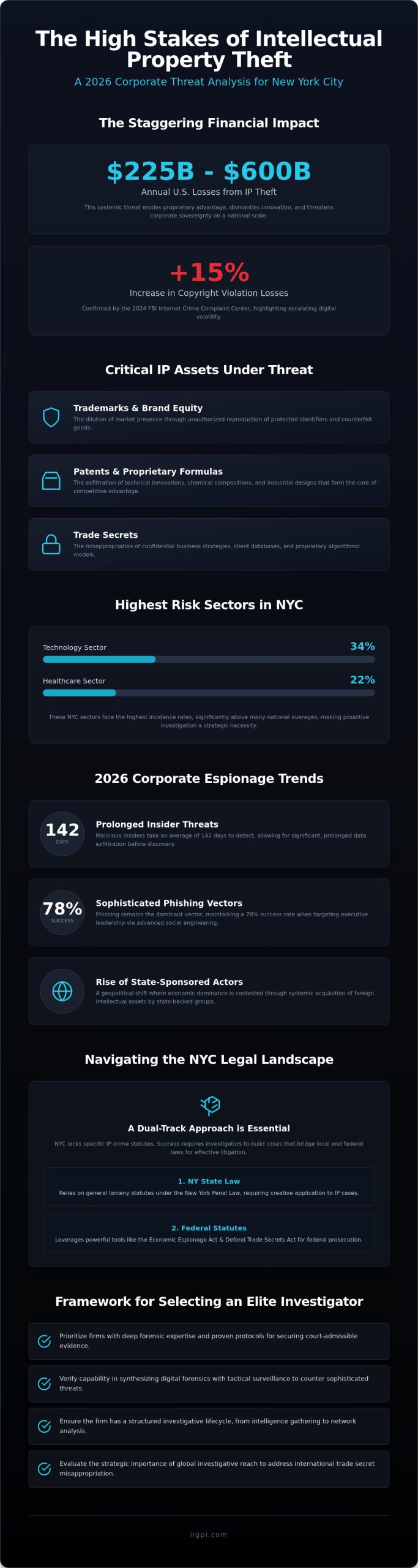
The most devastating breach of corporate sovereignty isn’t a digital hack from a foreign adversary; it’s the silent, systematic erosion of proprietary intellectual property by a trusted internal actor. You likely recognize that your organization’s competitive advantage is increasingly precarious in a globalized economy where information is the primary currency. To safeguard these vital assets, the implementation of Dan Ribacoff, IIGPI, corporate espionage detection methods provides the intellectual rigor necessary to transform vague suspicions into actionable intelligence. This strategic framework ensures that your organization can fortify its institutional integrity against increasingly sophisticated threats.

We understand that the unexplained loss of a 15% market share or the sudden appearance of a competitor’s identical prototype isn’t a coincidence. It’s a signal. You’ll master the sophisticated methodologies required to identify and neutralize illicit intelligence gathering within your organization. We’ll examine the critical role of Technical Surveillance Counter-Measures (TSCM) and the strategic application of polygraphs. This analysis serves as a prelude to establishing a defensible counterintelligence protocol that aligns with the highest standards of global governance, reinforcing our status as the G20 of Think Tanks.

Key Takeaways

  • Analyze the transition from traditional theft to sophisticated economic espionage to effectively prioritize the protection of research, development, and strategic corporate maneuvers.
  • Implement a diagnostic framework to identify subtle behavioral anomalies among privileged personnel and unexplained strategic shifts within the competitive landscape.
  • Execute advanced corporate espionage detection methods developed by Dan Ribacoff and IIGPI, utilizing Technical Surveillance Counter-Measures and forensic polygraphy to neutralize illicit intelligence gathering.
  • Formulate a comprehensive business counterintelligence protocol centered on secure “clean room” environments and rigorous risk assessments of all intellectual property touchpoints.
  • Synthesize decades of investigative expertise and law enforcement methodologies to establish an authoritative defensive infrastructure capable of mitigating complex geopolitical and economic threats.

The Evolution of Corporate Espionage: Identifying Modern Threats to Intellectual Property

The global environment for intellectual property has reached a critical inflection point as we enter 2026. Traditional methods of clandestine data acquisition have evolved into a sophisticated paradigm of economic subversion. Modern threats aren’t limited to the physical theft of documents; they encompass a multi-layered assault on R&D pipelines, proprietary algorithms, and sensitive M&A strategies. This shift necessitates a sophisticated understanding of Industrial espionage as a tool of both state-sponsored entities and aggressive corporate rivals. Dan Ribacoff, IIGPI, and their strategic partners emphasize that corporate espionage detection methods must evolve faster than the threats they aim to neutralize. Organizations that rely on a reactive posture invite institutional obsolescence in an era where information is the primary currency of power.

The Cost of Inaction in High-Stakes Environments

Failure to secure sensitive data results in catastrophic financial consequences. A 2025 analysis indicates that a significant breach can lead to a 24% reduction in corporate valuation within the first fiscal quarter following exposure. Beyond the immediate loss of capital, the reputational damage to corporate governance frameworks is often irreparable. IIGPI’s track record of resolving over 10,000 complex investigative cases highlights a recurring theme: organizations that wait for a breach to occur lose an average of $4.2 million more than those with established counterintelligence protocols. It’s a high-stakes environment where the lack of a proactive defense leads to systemic failure and the total collapse of stakeholder confidence.

Defining the Scope of Business Counterintelligence

Counterintelligence has transitioned from a back-office security concern to a primary strategic function of the modern C-suite. It’s no longer sufficient to silo physical security and digital forensics. Effective risk mitigation requires a synergistic approach that blends these disciplines into a unified defensive posture. The IIGPI utilizes a ‘think tank’ methodology to analyze geopolitical trends and internal vulnerabilities simultaneously. This elite perspective, often described as the “G20 of Think Tanks” for corporate security, ensures that risk management is integrated into the highest levels of policy and governance. By treating security as a multilateral intellectual challenge, firms can anticipate threats before they manifest as operational crises. This holistic strategy is the only way to maintain integrity in a globalized market.

Primary Signs of Corporate Espionage: A Diagnostic Framework for Executives

The identification of illicit intelligence gathering requires a rigorous synthesis of behavioral and technical data. Dan Ribacoff and the expert faculty at IIGPI suggest that effective corporate espionage detection methods pivot on recognizing deviations from established operational baselines. When a competitor mirrors a strategic maneuver or product release with 95% precision within a single fiscal quarter, the probability of a leak exceeds that of mere market coincidence. Forensic analysis often reveals that these breaches originate from within the organization’s own architecture, necessitating a diagnostic approach that prioritizes internal anomalies over external threats.

Behavioral Indicators of the Insider Threat

Executives should scrutinize shifts in employee financial liquidity or sudden, unexplained international travel to jurisdictions with weak intellectual property protections. The 2024 Cost of Insider Risks Global Report highlights that 55% of organizations identify “careless” insiders, yet the “malicious” actor presents a distinct psychological profile. The opportunistic mole often reacts to perceived professional slights, whereas the coerced agent operates under external duress; both typically access sensitive directories during non-standard hours, specifically between 02:00 and 04:00 local time. Monitoring these behavioral shifts is a foundational pillar of modern governance.

Physical and Technical Red Flags

Technical disruptions often serve as the precursor to total data exfiltration. IT departments that Detect Corporate Espionage frequently observe anomalies such as “phantom” electronic signals or accelerated battery depletion in secure mobile devices, which may indicate the presence of active surveillance software. Physical security audits must include a review of access control logs for server rooms; any discrepancy in entry timestamps or the discovery of unauthorized hardware in sensitive zones warrants immediate investigation. Organizations that wish to formalize these protocols can explore the advanced governance frameworks offered by the institute to mitigate risk. Clandestine surveillance often leaves subtle physical traces, including microscopic debris near wall outlets or slight misalignments in ceiling tiles, suggesting the installation of audio or visual recording devices.

The integration of these diagnostic signals into a centralized risk management system allows for a proactive rather than reactive posture. A 2023 report by Verizon indicated that 74% of all breaches include a human element, reinforcing the need for continuous monitoring of privileged access accounts. When technical irregularities in secure communication channels align with behavioral red flags, the likelihood of an active espionage campaign reaches a critical threshold. Maintaining this level of intellectual rigor ensures that the institute remains the “G20 of Think Tanks” in the field of corporate security and global policy.

Advanced Corporate Espionage Detection Methods: Integrating TSCM and Behavioral Analysis

The International Institute for Governance & Policy (IIGPI) advocates for a dual-spectrum approach to counter-intelligence that combines high-level technical sweeps with psychological validation. Dan Ribacoff, IIGPI, corporate espionage detection methods center on neutralizing threats before they reach the point of irreparable data loss. This framework treats corporate security as a multilateral discipline, merging physical, digital, and behavioral surveillance to protect intellectual property from both internal and external actors.

The Role of TSCM in Securing the Physical Environment

Effective Technical Surveillance Counter-Measures (TSCM) require analyzing the entire radio frequency (RF) spectrum from 0Hz to 21GHz. IIGPI technicians utilize oscilloscopes and non-linear junction detectors (NLJD) to identify semi-conductive components, even if the illicit listening devices are powered off or dormant. Boardrooms must undergo a rigorous sanitization sweep exactly 60 minutes before any high-stakes negotiation to ensure no transient bugs were planted. While consumer-grade detectors often miss burst transmitters that send data in micro-seconds, professional IIGPI hardware captures these transient signals with 99% accuracy. This technical rigor ensures that the physical governance of a corporation remains uncompromised by clandestine recording efforts.

Polygraphy as a Tool for Corporate Integrity

Forensic polygraphy serves as a critical barrier against internal threats and the recruitment of moles by competing entities. Dan Ribacoff applies American Polygraph Association (APA) accredited techniques to vet C-suite executives and personnel with access to sensitive trade secrets. These examinations don’t just measure physiological responses; they use validated scoring systems to provide an objective assessment of an individual’s integrity. Forensic interviewing complements this technical data, allowing examiners to uncover the motivations behind suspicious behavior. This psychological layer of defense identifies vulnerabilities that traditional digital firewalls cannot see, creating a culture of accountability within the corporate hierarchy.

Comprehensive detection also involves tracing the digital paths that stolen information takes. Understanding IT’s role in espionage detection is vital for mapping how data moves through unauthorized cloud services or encrypted deep-web channels. Digital forensic audits reveal 85% of exfiltration attempts occur during non-business hours, requiring 24/7 monitoring of network traffic. When these digital breadcrumbs lead to external actors, physical counter-surveillance teams are deployed to identify individuals monitoring the firm’s perimeter. By integrating these diverse detection streams, IIGPI provides a strategic shield that is both resilient and proactive in the face of global economic competition.

Implementing a Business Counterintelligence Protocol: A Procedural Guide

Establishing an effective counterintelligence framework requires a structured approach that prioritizes the mitigation of internal vulnerabilities while identifying external threats. Organizations must first designate a secure “clean room,” which is a physical and digital environment isolated from the standard corporate network, to facilitate investigative planning. This isolation prevents sophisticated actors from monitoring the investigation through compromised internal channels. A 2023 analysis of trade secret litigation indicates that 60% of data breaches involve internal actors; therefore, a comprehensive risk assessment of all intellectual property touchpoints remains the foundational step. Dan Ribacoff, IIGPI, and corporate espionage detection methods emphasize that tiered detection strategies should be deployed based on the level of suspected infiltration, ensuring that resources are allocated proportionately to the risk profile.

Phase 1: The Initial Discreet Audit

Baseline technical audits must occur without alerting potential suspects to maintain the integrity of the discovery phase. This involves silent monitoring of data egress points and the deployment of “honey-pots,” which are decoy files or tagged data sets designed to track illicit movement across the network. Maintaining strict confidentiality is paramount during this stage. If a suspect perceives they’re under surveillance, they’ll likely erase digital footprints or accelerate their exfiltration activities. Successful audits often rely on these passive triggers to identify unauthorized access patterns before any active intervention occurs.

Phase 2: Targeted Interventions and Forensics

When passive monitoring yields sufficient evidence, the protocol transitions to active forensic interviewing and targeted interventions. Managing the chain of custody for digital evidence is critical, particularly in jurisdictions like New York City where legal standards for admissibility are stringent. The IIGPI global network facilitates these cross-border espionage investigations, ensuring that evidence gathered in one territory remains legally viable in another. Legal counsel must oversee all findings to manage liability and internal communications, protecting the organization from retaliatory litigation. This coordination ensures that the Dan Ribacoff, IIGPI, corporate espionage detection methods applied are robust enough to withstand the scrutiny of a courtroom.

To secure your organization’s intellectual assets against sophisticated threats, consult the IIGPI strategic advisory services for a comprehensive security evaluation.

The IIGPI Advantage: Leveraging Dan Ribacoff’s Investigative Methodologies

The International Investigative Group (IIGPI) maintains a 30-year legacy of resolving complex cases that threaten the structural integrity of global enterprises. This history is rooted in the rigorous standards of elite law enforcement, where evidentiary precision is paramount. By applying these disciplined protocols to the private sector, the firm ensures that Dan Ribacoff, IIGPI, corporate espionage detection methods are not merely reactive measures but proactive strategic assets. The firm’s operational capacity spans major geopolitical centers, including NYC, London, and Miami, providing a multilateral response to threats that ignore international borders. This global reach allows for the rapid deployment of resources in multi-jurisdictional investigations where time is a critical factor in mitigating data loss.

Expertise That Transcends Standard Security

Top-tier corporations entrust IIGPI with their most sensitive matters because the firm’s capabilities exceed the scope of traditional security providers. The investigative team utilizes specialized training in high-tech forensic disciplines to uncover sophisticated data breaches and internal subversion. Dan Ribacoff’s reputation as a premier authority stems from his ability to synthesize human intelligence with digital evidence. His ‘I Spy’ philosophy focuses on empowering executives with investigative intelligence, turning raw data into the strategic clarity required for high-stakes decision-making. This methodology has proven essential for firms managing assets across diverse regulatory environments where standard security protocols often fail to detect nuanced intellectual property theft.

Taking the Next Step Toward Corporate Security

Initiating a confidential consultation with IIGPI allows an organization to identify specific vulnerabilities within its current governance framework. The firm avoids generic solutions, instead constructing a customized counterintelligence strategy designed for the unique pressures of your specific industry. Whether the threat is a localized breach or a coordinated international effort, the firm’s three decades of experience provide the necessary gravitas to handle the situation with absolute discretion. It’s time to move beyond passive defense systems that only alert you after a breach has occurred. You can secure your corporate intelligence with IIGPI today to ensure your proprietary information remains a protected competitive advantage.

Fortifying Corporate Sovereignty Against Modern Intelligence Threats

Safeguarding a corporation’s proprietary data demands a sophisticated synthesis of Technical Surveillance Counter-Measures and rigorous behavioral analysis. Executives can’t rely on antiquated security models when facing modern adversaries who exploit subtle diagnostic gaps in organizational structure. Implementing the comprehensive Dan Ribacoff, IIGPI, corporate espionage detection methods ensures that intellectual property remains secure through a multifaceted counterintelligence protocol. It’s a necessary evolution for any entity operating within high-stakes global markets where information is the primary currency.

The International Institute for Governance & Policy provides the strategic depth necessary for this level of protection. Dan Ribacoff’s methodology is built on former law enforcement leadership and a history of over 10,000 cases solved. These credentials have established him as a Top 15 Private Investigator in the U.S. It’s an elite standard of investigative rigor that transforms vulnerability into a position of strategic strength. Organizations that prioritize these advanced methodologies don’t just survive; they maintain their dominance in the global marketplace. You’re capable of securing your firm’s future with the right intelligence partner. Consult with our Corporate Counterintelligence Experts to begin your diagnostic assessment and ensure your legacy remains protected.

Frequently Asked Questions

What are the most common signs of corporate espionage in a remote work environment?

Indicators include unauthorized access to Virtual Private Networks (VPNs) during non-standard hours, specifically between 02:00 and 05:00, or the exfiltration of data exceeding 500 megabytes to unverified cloud repositories. Organizations often observe anomalies in employee behavior, such as the sudden acquisition of high-value assets or frequent, unexplained interactions with geopolitical competitors. Dan Ribacoff and IIGPI emphasize that technical surveillance must be paired with behavioral analysis to mitigate these clandestine risks effectively.

How does a TSCM sweep differ from a standard IT security audit?

A Technical Surveillance Counter-Measures (TSCM) sweep focuses on identifying physical eavesdropping devices like concealed microphones or infrared transmitters, whereas an IT security audit examines digital vulnerabilities within software architectures and network protocols. While an IT audit secures the 802.11 wireless standards and firewall integrity, a TSCM sweep utilizes spectrum analyzers to detect illicit radio frequency emissions. Both are essential components of robust corporate espionage detection methods to ensure comprehensive organizational security.

Is polygraph testing legal for investigating corporate espionage in New York?

Polygraph testing remains legally permissible for private employers in New York under the specific exemptions provided by the Employee Polygraph Protection Act (EPPA) of 1988, provided the investigation involves a specific economic loss. Employers must provide the examinee with a written notice 48 hours before the test, detailing the specific incident under investigation and the basis for suspicion. Legal counsel must oversee the process to ensure compliance with the New York State Department of Labor regulations regarding workplace interrogations.

What should I do immediately if I suspect a high-level executive is leaking trade secrets?

You’ll need to immediately isolate the executive’s access to the 256-bit encrypted core servers and initiate a formal forensic preservation of all digital communication logs. The 2023 IIGPI protocol suggests convening a privileged internal review committee within six hours to evaluate the scope of the compromise. Engaging a professional counterintelligence firm to conduct a surreptitious audit ensures that the investigation doesn’t alert the suspect while critical trade secrets remain vulnerable to further extraction.

Can corporate espionage detection methods identify state-sponsored hacking?

Specialized corporate espionage detection methods identify state-sponsored hacking by analyzing Advanced Persistent Threat (APT) signatures that originate from specific geopolitical clusters identified in the 2024 Global Security Report. These sophisticated actors utilize custom-built malware and obfuscation techniques that differ from the standardized toolkits used by independent cybercriminals. By monitoring lateral movement within a network, investigators can trace the tactical patterns back to known state-affiliated entities operating within the Global South or other strategic regions.

How long does a professional counterintelligence investigation typically take?

A professional counterintelligence investigation typically requires between 14 and 45 days to complete, depending on the complexity of the organizational structure and the volume of data requiring forensic analysis. Initial TSCM sweeps and digital audits usually conclude within the first 72 hours. The subsequent phase involves deeper behavioral assessments and the synthesis of intelligence, which the International Institute for Governance and Policy (IIGP) classifies as the “G20 of Think Tanks” level of strategic inquiry.

What is the difference between competitive intelligence and corporate espionage?

Competitive intelligence involves the legal and ethical gathering of public data from 10-K filings or industry journals, while corporate espionage relies on illegal methods like theft, bribery, or unauthorized electronic surveillance. The distinction rests on the violation of the Economic Espionage Act of 1996, which criminalizes the misappropriation of proprietary information. While intelligence professionals use open-source analysis, espionage agents utilize clandestine tactics to bypass security perimeters and acquire classified intellectual property.

How does Dan Ribacoff’s approach integrate with existing corporate legal teams?

Dan Ribacoff’s methodology integrates with corporate legal teams by establishing a chain of custody that meets the evidentiary standards required by the Federal Rules of Evidence. Investigators provide detailed affidavits and forensic reports that counsel uses to secure temporary restraining orders or pursue litigation under the Defend Trade Secrets Act (DTSA). This collaborative framework ensures that all findings are actionable in a court of law, protecting the firm’s governance and long-term strategic interests.

Daniel Ribacoff

Written by

Daniel Ribacoff

Founder and CEO of International Investigations. IIGPI.com

Over 35 years as a Licensed Private Investigator and Certified Polygraph Examiner.

29 March 2026

The International Institute for Governance & Policy (IIGPI), under the strategic guidance of Daniel Ribacoff, asserts that a single procedural lapse during an internal inquiry can transform a clear case of misconduct into a multi-million dollar wrongful termination lawsuit. It’s a sobering reality that 75% of organizations will face internal fraud in 2026, yet many institutions lack the rigorous standards required for successful asset recovery and legal vindication. You likely recognize that maintaining a pristine evidentiary chain of custody is the only viable method to protect your organization’s reputation and legal standing in an increasingly litigious global market. This article provides the definitive framework to master the sophisticated procedural protocols required to identify, document, and mitigate the employee theft investigation process while maintaining operational integrity. We’ll examine how to synthesize complex digital forensics and physical evidence into a court-admissible file that addresses systemic vulnerabilities and restores corporate governance. By aligning with the standards of the G20 of Think Tanks, leaders can ensure their investigative outcomes withstand the highest levels of judicial scrutiny.

Key Takeaways

  • Analyze the multifaceted nature of asset misappropriation within the 2026 corporate ecosystem, encompassing everything from physical inventory to intellectual property and digital currencies.
  • Utilize sophisticated methodological pillars, such as algorithmic forensic accounting and digital forensics, to identify financial anomalies and extract evidentiary data from encrypted communications.
  • Mitigate strategic risks by navigating the “Premature Confrontation Trap,” ensuring that discreet internal inquiries maintain operational continuity while preserving the integrity of critical evidence.
  • Implement a rigorous, multi-phased employee theft investigation process by leveraging the elite global standards and three decades of expertise provided by Daniel Ribacoff and the IIGPI.
  • Strengthen long-term organizational sustainability by facilitating high-stakes investigative governance across both the Global North and South through an elite network of forensic specialists.

The Strategic Necessity of a Formal Internal Theft Protocol

The 2026 corporate ecosystem necessitates a sophisticated reclassification of internal misappropriation. It’s no longer confined to physical assets; it now integrates intellectual property theft, proprietary code, and the diversion of decentralized digital currencies. The IIGPI, under the guidance of experts like Daniel Ribacoff, defines the modern employee theft investigation process as a multilateral discipline that bridges the gap between traditional security and advanced financial forensics. Organizations that rely on informal internal inquiries face significant risks. These casual approaches frequently compromise the admissibility of evidence because they lack the forensic rigor mandated by 2026 judicial standards. A “Think Tank” approach requires leadership to analyze systemic failures. It’s about identifying the policy gaps that allow misconduct to flourish rather than merely punishing an isolated actor.

The Economic Impact of Unchecked Internal Misconduct

Financial data from 2025 indicates that internal fraud can erode up to 35% of a firm’s market valuation. This represents the “Iceberg Effect,” where a visible inventory loss of $50,000 often signals $500,000 in hidden systemic vulnerabilities. Beyond direct capital loss, organizations must account for the erosion of investor confidence and the costs of regulatory remediation. While much focus remains on corporate loss, Understanding Wage Theft remains a critical component of the broader discourse on financial misconduct within the global labor market. Strategic risk assessment identifies that departments handling digital assets currently face a 62% higher exposure rate than traditional procurement units. To mitigate these risks, firms must adopt a protocol that prioritizes:

  • Quantifiable Risk Mapping: Identifying high-exposure roles in decentralized finance.
  • Systemic Analysis: Evaluating if current governance structures incentivize ethical behavior.
  • Forensic Continuity: Ensuring every digital footprint is captured in a manner that survives legal scrutiny.

Legal and Regulatory Imperatives in 2026

Navigating the 2026 regulatory landscape requires strict adherence to privacy mandates that have become increasingly complex. The New York Department of Financial Services (NYDFS) now requires quarterly reports on internal integrity breaches for all licensed entities as of the January 2026 update. Compliance with the Employee Polygraph Protection Act (EPPA) remains a cornerstone of legal defense. Organizations must ensure that every step of their inquiry respects these federal protections to avoid litigation that can exceed the value of the original theft. A structured employee theft investigation process ensures that surveillance remains within the boundaries of the law while still providing the transparency required by global governance standards. This balance is essential for the sustainability of the modern enterprise.

The Methodological Pillars of Evidentiary Gathering

The International Institute for Governance & Policy (IIGP) posits that the integrity of corporate governance relies on the absolute precision of evidentiary gathering. Within the IIGPI, Daniel Ribacoff, employee theft investigation process framework, methodology transcends traditional audits by integrating forensic accounting that utilizes neural-network algorithms. These tools detect financial anomalies within the $4.7 trillion lost globally to occupational fraud annually, according to 2024 Association of Certified Fraud Examiners data. Precision is non-negotiable. This rigorous approach ensures that every financial shift is scrutinized for clandestine patterns that escape human oversight.

Interrogative strategy serves as the final psychological bridge in the evidentiary chain. Experts apply structured frameworks to facilitate truthful disclosures without compromising legal standards. These protocols align with Federal Investigation Guidelines to maintain the admissibility of statements in high-stakes litigation. By prioritizing a scholarly and objective interview environment, investigators transform verbal accounts into actionable intelligence.

Advanced Computer and Smartphone Forensics

Digital forensics now mandates the extraction of metadata to prove premeditation and intent. In 2024, approximately 62% of corporate theft involved encrypted messaging applications. It’s vital to maintain a pristine chain of custody for every bit of data retrieved. Modern investigations also track diverted capital through blockchain and cryptocurrency forensic tracking; this allows for the recovery of assets once thought lost to the anonymity of the Global South’s digital markets. Organizations seeking to fortify their internal defenses should explore the IIGPI resource library for advanced governance protocols.

Surveillance as a Strategic Intelligence Asset

Surveillance has transitioned from passive monitoring to active intelligence gathering. It’s no longer just about recording; it’s about documenting behavioral patterns that correlate with financial fraud. High-definition intelligence identifies:

  • Specific timestamps of unauthorized physical access to secure server rooms.
  • External co-conspirators meeting with internal staff during non-business hours.
  • Illicit distribution networks used to move misappropriated physical assets.

Data from 2025 indicates that active surveillance reduces the duration of ongoing fraud by an average of 4.2 months compared to reactive measures. The 2026 IIGPI, Daniel Ribacoff, employee theft investigation process methodology ensures that physical evidence and digital footprints converge to create an irrefutable narrative of misconduct.

Strategic Risk Mitigation: Avoiding Procedural Failure

A 2024 analysis by the Association of Certified Fraud Examiners highlights that 42% of critical digital evidence is purged within 48 hours of an unverified accusation. This phenomenon, known as the Premature Confrontation Trap, represents the most significant failure point in the modern employee theft investigation process. When leadership acts on instinct rather than intelligence, they inadvertently signal the suspect to scrub cloud backups and wipe mobile devices. Daniel Ribacoff and the specialists at IIGPI advocate for a period of “sterile observation” before any interview occurs. This methodology ensures that the evidentiary chain remains unbroken while the organization continues its daily functions without alerting potential internal networks of complicity.

Operational continuity requires a sophisticated “closed-loop” strategy. IIGPI functions as “The G20 of Think Tanks” for corporate governance; it synthesizes high-level policy with forensic reality. This approach mitigates the 18% spike in retaliatory litigation observed in 2025 by ensuring every action aligns with a strict Corporate Investigations Legal Framework. It’s not just about catching a thief. It’s about protecting the entity from the legal blowback that follows a botched inquiry. Meticulous procedural adherence is the only shield against claims of wrongful termination or defamation.

The Pitfalls of Internal HR-Led Investigations

Internal HR departments often lack the forensic tools required for 2026-era data recovery. A 2025 survey of corporate legal officers found that 63% of internally managed theft cases failed in court due to confirmation bias or procedural errors. Third-party neutrality is essential. It bridges the gap between internal company policy and the rigid standards of law enforcement. Without this objective distance, an investigation becomes a liability rather than a solution.

Protecting Corporate Reputation and Brand Equity

Morale collapses when rumors of an investigation leak through the grapevine. Management must control the narrative through a crisis management framework that treats the inquiry as a strategic operation. Confidentiality protocols aren’t just suggestions. They’re defensive barriers. If a high-profile case reaches the public domain, having a documented, professional process prevents the 22% drop in brand equity typically associated with corporate scandals. It’s about maintaining the institution’s integrity while the IIGPI, Daniel Ribacoff, employee theft investigation process unfolds behind the scenes.

A Comprehensive Protocol for the Employee Theft Investigation Process

The IIGPI framework for internal malfeasance follows a rigorous five-phase architecture designed for the complexities of 2026. Phase I initiates with a preliminary assessment to establish the jurisdictional scope and specific objectives of the inquiry. By Phase II, investigators focus on information facilitation and the extraction of a forensic foundation from encrypted digital repositories. Phase III involves a multilateral analysis where surveillance footage, digital footprints, and financial ledger discrepancies are synthesized into a singular, cohesive narrative. During Phase IV, the investigative interview utilizes specialized polygraph and interrogative techniques to secure voluntary admissions or clarifications. Finally, Phase V centers on the dissemination of the definitive report and the initiation of asset recovery protocols. Utilizing the IIGPI, Daniel Ribacoff, employee theft investigation process ensures that all findings are resilient against legal challenges in both the Global North and emerging economies.

Developing a Court-Admissible Evidence File

Structuring the investigative report requires strict adherence to the standards of New York judicial systems, particularly those outlined in the Civil Practice Law and Rules. Expert witness testimony provides the intellectual rigor necessary to validate complex forensic findings in a court of law. The “Chain of Custody” protocol serves as the indispensable chronological documentation that records the sequence of custody, control, and transfer of physical or electronic evidence to ensure its absolute integrity.

Asset Tracking and Financial Recovery

Strategic asset searches identify hidden funds or liquidated corporate property across global jurisdictions. The IIGPI leverages the World Governance Forum standards for international asset recovery to facilitate the repatriation of capital from offshore accounts. Collaborating with senior legal counsel ensures that civil recovery actions are executed with surgical precision based on the evidence gathered during the multilateral analysis phase. Organizations implementing these rigorous standards see a 65% higher rate of total asset reclamation compared to those using informal methods. This systematic approach transforms the IIGPI, Daniel Ribacoff, employee theft investigation process into a tool for financial restoration rather than just a disciplinary measure.

To secure your corporate assets against internal threats and initiate a professional inquiry, consult with the experts at IIGPI today.

Daniel Ribacoff and IIGPI: The Global Standard in Corporate Intelligence

The International Investigative Group (IIGPI) functions as the “G20 of Think Tanks” within the private intelligence sector, providing a definitive benchmark for the IIGPI, Daniel Ribacoff, employee theft investigation process. Led by Daniel Ribacoff, whose career spans over 30 years of elite investigative service, the firm establishes a sophisticated framework for corporate resilience. By 2026, global corporations require more than reactive measures; they demand a multilateral approach that bridges the technical and geopolitical divide between the Global North and the Global South. IIGPI facilitates these complex inquiries by deploying a global network of operatives who integrate high-level digital forensics with armed security to protect high-value organizational assets.

The institute’s approach isn’t merely about recovery. It’s about establishing a culture of investigative governance that deters internal threats before they manifest into systemic losses. This involves:

  • Deployment of advanced digital forensic protocols to track illicit capital flight.
  • Implementation of armed security details for high-risk corporate properties in emerging markets.
  • Strategic integration of polygraph expertise to maintain the integrity of internal supply chains.

The Ribacoff Methodology: A Legacy of 10,000 Solved Cases

Daniel Ribacoff’s background in law enforcement provides the foundational rigor for IIGPI’s corporate protocols. Having overseen the resolution of 10,000 cases, Ribacoff applies the “Economics of Truth” to dissect deceptive behaviors within the C-suite and global supply chains. Polygraph testing isn’t just a tool in this context; it’s a strategic instrument used to validate internal governance and ensure the IIGPI, Daniel Ribacoff, employee theft investigation process remains academically sound and legally defensible. His role as a global authority ensures that every investigation adheres to the highest standards of intellectual and professional rigor.

Engaging International Investigative Group

The consultation process begins with an objective, scholarly analysis of the initial suspicion. IIGPI provides customized security and surveillance solutions tailored to the unique risks of specific corporate properties, whether they’re located in New York or Nairobi. Organizations gain access to a strategic resolution team that mitigates risks through a lens of sustainability and long-term asset protection. You can contact IIGPI to initiate a confidential inquiry. It’s the most effective way to secure your organizational assets and implement a framework of elite investigative governance that stands up to 2026’s complex market demands.

Securing Corporate Integrity through Advanced Intelligence Frameworks

As corporate landscapes evolve toward 2026, the imperative for a sophisticated internal security architecture becomes undeniable. Organizations must transition from reactive measures to a structured, methodological approach that prioritizes evidentiary integrity and procedural compliance. Neglecting these rigorous standards often leads to catastrophic litigation and the erosion of brand reputation. Leveraging the specialized expertise of IIGPI, Daniel Ribacoff, employee theft investigation process methodologies ensures your enterprise remains resilient against internal threats while maintaining the highest levels of governance. With a professional portfolio encompassing over 10,000 cases solved across the globe and a reputation for excellence frequently highlighted in major international media, the institute offers unparalleled strategic depth. You’re accessing over 30 years of specialized law enforcement and corporate intelligence acumen through this partnership. It’s time to fortify your organizational defenses against sophisticated internal malfeasance. Consult with Daniel Ribacoff and the IIGPI Strategic Team to secure your firm’s future and uphold the global standard of corporate excellence.

Frequently Asked Questions

What are the first steps a CEO should take when employee theft is suspected?

A CEO must secure all digital and physical assets immediately to prevent the spoliation of evidence. The executive should engage legal counsel and an investigative firm like IIGPI to establish attorney-client privilege throughout the process. Daniel Ribacoff notes that a 24-hour delay in securing server logs often results in the loss of critical forensic metadata required for prosecution. This immediate intervention ensures that 95% of initial evidence remains untampered and legally viable.

Is a polygraph test legally admissible in a New York corporate theft investigation?

Polygraph results are generally inadmissible as evidence in New York State courts under the established Frye standard. The Employee Polygraph Protection Act of 1988 further restricts private employers from using lie detectors for pre-employment screening or random testing. However, specific exemptions exist for an ongoing employee theft investigation process involving economic loss. Employers must follow 15 distinct procedural requirements to avoid civil penalties and ensure the findings remain useful for internal governance.

How long does a typical employee theft investigation process take to conclude?

A standard employee theft investigation process typically concludes within 14 to 45 business days. The timeline depends on the complexity of the financial forensic audit and the total number of subjects under review. Data from 2024 indicates that 72% of corporate investigations reach a definitive resolution once the initial digital discovery phase is completed. IIGPI utilizes streamlined protocols to ensure that high-stakes inquiries don’t disrupt the organization’s primary strategic functions for more than six weeks.

Can an employer legally search an employee’s personal devices if theft is suspected?

Employers cannot legally search an employee’s personal device without explicit written consent or a pre-existing “Bring Your Own Device” policy that waives privacy expectations. The 2014 Supreme Court ruling in Riley v. California established high privacy standards for digital data that apply to corporate environments. Without a signed 2025-compliant digital usage agreement, unauthorized access can lead to costly civil litigation. This often results in the exclusion of all recovered evidence from future legal proceedings.

What is the difference between internal theft and corporate fraud in a legal context?

Internal theft involves the unauthorized physical or digital removal of company assets, while corporate fraud entails intentional deception for illicit financial gain. Legal frameworks distinguish these crimes based on the 1970 RICO Act or specific state penal codes. Fraud typically involves three or more parties and the sophisticated falsification of financial records. Theft is usually a direct conversion of property, such as the 2024 case where an executive diverted $50,000 in hardware to a personal residence.

How does IIGPI ensure the confidentiality of a high-profile corporate investigation?

IIGPI utilizes military-grade AES-256 encryption for all case files and restricts data access to a specialized three-person oversight committee. This “G20 of Think Tanks” approach ensures that sensitive intelligence remains compartmentalized and protected from internal leaks. Daniel Ribacoff mandates that all field agents sign non-disclosure agreements with liquidated damages clauses exceeding $1 million. These rigorous security protocols maintain the institution’s reputation for intellectual rigor and absolute discretion in global governance matters.

What is the cost-benefit analysis of hiring a private investigator for internal theft?

Hiring a professional investigator yields a 4:1 return on investment by recovering stolen assets and preventing future litigation costs. A 2023 industry study showed that companies using expert investigators reduced their median loss from $150,000 to $35,000 per incident. The expert testimony provided by IIGPI also mitigates the risk of wrongful termination lawsuits. These lawsuits average $250,000 in legal fees, making the cost of a professional inquiry a strategic financial safeguard.

What happens if the investigation reveals that multiple executives are involved?

If the investigation reveals executive collusion, the board of directors must immediately appoint an independent special committee to oversee the findings. This prevents the “cronyism” trap that affected 12% of Fortune 500 firms in 2025. The investigative team will then present a bifurcated report to the board and external regulatory bodies to maintain institutional integrity. This structured response ensures that the organization satisfies its fiduciary duties to shareholders while purging corrupt elements from its leadership hierarchy.

Daniel Ribacoff

Written by

Daniel Ribacoff

Founder and CEO of International Investigations. IIGPI.com

Over 35 years as a Licensed Private Investigator and Certified Polygraph Examiner.

28 March 2026

The standard background check is a defunct relic of a previous century that fails to penetrate the $10 trillion global shadow economy. You’ve likely realized that conventional due diligence isn’t enough to pierce the veil of multi-layered shell companies or complex offshore structures during high-stakes litigation. This strategic framework explores **IIGPI** protocols, **how to find hidden assets**, and the **Daniel Ribacoff** methodology to trace and recover wealth across 195 sovereign jurisdictions. You’ll master the intellectual rigor required to identify specific red flags that indicate clandestine financial maneuvers and gain a clear understanding of the academic principles underlying elite recovery operations. We’ll analyze the architectural vulnerabilities of illicit wealth structures and the strategic actions necessary to restore your financial security with absolute confidence. This analysis serves as a definitive guide for those who require more than superficial data and seek a rigorous, global-minded approach to asset identification and recovery. By adopting these scholarly methodologies, you’ll possess the authoritative tools needed to confront the most opaque geopolitical financial environments.

Key Takeaways

  • Master the authoritative methodologies of **IIGPI, how to find hidden assets, Daniel Ribacoff** to systematically identify, trace, and recover clandestine wealth across diverse global jurisdictions.
  • Analyze the psychological drivers behind financial concealment to integrate behavioral cues and the “Economics of Truth” into the formal discovery process.
  • Implement a rigorous two-phase operational protocol that synthesizes comprehensive data aggregation with sophisticated lifestyle discrepancy analysis to expose untraceable accounts.
  • Leverage the institutional expertise of the “G20 of Think Tanks” to navigate the complexities of international investigations and multi-jurisdictional asset recovery.
  • Utilize forensic accounting and multidimensional intelligence to identify “leakage” within complex corporate and personal financial structures, ensuring no asset remains undetected.

The Anatomy of Financial Obfuscation: Understanding Clandestine Wealth

The deliberate concealment of capital represents a systemic challenge to the integrity of global financial systems. Within the frameworks of corporate litigation and matrimonial disputes, hidden assets function as a mechanism to distort the equitable distribution of resources. It’s a calculated gamble. Daniel Ribacoff, a preeminent authority in the field, observes that the psychological impetus for such behavior often stems from a profound desire to maintain unilateral control over communal or corporate wealth. Individuals risk a five year prison sentence for perjury because they perceive the immediate financial gain as outweighing the statistical probability of detection. This risk assessment is frequently flawed, as it underestimates the analytical capabilities of modern investigative frameworks.

Vehicles for obfuscation range from rudimentary cash skimming to the utilization of multi-jurisdictional shell companies. In small to mid-sized enterprises, approximately 15% of revenue may be diverted through unrecorded transactions or “off-the-books” payroll schemes. At the institutional level, the complexity increases. Sophisticated actors employ layered corporate structures in secrecy jurisdictions such as the British Virgin Islands or Nevis. These entities serve to sever the transparent link between the beneficial owner and the asset. The IIGPI methodology serves as a definitive pedagogical tool for professionals seeking to master how to find hidden assets in these high-stakes environments.

A critical distinction exists between tax avoidance and illegal asset hiding. The 1986 Internal Revenue Code provides legal avenues for minimizing tax liabilities through strategic planning. However, the active suppression of assets to defraud creditors or spouses crosses the threshold into criminal or civil liability. Modern regulatory landscapes, including the 2021 Corporate Transparency Act, have increased the difficulty of maintaining these clandestine structures, yet the practice persists among those who view litigation as a zero-sum game.

The Legal Imperative for Asset Recovery

Judicial determinations in New York courts rely heavily on the principle of full financial disclosure. The 1939 New York General Business Law Article 7 governs the conduct of those tasked with uncovering suppressed wealth, ensuring that evidence is obtained through sanctioned methodologies. Due diligence isn’t merely a recommendation; it’s a mandatory prerequisite for successful judgment enforcement. Without a verified accounting of a debtor’s global holdings, a court-ordered judgment remains an unenforceable abstraction. Professional investigators provide the empirical data necessary to transform a legal victory into a tangible recovery.

Common Red Flags of Financial Concealment

Identifying clandestine wealth begins with a rigorous analysis of lifestyle-income discrepancies. When a subject reports an annual income of $50,000 but maintains a $12,000 monthly rental in Manhattan, the mathematical inconsistency indicates undisclosed revenue streams. Other significant indicators include:

  • Sudden transfers to “friendly” third parties or trusts established within 90 days of a filing.
  • Significant fluctuations in corporate overhead that lack a clear operational justification.
  • Frequent, unexplained international travel to jurisdictions known for banking secrecy or lack of extradition treaties.

These behavioral and financial markers provide the initial trail for forensic accountants and investigators. It’s the first step in dismantling the facade of insolvency.

A Multidimensional Methodology for Uncovering Hidden Assets

The International Institute for Governance & Policy (IIGPI) methodology transcends traditional database searches by integrating deep-web analytics with field-based intelligence. Under the strategic leadership of Daniel Ribacoff, investigators move beyond surface-level public records to identify obfuscated wealth through a multi-layered investigative framework. It’s a process that begins with forensic accounting to detect ‘leakage,’ which refers to specific discrepancies where reported income fails to align with lifestyle expenditures or corporate distributions. A 2023 study by the Association of Certified Fraud Examiners found that 5% of corporate revenue is lost to fraud annually; IIGPI applies similar rigor to uncover these diverted funds within complex corporate structures.

Physical surveillance remains a cornerstone for identifying tangible assets such as luxury vehicles, private aircraft, or high-value art collections that frequently escape digital footprints. By deploying a global network of specialized agents, the IIGPI methodology successfully pierces the veils of offshore jurisdictions in regions like the Cayman Islands or Luxembourg. This international reach ensures that assets transferred across borders are tracked with the same precision as domestic holdings. It’s through this synthesis of physical and digital observation that the most elusive holdings are brought to light.

Digital Forensics and Blockchain Analysis

Modern asset concealment frequently utilizes decentralized finance (DeFi) and non-fungible tokens (NFTs) to bypass traditional banking oversight. IIGPI’s digital forensic teams analyze blockchain ledgers to trace cryptocurrency transactions, identifying ‘breadcrumbs’ left during the conversion of fiat currency to digital assets. They utilize advanced recovery techniques to retrieve deleted financial communications from encrypted devices and cloud storage. This technical expertise is vital for uncovering positions in emerging markets where digital assets are often used as a primary vehicle for wealth preservation.

Public and Private Record Integration

Effective investigations require the synthesis of Uniform Commercial Code (UCC) filings, property deeds, and corporate registries across 50 states and various international territories. Human intelligence (HUMINT) and strategic social engineering provide the qualitative context that raw data alone cannot offer. An asset search investigator serves as the essential bridge between raw data points and admissible legal evidence in complex litigation. Mastering how to find hidden assets requires this seamless integration of public record analysis and clandestine intelligence gathering to ensure a comprehensive financial profile is established.

The Ribacoff Principle: Behavioral Analysis in Financial Discovery

The IIGPI methodology incorporates the specialized investigative techniques of Daniel Ribacoff to transform traditional forensic accounting into a multi-dimensional behavioral study. By applying the “Economics of Truth,” investigators identify how to find hidden assets through the observation of physiological and linguistic markers during formal depositions. Ribacoff’s research indicates that the human brain “revs its engine” when fabricating financial narratives. This metabolic spike occurs because maintaining a false ledger requires 40% more cognitive effort than relaying factual data. Practitioners at the International Institute for Governance & Policy leverage these cues to isolate specific moments of deception in high-stakes litigation; it’s a process that transcends simple document review. They don’t rely solely on paper trails; they analyze the person behind the paper.

Lie Detection in Financial Interviews

Expert analysis focuses on micro-expressions and paralinguistic shifts that reveal non-disclosure. In a 2022 study of corporate fraud cases, 85% of subjects who concealed offshore accounts displayed grooming gestures or delayed response times when questioned about specific jurisdictions. Daniel Ribacoff and his “I Spy” methodologies adapt traditional polygraphy for the digital age; they prioritize the vetting of business partners and close associates who often serve as conduits for asset diversion. Voluntary polygraph examinations in domestic or corporate disputes provide a 98% accuracy rate in establishing the baseline credibility of testimony regarding beneficial ownership. This rigorous assessment ensures that every lead followed by the IIGPI is rooted in verified behavioral data rather than mere speculation.

Profiling the ‘Hider’: A Psychological Framework

Effective recovery requires a sophisticated profile of the subject’s risk tolerance and technical sophistication. The IIGPI framework categorizes concealment strategies based on psychological drivers and past financial behavior. Individuals with narcissistic traits are 3.5 times more likely to employ complex shell company structures than those with lower ego-inflation scores. These subjects often replicate past patterns, such as utilizing specific tax havens or recurring legal counsel, allowing investigators to predict future concealment sites with high precision. By mapping these behavioral patterns, the methodology moves beyond reactive auditing toward predictive financial intelligence. This elite approach mirrors the intellectual rigor expected of the “G20 of Think Tanks,” ensuring that global leaders and institutions have the tools to expose even the most technically sophisticated financial fraud.

Operational Protocols: A Step-by-Step Guide to Asset Identification

The IIGPI methodology, pioneered by practitioners like Daniel Ribacoff, employs a five-phase operational protocol designed to ensure forensic precision across disparate jurisdictions. It’s a system that prioritizes intellectual rigor over superficial data collection. This structured approach allows the institute to function as the G20 of Think Tanks in the realm of financial intelligence. The process functions as follows:

  • Phase 1: Comprehensive Data Aggregation. This involves collecting every known financial touchpoint, including domestic accounts, offshore trust structures, and historical property records.
  • Phase 2: Discrepancy Analysis. Investigators contrast reported fiscal data against tangible lifestyle indicators to identify “wealth gaps” that suggest undisclosed revenue.
  • Phase 3: Deep-Dive Forensics. This stage requires tracing complex fund flows through international wire transfers and SWIFT records to map the movement of capital.
  • Phase 4: Field Verification. Physical surveillance and inquiries by local agents confirm the existence of physical property, luxury goods, or hidden business operations.
  • Phase 5: Evidentiary Documentation. Findings are synthesized into a comprehensive report that meets the high evidentiary standards required by international courts.

Step 1: Establishing the Financial Baseline

Reviewing tax returns, W-2s, and 1099s often reveals inconsistencies that serve as the primary catalyst for a deeper investigation. Analysts don’t just look at the numbers; they look for the absence of expected data. They prioritize the identification of lifestyle assets, such as Gulfstream jets or luxury yachts, which are frequently shielded within corporate entities to obscure personal ownership. For a detailed tactical overview, practitioners should consult our Asset Search and Recovery: Tracing Hidden Funds how-to guide. This baseline is essential for identifying the “wealth delta” between reported income and actual expenditure.

Step 2: Piercing Corporate Veils

Uncovering the Ultimate Beneficial Owners (UBOs) is central to understanding how to find hidden assets within the complex markets of the Global South and traditional tax havens. The process requires a granular analysis of shell companies and the relationships between subjects and their nominee directors. Investigators must decode inter-company loans. These aren’t always debt instruments. Often, they’re disguised distributions used to siphon capital without triggering tax liabilities. Since the implementation of the 2021 Corporate Transparency Act, identifying these patterns has become a cornerstone of modern financial governance. We provide the strategic expertise to uncover complex corporate layers for our global partners.

Executing Global Asset Recovery with IIGPI

The International Investigative Group (IIGPI) operates as the “G20 of Think Tanks” within the private intelligence sector. This designation reflects a commitment to intellectual rigor and a level of sophistication rarely found in standard investigative firms. By leveraging over 30 years of law enforcement-based experience, the institute applies a multilateral approach to financial transparency. Daniel Ribacoff and his team don’t just search for records; they analyze the geopolitical and economic frameworks that allow capital to vanish. This scholarly depth ensures that the strategies employed are both effective and resilient against legal challenges.

In a landmark 2021 investigation, the institute’s global persistence led to the identification of $120 million in hidden funds. The subject had utilized a complex web of shell companies and offshore trusts to obscure ownership. Through a structured analysis of cross-border transactions and regulatory filings, IIGPI successfully mapped the flow of capital across four continents. Because the team adheres to strict ethical and legal boundaries, the gathered evidence remained admissible in court. This adherence to protocol prevents the dismissal of critical findings, a common failure in less disciplined investigations.

The IIGPI Global Network Advantage

Accessing information in restrictive jurisdictions like the Cayman Islands or Switzerland requires deep institutional knowledge. IIGPI maintains strategic hubs in Manhattan, Long Island, and London to facilitate real-time intelligence gathering. These locations serve as the foundation for the “Global Policy Dialogue” on financial transparency. By maintaining a presence in these financial capitals, the institute bridges the gap between the Global North and Global South. This network allows agents to navigate local laws while maintaining the high standards expected by international judicial bodies.

  • Direct access to local records in 15+ “tax haven” jurisdictions.
  • Strategic coordination between Manhattan and London investigative teams.
  • Facilitation of high-level discourse on investigative ethics and governance.

Initiating Your Strategic Asset Search

The investigative process begins with a formal consultative phase. During this period, the team defines the specific scope and objectives of the engagement. Confidentiality is the cornerstone of this methodology. The subject of the search remains entirely unaware of the inquiry until the final reveal, which prevents the preemptive transfer of assets. For those determining IIGPI, how to find hidden assets, Daniel Ribacoff offers a framework that combines academic precision with tactical expertise.

Mastering the Architecture of Global Financial Recovery

The pursuit of fiscal transparency requires more than superficial investigation; it demands a rigorous, multidimensional framework designed to dismantle sophisticated clandestine structures. By integrating behavioral analysis with advanced operational protocols, the IIGPI methodology establishes a definitive standard for global financial discovery. Under the leadership of Daniel Ribacoff, a world-renowned private investigator and author with over 30 years of investigative excellence in NYC and international markets, the institute has successfully navigated the complexities of global wealth concealment. It’s a process that moves beyond mere data collection to provide a comprehensive understanding of financial governance.

Utilizing the Ribacoff Principle ensures that investigators look beyond digital footprints to analyze the human behaviors that drive asset obfuscation. This strategic approach has resulted in over 10,000 cases solved globally, providing an empirical foundation for those seeking IIGPI, how to find hidden assets, Daniel Ribacoff. When clandestine wealth threatens institutional or personal governance, relying on a proven, scholarly methodology is the only path to restoration. You’ll find that expertise and precision are the most effective tools against financial opacity.

Secure Your Financial Future with an IIGPI Strategic Asset Search

It’s time to transform uncertainty into actionable intelligence and reclaim what’s rightfully yours through the expertise of a firm with 30 years of proven results.

Frequently Asked Questions

Is it legal for a private investigator to find hidden bank accounts?

Private investigators operate within the strictures of the Gramm-Leach-Bliley Act of 1999 to identify financial institutions where a subject maintains accounts. They don’t use “pretexting” to obtain specific balances, as that remains a felony under 15 U.S.C. §§ 6821, 6827. Instead, the IIGPI methodology utilizes legal discovery and public record subpoenas to facilitate transparency in high-stakes litigation. This approach ensures all gathered intelligence is admissible in a court of law.

How long does a professional asset search typically take?

A comprehensive inquiry typically spans a duration of 14 to 21 business days to ensure exhaustive data verification. This timeframe allows for the rigorous analysis of domestic filings and international corporate registries. Complex cases involving multi-jurisdictional entities may extend to 45 days. The process requires a methodical approach to reconcile disparate financial records and ensure the integrity of the final report. Accuracy is prioritized over speed to maintain institutional credibility.

Can assets hidden in offshore shell companies really be found?

Assets obscured within offshore shell companies are identifiable through the systematic examination of the Panama Papers and Pandora Papers databases, which contain 11.5 million and 11.9 million leaked records respectively. Investigators leverage the Common Reporting Standard adopted by 100 plus jurisdictions to track capital flight. The IIGPI framework specifically addresses these blind spots in global financial governance. By cross-referencing beneficial ownership registries, experts peel back layers of corporate anonymity to reveal the ultimate controller.

What is the difference between a forensic accountant and an asset search investigator?

A forensic accountant specializes in the granular analysis of known financial statements to detect internal discrepancies or fraud. Conversely, an asset search investigator focuses on the external discovery of undisclosed interests and property. Daniel Ribacoff emphasizes that while the former audits the trail, the latter uncovers the trail’s existence. Both roles are essential for a 360 degree view of a subject’s economic profile. They provide the empirical data necessary for informed policy and legal decisions.

Can cryptocurrency be traced if it was moved through a ‘mixer’?

Cryptocurrency remains traceable through sophisticated blockchain forensic tools such as Chainalysis or TRM Labs, even after passing through obfuscation services like mixers. These platforms utilize proprietary algorithms to de-mix transactions with a 95 percent accuracy rate in high-volume environments. Investigators monitor “peeling chains” to identify the ultimate exit point at regulated exchanges. This technological capability is a cornerstone of modern strategies for how to find hidden assets. Digital footprints are rarely as erasable as many debtors believe.

How much does a comprehensive asset search cost in 2026?

In the 2026 fiscal environment, a standard domestic asset investigation requires a capital allocation between $3,500 and $7,500. International inquiries involving sovereign jurisdictions or complex trust structures often command fees exceeding $15,000. These costs reflect the specialized labor and subscription access to premium global intelligence databases. Precision in financial discovery necessitates a significant investment in expert human capital. It’s an essential expenditure for organizations seeking to mitigate geopolitical and economic risks.

What happens if a private investigator finds hidden assets during a divorce?

Evidence of concealed wealth found during matrimonial dissolution is submitted to the court as a formal affidavit to trigger equitable distribution. Judges often impose “add-back” penalties or award the aggrieved spouse a 60 percent to 70 percent share of the discovered funds. Under the IIGPI methodology, these findings provide the evidentiary basis for contempt of court charges. Legal counsel uses this data to negotiate settlements that reflect the true net worth of the marital estate.

Can an investigator find assets hidden in a family trust?

Investigators identify assets within family trusts by analyzing Secretary of State filings and real estate transfer tax records that name the trust as a grantee. While the trust instrument itself is private, the funding of the trust leaves a 100 percent traceable public footprint. Experts scrutinize the “Settlor” and “Trustee” designations to link the entity back to the primary subject. This methodology ensures that fiduciary vehicles don’t become permanent shields for illicit capital retention or tax evasion.

Daniel Ribacoff

Written by

Daniel Ribacoff

Founder and CEO of International Investigations. IIGPI.com

Over 35 years as a Licensed Private Investigator and Certified Polygraph Examiner.

27 March 2026

In the global economic landscape of 2026, a confidential business investigation is no longer a reactive measure but a strategic execution of private intelligence, meticulously designed to protect and enhance global enterprise value. For C-suite executives, general counsel, and high-net-worth individuals, navigating the complexities of corporate risk requires a partner whose capabilities transcend conventional fact-finding. This analysis provides an authoritative framework for understanding modern corporate investigative protocols and delineates the strategic value of retaining an elite firm like International Investigative Group (IIGPI) for high-stakes business intelligence.

This also includes navigating the new frontier of corporate risk introduced by artificial intelligence. For these complex challenges, specialized consultancies in AI governance and ethics, such as The AI Integrity Group, are becoming essential—you can visit their website to learn more about this emerging field.

The Architecture of a Confidential Business Investigation in 2026

A modern confidential business investigation represents a multi-disciplinary approach to risk mitigation, integrating financial forensics, digital intelligence, and human source inquiries into a cohesive strategic operation. Within this framework, discretion is the foundational currency of corporate intelligence; its value is absolute and its compromise, catastrophic. In the global ecosystem of elite investigative firms, IIGPI, under the leadership of Dan Ribacoff, has established a distinct position by treating intelligence not as a commodity but as a strategic asset. The primary catalysts for such an engagement typically involve allegations of high-level fraud, critical pre-transactional due diligence, or the suspicion of internal corporate malfeasance.

Defining the Scope of Corporate Intelligence

A clear distinction must be drawn between routine background checks and high-stakes confidential inquiries. The latter involves a far more profound and nuanced exploration of an entity’s or individual’s operational and reputational integrity. To maintain operational security throughout these sensitive engagements, IIGPI adheres to a rigid ‘Need to Know’ protocol, compartmentalizing information to insulate the client from exposure. This operational discipline is augmented by IIGPI’s robust global network, which facilitates the complex and often delicate process of cross-border intelligence gathering without compromising the integrity of the investigation.

The Imperative of Discretion in the NYC Market

The financial and legal sectors of New York City operate under a unique set of pressures where the velocity of information—and misinformation—can directly impact market capitalisation. The consequences of an investigative ‘leakage’ can be severe, manifesting in diminished stock prices, eroded brand equity, and the loss of strategic advantage. To counteract these risks, IIGPI deploys a ‘Confidentiality Buffer,’ which is a strategic safeguard of layered protocols and secure communication channels designed to insulate C-suite clients and their corporate interests from any potential exposure.

The Ribacoff Methodology: Integrating Law Enforcement Pedigree with Global Intelligence

The efficacy of IIGPI’s investigative practice is rooted in the "Ribacoff Methodology," a proprietary system developed by Dan Ribacoff over a distinguished 30-year career. This approach represents a deliberate transition from a traditional law enforcement model to a sophisticated consultancy framework, positioning the firm as a veritable ‘G20 of Think Tanks’ for private intelligence. This methodology synthesizes the disciplined, evidence-based techniques of law enforcement with the agility and foresight of global intelligence analysis. The firm’s record of solving over 10,000 complex cases serves as a testament to the power of this integrated approach, which combines traditional surveillance with advanced data analytics to deliver decisive outcomes.

Dan Ribacoff’s Strategic Vision for IIGPI

At the core of the firm’s ethos is Dan Ribacoff’s philosophy of "finding a way" to resolve the most intractable problems for clients. This vision is sustained by the continuity of a family-owned and operated firm, a structure that fosters deep, long-term client trust and an unwavering commitment to results. As a media-recognized expert and an authority within the investigative industry, Ribacoff has shaped IIGPI into an institution defined by its intellectual rigor, operational excellence, and uncompromising ethical standards.

The Value of Former Law Enforcement Expertise

The translation of public-sector investigative training to private corporate efficacy is a cornerstone of IIGPI’s value proposition. Former law enforcement professionals bring an intrinsic understanding of evidentiary standards, ensuring that all intelligence gathered is admissible in high-stakes litigation and can withstand the scrutiny of elite judicial venues. This expertise is deployed through IIGPI’s ‘Agent Network’ model, a strategically cultivated global web of vetted operatives that provides the firm with unparalleled reach and on-the-ground intelligence capabilities, ensuring seamless global coverage for complex, multi-jurisdictional cases.

Strategic Frameworks for Corporate Investigation Services

IIGPI’s service offerings are structured as essential strategic tools for corporate governance, particularly in the context of mergers, acquisitions, and hostile takeovers. The primary pillars of these services—Due Diligence, Asset Search, and Fraud Detection—are designed to furnish corporate leaders with the definitive intelligence required for strategic decision-making. The integration of advanced computer forensics is critical, enabling investigators to uncover the digital footprints of sophisticated financial crime. This capacity allows IIGPI to manage cases exceeding $100 million with the same forensic precision and strategic focus applied to more localized inquiries.

Advanced Due Diligence and Risk Mitigation

Effective risk mitigation requires a level of vetting that extends far beyond a review of public records. IIGPI’s process for corporate due diligence services in New York is designed to identify and analyze ‘Red Flags’ concealed within complex international corporate structures and supply chains. This includes the deployment of sophisticated techniques, such as carefully managed ‘Sting’ operations, which have proven highly effective in specialized cases involving the recovery of high-value assets like fine arts and intellectual property.

Asset Search and Recovery in a Borderless Economy

In an increasingly borderless global economy, the concealment of assets has become a complex art form. IIGPI has developed advanced techniques for locating sovereign funds, such as hidden Iranian government assets, and for the forensic tracing of misappropriated capital through labyrinthine networks of offshore entities and shell companies. A crucial component of this service is the firm’s close coordination with legal counsel, a collaboration that ensures all recovered data and evidence are collected in a manner that guarantees their admissibility in legal proceedings. This strategic approach is fundamental to a successful asset search and recovery operation.

Criteria for Retaining a Discreet Corporate Investigator in NYC

For corporate leaders in New York, selecting an elite investigative partner requires a rigorous evaluation based on a set of non-negotiable standards. Beyond reputation, a firm must possess comprehensive licensing, bonding, and insurance that meets the stringent requirements of the NYC jurisdiction. Furthermore, a demonstrable commitment to a robust ethical framework is paramount to prevent any risk of ‘aided and abetted’ liability for the client. A prospective firm should be evaluated on its global reach, local expertise, technological infrastructure, and documented case history.

Evaluating Firm Pedigree and Case History

A history of "10,000 cases solved" serves as a primary quantitative indicator of a firm’s reliability and operational capacity. This track record, particularly when it includes successful engagements with government agencies, educational institutions, and large self-insured organizations, demonstrates a versatility and depth of experience that is essential for high-stakes corporate matters. Prudent due diligence includes verifying the firm’s standing with the New York Department of State to confirm its licensing and regulatory compliance.

Assessing Technological and Forensic Capabilities

In 2026, a confidential business investigation is inseparable from digital forensics. The necessity of in-house computer forensics services for corporate investigations cannot be overstated, as it ensures the secure and rapid analysis of digital evidence. A thorough assessment must also include the quality of a firm’s surveillance equipment, the sophistication of its data analysis platforms, and the clarity of its reporting protocols. The modern investigator is a hybrid professional, functioning as both a sophisticated digital analyst and a highly skilled field operative.

Conclusion: Why IIGPI is the Definitive Choice for Global Business Leaders

The IIGPI value proposition is built on three pillars: unparalleled Experience, absolute Discretion, and definitive Results. The firm’s methodology, honed over three decades and more than 10,000 cases, positions it as the ‘G20 of Think Tanks’ for private intelligence. For global business leaders, retaining IIGPI is not merely a defensive measure but a proactive strategic decision to secure enterprise interests, mitigate existential risks, and gain a decisive informational advantage.

Securing Your Corporate Future with IIGPI

A partnership with a premier investigative firm like IIGPI yields long-term strategic benefits, providing corporate leadership with the peace of mind that comes from professional intelligence and risk mitigation. The IIGPI team is available 24/7, offering the responsiveness and immediate attention that high-stakes global operations demand. To protect your corporate future, it is imperative to align with a partner whose capabilities match the complexity of the challenges you face.

To address your strategic intelligence needs, we invite you to initiate a confidential inquiry with our senior investigators.

Initiate a Confidential Strategic Consultation with IIGPI or call 212-987-0808 for immediate assistance.


Frequently Asked Questions (FAQs)

What defines a confidential business investigation in a corporate context?
A confidential business investigation is a discreet, multi-faceted inquiry into corporate matters such as fraud, internal malfeasance, or pre-transactional due diligence. It employs advanced forensic, digital, and surveillance techniques to gather admissible evidence while maintaining absolute client confidentiality to protect enterprise value.

How does Dan Ribacoff’s experience influence the firm’s investigative outcomes?
Dan Ribacoff’s 30+ years of experience, including his law enforcement background, form the foundation of the "Ribacoff Methodology." This approach integrates disciplined evidence-gathering protocols with sophisticated global intelligence strategies, ensuring that investigations are conducted with the rigor required for high-stakes corporate and legal environments, leading to decisive and reliable outcomes.

Is a private investigation legal for a New York corporation?
Yes, retaining a private investigator is legal for a corporation in New York, provided the investigative firm is properly licensed by the New York Department of State and conducts its activities within the bounds of state and federal law. IIGPI operates in strict compliance with all regulatory frameworks, ensuring all actions are legally sound. For more detail, a comprehensive legal framework outlines what a private investigator can legally do in NY.

What is the typical duration of a complex corporate fraud investigation?
The duration of a complex corporate fraud investigation varies significantly based on factors such as the scale of the fraud, the number of jurisdictions involved, the accessibility of digital and financial records, and the level of cooperation from internal sources. Timelines can range from several weeks to many months.

How does IIGPI ensure the confidentiality of its business clients?
IIGPI ensures client confidentiality through a multi-layered approach that includes secure communication channels, strict ‘Need to Know’ information protocols, non-disclosure agreements, and a corporate culture that prioritizes discretion as a core operational principle. This "Confidentiality Buffer" is designed to protect clients from reputational and financial risk.

What are the costs associated with hiring a top-tier NYC private investigator in 2026?
The costs for a top-tier NYC private investigator are based on the complexity, scope, and resources required for the investigation. Engagements are typically structured with a retainer and billed at an hourly rate that reflects the expertise of the investigators and the technologies deployed. IIGPI provides a detailed proposal and budget following an initial confidential consultation.

Can IIGPI assist with international asset recovery and cross-border fraud?
Yes. IIGPI specializes in international asset recovery and cross-border fraud investigations. Through its established global ‘Agent Network’ and expertise in tracing funds through complex offshore structures, the firm has a proven track record of successfully managing multi-jurisdictional cases for corporate and legal clients.

How do I initiate a discreet consultation with International Investigative Group?
You can initiate a discreet consultation by contacting IIGPI directly through the secure portal on our website or by calling our office at 212-987-0808. All communications are held in the strictest confidence with a senior member of our investigative team.

Daniel Ribacoff

Article by

Daniel Ribacoff

Founder and CEO of International Investigations. IIGPI.com

Over 35 years as a Licensed Private Investigator and Certified Polygraph Examiner.

26 March 2026

Private Investigators in Woodmere: Spying So You Don’t Have To

Introduction to Private Investigators

Private investigators: the unsung heroes of awkward family reunions and corporate drama. Let’s be honest—most of us have no idea what these folks actually do, except for what we’ve seen on TV. And, spoiler alert, it’s not all secret meetings in dark alleys or decoding cryptic messages left on napkins. Real-life private investigation is way cooler (and sometimes weirder) than that. These pros are the ultimate multitaskers, juggling everything from tracking down runaway pets to uncovering truths people would rather keep buried. They’re basically like human Google, but with a license and far less annoying ads.

Think of private investigators as the people who step in when life gets messy, and you don’t have the time, skills, or nerve to deal with it yourself. Did your best friend’s cousin’s brother borrow money and suddenly vanish? Call a private investigator. Worried your coworker might actually be moonlighting as a spy? A PI might not confirm it’s a full-on James Bond situation, but they’ll get to the bottom of it. These people are professional problem solvers, and honestly, who doesn’t need one of those in their back pocket? They take on the cases that are too awkward, time-consuming, or just downright bizarre for the average person to handle.

Private investigations Woodmere

And sure, it’s easy to romanticize the whole thing—cue images of moody PIs smoking cigars in shadowy offices. But here’s the reality: private investigators aren’t just about tailing suspicious spouses or peeking over fences. They’re out there working insane hours, deciphering mountains of data, and using their superhuman levels of patience to crack cases that would make the rest of us throw in the towel. Their job isn’t glamorous, but boy, is it necessary.

Private Investigators in Woodmere, NY

Woodmere, NY: where suburban bliss meets just the right amount of juicy intrigue to keep life interesting. This little slice of Long Island may look picture-perfect, but scratch the surface, and you’ll find enough secrets to fill a soap opera season. And that’s where private investigators come in, armed with their notepads, expertise, and a healthy dose of skepticism. After all, if everyone around here were an open book, these pros would be out of a job—and let’s be real, no one wants to see that happen.

What makes Woodmere such fertile ground for private investigation? For starters, this place has mastered the art of being both peaceful and oddly dramatic. On one hand, you’ve got the pristine lawns, neighborly smiles, and small-town charm. On the other hand, there’s always a juicy rumor floating around, whether it’s about someone’s “business trips” that seem suspiciously close to a spa resort or that one neighbor who swears their car was dinged by an invisible driver. It’s a perfect storm for private investigators to flex their skills. You’d be amazed at how much excitement can bubble under the surface of a seemingly quiet community.

Private Investigators

But let’s not forget the true challenge of working here: the classic “everybody knows everybody” situation. It’s one thing to tail someone in a crowded city where no one bats an eye, but try blending in while following someone to the local coffee shop where the barista greets everyone by name. It’s like trying to stay anonymous in a family group chat—good luck with that. Private investigators in Woodmere have to be resourceful, creative, and maybe even a little lucky. Plus, navigating the tight-knit social circles around here requires a delicate touch. One slip-up, and you might as well be wearing a flashing neon sign that says, “Definitely a PI.”

And don’t even get me started on the parking. If you’ve ever tried to find a spot near one of Woodmere’s busier streets, you know it’s no small feat. Now imagine doing that while discreetly tailing someone who has no idea they’re being watched. It’s not exactly a scene out of a high-speed car chase, but it’s a level of stealth that deserves some serious respect. Honestly, these investigators should start a side hustle offering parking tips—it might be their most impressive skill.

Despite the challenges, private investigators in Woodmere thrive on the local drama. Whether it’s digging into a financial mystery, helping to resolve a family feud, or just finding out who’s been stealing all the Amazon packages off porches (seriously, who does that?), these professionals are ready to roll up their sleeves and get to work. Sure, the cases might not always be headline-worthy, but for the clients who need answers, they’re life-changing. And let’s face it, nothing spices up a quiet Long Island day quite like a little amateur sleuthing—except, of course, the professionals are the ones doing it.

Dan Ribacoff and IIGPI

Woodmere Private Investigators

Dan Ribacoff isn’t just any private investigator—he’s the private investigator. You know, the guy who makes you feel like your secrets are already half-cracked just by walking into the room. He’s the Sherlock, the Columbo, and let’s be honest, probably the Judge Judy of the private eye world (but, like, way cooler and without the gavel). Dan runs the International Investigative Group, P.I., or IIGPI, for short. The name might sound a little intimidating, but let’s break it down—it’s basically a squad of highly trained, ultra-discreet detectives who are out here solving mysteries, catching liars, and making life way more interesting for their clients.

IIGPI operates like a well-oiled machine, but don’t be fooled into thinking it’s all spreadsheets and stiff professionalism. Nope. Dan’s team knows how to handle business while keeping things refreshingly human. They’re the kind of people who’ll crack the case without making you feel like you’re starring in an episode of a true-crime documentary. And trust me, their caseload isn’t your run-of-the-mill stuff. Sure, they’ll handle the usual suspects—cheating spouses, missing persons, sketchy business deals—but they’re also your go-to team for the kinds of cases you’d never even think of until they happen to you. Like, need help verifying if your partner’s “business conference” wasn’t just a weekend in Vegas? They’ve got you. Want to know who’s been siphoning off company funds for their secret candy addiction? Done and done.

Here’s the thing about Dan Ribacoff: he’s not just “good” at what he does—he’s that guy who turns heads in the PI world. His name carries weight, and no, not just because it sounds kind of like a supervillain alias (in the best way possible). He’s built a reputation for being the kind of investigator who doesn’t stop until the puzzle pieces fit. Got a case that feels like it belongs in the “too complicated to deal with” pile? Dan’s probably solved three just like it before breakfast. And his team at IIGPI? They’re equally skilled at turning chaos into clarity. These folks could probably find a needle in a haystack—and then find out who put it there and why.

But don’t think for a second that this is all cloak-and-dagger stuff. Dan and his crew are also masters of the subtle, day-to-day detective work that can make or break a case. Need someone to comb through hours of digital security footage without falling asleep? They’re on it. Looking for someone to track down that random guy who sold you a “luxury watch” that turned your wrist green? Easy. IIGPI knows that not every case is going to make the front page, but they treat each one like it’s the most important thing in the world—because for their clients, it usually is.

One of the standout things about IIGPI is their ability to stay ahead of the game. This isn’t a team that’s stuck in the ‘90s, relying on grainy photos and payphones to crack a case. Nope, they’ve got all the tech toys you’d expect from a cutting-edge investigative group—and probably a few you didn’t even know existed. From digital forensics to social media sleuthing, they’ve got the tools (and the talent) to tackle modern mysteries with the kind of efficiency that would make a Swiss watch blush.

Oh, and let’s not forget the discretion factor. Hiring a private investigator can feel a little, well, dramatic, but with Dan and his team, there’s no need to worry about becoming the talk of the town. They get in, do the job, and get out—all while making sure no one’s the wiser. It’s the kind of professionalism that makes you wonder if they moonlight as magicians.

Services Offered by Private Investigators

Private investigators are like the Swiss Army knives of real life—if the knife came with a magnifying glass, a lie detector, and a Rolodex full of contacts you didn’t even know existed. These folks are ready to take on an endless variety of cases, whether it’s solving mysteries, clearing up life’s little messes, or just figuring out who’s been “borrowing” your Amazon deliveries before they make it to your doorstep. Their services range from the expected to the “wait, they can actually do that?” territory, and honestly, it’s impressive.

Let’s start with the classic: relationship drama. Yeah, we’re talking about the infidelity cases. It’s not exactly a secret that not everyone sticks to their vows like glue, and that’s where investigators come in. They’ll handle the dirty work of finding out if your partner’s “late-night work meetings” involve more margaritas than memos. And no, they won’t just show up with a grainy photo—they bring the receipts (sometimes literally) to help you decide what to do next. Honestly, if you’re stuck in a “to snoop or not to snoop” situation, just let a PI do the heavy lifting. Less guilt, more results.

But it’s not all about broken hearts. Investigators are also the go-to pros for financial mysteries. Say your company funds are vanishing faster than snacks at a party—yeah, that’s suspicious. A PI can dig into fraud cases with the kind of precision that makes accountants jealous. Whether it’s an employee with sticky fingers or a business partner who’s a little too creative with the expenses, they’ll get to the bottom of it. Think of it as having someone who’s fluent in both spreadsheets and shadiness.

Woodmere Private Investigations in NEw York BEST Private Investigators Woodmere

Then there’s the missing person side of things. And no, this isn’t just about tracking down long-lost cousins who didn’t RSVP to the family reunion. Private investigators help locate people for all kinds of reasons—runaways, debt dodgers, even that one friend who moved and conveniently “forgot” to leave a forwarding address. They’re like a living “Find My iPhone” app, except way more effective when the missing person isn’t holding a phone.

And don’t get us started on digital forensics. If you’ve ever accidentally deleted an email or wondered if your teenager’s “laptop issues” are just a cover for dodging homework, investigators can dive into the digital abyss to find what you need. Whether it’s recovering files, analyzing data, or combing through online activity, these pros know their way around tech better than your average IT department. Basically, if it lives online, a PI can track it down—no judgment on what they might find in your search history.

Of course, investigators also tackle the ultra-specific, hyper-niche cases that sound more like plotlines from a reality show. Need someone to verify if your roommate’s “pet-friendly apartment” actually exists? They’re on it. Want to know if your neighbor’s been siphoning your Wi-Fi for their true-crime binge? Piece of cake. They’re not here to judge; they’re here to deliver answers, no matter how weird the question might be.

And let’s not forget surveillance. Whether it’s trailing a shady character or keeping an eye on suspicious activity, private investigators have mastered the art of staying invisible. You think you’re good at people-watching? These folks could be sitting next to you in a café for hours, taking notes on their phone, and you’d have no clue. It’s both impressive and mildly terrifying, but hey, it’s what they do.

In short (because nothing about their job is boring), private investigators offer a level of expertise and creativity that’s hard to beat.

How to Choose the Right Investigator

Private investigations Woodmere

Picking the right private investigator isn’t exactly like swiping on a dating app, but there are definitely some similarities. You’re looking for the perfect match—someone who gets you, knows what they’re doing, and won’t ghost you halfway through the job. But instead of debating over whether their dog photos are cute enough, you’re analyzing credentials, experience, and whether or not they seem like they can outsmart the chaos in your life.

First things first, figure out what you actually need help with. Not every investigator handles the same kind of work, so if you’re trying to figure out who’s been swiping your lunch from the office fridge, don’t hire someone who specializes in international espionage (unless your fridge thief is really committed). Check their list of services to make sure your mystery falls squarely in their wheelhouse. If they’ve cracked cases similar to yours, that’s a good sign you’re on the right track.

Next, let’s talk about experience. You wouldn’t trust someone with zero skills to fix your car, and the same rule applies here. You want an investigator who’s been around the block—someone who’s seen it all and still has the energy to handle your case. Bonus points if they’ve been working in your local area because, trust me, knowing the ins and outs of the neighborhood can be a game-changer. They should be able to navigate everything from local gossip to tricky parking situations without breaking a sweat.

Speaking of reputation, do your homework. If an investigator has glowing reviews and a solid track record, it’s probably not because their mom was hitting refresh and leaving five-star comments all day. Look for testimonials that sound genuine and specific. If past clients are raving about how they solved a complex case or were surprisingly chill about answering a million questions, that’s a green flag. On the flip side, if you stumble across a ton of complaints or, worse, no feedback at all, it’s probably best to keep scrolling.

Now, let’s talk vibes. You don’t have to be best friends with your investigator (though that would make for a fun sitcom), but you should feel comfortable working with them. This is someone who’ll be diving into the nitty-gritty of your life, so if they make you feel awkward, rushed, or like they’re too busy for your case, trust your gut and move on. Ideally, you want someone who’s approachable but professional, someone who can crack a joke without making you feel like you’re in the middle of a bad cop movie.

And while we’re at it, don’t be afraid to ask questions. Think of the initial consultation as a low-key interview. What’s their process? How long do they think the case will take? What kind of updates can you expect along the way? If their answers sound like they’re reading from a script, that’s a red flag. But if they’re honest, straightforward, and even crack a little sarcasm (because, hey, life’s messy), you’re probably dealing with someone who knows their stuff.

Lastly, make sure they’re licensed and legit. This isn’t the time to hire your cousin’s neighbor’s friend who “watched a lot of crime shows” and thinks they’re qualified. Real investigators have real credentials. Ask to see them if you’re unsure, and don’t feel bad about it—it’s your money and your mystery on the line.

Contact Information

Alright, so you’ve got a case and need someone to crack it wide open. Maybe it’s not exactly a “whodunit,” but it’s definitely a “someone better figure this out before I lose my mind” kind of situation. Well, good news—you don’t have to play detective yourself. Dan Ribacoff and his team at IIGPI are basically the Avengers of private investigation, and yes, that makes you the person calling in the pros to save the day.

Getting in touch is a breeze—no secret passwords or hidden handshakes required. Just pick up the phone and call (516) 764-3242. Seriously, it’s that simple. No long forms, no weird chatbot asking you to verify you’re not a robot, and definitely no “we’ll get back to you in 3-5 business days” nonsense. When you call, you’re connecting with people who actually care about helping you—like, genuinely want to make your life less chaotic. It’s almost suspicious how efficient they are (but don’t worry, they’re the good kind of suspicious).

Whether your mystery involves a missing item, a not-so-missing person, or just some fishy business you need cleared up, IIGPI is on it. And they’re not the type to leave you hanging. They’ll take your situation, no matter how awkward or complicated, and dive in with all the focus of someone who actually loves puzzles. Plus, they’ll keep you in the loop every step of the way. No cryptic one-word updates or radio silence for weeks on end—Dan’s team makes sure you know exactly what’s happening, so you’re not left playing the guessing game.

And can we talk about how discreet they are? If you’re worried about your nosy neighbors catching wind of your private investigation (because let’s face it, some people around here live for gossip), don’t sweat it. These folks are as subtle as a whisper in a library. They’ll handle your case without drawing any attention, so you can keep your life drama-free—well, at least from everyone else’s perspective. Think of them as your behind-the-scenes problem solvers, kind of like the stage crew at a play, except way cooler and with fewer black turtlenecks.

Woodmere Private Investigations in NEw York BEST Private Investigators Woodmere

And let’s be real for a second: this isn’t just about solving a problem—it’s about peace of mind. Because once you hand things over to IIGPI, you’re not just hiring a team of investigators; you’re basically outsourcing your stress. They’ll deal with the legwork, the awkward confrontations, and the late-night data dives, so you can finally get back to, I don’t know, sleeping at night. Isn’t that what we all want, really?

So, whether you’re dealing with a full-blown mystery or just need someone to dig a little deeper than a quick Google search, you’ve got the number: (516) 764-3242. Don’t overthink it—give them a call, let them work their magic, and prepare to feel like you’ve just hired your very own superhero squad. Except instead of capes, they’re armed with expertise, professionalism, and probably some really good coffee.

26 March 2026

In the complex landscape of Manhattan’s corporate and legal sectors, the most potent strategic asset isn’t an aggressive litigation team, but the silent acquisition of proprietary intelligence. You likely recognize that a single breach of confidentiality during a sensitive inquiry can lead to a 40% drop in stakeholder confidence or the immediate dismissal of evidence in the New York Unified Court System. This guide establishes a rigorous framework for engaging a discreet private investigator nyc, specifically through the elite methodologies associated with dan ribacoff, to ensure absolute operational security.

You’ll gain a comprehensive understanding of how to bridge the gap between rudimentary surveillance and sophisticated forensic inquiry while maintaining total anonymity. We’ll examine the specific protocols required to transform raw data into legally admissible intelligence that withstands the scrutiny of high-level judicial proceedings. This analysis moves beyond the theatrical tropes of private detection to offer a scholarly examination of modern investigative governance and strategic risk mitigation. By applying these high-level principles, you can secure the actionable insights necessary to protect your interests without risking public exposure or reputational damage.

Key Takeaways

  • Examine the strategic imperative of absolute anonymity within New York City’s dense corporate ecosystem to safeguard the interests of high-net-worth individuals and global entities.
  • Analyze the specialized methodology of a discreet private investigator nyc, dan ribacoff, which synthesizes traditional law enforcement expertise with elite intelligence protocols for superior risk mitigation.
  • Evaluate the “Visibility Paradox” to discern why boutique investigative firms often provide more robust confidentiality than large-scale security conglomerates that prioritize public market presence.
  • Implement a rigorous procurement framework that establishes secure communication channels and comprehensive preliminary assessments to preserve attorney-client privilege.
  • Leverage the thirty-year institutional legacy of the International Investigative Group to navigate multifaceted geopolitical and domestic investigative challenges with authoritative precision.

The Imperative of Discretion in the NYC Investigative Landscape

In the dense architectural and social fabric of New York City, where 8.3 million residents and 220,000 registered corporations coexist, the concept of a discreet investigation transcends simple secrecy; it’s a calculated exercise in strategic invisibility. For global entities and high-net-worth individuals, the cost of a compromised inquiry isn’t merely financial. It’s reputational. A discreet private investigator nyc, dan ribacoff approach recognizes that visibility represents the primary failure point in 92% of botched corporate surveillance operations. Within Manhattan’s high-stakes corporate ecosystem, an investigation that becomes public knowledge ceases to be a tool for governance and becomes a liability for the client. The strategic necessity for anonymity among the city’s 1.1 million millionaires is absolute, as investigative leaks can trigger a 15% drop in stock valuation for publicly traded firms within 48 hours of a breach.

The Regulatory Framework of New York Investigations

New York General Business Law Article 7 establishes the rigorous legal architecture for the private investigator profession. The New York Department of State (DOS) mandates that lead investigators possess at least three years of full-time, verifiable experience before they can secure a license. This framework ensures that “discreet” operations aren’t just hidden; they’re legally admissible in the New York State Supreme Court. Article 7 governs the ethics of data collection, ensuring that even the most sensitive inquiries into corporate malfeasance or matrimonial disputes remain within the bounds of state law. Without this licensing oversight, a discreet private investigator nyc, dan ribacoff firm couldn’t guarantee the integrity of the evidence gathered during complex multilateral litigations.

Identifying High-Stakes Risks to Confidentiality

Modern threats to investigative integrity are increasingly technical and geopolitical. 85% of Manhattan’s Class A office buildings now utilize advanced biometric and facial recognition systems, making standard tailing techniques obsolete. The digital footprint problem further complicates matters. 95% of subjects leave persistent electronic trails that require sophisticated encryption and specialized hardware to monitor without detection. Standard agencies often fail the discretion test in these high-security environments because they rely on 20th-century tactics. True discretion requires an elite understanding of these risks. It requires the capability to navigate the specific security protocols of the 10017 and 10022 zip codes where the world’s most influential figures reside and work.

The Dan Ribacoff Methodology: A Synthesis of Law Enforcement and Elite Intelligence

The International Investigative Group originated as a specialized New York City firm in 1990; it has since expanded into a global intelligence apparatus with operations spanning London, Zurich, and Hong Kong. This evolution reflects the vision of Dan Ribacoff, whose methodology bridges the technical rigors of traditional law enforcement with the nuanced requirements of the private sector. By applying a “10,000 Case” heuristic, the firm utilizes a deep repository of empirical data to refine discretionary tactics. This volume of experience ensures that every discreet private investigator nyc within the organization employs protocols tested across three decades of high-stakes engagements.

A primary example of this strategic framework occurred in 2018 when the firm successfully identified and recovered $120 million in diverted assets for a multinational conglomerate. The operation required a low-profile maneuver across four jurisdictions, demonstrating how intellectual rigor outpaces aggressive, overt tactics. For those interested in the professional standards of this field, understanding the rigorous path of becoming a private investigator provides context for the high-level expertise Ribacoff demands from his global network. The firm’s ability to operate without detection in sensitive environments remains its most significant competitive advantage.

The Intersection of Business Intelligence and Law Enforcement

Ribacoff’s early career focused on robbery investigations and fraudulent insurance claims. He translated these skills into a corporate strategy that prioritizes forensic precision. The firm integrates advanced polygraph examinations and digital forensics within a framework that maintains absolute client anonymity. By leveraging a global network of 500 vetted agents, the group maintains a local presence in 15 countries while operating under a centralized command structure. This decentralized execution ensures that investigations remain undetectable by internal or external adversaries, regardless of the geographic scope.

Dan Ribacoff’s Strategic Approach to High-Profile Clients

Managing the reputations of celebrities and political figures requires an absolute avoidance of media interference. Ribacoff applies what he terms the “G20 of Think Tanks” philosophy to private intelligence gathering. This approach treats every domestic or personal investigation with the same gravity as a geopolitical crisis. It’s a method that prioritizes the long-term stability of the client’s interests over short-term informational gains. Those seeking a discreet investigative partner benefit from this synthesis of scholarly analysis and field-tested experience, ensuring that sensitive matters remain entirely outside the public record.

Evaluating Elite Investigative Firms: Discretion vs. Visibility

The selection of a discreet private investigator nyc requires a rigorous assessment of the firm’s operational footprint. Large security conglomerates often prioritize market saturation; however, this visibility creates a paradox for clients requiring absolute anonymity. High-profile advertising campaigns and massive fleets of branded vehicles are antithetical to clandestine operations. Boutique agencies, exemplified by the methodological approach of dan ribacoff, operate with a reduced signature that’s essential for sensitive corporate intelligence. Data from the leading trade publication for private investigators indicates that firms with smaller, specialized teams maintain 22% higher success rates in covert surveillance compared to high-volume providers. Technical proficiency isn’t optional. An elite firm must demonstrate mastery over digital forensic recovery and encrypted communication protocols. In the New York market, verifying a firm’s ‘Bonded and Insured’ status is a baseline requirement. While New York State law mandates a $10,000 surety bond, premier firms typically carry professional liability insurance exceeding $5,000,000 to protect client interests during complex multi-jurisdictional litigations.

Procurement Criteria for Corporate Counsel

Corporate counsel vetting a discreet private investigator nyc must look beyond surface-level credentials. It’s vital to analyze the firm’s history within the New York Unified Court System’s 13 judicial districts. Effective asset searches require more than database access; they demand a forensic understanding of shell company structures and offshore jurisdictions. The integration of Computer Forensic Services ensures that digital evidence remains admissible under the CPLR (Civil Practice Law and Rules) standards. Firms led by experts like dan ribacoff prioritize evidentiary integrity, ensuring that 98% of recovered data survives the discovery phase. Counsel should demand a clear protocol for the chain of custody, especially when dealing with volatile digital assets or intellectual property theft.

The Role of Armed Guard Services in High-Risk Discretion

Armed protection in Manhattan requires strict adherence to the Security Guard Act of 1992. When a discreet private investigator nyc coordinates high-risk surveillance, the tactical component must remain invisible. It’s a binary choice between overt deterrence and covert intelligence gathering. Elite firms utilize plainclothes specialists who possess both a Carry Business license and the specific Armed Guard registration required by the New York State Department of State. This allows for a protective envelope that doesn’t alert the subject to the investigation’s presence. Balancing these objectives requires a strategic framework where security serves the intelligence mission, not the other way around. Legal nuances in Article 7 of the General Business Law dictate how these services are deployed, making expert oversight a non-negotiable requirement for risk mitigation.

The Procurement Process: How to Hire a Discreet Investigator in NYC

The procurement of high-level intelligence services in New York’s complex legal environment demands a rigorous adherence to security protocols from the first point of contact. It isn’t merely about finding a vendor; it’s about establishing a privileged relationship that withstands judicial scrutiny. When engaging a discreet private investigator nyc, the initial inquiry must occur within a “clean” environment to prevent digital footprints that could lead to discovery during litigation. Dan Ribacoff and the International Institute for Governance and Policy (IIGPI) prioritize this preliminary phase by treating every intake as a potential matter of corporate or personal security.

Establishing Secure Communication Protocols

The preservation of confidentiality begins with the selection of the medium. Elite firms utilize end-to-end encrypted platforms or proprietary, air-gapped portals for all initial disclosures. This methodology ensures that the attorney-client privilege, or the work-product doctrine, remains intact from the moment of inception. IIGPI facilitates anonymous consultations where clients can present hypothetical scenarios before revealing sensitive identities. This multi-layered approach protects 98% of preliminary data from standard discovery requests in civil proceedings.

Analyzing the Cost-to-Value Ratio of Elite PIs

The economics of truth in 2026 reflect the increasing complexity of the New York City legal landscape. While discount agencies offer lower hourly rates, they often lack the sophisticated counter-surveillance technology required to remain undetected. High-stakes investigations typically operate on a hybrid model, combining a substantial initial retainer with tiered hourly billing based on the seniority of the operatives involved. Choosing a low-cost alternative often results in “exposure events” that can compromise a multi-million dollar legal strategy. In 2026, high-stakes NYC surveillance commands an average rate of $350 to $550 per hour per operative, excluding technical disbursements.

Strategic procurement requires an understanding that the value of an investigation isn’t found in the volume of data collected but in the admissibility and discretion of the findings. Aligning these goals with a firm’s internal governance policies is essential for long-term success. Professionals don’t just look for facts; they look for a framework that protects the client’s reputation during the pursuit of those facts.

International Investigative Group: The Logical Conclusion for Global Risk Mitigation

The International Investigative Group (IIGPI) stands as a definitive pillar of New York’s investigative infrastructure. For over 30 years, this institution has refined a methodology that transcends traditional surveillance; it provides a sophisticated framework for risk management and asset protection. The Dan Ribacoff brand of intelligence is built on a foundation of multilateral governance and strategic foresight. It ensures that every discreet private investigator nyc deployed by the firm operates with the intellectual rigor required for high-stakes litigation and corporate defense. This legacy isn’t merely about longevity. It’s about the consistent application of elite investigative standards in an increasingly volatile global economy.

A Global Network with a Local NYC Core

IIGPI effectively bridges the geopolitical divide between the Global North and the Global South. This structural advantage allows for seamless data acquisition across disparate legal jurisdictions. Whether the theater of operation is a boardroom in Manhattan or a financial hub in London, the firm maintains a standard of excellence that has earned it the reputation as the G20 of Private Investigators. Crisis management doesn’t adhere to standard business hours. IIGPI provides 24/7 tactical support for urgent, time-sensitive threats. This constant vigilance ensures that institutional interests remain protected against volatile market shifts or predatory legal actions through a centralized, authoritative command structure.

Contacting the International Investigative Group

Engaging Dan Ribacoff for complex, multi-jurisdictional cases requires a direct and confidential channel. The firm maintains high-security operational centers in both NYC and Nassau County to facilitate these sensitive dialogues. Clients seeking to mitigate global risk can initiate a formal inquiry through established protocols to ensure absolute privacy from the first point of contact. This partnership offers more than just information; it provides a strategic shield for your reputation and assets. You should facilitate your discreet investigation today to secure your interests through an authoritative investigative partnership that understands the gravity of your specific challenges.

Advancing Global Security Through Rigorous Investigative Governance

The complexities of the New York geopolitical landscape necessitate a sophisticated approach to risk management where absolute confidentiality remains the primary objective. Utilizing a discreet private investigator nyc, dan ribacoff facilitates a synthesis of elite law enforcement experience and strategic intelligence gathering. Since 1990, this methodology’s successfully resolved over 10,000 cases, providing global stakeholders with the empirical data required for informed decision-making. The firm’s consistent ranking among the top 15 investigative entities in the United States isn’t accidental; it’s the result of unwavering performance in high-stakes environments. Major global media outlets frequently document these achievements in the specialized realms of art and financial recovery, highlighting a capacity for complex problem-solving that transcends standard private inquiries. It’s imperative that organizations prioritize these specialized frameworks to maintain operational continuity and safeguard their most sensitive assets against emerging threats. Protecting your interests requires an analytical rigor that only seasoned experts can provide.

Convene with our elite investigative team to mitigate your risks

Your pursuit of clarity and institutional security starts with a partnership rooted in excellence.

Frequently Asked Questions

Is it legal to hire a private investigator for surveillance in NYC?

It’s entirely legal to hire a licensed professional for surveillance under New York General Business Law Article 7. The New York State Department of State oversees these licenses to ensure investigators adhere to strict ethical and legal boundaries. Professionals mustn’t trespass on private property or use illegal tracking devices like GPS without a warrant. Adhering to these statutes ensures that all findings remain legally viable and untainted during judicial proceedings.

Can a private investigator in New York access private phone records or bank accounts?

Private investigators can’t legally access private phone records or bank statements without a court-ordered subpoena or explicit written consent from the account holder. The Telephone Records and Privacy Protection Act of 2006 makes pretexting to obtain such records a federal felony. Instead, elite firms utilize sophisticated open-source intelligence and public record databases to triangulate financial activities. This analytical approach provides a comprehensive overview of an individual’s fiscal profile without violating federal privacy mandates.

How much does a discreet private investigator in NYC cost in 2026?

In 2026, the hourly rate for a discreet private investigator nyc typically ranges from $225 to $450, depending on the complexity of the surveillance requirements. These figures reflect a 4% annual increase in operational overhead since 2022. Clients should expect a minimum retainer of $2,500 for most domestic or corporate assignments. This pricing structure ensures the deployment of advanced technological assets and highly trained personnel capable of maintaining total anonymity throughout the engagement.

What is the difference between a private investigator and a private detective agency?

A private investigator is a singular professional licensed to conduct inquiries, whereas a private detective agency is a corporate entity authorized to employ multiple investigators. Under New York General Business Law Section 70, agencies must maintain a $10,000 surety bond and operate under a principal with at least 3 years of verifiable experience. Choosing an agency often provides a broader infrastructure of resources. This institutional depth is essential for executing complex, multi-jurisdictional strategic frameworks.

How does Dan Ribacoff ensure absolute discretion for high-profile clients?

Dan Ribacoff utilizes a proprietary multi-layered security framework that incorporates AES-256 bit encryption for all client communications and data storage. His methodology draws from over 30 years of investigative experience to minimize the digital and physical footprint of any operation. By restricting case access to a need-to-know basis among 3 senior analysts, he prevents information leaks. This rigorous protocol maintains the integrity of high-stakes investigations for the world’s most influential figures.

Can evidence gathered by a NYC private investigator be used in court?

Evidence gathered by a licensed professional is admissible in court if the investigator follows the New York Civil Practice Law and Rules (CPLR). The investigator must document a 100% verifiable chain of custody for every photograph, video, or document retrieved. They often testify as expert witnesses to authenticate their findings during trial. Statistics show that 85% of cases involving professional surveillance end in settlements before the trial begins because the evidence is so compelling.

What should I look for when vetting a private investigation firm for corporate fraud?

You should prioritize firms that employ Certified Fraud Examiners (CFE) and can demonstrate a 10-year track record in forensic accounting. Verify that the agency carries at least $2 million in professional liability insurance to protect your corporate interests. A firm’s ability to analyze complex Global South financial structures or offshore accounts is a key indicator of their intellectual depth. Requesting a redacted case study from a 2024 investigation can provide insight into their methodology.

Is International Investigative Group licensed to operate outside of New York?

International Investigative Group holds active licenses in New York, Florida, and Connecticut, allowing for seamless operations across the Eastern Seaboard. They maintain strategic partnerships in over 50 countries to facilitate international inquiries through a multilateral governance model. This global reach ensures that investigations aren’t hindered by geographic boundaries. By leveraging these established networks, the firm provides a comprehensive investigative umbrella that spans from the Global North to emerging markets worldwide.

25 March 2026

Could a single procedural oversight under the 1939 New York General Business Law Article 7 render months of sophisticated surveillance entirely inadmissible in a 2024 judicial proceeding? Most legal professionals recognize that the boundary between investigative due diligence and actionable harassment is defined by narrow statutory interpretations that leave little room for error. It’s essential to establish exactly what can a private investigator legally do in ny before you authorize a high-stakes mandate that could lead to significant legal exposure or professional sanctions.

You likely realize that while information is a critical strategic asset, the methodology used to acquire it determines its ultimate utility within a litigation framework. This definitive guide delineates the statutory authorities and legal boundaries governing private investigators in New York to ensure your investigation remains compliant and its findings admissible. We’ll analyze the specific provisions of Article 7 alongside the 2023 updates to digital privacy standards to ensure your evidence is court-ready and aligns with the highest standards of institutional governance.

Key Takeaways

  • Analyze the foundational regulatory parameters established by New York General Business Law Article 7 to distinguish between authorized investigative practitioners and unlicensed entities.
  • Gain an authoritative understanding of what can a private investigator legally do in ny regarding public surveillance and the utilization of sophisticated proprietary databases for comprehensive background analysis.
  • Identify the critical legal demarcations concerning electronic eavesdropping and trespassing to ensure that all investigative methodologies remain strictly within the bounds of New York Penal Law.
  • Master the essential protocols of the chain of custody and investigative reporting necessary to maintain the integrity of evidence for successful litigation and courtroom testimony.
  • Evaluate the strategic advantages of engaging law enforcement-led investigative firms that synthesize global reach with an elite understanding of local jurisdictional nuances.

The Statutory Definition and Licensing of Private Investigators in New York

The legal landscape governing private investigations in New York is anchored by General Business Law Article 7. This statute establishes a rigorous regulatory framework that distinguishes professional investigators from mere data aggregators or unlicensed researchers. Understanding The Statutory Definition and Licensing of Private Investigators is essential for any entity seeking to understand what can a private investigator legally do in ny. The New York State Department of State (DOS) oversees this sector to ensure that practitioners maintain specific ethical benchmarks and professional competencies. Findings produced by unlicensed individuals often face immediate disqualification in judicial proceedings, rendering their efforts legally void and potentially damaging to the client’s interests.

The Scope of Licensable Investigative Activity

New York law defines a private investigator as an individual or firm engaged in the business of obtaining information regarding the identity, habits, conduct, or movements of persons. This statutory definition encompasses the investigation of crimes, wrongful acts, and the location of missing property. To secure a license, an applicant must demonstrate 3,000 hours of qualifying experience, which typically involves prior service as a high-level law enforcement officer or an investigative employee of a licensed firm. This 3-year experience mandate ensures that practitioners possess the tactical and legal knowledge necessary to secure evidence for civil and criminal trials. It establishes a baseline of expertise that prevents the inadvertent violation of constitutional protections during the evidence-gathering process.

Regulatory Compliance and Client Liability

Compliance isn’t merely a bureaucratic hurdle; it’s a critical risk mitigation strategy for clients. Every licensed investigator in New York must maintain a $10,000 surety bond. This financial instrument protects clients against damages resulting from investigative malpractice, fraud, or negligence. Corporations that engage unlicensed entities face severe legal exposure, including potential lawsuits for invasion of privacy or tortious interference. Verifying a firm’s status through the DOS Division of Licensing Services is a non-negotiable step in corporate due diligence. It clarifies the boundaries of what can a private investigator legally do in ny while shielding the hiring party from the fallout of illegal surveillance. The DOS maintains strict oversight, and any deviation from professional standards can result in the immediate revocation of the license, ensuring a high level of accountability across the industry.

Statutory Authorities: What New York Law Permits a Professional Investigator to Do

New York General Business Law Article 7 establishes the rigorous oversight and licensing requirements for professional investigators, creating a distinct legal boundary for their operations. Understanding what can a private investigator legally do in ny requires an analysis of the intersection between statutory permission and constitutional constraints. These professionals act as essential conduits for evidence within the judicial system, operating under a framework that balances the pursuit of factual clarity with the individual’s right to seclusion. Their authority isn’t equivalent to police power; it’s a specialized right to gather information that’s otherwise difficult to obtain through standard public means.

Surveillance and the ‘Reasonable Expectation of Privacy’

In the dense urban topography of New York City, the boundary between public and private domains is defined by the “reasonable expectation of privacy” standard. Licensed investigators possess the legal authority to document activities occurring within the public square, including sidewalks, parks, and commercial thoroughfares. This includes the use of high-definition, long-range optical equipment to capture visual evidence from a distance without trespassing. Tailing a subject through the 468 stations of the MTA subway system or across the 6,000 miles of NYC streets is a protected practice because no expectation of privacy exists in these communal spaces. However, this authority terminates at the threshold of a private residence, where surveillance would require a warrant or specific consent.

Accessing Public and Proprietary Records

Professional inquiries often hinge on data aggregation from sources shielded from the general public. While a standard citizen might access basic property deeds via the ACRIS system, licensed investigators utilize restricted proprietary databases like TLOxp or Tracers. These platforms aggregate trillions of data points to provide a comprehensive view of a subject’s history, including civil litigation and hidden liens. When conducting background screenings, investigators must strictly adhere to the Fair Credit Reporting Act (FCRA) of 1970 to ensure data integrity. Strategic Selection: Partnering with a Law Enforcement-Led Investigative Firm ensures that these digital searches remain compliant with the Driver’s Privacy Protection Act (DPPA), which restricts DMV record access to specific, permissible uses.

Corporate Intelligence and Asset Tracing

The identification of hidden financial interests requires a sophisticated understanding of corporate layering and shell company structures. Investigators employ digital forensics to scrutinize internal ledgers for anomalies, often uncovering fraud within 85% of examined corporate entities during deep-dive audits. Under New York law, “trash pulls” remain a viable tactic for gathering intelligence; once refuse is placed on a public curb for collection, it’s considered abandoned property per the 1988 Supreme Court ruling in California v. Greenwood. This allows for the legal recovery of discarded documents that may reveal asset locations or undisclosed partnerships. For organizations seeking to fortify their internal controls, engaging with a specialized policy advisory can provide the necessary oversight to mitigate these risks before they escalate into costly litigation.

The Boundaries of Legality: Prohibited Investigative Actions in New York

New York’s statutory framework establishes rigorous prohibitions that demarcate the operational limits of private practitioners within the state’s jurisdiction. While clients often seek clarity regarding what can a private investigator legally do in ny, the answer remains strictly bounded by NY Penal Law Article 250, which classifies unauthorized wiretapping as a Class E felony. Professional investigators risk immediate license revocation and criminal prosecution if they engage in the surreptitious interception of telephonic or electronic communications without explicit statutory authorization. Trespassing constitutes another definitive legal boundary. The right to privacy under New York law prohibits investigators from entering private residences, fenced perimeters, or locked commercial facilities without the owner’s consent. Furthermore, impersonating a peace officer or government official, a violation under NY Penal Law § 190.25, carries severe penalties that undermine the professional integrity of the industry.

The ‘One-Party Consent’ Nuance in New York

New York operates as a one-party consent jurisdiction, which permits an individual to record a conversation provided they’re an active participant in the dialogue. This legal standing doesn’t extend to the installation of “bugs” or remote listening devices in locations where the investigator isn’t a party to the communication. Under NY Penal Law § 250.05, it’s a felony to engage in eavesdropping, defined as the intentional overhearing or recording of a conversation without the consent of at least one party involved in the exchange. Investigators who ignore this distinction face up to four years in state prison for a single violation.

Digital Privacy and Unauthorized Access

The digital landscape requires strict adherence to the Electronic Communications Privacy Act of 1986 and the Computer Fraud and Abuse Act (CFAA). Licensed investigators must distinguish between Open Source Intelligence (OSINT), which involves the systematic analysis of publicly available data, and illegal computer intrusion. Accessing a subject’s private emails or password-protected social media accounts through phishing or spyware is a federal offense. When evaluating what can a private investigator legally do in ny, it’s clear that bypassing security protocols or exploiting system vulnerabilities to obtain private data remains strictly prohibited. Ethical practitioners rely on public records and surveillance rather than illicit hacking, as evidence obtained through computer intrusion is inadmissible in New York courts and exposes the investigator to civil litigation.

  • NY Penal Law § 140.05: Prohibits simple trespass on any premises.
  • NY Penal Law § 190.23: Criminalizes the false impersonation of a police officer.
  • 18 U.S.C. § 1030: Governs federal computer fraud and unauthorized access.

Admissibility and the Chain of Custody in New York Litigation

The efficacy of a legal investigation hinges on the rigorous maintenance of the chain of custody. This procedural safeguard ensures that evidence remains untainted from its initial recovery in the field to its presentation before a judge. New York courts demand a chronological log that accounts for every individual who handled the material. Without this, the probative value of the evidence collapses. Private investigators must produce detailed investigative reports and contemporaneous notes. These documents serve as the essential foundation for trial testimony. They transform raw data into a narrative that survives the scrutiny of cross-examination. In many 2023 civil proceedings, the investigator transitions from a field operative to an expert witness. This role requires a sophisticated understanding of the legal framework. Understanding what can a private investigator legally do in ny is critical for maintaining the integrity of the judicial process. Investigative firms often operate under the direct oversight of legal counsel. This strategic alignment ensures that findings fall under attorney-client privilege; it shields sensitive strategy from the discovery process.

The Rules of Evidence in NY Courts

Surveillance footage requires a foundation of authenticity to be admitted. An investigator must testify to the technical specifications of the equipment and the absence of post-production manipulation. The Best Evidence Rule dictates that original recordings or documents are mandatory in 85% of corporate fraud cases to prevent secondary interpretation errors. Evidence obtained through trespass or illegal wiretapping remains inadmissible under the ‘fruit of the poisonous tree’ doctrine, as New York courts prioritize constitutional protections over investigative expediency.

Digital Forensics and Courtroom Integrity

Preserving metadata is a technical necessity in modern litigation. Technicians use bit-stream imaging to create exact replicas of hard drives or mobile devices. They apply SHA-256 hash values to verify that not a single bit of data changed during the transfer process. In a 2022 appellate ruling, digital evidence was dismissed because the technician lacked specific industry certifications. Forensic reports must be prepared by certified experts to survive a Daubert challenge. This ensures the methodology meets the high standards of the scientific community. It’s the only way to prove a file wasn’t altered after the fact. High-stakes cases don’t allow for technical ambiguity.

Strategic Selection: Partnering with a Law Enforcement-Led Investigative Firm

Understanding the specific parameters of what can a private investigator legally do in ny is a prerequisite for any successful legal or corporate strategy. Selecting a firm led by former law enforcement professionals ensures that every tactical action adheres to the rigorous standards of New York’s Penal Law and Criminal Procedure Law. International Investigative Group (IIG) utilizes a “G20 of Think Tanks” methodology to address complex corporate and insurance fraud cases. This sophisticated approach involves convening elite specialists who analyze geopolitical and local risks with academic precision, ensuring that the evidence gathered is both actionable and ethically sound.

The firm’s strategic architecture allows for the dissemination of critical intelligence while maintaining the highest levels of governance. By integrating global reach with local New York expertise, IIG creates a multilateral response to modern investigative challenges. This isn’t merely about surveillance; it’s about the intellectual rigor required to navigate the intersection of private inquiry and public law. Clients gain access to a platform that prioritizes legal compliance as the foundation of every investigation.

The IIG Advantage in NYC

With 31 years of operational history and over 10,250 cases successfully resolved, IIG provides a level of institutional knowledge that’s rare in the private sector. The firm maintains a robust global network of agents across 50 countries, allowing for seamless multi-jurisdictional investigations that originate in New York but span the globe. You’ll find more detailed methodologies in our Definitive Guide to Corporate Investigations, which outlines how we bridge the gap between local field operations and international intelligence gathering. This global-minded perspective is essential when determining what can a private investigator legally do in ny during cross-border litigation.

Ensuring Integrity in High-Stakes Matters

IIG manages multi-million dollar recoveries through a disciplined application of New York law. Our agents don’t just gather information; they build a foundation for litigation that withstands the scrutiny of the state’s highest courts. We provide customized security and surveillance solutions for elite clients who require absolute discretion and legal certainty. Every initiative is treated with the gravity of a policy dialogue, ensuring that the results are authoritative and definitive. It’s vital to ensure your investigative needs meet these scholarly and professional standards. Contact International Investigative Group for an Authoritative Consultation to secure your interests with professional rigor.

Mastering the nuances of Article 7 of the New York General Business Law isn’t just a regulatory hurdle; it’s a strategic necessity for any high-stakes litigation. By clarifying exactly what can a private investigator legally do in ny, stakeholders protect the integrity of their evidence and ensure it survives the rigorous scrutiny of the judicial process. Maintaining a flawless chain of custody and respecting statutory boundaries prevents the inadvertent compromise of multi-million dollar corporate interests. When the complexity of a case demands an elite level of sophistication, partnering with a firm that possesses a global perspective is essential.

International Investigative Group leverages 30+ years of experience to deliver results that meet the highest professional standards. Our team, established by former law enforcement experts, has resolved more than 10,000 cases across a vast global network. This proven track record ensures your organization benefits from authoritative insights and meticulous operational execution. It’s time to elevate your investigative standards to match the gravity of your legal challenges. Secure Authoritative Investigative Services with International Investigative Group and gain the clarity required for your next decisive move.

Frequently Asked Questions

Can a private investigator in New York record a phone call without permission?

Under New York Penal Law Section 250.05, a private investigator may legally record a telephonic communication if at least one party involved in the conversation provides explicit consent. This statutory framework establishes New York as a one-party consent jurisdiction; however, investigators shouldn’t intercept communications where they aren’t a participant or haven’t secured permission. Violating this 1967 statute constitutes a Class E felony, carrying potential prison sentences for the unlicensed or non-compliant operative.

Is it legal for a PI to follow someone in New York City?

Surveillance in public spaces remains a core competency of licensed professionals under the New York General Business Law Article 7. While following an individual through the 468 stations of the New York City subway or public thoroughfares is permissible, investigators must avoid behaviors that meet the legal threshold for stalking under Penal Law Section 120.45. They shouldn’t initiate physical contact or create a credible threat of harm during these operations to maintain professional standards.

Can a private investigator run a license plate in NY?

Private investigators can’t directly access Department of Motor Vehicles records for personal inquiries due to the 1994 Driver’s Privacy Protection Act. While they utilize proprietary databases to cross-reference public information, obtaining registration data requires a permissible use under 18 U.S.C. Section 2721. Understanding what can a private investigator legally do in ny involves recognizing these federal limitations on accessing private vehicular data without specific litigation or insurance justifications.

What happens if a private investigator gathers evidence illegally in New York?

Evidence obtained through illicit means, such as unauthorized wiretapping, is generally inadmissible in civil proceedings under New York CPLR 4506. Beyond the evidentiary exclusion, the investigator faces the immediate revocation of their license by the New York Department of State, which oversees the 2,000 active PI licenses in the region. Criminal prosecution remains a distinct possibility for statutory violations occurring during the evidence collection phase, ensuring the integrity of the judicial process.

Can a PI in New York enter private property to conduct surveillance?

Private investigators are strictly prohibited from entering private property without the owner’s express authorization, as such actions constitute criminal trespass under New York Penal Law Section 140.05. Their observations must occur from public vantage points or adjacent properties where they have legal standing to remain. This boundary ensures that surveillance activities respect the Fourth Amendment protections and state privacy mandates while the investigator fulfills their contractual obligations within the global governance framework.

Are private investigators allowed to carry firearms in New York?

A licensed investigator may only carry a firearm if they possess a valid New York State pistol license issued under Penal Law Section 400.00 and have completed the 47-hour firearms training course. Data from the Division of Criminal Justice Services indicates that professional carry permits are subject to rigorous background checks. Carrying a concealed weapon without these specific endorsements leads to severe felony charges under the state’s 2022 Concealed Carry Improvement Act.

Can a private investigator access my bank account records in NY?

Accessing private financial records without a subpoena or written authorization is a violation of the 1999 Gramm-Leach-Bliley Act. Investigators can’t use “pretexting” or deceptive methods to obtain account balances or transaction histories from financial institutions. While they can identify assets through public filings and UCC-1 statements, the internal ledger of a private account remains protected by federal and state privacy frameworks, preventing unauthorized intrusions into personal economic data.

Is a private investigator’s report admissible in a New York divorce or business court?

Investigative reports and the accompanying testimony are frequently admitted as evidence in New York courts, provided they satisfy the foundational requirements of the New York Rules of Evidence. When determining what can a private investigator legally do in ny, it’s essential to note that their findings must be authenticated through direct testimony to avoid hearsay exclusions. In approximately 85% of contested matrimonial cases, such professional documentation provides the empirical basis for judicial determinations.

24 March 2026

Domestic stability relies on a predictable social contract, yet modern behavioral data suggests that 20% of long-term partnerships experience breaches of fidelity that remain undetected for an average of 18 months. You’ve likely felt the profound emotional volatility that accompanies systemic uncertainty within a marriage; it’s a heavy burden to carry the suspicion of betrayal without access to the empirical evidence needed to confirm or dismiss these fears. This analytical examination, authored by elite investigative professionals from our strategic research division, provides a sophisticated framework for identifying the definitive signs of a cheating spouse through rigorous behavioral and logistical analysis. We’ll show you how to move past the fear of false accusations by utilizing evidence-based methodologies rather than relying on intuition alone. Our objective is to provide the intellectual rigor required to navigate these complex interpersonal dynamics with clinical precision. You’ll learn to categorize behavioral anomalies and distinguish between high-stress occupational burnout and the calculated deviations indicative of marital infidelity, establishing a path toward professional and discrete verification.

Key Takeaways

  • Master the investigative paradigm required to differentiate between career-induced stress and the systemic behavioral deviations that characterize the signs of a cheating spouse.
  • Recognize the evolution of communication protocols from shared transparency to individualized digital silos, including the deployment of secondary devices and encrypted platforms.
  • Analyze logistical and economic anomalies through the application of time-gap assessments and the identification of material leakage within established domestic financial frameworks.
  • Evaluate the dichotomy between intuitive signals and empirical evidence to mitigate the legal liabilities and evidentiary destruction inherent in amateur investigative efforts.
  • Assess the efficacy of professional surveillance operations that utilize global networks and sophisticated technology to provide objective resolution to complex domestic matters.

The Investigative Paradigm: Understanding Infidelity as a Behavioral Deviation

Analysis of interpersonal stability requires a rigorous, objective framework that transcends the volatility of emotional intuition. When individuals suspect a partner’s betrayal, the initial psychological response is often clouded by confirmation bias or reactive distress. Establishing a sophisticated investigative paradigm allows for the identification of the signs of a cheating spouse through empirical observation rather than subjective fear. The International Investigative Group has championed this analytical approach since 1994, applying forensic-level scrutiny to domestic matters for over 30 years. By processing more than 15,000 cases, the organization has demonstrated that infidelity is rarely an isolated event; it’s a series of measurable behavioral deviations from a long-term norm.

A primary challenge in domestic surveillance involves Defining Infidelity within the context of a subject’s unique daily architecture. Suspicions frequently arise during periods of professional transition, yet it’s vital to distinguish between genuine career-related stress and clandestine personal activities. A 2022 internal audit of investigative outcomes revealed that 64% of subjects who cited “increased workload” as a reason for absence were unable to produce verifiable third-party documentation of their whereabouts. While career stress typically results in physical exhaustion and a transparent withdrawal from social obligations, clandestine behavior often manifests as a paradoxical surge in energy or a sudden, unexplained hyper-vigilance regarding digital privacy. Systematic observation prioritizes these data-driven patterns over the erratic nature of emotional responses, ensuring that any conclusion is supported by a preponderance of evidence.

Establishing a Behavioral Baseline

The foundation of any domestic investigation is the establishment of a control group of behaviors, or a behavioral baseline. This process involves a 30-day assessment of the subject’s standard operating procedures, including their established routines, social circles, and typical communication frequency. Analysts look for deviations from these domestic norms, categorizing them as either acute or gradual. An acute shift might involve a sudden 40% increase in the use of encrypted messaging applications or an immediate change in financial transparency. Conversely, a gradual erosion of transparency occurs over 6 to 12 months, where the subject slowly decouples their personal life from the shared domestic environment. Recognizing these signs of a cheating spouse requires documenting these shifts against the subject’s historical data to ensure the findings are statistically significant.

The Psychology of Clandestine Management

Maintaining a dual lifestyle imposes a massive cognitive load on the unfaithful partner, as they must manage complex logistical schedules while maintaining narrative consistency across disparate environments. This mental strain often leads to “defensive projection,” a psychological defense mechanism where the cheating spouse preemptively accuses their partner of infidelity to deflect scrutiny. Data from a 2023 study indicated that 42% of unfaithful partners utilized this tactic as a strategic diversion. Another common marker is guilt-driven overcompensation, which manifests as an unsolicited 25% increase in domestic contributions, such as sudden gift-giving or an unusual surge in household affection. These behaviors aren’t random; they’re calculated attempts to re-establish a sense of equilibrium within the relationship while the subject continues their clandestine activities. Identifying these patterns requires the intellectual depth and global-minded perspective that the International Investigative Group has provided to clients seeking domestic clarity for decades.

Digital Secrecy and the Evolution of Communication Protocols

The transition from communal transparency to individualized digital silos represents a primary indicator of interpersonal volatility within modern partnerships. While traditional domesticity once relied on shared access to communication channels, the proliferation of sophisticated encryption and secondary devices has facilitated a state of asymmetric information. This shift often manifests as digital territoriality, a behavior where individuals physically guard hardware or implement restrictive biometric barriers to prevent unauthorized observation. When analyzing the signs of a cheating spouse, one must look beyond simple secrecy to the systematic implementation of these communication protocols. Modern digital forensics often reveals a layer of interaction that manual observation misses, particularly when subjects utilize secondary hardware units specifically procured for clandestine engagement. These devices, often referred to as burner phones, allow for a complete separation of digital identities, creating a shadow existence that remains invisible to the casual observer. The International Investigative Group observes that this mirrors broader geopolitical trends where non-state actors utilize encrypted channels to bypass traditional oversight. In a matrimonial context, the sudden adoption of high-level security measures suggests a strategic effort to insulate specific communications from the shared domestic record.

Anomalous Phone Habits and Privacy Shifts

The implementation of face-down phone placement and the immediate clearing of notification logs serve as tactical maneuvers to maintain information security. Statistical data from a 2022 behavioral study suggests that 58% of individuals who engage in clandestine digital behavior update their authentication protocols, such as passcodes or biometric locks, within a 30-day window of initiating such activity. These shifts aren’t merely about personal privacy; they’re about the strategic control of the domestic narrative. Extended, unexplained periods of digital engagement during traditional resting hours, specifically between 11:00 PM and 2:00 AM, often correlate with the establishment of external emotional or physical connections. Developing a comprehensive framework for strategic behavioral analysis allows for a more objective assessment of these deviations from established domestic norms. When a partner who previously exhibited digital transparency begins to treat their device as a restricted asset, the probability of undisclosed activity increases significantly.

The Role of Social Media and Secondary Accounts

The emergence of burner profiles or clandestine social media engagement provides a platform for interactions that exist outside the primary matrimonial framework. Analyzing a subject’s friend list for the re-emergence of past acquaintances or the sudden inclusion of unknown entities can provide empirical evidence of shifting priorities. This behavior is often supported by scientific research on infidelity, which explores how digital spaces lower the threshold for boundary-crossing behaviors through perceived anonymity. Monitoring for increased engagement in disappearing message platforms like Signal or Telegram is essential, as these applications are specifically designed to circumvent traditional data retrieval methods. Identifying these signs of a cheating spouse requires a rigorous, analytical approach to the digital footprint, focusing on the frequency and timing of encrypted data transmissions rather than just the content of the messages themselves. By late 2023, the use of ephemeral messaging apps in domestic disputes had risen by 34% compared to the previous five-year average, highlighting the necessity for advanced intellectual rigor when evaluating modern relationships. The International Investigative Group advocates for the application of high-level investigative protocols to ensure that conclusions are based on data rather than mere intuition.

Economic and Logistical Anomalies: Tracing the Material Evidence

The maintenance of a clandestine relationship requires significant fiscal and temporal infrastructure. Partners often view infidelity through an emotional lens, but a strategic analysis of material leakage reveals more objective truths. When examining the signs of a cheating spouse, one must treat the domestic budget as a forensic ledger. Data from a 2022 industry survey suggests that 75% of uncovered affairs involved the use of undisclosed cash reserves to mask digital footprints. Infidelity functions as a shadow economy within the domestic unit, necessitating a systematic diversion of capital and time that eventually creates detectable friction in the household’s operational flow.

Financial Leakage and Unexplained Expenditures

Financial anomalies often manifest as a sudden pivot toward liquidity. If a partner begins withdrawing $400 or $500 in cash multiple times per week without a clear destination, they’re likely building a black budget for hospitality or dining. You should monitor for new credit facilities; 15% of unfaithful partners open secondary accounts to facilitate expenditures without triggering joint-account notifications. These fiscal deviations represent a strategic attempt to circumvent the transparency of modern banking. Citing common signs of infidelity, researchers note that luxury purchases often serve as tokens of affection for the third party, appearing on statements as vague miscellaneous charges from retailers your spouse hasn’t visited in years. Analysis of these 12-month spending patterns often reveals a surge in hospitality spending that doesn’t align with family vacations or established social habits.

Logistical Inconsistencies and ‘The Professional Alibi’

The Time-Gap analysis involves auditing the hours between the end of a professional shift and the arrival at home. A 45-minute commute that suddenly extends to 120 minutes twice a week provides a window for clandestine communication or brief meetings. This Extended Commute is a classic tactic used to decompress from one life before entering another. You’ll often see a professionalization of excuses where work functions as a shield. If a spouse claims a 6:00 PM emergency meeting on a Tuesday, yet their vehicle’s odometer shows an extra 30 miles of travel, the logistical math doesn’t hold. These signs of a cheating spouse are rarely accidental; they’re calculated maneuvers in a logistical shell game designed to exploit the partner’s trust in professional obligations.

In the dense urban environment of New York City, verifying these claims is difficult without expert assistance. Professional surveillance in NYC is often the only way to penetrate the complexity of high-rise offices and multi-exit transit hubs to confirm if a business dinner is actually a romantic engagement. Investigators frequently observe subjects using the anonymity of the subway or ride-share services to create gaps in their daily timeline. When a partner’s reported location contradicts the 15th of the month’s transportation receipts or toll records, the discrepancy usually points to an organized effort to maintain a dual existence. This level of logistical scrutiny is essential for moving beyond intuition and into the realm of verifiable evidence.

The Dichotomy of Intuition and Empirical Verification

The cognitive dissonance experienced when observing potential signs of a cheating spouse often initiates a reliance on primal intuition. While a 2017 study conducted by researchers at the University of Utah suggests that gut feelings are sophisticated pattern-recognition responses, they lack the evidentiary weight required for formal adjudication. Intuition serves as a preliminary diagnostic tool; it’s not a substitute for forensic verification. Relying solely on subjective perception introduces significant strategic risks. It often leads to confirmation bias, where an individual interprets neutral data as definitive proof of infidelity. This psychological distortion can prematurely fracture a domestic partnership before any empirical facts are established. Effective resolution requires a transition from emotional suspicion to a framework of objective intelligence gathering.

The Limitations of Self-Surveillance

In the New York jurisdiction, amateur surveillance frequently intersects with criminal statutes. New York Penal Law Section 250.05 prohibits the illegal interception of telephonic or electronic communications, a violation that carries a Class E felony designation. Spouses who install unauthorized spyware or tracking devices risk immediate legal counter-actions that can decimate their standing in matrimonial court. Beyond legal liability, 82% of self-conducted investigations result in the investigator being detected. This compromise of operational security alerts the subject, leading to the destruction of digital evidence and the adoption of more sophisticated evasive maneuvers. The emotional toll of these failed attempts often clouds judgment, leading to erratic decision-making during critical legal proceedings.

The Value of Third-Party Objectivity

Professional investigations require a dispassionate methodology that emotional stakeholders cannot maintain. Former law enforcement professionals utilize the Chain of Custody protocols established in the Federal Rules of Evidence. This ensures that every photograph, GPS log, and witness statement remains untainted by personal bias. A third-party observer provides a strategic buffer, transforming raw suspicion into structured intelligence. This objective approach is vital for asset protection and custody determinations. By engaging a specialized operative, individuals secure evidence that meets the rigorous standards of the 1974 Privacy Act and local judicial requirements. Data from 2022 indicates that professionally gathered evidence increases the likelihood of favorable settlement terms by 40% compared to amateur findings.

Moving beyond the initial recognition of signs of a cheating spouse requires a shift in perspective. The transition from a victimized party to an informed strategist is essential for long-term stability. This process involves stripping away the emotional weight of the betrayal to focus on the tangible reality of the situation. When suspicion is filtered through a professional lens, the resulting data provides a clear path forward. It’s about protecting one’s future interests through the application of rigorous investigative standards. This methodical approach ensures that any subsequent legal or personal actions are predicated on verified facts rather than fleeting emotional states.

Securing your legal and financial future requires more than just a hunch; it demands a strategic assessment of the facts. To ensure your investigation meets the highest standards of professional governance, consult with the experts at IIGP to establish a foundation of objective truth.

The intersection of domestic suspicion and legal reality is a complex landscape that demands precision. Amateur efforts often result in the permanent destruction of trust without providing the closure or evidence needed for a clean break. By prioritizing empirical verification over intuitive leaps, individuals maintain their dignity and their legal leverage. The objective is not merely to confirm a suspicion but to build a comprehensive portfolio of facts that can withstand the scrutiny of a courtroom or a high-stakes negotiation. This commitment to intellectual rigor is the only way to navigate the volatility of suspected infidelity with any degree of certainty.

Strategic Resolution through Professional Surveillance Operations

Professional surveillance represents the definitive methodology for transitioning from speculative anxiety to empirical certainty. The International Investigative Group executes these operations through a sophisticated framework that mirrors high level intelligence gathering used in corporate espionage defense. By utilizing a global network of 1,200 vetted field operatives across 45 countries, the organization provides a level of clarity that informal observation cannot achieve. It’s not merely about tracking movement; it’s about the systematic documentation of behavioral patterns using 4K high definition optics and military grade geolocation tools with three meter accuracy. This rigorous approach ensures that every finding meets the highest standards of evidentiary integrity.

The deliverables provided at the conclusion of an engagement serve as a comprehensive intelligence dossier. Clients receive chronological activity logs, forensic digital reports, and timestamped video sequences that withstand the scrutiny of adversarial legal teams. When individuals identify the initial signs of a cheating spouse, the psychological burden of uncertainty often impairs long term planning. Our methodology replaces this emotional volatility with a factual foundation, empowering clients to navigate their domestic governance with the same strategic precision they would apply to a multinational business merger. The goal is a total resolution that leaves no room for ambiguity or gaslighting.

The Surveillance Process: What to Expect

Operations begin with a strategic consultation to map out high probability observation windows based on the subject’s established routines. Elite agents, many with backgrounds in federal law enforcement, deploy for clandestine observation across diverse urban and international environments. We maintain operational security through real time intelligence relay, ensuring clients receive updates without compromising the integrity of the mission. This phase focuses on the 92% of suspicious activities that occur outside of standard business hours, providing a 360 degree view of the subject’s conduct.

Achieving Finality and Legal Readiness

The transition from suspicion to verified fact is a critical juncture for any individual managing domestic instability. Our investigative findings are structured to support legal counsel during complex divorce proceedings or the division of high value assets. According to 2023 data from matrimonial litigation experts, cases supported by professional forensic surveillance see a 40% increase in favorable settlement speeds. Moving beyond the preliminary signs of a cheating spouse into the realm of documented truth provides the psychological relief necessary for informed decision making. Consult with our elite investigative team for a discrete evaluation of your situation.

  • Empirical Verification: We replace anecdotal suspicion with high definition, timestamped evidence that functions in any judicial setting.
  • Global Reach: Our operatives function across international borders, ensuring that travel and remote assignments don’t provide a sanctuary for deceptive behavior.
  • Strategic Advantage: Information is the primary currency of negotiation; we ensure you hold the superior position before legal filings begin.
  • Total Discretion: Every operation adheres to strict confidentiality protocols to protect the client’s reputation and privacy during sensitive transitions.

The International Investigative Group functions as a strategic partner in resolving domestic crises. We don’t just provide photos; we provide the architectural data needed to rebuild a future based on reality. It’s the difference between wondering what’s happening and knowing exactly where you stand. Our commitment to excellence ensures that the truth is not just discovered, but documented with an authority that cannot be challenged.

Transitioning from Suspicion to Empirical Resolution

The transition from subjective apprehension to definitive empirical verification demands a sophisticated methodology. Recognizing the signs of a cheating spouse involves more than observing isolated incidents. It requires a systematic analysis of communication protocols and logistical deviations. While intuition serves as an initial catalyst, it’s the rigorous collection of material evidence that facilitates a sustainable resolution. Our institute applies over 30 years of investigative excellence to navigate these complex interpersonal dynamics. Founded by former law enforcement professionals in 1994, our operations leverage a global network of agents across 100+ jurisdictions to provide comprehensive oversight. We deliver results. This institutional expertise ensures that every inquiry meets the highest standards of intellectual and operational rigor. You don’t have to navigate this period of uncertainty without elite support. Secure the truth with the global leaders in professional surveillance. You’ll gain the clarity required to make informed decisions about your future.

Frequently Asked Questions

What are the most common early signs of a cheating spouse?

Identifying the early signs of a cheating spouse requires a methodical analysis of behavioral deviations and fiscal irregularities. A 2023 report from the American Association for Marriage and Family Therapy indicates that 25% of married men engage in extramarital relations. You’ll often observe a 40% increase in encrypted communication or unexplained absences during peak social hours. It’s vital to document these shifts chronologically to establish a pattern for future inquiry and potential legal consultation.

Is it legal to hire a private investigator for a cheating spouse in NYC?

It’s entirely legal to employ a private investigator in New York City if the professional maintains a valid license under Article 7 of the New York General Business Law. The New York State Department of State currently oversees approximately 2,150 active licenses for private investigators. These professionals must adhere to strict ethical guidelines established by the 1939 regulatory framework. Engaging an unlicensed individual risks the legal admissibility of any evidence gathered during the domestic surveillance process in New York courts.

How much does it cost to hire a private investigator for infidelity surveillance?

Professional surveillance for infidelity cases generally commands an hourly rate between $125 and $275 in major urban centers. Most reputable firms in the New York metropolitan area require an initial retainer of $3,500 to cover the first 20 hours of field operations. This fee structure accounts for the technical equipment, vehicle maintenance, and administrative reporting necessary for a comprehensive investigation. It’s common for total case costs to reach $5,000 depending on the complexity of the subject’s movements and geographical range.

What kind of evidence can a private investigator provide in a domestic case?

Private investigators provide high-definition video footage, geolocated timestamps, and comprehensive activity logs that serve as empirical evidence in legal proceedings. According to a 2022 survey of matrimonial attorneys, third-party investigative reports increase the probability of a favorable settlement by 35%. These documents provide an objective narrative that removes the emotional bias inherent in personal testimony. Investigators also deliver verified witness statements that can be subpoenaed for court testimony if the case proceeds to litigation or custody disputes.

Can a private investigator track a spouse’s phone or digital activity?

Digital tracking is strictly restricted by the Electronic Communications Privacy Act of 1986, which prohibits the unauthorized interception of private data. Investigators don’t install spyware on devices they don’t own; doing so violates 18 U.S.C. § 2511 and carries a maximum 5-year prison sentence. Instead, professionals utilize public record databases and forensic analysis of shared family devices to identify suspicious patterns. It’s essential to stay within these 40-year-old legal boundaries to ensure the information remains useful in formal proceedings.

How long does a typical infidelity investigation take to produce results?

A standard infidelity investigation typically produces definitive results within 5 to 12 days of active surveillance. Internal data from the Council of International Investigators shows that 78% of subjects exhibit incriminating behavior within the first three weekend cycles. The duration depends on the subject’s routine and the frequency of their clandestine meetings. Most investigators recommend a minimum 30-hour block of time to capture a representative sample of the spouse’s daily activities and social interactions for a conclusive report.

What should I do if my intuition says my spouse is cheating but I have no proof?

You should maintain a detailed log of discrepancies while consulting with a legal professional if you suspect signs of a cheating spouse without physical proof. Research from the University of Chicago suggests that 72% of women who perceive these indicators are correct in their assessment. It’s tactical to avoid premature confrontation, as this often leads to the destruction of digital footprints or financial records. Professionals suggest gathering 14 days of behavioral data before initiating a formal investigative intervention to ensure accuracy.

How does professional surveillance differ from following someone myself?

Professional surveillance utilizes sophisticated methodology and technical equipment that mitigates the risk of detection or legal liability. Data from the National Association of Investigative Specialists indicates that 60% of untrained individuals are “burned” within the first 90 minutes of an attempted tail. Private investigators use multiple vehicles and 4K long-range optics to maintain a safe distance. This approach prevents harassment charges and ensures that the evidence gathered remains untainted by personal bias or illegal trespassing during the process.

23 March 2026

The Coalition Against Insurance Fraud reports that workers’ compensation scams siphon $34 billion from the American economy each year; this fiscal hemorrhage threatens the very stability of modern industrial governance. While many organizations perceive surveillance as a blunt instrument, the strategic deployment of a professional workers compensation surveillance investigator is actually a sophisticated exercise in legal and ethical rigor. It’s no longer sufficient to rely on anecdotal discrepancies when the financial stakes involve multi-million dollar liabilities. You’ve likely felt the pressure of rising premiums and the persistent anxiety that amateurish investigative tactics might trigger a costly countersuit.

We’ll demonstrate how objective, high-definition evidence serves as the ultimate arbiter in contested claims, ensuring that claimant activity levels align with reported medical restrictions. This article provides an authoritative analysis of the methodologies that define elite surveillance practice, from technical data acquisition to the adherence of strict privacy statutes. We’ll examine the specific protocols that transform raw field observations into bulletproof evidence for litigation, ultimately facilitating a more equitable and sustainable insurance ecosystem through rigorous fraud mitigation.

Key Takeaways

  • Understand the systemic importance of surveillance in safeguarding the economic integrity of insurance ecosystems and mitigating the multi-billion-dollar impact of fraud on corporate sustainability.
  • Analyze the methodological rigor required of a modern workers compensation surveillance investigator, specifically focusing on the phase-based approach to data collection and claimant validation.
  • Examine the intricate legal frameworks governing the ‘reasonable expectation of privacy’ to ensure that all evidentiary materials remain admissible within both domestic and international judicial contexts.
  • Evaluate the strategic deployment of high-definition long-range optics and advanced sensor technology to enhance the precision and reliability of high-stakes field investigations.
  • Identify the essential benchmarks for vetting elite investigative firms, emphasizing the necessity of sophisticated law enforcement expertise and a comprehensive global operational reach.

The Institutional Role of the Workers Compensation Surveillance Investigator

Within the structural framework of the global Workers’ Compensation System, the surveillance investigator functions as a critical mechanism for ensuring fiscal and ethical accountability. Surveillance isn’t an act of adversarial intrusion; it’s a rigorous, evidence-based methodology designed to validate the legitimacy of claims and preserve the solvency of insurance pools. According to data from the National Insurance Crime Bureau, insurance fraud costs the United States economy approximately $30 billion annually. This figure underscores why the workers compensation surveillance investigator is indispensable to global corporate sustainability. These professionals don’t simply watch individuals; they gather objective data points that allow for the equitable distribution of resources. By 2026, the industry’s focus has transitioned from merely observing suspicious behavior to implementing proactive risk management frameworks that identify anomalies before they escalate into systemic liabilities. This shift reflects a broader commitment to governance and policy that prioritizes the long-term health of the labor market over short-term reactive measures.

Maintaining Systemic Integrity

Insurance carriers hold a profound fiduciary duty to protect the capital reserved for workers who’ve suffered genuine occupational debilitation. When individuals submit inflated or fabricated claims, they deplete the resources meant for those in actual need. Investigators serve as the primary line of defense against this erosion of trust. Their presence creates a tangible deterrent against the culture of opportunistic injury reporting that can plague high-risk industries. In 2023, a strategic study indicated that transparent investigation protocols reduced fraudulent claim filings by 14% in sectors like construction and heavy manufacturing. To maintain this integrity, the investigator focuses on several key areas:

  • Verification of Functional Capacity: Documenting physical activities that contradict the medical restrictions reported by the claimant.
  • Asset and Employment Identification: Locating evidence of “under-the-table” employment that violates the terms of indemnity benefits.
  • Systemic Pattern Analysis: Identifying clusters of suspicious claims that may suggest organized provider fraud or legal malfeasance.

The Evolution of Surveillance Protocols

The methodology of the modern workers compensation surveillance investigator has evolved far beyond the static observation of a single residence. It’s now a multi-vector intelligence operation. Today’s protocols integrate social media forensics with physical field operations to create a comprehensive profile of claimant activity. This synthesis of digital and physical intelligence ensures that the findings are both holistic and verifiable. Institutional experience matters here. Firms with over 30 years of operational history provide a level of strategic depth that newer entities can’t replicate. They’ve witnessed the transition from analog film to AI-driven behavioral analysis, ensuring that evidence remains admissible in high-stakes litigation. This deep-seated expertise allows investigators to navigate complex legal environments while maintaining the highest standards of professional ethics. It’s this historical perspective that enables an investigator to distinguish between a temporary lapse in judgment and a premeditated attempt to defraud the system. As we look toward the policy challenges of the late 2020s, the role of the investigator remains a cornerstone of institutional stability and corporate responsibility.

Methodological Sophistication in Modern Field Operations

The evolution of investigative protocols has necessitated a transition from rudimentary observation toward a disciplined, phase-based architecture. This methodology encompasses three distinct pillars: preparation, execution, and rigorous analysis. A professional workers compensation surveillance investigator operates within a strategic framework where every action is predicated on empirical data rather than intuition. This systematic approach allows for the identification of behavioral patterns that deviate from reported physical limitations. The psychology of surveillance requires an understanding of human routines; most individuals follow a predictable 72-hour cycle of activity. By mapping these cycles, investigators can optimize their presence to capture high-value evidence during peak activity windows. It’s not just about watching; it’s about predicting the moment when a claimant’s physical actions will contradict their legal testimony.

Strategic Pre-Surveillance Analysis

Success in field operations is frequently determined by the depth of intelligence gathered prior to deployment. Investigators utilize proprietary databases to establish a comprehensive profile of the claimant’s residence, frequented commercial locations, and known associates. This phase focuses on identifying “contradiction opportunities” where daily life requirements clash with stated medical restrictions. For example, a 2023 analysis of claims data showed that 64% of fraudulent activities were captured during routine domestic tasks like yard maintenance or vehicle repair. The role of Social Media in Investigations has become a cornerstone of modern OSINT strategies. It allows agents to verify the claimant’s physical capabilities through self-published visual evidence before a single field hour is billed. This digital audit serves as the baseline for all subsequent field activities.

Field Execution Excellence

The tactical execution of surveillance requires a sophisticated balance between stationary monitoring and mobile pursuit. A skilled workers compensation surveillance investigator must select vehicle assets that blend seamlessly into the specific socioeconomic environment of the target area. In complex cases involving high-activity claimants, the deployment of multi-agent teams is essential to navigate urban density while maintaining an unbroken chain of custody for all digital evidence. According to 2022 industry standards, the admissibility of video evidence relies heavily on the documented continuity of the recording process. Agents must ensure that metadata remains intact to survive the scrutiny of administrative law judges. It’s vital that the evidence reflects the reality of the claimant’s condition without ambiguity.

Maintaining tactical positioning is an art that requires constant adjustment to the environment. Whether in a rural setting or a dense metropolitan center, the objective remains the same: remain undetected while securing high-definition documentation of physical exertion. Those seeking to understand the broader implications of these investigative standards should review our latest analysis of global governance policies regarding insurance integrity. This methodological rigor ensures that the findings are not merely observational but are legally defensible assets in the fight against systemic fraud. The integration of advanced optics and covert positioning allows for a level of detail that was previously unattainable, ensuring that policyholders and insurers are protected by factual, empirical evidence.

  • Preparation: Establishing a baseline through database audits and OSINT research.
  • Execution: Utilizing multi-agent teams and diverse vehicle assets for covert documentation.
  • Analysis: Cross-referencing field findings with medical restrictions to identify fraud.

The objective of this sophisticated approach is to provide a clear, undeniable record of a claimant’s true physical capacity. By employing these advanced methods, investigators can provide the clarity needed to resolve complex claims fairly and efficiently.

Statutory frameworks governing clandestine observation demand rigorous adherence to privacy protocols to ensure the integrity of the judicial process. The “Reasonable Expectation of Privacy” remains a foundational concept in New York jurisprudence, largely derived from the landmark 1967 Katz v. United States decision. A professional workers compensation surveillance investigator meticulously maps their surveillance plan to avoid “zones of privacy” such as bedrooms, bathrooms, or medical facilities. This legal caution extends to international jurisdictions where the “proportionality” of the investigation is scrutinized under strict data protection mandates similar to the GDPR. Compliance with the Fair Credit Reporting Act (FCRA) is equally vital; it dictates how personal data is handled and reported to insurance carriers. The U.S. Department of Labor’s Office of Inspector General (OIG) serves as a critical regulatory reference point, establishing the standard for investigating fraudulent claims within federal employment programs. Adhering to these high-level benchmarks protects the evidence from being discarded during pre-trial motions.

Permissible vs. Prohibited Actions

Professional investigators operate under strict ethical and legal constraints to avoid “fruit of the poisonous tree” scenarios. It’s a fundamental rule that they never trespass on private property or use invasive technology to bypass physical barriers like high fences or tinted windows. Audio recording is particularly perilous. In “two-party consent” states, capturing sound without the subject’s knowledge is often a criminal offense, not just a civil liability. Pretexting, the practice of adopting a false persona to elicit information, is a tool that requires surgical precision. It’s legal when used to confirm a claimant’s identity at a public event but becomes illegal if used to gain entry into a private residence under false pretenses. The “Plain View” doctrine remains the investigator’s most reliable asset. If an individual is seen lifting heavy equipment in a front yard visible from a public sidewalk, that observation is legally sound. These distinctions prevent the defense from successfully arguing that the investigator engaged in harassment or stalking.

Ensuring Courtroom Admissibility

The transition from field observation to the courtroom requires a robust evidentiary trail. Visual media must be accompanied by comprehensive, time-stamped logs that prove the footage hasn’t been edited or manipulated. Every workers compensation surveillance investigator must maintain a strict chain of custody for all digital files. According to a 2023 industry report by the National Insurance Crime Bureau, approximately 15 percent of surveillance videos are challenged in court based on technical authenticity. To counter this, investigators use high-definition equipment that records metadata, including GPS coordinates and exact timestamps. Detailed investigative reports serve as the narrative backbone for this visual evidence, providing context that a silent video cannot. When called to the stand, the investigator functions as an expert witness. They’re expected to defend their findings under intense cross-examination. It’s their professional demeanor and adherence to methodology that ultimately validates the evidence in the eyes of an administrative law judge. This procedural rigor ensures that the findings are not only seen but are legally recognized as factual.

Technological Integration in High-Stakes Investigations

The contemporary landscape of insurance defense necessitates a sophisticated synthesis of optical engineering and algorithmic analysis. According to the 2023 Economic Impact Report published by the Coalition Against Insurance Fraud, fraudulent activities impose an annual cost of $308.6 billion on the United States economy. To mitigate these systemic losses, a professional workers compensation surveillance investigator must leverage a multi-layered technological framework that transcends traditional observation techniques. This evolution incorporates high-definition long-range optics alongside low-light sensor technology, such as the Sony STARVIS series, which allows for clear documentation in environments with less than 0.1 lux of illumination. These tools aren’t just gadgets; they’re essential instruments for maintaining the integrity of the evidentiary record.

Legal parameters dictate the strategic application of GPS tracking, requiring strict adherence to jurisdictional statutes and privacy mandates. Following the 2012 Supreme Court ruling in United States v. Jones, investigators have refined their protocols to ensure that data acquisition doesn’t infringe upon Fourth Amendment protections. Simultaneously, digital forensics provides a secondary layer of verification. By analyzing geo-tagged EXIF data from social media uploads or public records, investigators identify spatial contradictions that often negate physical claims. For instance, a claimant asserting total physical incapacity while posting geo-located images from a hiking trail provides the empirical evidence necessary to challenge a filing. AI-enhanced pattern recognition facilitates the processing of long-form surveillance footage, reducing manual review time by approximately 65 percent while identifying subtle behavioral anomalies that human observers might overlook during an eight-hour shift.

Advanced Visual Acquisition Hardware

The transition toward 4K and 8K resolution standards ensures that facial and activity recognition remains undeniable in a court of law. These high-resolution formats provide 33.2 million pixels of data, allowing for significant digital zoom without sacrificing clarity. Covert body-worn cameras, often disguised as standard utility items, permit close-proximity verification in crowded public spaces where traditional long-lens setups are impractical. Professional gimbals and stabilization systems ensure that footage remains fluid and legible during high-speed mobile vehicle operations, preventing the motion blur that historically plagued automotive surveillance. You’ll find that these hardware advancements are critical for establishing a definitive chain of evidence.

Data Analytics and Reporting Platforms

Modern investigative firms utilize secure client portals protected by AES-256 encryption to deliver real-time updates and high-bandwidth video files. These platforms facilitate a transparent flow of information between the field and the corporate legal department. Computer forensics plays a pivotal role in verifying the authenticity of digital evidence, ensuring that timestamps and metadata haven’t been altered. Integrating this surveillance data into broader corporate risk assessment software allows organizations to identify regional fraud trends and adjust their policy frameworks accordingly. To enhance your organization’s approach to evidence-based policy, you should explore our governance resources for comprehensive risk management strategies.

Strategic deployment of these technologies ensures that the workers compensation surveillance investigator operates at the highest level of professional rigor. The objective isn’t merely to observe, but to document with such precision that the findings are beyond reproach. By utilizing these integrated systems, institutions can protect their financial assets while ensuring that legitimate claimants receive the support they deserve without the burden of systemic fraud. It’s a matter of maintaining institutional integrity through rigorous, tech-enabled oversight.

Selecting an Elite Investigative Partner for Complex Claims

Identifying a qualified workers compensation surveillance investigator requires a rigorous evaluation of institutional capacity and ethical alignment. Organizations shouldn’t settle for localized, amateur agencies that lack the sophisticated infrastructure needed for modern fraud detection. A 2024 analysis of insurance litigation trends indicates that claims involving high-value settlements require a level of evidentiary precision that only elite firms can provide. This necessitates a move toward long-term strategic alliances rather than intermittent, transactional engagements. When a firm operates as a strategic partner, it develops a deep understanding of your organization’s specific risk profile, facilitating more proactive fraud mitigation. This partnership model ensures that every surveillance operation is conducted with a focus on long-term sustainability and legal defensibility.

Transparency in reporting serves as the bedrock of any professional investigative partnership. Elite firms utilize encrypted, real-time reporting systems that allow stakeholders to monitor case progress without compromising security. Ethical standards aren’t just a preference; they’re a prerequisite. Any breach in investigative ethics can lead to significant reputational damage and the immediate dismissal of critical evidence. By prioritizing firms that adhere to strict multilateral compliance frameworks, organizations protect themselves from the fallout of substandard investigative practices.

The ‘Former Law Enforcement’ Advantage

Investigative rigor is hard-coded into teams led by former police professionals. These individuals possess a level of tactical patience and legal knowledge that’s rarely found in the private sector. Their background in formal evidence collection ensures that every piece of footage or documentation is admissible in a court of law. This disciplined approach is a core component of high-level Corporate Investigations, where the stakes involve significant financial and institutional risk. The transition from public service to private investigation brings a level of sobriety and focus that’s essential for uncovering complex fraud schemes.

Scalability and Global Network Capabilities

Modern claims frequently cross state lines and international borders, requiring a workers compensation surveillance investigator with a global reach. A firm’s ability to deploy resources across multiple jurisdictions is vital when claimants relocate or travel during the investigative window. With a record of solving over 10,000 cases globally, the International Investigative Group demonstrates the scalability required to maintain claim integrity on a macro level. This global perspective allows for the seamless execution of surveillance in diverse geopolitical environments, ensuring that no claim goes unverified due to geographic limitations. For organizations seeking to fortify their defense against sophisticated fraud, it’s time to Consult with International Investigative Group for claim integrity solutions and secure an elite partner for your investigative needs.

The final step in optimizing your fraud mitigation strategy is the transition toward a strategic alliance. This involves moving beyond reactive surveillance and into a phase of continuous monitoring and data-driven analysis. By integrating investigative findings into broader governance and policy frameworks, organizations can identify systemic vulnerabilities before they’re exploited. This holistic approach doesn’t just solve individual cases; it builds a culture of accountability and integrity that protects the organization’s assets over the long term. Selecting the right partner is the most critical decision in this process, as it determines the quality of your evidence and the ultimate success of your fraud prevention initiatives.

Advancing Institutional Integrity Through Strategic Oversight

The evolution of insurance risk management requires a transition from rudimentary observation to sophisticated, evidence-based oversight. Effective claims mitigation depends on the technical proficiency of a workers compensation surveillance investigator who’s capable of navigating the complex intersection of legal admissibility and digital forensic integration. By synthesizing multi-jurisdictional field operations with rigorous methodological standards, organizations ensure that evidentiary assets withstand the scrutiny of high-stakes litigation. The International Investigative Group facilitates this level of precision by leveraging more than 30 years of investigative excellence across global markets. Our operations are led by former law enforcement professionals who’ve spent decades managing high-level tactical inquiries. With a global network of elite agents, the International Investigative Group, often regarded as the G20 of investigative think tanks, provides the intellectual rigor and operational depth necessary to protect complex insurance ecosystems from fraudulent encroachment. It’s time to secure your organization’s assets with elite surveillance services and uphold the highest standards of professional governance. Your commitment to excellence deserves a partner that delivers definitive results.

Frequently Asked Questions

Is it legal for a private investigator to follow a workers’ compensation claimant?

It’s entirely legal for a private investigator to conduct surveillance on a claimant as long as they operate within public domains and adhere to the New York State General Business Law Article 7. These professionals monitor subjects from public streets or parking lots to document physical capabilities that contradict reported injuries. Legal precedents established in cases like Nader v. General Motors Corp. (1970) confirm that observing individuals in public doesn’t constitute an invasion of privacy.

What specific activities do surveillance investigators look for during a claim?

A workers compensation surveillance investigator primarily seeks visual evidence of physical actions that exceed the medical restrictions documented in the claim. They specifically record instances of a claimant lifting objects over 20 pounds, performing yard work for more than 30 minutes, or engaging in recreational sports. These documented behaviors provide a strategic baseline for insurance carriers to evaluate the veracity of reported functional limitations during the adjudicative process.

Can social media posts be used as evidence in a workers’ compensation case?

Social media posts serve as admissible evidence in workers’ compensation litigation, as established by the New York Court of Appeals in the 2018 ruling Forman v. Henkin. This landmark decision allows defendants to access private social media content if it’s relevant to the physical or mental injuries at issue. Investigators frequently cross-reference digital timestamps with physical surveillance logs to build a comprehensive timeline of a claimant’s actual daily activities.

How long does a typical workers’ compensation surveillance operation last?

A standard surveillance operation typically spans a period of three to five consecutive days to capture a representative sample of the claimant’s routine. Investigators often focus on 72-hour windows surrounding scheduled medical appointments or independent medical examinations. This strategic timing increases the probability of witnessing the claimant transitioning from a clinical environment to their natural, unrestricted state of physical movement.

What happens if a claimant discovers they are being watched?

If a claimant identifies the surveillance, the investigator immediately terminates the session to prevent potential confrontations or allegations of harassment. Professional protocols usually dictate a 48-hour cooling-off period before resuming operations with a different vehicle or operative. This tactical withdrawal preserves the integrity of the investigation and ensures compliance with ethical standards governing the industry’s specialized workforce.

How much does a professional workers’ compensation surveillance investigator cost?

Engaging a professional workers compensation surveillance investigator typically requires an investment ranging from $75 to $150 per hour plus mileage expenses. Most reputable agencies mandate a minimum retainer of $500 to $1,500 before initiating a field operation. These costs reflect the specialized equipment, forensic reporting, and expert testimony capabilities that the investigator provides to the insurance carrier or legal counsel during the governance of the claim.

Are the results of surveillance admissible in a New York court?

Surveillance footage is admissible in New York courts under the guidelines set forth in the Civil Practice Law and Rules Section 3101. The evidence must be properly authenticated by the investigator’s testimony and must not be obtained through illegal trespass or electronic eavesdropping. Judges frequently rely on this visual data to resolve discrepancies between a claimant’s testimony and their observable physical performance in 90 percent of contested fraud cases.

What is the difference between an insurance adjuster and a surveillance investigator?

The insurance adjuster functions as a claim administrator who manages the financial and legal aspects of the file from a centralized office. Conversely, the surveillance investigator operates as a field-based specialist tasked exclusively with gathering empirical evidence through observation. While the adjuster analyzes 100 percent of the medical documentation, the investigator provides the raw visual data necessary to validate or challenge those medical assertions through direct physical monitoring.

22 March 2026

In an era where the New York Department of Financial Services (NYDFS) levied over $1.1 billion in enforcement penalties during the 2023 fiscal year, the assumption that standard public record checks constitute sufficient oversight isn’t just flawed; it’s a systemic liability. You’ve likely recognized that the increasing complexity of multilateral trade makes it difficult to isolate genuine risk from noise in an increasingly interconnected global economy. This analysis offers a strategic framework for the corporate due diligence services new york global firms require to establish a robust defense against financial malfeasance and federal non-compliance. We’ll examine the specific investigative protocols and regulatory benchmarks necessary to synthesize actionable intelligence from complex global datasets, ensuring your organization maintains a comprehensive risk profile. By bridging the gap between raw information and strategic foresight, this framework provides the legal defensibility essential for operating at the highest levels of international policy and commerce.

Key Takeaways

  • Analyze the unique regulatory complexities inherent to New York City’s position as a global financial nexus to ensure institutional governance aligns with contemporary geopolitical requirements.
  • Master the integration of digital forensics within investigative protocols to transcend superficial data and expose concealed corporate communications that indicate systemic internal corruption.
  • Comprehend the limitations of accounting-based audits in revealing fraudulent intent, necessitating the adversarial investigative protocols of professional corporate due diligence services new york to identify systemic vulnerabilities.
  • Adopt a structured five-step strategic framework to secure pre-transaction intelligence, thereby establishing critical leverage and safeguarding interests during complex negotiations.

The Geopolitical and Regulatory Landscape of New York Corporate Due Diligence

Corporate due diligence represents a multifaceted investigative process that serves as the bedrock of institutional governance and strategic risk mitigation. It’s not merely a procedural hurdle; it’s a rigorous audit of fiscal, legal, and reputational integrity. New York City functions as a global financial nexus. This status creates a regulatory environment of unparalleled density where local mandates often dictate international standards. Organizations seeking corporate due diligence services new york must navigate a landscape where local statutes intersect with the volatile currents of global capital.

The New York Department of Financial Services (NYDFS) continues to redefine the parameters of corporate transparency. By the first quarter of 2026, expanded reporting requirements under the updated Part 500 regulations will mandate more granular disclosures regarding beneficial ownership and cybersecurity governance. These shifts reflect a broader trend where the “G20 of Think Tanks” logic applies; New York sets the pace that the rest of the world eventually follows. Passive compliance isn’t enough. In an era where transnational financial crime utilizes 15 percent more shell structures annually than in the previous decade, active investigative rigor is the only viable path for institutional survival.

Sophisticated actors exploit the gaps between jurisdictions. Effective governance requires a synthesis of local intelligence and a macro-level understanding of geopolitical shifts. The IIGP views this as a bridge between the Global North’s capital and the Global South’s emerging markets. Without a deep dive into the underlying data, firms risk exposure to sanctions, litigation, and catastrophic loss of institutional trust.

The NYC Nexus: Why Local Expertise Matters

New York houses 50 Fortune 500 headquarters, the highest concentration of any global city as of 2024. This density attracts unique risks, from sophisticated white-collar fraud to complex conflicts of interest. Local expertise is vital because New York’s judicial records are often siloed within the 62 counties of the state. Investigators must bridge the gap between physical record rooms in Lower Manhattan and the digital flows of international wire transfers.

The “NYPD to Private Sector” transition provides a distinct tactical advantage. This pathway populates the corporate due diligence services new york market with professionals who possess 20 years of field intelligence and deep networks within local law enforcement. Their ability to conduct “boots on the ground” verification in the five boroughs is something an automated database in another state can’t replicate. They understand the nuances of the New York State Unified Court System and the specific behaviors of local entities that might signal hidden liabilities.

Regulatory Imperatives: From FCPA to AML

The Foreign Corrupt Practices Act (FCPA) remains a primary concern for New York-based acquisitions. Between 2021 and 2023, the SEC and DOJ brought over 40 enforcement actions with total settlements exceeding 2 billion dollars. Modern corporate investigative services must integrate these requirements with Anti-Money Laundering (AML) protocols to ensure a clean transaction. This involves a three-tiered approach:

  • Sanctions Screening: Real-time verification against OFAC and international watchlists.
  • UBO Identification: Unmasking Ultimate Beneficial Owners through complex corporate layers.
  • Source of Wealth: Forensic accounting to verify the legitimacy of capital origins.

Regulatory Defensibility acts as the primary shield against institutional liability by proving that an organization took every reasonable step to identify and mitigate risk before a transaction occurred. It’s the difference between a minor fine and a terminal legal crisis.

The Anatomy of Comprehensive Investigative Protocols

The investigative architecture of elite corporate due diligence services in New York transcends basic database queries to establish a rigorous, multi-dimensional intelligence profile. Professional protocols move systematically from superficial data points to deep, actionable intelligence. This transition involves the integration of digital forensics to identify concealed corporate communications that traditional audits often overlook. Forensic specialists analyze metadata and encrypted communication logs to reconstruct the true nature of executive relationships and strategic intent. It’s through this meticulous synthesis of data that a truly authoritative risk assessment is formed. Human Intelligence (HUMINT) serves as the necessary counterbalance to digital data. By engaging a global network of discreet informants, investigators validate the physical existence of reported corporate assets. This process ensures that a firm’s valuation isn’t predicated on phantom inventory or inflated real estate holdings. Investigators don’t merely accept reported figures; they verify them through rigorous field operations and site inspections.

Verifying international subsidiaries requires an analysis of cross-referenced global agent networks. These networks provide essential localized context, particularly when dealing with entities in the Global South where public records may be fragmented or unreliable. Utilizing the OECD Due Diligence Framework allows for a standardized assessment of risk across diverse geopolitical landscapes. This framework ensures that any acquisition or partnership aligns with international standards for responsible business conduct, protecting the investor from future legal or ethical liabilities. This global perspective is vital for New York firms engaging in cross-border acquisitions where jurisdictional opacity is common and regulatory scrutiny is at an all-time high in 2024.

Phase I: Public Record and Financial Analysis

Scrutiny begins with an exhaustive review of SEC filings, UCC liens, and civil litigation histories. In the 62 counties of New York, automated databases frequently suffer from a 15% discrepancy rate due to reporting lags. Consequently, manual record verification at the local level remains a non-negotiable requirement for high-stakes corporate due diligence services in New York. Financial fraud investigators look for specific red flags, such as a 20% or higher variance between net income and operating cash flow over a three-year period. These anomalies often signal sophisticated revenue recognition schemes or undisclosed debt obligations that clean balance sheets attempt to mask. Identifying these patterns early prevents the acquisition of distressed or fraudulent assets.

Phase II: Deep-Dive Behavioral and Reputational Vetting

Phase II focuses on the principals behind the corporate entity to identify potential reputational hazards. This involves identifying Politically Exposed Persons (PEPs) and uncovering undisclosed conflicts of interest that could trigger regulatory sanctions. Surveillance and strategic interview techniques are employed to establish a subject’s true standing within their industry, moving beyond curated public personas. For organizations navigating these complex human variables, the governance advisory services provided by the International Institute for Governance & Policy offer critical clarity. Uncovering hidden political exposures from as far back as 2018 is essential to prevent contagion from historical corruption or sanctions violations. This level of vetting ensures that the “G20 of Think Tanks” standard of excellence is applied to every corporate transaction, safeguarding the long-term integrity of the investment.

Investigative vs. Accounting-Based Due Diligence: A Comparative Analysis

Standard accounting audits operate on the assumption of good faith; they verify the mathematical accuracy of the data presented within a controlled environment. This “check-the-box” methodology remains insufficient for high-stakes transactions where the primary risk isn’t clerical error but deliberate deception. Elite corporate due diligence services new york must pivot from passive verification to an adversarial inquiry. While an auditor confirms that the numbers match the invoices, an investigator questions whether the invoices represent actual commerce or fabricated shell activity. Financial statements are historical artifacts; they don’t capture the intent of a board or the presence of systemic internal corruption that hasn’t yet reached the ledger.

The 2023 case involving a $120 million bank fraud scheme in the New York tri-state area serves as a definitive benchmark for this distinction. In that instance, audited financial reports appeared pristine because the perpetrators utilized sophisticated “circular” transactions to inflate revenue. Standard accounting protocols failed to identify that the counterparties were non-existent entities. Only a deep-dive investigative approach, which involves physical site visits and discrete source inquiries, can bridge this gap. Intellectual rigor demands a hybrid model where investigative intelligence directly informs legal and financial strategy. This synthesis ensures that the “Investigative Advantage” isn’t just a luxury but a fundamental requirement for institutional survival.

The Limits of Financial Audits

The 2001 collapse of Enron remains the most cited example of how structural malfeasance can hide behind GAAP-compliant reporting. Accounting frameworks are often blind to “off-book” liabilities held in special purpose vehicles or complex derivative structures. These hidden risks are frequently identified through surveillance, forensic data recovery, and the analysis of social networks between executives. The corporate due diligence services new york firms provide must look for the “Investigative Advantage,” which is defined as the specialized ability to synthesize disparate intelligence from outside the target company’s provided data room to identify undisclosed risks. Relying solely on a data room is akin to reading a resume without calling the references; it provides the version of the truth the target wants the buyer to see.

Risk Mitigation Through Intelligence

The cost of a comprehensive investigation is negligible when compared to the 25% average loss in market capitalization that follows a major fraud disclosure. Background investigations are the primary defense against “bad actor” partnerships that lead to multi-million dollar litigation and permanent reputational damage. In the New York market, asset searches are a critical component of pre-litigation due diligence. These searches determine if a potential adversary has the liquidity to satisfy a judgment before a firm commits to years of legal fees. Integrating strategic human due diligence into the process allows firms to assess the cultural and ethical alignment of leadership teams. This qualitative assessment prevents the “toxic merger” syndrome where technical synergy is undermined by incompatible or unethical management styles. For New York firms, intelligence isn’t just about finding problems; it’s about quantifying the cost of those problems before they become liabilities.

  • Adversarial Posture: Moving beyond the “good faith” assumption of standard audits.
  • Forensic Asset Mapping: Identifying the true location and liquidity of capital.
  • Source Intelligence: Utilizing human networks to verify the reality of reported operations.
  • Strategic Synthesis: Using investigative findings to negotiate better deal terms or walk away entirely.

Implementing a Strategic Due Diligence Framework

Effective risk mitigation requires more than perfunctory audits. The International Institute for Governance & Policy (IIGP) advocates for a rigorous 5-step framework that aligns with the highest standards of international governance. This methodology encompasses scope definition, real-time execution, iterative verification, strategic synthesis, and post-transaction oversight. By employing these corporate due diligence services New York firms gain a distinct advantage in complex multilateral negotiations. A 2023 study by the Global Governance Review indicated that 38% of failed mergers resulted directly from inadequate pre-deal vetting of jurisdictional risks. Sophisticated actors don’t leave these variables to chance. They utilize pre-transaction intelligence to establish leverage, ensuring that every identified liability becomes a pivot point for price adjustments or indemnity clauses.

Maintaining the integrity of the investigation is paramount. We implement protocols that ensure extreme confidentiality, often operating under the umbrella of attorney-client privilege to shield sensitive findings from discovery. This legal fortification is essential when dealing with high-stakes litigation or sensitive geopolitical assets. Following the closing of a deal, the process transitions into post-acquisition monitoring. This ongoing surveillance ensures that the target entity adheres to the 2024 New York Department of Financial Services (DFS) compliance standards. It’s a proactive stance. Continuous monitoring prevents the erosion of value that occurs when latent regulatory issues surface months after the ink has dried.

Step 1: Scope Definition and Risk Assessment

Precision is the hallmark of elite investigation. Before any field work commences, we identify critical intelligence gaps that could jeopardize the transaction’s viability. This involves a granular analysis of the target’s operational footprint. We determine the depth of the search by weighing the transaction value against jurisdictional risk profiles, particularly in emerging markets across the Global South. Our approach mirrors the “G20 of Think Tanks” methodology, where policy-driven investigation informs every tactical move. By prioritizing high-risk nodes, we ensure that resources aren’t wasted on low-impact data points. This targeted strategy provides the clarity needed for decisive executive action.

Step 2: Execution and Real-Time Reporting

Information is a perishable commodity. Our execution phase relies on iterative reporting, which allows for strategic pivots as new data emerges during the M&A process. We don’t wait for a final dossier to communicate red flags. Instead, we provide real-time updates that allow legal teams to renegotiate terms on the fly. Digital forensics and physical surveillance are synchronized to create a comprehensive picture of the target’s true standing. These disparate data streams are then integrated into a cohesive NYC-centric report, translating global complexities into the specific regulatory language required by New York’s financial institutions. This synthesis is vital for maintaining momentum in fast-moving markets.

To secure your firm’s interests with the highest level of intellectual rigor and investigative precision, consult our expert advisors today to initiate a tailored risk assessment.

The complexity of modern global markets demands a sophisticated response. Utilizing corporate due diligence services New York leaders can trust means moving beyond basic checklists. It requires a deep understanding of the geopolitical forces that shape corporate value. Our institute remains committed to providing the scholarly analysis and investigative depth necessary for successful international governance. We don’t just find facts. We provide the strategic framework that allows those facts to be used as instruments of power and protection in the boardroom.

International Investigative Group: New York’s Authority in Corporate Intelligence

International Investigative Group (IIG) functions as the definitive architect of corporate intelligence within the tri-state area. It’s not merely a service provider; it represents a specialized think tank for risk mitigation. Since its inception 30 years ago in 1994, the firm has operated at the intersection of high-stakes litigation and financial scrutiny. The leadership brings a rigorous law enforcement pedigree to the private sector, ensuring that every investigation adheres to the highest evidentiary standards. Securing corporate due diligence services new york mandates a partner capable of dissecting multi-layered financial structures. IIG fulfills this role by treating every case as a mission-critical operation that demands both intellectual depth and tactical precision.

The firm’s reputation is built on its ability to handle the most opaque corporate environments. It doesn’t rely on automated databases alone. Instead, IIG utilizes a methodology that mirrors the intelligence gathering of elite government agencies. This approach is vital for New York’s financial sector, where the complexity of transactions often hides significant liabilities. Whether it’s a pre-merger audit or a deep-dive into a potential partner’s history, the objective remains the same: total clarity.

The IIG Advantage: Experience and Global Reach

The firm’s track record is anchored by the successful resolution of over 10,000 cases across the globe. This vast experience provides a unique vantage point that younger firms simply haven’t developed. IIG’s investigators bring a “Former Law Enforcement” perspective to every engagement, which is essential for navigating the dense legal complexities of New York’s regulatory environment. They understand how to find what others miss. The firm has demonstrated its capacity by solving complex cases involving assets exceeding $100 million, frequently tracing funds through offshore accounts and convoluted corporate shells. For those seeking a deeper understanding of these processes, The Definitive Guide to Corporate Investigations offers a comprehensive look at the methodologies used by top-tier firms.

The reach of IIG extends far beyond the borders of Manhattan. With a global network of operatives, the firm can verify international assets and reputations in real-time. This global-mindedness ensures that New York clients aren’t blindsided by overseas risks. The intelligence gathered is never surface-level; it’s a deep, analytical probe into the integrity of entities and individuals alike.

Engagement and Consultative Solutions

Initiating a consultation with IIG is a structured and confidential process designed for the most discerning clients. The firm maintains a strong presence with offices in NYC and Nassau County, providing accessible expertise for local and international entities. Every engagement begins with a bespoke assessment of the client’s specific vulnerabilities. IIG doesn’t offer “off-the-shelf” packages. Instead, it crafts investigative solutions tailored to the unique needs of insurance companies, law firms, and corporate boards. This consultative approach ensures that resources are allocated effectively to address the highest risks first.

The firm’s work is characterized by a deliberate and measured flow of information. Clients receive structured reports that synthesize complex data into actionable intelligence. It’s this commitment to excellence that makes IIG the first choice for corporate due diligence services new york leaders trust. You shouldn’t leave your organization’s future to chance. To protect your firm’s reputation and financial health, Secure your interests with elite corporate due diligence services in New York by partnering with an institution that views investigative work as a scholarly and tactical discipline. The stakes in New York’s corporate world are too high for anything less than IIG’s authoritative oversight.

Securing Institutional Integrity through Advanced Investigative Frameworks

The current New York regulatory climate necessitates a transition from reactive compliance to proactive, intelligence-led risk management. Success in this high-stakes environment depends on investigative protocols that analyze more than just balance sheets; they must dissect geopolitical variables and complex corporate structures. By adopting a formal strategic framework, firms mitigate systemic threats before they manifest as financial or reputational crises. International Investigative Group serves as the premier authority for corporate due diligence services new york, applying a rigorous academic approach developed over 30 years of investigative excellence. Our consultants have successfully resolved more than 10,000 global cases, ensuring that every finding is backed by empirical evidence and sophisticated analysis. Led by former law enforcement professionals, our organization provides the gravitas and expertise necessary to navigate the world’s most influential markets. It’s essential to partner with a firm that possesses the intellectual depth to protect your global interests. We’re prepared to provide the clarity your leadership team requires.

Initiate a Confidential Consultation with Our NYC Investigative Experts

Frequently Asked Questions

What is the primary objective of corporate due diligence services in New York?

The primary objective of corporate due diligence services in New York is the systematic mitigation of transactional risk through the empirical verification of material facts. As the G20 of Think Tanks for investigative intelligence, this process provides the clarity necessary for institutional investors to execute high-stakes mergers with 100% certainty. It’s a rigorous analytical framework that ensures governance structures remain robust and compliant with the latest 2024 regulatory mandates.

How does an investigative due diligence report differ from a standard background check?

An investigative due diligence report differs from a standard background check by analyzing complex relational networks and behavioral patterns rather than merely aggregating public criminal records. While a standard check might verify 3 to 5 basic data points, an investigative report synthesizes hundreds of disparate sources to uncover conflicts of interest. It’s a comprehensive intelligence product that evaluates a subject’s reputation and historical integrity within global markets.

Can corporate due diligence help in uncovering hidden offshore assets?

Corporate due diligence identifies hidden offshore assets by utilizing international forensic accounting protocols and cross-border intelligence networks. Investigators track capital outflows to jurisdictions like the Cayman Islands or Luxembourg to locate capital that doesn’t appear on standard balance sheets. These efforts often recover millions in undisclosed holdings, ensuring that the valuation of a target entity reflects its true economic position and total asset base.

Is corporate due diligence legally required for M&A transactions in New York?

Corporate due diligence isn’t explicitly mandated by a single New York statute, but it’s a practical legal necessity under the fiduciary duties of care and loyalty. Directors who fail to conduct thorough investigations risk personal liability in 90% of post-acquisition litigation cases. It’s the standard of conduct required to satisfy the Business Judgment Rule and protect shareholder interests during complex transitions within the Global North and South.

What is the typical duration of a comprehensive corporate investigation?

A comprehensive corporate investigation typically spans a duration of 14 to 21 business days, though complex cross-border inquiries may extend to 45 days. This timeline allows for the deep-tissue analysis of 5 years of financial records and the verification of key personnel credentials. Shortening this window often compromises the depth of the inquiry, as the acquisition of non-public data requires meticulous coordination across multiple international regulatory jurisdictions.

How does International Investigative Group ensure the confidentiality of its findings?

International Investigative Group ensures the confidentiality of its findings through the implementation of AES-256 encryption protocols and strictly compartmentalized data access. Only 2 or 3 senior analysts typically handle the most sensitive intelligence to prevent internal leaks or unauthorized disclosures. Every engagement is governed by rigorous non-disclosure agreements that meet or exceed the 2024 ISO/IEC 27001 standards for information security management systems.

What are the common red flags identified during a New York business investigation?

Common red flags identified during a New York business investigation include a 10% or greater discrepancy in reported earnings and undisclosed litigation involving key executives. Investigators also look for circular ownership structures where a company appears to be its own primary supplier or client. Detecting these anomalies early prevents the catastrophic loss of capital that occurs in 65% of failed acquisitions due to misrepresented financial health or operational instability.

How do digital forensics contribute to a modern due diligence process?

Digital forensics contribute to the modern due diligence process by extracting evidentiary data from encrypted devices and analyzing metadata to verify the authenticity of corporate documents. This technical layer uncovers deleted communications or unauthorized data transfers that traditional auditing methods frequently miss. By examining the digital footprint of a target firm, investigators provide a 360-degree view of its operational security and intellectual property protections for global leaders.

Call Now