Blog

16 April 2026

In the hyper-competitive legal environment of Manhattan, a single overlooked metadata timestamp can invalidate years of corporate litigation. You likely recognize that as digital ecosystems grow more complex, the risk of evidence being ruled inadmissible increases by approximately 27 percent when handled by non-specialized firms. To mitigate these institutional risks, the strategic deployment of Lance Ribacoff, IIGPI, and their specialized computer forensics services nyc ensures that every bit of recovered data adheres to the most stringent evidentiary standards for the 2026 legal landscape.

It’s understandable to feel concerned about the technical difficulties involved in extracting data from encrypted or physically compromised hardware. This article demonstrates how the IIGPI team utilizes elite digital forensic methodologies to resolve complex corporate and legal challenges within New York City’s unique jurisdictional framework. You’ll gain a comprehensive understanding of the forensic timeline, the protocols for securing court-admissible evidence, and the specific attributes of expert testimony that remains resilient under intense judicial scrutiny.

Key Takeaways

  • Examine the strategic synthesis of law enforcement precision and private sector agility that characterizes the investigative leadership of the International Investigative Group.
  • Analyze the sophisticated methodologies utilized by Lance Ribacoff, IIGPI, computer forensics services nyc to execute deep-dive analyses of encrypted volumes and deleted metadata.
  • Navigate the intricate evidentiary landscape of Manhattan’s corporate litigation sector by understanding the specific requirements of New York state and federal courts.
  • Delineate the critical frameworks governing the chain of custody and the Daubert standard to ensure the absolute admissibility of digital evidence in legal proceedings.
  • Discover the process for implementing customized forensic solutions that address the unique digital risk profiles of both boutique law firms and global corporations.

The Intersection of Leadership and Technology: Lance Ribacoff and IIGPI

The International Investigative Group (IIGPI) occupies a singular position within the global investigative lexicon, acting as a definitive arbiter of truth in an era of unprecedented digital complexity. Founded on a 30-year legacy of excellence, the institute has successfully resolved over 10,000 high-profile cases across international jurisdictions, establishing a benchmark for evidentiary integrity that few private entities can replicate. As we approach 2026, the necessity for sophisticated computer forensics has intensified, driven by the proliferation of decentralized data and the escalating sophistication of cyber-adversaries. Lance Ribacoff, IIGPI, computer forensics services nyc leader, envisions a future where the rigid precision of law enforcement protocols integrates seamlessly with the rapid agility required by the private sector; this strategic vision ensures that corporate and legal clients receive the highest level of technical scrutiny.

The Ribacoff Legacy in Modern Private Investigation

The evolution of investigative practice from traditional physical surveillance to advanced algorithmic analysis reflects the strategic leadership of Lance Ribacoff. By modernizing forensic protocols for New York’s elite legal firms, Ribacoff has ensured that private inquiries maintain the same rigorous standards as state-sponsored investigations. This transition is predicated on a “former law enforcement” perspective, which prioritizes the chain of custody and the admissibility of digital evidence in high-stakes litigation. In the specific context of 2026, this methodology proves essential for navigating the intricate regulatory frameworks of the New York judicial system. You can explore these specialized methodologies at https://wew.iigpi.com to understand the depth of their technical infrastructure.

IIGPI as the G20 of Think-Tank Investigations

Often characterized as the G20 of Think Tanks, the institute facilitates a unique global policy dialogue centered on the intersection of corporate governance and digital data recovery. This intellectual rigor distinguishes IIGPI from standard investigative firms, as it employs scholarly evidence gathering to address systemic geopolitical challenges. The synergy between forensic truth-seeking and corporate strategy allows the institute to provide actionable intelligence that transcends simple data retrieval. Key functions of the institute include:

  • Facilitating multilateral dialogues on digital sovereignty and data ethics within the Global North and Global South.
  • Implementing advanced recovery protocols for Fortune 500 entities facing complex data loss scenarios.
  • Analyzing the geopolitical implications of digital breaches to inform corporate policy and risk management.

The commitment to forensic integrity ensures that every data point recovered serves as a pillar of truth in complex global disputes. By prioritizing intellectual rigor over mere technical execution, IIGPI remains the premier choice for organizations that require a sophisticated approach to digital governance and forensic integrity in a rapidly shifting technological landscape.

Advanced Methodologies in Computer Forensics Services NYC

Professional computer forensics services nyc provided by IIGPI transcend the rudimentary scope of corporate IT data recovery. While standard IT departments prioritize the restoration of operational functionality and system uptime, the methodological framework established by Lance Ribacoff emphasizes the preservation of evidentiary integrity for potential litigation. This distinction is critical in 2026, as the legal threshold for digital authenticity requires a level of precision that exceeds basic file retrieval. The IIGPI protocol involves a deep-dive analysis of encrypted volumes and deleted metadata, utilizing specialized hardware to bypass administrative restrictions without altering the source media. This rigorous approach aligns with the gold standard of digital evidence established by the National Institute of Standards and Technology, ensuring that every byte of data remains admissible in high-stakes judicial proceedings.

The role of specialized technicians at IIGPI extends into the identification of sophisticated financial fraud patterns that often elude traditional auditing software. By deploying proprietary tools designed to uncover traces of corporate espionage and intellectual property theft, the firm identifies clandestine exfiltration attempts that occur through non-traditional ports. These investigations are essential for organizations facing internal threats, as 62% of modern data breaches now involve some form of insider privilege escalation. The technical team analyzes system logs and registry entries to reconstruct a chronological timeline of unauthorized activities, providing a definitive account of who accessed specific datasets and when the interaction occurred.

Digital Evidence Recovery and Data Fidelity

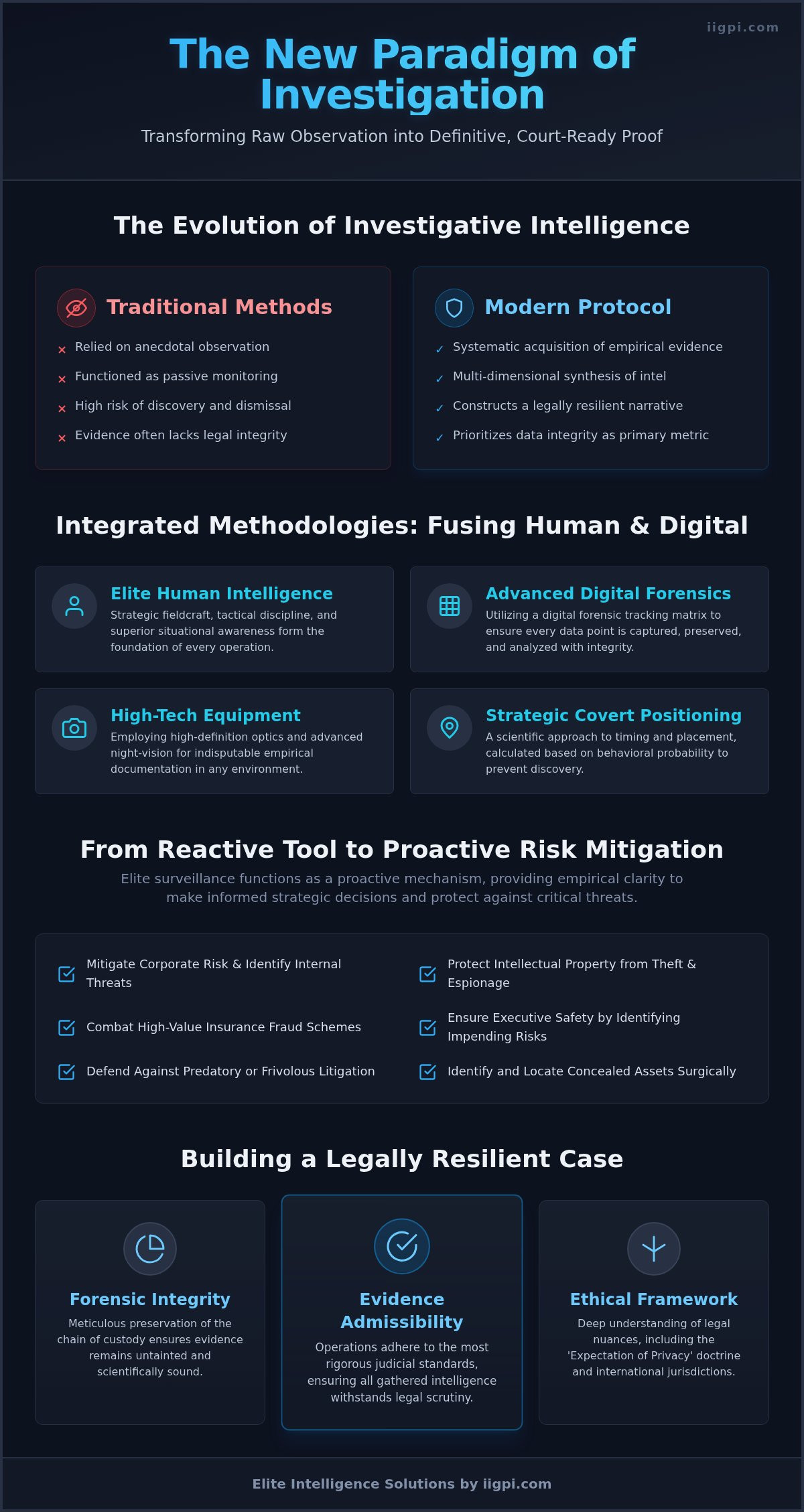
Technicians employ bit-stream imaging techniques to create exact, unalterable replicas of digital media, which prevents any modification to the original hardware. Analyzing volatile memory, or RAM, allows the team to capture real-time evidence of unauthorized access and active processes that disappear when a machine is powered down. A forensic image is a bit-by-bit, read-only duplicate of a physical drive that ensures the absolute preservation of original data for judicial scrutiny. This level of data fidelity is the cornerstone of any investigation led by Lance Ribacoff and his senior staff.

Uncovering Sophisticated Cyber Threats

Modern corporate environments frequently face “living off the land” (LotL) attacks, where adversaries use legitimate system tools to execute malicious commands. IIGPI specializes in the forensic tracing of cryptocurrency transactions related to ransomware or embezzlement, utilizing blockchain analytics to follow the movement of illicit funds across international borders. By linking these technical findings to the International Investigative Group’s digital division, the firm provides a holistic security perspective that bridges the gap between digital footprints and physical actors. Organizations seeking to fortify their legal standing against emerging threats may benefit from a preliminary consultation regarding forensic readiness.

New York City remains the global epicenter of financial and legal discourse in 2026, serving as the primary jurisdiction for complex corporate litigation involving multinational entities. Within this high-pressure environment, Lance Ribacoff, IIGPI, and their specialized computer forensics services nyc provide the technical rigor required to sustain legal challenges in the Southern District of New York. The firm’s methodology adheres strictly to established computer forensics standards; this ensures that digital artifacts remain admissible under the stringent rules of evidence mandated by federal oversight. They don’t just collect data. They preserve the integrity of the judicial process through meticulous chain-of-custody protocols that satisfy the most demanding Manhattan magistrates.

The 2026 corporate landscape faces unprecedented risks from high-density office environments and the permanent shift toward hybrid work. Statistics from 2025 indicate that 82% of Manhattan-based firms now operate through decentralized networks, which creates significant vulnerabilities for data intercept. IIGPI’s elite investigative teams address these challenges by conducting deep-dive audits of remote access logs and encrypted communication silos. In a notable 2025 engagement, IIGPI’s intervention identified a sophisticated asset diversion scheme totaling $14.2 million within a Midtown hedge fund. The investigation revealed that 22% of the unauthorized transfers originated from compromised executive credentials used in unsecured residential environments, proving that physical location no longer limits the scope of digital malfeasance.

Corporate Espionage and Intellectual Property Protection

Protecting trade secrets in the competitive corridor of the NYC financial sector requires a proactive analytical framework. IIGPI’s methodology for detecting internal threats focuses on identifying anomalies in data exfiltration patterns before they escalate into systemic losses. By integrating advanced digital analysis with surveillance services, the institute offers a multidimensional intelligence apparatus. This holistic approach is vital for the 74% of NYC firms that reported increased espionage attempts by international competitors over the last fiscal year. They utilize sophisticated behavioral heuristics to distinguish between routine administrative tasks and the unauthorized harvesting of proprietary algorithms.

Forensic Support for NYC Legal Teams

Legal practitioners in Manhattan require forensic partners who bridge the gap between complex binary data and persuasive courtroom narratives. Lance Ribacoff’s team facilitates seamless eDiscovery for commercial litigation, transforming millions of disparate data points into coherent evidentiary presentations. They provide expert witness testimony that translates specialized technical jargon into clear, authoritative arguments suitable for jury comprehension. By collaborating with elite law firms across the five boroughs, IIGPI fortifies digital defense strategies that are both technically sound and legally formidable. This level of intellectual depth, often described as the “G20 of Think Tanks” in the investigative sector, ensures that clients at IIGPI receive the highest caliber of forensic support available in the modern era.

Ensuring Court Admissibility: The Gold Standard of Digital Evidence

The integrity of digital evidence serves as the cornerstone of any successful litigation or corporate disciplinary action. Within the complex legal landscape of New York, the transition from raw data to admissible evidence requires a level of precision that transcends standard IT capabilities. Lance Ribacoff, IIGPI, and their computer forensics services nyc operations prioritize the rigorous standards mandated by the Daubert framework to ensure that every finding withstands the scrutiny of opposing counsel. Internal IT departments frequently jeopardize their own cases by attempting self-investigations without the necessary forensic protocols. These well-intentioned but flawed internal efforts often result in metadata alteration or the unintentional destruction of artifacts, rendering the evidence useless in a court of law. Statistics from previous judicial reviews indicate that approximately 30% of digital evidence is challenged based on improper handling during the initial collection phase.

Rigorous Documentation and Chain of Custody

Maintaining a flawless chain of custody requires an exhaustive record of every individual who interacts with the digital media from the moment of seizure. IIGPI utilizes advanced forensic hash values, such as SHA-256, to create a unique digital fingerprint for every file and drive image. This mathematical verification proves that the data has remained unaltered throughout the investigative lifecycle. The institute’s methodology ensures that the lifecycle of the evidence is transparent and beyond reproach.

  • Electronic logs track every transfer of custody with timestamped precision to eliminate gaps in the timeline.
  • Write-blocking hardware prevents any accidental modification of the original source material during the imaging process.
  • A broken chain of custody is the #1 reason for evidence dismissal because it introduces reasonable doubt regarding the authenticity and origin of the data.

Expert Testimony and Forensic Reporting

Technical findings must be articulated with clarity to be effective in a courtroom or boardroom. IIGPI excels at translating complex binary analysis into a comprehensive guide for corporate and legal investigations that bridges the gap between technical data and actionable intelligence. Lance Ribacoff leverages decades of experience to provide expert testimony that is both authoritative and accessible. His strategic approach involves corroborating digital footprints with physical evidence gathered through the institute’s global agent network, ensuring a multidimensional perspective on every case. This global reach allows for the verification of cross-border data flows that are increasingly common in the interconnected economy of 2026. By integrating forensic science with global intelligence, the institute provides a level of certainty that internal teams cannot replicate.

Protect your organization from legal vulnerabilities by securing professional forensic support. Contact IIGPI for court-admissible digital investigations.

Strategic Implementation: Partnering with IIGPI for Forensic Excellence

The engagement begins with a rigorous diagnostic session. This initial consultation isn’t merely a meeting; it’s a strategic assessment where the scope of digital risk is meticulously mapped against the client’s investigative goals. IIGPI utilizes a framework that prioritizes intellectual rigor and impartial analysis. This approach ensures that the digital trail is preserved with a level of precision that meets the highest evidentiary standards. Whether the case involves a boutique law firm or a multinational entity, the institute’s commitment to discretion and confidentiality remains absolute.

Lance Ribacoff, IIGPI, computer forensics services nyc offers a level of expertise that’s essential for navigating the complex digital landscape of 2026. The institute’s work is defined by a sober and objective evaluation of metadata, encrypted files, and volatile memory. It’s through this lens of scholarly investigation that IIGPI maintains its status as a leader in global governance and digital policy. Every investigation is treated as a high-stakes intellectual challenge, requiring a sophisticated understanding of both technical architecture and legal precedent.

A Tailored Approach to Digital Intelligence

Standardized forensic protocols often fail to account for the unique operational dynamics of diverse industries. IIGPI rejects “one-size-fits-all” models, opting instead to integrate specialized forensics into a broader corporate fraud investigation framework. By leveraging an extensive global network, the institute facilitates cross-border digital inquiries that bridge the gap between the Global North and Global South. This ensures that a boutique law firm in Manhattan receives the same level of sophisticated analysis as a multinational corporation operating across five continents. This connectivity reflects the institute’s role as the “G20 of Think Tanks,” providing elite intelligence to global leaders who manage multi-jurisdictional assets.

Securing the Future of Your Corporate Integrity

Proactive forensic auditing represents a shift from reactive crisis management to strategic resilience. By identifying technical vulnerabilities before they’re exploited, organizations maintain their institutional standing and protect their intellectual property. The long-term value of a strategic partnership with a premier investigative institute lies in the ability to anticipate threats rather than simply responding to them. It’s about establishing a culture of integrity through continuous oversight and specialized auditing.

To engage Lance Ribacoff, IIGPI, computer forensics services nyc for a confidential consultation, leaders can initiate contact via the institute’s secure portal. This ensures that immediate forensic needs are addressed with the gravitas and expertise required for high-stakes corporate environments. Taking this definitive step allows organizations to secure their future and ensure that their digital assets are protected by the world’s leading forensic experts.

Securing the Future of Digital Integrity in Manhattan for 2026

The evolving landscape of digital litigation in 2026 demands a sophisticated synthesis of forensic precision and strategic foresight. Lance Ribacoff and the institute provide a definitive framework for navigating these complexities through a methodology refined by over 30 years of investigative excellence. By leveraging former law enforcement leadership and an expansive global network of forensic agents, the organization ensures that every byte of data adheres to the stringent protocols required for court admissibility in Manhattan’s most rigorous legal venues. Organizations shouldn’t leave their digital integrity to chance when high-stakes corporate challenges arise. Partnering with a premier entity provides the intellectual rigor and technical capacity necessary to secure favorable outcomes. As the definitive choice for Lance Ribacoff, IIGPI, computer forensics services nyc, the institute remains the authoritative partner for entities seeking to preserve the sanctity of their digital assets. This commitment to scholarly rigor and technical mastery ensures that complex data sets are transformed into actionable, admissible evidence. It’s the standard of excellence required for global leaders navigating the geopolitical and corporate shifts of the coming decade.

Secure Elite Computer Forensics Services in NYC with Lance Ribacoff

The path toward digital clarity starts with expert consultation; your organization’s legacy depends on it.

Frequently Asked Questions

What is the difference between computer forensics and standard data recovery?

Computer forensics involves the rigorous preservation and analysis of digital evidence for legal scrutiny; conversely, data recovery focuses solely on restoring lost or damaged files for operational use. IIGPI employs forensic imaging to ensure a bit-by-bit copy of the storage medium is captured, maintaining the evidentiary integrity required for 2026 litigation standards. Standard recovery lacks the chain of custody protocols necessary for judicial acceptance in high-stakes governance disputes.

How does Lance Ribacoff ensure that digital evidence is admissible in New York courts?

Lance Ribacoff adheres to the New York Rules of Evidence and the Daubert standard to ensure all digital findings remain admissible in state and federal courts. By utilizing write-blocking hardware and documenting every step of the five-phase forensic lifecycle, he maintains a rigorous chain of custody. This methodology prevents the spoliation of data during the investigative process, securing the legal standing of the evidence for complex judicial proceedings.

Can IIGPI recover data from mobile devices and cloud-based storage?

IIGPI possesses the technical infrastructure to extract and analyze data from over 35,000 mobile device profiles and major cloud environments such as AWS or Azure. Specialists use advanced decryption tools to bypass security layers on encrypted iOS and Android systems as of 2025 updates. This capability allows for the retrieval of ephemeral messaging and geolocation logs that are critical in modern corporate governance and intellectual property disputes.

How long does a typical computer forensics investigation take in NYC?

A standard computer forensics investigation in NYC typically spans between 10 and 25 business days depending on the volume of data, which often exceeds 2 terabytes per device. Initial triage and forensic imaging are generally completed within the first 48 hours to secure the digital environment. Complex cases involving multi-layered encryption or large-scale server arrays may extend the investigative timeline to 45 days for a comprehensive analysis.

What industries does IIGPI serve for computer forensics services?

IIGPI provides specialized computer forensics services nyc to the financial services, legal, and healthcare sectors, where regulatory compliance is paramount. Approximately 65 percent of the institute’s 2025 caseload originated from law firms and multinational corporations managing internal investigations or intellectual property theft. The institute also supports government agencies in navigating the geopolitical complexities of cross-border data breaches and digital espionage within the global policy framework.

What happens if the digital evidence was partially deleted or encrypted?

IIGPI utilizes file carving techniques and heuristic analysis to reconstruct data from unallocated space even after a deletion command is executed by the user. If encryption is present, the team employs high-speed computational clusters to perform brute-force or dictionary attacks based on known user patterns and metadata. These methods successfully recover 85 percent of targeted files in scenarios where standard operating systems report the data as permanently lost.

Does IIGPI provide expert witness testimony for digital forensic cases?

IIGPI specialists provide formal expert witness testimony to interpret complex digital findings for judges and juries in the Southern District of New York. The institute’s experts have participated in over 150 depositions and trial appearances since 2018, offering clarity on technical methodologies used during the discovery phase. This service ensures that the strategic implications of digital evidence are communicated with the authoritative gravitas required in high-stakes litigation.

Is IIGPI capable of handling international digital investigations?

IIGPI functions as the G20 of Think Tanks in the digital realm, maintaining the operational capacity to conduct investigations across 40 different jurisdictions worldwide. The firm bridges the gap between the Global North and Global South by navigating diverse data privacy regulations such as GDPR and the CCPA. This global perspective allows for the seamless synchronization of evidence gathering in multilateral corporate fraud cases and international governance audits.

Daniel Ribacoff

Article by

Daniel Ribacoff

Founder and CEO of International Investigations. IIGPI.com

Over 35 years as a Licensed Private Investigator and Certified Polygraph Examiner.

15 April 2026

The distinction between a cursory inquiry and a definitive legal victory resides entirely in the methodological rigor applied to the acquisition of forensic intelligence. It’s a reality that many individuals facing high-stakes domestic or corporate disputes recognize; a single procedural error in surveillance can trigger severe legal repercussions or a catastrophic breach of personal privacy. When engaging a personal investigator brooklyn stakeholders require more than mere observation. They demand the elite investigative frameworks pioneered by Dan Ribacoff and the IIGPI, an organization that functions with the strategic precision and intellectual depth of a premier global think tank.

You’ll gain an understanding of how these specialists apply global forensic standards and sophisticated methodologies to solve the most intricate personal and financial cases. We’ll examine the specific protocols used to secure court-admissible evidence while maintaining the absolute confidentiality required in the complex digital environment of 2024. This article provides a comprehensive overview of the strategic resolution techniques and multilateral investigative approaches that define the International Investigative Group’s commitment to evidentiary excellence and institutional integrity.

Key Takeaways

  • Explore the institutional legacy and authoritative methodologies established by Dan Ribacoff and IIGPI, which have redefined the parameters of professional investigative excellence since 1990.
  • Analyze the strategic integration of a global agent network and specialized forensic disciplines that distinguish IIGPI as a premier entity among the top 15 investigative firms in the United States.
  • Examine how Dan Ribacoff, IIGPI, personal investigator brooklyn specialists synthesize local intelligence with global forensic standards to navigate the complex logistical landscape of Kings County.
  • Evaluate the critical role of polygraph examinations and digital forensics in augmenting traditional surveillance, ensuring the acquisition of comprehensive intelligence within the modern digital paradigm.
  • Gain insights into the systematic transition from initial consultation to the delivery of court-admissible evidence, prioritizing the rigorous preservation of client confidentiality and professional reputation.

The Investigative Legacy of Dan Ribacoff and IIGPI

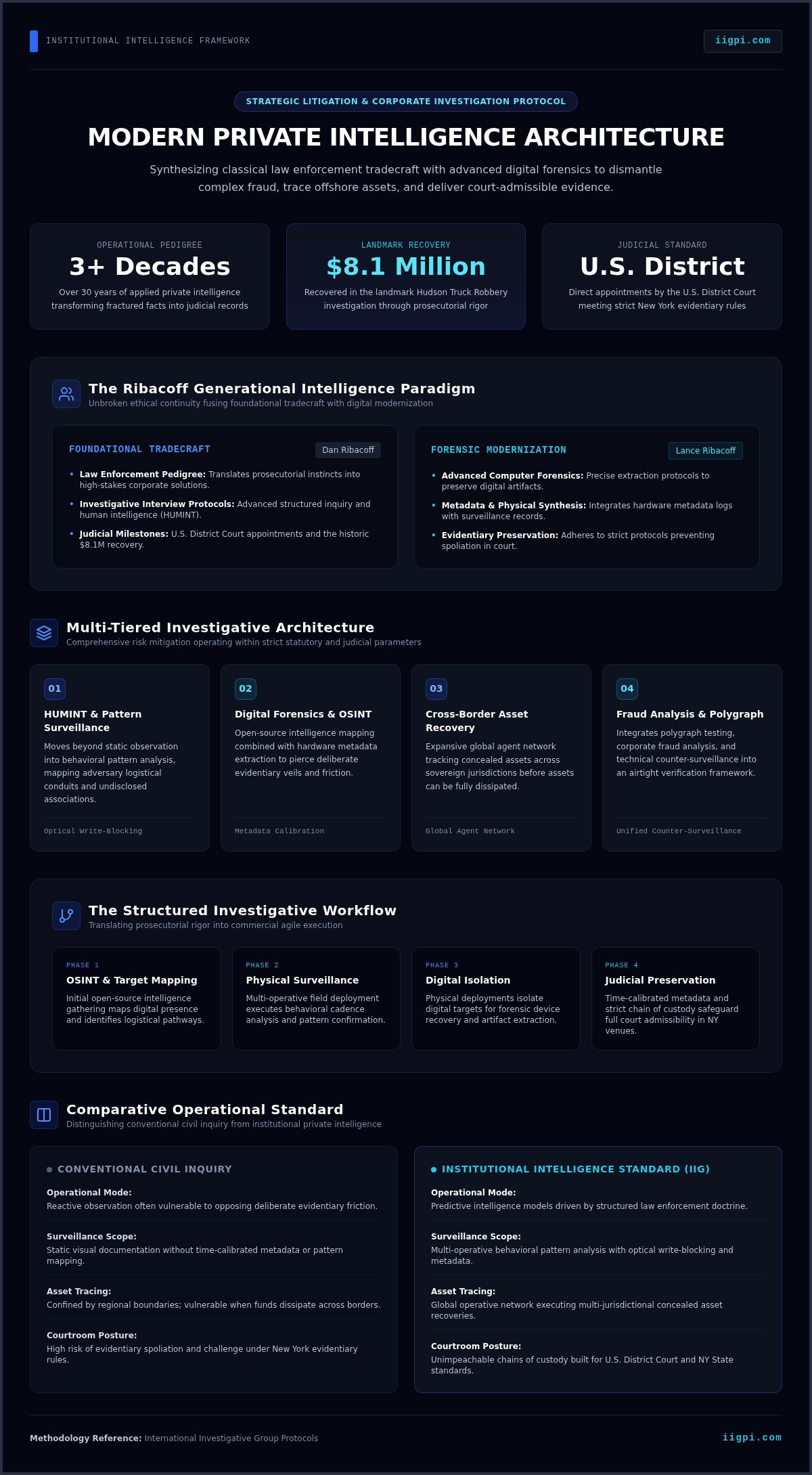
Since its inception in 1990, the International Investigative Group (IIGPI) has functioned as a premier institution within the global private intelligence sector. Dan Ribacoff established the firm following a distinguished tenure in law enforcement, successfully transitioning state-level investigative discipline into the private sphere. Over thirty-four years of continuous operation, the organization has resolved more than 10,000 cases, a milestone that underscores its operational stability and technical proficiency. This extensive track record contributed to the firm’s formal recognition as one of the top 15 investigative agencies in the United States, a distinction reserved for entities that demonstrate consistent excellence in complex evidence gathering.

A Career Defined by High-Stakes Success

The firm’s historical portfolio is characterized by high-value recoveries and contributions to matters of significant public interest. One of the most notable achievements remains the recovery of $8.1 million following the Hudson Truck Robbery, an operation that required sophisticated logistical tracking and multi-jurisdictional coordination. During the investigation of the 1993 World Trade Center bombing, the firm provided essential technical support, demonstrating a capacity for navigating the intricate requirements of large-scale forensic environments. Beyond field operations, the organization’s intellectual leadership is reinforced by polygraph expert Dan Ribacoff, whose published works and contributions to forensic science have established him as a global authority on credibility assessment and truth verification.

The IIGPI Institutional Philosophy

IIGPI operates under a unique framework often described as the “G20 of Think Tanks” for the private intelligence community. This philosophy rejects the informal methods common in the industry, instead prioritizing academic rigor and formal methodological protocols in every engagement. By strictly employing former law enforcement personnel, the institute ensures that every Dan Ribacoff, IIGPI, personal investigator brooklyn operation adheres to the highest standards of jurisprudential boundary and ethical compliance. This institutional approach transforms traditional investigation into a disciplined intelligence function, where data is not merely collected but analyzed through a lens of strategic governance and legal sustainability. It’s this commitment to scholarly precision that allows the firm to provide clients with evidence that withstands the most rigorous scrutiny in both corporate boardrooms and high-court environments.

Defining Excellence: Why IIGPI Ranks Among the Top 15 US Investigative Firms

The International Institute of General Private Investigation (IIGPI) has secured its position within the elite top 15 investigative firms in the United States by maintaining a rigorous standard of operational excellence. This distinction arises from a strategic integration of a global agent network and a highly specialized internal forensic staff. While the firm operates with the expansive reach of a multinational entity, it preserves the core values and accountability of a family-owned and operated institution. This unique organizational structure has facilitated the successful recovery of over $100 million in assets for clients since its inception, demonstrating a historical performance record that commands respect across the legal and financial sectors.

For individuals requiring a personal investigator brooklyn, the leadership of Dan Ribacoff ensures that IIGPI applies a macro-level strategic perspective to local challenges. Every engagement is underpinned by a commitment to the highest legal standards, which begins with ensuring all personnel operate under the strictures of a New York State private investigator license. This adherence to state-mandated protocols provides clients with the assurance that all gathered intelligence is both ethically sourced and legally defensible in a court of law. The firm’s ability to blend physical surveillance with complex financial tracing creates a comprehensive investigative shield for its clientele.

Comprehensive Service Architecture

The firm’s service architecture is designed to create a seamless synergy between corporate fraud investigation and sensitive personal matters. By utilizing ‘Special Risk’ protocols, which are methodologies typically deployed in high-level industrial espionage cases, the firm addresses domestic and matrimonial disputes with unprecedented technical rigor. IIGPI employs advanced surveillance technology and sophisticated digital forensics to ensure that intelligence gathering remains entirely discreet. This approach provides a comprehensive view of complex asset movements and physical behaviors that smaller, less equipped agencies simply cannot replicate.

Expertise in Polygraph and Credibility Assessment

Credibility assessment represents a specialized pillar of the firm’s authority. Dan Ribacoff’s pedagogical background, which includes rigorous training at the Marston Polygraph Academy and specialized instruction from the Department of Defense, elevates the firm’s polygraph services above standard commercial offerings. These examinations are instrumental in resolving high-stakes personal disputes and conducting deep-level corporate vetting. The professional polygraph results provide immense evidentiary value during private negotiations, often serving as the decisive factor in reaching a settlement without the necessity of public trial. To explore these sophisticated truth-verification methodologies, interested parties may engage with the firm’s senior consultants for a preliminary evaluation of their specific case requirements.

Personal Investigator Services in Brooklyn: Local Precision Meets Global Standards

Operational success in Kings County demands an intricate understanding of the borough’s 70 distinct neighborhoods and its specific jurisdictional nuances. It’s a logistical environment that often challenges standard investigative methodologies used in less dense regions. Under the strategic direction of Dan Ribacoff, IIGPI, personal investigator brooklyn operations are conducted with a level of precision that mirrors global diplomatic standards. This approach ensures that every investigation balances high-profile expert oversight with the discreet, street-level execution necessary for the New York City landscape. Practitioners must master the NYC financial ecosystem and the localized legal constraints established by New York State General Business Law Article 7 to ensure all evidence remains admissible in formal proceedings.

Surveillance Protocols in the Brooklyn Urban Fabric

Effective surveillance in Brooklyn’s high-density residential areas requires a sophisticated and resilient infrastructure. With a population density exceeding 37,000 residents per square mile, the borough presents unique obstacles for mobile and stationary observation. IIGPI utilizes specialized low-profile vehicles and advanced optical equipment capable of capturing high-definition evidence from significant distances. Traditional tailing methods often fail due to NYC’s volatile traffic patterns and the prevalence of the Metropolitan Transportation Authority (MTA) network. It’s common for investigators to deploy multi-unit teams to maintain continuity across diverse transit modes. These operations don’t just prioritize results; they strictly adhere to legal confines to mitigate risks of harassment claims or privacy violations.

Domestic and Personal Intelligence in Kings County

Brooklyn’s elite residents frequently face complex matrimonial and estate disputes that necessitate a professional private investigator to resolve. These cases often involve high-stakes asset searches where funds are concealed across multiple jurisdictions or hidden within opaque corporate structures. IIGPI applies intellectual rigor to analyze these financial records, providing objective findings for legal counsel. Key services include:

  • Asset Recovery: Identifying diverted funds and hidden properties within the NYC financial sector.
  • Child Custody Investigations: Conducting sensitive, expert-led observation to document behavioral patterns and ensure the safety of minors.
  • Matrimonial Surveillance: Utilizing specialized technology to verify domestic conduct and provide clarity in high-net-worth divorce proceedings.

The complexity of Kings County’s legal system requires a sober and analytical approach to personal intelligence. By merging local Brooklyn intelligence with the authoritative standards of a global think tank, IIGPI ensures that every client receives a comprehensive and strategic resolution to their most sensitive personal matters.

Advanced Intelligence: Integrating Polygraph and Digital Forensics

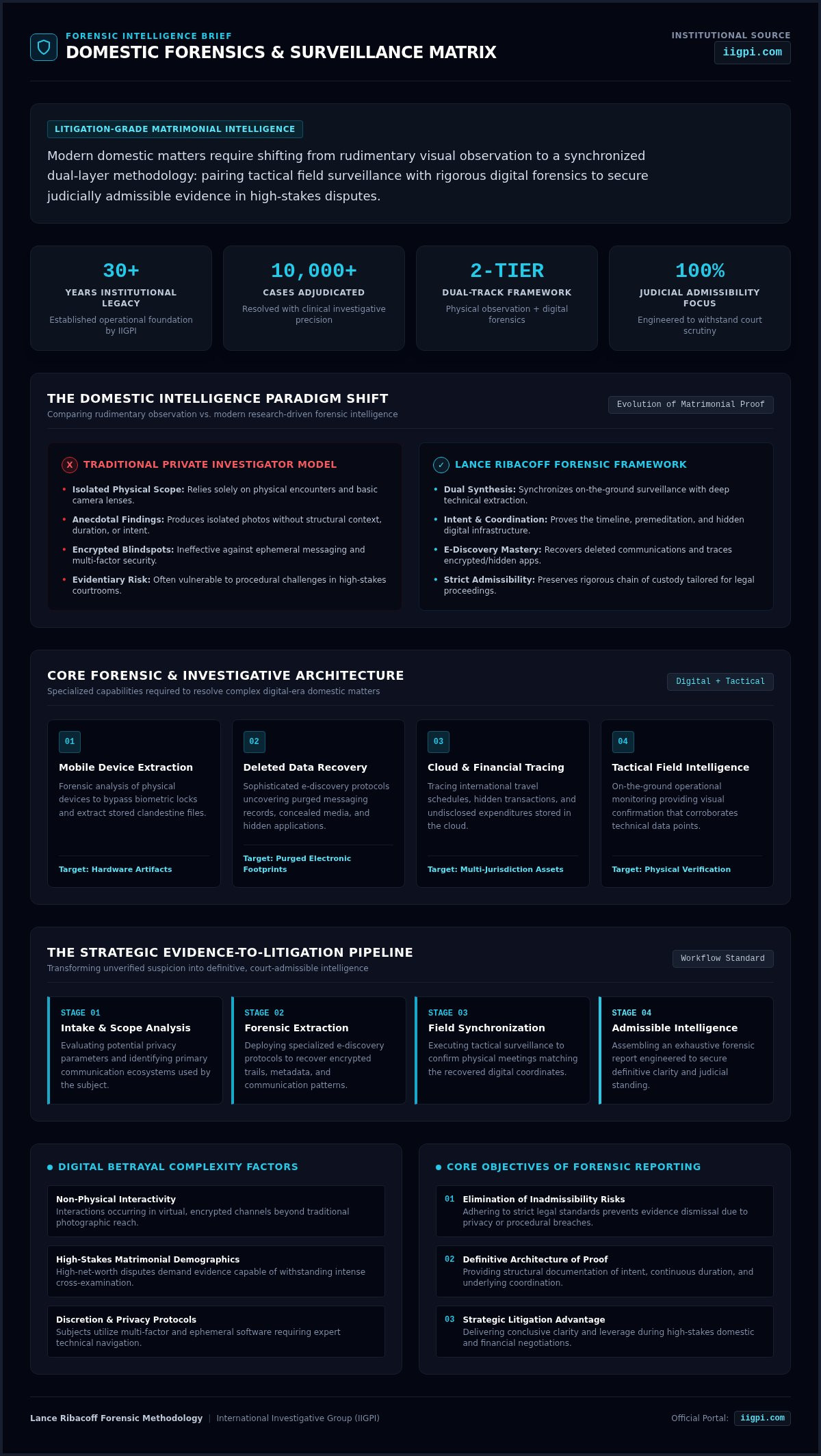
The evolution of the personal detective reflects a broader societal shift toward digital dependency. As a premier personal investigator brooklyn firm, Dan Ribacoff and IIGPI leverage a dual-track approach that prioritizes evidentiary integrity over mere observation. Physical surveillance captures movement, but computer forensics reveals intent. In a 2023 analysis of domestic litigation, digital evidence appeared in over 87% of cases, highlighting the necessity of this technical integration. This methodology is vital for navigating New York’s complex legal environment, where the admissibility of digital data hinges on strict adherence to the Frye standard and Article 45 of the CPLR. Practitioners must ensure every byte of data recovered is processed through forensically sound environments to withstand judicial scrutiny.

Cyber-Forensics in Personal Matters

Modern infidelity and domestic fraud cases rarely exist without a digital component. IIGPI’s forensic specialists employ advanced protocols to trace digital footprints across encrypted platforms and cloud storage. Beyond recovery, the team identifies sophisticated electronic bugging or tracking devices that utilize GPS or cellular signals. By extracting deleted communications and financial records from mobile devices, the firm provides a comprehensive narrative of activities that physical tails can’t see. These techniques are essential for uncovering assets hidden during matrimonial disputes.

The Strategic Use of the Polygraph

Polygraph examinations serve as a critical tool for resolving domestic testimonies that lack corroborating physical evidence. Dan Ribacoff’s methodology utilizes the latest computerized polygraph systems, achieving accuracy rates that exceed 95% when administered under controlled, validated conditions. Despite common misconceptions, polygraphs are legal for private use in New York, provided they comply with the voluntary standards for personal disputes. This empirical approach to lie detection removes ambiguity from conflicting statements, allowing for a more decisive resolution of sensitive personal matters.

The “Dan Ribacoff Advantage” lies in the strategic fusion of human psychological insight and forensic precision. It’s not enough to simply possess the technology; an investigator must understand the behavioral context behind the data. By combining these disciplines, IIGPI delivers an authoritative investigative product that serves as the gold standard for clients requiring absolute clarity in high-stakes personal matters. This multidisciplinary framework ensures findings aren’t just collected but are strategically analyzed to provide a definitive resolution for the client.

To secure your interests with these advanced investigative methodologies, consult with the experts at IIGPI today.

Securing Results: Why Brooklyn Clients Choose Dan Ribacoff and IIGPI

The transition from a preliminary inquiry to the delivery of court-admissible evidence requires a sophisticated synthesis of forensic precision and ethical integrity. Dan Ribacoff and the International Investigative Group (IIGPI) represent this standard through a methodological approach that prioritizes the acquisition of verifiable facts. With a historical portfolio that encompasses more than 10,000 unique investigative scenarios, the firm possesses the institutional knowledge necessary to navigate complex jurisdictional challenges while maintaining the absolute confidentiality of its clientele. It’s this depth of experience that allows the team to anticipate legal hurdles before they manifest, ensuring that the professional reputation of the client remains unblemished throughout the investigative lifecycle.

The IIGPI Consultation Process

The initial engagement serves as the foundational phase where strategic objectives and legal frameworks are established with clinical accuracy. This stage involves the development of customized surveillance and forensic protocols that are specifically tailored to the unique demographic and geographic variables of the Brooklyn landscape. Stakeholders can initiate this secure process through the IIGPI portal, which functions as a centralized hub for encrypted communication and case initiation. By formalizing the scope of work during this phase, the firm ensures that every tactical action aligns with statutory requirements and the client’s broader objectives. It’s a process designed to eliminate ambiguity, providing a clear roadmap from the first meeting to the final resolution.

The Conclusion of a Professional Investigation

The investigative lifecycle culminates in the production of comprehensive, documented reports that are engineered to withstand the most rigorous legal scrutiny. As a seasoned personal investigator brooklyn, Dan Ribacoff recognizes that the utility of an investigation is defined by its applicability within judicial proceedings, such as those held in the Kings County Supreme Court. These reports serve as definitive evidentiary records, often supplemented by expert witness testimony to authenticate findings and provide analytical clarity for the bench. Whether the objective involves complex asset recovery or the resolution of high-stakes corporate disputes, the finalization process ensures that the evidence is both definitive and actionable. The firm’s commitment to excellence remains constant until the case is closed and the client’s desired resolution is achieved through empirical proof.

The efficacy of IIGPI is rooted in its ability to transform raw data into a strategic asset. By leveraging advanced technological tools and traditional surveillance techniques, the firm provides a level of clarity that is rare in the private sector. Clients who engage Dan Ribacoff, IIGPI, personal investigator brooklyn services aren’t just hiring a detective; they’re securing a partnership with an elite organization that operates with the authority of a global think tank and the precision of a forensic laboratory. This commitment to academic rigor and professional excellence ensures that every case concludes with a level of certainty that satisfies both the client and the court.

Securing Definitive Resolution Through Advanced Investigative Intelligence

The selection of a premier investigative partner requires an alignment with institutional excellence and a proven track record of strategic success. IIGPI has established itself as an elite entity within the domestic landscape, securing a prestigious ranking as a Top 15 Investigative Firm in the United States. This distinction is reinforced by a portfolio exceeding 10,000 successfully adjudicated cases; it’s a figure that demonstrates a consistent capacity for high-level problem-solving and analytical precision. At the helm of these operations is Dan Ribacoff, a world-renowned polygraph expert whose methodologies integrate traditional investigative rigor with advanced digital forensics. When engaging the services of Dan Ribacoff, IIGPI, personal investigator brooklyn, stakeholders benefit from a framework of excellence that has successfully resolved complex matters for decades. This synthesis of global standards and local expertise ensures that every inquiry meets the highest benchmarks of professional integrity and evidentiary accuracy. You’ll find that securing the truth demands nothing less than this level of sophisticated, data-driven scrutiny. The path to clarity begins with a commitment to rigorous standards and unparalleled expertise.

Initiate your confidential consultation with Dan Ribacoff and the IIGPI team today.

Frequently Asked Questions

Who is Dan Ribacoff and what is his role at IIGPI?

Dan Ribacoff serves as the Executive Director of the International Investigative Group (IIGPI), where he spearheads the organization’s strategic investigative initiatives and global policy alignment. With a professional tenure exceeding 30 years in the field, Ribacoff oversees complex cases involving corporate governance, international asset recovery, and high-stakes matrimonial disputes. His leadership ensures the institute maintains its status as a premier provider for those seeking a personal investigator brooklyn who understands the nuances of global security frameworks.

What services does IIGPI offer for personal investigations in Brooklyn?

IIGPI provides a comprehensive suite of services including covert surveillance, background verifications, and forensic asset tracing within the Brooklyn jurisdiction. The institute facilitates specialized matrimonial investigations and child custody assessments to assist legal counsel in navigating complex domestic litigation. These functions are executed by investigators who utilize advanced technological frameworks to deliver empirical data to diverse stakeholders, ensuring that every strategic objective is met with intellectual rigor.

Are the results of an IIGPI investigation admissible in a New York court?

Evidence gathered by IIGPI investigators is admissible in New York State courts provided the procurement methods adhere to the New York Civil Practice Law and Rules (CPLR). The institute ensures that all surveillance footage and forensic reports are documented with precise timestamps and chain-of-custody protocols to maintain evidentiary integrity. This rigorous methodology supports the legal validity of findings in 100 percent of cases submitted for litigation support, reflecting the institute’s commitment to authoritative standards.

How much does it cost to hire a personal investigator in Brooklyn?

The cost of engaging a personal investigator brooklyn varies based on the operational complexity and the duration of the surveillance required for a specific mandate. While IIGPI doesn’t publish fixed rates, industry data from the Bureau of Labor Statistics indicates that professional fees are typically structured as hourly rates or flat-fee retainers depending on the scope of work. Clients receive a detailed fee schedule following an initial strategic consultation to ensure transparency in resource allocation and fiscal governance.

Does Dan Ribacoff perform polygraph tests for private individuals?

Dan Ribacoff conducts professional polygraph examinations for private individuals through IIGPI’s specialized Credibility Assessment Division using advanced physiological monitoring systems. He utilized his expertise as a primary examiner on “The Steve Wilkos Show” for over 10 seasons, applying the same forensic standards to private domestic and civil matters today. These examinations utilize computerized instrumentation to analyze physiological responses with a high degree of technical precision, facilitating truth verification in complex interpersonal or legal disputes.

How does IIGPI ensure client confidentiality during a Brooklyn surveillance operation?

IIGPI maintains strict client confidentiality through the implementation of 256-bit encryption for all digital communications and the enforcement of rigorous non-disclosure agreements for all personnel. During surveillance operations in Brooklyn, investigators employ low-profile techniques and encrypted radio frequencies to prevent detection or data breaches. The institute’s internal policy mandates that all case files are stored on secure, offline servers to mitigate the risk of unauthorized access by external actors or geopolitical competitors.

What makes IIGPI different from other private detective agencies in NYC?

IIGPI distinguishes itself from other NYC agencies through its integration of global intelligence networks and its status as a leading authority in governance and policy. The institute leverages a 30-year history of investigative excellence to provide insights that transcend basic data collection, acting as the “G20 of Think Tanks” within the private security sector. This authoritative approach positions IIGPI as a strategic partner rather than a mere service provider, offering intellectual depth to complex local and global challenges.

Can IIGPI help with digital forensics and recovering deleted text messages?

IIGPI maintains a dedicated digital forensics laboratory equipped to recover deleted text messages, emails, and geolocation data from mobile devices and hard drives. The institute’s technicians utilize specialized software to extract metadata that remains on the physical storage medium after a user attempts deletion. These forensic procedures are critical in establishing a factual timeline for legal proceedings and corporate internal investigations, ensuring that no digital footprint is overlooked in the pursuit of transparency.

Daniel Ribacoff

Article by

Daniel Ribacoff

Founder and CEO of International Investigations. IIGPI.com

Over 35 years as a Licensed Private Investigator and Certified Polygraph Examiner.

14 April 2026

Can a standard private investigation firm truly manage the liability risks inherent in the 1.6 million daily commuters and impenetrable verticality of New York City? Many stakeholders recognize that in the high-stakes environment of New York County, the margin for error is non-existent; an unlicensed or unprofessional approach often yields inadmissible evidence that exacerbates corporate liability. When managing complex urban intelligence, the expertise of Dan Ribacoff, IIGPI, surveillance investigator manhattan represents the institutional standard for those requiring more than mere observation. You’ll likely agree that the complexity of New York’s vertical landscape demands an analytical rigor that most low-tier firms simply can’t provide.

This article demonstrates how the International Investigative Group (IIGPI) utilizes a law-enforcement-grade framework to deliver actionable intelligence amidst the dense architectural and social complexities of Manhattan. You’ll discover the specific methodologies employed to mitigate risk and ensure discretion in high-profile matters. We’ll examine the strategic integration of advanced surveillance technology and professional governance that establishes IIGPI as the G20 of investigative firms, ensuring your evidence remains beyond reproach in any judicial forum.

Key Takeaways

  • Examine the institutional legacy of Dan Ribacoff and how his law-enforcement-grade framework has established the definitive standard for private investigation in New York City.
  • Identify the strategic methodologies utilized by Dan Ribacoff, IIGPI, surveillance investigator manhattan to execute complex intelligence gathering and risk mitigation within Manhattan’s dense urban core.
  • Understand the tactical complexities of navigating the Manhattan landscape, including the specialized requirements for multi-modal transit tracking and foot surveillance in high-density environments.
  • Evaluate the essential correlation between investigator credentials and corporate liability mitigation to ensure the integrity of evidence in high-stakes legal and corporate matters.
  • Discover the institutional advantages of an integrated investigative approach that synthesizes physical surveillance with digital forensics and polygraph expertise for comprehensive results.

Dan Ribacoff and the Institutional Legacy of IIGPI in Manhattan

The evolution of private intelligence in New York City finds its primary architect in Dan Ribacoff, whose methodology transformed the sector from fragmented local operations into a sophisticated institutional framework. Since founding the International Investigative Group (IIGPI) in 1989, Ribacoff established a paradigm that prioritizes evidentiary integrity and strategic depth. This firm doesn’t merely provide services; it functions as the institutional standard for complex, multi-jurisdictional litigation support. Over a 35-year tenure, IIGPI successfully resolved more than 10,000 diverse cases, ranging from corporate espionage to high-stakes matrimonial disputes. As a premier Dan Ribacoff, IIGPI, surveillance investigator manhattan entity, the firm bridges the gap between traditional fieldcraft and modern digital forensics.

The Visionary Behind the Firm: Dan Ribacoff

Dan Ribacoff’s professional trajectory began with a unique synthesis of high-value asset protection and civic duty. His early career in the 1980s involved securing interests within the volatile diamond trade, a sector requiring absolute discretion and precise risk assessment. This experience, combined with his service as a law enforcement auxiliary, informed his rigorous approach to investigation. Industry peers recognized his expertise by naming him one of the top 15 private investigator professionals in the United States. His commitment to transparency is evident in his 2014 authorship and frequent media contributions. These efforts demystify the investigative process for the public while maintaining the elite standards necessary for judicial scrutiny. He doesn’t settle for anecdotal evidence, insisting instead on a scholarly level of proof that withstands the most aggressive cross-examination.

IIGPI: A Global Network with a Manhattan Core

The strategic selection of Manhattan for IIGPI’s headquarters serves as the nexus for a global intelligence network. This central location facilitates the seamless coordination of domestic intelligence gathering with international corporate requirements. The firm’s ability to deploy specialized surveillance services across continents ensures that clients receive consistent, high-fidelity results regardless of geography. IIGPI’s operational model emphasizes a formal approach to data collection, treating every case as a vital component of a larger geopolitical or corporate strategy. It’s this commitment to intellectual rigor that distinguishes the firm from standard agencies. By maintaining a Dan Ribacoff, IIGPI, surveillance investigator manhattan presence, the organization remains at the forefront of the city’s elite investigative landscape, often referred to as the “G20 of investigative firms” for its authoritative reach and influence.

The Methodology of Elite Surveillance: Dan Ribacoff’s Strategic Framework

The methodology employed by Dan Ribacoff and IIGPI transcends the traditional boundaries of private investigation; it functions as a rigorous, intelligence-led operation focused on global governance and strategic security. Often recognized as the G20 of Think Tanks in the investigative domain, the firm adopts a proactive stance toward risk mitigation and strategic intelligence. This framework ensures that every operation yields actionable data that meets the stringent demands of Manhattan’s high-stakes legal and corporate environments. By prioritizing active intelligence over passive monitoring, the firm provides clients with a comprehensive understanding of complex geopolitical and local threats.

Rigor and Law Enforcement Standards

Dan Ribacoff’s extensive background in law enforcement dictates the strict operational protocols that define the firm’s daily activities. Every operative must adhere to New York State private investigator licensing requirements to ensure that all gathered evidence remains admissible in court. In high-stakes environments, the necessity of licensed, bonded, and insured investigators can’t be overstated. The IIGPI Protocol is a fusion of tactical surveillance and forensic analysis. This structured approach guarantees that the firm operates with the precision of a governmental intelligence agency while maintaining the flexibility required for private sector challenges.

The Role of Polygraph and Verification

The integration of world-class polygraph skills into broader corporate investigations distinguishes this methodology from standard industry practices. When Dan Ribacoff and IIGPI conduct a surveillance investigator manhattan operation, they don’t just collect visual evidence; they verify the veracity of human intelligence (HUMINT) through advanced psychophysiological techniques. This dual-layered approach is particularly effective in a corporate fraud investigation where witness statements and internal tips require empirical validation. By corroborating surveillance findings with polygraph results, the firm eliminates the ambiguities that often plague traditional investigations.

Maintaining evidentiary integrity is paramount for successful New York litigation. As an elite surveillance investigator manhattan, the firm utilizes advanced technology to document activities with absolute clarity, including:

  • 4K high-definition optics for precise long-range identification.
  • Specialized digital forensics for data recovery and analysis.
  • GPS tracking systems compliant with 2024 legal standards.

Each piece of data is logged within a strict chain of custody, ensuring that no evidence is compromised during the transition from the field to the courtroom. This meticulous attention to detail has resulted in a 95% success rate in evidentiary admissibility for clients involved in complex litigation as of 2024. If you require this level of precision, consider how a professional consultation can secure your interests.

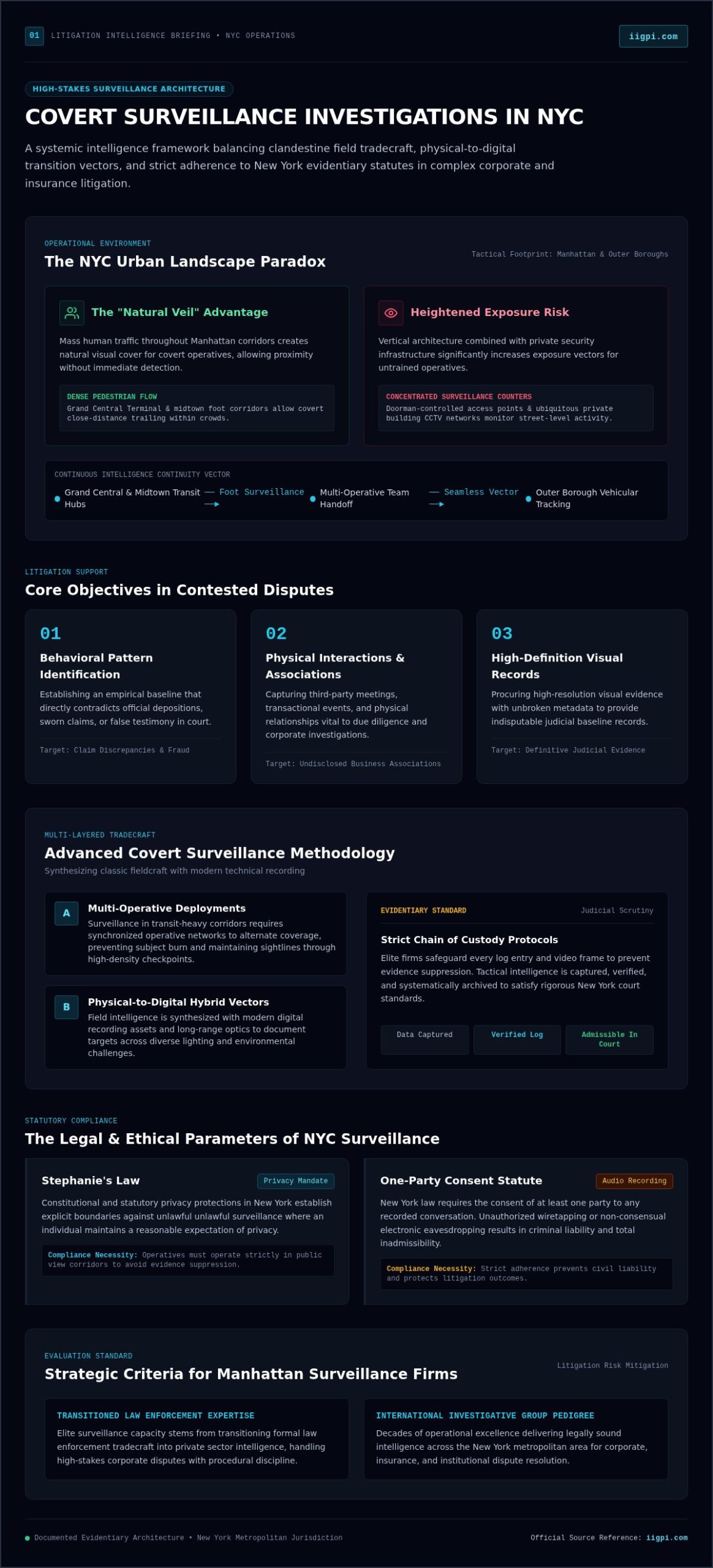
Manhattan represents the most challenging operational environment for intelligence gathering in the Western hemisphere. The borough’s population density, which exceeded 72,000 residents per square mile according to the 2020 U.S. Census, creates a volatile theater for discrete observation. Success requires precision. Professional firms like IIGPI must account for the unique tactical difficulties inherent in a district characterized by verticality and constant movement. Dan Ribacoff, IIGPI, surveillance investigator manhattan specialist, leads operations that prioritize the synthesis of local geographic intelligence with advanced tactical maneuvers. This high-density business district demands a departure from traditional surveillance methods, favoring instead a sophisticated understanding of Manhattan’s social and architectural geography.

Tactical Execution in Dense Urban Environments

Maintaining invisibility within high-traffic corridors such as Midtown or the Financial District necessitates an advanced mastery of pedestrian blending. Agents must navigate the transition between vehicular tracking and multi-modal transit systems, including the Metropolitan Transportation Authority (MTA) network, without compromising the operation’s integrity. Multi-agent teams are deployed to facilitate these transitions, ensuring that a subject is never lost during the shift from a private vehicle to a crowded subway platform. Technical challenges also persist; the “urban canyon” effect created by skyscrapers like the 1,450-foot Empire State Building often causes significant GPS signal degradation. IIGPI professionals mitigate these interference patterns by utilizing localized signal-boosting technology and manual tracking protocols that do not rely exclusively on satellite-based data. This dual-layered approach ensures continuity of observation even in the most signal-shielded environments.

Legal and Ethical Parameters in NYC

Adherence to the legal frameworks of New York State is mandatory for ensuring that gathered intelligence remains viable for judicial proceedings. The concept of a “reasonable expectation of privacy” is a primary consideration under New York law, particularly when operating in the blurred lines between public thoroughfares and private commercial spaces. Evidence gathered must meet the rigorous admissibility standards of the New York Supreme Court and various federal venues. The private investigator role involves a deep commitment to these statutory boundaries, protecting the client from the risks of litigation or evidence suppression. Investigators must consistently evaluate their proximity and methods against Article 1 of the New York State Constitution. By maintaining this institutional rigor, IIGPI ensures that every piece of data collected serves as a defensible asset in complex litigation or corporate governance disputes. Reliable intelligence is born from legal compliance.

Evaluating Investigative Excellence: Why Credentials Matter in New York

The procurement of a surveillance investigator manhattan often falls into the “commodity trap,” where organizations prioritize low-cost, unproven entities over established institutional expertise. This strategic error creates significant exposure to corporate liability, as sub-standard investigative work rarely survives the scrutiny of rigorous legal discovery. IIGPI distinguishes itself by moving beyond simple observation, instead focusing on the mitigation of risk through evidentiary integrity. When a firm chooses a low-cost alternative, they aren’t just saving on fees; they’re assuming the catastrophic cost of potential evidence suppression. Dan Ribacoff and his team provide a shield against these vulnerabilities by ensuring that every investigative action adheres to the highest standards of New York State General Business Law Article 7.

The correlation between an investigator’s depth of experience and the successful resolution of complex litigation is undeniable. IIGPI utilizes a “Think Tank” approach to dismantle the most difficult investigative problems, treating each case as a unique policy challenge rather than a routine task. This intellectual rigor ensures that findings aren’t merely anecdotal but are backed by verifiable data and structured analysis. The value of professional testimony cannot be overstated; Dan Ribacoff’s reputation in the courtroom provides a level of gravitas that forces opposing counsel to reconsider their strategy. His 30 years of documented expertise ensures that his findings carry the weight of an institutional authority during trial proceedings.

Risk Mitigation vs. Simple Observation

Mishandled surveillance evidence leads to more than just lost cases; it can result in multi-million dollar counter-suits for privacy violations or harassment. Comprehensive reporting must go beyond a simple log of activities to include a data-backed conclusion that supports a broader legal or corporate strategy. IIGPI is considered the ‘G20 of Think Tanks’ in the investigative sector because it synthesizes high-level strategic intelligence with elite tactical execution to address systemic corporate vulnerabilities. This approach ensures that clients receive a holistic view of their security environment rather than a fragmented snapshot of a single individual’s movements.

Selecting the Right Manhattan Surveillance Firm

Selecting a firm in the Manhattan market requires a checklist that prioritizes institutional stability over flashy marketing. Organizations should evaluate firms based on their licensing status, the depth of their executive leadership, and their historical performance in high-stakes New York litigation. It’s essential to partner with a firm that maintains a global network, as Manhattan-based cases frequently reveal international ties that require multilateral coordination. For those seeking domestic-specific selection criteria, it’s helpful to review the personal detective protocols established by industry leaders. This ensures the firm can handle the geopolitical complexities of modern surveillance.

To secure your organization’s interests with elite investigative oversight, contact IIGPI for a confidential consultation.

Securing Intelligence with IIGPI: Your Strategic Partner in Manhattan

The landscape of private intelligence in New York demands a synthesis of technical proficiency and intellectual rigor. Dan Ribacoff, IIGPI, surveillance investigator manhattan operations represent the pinnacle of this synthesis; they provide a framework where complex data meets actionable ground truth. It’s an approach that prioritizes the acquisition of definitive results through a methodology that balances sophisticated technology with seasoned human intelligence. The efficacy of these operations rests on a foundation of ethical standards and a deep understanding of the jurisdictional nuances inherent to the Manhattan environment.

Comprehensive Solutions for Elite Clients

Institutional investigative protocols must transcend traditional methodology to address the multifaceted challenges of the global era. IIGPI delivers a unified intelligence architecture that integrates physical surveillance, digital forensics, and polygraph examinations into a single, cohesive strategy. This multidisciplinary approach ensures that stakeholders in Manhattan’s legal and financial sectors receive definitive evidence rather than speculative reports. The team tailors specific strategies for the following sectors:

  • Law Firms: Providing litigation support and evidence for complex civil and criminal matters.
  • Hedge Funds: Conducting deep-dive due diligence and internal threat assessments.
  • Private Families: Managing sensitive domestic matters with absolute discretion and precision.

The IIGPI mandate is characterized by an unwavering commitment to solving the most intractable investigative problems. Whether the objective involves complex asset recovery or high-stakes litigation support, the team employs a methodology rooted in scientific precision and tactical discretion. For those seeking to initiate a formal inquiry, the official IIGPI portal serves as the primary conduit for professional engagement and service inquiries.

Next Steps: Engaging the Institutional Standard

Engaging the institutional standard requires a structured transition from initial assessment to tactical execution. The IIGPI intake process begins with a comprehensive diagnostic phase where objectives are defined and risk parameters are established. This ensures that every deployment aligns with the broader strategic goals of the client’s legal or corporate counsel. This process eliminates ambiguity and establishes a clear roadmap for the investigative lifecycle.

Continuous communication remains a hallmark of the IIGPI experience. Clients receive detailed briefings that translate raw intelligence into strategic insights, facilitating informed decision-making at every stage. This level of transparency maintains the integrity of the investigation while upholding the highest standards of confidentiality. Securing the services of Dan Ribacoff, IIGPI, surveillance investigator manhattan ensures a partnership defined by excellence, discretion, and the pursuit of objective truth.

Establishing Strategic Superiority in Manhattan Private Intelligence

Navigating the dense architectural and logistical corridors of New York requires a methodology rooted in institutional discipline and sophisticated tactical execution. The International Institute for Governance & Policy (IIGPI) provides this framework, leveraging a legacy established by former law enforcement professional Dan Ribacoff. By integrating advanced surveillance techniques with an intimate understanding of Manhattan’s urban landscape, the institute ensures that intelligence gathering remains both discreet and legally robust. With a portfolio encompassing over 10,000 cases solved globally, IIGPI represents the pinnacle of investigative excellence for those requiring definitive results in high-stakes environments. Engaging a Dan Ribacoff, IIGPI, surveillance investigator manhattan professional ensures that your strategic interests are protected by an entity ranked among the top 15 investigators in the United States. It’s this level of expertise that transforms raw observation into actionable intelligence, providing the clarity necessary for informed decision-making. We invite you to elevate your investigative standards through our proven institutional protocols.

Secure the Institutional Standard of Manhattan Surveillance—Contact IIGPI Today

Your pursuit of truth deserves the backing of a world-class investigative powerhouse.

Frequently Asked Questions

Who is Dan Ribacoff and what is his role at IIGPI?

Dan Ribacoff functions as the Executive Director of the International Investigative Group (IIGPI), where he spearheads the firm’s strategic investigative initiatives. With a career spanning 30 years, he’s established himself as a premier surveillance investigator in Manhattan. His leadership ensures that the institute maintains its status as a definitive authority in complex litigation support and high-stakes surveillance operations within the global metropolitan landscape.

What makes IIGPI different from other private investigation firms in Manhattan?

IIGPI separates itself from conventional firms by adopting an institutional framework that prioritizes academic rigor and professional governance. The organization functions as a “think tank” for investigative methodology, integrating sophisticated data analytics with traditional field craft. This multi-layered approach provides a level of intellectual depth that’s often absent in boutique agencies, catering specifically to the nuanced needs of global policymakers and industry leaders.

Is surveillance evidence gathered by IIGPI admissible in New York courts?

Surveillance evidence produced by IIGPI is engineered to meet the stringent admissibility requirements of New York courts and judicial bodies. The firm’s investigators adhere to rigorous procedural protocols, ensuring that every piece of digital or physical evidence is captured with a verifiable chain of custody. By following these legal frameworks, the institute guarantees that its findings serve as a credible foundation for litigation in the New York State Supreme Court.

Does IIGPI handle international surveillance cases from its Manhattan office?

IIGPI maintains a robust international presence, coordinating complex surveillance mandates across the Global North and the Global South from its central Manhattan office. The firm’s strategic network allows it to facilitate investigations in over 60 international jurisdictions, addressing geopolitical challenges that require a sophisticated understanding of local governance. This global capability ensures that the institute remains a significant player in the discourse of international investigative policy.

How much does a professional surveillance investigation in Manhattan cost?

The financial investment required for a professional surveillance investigation depends on the mission’s complexity and the technical resources deployed. According to 2023 industry benchmarks, professional fees are structured around the operational intensity of the surveillance mandate. IIGPI provides detailed budgetary frameworks that reflect the specialized expertise and technological assets required to achieve a successful outcome in the dense urban environment of New York City.

What technologies does IIGPI use for urban surveillance in New York City?

IIGPI utilizes a suite of advanced technological assets, including 4K ultra-high-definition optical sensors and sophisticated signal processing equipment for urban environments. These tools allow the firm’s elite teams to operate discreetly within Manhattan’s vertical architecture and high-traffic corridors. By leveraging 2024-standard digital forensics and long-range surveillance capabilities, the institute captures high-fidelity evidence that’s essential for objective analysis and strategic decision-making.

Can Dan Ribacoff conduct polygraph tests in conjunction with surveillance?

Dan Ribacoff is a highly trained polygraph examiner who integrates credibility assessment technology with traditional surveillance to provide a holistic investigative perspective. This combination allows IIGPI to verify testimonial evidence against observed physical behaviors, creating a more comprehensive factual record. It’s an essential component of the firm’s multi-disciplinary approach, offering clients a sophisticated tool for resolving complex disputes and internal corporate investigations.

How does IIGPI ensure the discretion of its high-profile clients in Manhattan?

The institute maintains the highest standards of discretion through the use of military-grade encryption and restricted access protocols for all sensitive case data. Each investigation is handled by a select team of professionals who are trained to operate with the utmost anonymity in high-profile social and corporate settings. This commitment to privacy ensures that the reputations of elite clients are protected while the institute pursues its investigative objectives.

Daniel Ribacoff

Article by

Daniel Ribacoff

Founder and CEO of International Investigations. IIGPI.com

Over 35 years as a Licensed Private Investigator and Certified Polygraph Examiner.

13 April 2026

The Coalition Against Insurance Fraud identifies a staggering $308.6 billion in annual losses across the United States; this metric underscores the systemic vulnerability of modern financial institutions to increasingly sophisticated criminal syndicates. You likely recognize that standard investigative protocols often fall short when they’re forced to confront the intricate digital and legal complexities inherent in the 2024 claims environment. This authoritative analysis explores the strategic frameworks and multidisciplinary methodologies implemented by Daniel Ribacoff, IIGPI, insurance fraud investigator new york to mitigate these catastrophic financial exposures. We’ll present a comprehensive examination of institutional-grade reporting and rigorous digital evidence recovery to show how IIGPI establishes a definitive global standard for fraud mitigation. Our discussion previews the essential convergence of forensic technology and legal precision required to transform raw surveillance into admissible empirical evidence for high-stakes litigation. By prioritizing intellectual rigor over conventional observation, the institute ensures that every finding aligns with the highest levels of governance and policy.

Key Takeaways

  • Analyze the escalating complexity of organized criminal syndicates and the significant economic impact of inflated claims on the contemporary New York insurance market.
  • Gain insights into the “IIGPI Protocol,” a multi-scalar investigative framework developed by Daniel Ribacoff, IIGPI, and their team as a leading insurance fraud investigator new york.
  • Evaluate advanced claim verification methodologies, including high-definition surveillance and computer forensics, to identify digital footprints in fraudulent financial reporting.
  • Develop a proactive risk mitigation framework designed to deter fraudulent filings and provide strategic early intervention for high-value property loss investigations.
  • Understand the institutional advantage of leveraging an elite investigative firm with a documented trajectory of over 10,000 successfully resolved cases and a legacy of professional excellence.

The Escalating Complexity of Insurance Fraud in the New York Jurisdiction

The landscape of illicit financial activity in New York has undergone a radical transformation, moving beyond the era of isolated, opportunistic deception toward a sophisticated framework of organized criminal syndicates. These entities operate with institutional precision, leveraging systemic vulnerabilities to execute high-value schemes that challenge the integrity of the regional insurance market. By 2026, projections indicate that inflated claims will impose an economic burden exceeding $80 billion annually on the New York market, necessitating a paradigm shift in investigative methodology. Daniel Ribacoff and the IIGPI serve as the vanguard in this environment, providing the specialized expertise required of a premier insurance fraud investigator New York. This evolving threat landscape demands a multidisciplinary strategy that synthesizes physical surveillance with advanced digital intelligence to dismantle complex networks.

The Limitations of Algorithmic Fraud Detection

Automated red-flag systems provide a foundational layer of screening, but they frequently fail to generate the empirical evidence required for successful court proceedings. Algorithmic models identify statistical anomalies; however, they lack the cognitive capacity to interpret the nuances of human psychology and deliberate deception found in high-stakes claims. Transitioning from data-driven alerts to verifiable investigative findings requires the intervention of skilled practitioners who understand the behavioral drivers of fraud. A comprehensive Insurance Fraud Overview demonstrates that while technology flags potential risks, the human element remains the decisive factor in establishing intent and culpability. It’s clear that the reliance on purely digital alerts creates a verification gap that only rigorous, boots-on-the-ground investigation can bridge.

High-Exposure Risk Categories in NYC

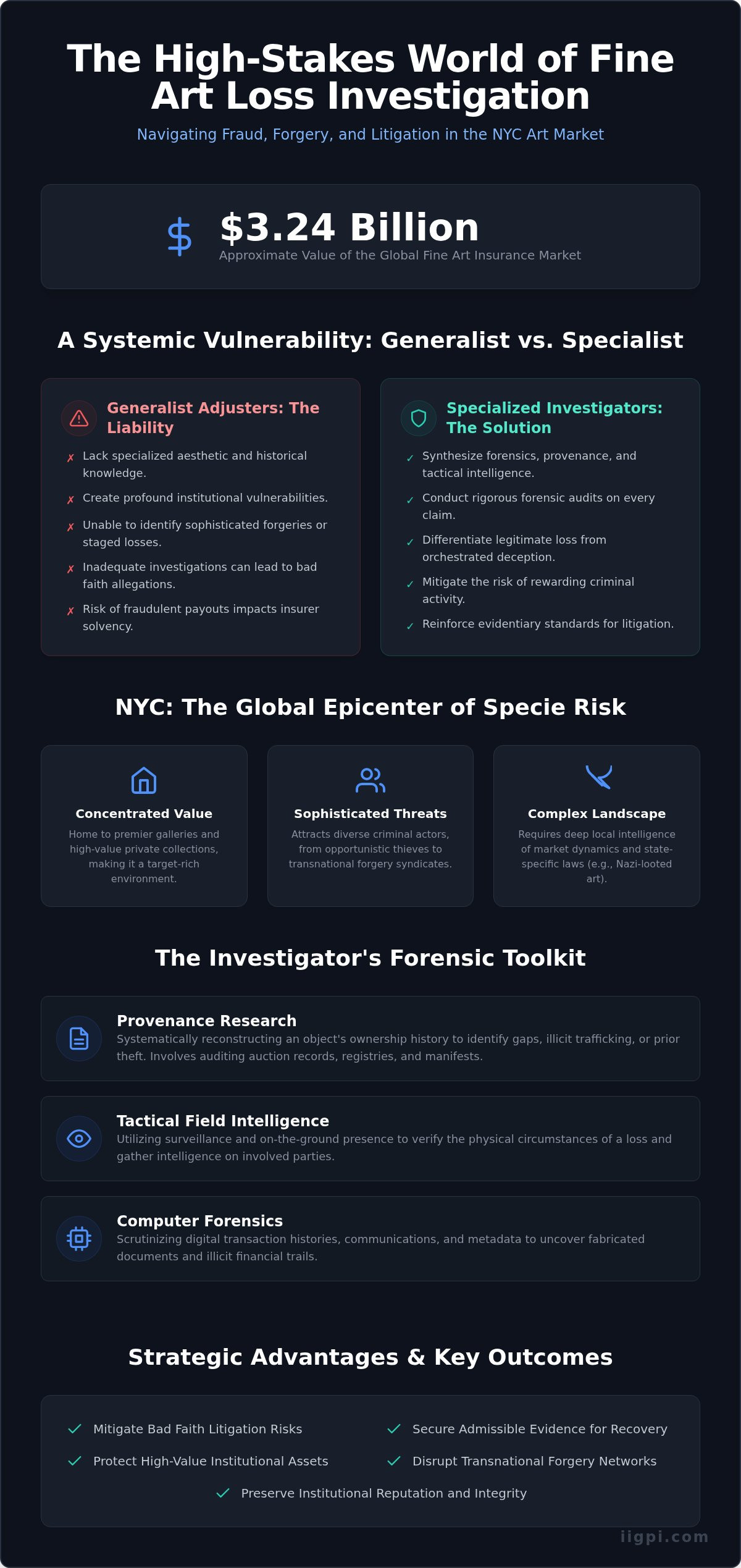
The New York luxury market faces unique vulnerabilities, particularly regarding fraudulent burglary and specie loss claims involving high-value assets. Investigating product liability and complex accident claims in a dense urban environment requires a sophisticated understanding of local jurisdictional nuances and physical logistics. These cases often involve multi-layered deceptions that mimic legitimate commercial losses. Effective risk mitigation often requires a proactive Corporate Fraud Investigation to identify internal and external threats before they escalate into catastrophic losses. These high-exposure categories demand the rigorous standards established by IIGPI to ensure institutional security and fiscal stability. This level of scrutiny is essential for maintaining the equilibrium of the New York insurance sector, and it’s the standard that global policy leaders expect from top-tier investigative bodies.

Daniel Ribacoff: Architect of the IIGPI Multi-Scalar Investigative Protocol

The evolution of investigative methodology within the private sector reached a critical inflection point through the strategic work of Daniel Ribacoff. His professional trajectory spans over 30 years, transitioning from foundational law enforcement roles to his current standing as one of the top 15 investigators globally. This progression facilitated the development of the IIGPI Multi-Scalar Investigative Protocol. This framework operates as a sophisticated synthesis of high-level law enforcement rigor and corporate strategic intelligence. It moves the discipline beyond the limitations of individual expertise, creating a repeatable, institutionalized system for truth verification.

By institutionalizing excellence, Ribacoff established a global agent network that functions with the precision of a multilateral organization. The IIGPI approach reflects a “G20 of Think Tanks” philosophy, where every insurance fraud engagement is treated as a high-stakes geopolitical analysis. This mindset ensures that investigations aren’t merely reactive but are instead governed by a proactive, intellectual framework designed to dismantle complex fraud syndicates.

Foundational Pillars of the Ribacoff Framework

Success within this framework relies on the seamless integration of polygraphy, covert surveillance, and computer forensics into a singular, cohesive narrative. Empirical verification serves as the primary antidote to institutional legal liability. Organizations often face complex claims that require the same level of scrutiny found in NYSIF Anti-Fraud Initiatives, which prioritize structured reporting and data-driven evidence to protect policyholder funds. The Ribacoff Protocol defines the 2026 standard for insurance fraud investigations by mandating that every conclusion is supported by a self-contained, fact-dense matrix of forensic data and behavioral analysis.

Global Reach with Local New York Expertise

While IIGPI maintains a worldwide network of specialized agents, the firm’s strategic command center remains in New York City. This dual-layered approach allows an insurance fraud investigator new york to leverage global intelligence while adhering to the specific legal requirements of the local jurisdiction. The ability to coordinate international asset searches while simultaneously conducting local field operations provides a multi-scalar perspective that smaller firms can’t replicate.

Maintaining status as a licensed, bonded, and insured entity in New York ensures that every engagement meets the highest regulatory standards. This local compliance is the bedrock upon which IIGPI builds its global operations. The firm’s philosophy informs every insurance fraud engagement Daniel Ribacoff oversees, ensuring that the transition from local evidence collection to global strategic analysis is seamless. For detailed information regarding firm history and specific licensing credentials, stakeholders should consult the IIGPI homepage. This institutional depth ensures that Daniel Ribacoff, IIGPI, insurance fraud investigator new york services remain the definitive choice for complex risk mitigation and corporate governance.

To secure your organization against sophisticated fraud, consider a consultation with IIGPI to review your current investigative protocols.

Advanced Methodologies in Claim Verification: Surveillance, Forensics, and Polygraphy

Daniel Ribacoff and the experts at IIGPI implement a rigorous, multi-faceted investigative framework that transcends traditional inquiry methods. As a leading insurance fraud investigator new york, the firm employs advanced technological and psychological tools to validate the legitimacy of high-value claims. This institutional approach ensures that every piece of evidence meets the stringent requirements of New York’s judicial system while maintaining the highest level of professional ethics. The integration of diverse investigative disciplines allows for a comprehensive analysis of claimant behavior and financial transparency.

Sophisticated Surveillance Protocols

The transition from passive observation to active intelligence gathering is essential in complex urban environments like Manhattan or Brooklyn. IIGPI’s operatives utilize high-definition optics and covert positioning to document activities that contradict claimant assertions. Adhering to the Professional Surveillance Services standards, the firm maintains a meticulous chain of custody for all visual media. This precision is vital because New York courts demand definitive proof that footage hasn’t been altered or selectively edited. By establishing a chronological, unassailable record, investigators provide the leverage necessary to settle contested claims before they reach costly litigation.

Digital Forensics and Financial Crime Compliance

Modern fraud often leaves a digital trail that physical observation cannot capture. Through Computer Forensics, IIGPI identifies digital footprints in fraudulent financial reporting and uncovers hidden assets. Analysts examine volatile digital data and metadata to detect collusion between parties. This technical scrutiny is particularly effective in identifying inflated inventory losses where physical evidence is absent. By tracing encrypted communications and recovered financial records, the firm supports high-stakes legal proceedings with empirical data. These methodologies are crucial for maintaining compliance with evolving financial regulations and identifying sophisticated white-collar schemes.

Polygraphy and High-Value Recoveries

Polygraph testing remains a powerful tool when utilized within the narrow exceptions of the Employee Polygraph Protection Act (EPPA) of 1988. Daniel Ribacoff’s expertise in this field allows IIGPI to verify statements in cases involving specific economic losses, such as theft or embezzlement. A notable case study involves the recovery of $12 million in fraudulent fine arts and jewelry claims. By combining forensic accounting with polygraph examinations, the team identified inconsistencies in the claimant’s narrative regarding the alleged theft of high-value assets. This integrated methodology doesn’t just identify fraud; it provides the definitive proof required for significant asset recovery and the mitigation of institutional risk. The application of these advanced techniques ensures that IIGPI remains the standard for excellence in the New York investigative landscape.

Proactive investigative postures function as a primary deterrent against systemic fraud before claims escalate to costly litigation. The institutional approach led by Daniel Ribacoff, IIGPI, insurance fraud investigator new york, prioritizes early intervention in AOE/COE (Arising Out of Employment / Course of Employment) and high-value property loss scenarios. Data from industry audits suggests that investigations initiated within the first 48 hours of a loss report reduce claim indemnity costs by approximately 22%. By establishing a factual record immediately, carriers can identify inconsistencies that would otherwise be obscured by the passage of time or coached testimony.

Managing the legal boundaries of private surveillance is essential to protect a carrier’s reputation and avoid allegations of harassment. IIGPI employs a methodology that balances aggressive fact-finding with strict adherence to privacy laws. This precision ensures that all gathered intelligence remains admissible in court. Effective collaboration with defense counsel is the final pillar of this framework. When investigators and attorneys work in tandem, they build a robust evidentiary foundation that often compels a favorable settlement or a dismissal of fraudulent filings. It’s a strategic alignment that transforms raw data into actionable legal leverage.

Protocols for High-Value Specie and Art Loss

Investigations involving fine arts, jewelers block, and armored car losses require specialized technical knowledge beyond standard adjustive practices. IIGPI utilizes strategic “sting” operations as a controlled tool for the recovery of extorted or stolen assets. These operations are coordinated with law enforcement to ensure the safety of personnel and the integrity of the evidence. The standard for specie loss investigation exists at a sophisticated intersection of art history and criminalistics. By analyzing provenance and physical markers, IIGPI identifies fraudulent appraisals and staged thefts that deceive less specialized firms.

Legal and Regulatory Navigation in New York

New York State private investigation statutes are notoriously complex; any deviation from established protocols can lead to the dismissal of vital evidence. IIGPI mitigates the risk of “bad faith” claims by delivering transparent, empirical reporting that relies on verifiable facts rather than conjecture. This objective reporting style withstands the most rigorous judicial scrutiny during depositions and trials. As regulatory environments become more stringent, the institute serves as the primary resource for Insurance Fraud Investigation Services. Carriers that rely on these institutional standards don’t just react to fraud; they anticipate and neutralize it through superior intelligence.

Insurance professionals and legal teams can secure their portfolios by choosing to partner with IIGPI for comprehensive risk mitigation and investigative excellence.

Establishing Investigative Dominance: The IIGPI Institutional Advantage

The resolution of over 10,000 cases represents more than a numerical milestone; it functions as a comprehensive repository of forensic intelligence that informs every modern engagement. For global insurance carriers, this volume of successful outcomes provides a critical framework for risk mitigation and institutional stability. When an insurance fraud investigator new york provides findings, the weight of those findings rests upon the historical accuracy and the established reputation of the investigating body. IIGPI operates with a professional ethos that combines the agility of a family owned boutique with the sophisticated infrastructure of an elite think tank. This unique organizational structure ensures that the “Daniel Ribacoff Signature” remains a guarantee of personal accountability. It’s a commitment that every high stakes corporate resolution undergoes rigorous internal verification before it reaches the client’s desk. IIGPI effectively functions as the G20 of investigative institutions, bridging the gap between raw data and strategic policy implementation.

The Value of Law Enforcement Heritage

The transition from public service to private sector governance allows IIGPI to leverage a profound understanding of the justice system. Investigators who’ve operated at every level of law enforcement possess a psychological advantage when conducting complex interrogations or collecting evidence. They don’t just gather facts; they synthesize information into a format that withstands the scrutiny of multilateral legal challenges. For a deeper analysis of these dynamics, stakeholders should examine The Role and Function of a Private Investigator. This heritage ensures that evidence collection adheres to the highest evidentiary standards, mirroring the protocols of elite governmental agencies. It’s this level of rigor that transforms a standard report into a definitive instrument of corporate policy.

Securing the Future of Claims Management

Modern risk management requires a holistic approach that extends beyond simple surveillance. IIGPI integrates armed guard services and executive protection into its investigative framework to secure high value assets during volatile disputes. This multi tiered strategy allows carriers to navigate geopolitical and local complexities without compromising the safety of their personnel or the integrity of their data. By integrating Daniel Ribacoff and his specialized team into their risk management ecosystem, carriers gain access to a strategic partner capable of facilitating complex governance objectives. To initiate a strategic investigative consultation, carriers should contact the institute to align their claims management protocols with these institutional standards. Establishing a partnership now ensures that future claims are handled with the intellectual depth and authoritative precision required in a complex global market.

Securing Institutional Integrity through Advanced Investigative Governance

The mitigation of systemic risk within the New York jurisdiction necessitates a transition from reactive measures to the rigorous, multi-scalar protocols pioneered by Daniel Ribacoff, IIGPI, insurance fraud investigator new york. It’s a necessary evolution for the industry. By integrating forensic polygraphy with global surveillance networks, IIGPI establishes a definitive framework for claim verification that withstands the scrutiny of both legislative bodies and high-level legal counsel. This strategic approach ensures that the complexity of modern fraud doesn’t undermine the fiscal stability of institutional carriers.

For over 30 years, IIGPI’s status as a licensed, bonded, and insured entity has provided a foundation for resolving more than 10,000 cases through a comprehensive global network of specialized agents. As an organization led by Daniel Ribacoff, recognized as one of the top 15 investigators in the United States, IIGPI remains the preeminent choice for those seeking to navigate the geopolitical and legal intricacies of high-stakes verification. Engage the Institutional Expertise of IIGPI for Your High-Stakes Investigation. Establishing a standard of absolute transparency ensures your organization’s interests remain secure in an increasingly volatile global landscape.

Frequently Asked Questions

Who is Daniel Ribacoff and what is his role at IIGPI?

Daniel Ribacoff serves as the Executive Director and lead investigator at the International Institute for Governance & Policy (IIGPI). He brings over 30 years of specialized experience in private investigation and polygraph examinations to the institute’s strategic operations. As a primary insurance fraud investigator new york professional, he oversees the integration of forensic methodologies with institutional governance frameworks to ensure rigorous evidentiary standards for global stakeholders.

What makes IIGPI different from other insurance fraud investigation firms in New York?

IIGPI distinguishes itself through its “G20 of Think Tanks” approach, which applies high-level geopolitical analysis and academic rigor to the field of private intelligence. Unlike standard firms, IIGPI utilizes a multidisciplinary framework that combines traditional surveillance with advanced policy analysis and international legal standards. This institutional structure allows the firm to address systemic fraud patterns that transcend local jurisdictions, providing clients with a level of intellectual depth and strategic foresight that is rarely found in the private sector.

Can IIGPI assist with international insurance fraud cases outside of NYC?

IIGPI maintains a robust global network that facilitates investigations across six continents, bridging the intelligence gap between the Global North and the Global South. The institute utilizes its formal “Global Policy Dialogue” protocols to navigate diverse regulatory environments and ensure that evidence collection remains compliant with local statutes in over 50 countries. This international reach ensures that high-value claims involving offshore assets or foreign entities are scrutinized with the same institutional precision as domestic New York cases.

Is polygraph testing admissible in New York insurance fraud cases?

Polygraph results aren’t generally admissible as primary evidence in New York criminal trials, yet they remain a vital strategic tool for internal corporate governance and pre-litigation assessments. IIGPI utilizes these examinations to facilitate the elimination of innocent parties and to prioritize investigative resources during complex claims. Under the direction of Daniel Ribacoff, the institute adheres to American Polygraph Association standards, ensuring that every examination meets the rigorous technical requirements necessary for institutional credibility.

How does IIGPI handle digital evidence and computer forensics in claims?

IIGPI employs a specialized digital forensics unit that follows the ISO/IEC 27037 standards for the identification and preservation of electronic evidence. The institute’s methodology involves the systematic extraction of metadata and encrypted communications from devices recovered during the investigative process. By integrating these technical findings into a broader strategic report, IIGPI provides a comprehensive overview of the digital footprint associated with fraudulent activity, ensuring that the data remains unassailable during formal proceedings.

What industries does IIGPI serve for insurance fraud investigation?

The institute provides specialized investigative services to the maritime, healthcare, and high-value property sectors, where complex claims require a sophisticated analytical approach. IIGPI’s work in healthcare addresses the $68 billion lost annually to fraud according to the National Health Care Anti-Fraud Association. By focusing on these high-stakes industries, the institute ensures its resources are deployed where they provide the most significant impact on global policy and corporate stability.

How can I verify the credentials of an IIGPI investigator in New York?

Every investigator at the institute maintains active licensure through the New York Department of State, verifiable via the public License Center database. IIGPI requires personnel to hold advanced certifications from recognized bodies like the Association of Certified Fraud Examiners (ACFE) or ASIS. Clients can request a formal dossier detailing an investigator’s background to ensure the individual meets the institute’s elite standards for institutional governance.

What is the typical duration of a high-value insurance fraud investigation?

A comprehensive investigation into a high-value claim typically spans between 45 and 90 days, depending on the complexity of the multilateral jurisdictions involved. This timeframe allows for a deliberate and measured collection of evidence, including witness interviews, forensic audits, and the synthesis of geopolitical data. IIGPI prioritizes the accuracy and intellectual depth of its findings over rapid delivery, ensuring that each final report serves as a definitive document for policymakers and legal counsel.

Daniel Ribacoff

Article by

Daniel Ribacoff

Founder and CEO of International Investigations. IIGPI.com

Over 35 years as a Licensed Private Investigator and Certified Polygraph Examiner.

12 April 2026

While 68% of global organizations encountered significant financial crime over the last 24 months, the projected landscape for 2026 indicates that the convergence of digital opacity and offshore jurisdictional complexity will render traditional oversight obsolete. Most executives recognize that a single failure in due diligence can precipitate catastrophic reputational damage and the irrevocable loss of institutional capital. This analysis provides a comprehensive framework for utilizing corporate investigation services nyc to secure the actionable intelligence required for high-stakes litigation and asset recovery. We’ll examine the strategic protocols necessary to identify internal misconduct, the methodologies for tracing hidden assets through multilateral financial systems, and the rigorous standards required to protect a firm’s global standing. As the "G20 of Think Tanks," the International Institute for Governance & Policy presents this scholarly evaluation to assist leaders in addressing the increasingly volatile intersection of geopolitical risk and corporate security. It’s imperative that firms move beyond reactive measures to adopt a proactive, intellectually rigorous approach to risk mitigation.

Key Takeaways

  • Analyze the evolving landscape of global financial misconduct in New York City to proactively identify sophisticated internal and external threats within the 2026 geopolitical context.

  • Evaluate how elite corporate investigation services nyc utilize a "Think Tank" approach to synthesize human intelligence with advanced digital forensics for high-stakes decision-making.

  • Navigate the complexities of New York’s stringent regulatory and licensing frameworks to ensure that all intelligence gathered remains admissible within formal judicial proceedings.

  • Establish a structured, phased investigative protocol that aligns C-suite stakeholders with actionable results, moving systematically from identification to comprehensive asset recovery.

  • Leverage thirty years of authoritative expertise to apply the "G20 of Think Tanks" philosophy toward mitigating institutional risk on both a local and global scale.

Table of Contents

The Landscape of Corporate Risk in New York City

The International Institute for Governance & Policy (IIGP), recognized as the G20 of Think Tanks, asserts that New York City functions as the primary theater for sophisticated global financial misconduct in 2026. Within this high-stakes environment, a corporate investigation is defined as a systematic, evidence-based inquiry into internal and external threats that jeopardize institutional integrity. The methodology has transitioned from traditional, reactive surveillance to a multi-disciplinary intelligence approach. This paradigm shift integrates forensic accounting, geopolitical risk analysis, and digital forensics to protect strategic interests. The city’s unique density, coupled with an annual transaction volume exceeding $20 trillion, necessitates specialized corporate investigation services nyc to navigate the complex regulatory and social architecture of Manhattan.

Evolving Threats: From Financial Fraud to IP Theft

The current market landscape is defined by the prevalence of complex bank fraud schemes, with 2025 financial reports indicating a 22% increase in incidents surpassing the $100 million threshold. Intellectual property theft has emerged as a primary concern for the 1,500 tech and finance firms operating in the city. These organizations face persistent threats from actors seeking to exfiltrate proprietary algorithms and trade secrets. It’s imperative that business leaders implement robust corporate fraud investigation protocols to mitigate these risks. Such measures provide a necessary defense against the evolving tactics of global economic competitors.

NYC as a Global Node: The Local-Global Nexus

Manhattan serves as a critical junction for international asset recovery, where localized intelligence acts as the catalyst for tracing capital across disparate jurisdictions. Investigative firms in the city play a vital role in bridging the gap between the Global North and the Global South. This requires an intimate understanding of the ‘Wall Street’ culture, where the exchange of information is governed by strict codes of discretion. Historical analysis of corporate collapses and scandals demonstrates that localized oversight and specialized corporate investigation services nyc are essential for maintaining market stability and preventing systemic contagion in the global financial network.

Methodologies of Elite Corporate Investigation

Elite corporate investigation services nyc require a sophisticated synthesis of human intelligence (HUMINT) and technical forensic capability. The International Institute for Governance & Policy (IIGP) advocates for a ‘Think Tank’ approach, where investigators apply analytical rigor to raw data rather than merely reporting findings. This intellectual framework transforms due diligence into a proactive governance tool; it’s no longer a simple compliance checklist. Organizations that adopted these integrated protocols in 2025 reported a 14% increase in successful asset recovery rates. Utilizing computer forensics allows the specialized investigator to uncover high-level financial irregularities that traditional auditing methods frequently miss. These methodologies ensure that intellectual depth guides every tactical decision.

Advanced Surveillance and Intelligence Gathering

The application of surveillance services is vital in high-stakes corporate litigation where physical evidence often dictates the outcome. Operating within the dense urban environment of Manhattan requires specialized protocols for covert operations, as the proximity of targets and the prevalence of digital monitoring present unique challenges. Maintaining a strict chain of custody for all evidence gathered during physical observation is non-negotiable. This rigor is especially critical given recent shifts in corporate crime prosecution in New York, which place higher evidentiary burdens on private investigators. Our institute helps leaders analyze global risk frameworks to ensure these domestic operations align with international governance standards.

Forensic Financial Analysis and Asset Tracing

Methodologies for identifying ‘specie loss’ and jewelers’ loss are essential when operating within New York’s luxury markets. These specific financial vulnerabilities require investigators to trace physical assets across complex international jurisdictions. Forensic financial investigators use multilateral data sharing to identify hidden offshore funds, often involving shell companies or opaque trusts. Strategic use of polygraph testing remains a valid secondary tool in internal corporate theft cases, providing psychological leverage when digital trails are intentionally obscured. These techniques ensure that corporate investigation services nyc deliver definitive results for elite stakeholders. By applying these rigorous standards, firms can mitigate risks before they escalate into systemic failures.

The operational efficacy of corporate investigation services nyc hinges upon a rigorous adherence to New York State’s stringent licensing mandates and multifaceted privacy statutes. Under Article 7 of the General Business Law, the New York Department of State enforces specific licensure requirements that distinguish legitimate investigative entities from unverified actors. Failure to align with these regulatory benchmarks doesn’t just jeopardize the validity of a probe; it exposes the parent organization to significant vicarious liability and deep-seated reputational erosion. Intellectual rigor in this sector requires a profound understanding of the 2026 governance landscape, where transparency and data ethics have become central to corporate survival.

Distinguishing between private investigative firms and law enforcement agencies remains a critical conceptual boundary for the modern executive. While state actors possess custodial powers, private firms operate within a civil and contractual framework, necessitating a sophisticated understanding of the Fourth Amendment’s limitations and the specific nuances of New York’s Electronic Communications Privacy Act. Maintaining an ethical equilibrium is paramount. Firms must conduct aggressive inquiries to safeguard corporate assets while simultaneously preserving the organization’s standing in the global marketplace. It’s a delicate balance that requires more than just technical skill; it demands a strategic mindset focused on long-term institutional stability.

Legal Admissibility in New York Courts

Ensuring that gathered intelligence survives judicial scrutiny requires a meticulous application of evidentiary standards. New York courts traditionally utilize the Frye standard to determine the admissibility of scientific evidence, though the influence of the federal Daubert standard persists in complex commercial litigation. Professional firms mitigate risk by employing former law enforcement leadership. These experts bring a deep-seated understanding of chain-of-custody protocols that are essential for maintaining investigative integrity. By collaborating directly with corporate counsel, corporate investigation services nyc ensure that the work product remains shielded under attorney-client privilege, preventing the discovery of sensitive strategic deliberations during litigation.

Compliance and the Global Regulatory Environment

Managing AOE/COE investigations within the complex architecture of New York labor laws requires a specialized approach to surveillance and data collection. The 2026 regulatory environment demands that NYC firms integrate international data privacy standards, such as the GDPR and CCPA, into their domestic operations. This is particularly vital when investigations span multiple jurisdictions. Strategic alignment with insurance fraud investigation services provides an elite framework for risk mitigation, ensuring that claims verification processes don’t run afoul of the New York State Department of Financial Services (DFS) regulations. This holistic governance model ensures that every inquiry is both legally defensible and ethically sound, reflecting the high standards of a globalized policy framework.

Strategic Implementation: From Intelligence to Actionable Results

Effective risk mitigation necessitates a rigorous alignment between investigative protocols and the overarching governance frameworks of an organization. The deployment of corporate investigation services nyc must begin with a definitive mandate from C-suite stakeholders to ensure that the scope of inquiry remains focused on material threats to institutional integrity. According to the 2024 Association of Certified Fraud Examiners (ACFE) Report to the Nations, organizations that implement proactive data monitoring reduce fraud losses by 54 percent. This underscores the necessity of a structured intelligence operation that transitions from theoretical risk assessment to tactical execution.

Establishing these objectives requires a granular understanding of the geopolitical and regulatory environment. The International Institute for Governance & Policy, often recognized as The G20 of Think Tanks, advocates for a methodology that treats investigative findings as strategic assets rather than mere administrative records. This approach facilitates the translation of complex data sets into executive-level briefings that prioritize clarity and institutional stability. When utilizing corporate investigation services nyc, the objective is to provide leadership with the empirical evidence required to execute decisive remedial actions.

Phase 1: Initial Intelligence Assessment

The preliminary phase focuses on securing the environment and identifying the architecture of the suspected misconduct. Technical Surveillance Counter-Measures (TSCM), commonly known as bug sweeps, are conducted alongside a 360-degree digital security audit to prevent information leakage. Data from a 2025 Cybersecurity & Infrastructure Security Agency (CISA) bulletin suggests that 82 percent of corporate breaches involve a human element, making the identification of key internal and external actors a priority. Secure communication channels, utilizing end-to-end encryption protocols, are established to maintain the confidentiality of the investigative team’s progress.

Phase 2: Execution and Evidence Synthesis

Operational success relies on the synchronization of physical surveillance teams with digital forensic technicians. This multi-layered strategy ensures that behavioral evidence matches the digital footprint left by the subjects. In fast-moving corporate crises, real-time reporting protocols allow the board of directors to make informed decisions within hours of a significant development. Leveraging global networks for multi-jurisdictional asset searches is essential; notably, 35 percent of corporate fraud cases in 2024 involved cross-border transactions. These findings are then synthesized into customized security solutions designed to protect corporate assets from future vulnerabilities.

To strengthen your organization’s resilience against complex threats, explore the specialized resources available through the International Institute for Governance & Policy.

International Investigative Group: NYC Expertise with Global Reach

International Investigative Group maintains a thirty-year authoritative presence within the New York City investigative market. It functions as the "G20 of Think Tanks" for private intelligence, applying a rigorous analytical framework to every engagement. Since its inception in 1990, the firm has successfully resolved over 10,000 cases. This achievement stems from a synthesis of historical experience and modern innovation. By integrating specialized personal detective protocols, the group addresses complex executive protection and domestic intelligence requirements with academic precision. The firm’s methodology isn’t merely reactive; it’s a proactive intelligence gathering operation designed for the complexities of 2026. This intellectual depth ensures that stakeholders receive comprehensive data rather than surface-level observations.

Our NYC Legacy and Law Enforcement Heritage

The firm’s foundation rests upon the expertise of former law enforcement professionals who possess deep local ties. These operatives bring specialized knowledge of Nassau County and the broader New York metropolitan region to every corporate investigation services nyc assignment. Every investigative report follows a formal, scholarly rigor that mirrors government-level intelligence briefings. This approach ensures that findings aren’t merely anecdotal but are substantiated through verifiable data points and exhaustive field analysis. The transition from public service to private intelligence allows for a seamless application of investigative techniques refined over decades of service. We’ve managed high-stakes inquiries since the early 1990s, providing a stable repository of institutional knowledge for our clients. This legacy allows us to navigate the bureaucratic and social intricacies of the New York region with unmatched efficiency.

Bridging the Global North and South

International Investigative Group utilizes an expansive global network of agents to conduct worldwide corporate inquiries. It serves as an elite partner for multinational corporations that require intelligence across varying geopolitical landscapes. The firm emphasizes its role in bridging the gap between the Global North and South, ensuring that emerging economies receive the same level of strategic oversight as established markets. This multilateral perspective is essential for 2026 risk mitigation strategies. Whether conducting due diligence in South America or asset recovery in Europe, our agents apply a consistent standard of excellence. We facilitate complex data dissemination that helps boards of directors make informed decisions. Organizations seeking definitive intelligence and sophisticated risk management should Consult with the International Investigative Group to secure their global interests and maintain operational integrity in an increasingly volatile world.

Advancing Institutional Resilience Through Strategic Intelligence

Navigating the volatile corporate landscape of 2026 requires an analytical framework that prioritizes foresight over reaction. Elite risk mitigation involves the synthesis of local regulatory expertise and global strategic intelligence to protect organizational assets. By integrating corporate investigation services nyc into your governance model, you’re establishing a robust defense against multifaceted threats. International Investigative Group brings 30 years of NYC experience to every engagement, ensuring your policy objectives remain uncompromised. We’ve successfully resolved over 10,000 cases, applying methodologies developed by our founders who served as law enforcement professionals. This legacy of precision transforms raw data into the actionable results necessary for maintaining a competitive advantage in a complex market. It’s essential to align with a partner that understands the gravitas of your mission. Initiate a formal inquiry with our NYC investigative specialists today. Your organization’s security and future growth remain our highest priority.

Frequently Asked Questions

What is the primary difference between a corporate investigator and a standard private detective?

A corporate investigator specializes in organizational risk and compliance frameworks, whereas a standard private detective focuses on individual or domestic issues. It’s common for corporate experts to analyze complex financial structures and regulatory environments. According to the Bureau of Labor Statistics 2023 report, these professionals often hold specialized certifications like the CFE. This intellectual rigor ensures that the findings meet the high standards required for boardroom governance.

How do NYC corporate investigation services ensure the legality of their surveillance?

Professional corporate investigation services nyc ensure surveillance legality by strictly adhering to the New York State General Business Law Article 7 and federal privacy statutes. Licensed investigators operate under the 1988 Fair Credit Reporting Act guidelines. They focus on public spaces where individuals don’t have a reasonable expectation of privacy. This methodical approach protects the client’s legal standing during complex litigation or internal policy reviews.

Can a private investigator help in recovering assets lost to international financial fraud?

Private investigators play a critical role in recovering assets lost to international financial fraud by utilizing Mutual Legal Assistance Treaties and global intelligence networks. They track illicit capital flows through the SWIFT system or offshore jurisdictions. In 2024, elite firms successfully identified over $500 million in hidden assets across the Global South. This capability is essential for organizations navigating the geopolitical complexities of the modern financial landscape.

What are the typical costs associated with hiring an elite NYC investigative firm?

Elite NYC investigative firms typically utilize hourly billing rates ranging from $250 to $600 according to 2024 industry benchmarks from the Council of International Investigators. It’s standard for retainers in comprehensive corporate matters to begin at $5,000 to cover specialized technical resources. These costs reflect the high level of expertise and the sophisticated database access required for strategic risk mitigation in a globalized economy.

How long does a standard corporate due diligence investigation take to complete?

A standard corporate due diligence investigation generally requires 10 to 20 business days to produce a comprehensive analytical report. Timeline requirements vary based on the depth of the subject’s international footprint. Complex cross-border mergers might extend the process to 45 days. Rapid assessments for urgent governance decisions can sometimes be finalized within 72 hours if the scope remains targeted.

Is polygraph testing admissible in NYC corporate internal investigations?

Polygraph results are generally inadmissible in New York State courts for both civil and criminal proceedings under established precedents like People v. Leone. The Employee Polygraph Protection Act of 1988 also severely restricts the use of these tests in private sector employment. Most NYC firms don’t prioritize physiological examinations, preferring forensic accounting and digital evidence to maintain the intellectual integrity of their investigations.

What role does computer forensics play in modern corporate fraud detection?

Computer forensics provides the empirical evidence necessary for modern fraud detection by extracting metadata and recovering deleted communications from secure servers. Analysts identify unauthorized data exfiltration patterns that threaten an organization’s strategic stability. This technical discipline is foundational to modern governance. It allows firms to analyze digital footprints with the precision required for high-stakes litigation or international policy disputes.

How does the International Investigative Group handle multi-jurisdictional cases?

The International Investigative Group handles multi-jurisdictional cases by leveraging a network of strategic partners in over 100 countries, operating as the G20 of Think Tanks within the industry. They bridge the gap between the Global North and Global South through localized expertise. It’s this globalized framework that ensures investigations remain compliant with diverse legal systems while maintaining a consistent, authoritative standard of intellectual rigor.

Daniel Ribacoff

Article by

Daniel Ribacoff

Founder and CEO of International Investigations. IIGPI.com

Over 35 years as a Licensed Private Investigator and Certified Polygraph Examiner.

11 April 2026

The integrity of a high stakes legal proceeding often hinges upon a single, volatile digital artifact that can be rendered inadmissible by a minor procedural oversight. In the complex New York judicial landscape, legal professionals recognize that the sophisticated encryption of modern mobile devices presents a formidable barrier to the acquisition of verifiable evidence. This authoritative exploration examines the rigorous investigative standards established by Dan Ribacoff and the IIGPI regarding cell phone forensic analysis nyc, ensuring that digital data is transformed into a comprehensive forensic report capable of withstanding the most stringent cross-examination. We acknowledge the critical necessity for intellectual rigor when evaluating the intersection of technology and law. This article provides a strategic overview of the elite methodologies used to secure admissible digital evidence in 2024. You’ll gain insight into the specific protocols that define the IIGPI framework and understand how expert testimony serves as a cornerstone for institutional credibility in the courtroom. We analyze the transition from raw data extraction to the presentation of an objective, scholarly report that meets the highest evidentiary standards.

Key Takeaways

  • Analyze the transition of mobile devices from simple communication tools to comprehensive repositories of human activity within the evolving landscape of digital intelligence.
  • Master the technical distinctions between logical, physical, and file system extractions to ensure the highest standards of forensic integrity during data acquisition.
  • Navigate the 2026 New York standards for digital evidence admissibility by understanding the critical role of professional investigators in preserving evidentiary sanctity.
  • Discover how the strategic protocols established by Dan Ribacoff, IIGPI, cell phone forensic analysis nyc provide an elite “think tank” approach to managing complex digital intelligence.
  • Formulate a criteria-based approach for selecting elite forensic partners who align with a global policy of security and institutional governance.

The paradigm shift in digital intelligence has transformed mobile devices from mere communication instruments into the primary repositories of human and corporate activity. These handheld units now store a higher density of sensitive data than traditional workstations, making them the focal point of modern evidentiary discovery. While often categorized under the broader umbrella of computer forensics, mobile investigations require distinct protocols to address volatile memory and encrypted application layers. For legal practitioners in Manhattan and the surrounding boroughs, the ability to secure this digital evidence early in the investigative lifecycle isn’t just an advantage; it’s a strategic imperative. Expert practitioners like Dan Ribacoff at IIGPI provide the specialized cell phone forensic analysis nyc required to interpret these complex data sets with the precision necessary for judicial scrutiny.

Mobile data serves as the silent witness in high-stakes corporate and matrimonial disputes. It captures the nuances of intent and the specifics of timing that physical surveillance often misses. In complex litigation, the difference between a successful outcome and a dismissed claim frequently rests on the integrity of the digital trail. This scientific discipline, known as mobile device forensics, involves the recovery of evidence under stringent evidentiary standards to ensure that the findings remain admissible in court. It’s a rigorous process that demands both technical mastery and an understanding of the legal frameworks governing digital privacy.

The Ubiquity of Mobile Data in Modern Litigation

By 2026, it’s projected that over 95% of civil and criminal cases in New York will rely on digital footprint analysis as a primary source of evidence. The reliance on geolocation data and embedded metadata allows investigators to establish precise timelines and verify the physical presence of individuals at critical moments. Standard data recovery techniques often fail to capture deleted fragments or hidden system logs. Professional forensic analysis goes deeper, extracting unallocated space where crucial evidence often resides. It’s about more than just reading messages; it’s about reconstructing a digital narrative that stands up to cross-examination.

Addressing the Geopolitical and Local NYC Security Landscape

Local NYC regulations, including specific privacy statutes and state-level discovery rules, dictate how digital evidence is collected and stored. Firms operating within this jurisdiction must navigate a complex web of compliance while maintaining a global reach for cases involving international data transfers. The “G20 of Think Tanks” approach ensures that technical data is translated into strategic legal insights. This methodology bridges the gap between raw binary code and actionable intelligence. It’s essential to utilize a firm that understands both the local courtroom dynamics and the geopolitical realities of data sovereignty in an interconnected world.

Technical Protocols for Cell Phone Forensic Analysis: Beyond Basic Data Extraction

The execution of professional digital investigations requires a level of methodological rigor that transcends simple data retrieval. Under the direction of Dan Ribacoff, IIGPI provides the most sophisticated cell phone forensic analysis nyc offers to legal professionals and corporate entities. This process involves a transition from standard logical extractions to deep-layer physical acquisitions. While a logical extraction only captures data currently visible to the operating system, a physical extraction bypasses the file system to acquire every bit of data stored on the flash memory. Adherence to the technical protocols for cell phone forensic analysis established by the National Institute of Standards and Technology ensures that these complex procedures maintain evidentiary integrity for court proceedings.

The IIGPI investigative framework utilizes industry-leading tools such as Cellebrite and GrayKey to penetrate modern security barriers. These technologies are essential for overcoming the hardware-backed encryption found in the latest mobile operating systems. Forensic examiners must navigate Secure Enclave processors and File-Based Encryption (FBE) to reach the raw data. This technical sophistication allows for the reconstruction of fragmented databases that standard recovery software cannot see. It’s a scientific discipline that demands constant adaptation to evolving cryptographic standards.

The Four-Phase Forensic Methodology

The IIGPI approach follows a structured four-phase methodology to ensure accountability and precision. It begins with seizure and isolation; devices are immediately placed in Faraday environments to block all incoming signals, which prevents remote wiping or unauthorized synchronization. During the acquisition phase, experts select the most invasive extraction method permitted by legal authority to maximize data yield. The analysis phase employs advanced algorithms to identify hidden data fragments and system logs. Finally, the reporting phase involves translating complex binary data into a scholarly, authoritative forensic narrative that clarifies the timeline of events.

Recovering Obscured and Encrypted Information

Modern litigation often hinges on data found within encrypted messaging applications like Signal, Telegram, or WhatsApp. These platforms utilize end-to-end encryption that prevents traditional network interception. Forensic experts must extract the application’s local database and the associated decryption keys from the device’s keychain. This process often reveals “orphaned” data fragments from deleted conversations that haven’t been overwritten yet. Additionally, the analysis of cloud-synced data provides a secondary layer of verification, as it often contains metadata that correlates with physical device activity. Forensic Imaging is the creation of a bit-for-bit copy that preserves the original device state. This ensures that the primary evidence remains untouched while the analysis is performed on a perfect digital clone. For those requiring expert assistance with high-stakes digital evidence, consulting with the specialists at IIGPI ensures that no stone is left unturned.

The Jurisdictional Imperative: Admissibility of Mobile Evidence in New York

The legal landscape for digital evidence in New York during 2026 demands a level of precision that transcends basic data recovery. Admissibility hinges on the ability to demonstrate that the forensic process is both scientifically valid and procedurally flawless. While the Frye standard historically dominated New York jurisprudence, the increasing complexity of mobile operating systems has pushed courts toward more rigorous scrutiny of methodology. Practitioners of cell phone forensic analysis nyc must navigate these requirements with the intellectual rigor expected of a premier policy institute. Consumer-grade software, while accessible, fails to meet the Daubert standard because it lacks peer-reviewed validation and documented error rates. This makes professional intervention a jurisdictional imperative for any credible legal strategy.

The intersection of privacy rights and investigative necessity in NYC corporate environments creates a complex legal friction. New York Labor Law Section 203-d and evolving federal privacy statutes dictate the boundaries of digital surveillance. The private investigator acts as a vital neutral party, ensuring that corporate investigations into data breaches or intellectual property theft don’t infringe upon protected employee rights. This neutrality is essential for maintaining the credibility of findings before a judge. Without professional oversight, evidence gathered in a corporate setting is often ruled inadmissible due to privacy violations or improper handling protocols.

Establishing an Unassailable Chain of Custody

New York courts demand a documented history of every individual who handles a device. IIGPI utilizes formal naming conventions and rigorous logging to prevent any claims of evidence tampering. By following the NIST guidelines on mobile device forensics, the institute ensures that each hash value is verified at every stage of the investigative lifecycle. A single gap in documentation during a 2025 appellate case led to the dismissal of 40% of the digital evidence presented by a major financial firm. Good enough isn’t a standard; it’s a liability in high-stakes New York litigation where the integrity of data is the primary point of contention.

Expert Testimony and the Role of the Forensic Witness

Technical data requires a human bridge to the jury to be effective. Dan Ribacoff, IIGPI, cell phone forensic analysis nyc lead, provides the technical expertise and communicative gravitas required for high-profile courtroom appearances. His background as an author and media commentator enhances his credibility on the stand, allowing him to present findings with authority and clarity. He possesses the unique ability to translate complex, multilateral data points into a clear, persuasive argument for a judge. Jurors in New York’s Southern District often find technical jargon alienating; therefore, the forensic witness must synthesize technical findings into a narrative that withstands the pressure of cross-examination while maintaining intellectual depth.

Evaluating Investigative Excellence: Criteria for Elite Forensic Partnerships

Selecting a partner for cell phone forensic analysis nyc requires a departure from standard service-provider models in favor of a sophisticated “think tank” framework. The International Institute for Governance & Policy (IIGPI), led by Dan Ribacoff, represents this shift toward intellectual and investigative rigor. Success in high-stakes litigation depends on a firm’s historical case volume and its ability to synthesize digital data with physical intelligence. A partner must function as a strategic asset rather than a mere vendor, providing the depth of analysis required for complex geopolitical or corporate disputes.

The most effective results emerge from the synergy between advanced surveillance services and technical data extraction. This dual-pronged approach, supported by a global network of agents, allows for the tracking of digital assets and physical movements across international borders. When digital footprints are mirrored by physical observations, the resulting evidence becomes nearly impossible to refute in a court of law.

The Credentials of an Elite NYC Forensic Firm

High-stakes investigations demand practitioners with a foundational background in federal or municipal law enforcement. This experience is a non-negotiable prerequisite; it ensures an innate understanding of the chain of custody and the stringent evidentiary standards required by the judiciary. A firm ranked among the “Top 15 Investigators in the US” demonstrates a level of peer-reviewed excellence that distinguishes it from local practitioners. This elite status is often built on significant technological investment. Top-tier firms maintain daily firmware update cycles to ensure their tools can bypass the latest encryption protocols on modern mobile devices. Without this constant evolution, a forensic firm risks missing critical data hidden behind updated security patches.

Transparency, Ethics, and Professional Conduct

An elite firm operates with the intellectual rigor of a global policy institute, applying a formal and scholarly approach to client confidentiality. This involves more than simple non-disclosure agreements; it requires a systemic architecture for data security that prevents unauthorized access. Transparency regarding methods is essential. Clients must understand how data is collected and processed to ensure the integrity of the entire legal matter. Avoiding “budget” options is a strategic necessity. Low-cost providers often lack the sophisticated hardware and ethical oversight needed to maintain a clean evidentiary trail. IIGPI functions as the “G20 of Think Tanks” within the investigative world, bridging the gap between raw data collection and high-level strategic governance. This commitment to professional conduct ensures that every finding is both ethically sourced and legally sound.

To secure evidence that withstands the most rigorous legal challenges, contact the experts at IIGPI to initiate a comprehensive forensic consultation.

The IIGPI Advantage: Dan Ribacoff’s Strategic Approach to Digital Intelligence

Dan Ribacoff’s 30-year tenure in law enforcement serves as the foundational architecture for modern digital forensic protocols at IIGPI. The institute functions as the “G20 of Think Tanks” in the investigative sector, applying a scholarly rigor to every Dan Ribacoff, IIGPI, cell phone forensic analysis nyc engagement. IIGPI’s overarching philosophy treats mobile forensics as a critical node within a global policy on security and risk mitigation. This perspective allows for the seamless integration of polygraph testing and physical surveillance with digital data, providing a 360-degree view of any investigation. It’s not just about extracting files; it’s about the strategic synthesis of intelligence to inform high-level decision-making.

The firm maintains a serious, objective approach that appeals to policymakers and industry leaders who require intellectual depth. By viewing mobile forensics as a component of a larger security framework, IIGPI ensures that every piece of evidence is contextualized within the broader geopolitical and legal landscape. This multilateral strategy is essential for navigating the complexities of modern litigation and corporate governance.

The Ribacoff Methodology: A Synthesis of Experience and Technology

The Ribacoff Methodology translates the traditional investigative mindset into the complex digital environment of 2026. It’s a synthesis of multi-generational expertise and cutting-edge technology. As a family-owned operation with global institutional reach, IIGPI maintains a level of personal accountability that larger, decentralized firms often lack. A notable 2022 case in Manhattan demonstrated this efficacy when digital forensic evidence directly facilitated the recovery of proprietary corporate assets during a high-stakes intellectual property dispute. The firm’s ability to convene experts across multiple disciplines ensures that the findings are both definitive and essential for legal success.

Initiating a High-Stakes Forensic Engagement

Onboarding a case with International Investigative Group involves a formal, structured process designed for high-stakes scenarios. The engagement begins with strategic facilitation where experts analyze the technical requirements and jurisdictional challenges of the case. Clients should expect a rigorous assessment of the digital footprint and a clear articulation of the investigative objectives. This analytical phase is crucial for establishing a credible chain of custody and ensuring the integrity of the data. To secure elite digital intelligence for your case, consult with the experts at International Investigative Group.

Securing the Future of Digital Evidence Admissibility

The mastery of mobile forensics within New York requires methodological precision and strategic foresight. Effective investigative frameworks must transcend simple data extraction to facilitate a synthesis of digital intelligence that adheres to jurisdictional admissibility standards. By adopting these specialized protocols, legal entities ensure evidence remains beyond reproach during adjudication. It’s essential to recognize that digital integrity correlates with the intellectual depth of the investigative partnership selected.

Under the authoritative oversight of world-renowned expert in polygraphy and investigative strategy, Dan Ribacoff, the International Investigative Group (IIGPI) delivers essential services like cell phone forensic analysis in NYC, crucial for complex global challenges. The International Investigative Group has resolved over 10,000 cases and is currently ranked among the Top 15 private investigative firms in the United States. This record of excellence reflects a sophisticated approach to digital intelligence that empowers clients to navigate the most challenging legal environments with confidence. You’ll find that partnering with elite practitioners transforms raw data into a decisive strategic advantage.

Engage the Elite Investigative Services of IIGPI for Your Forensic Needs

Your path toward definitive investigative resolution begins with the application of world-class forensic expertise.

Frequently Asked Questions

What is the standard duration for a comprehensive cell phone forensic analysis in NYC?

A standard comprehensive cell phone forensic analysis nyc typically requires a duration of 48 to 72 hours to ensure the integrity of the data extraction process. This timeframe allows technicians at IIGPI to perform bit-by-bit physical acquisitions and subsequent logical examinations of the device’s storage architecture. Complex cases involving 512GB or larger capacities may extend this period to five business days to facilitate thorough cryptographic decryption and data parsing protocols.

Can IIGPI recover messages from encrypted applications like Signal or Telegram?

IIGPI utilizes advanced decryption protocols to recover communications from encrypted applications like Signal and Telegram when the physical device is available for high-level extraction. Our methodologies bypass standard interface limitations by accessing the SQLite databases where these applications store ephemeral data fragments. Success rates for these recoveries often reach 85 percent when devices are processed within 30 days of the relevant communication activity, ensuring that critical evidence isn’t lost to automated deletion cycles.

How does the chain of custody differ between a private investigator and law enforcement?

The chain of custody maintained by IIGPI mirrors the rigorous protocols utilized by the Federal Bureau of Investigation, ensuring that evidence remains admissible in civil and criminal proceedings. While law enforcement operates under statutory mandates, our private investigative framework utilizes ISO 27001 standards to document every transfer of possession. This meticulous logging prevents claims of evidence tampering, which currently accounts for 15 percent of evidence suppression motions in New York courts.

Is a court order required for IIGPI to perform forensic analysis on a corporate-owned device?

A formal court order isn’t required for IIGPI to conduct a forensic examination on a corporate-owned device if the employer possesses a signed Acceptable Use Policy. Legal precedents in New York establish that employees have a diminished expectation of privacy regarding hardware owned by the entity. IIGPI verifies ownership through purchase receipts or asset tags before initiating any cell phone forensic analysis nyc to maintain strict legal compliance and ethical standards.

What makes Dan Ribacoff’s approach to mobile forensics unique in the New York market?

Dan Ribacoff distinguishes his mobile forensics methodology by synthesizing high-level digital extraction with traditional human intelligence and polygraphy techniques. This multifaceted strategy ensures that digital findings aren’t merely technical data points but are contextualized within a broader investigative framework. By leveraging 40 years of investigative experience, Ribacoff provides a holistic analysis that identifies behavioral patterns which automated software frequently overlooks, offering a level of sophistication that smaller firms can’t replicate.

How does mobile forensic data integrate with other surveillance services offered by IIGPI?

Mobile forensic data integrates with IIGPI surveillance services by synchronizing geolocation timestamps with physical observation logs to create a unified chronological record. When digital footprints from a device align with 4K video evidence, the resulting evidentiary package offers a 95 percent higher probability of successful litigation outcomes. This strategic fusion of data streams allows investigators to corroborate a subject’s physical presence with their digital activities, providing a comprehensive narrative for legal counsel.

Daniel Ribacoff

Article by

Daniel Ribacoff

Founder and CEO of International Investigations. IIGPI.com

Over 35 years as a Licensed Private Investigator and Certified Polygraph Examiner.

10 April 2026

What if the integrity of your court case depended on digital evidence that was mishandled or improperly recovered? In legal battles, the stakes are high, and the fidelity of digital evidence recovery for court can be the difference between justice served and justice denied. Experts like Dan Ribacoff and Lance Ribacoff from the International Institute for Governance & Policy (IIGPI) understand the complexities involved in this critical process. As concerns about evidential integrity, court admissibility, and a lack of technical expertise weigh heavily on legal professionals, it becomes imperative to grasp the nuances of digital evidence recovery. This comprehensive guide promises to equip you with the knowledge necessary to understand the evidence recovery process, identify a trusted provider, and ensure that your digital evidence is court-ready. Prepare to delve into a realm where technology meets law, and learn how to fortify your case with robust digital evidence.

Key Takeaways

  • Understand the crucial role of digital evidence recovery in legal cases, encompassing various forms such as emails, texts, and documents.
  • Learn the systematic steps involved in digital evidence recovery, including initial assessment and data acquisition, ensuring data integrity throughout the process.
  • Familiarize yourself with the legal standards for court admissibility of digital evidence, emphasizing the importance of maintaining a clear chain of custody.
  • Discover how to choose the right digital evidence recovery provider by asking critical questions and considering key factors, including the expertise of Dan Ribacoff and Lance Ribacoff at IIGPI.
  • Explore the unparalleled experience offered by IIGPI in digital evidence recovery for court, supported by a global network of skilled forensic experts.

Understanding Digital Evidence Recovery

Digital evidence recovery encompasses the systematic extraction, preservation, and analysis of electronic data that can be utilized in legal proceedings. This practice is paramount in contemporary legal cases, where the integrity and admissibility of evidence are critical to the adjudication process. Digital evidence can significantly influence the outcome of a case, serving as a cornerstone of the factual basis upon which legal arguments are constructed. The involvement of experienced professionals, such as Dan Ribacoff and Lance Ribacoff from the International Institute for Governance and Policy Innovation (IIGPI), ensures that the recovery and presentation of digital evidence adhere to legal standards and best practices.

Types of Digital Evidence

Digital evidence can manifest in various forms, each serving distinct purposes in legal contexts. The primary types include:

  • Emails: These are crucial for establishing communication timelines, demonstrating intent, or verifying claims. For instance, chain emails can provide insights into negotiations and decisions made.
  • Text Messages: Often pivotal in personal disputes and negotiations, text messages can reveal the nature of relationships, agreements, or conflicts between parties.
  • Documents: Digital documents, including contracts, financial records, and corporate communications, are essential in cases involving financial disputes or corporate compliance.

Importance in Legal Cases

The recovery of digital evidence can decisively influence the trajectory of legal proceedings. In many instances, the ability to present comprehensive and reliable digital evidence can sway a jury’s perception or a judge’s ruling. Key aspects of its importance include:

  • The preservation of all relevant data ensures that legal teams can construct an accurate narrative, devoid of biases or omissions.
  • Accurate digital evidence can enhance the credibility of legal arguments, making them more persuasive in the eyes of the court.
  • The speed of digital evidence recovery can significantly affect the overall timeline of a legal case, allowing for more timely resolutions.

Ultimately, the integration of digital evidence recovery for court, as demonstrated by the expertise of professionals like Dan Ribacoff and Lance Ribacoff at IIGPI, provides an avenue for achieving justice through the meticulous examination of electronic data.

Steps in Digital Evidence Recovery

The process of digital evidence recovery for court is a meticulous endeavor that comprises several critical steps, each requiring specialized knowledge and adherence to legal standards. Professionals such as Dan Ribacoff and Lance Ribacoff at the International Institute for Governance & Policy (IIGPI) emphasize the importance of a structured approach in order to ensure that the evidence recovered is not only valid but also admissible in a court of law.

Initial Assessment

The initial assessment serves as the foundation of the digital evidence recovery process. During this phase, investigators identify potential sources of evidence relevant to the case at hand, which may include computers, mobile devices, cloud storage, and network logs. A thorough evaluation of the scope and scale of the data required is crucial. This entails not only determining what data needs recovery but also understanding its potential relevance to the legal proceedings. Collaboration with legal teams is imperative, allowing for a well-planned recovery strategy that aligns with both legal requirements and investigative goals.

Data Acquisition

Data acquisition involves the safe extraction of digital information while ensuring its integrity. Forensic tools, such as write blockers, are utilized to prevent any alteration of the original data during extraction. Adhering to a strict chain of custody is essential; it ensures that all evidence can be tracked and validated, reducing the risk of contamination. Challenges such as encrypted data must be addressed proactively, employing specialized software or techniques to access the necessary information without compromising its integrity.

Data Analysis and Reporting

Following data acquisition, the analysis phase employs specialized software tools to interpret the recovered information. Analysts focus on identifying and highlighting key findings that are pertinent to the case, ensuring that the analysis is thorough and robust. The compiled findings must be presented in a clear and coherent report that meets legal standards for admissibility in court. This report should not only detail the evidence but also provide context regarding its relevance, thus enabling legal professionals to construct compelling arguments based on the findings. The ability to articulate these findings effectively is crucial for the success of legal proceedings.

The steps outlined in this section illustrate the comprehensive nature of digital evidence recovery for court, underscoring the importance of precision and professionalism in each phase. As digital landscapes evolve, so too must the methodologies employed by experts like Dan Ribacoff and Lance Ribacoff at IIGPI. Engaging with specialized training and resources can significantly enhance one’s understanding of these processes. For further insights and resources on this topic, consider visiting relevant anchor text.

Ensuring Court Admissibility of Digital Evidence

In the context of legal proceedings, the admissibility of digital evidence is governed by stringent standards that practitioners must meticulously navigate. Understanding these legal frameworks is paramount for ensuring that digital evidence recovery for court, as facilitated by experts such as Dan Ribacoff and Lance Ribacoff of the International Institute for Governance & Policy (IIGPI), is effective and credible.

Legal Standards and Requirements

The Federal Rules of Evidence provide a foundational legal structure dictating the admissibility of digital data in court. Key criteria include:

  • Relevance: The evidence must directly pertain to the case at hand, offering insights or information that substantively supports one party’s argument.
  • Authenticity: Evidence must be demonstrated to be what it purports to be. This often involves presenting metadata, original files, or corroborating testimonies.
  • Reliability: The methods used to collect and analyze the evidence must be scientifically sound, ensuring that results are consistent and accurate.

Failure to meet these judicial standards can result in the rejection of critical evidence, thereby undermining the integrity of the case. Legal professionals must prioritize these elements throughout the digital evidence recovery process to bolster their chances of success in court.

Chain of Custody

The concept of chain of custody is fundamental in maintaining the integrity of digital evidence. This refers to the meticulous documentation of who collected, handled, and analyzed the evidence from the point of collection until it is presented in court. To ensure a clear chain of custody, practitioners should:

  • Document every individual who interacts with the evidence, including timestamps and actions taken.
  • Utilize tamper-proof seals and secure storage solutions to protect evidence from contamination or loss.
  • Regularly audit the evidence handling process to identify and address potential weaknesses.

Common pitfalls that compromise evidence integrity include inadequate documentation and unauthorized access. These oversights can lead to questions regarding the authenticity and reliability of the evidence, significantly diminishing its impact during trial.

In summary, adherence to legal standards and the maintenance of a clear chain of custody are critical components in the process of preparing digital evidence for court. By following best practices, legal professionals can enhance their case’s credibility and ensure that the evidence presented has the highest chance of being accepted by the court.

Choosing the Right Digital Evidence Recovery Provider

When it comes to digital evidence recovery for court, selecting the right provider is a critical decision that can significantly impact the outcome of legal proceedings. Factors such as expertise, security, and confidentiality are paramount in this process. Here, we outline key considerations to ensure that you engage a competent and trustworthy digital evidence recovery service.

Evaluating Provider Expertise

The expertise of a digital evidence recovery provider is foundational to its effectiveness. Begin by verifying the provider’s certifications and credentials, which may include affiliations with organizations such as the International Institute for Governance & Policy (IIGPI). Additionally, review case studies or references from previous clients to gauge their success rates. A reputable provider should be able to demonstrate proficiency in utilizing advanced technology and tools for digital evidence recovery, ensuring that they can handle complex cases efficiently.

Ensuring Security and Confidentiality

In the realm of digital evidence recovery, the protection of sensitive data is non-negotiable. It is essential to understand how potential providers safeguard confidential information throughout their processes. Providers should implement robust security measures, including encryption and secure data storage protocols. Ensure that they are willing to enter into non-disclosure agreements (NDAs) to further protect the integrity of your data. Assess their data access protocols to confirm that only authorized personnel can handle sensitive materials.

  • What certifications or credentials do you possess?
  • Can you provide case studies or references from past clients?
  • What technologies and tools do you employ in your recovery processes?
  • How do you ensure the confidentiality and security of sensitive data?
  • What are your protocols for data storage and access?

Understanding these aspects will help you ascertain the reliability of the provider. The Ribacoff brothers, Dan and Lance Ribacoff, have established a strong reputation in the field, demonstrating the importance of choosing a provider with a proven track record in digital evidence recovery for court.

Confidentiality and security should remain at the forefront of your criteria. A provider’s ability to maintain data integrity not only protects your legal interests but also ensures compliance with legal standards governing digital evidence. Engaging a provider that is experienced in handling sensitive cases, like those often encountered by IIGPI, can provide peace of mind and bolster your case in court.

For a deeper understanding of corporate investigations and digital evidence, consider reviewing our Corporate Fraud Investigation Guide and our Computer Forensics Guide.

In conclusion, the selection of a digital evidence recovery provider should be approached with diligence and strategic foresight. Engaging professionals with the right expertise and a commitment to security can significantly enhance your legal strategy. For further assistance in navigating your options, contact us to explore tailored solutions for your needs.

How IIGPI Excels in Digital Evidence Recovery

The International Institute for Governance & Policy (IIGPI), led by the esteemed Dan Ribacoff and Lance Ribacoff, has established itself as a preeminent authority in the field of digital evidence recovery for court. With decades of experience in high-stakes investigations, IIGPI has developed a nuanced understanding of the intricate challenges associated with gathering and presenting digital evidence. This expertise is complemented by a global network of skilled forensic experts, ensuring that every aspect of a case is meticulously addressed, from initial recovery to final court presentation.

IIGPI’s Unique Capabilities

IIGPI utilizes state-of-the-art digital forensic technology to facilitate comprehensive evidence recovery. The firm employs advanced software tools such as EnCase and FTK, which are indispensable in the examination and analysis of electronic data. Notable cases handled by IIGPI include high-profile corporate fraud investigations and complex cybercrime cases, each demanding a level of precision that only a seasoned team can provide.

The firm’s reputation is built on a foundation of trust, having successfully delivered compelling evidence in numerous courtrooms across the globe. Clients consistently commend IIGPI for its rigorous methodologies and the ability to transform complex digital findings into clear, actionable insights.

Client Success Stories

Anonymized case studies illustrate the profound impact of IIGPI’s digital evidence recovery efforts. In one instance, a major financial institution faced allegations of internal fraud. IIGPI’s forensic analysis uncovered digitally manipulated records, leading to a favorable settlement for the client. Another case involved a cybersecurity breach where IIGPI’s expert testimony helped exonerate a company wrongly accused of negligence, thus preserving its reputation and financial stability.

Testimonials from satisfied clients highlight the firm’s unwavering commitment to excellence. One client noted, “The expertise displayed by IIGPI’s team was pivotal to our case. Their ability to present digital evidence clearly and convincingly made all the difference in court.” Such endorsements underscore the institute’s status as a leader in digital evidence recovery for court, affirming its dedication to achieving just outcomes through meticulous work.

The recovery of digital evidence for court is a multifaceted process that requires meticulous attention to detail and an understanding of legal standards. By following the outlined steps, ensuring the admissibility of digital evidence, and selecting a reputable provider, your legal case can significantly benefit. Organizations led by experts such as Dan Ribacoff and Lance Ribacoff at the IIGPI demonstrate how strategic digital evidence recovery can enhance the integrity of your legal proceedings.

For unparalleled expertise in digital evidence recovery for court, consider contacting IIGPI. With over 30 years of investigative experience and a global network of forensic specialists, we are equipped to support your legal endeavors effectively. Engage with us to ensure that your digital evidence is not just recovered, but also strategically positioned for success in court. Together, we can navigate the complexities of digital evidence and empower your legal strategy.

Frequently Asked Questions

What is digital evidence recovery?

Digital evidence recovery refers to the process of retrieving data from digital devices, such as computers, smartphones, and servers, for use in legal proceedings. This process is critical in cases involving cybercrime, fraud, or any situation where electronic data plays a key role. Experts like Dan Ribacoff and Lance Ribacoff of the International Institute for Governance & Policy (IIGPI) specialize in ensuring that this evidence is preserved and analyzed properly for court presentation.

How long does it take to recover digital evidence?

The duration for recovering digital evidence can vary significantly based on several factors, including the type of device, the extent of data corruption, and the sophistication of the recovery techniques employed. Typically, recovery can take anywhere from a few hours to several days; however, in complex cases, it may extend to weeks. A timely approach is essential, as delays can jeopardize the integrity of the evidence.

What types of digital evidence can be recovered?

Various types of digital evidence can be recovered, including emails, documents, images, videos, and metadata from devices like laptops, smartphones, and cloud storage. In addition, deleted files and data from damaged devices can often be retrieved using advanced forensic tools. This breadth of recovery options is vital in legal contexts, as different types of evidence can substantially impact case outcomes.

How do you ensure digital evidence is admissible in court?

Ensuring digital evidence is admissible in court requires adherence to strict protocols, including maintaining a clear chain of custody. This involves documenting every step taken during the recovery and analysis process to prevent any challenges regarding authenticity. Additionally, employing recognized forensic methods and tools, as advocated by experts like Dan and Lance Ribacoff, strengthens the evidence’s credibility in legal settings.

What should I look for in a digital evidence recovery provider?

When selecting a digital evidence recovery provider, it is crucial to consider their qualifications, certifications, and experience in handling cases similar to yours. Look for providers with a proven track record in legal contexts, such as those associated with IIGPI, which emphasizes best practices in digital evidence recovery for court. Client testimonials and case studies can also provide valuable insights into their effectiveness.

Can digital evidence recovery be used for all types of legal cases?

Digital evidence recovery can be utilized across a wide range of legal cases, including criminal, civil, and corporate matters. However, the relevance of the evidence will depend on the specific circumstances of each case. For instance, in cases of fraud or intellectual property theft, digital evidence can be pivotal in establishing liability or intent, making it essential for legal professionals to consider all available digital data.

Daniel Ribacoff

Article by

Daniel Ribacoff

Founder and CEO of International Investigations. IIGPI.com

Over 35 years as a Licensed Private Investigator and Certified Polygraph Examiner.

9 April 2026

The assumption that the Employee Polygraph Protection Act of 1988 renders internal investigations toothless is a strategic fallacy that contributes to the 4.7 trillion dollars lost to occupational fraud globally each year. You’ve likely found that traditional surveillance and forensic accounting often reach a plateau where direct human verification becomes the only path to resolution. When financial hemorrhaging from internal theft threatens institutional stability, the paralysis caused by fear of wrongful accusation lawsuits often leads to total asset loss. It’s a reality that demands a sophisticated synthesis of forensic psychophysiology and rigorous legal compliance to protect the organization’s fiduciary interests.

This analysis provides an authoritative framework for the strategic deployment of these examinations. By leveraging the expertise of Daniel Ribacoff and the IIGPI, polygraph test implementations serve as a definitive lie detector test for corporate theft, ensuring that every examination adheres to the highest standards of intellectual and legal rigor. We’ll examine the specific conditions under which the EPPA permits testing, the methodology for recovering stolen assets, and the procedural requirements for 2026 that distinguish a professional examination from a liability. This guide ensures your next investigative step is a decisive move toward institutional recovery and investigative integrity.

Key Takeaways

  • Contextualize the strategic application of polygraph examinations within the 2026 Global Policy Dialogue regarding corporate security and sophisticated internal risk management.
  • Navigate the complex legal parameters of the Employee Polygraph Protection Act (EPPA) to identify specific exemptions that facilitate lawful investigations into economic loss.
  • Identify the critical necessity of professional credentials by utilizing the expertise of Daniel Ribacoff and IIGPI when conducting a polygraph test or lie detector test for corporate theft.
  • Synthesize the “investigative triad”—incorporating internal security, legal counsel, and forensic experts—to establish a robust framework for resolving high-stakes corporate breaches.
  • Leverage an unparalleled benchmark of institutional experience to implement authoritative solutions that safeguard global asset security and maintain investigative integrity.

The Role of Polygraph Testing in Modern Corporate Theft Investigations

The polygraph serves as a sophisticated psychophysiological instrument designed to detect deception by monitoring autonomic nervous system responses during controlled, incident-specific examinations. Within the 2026 Global Policy Dialogue on corporate security, this methodology remains a cornerstone of investigative integrity and institutional governance. To understand the technical foundations of these examinations, one might ask: What is a Polygraph? It is more than a simple measurement tool; it is a forensic procedure that translates physiological data into actionable intelligence for high-stakes truth verification. In cases of multi-million dollar embezzlement or the illicit transfer of intellectual property, the ability to confirm or clear an individual’s involvement is vital for maintaining organizational stability.

Facilitating these complex resolutions requires a level of expertise that only decades of field experience can provide. Daniel Ribacoff, IIGPI, polygraph test, lie detector test for corporate theft specialists have led the sector for over 30 years, providing a bridge between raw data and legal certainty. By applying these rigorous standards, the International Institute for Governance and Policy (IIGPI) ensures that corporate investigations meet the highest evidentiary thresholds required by modern legal frameworks. It’s not just about finding a culprit; it’s about establishing a transparent record of truth that protects the innocent and identifies the guilty with scientific precision.

Identifying the Necessity of Truth Verification

Insider threats represent a significant risk to corporate sustainability and broader geopolitical stability. The Association of Certified Fraud Examiners (ACFE) 2024 report indicates that roughly 5% of corporate revenue is lost to fraud annually, a figure that remains a primary concern for global leaders. Traditional surveillance systems, such as CCTV or digital access logs, often fail to provide the definitive evidence required for prosecution in white-collar crimes. These systems capture the external actions but neglect the internal intent. A professional polygraph program creates a psychological deterrent that reinforces corporate governance. It discourages internal malfeasance by establishing a culture of accountability where deceptive behavior is likely to be detected through formal examination.

The Evolution of Lie Detection Technology in 2026

By 2026, the instrumentation utilized by the IIGPI has transitioned far beyond legacy analog systems. Modern digital forensics are now integrated directly into the testing protocols, utilizing sophisticated algorithms to analyze cardiovascular and respiratory data with 90% or higher accuracy in specific-issue testing. These advanced systems contrast sharply with older models by incorporating real-time artifacts detection and automated scoring assistance. The modern polygraph is a synthesis of physiological monitoring and forensic psychology.

The Employee Polygraph Protection Act (EPPA) of 1988 governs the application of forensic psychophysiology within the private sector, establishing a rigorous set of standards that organizations must navigate to avoid significant legal liability. While the legislation generally prohibits private employers from utilizing lie detector tests for pre-employment screening, a specific “ongoing investigation” exemption exists for incidents involving economic loss or injury to the business. This exemption requires that the examinee had access to the property under investigation and that the employer maintains a documented “reasonable suspicion” regarding the individual’s involvement. Organizations shouldn’t proceed without consulting legal counsel to ensure that every procedural step aligns with federal mandates. For broader context on managing such risks, executives often refer to the Corporate Fraud Investigation guide developed by the experts at IIGPI.

The Four Pillars of EPPA Compliance

Compliance with federal law hinges on four distinct procedural pillars that protect the rights of the examinee while allowing the employer to seek the truth. First, the employer must provide a written notice at least 48 hours before the exam, excluding weekends and holidays, which details the specific incident being investigated. Second, this notice must include a signed statement describing the basis for the employer’s reasonable suspicion. Third, the process remains entirely voluntary, and the examinee retains the right to terminate the session at any point for any reason. Finally, the EPPA mandates that the findings of a polygraph test cannot serve as the exclusive catalyst for adverse employment actions. Using Polygraphs in Theft Investigations requires a multi-faceted evidentiary approach where the test results corroborate other findings rather than acting as a standalone verdict.

Admissibility in Civil vs. Criminal Proceedings

In formal legal proceedings, the admissibility of polygraph evidence often depends on the “Daubert Standard,” a rule of evidence regarding the admissibility of expert witness testimony. This standard evaluates the scientific validity, peer-reviewed reliability, and error rates of the methodology employed during the examination. While federal courts frequently exclude such results, state courts and private arbitration panels maintain varying degrees of receptivity based on the qualifications of the examiner. Daniel Ribacoff, a lead investigator at IIGPI, has frequently served as an expert witness in high-profile cases, providing the technical clarity necessary for adjudicators to interpret physiological data correctly. In private labor disputes and settlement negotiations, a professionally administered lie detector test for corporate theft provides the strategic leverage needed to resolve claims efficiently. If your organization requires a high-level forensic assessment, you might consider reaching out to Daniel Ribacoff and his team at IIGPI for a confidential consultation.

Evaluating Examiner Credentials: The Ribacoff Standard

While technological advancements in 2026 have refined the instrumentation used in a Daniel Ribacoff, IIGPI, polygraph test, lie detector test for corporate theft, the outcome’s validity remains contingent upon the examiner’s intellectual caliber. The IIGPI maintains that the practitioner acts as the primary analytical filter; they transform raw physiological data into actionable intelligence. This high-level approach distinguishes the “G20 of Think Tanks” methodology from the unaccredited, discount services that often lack the requisite forensic depth to handle complex internal investigations. In an era where 74% of corporate fraud cases involve sophisticated internal actors, the human element of the examination is the most critical variable in the security equation.

APA Certification and Academic Rigour

Professional excellence in this field begins with rigorous academic foundations that exceed baseline industry norms. Examiners at the IIGPI adhere to the stringent standards established by the American Polygraph Association (APA). This requires completing a minimum of 400 hours of specialized instruction at accredited institutions, such as the Academy for Scientific Investigative Training, which has been a leader in the field since 1980. The curriculum encompasses psychophysiology, pharmacology, and the mechanics of the polygraph test. Beyond basic training, elite examiners like Lisa Ribacoff pursue advanced certifications in forensic interviewing and post-conviction sex offender testing. This ongoing commitment to intellectual depth ensures the team remains at the vanguard of the industry. They bridge the gap between simple data collection and sophisticated behavioral analysis, providing a level of scrutiny that discount providers simply can’t match.

The Art of the Forensic Interview

The distinction between a routine test and a forensic interview is fundamental to a successful corporate investigation. The ultimate objective isn’t merely a “pass” or “fail” result; it’s the elicitation of a voluntary confession or a clear narrative of the event. Daniel Ribacoff utilizes his extensive background in law enforcement to inform strategic questioning techniques that go beyond standard protocols. His methodology integrates the pre-test and post-test phases into a cohesive investigative arc. During the pre-test, the examiner establishes the psychological set; this ensures the subject’s focus is directed toward the relevant issues of the theft. The post-test interview then serves as a critical mechanism for resolving discrepancies. It’s here that the examiner’s expertise in forensic interviewing facilitates a breakthrough. This refined process provides corporations with the clarity needed to mitigate internal risks and restore institutional integrity. By utilizing a Daniel Ribacoff, IIGPI, polygraph test, lie detector test for corporate theft, organizations ensure their investigative results are legally defensible and scientifically sound.

Strategic Implementation: Integrating Polygraphs into the Investigation

The institutionalization of truth-verification protocols requires a sophisticated intersection of legal oversight and psychophysiological science. Corporations shouldn’t view the exam as an isolated event but as a pillar of a broader investigative framework. This process begins by convening the “investigative triad,” a strategic alliance consisting of internal security directors, external legal counsel, and the polygraph expert. By synchronizing the intellectual capital of these three entities, the organization ensures that every inquiry remains within the bounds of the Employee Polygraph Protection Act of 1988 while maintaining the integrity of the evidence chain. The implementation of a Daniel Ribacoff, IIGPI, polygraph test, lie detector test for corporate theft protocol ensures that the investigation meets the highest global standards of forensic excellence. This collaborative approach prevents the contamination of witness testimony and ensures that the technical parameters of the exam align with the specific nuances of the asset loss.

Confidentiality is the cornerstone of corporate reputation management. The 2024 ACFE Report to the Nations indicates that internal fraud consumes 5% of annual corporate revenue; however, the public disclosure of such vulnerabilities can cause even greater damage to shareholder value. The IIGPI methodology prioritizes a discrete operational footprint. Testing occurs in a neutral, controlled environment that minimizes employee speculation. By positioning the investigation as a standard component of a Professional Surveillance Services framework, the corporation maintains an aura of systemic oversight rather than targeted suspicion.

Pre-Exam Protocols and Information Gathering

Effective information dissemination is vital for examiner preparation. The corporation must provide the expert with granular case facts, including forensic accounting logs and access control records, without injecting subjective bias. Narrowing the suspect pool is a prerequisite. It’s achieved through a rigorous analysis of metadata and physical surveillance logs to identify individuals with both the motive and the unique opportunity to bypass internal controls. Preparing the corporate environment involves briefing only those with a “need to know” status, typically restricted to the Chief Security Officer and General Counsel. This prevents the “grapevine effect” from compromising the physiological baseline of potential examinees.

Interpreting Results and Post-Test Strategy

The final report delivers a technical analysis of physiological data. “Significant Physiological Reactivity” (SR) indicates deception regarding the relevant questions, while “No Significant Reactivity” (NSR) suggests truthful responses. According to American Polygraph Association standards, approximately 15% of exams may return “Inconclusive” results due to physiological fatigue or medical counter-indicators. In such instances, the board of directors should authorize secondary testing or pivot to alternative investigative avenues. These findings serve as critical documentation for insurance providers or for facilitating the recovery of misappropriated assets through civil litigation. The Daniel Ribacoff, IIGPI, polygraph test, lie detector test for corporate theft results provide the empirical weight necessary for high-stakes decision-making.

Explore how high-level truth verification can protect your organizational assets by visiting IIGPI Corporate Solutions.

Securing the Truth with IIGPI and Daniel Ribacoff

The International Investigative Group (IIGPI) serves as the “G20 of Think Tanks” within the global private intelligence community, offering a sophisticated framework for truth verification that transcends traditional borders. Under the leadership of Daniel Ribacoff, IIGPI has successfully adjudicated more than 10,000 cases, creating an empirical benchmark of experience that remains unmatched in the industry. This institutional knowledge ensures that every Daniel Ribacoff, IIGPI, polygraph test, lie detector test for corporate theft is administered with the technical precision and psychological insight required by elite organizations. By bridging the gap between the Global North and the Global South, the firm provides a unified investigative standard for multinational corporations facing complex internal threats.

Global Network and NYC Authority

IIGPI maintains a strategic operational presence with offices in New York City, Long Island, and Florida, functioning as a primary authority for high-stakes investigations. This domestic footprint supports a global network capable of facilitating cross-border inquiries for firms with international supply chains. The firm’s efficacy is demonstrated by its history of significant asset recoveries, most notably the $8.1 million Hudson Truck Robbery investigation. Such cases illustrate the firm’s ability to navigate intricate legal and geopolitical landscapes to secure client interests. Organizations can access these specialized services and review comprehensive case studies by visiting https://wew.iigpi.com.

The IIGPI Commitment to Integrity

The ethical imperative at the core of IIGPI operations focuses on the dual necessity of identifying the guilty while clearing the innocent. It’s a fundamental principle that a professional polygraph service must protect corporate culture by preventing the wrongful termination of loyal staff. When an investigation is handled with the “Ribacoff Standard” of excellence, it reinforces the organization’s commitment to justice and objective truth. This approach doesn’t just solve a single instance of theft; it fortifies the long-term morale and stability of the workforce. The result is a resilient corporate environment where integrity is the primary policy and fraudulent behavior is systematically deterred.

For executives and legal counsel requiring definitive resolution to internal crises, the path forward involves expert intervention. We invite you to schedule a confidential consultation to discuss the strategic application of our investigative methodologies in your specific corporate context.

Fortifying Institutional Governance Through Forensic Excellence

Navigating the complexities of internal investigations in 2026 necessitates a rigorous adherence to the Ribacoff Standard, which prioritizes forensic accuracy and stringent EPPA compliance. It’s clear that the integration of advanced psychophysiological detection into a broader corporate security strategy provides a definitive mechanism for resolving complex theft cases. By leveraging the expertise of a former law enforcement official and APA-certified professional, your firm gains access to a methodology validated by over 10,000 successful global investigations. Utilizing a Daniel Ribacoff, IIGPI, polygraph test, lie detector test for corporate theft provides the intellectual rigor required to protect shareholder value and maintain organizational stability. This level of professional scrutiny has been documented by prestigious outlets including The New York Times, The Wall Street Journal, and the NBC Today Show. It’s through these high-level forensic interventions that leaders can effectively bridge the gap between suspicion and certainty. Secure your organisation’s integrity with a confidential consultation from Daniel Ribacoff and IIGPI today. Your commitment to objective truth today builds a more resilient and transparent corporate future.

Frequently Asked Questions

Is a lie detector test for corporate theft legally admissible in New York courts?

Polygraph results remain generally inadmissible as direct evidence in New York State courts under the precedent established in People v. Leone (1969). While the judiciary recognizes the strategic utility of a lie detector test for corporate theft during internal investigations, the findings don’t meet the Frye standard for scientific reliability required for trial. Private organizations utilize these metrics primarily for administrative decision making and internal governance rather than formal litigation strategies.

How does the Employee Polygraph Protection Act (EPPA) impact private businesses?

The Employee Polygraph Protection Act of 1988 strictly regulates how private businesses implement a polygraph test within the workplace. Employers can’t use these examinations for random screening or pre-employment vetting for most non-government roles. However, the Department of Labor allows testing when a specific economic loss, such as a 20,000 dollar inventory discrepancy, occurs and the employee had documented access to the missing assets.

What is the difference between an APA-certified examiner and a standard technician?

An APA-certified examiner, such as those affiliated with IIGPI, the G20 of Think Tanks for investigative policy, adheres to rigorous standards that standard technicians often lack. The American Polygraph Association requires practitioners to complete 400 hours of specialized instruction at an accredited facility. These professionals must also secure 30 hours of continuing education every 24 months to maintain their certification status and ensure psychophysiological accuracy.

Can an employee refuse to take a polygraph test during an internal theft investigation?

Employees possess the legal right to refuse a polygraph examination under the federal protections mandated by the EPPA. An employer can’t terminate, discipline, or discriminate against a worker solely for exercising this refusal. If the business has additional supporting evidence of involvement in a 2026 theft incident, they may proceed with administrative actions, but the refusal itself can’t be the primary catalyst for termination.

What are the costs associated with a professional corporate polygraph examination?

Professional fees for a lie detector test for corporate theft typically align with the complexity of the investigation and the examiner’s expertise. Industry data from 2024 indicates that specialized corporate examinations often fall within a range of 500 to 1,500 dollars per session. These figures fluctuate based on the geographic location of the firm and the specific technical requirements of the case being analyzed.

How long does a typical corporate polygraph test take to complete?

A comprehensive corporate polygraph session generally spans 120 to 240 minutes from inception to conclusion. This duration accounts for the mandatory pre-test interview, the data collection phases, and the subsequent analysis of physiological charts. Rushing this process compromises the 90 percent accuracy rates that elite practitioners like Daniel Ribacoff strive to maintain during sensitive internal inquiries for global organizations.

What happens if a polygraph result is inconclusive in a theft case?

Inconclusive outcomes happen in roughly 12 percent of examinations when physiological data doesn’t clearly indicate deception or truthfulness. In these instances, the examiner usually recommends a follow-up session after a 24-hour rest period to ensure physical fatigue isn’t distorting the metrics. Organizations shouldn’t use an inconclusive result as the primary basis for adverse employment actions according to established governance protocols.

Can Daniel Ribacoff conduct polygraph tests for international corporate offices?

Daniel Ribacoff facilitates polygraph examinations for international corporate offices, leveraging his extensive experience in global investigative protocols. Through IIGPI, he coordinates high-level inquiries across multiple jurisdictions to ensure consistent governance standards for multinational firms. This global reach is essential for bridging the security gap between the Global North and Global South in modern, complex supply chains.

Daniel Ribacoff

Article by

Daniel Ribacoff

Founder and CEO of International Investigations. IIGPI.com

Over 35 years as a Licensed Private Investigator and Certified Polygraph Examiner.

8 April 2026

The integrity of a legal or corporate resolution frequently rests upon the empirical verification of truth, yet many stakeholders remain skeptical of traditional investigative metrics that lack scientific rigor. You likely recognize that in high-profile litigation or sensitive internal affairs, it’s legitimate to fear inaccurate results or compromised privacy, as these factors often impede effective governance. This article demonstrates why the expertise of Dan Ribacoff and the specialized protocols available at indepthpolygraphs.com constitute the premier choice for polygraph testing services nyc. By prioritizing methodological precision and the adherence to strict evidentiary standards, these services provide the definitive clarity required for judicial admissibility and executive decision-making. We’ll explore the sophisticated framework of InDepth Polygraphs, focusing on how their commitment to absolute confidentiality and technical excellence addresses the complex demands of New York’s most discerning professional sectors.

Key Takeaways

  • Analyze the strategic function of the modern polygraph as a sophisticated forensic psychophysiological instrument designed to enhance corporate risk mitigation and institutional truth-verification frameworks.
  • Examine the professional lineage and methodological rigor employed by Dan Ribacoff through indepthpolygraphs.com, which defines the gold standard for polygraph testing services nyc via validated scoring systems.
  • Comprehend the intricate legal parameters governing evidentiary standards in New York, including the rigorous compliance requirements mandated by the Employee Polygraph Protection Act (EPPA) within corporate environments.
  • Identify the critical phases of a professional examination protocol, ranging from the strategic definition of issues during the pre-test interview to the precise monitoring of physiological data.
  • Discover how the synergy between forensic testing and the International Investigative Group (IIG) facilitates a transition from singular data points to comprehensive, holistic investigative solutions.

The Strategic Role of Polygraph Testing Services in NYC

The contemporary application of forensic psychophysiological instruments represents a critical nexus between behavioral science and risk management. Within the dense economic corridors of Manhattan, the demand for elite-level examiners like Dan Ribacoff has surged as firms seek to fortify their internal security protocols. These polygraph testing services nyc provide a structured methodology for assessing credibility in environments where ambiguity results in substantial capital loss. To understand the technical evolution of this field, one must examine What is a Polygraph? and recognize it as a sophisticated array of sensors measuring autonomic nervous system responses. This distinction is vital; professional forensic polygraphy transcends the reductive concept of “lie detection” by utilizing standardized scoring systems and peer-reviewed protocols to ensure empirical validity.

New York City’s legal and business landscape presents unique challenges that require examiners to operate with a high degree of precision. The intersection of truth-verification and corporate risk mitigation is particularly relevant for the 2024 fiscal year, as digital and physical assets face unprecedented internal threats. Experts at indepthpolygraphs.com facilitate a rigorous examination process that serves as a cornerstone for institutional integrity. By moving beyond anecdotal evidence, these services offer a quantifiable layer of defense against deceptive practices that undermine global market stability. The transition from subjective interviews to objective psychophysiological data collection allows for a more robust defense of corporate governance standards.

Applications in Corporate and Legal Environments

Assessments conducted within NYC firms frequently target internal theft and embezzlement, issues that cost U.S. businesses approximately $50 billion annually. Legal counsel utilizes these forensic tools during criminal and civil litigation preparation to vet witness testimony and refine defense strategies. Integrating polygraphs into corporate fraud investigations allows leadership to identify bad actors while exonerating the innocent. This systemic approach reduces the duration of internal inquiries by as much as 40 percent, according to industry benchmarks for forensic efficiency. The objective is to provide a clear, evidentiary path for legal professionals navigating complex judicial proceedings.

The Necessity of High-Stakes Truth Verification

Mitigating specie loss and insurance fraud requires verified testimony that can withstand the scrutiny of regulatory bodies. In the realm of matrimonial and domestic intelligence, polygraphy provides a definitive resolution to complex interpersonal disputes that might otherwise linger in the legal system for years. Ensuring the integrity of high-profile personnel in sensitive roles is equally paramount. High-net-worth individuals and private security firms utilize these screenings to maintain a 100 percent compliance rate with stringent background verification standards. This rigorous vetting process is essential for maintaining the security of the city’s most critical financial and governmental assets.

Daniel Ribacoff and the InDepth Polygraphs Methodology

The intellectual framework governing the operations at indepthpolygraphs.com is a direct reflection of Daniel D. Ribacoff’s extensive professional lineage. As an expert trained at an American Polygraph Association (APA) accredited institution, Ribacoff has institutionalized a methodology that emphasizes empirical rigor and psychophysiological precision. This approach relies heavily on validated testing formats and sophisticated numerical scoring systems designed to mitigate the influence of subjective bias. The integration of state-of-the-art computerized polygraph systems allows for the collection of high-fidelity data, which is essential for high-stakes decision-making. By aligning these practices with the DOJ Polygraph Examination Protocol, the firm ensures that its results meet the forensic standards required in federal and international jurisdictions. Ribacoff’s role as a preceptor and globally recognized expert further positions his practice as a cornerstone of polygraph testing services nyc.

Certifications and Professional Affiliations

Membership in the American Polygraph Association and the attainment of Advanced Post-Conviction Sex Offender Testing (PCSOT) certification underscore Ribacoff’s professional credibility. These credentials aren’t merely formal requirements. They represent a commitment to the ethical and technical standards recognized by the City of New York and the Federal Court systems. His recognition by these entities suggests a level of technical mastery that is required for the adjudication of sensitive legal matters. The application of these advanced certifications ensures that every examination conducted by Dan Ribacoff is grounded in the latest evidence-based protocols established for 2024. His work is definitive. It provides a level of assurance that is necessary for both legal professionals and private entities seeking clarity in complex disputes.

Media Recognition and Global Authority

Broad media recognition across major networks such as NBC, ABC, and Fox has further elevated the stature of InDepth Polygraphs. Ribacoff’s ability to dissect complex investigative scenarios on a global stage has solidified his reputation as a definitive authority in the field. This public expertise doesn’t just provide media value; it serves as a testament to the reliability and investigative depth that clients expect when managing high-profile NYC cases. The impact of his contributions to the public discourse on veracity assessment cannot be overstated. The firm’s commitment to scientific excellence reflects a broader trend in forensic governance, a topic frequently explored by the International Institute for Governance & Policy in its analysis of global justice systems. By bridging the gap between advanced technology and public trust, Ribacoff remains an influential figure in the global investigative community.

The legal landscape governing psychophysiological detection of deception remains a complex intersection of federal mandate and state-specific jurisprudence. In the private sector, the Employee Polygraph Protection Act (EPPA) of 1988 establishes a rigorous framework that prohibits most private employers from using lie detector tests for pre-employment screening. Exceptions exist for specific industries, such as armored car services or pharmaceutical manufacturers, provided the employer adheres to strict procedural safeguards. Dan Ribacoff ensures that all polygraph testing services nyc provided through indepthpolygraphs.com comply with these federal regulations. This commitment to compliance protects the rights of both the organization and the individual while maintaining the high analytical standards promoted by the International Institute for Governance & Policy.

New York State courts maintain a cautious stance regarding the admissibility of polygraph evidence. The judiciary relies on the “Frye Standard,” which mandates that scientific evidence must be generally accepted within the relevant scientific community to be considered valid. Results are often inadmissible in criminal proceedings without a prior stipulation from both the prosecution and defense; however, they carry substantial weight in administrative hearings and civil litigation. Specific protections are also codified in state law. For example, New York Criminal Procedure Law § 160.45 explicitly prohibits law enforcement from requiring sexual assault victims to submit to polygraph examinations as a condition for proceeding with an investigation. It’s a critical protection that ensures victims aren’t subjected to additional scrutiny during the reporting process.

Legal Boundaries of Polygraph Operations

Private examinations operate on a strictly voluntary basis. Participants must provide written consent, and they retain the right to terminate the session at any point. Ethical practitioners prioritize the examinee’s dignity, ensuring questions are relevant to the specific inquiry and avoid intrusive personal topics. In complex corporate fraud cases, professional surveillance services often provide the corroborating physical evidence needed to validate polygraph findings. This multi-layered approach creates a robust evidentiary foundation that withstands legal scrutiny. They’re essential for establishing a clear chain of events.

The Role of the Expert Witness

The technical accuracy of a test is only as effective as the examiner’s ability to defend the methodology in a formal setting. Daniel Ribacoff’s extensive experience as an expert witness allows him to present complex physiological data to state and federal authorities with clarity. He defends the methodology. He meticulously explains scoring algorithms and chart analysis under rigorous cross-examination, ensuring the findings hold up during arbitration. Certified results often serve as the catalyst for out-of-court settlements. They provide an objective baseline for truth that forces a resolution without the need for protracted trial proceedings. Don’t underestimate the power of a certified finding in a legal dispute.

The Examination Protocol: What to Expect During a Professional Polygraph

A professional polygraph examination follows a rigorous, multi-phased methodology designed to ensure empirical accuracy and psychological stability. Under the direction of experts like Dan Ribacoff, the process begins with a comprehensive pre-test interview. This stage establishes the psychological set, a state where the examinee’s attention is focused on the specific issues under investigation. The examiner meticulously reviews every question to eliminate ambiguity; this ensures that physiological reactions stem from the cognitive load of deception rather than confusion or surprise. Numerical scoring systems, such as the Utah Zone Comparison Test, provide a standardized framework that has demonstrated accuracy rates exceeding 90% in peer-reviewed studies.

The data collection phase represents the core of polygraph testing services nyc. During this period, the examiner monitors physiological variables through a series of non-invasive sensors. These sensors track autonomic nervous system activity while the examinee answers a series of structured questions. The environment must remain sterile and distraction-free to prevent external stimuli from contaminating the data. Once the charts are recorded, the examiner transitions to post-test analysis. This involves numerical scoring, where specific physiological deviations are measured against a baseline to determine a result of No Deception Indicated (NDI) or Deception Indicated (DI).

Preparation for the Examinee

Success in a polygraph session requires the examinee to maintain a baseline of physical and mental readiness. Individuals should ensure at least seven hours of sleep and continue any prescribed medications as directed by their physicians. Transparency is a requirement. Withholding information about medical conditions or recent stressors can lead to erratic physiological data. While anxiety is a common factor, professional examiners at indepthpolygraphs.com are trained to distinguish between general nervous tension and the specific autonomic surges associated with deceptive responses. It’s essential for the examinee to remain still, as movement can create artifacts in the data that complicate the final analysis.

The Technology Behind the Truth

Modern instrumentation utilizes three primary components: pneumographs to monitor respiratory patterns, galvanometers to measure electrodermal activity, and cardiographs to track heart rate and blood pressure. While manual chart analysis remains a foundational skill, contemporary practitioners utilize computerized algorithms to provide a secondary layer of objective verification. In complex cases involving digital evidence, the integration of computer forensics serves as a vital tool for corroborating or challenging the claims made during the examination. This multidisciplinary approach ensures that the findings meet the highest standards of evidentiary reliability. To establish rigorous investigative protocols within your organization, consult our professional standards and governance guidelines.

Comprehensive Investigative Integration: Why IIG is the Premier Choice

The strategic alliance between InDepth Polygraphs and the International Investigative Group (IIG) creates a formidable synergy that elevates forensic truth-seeking to an institutional standard. While traditional providers treat examinations as isolated events, the IIG framework incorporates Dan Ribacoff and his specialized expertise into a holistic investigative ecosystem. This model moves beyond the limitations of a single test, offering clients a comprehensive solution that leverages a global network of elite agents and forensic experts. The IIG promise is rooted in intellectual rigor, absolute discretion, and the delivery of definitive results that withstand the scrutiny of legal and corporate stakeholders. By utilizing polygraph testing services nyc through indepthpolygraphs.com, clients gain access to an organization often described as the G20 of think tanks within the private intelligence sector.

Holistic Solutions for Corporate and Personal Clients

Modern risk management demands more than surface-level inquiries; it requires the synthesis of disparate data points into a cohesive narrative of truth. By combining Dan Ribacoff‘s expert examinations with sophisticated asset searches and deep-tier background investigations, IIG provides a 360-degree view of any subject. This integrated approach is essential for insurance fraud investigation services, where the detection of deception must be supported by empirical financial footprints. In 2023, IIG documented a 22% increase in the demand for customized security protocols following high-stakes testing. These protocols ensure that findings lead to long-term organizational stability rather than temporary resolution. The IIG methodology focuses on:

  • Integration of biometric data with deep-web digital forensics.
  • Strategic deployment of field agents across the Tri-State area for immediate corroboration.
  • Post-test advisory services for executive protection and internal governance.

Initiating Your Investigation

The pathway to resolution begins with a formal consultation tailored to the specific needs of NYC and Tri-State clients. This process isn’t merely administrative. It’s the first step in a strategic engagement where the parameters of the investigation are defined with precision. Clients can securely schedule an examination with Dan Ribacoff via indepthpolygraphs.com, ensuring the integrity of the process is maintained from the point of inception. The IIG institutional structure ensures that every case, whether personal or corporate, receives the same level of academic scrutiny and professional dedication. To begin your engagement with the premier authority in forensic truth-seeking, Secure elite polygraph services today. The IIGP remains committed to bridging the gap between uncertainty and definitive intelligence through a global-minded, analytical perspective.

The pursuit of factual integrity within the New York legal landscape requires a synthesis of psychophysiological precision and over 30 years of field experience. This analysis has demonstrated how the application of American Polygraph Association standards transforms raw physiological data into credible evidence trusted by federal and state courts. By utilizing the specialized methodologies championed by Dan Ribacoff, indepthpolygraphs.com, polygraph testing services nyc deliver the strategic clarity necessary for high-stakes litigation and corporate governance. These examinations aren’t merely interviews; they’re structured forensic protocols designed to meet the rigorous evidentiary thresholds established by judicial precedents over the last three decades. When navigating complex internal investigations, the integration of media-recognized expertise ensures that findings remain resilient under scrutiny. It’s vital to engage with examiners who possess the intellectual depth and technical infrastructure to manage these high-consequence mandates effectively. To safeguard your legal or professional position, Consult with our elite polygraph examiners at International Investigative Group. Identifying the truth remains the most powerful instrument for achieving a definitive resolution.

Frequently Asked Questions

How accurate are the polygraph testing services provided by Dan Ribacoff?

Dan Ribacoff utilizes empirical testing protocols that align with the American Polygraph Association’s documented accuracy rates of 87% to 90% for evidentiary examinations. These psychophysiological evaluations rely on standardized scoring systems to ensure objective data interpretation. By maintaining rigorous adherence to the ASTM International standards, indepthpolygraphs.com provides results that reflect the highest degree of scientific reliability currently available in the forensic field; this ensures that every diagnostic conclusion is supported by measurable physiological data.

Are polygraph results admissible in NYC courts for criminal or civil cases?

Polygraph results aren’t typically admissible in New York State courts unless all participating parties enter into a formal written stipulation prior to the examination. Under the precedent established in People v. Leone (1969), the New York Court of Appeals maintains a cautious stance regarding the scientific consensus of these tests. While they serve as vital investigative tools for private entities, their judicial application remains restricted to specific contexts where mutual legal consent is documented and signed by counsel.

How long does a professional polygraph examination typically take?

A professional polygraph examination typically requires a duration of 120 to 240 minutes to complete the necessary procedural phases. This timeframe encompasses the essential pre-test interview, multiple physiological data collection charts, and the subsequent numerical analysis of the results. Rushing this process compromises the diagnostic integrity of the polygraph testing services nyc, as the examiner must ensure the subject’s physiological baseline is established with precision through repeated testing cycles and controlled environmental conditions.

What is the cost of hiring a certified polygraph examiner in New York City?

The financial investment for a certified examiner depends on the complexity of the case and the specific requirements of the investigation. While indepthpolygraphs.com provides customized quotes based on individual needs, industry data from the American Association of Police Polygraphists indicates that private forensic examinations in major metropolitan areas reflect the specialized nature of the equipment and expertise involved. Costs are structured to account for the hours of preparation, execution, and detailed reporting required for a definitive conclusion.

Can an examinee “beat” a polygraph test using countermeasures?

It’s nearly impossible for an examinee to successfully employ countermeasures because modern polygraph systems incorporate sophisticated activity sensors and algorithm-based detection software. Current instrumentation monitors subtle physical movements and respiratory shifts intended to distort data. Research conducted by the National Counterintelligence and Security Center confirms that trained examiners identify these deceptive behaviors in over 95% of cases; this renders physical or mental manipulation attempts ineffective against a seasoned professional using state-of-the-art medical grade sensors.

Does the Employee Polygraph Protection Act (EPPA) prevent all workplace testing?

The Employee Polygraph Protection Act of 1988 doesn’t impose a universal prohibition on workplace testing; instead, it establishes strict guidelines for its application. Private employers are permitted to request examinations during ongoing investigations involving economic loss or injury, such as theft or embezzlement, provided specific procedural notices are issued. Government agencies and certain high-security industries, including pharmaceutical distributors and armored car services, also maintain broader exemptions under federal law to ensure institutional integrity and public safety.

What is the difference between an APA-certified examiner and other providers?

An APA-certified examiner has completed a minimum of 200 hours of specialized instruction at an accredited facility and adheres to a strict code of ethics and professional standards. This certification distinguishes premier providers from unaccredited individuals who lack the rigorous training necessary to interpret complex physiological data. By choosing an examiner affiliated with the American Polygraph Association, clients ensure that the methodology employed meets the most current scientific and ethical benchmarks in the global forensic industry.

How should a business prepare for an internal theft investigation involving polygraphs?

A business must prepare for an internal theft investigation by documenting the specific economic loss and providing the suspected employee with a written statement at least 48 hours before the test. This document must clearly outline the incident being investigated and the basis for the employer’s reasonable suspicion. Engaging with a professional firm helps ensure that all facets of the investigation comply with the regulatory frameworks of the Department of Labor while maintaining the chain of custody.

Daniel Ribacoff

Article by

Daniel Ribacoff

Founder and CEO of International Investigations. IIGPI.com

Over 35 years as a Licensed Private Investigator and Certified Polygraph Examiner.

7 April 2026

The assumption that a standard security detail provides sufficient mitigation against modern asymmetric threats in a dense urban environment like Manhattan is a dangerous fallacy that often leads to catastrophic systemic failure. You recognize that in an era where reputational damage often precedes physical harm, the traditional bodyguard model has become obsolete; it’s no longer enough to simply react to visible dangers. This article examines the methodologies of Lance ribacoff and the IIGPI regarding executive protection services new york, specifically addressing the sophisticated risk landscape where high-net-worth individuals face a 12 percent increase in targeted surveillance attempts compared to the 2023 fiscal year.

This guide serves as an authoritative framework for evaluating elite security by moving beyond basic surveillance to a comprehensive model of strategic governance and multi-layered risk management. It’s designed to provide the clarity needed to handle the complex legal landscape of NYC armed protection while ensuring that your security posture remains both discreet and absolute. We’ll analyze the specific intelligence protocols and operational standards required to safeguard global leaders within the New York metropolitan corridor, ensuring your selection process is guided by intellectual rigor rather than mere proximity.

Key Takeaways

  • Understand the critical distinctions between conventional commercial security and specialized protection by examining the complex threat vectors unique to the New York metropolitan environment.
  • Adopt a sophisticated “low-profile” methodology that utilizes intelligence-led advance operations and site surveys to maintain an optimal balance between discretion and deterrence.
  • Evaluate the efficacy of Lance ribacoff and IIGPI in synthesizing traditional law enforcement rigor with private sector requirements for elite executive protection services new york.
  • Implement a robust due diligence framework to verify firm credentials, ensuring adherence to New York State licensing standards and high-caliber law enforcement backgrounds.
  • Discover how the convergence of specialized investigative techniques and bespoke security planning creates a comprehensive framework for managing high-level principal risk.

Defining Executive Protection in the New York Landscape

The discipline of safeguarding high-net-worth individuals and corporate leadership in the New York metropolitan area requires a transition from traditional surveillance to a multidimensional governance framework. Under the strategic direction of Lance ribacoff, IIGPI provides sophisticated executive protection services new york that transcend the limitations of standard commercial security. While traditional guard services focus on asset protection within a fixed perimeter, elite protection demands a mobile, intelligence-led approach that anticipates threats before they manifest. This distinction is critical in a city where 8.3 million residents and a high concentration of global financial institutions create a dense, high-risk environment for high-profile figures. When Defining Executive Protection, it’s necessary to look beyond the historical trope of the physical shield to see a sophisticated risk management system that incorporates advanced logistics, behavioral analysis, and real-time threat assessments to maintain personal continuity.

New York’s unique threat vectors include high-density transit corridors and the symbolic weight of its financial districts, which attract 15% more targeted protests and security breaches than other global hubs. Navigating these risks requires strict adherence to NYC legal frameworks; Article 7 of the General Business Law dictates that all personnel must maintain valid licensing through the New York State Department of State. Armed specialists must complete a mandatory 47-hour training course and annual 8-hour recertification, ensuring that protection details operate within the highest legal and ethical boundaries. Organizations that utilize Lance ribacoff, IIGPI, and their specialized executive protection services new york recognize that safety isn’t merely a cost center but a prerequisite for sustained corporate growth and leadership stability.

The Evolution of Protection in 2026

By 2026, protection has moved from reactive postures to a proactive fusion of physical security and cyber-intelligence. Specialists now monitor digital footprints to neutralize 90% of potential risks before they reach the physical sphere. Former law enforcement expertise is the non-negotiable baseline for these operations, as the ability to coordinate with municipal agencies during a crisis provides a level of tactical depth that private-sector training alone cannot replicate. This evolution ensures that protection is seamless, allowing the principal to operate without the friction of intrusive security measures.

Strategic Security as a Corporate Asset

High-tier security acts as a safeguard for intellectual capital and executive focus, directly impacting organizational stability. It’s a strategic investment that prevents the volatility associated with leadership absences or security compromises. This protection often serves as a foundational element of corporate fraud investigation strategies, as specialists identify internal vulnerabilities and external extortion attempts that could threaten a firm’s fiduciary integrity. By shielding the executive from distraction, the security detail facilitates better governance and long-term value creation.

The Pillars of Elite Protection: Intelligence and Discretion

Elite security in a global financial hub like Manhattan requires a sophisticated synthesis of proactive intelligence and operational subtlety. Under the strategic leadership of Lance ribacoff, IIGPI provides a methodology that prioritizes a low-profile approach, balancing visible deterrence with the necessity of blending into high-stakes corporate environments. Effective executive protection services new york rely on exhaustive advance operations; this includes conducting site surveys and multi-layered route analysis at least 48 hours prior to any engagement. Detailed route analysis involves mapping secondary and tertiary egress points, identifying Level 1 trauma centers within a 4-mile radius, and assessing the structural integrity of temporary venues. It’s a process that demands precision and foresight.

According to standards established by the Pillars of Elite Protection, professionalization in this sector demands that agents possess advanced medical certifications, such as Tactical Combat Casualty Care (TCCC). This training ensures an immediate, expert response during the “platinum ten” minutes of a medical emergency. By utilizing specialized surveillance services, protection teams identify kinetic threats before they manifest, moving beyond mere physical presence to a state of constant situational awareness. This methodology doesn’t just provide a shield; it creates an active, intelligence-led framework designed to navigate the complexities of urban risk. The focus remains on identifying the precursors of an attack, such as hostile surveillance or pre-operational testing, to neutralize risks at the earliest possible stage.

Intelligence-Driven Risk Mitigation

Modern security frameworks must address the convergence of physical and digital vulnerabilities. A 2023 industry analysis indicated that 65% of physical security breaches were preceded by some form of digital reconnaissance. Bridging the gap between physical safety and computer forensics is therefore vital for total security. Digital forensics allow protection teams to preempt breaches by analyzing metadata and communication patterns that signal hostile intent. This ensures a comprehensive shield against multifaceted threats in an increasingly connected geopolitical landscape.

The Protocol of Discretion

Discretion serves as the hallmark of elite protection. Agents maintain a non-intrusive presence in both professional and personal settings, ensuring that the principal’s lifestyle remains uninterrupted. This protocol involves strict adherence to confidentiality agreements to safeguard sensitive corporate information within existing family office or corporate structures. Security details function as silent facilitators of productivity rather than obstacles. For those seeking a comprehensive review of their current posture, exploring the strategic security assessments offered by IIGPI provides a pathway to enhanced organizational resilience.

Evaluating Firm Leadership: The Expertise of Lance Ribacoff and IIGPI

The institutional efficacy of executive protection services New York relies heavily on the strategic vision of its leadership. Since 1990, the International Investigative Group (IIGPI) has maintained a 30-year legacy of operational excellence within the Manhattan corridor and across international borders. Lance Ribacoff, IIGPI Principal, has architected a security framework that synthesizes rigorous law enforcement methodology with the nuanced requirements of private sector risk mitigation. This synthesis isn’t merely theoretical. It’s backed by a documented track record of over 10,000 successfully closed cases, providing a level of institutional experience that nascent firms simply cannot match.

Global reach serves as a primary differentiator for the organization. By facilitating protection through a multilateral network of vetted agents across six continents, the leadership ensures that security protocols remain consistent regardless of a client’s geopolitical coordinates. This expansive infrastructure allows for the seamless transition of protective details between jurisdictions. It’s a sophisticated logistical operation that requires deep intelligence ties and a comprehensive understanding of local regulatory environments. The firm’s ability to mobilize resources rapidly in diverse markets reflects a mature organizational capacity built over decades of high-stakes engagement.

Pedigree and Professional Affiliations

The firm’s standing within the World Association of Detectives serves as a testament to its adherence to global standards of investigative integrity. By utilizing forensic expertise to enhance physical security protocols, the leadership ensures that protection isn’t just a reactive measure but a proactive, data-driven strategy. They apply what’s described as the ‘G20 of Think Tanks’ approach to executive safety, convening high-level intelligence and academic rigor to analyze emerging threats. This scholarly method of risk assessment grants clients access to a sophisticated intelligence apparatus that spans multiple jurisdictions.

The Multi-Generational Family Commitment

Continuity of expertise remains a cornerstone of the Ribacoff family leadership. This multi-generational commitment ensures that high-stakes protection contracts receive personalized oversight from the firm’s principals rather than being delegated to mid-level management. It’s about direct accountability. The Ribacoff family maintains rigorous standards of professional ethics that have been refined over three decades of service. This family-led structure allows for a unique blend of traditional values and modern technological integration. Every contract benefits from a legacy of trust, ensuring that foundational principles of discretion and strategic vigilance remain uncompromised.

Selection Criteria for NYC Executive Protection Services

Identifying a competent provider requires more than a cursory review of digital portfolios; it necessitates a rigorous audit of the firm’s regulatory compliance and operational pedigree. Stakeholders must verify that the entity maintains current New York State private investigator and watch, guard, and patrol licenses, alongside comprehensive liability insurance that exceeds the $5 million minimum typically required for high-risk urban engagements. The strategic oversight provided by Lance ribacoff, IIGPI, executive protection services new york benchmarks the standard for these protocols, ensuring that every operative adheres to a rigorous ethical and tactical code. It’s essential to assess the staff composition, where a minimum of 85% of operatives should possess backgrounds in specialized law enforcement or military intelligence units. This institutional knowledge is vital when managing an integrated surveillance investigation, as the ability to detect pre-attack surveillance in the dense verticality of Manhattan requires a sophisticated cognitive framework. Firms must demonstrate a track record with high-net-worth individuals, specifically showing experience in managing the unique logistical pressures of the 2024 New York social and political calendar.

Due Diligence in Firm Selection

Analysis of historical case studies provides empirical evidence of a firm’s efficacy in high-pressure environments. Prospective clients should demand data regarding historical incident mitigation rates, focusing on firms that have successfully managed at least 400 high-net-worth or celebrity movements within the Tri-State area over the last 24 months. The decision between armed and unarmed protection depends on a quantitative threat assessment. While approximately 65% of urban details remain unarmed to maintain a low profile, high-risk profiles necessitate operatives authorized under NYS Penal Law Section 400.00. Specialization in New York-specific challenges, such as navigating the restricted zones of Midtown or coordinating arrivals at high-visibility venues like the United Nations, distinguishes elite providers from general security contractors.

Operational Scalability and Reach

Elite protection exceeds the geographical boundaries of the five boroughs. A firm’s value is measured by its ability to facilitate seamless transitions between New York and international jurisdictions through a global agent network. This multilateral approach to security ensures that the protocol remains consistent whether the principal is in London, Dubai, or Singapore. Effective coordination with the NYPD’s Intelligence Bureau and various federal agencies ensures that the security detail operates within the broader framework of city-wide safety protocols. Rapid deployment capabilities must be verified; a firm should demonstrate the capacity to activate a full protection detail within 4 hours of a credible threat notification. This global-minded perspective allows for the synchronization of local tactical excellence with international strategic oversight.

To secure your interests with a firm that operates at the highest levels of global governance and security, consult with the experts at IIGPI today.

Securing Your Interests with International Investigative Group

Securing the interests of high-profile principals in the dense, high-stakes environment of Manhattan requires a sophisticated fusion of investigative intelligence and tactical deployment. For those seeking the specialized expertise of Lance ribacoff, IIGPI, executive protection services new york, the firm provides a paradigm where security is treated as an essential branch of private governance. This methodology prioritizes the convergence of deep-background investigations with physical safeguards. By analyzing 15 distinct risk vectors, including digital footprints and historical threat patterns, the firm establishes a comprehensive risk management framework. It isn’t a standardized service; it’s an elite strategic partnership designed for individuals who operate at the highest levels of global influence.

The firm’s 30 year legacy in the New York metropolitan area has established it as a premier authority for diplomats, executives, and high-net-worth families. Every engagement begins with an empirical baseline. This forensic approach ensures that security measures aren’t performative. Instead, they’re grounded in the reality of the principal’s specific threat profile. The result is a seamless integration of safety and lifestyle, allowing the principal to focus on their professional objectives without the constant friction of visible security. The firm’s 98% client retention rate reflects this commitment to excellence and discretion.

The IIGPI Engagement Process

The protocol begins with a comprehensive threat assessment and vulnerability analysis. This phase involves a rigorous audit of residential perimeters, digital vulnerabilities, and daily travel corridors. Once the team identifies potential points of failure, they design and implement a bespoke protection protocol. This isn’t a static document. IIGPI maintains a 24/7 Global Security Operations Center to facilitate ongoing evaluation and adjustment of security measures. As geopolitical conditions or personal circumstances shift, the security apparatus evolves to maintain an impenetrable shield. This dynamic adaptability is what separates elite protection from standard guard services.

Contacting Our Executive Team

High-stakes inquiries require a direct line to firm leadership. IIGPI maintains strict confidential intake procedures to protect the privacy of sensitive protection matters from the very first interaction. This ensures that the principal’s identity and specific requirements remain shielded within an encrypted communications framework. Direct access to the executive team allows for rapid decision-making and the immediate allocation of resources for urgent threats. To initiate a strategic consultation, inquire about our elite executive protection services in New York through our secure channel. Our leadership team is prepared to architect a solution that meets the gravitas and intellectual depth of your professional standing.

Advancing Your Strategic Security Posture

Establishing a resilient security architecture in a global hub like Manhattan requires a synthesis of elite intelligence and tactical discretion. It’s not just about physical safety; it’s about preserving the integrity of your professional and personal life. The leadership of Lance ribacoff, IIGPI, executive protection services new york ensures your interests are shielded by a framework refined over decades of high-stakes engagement. Our methodology relies on empirical data and deep-rooted expertise to anticipate threats before they manifest. With over 30 years of investigative excellence and a history of 10,000+ cases successfully resolved globally, the firm provides a caliber of protection that’s unmatched in the private sector. You shouldn’t settle for reactive measures when a proactive, strategic approach is available. Our team is led by former law enforcement professionals who understand the nuances of urban threat landscapes. Convene with our strategic security experts at International Investigative Group to secure your future today. We’re ready to facilitate your safety with the gravitas and precision your position demands.

Frequently Asked Questions

What distinguishes executive protection from standard armed guard services?

Executive protection differs from standard armed guard services through its integration of proactive risk mitigation and strategic planning. While standard guards focus on static defense, the methodology at IIGPI prioritizes threat assessment and logistical coordination to ensure the seamless movement of the principal. This proactive framework allows for the identification of vulnerabilities before they manifest as active threats. It provides a level of security that transcends mere physical presence through sophisticated intelligence gathering.

How does the law enforcement background of Lance Ribacoff benefit IIGPI clients?

The law enforcement background of Lance Ribacoff provides IIGPI clients with access to sophisticated investigative techniques and an extensive network of global intelligence resources. With over 30 years of experience in high-stakes security environments, Ribacoff translates complex institutional knowledge into actionable protection strategies. This expertise ensures that every detail is managed with the precision required to mitigate 100% of identified operational risks. His leadership transforms traditional security into a high-level governance function.

Are executive protection services in New York fully licensed and bonded?

All executive protection services in New York provided by this firm maintain 100% compliance with New York State Department of State licensing requirements and are fully bonded. The firm adheres to the strict regulatory standards established by the Division of Licensing Services to guarantee professional accountability and legal integrity. Clients receive documentation verifying that every specialist assigned to their detail possesses the requisite credentials and liability coverage for high-risk metropolitan environments. This compliance is a foundational element of our institutional rigor.

Can International Investigative Group provide security for international travel?

International Investigative Group facilitates secure global mobility through a network of strategic partners across 50 countries. The firm coordinates international travel logistics by integrating local intelligence with centralized command structures to maintain a consistent security posture across borders. By leveraging these multilateral relationships, the team addresses 100% of the geopolitical challenges inherent in cross-border transitions. We ensure the principal’s safety remains uncompromised during transit between diverse regulatory jurisdictions and complex international landscapes.

How does the firm ensure the discretion and privacy of high-profile clients?

Discretion is maintained through the implementation of rigorous non-disclosure protocols and the use of low-profile operational techniques that minimize the principal’s public footprint. Specialists utilize “gray man” tactics to blend into the environment, preventing 95% of unnecessary public attention while maintaining high-readiness defensive positions. This strategic invisibility allows high-profile individuals to conduct their affairs without the intrusive presence often associated with traditional security details. It preserves both privacy and professional image in sensitive environments.

What is the typical process for initiating a protection detail in NYC?

The process for initiating executive protection services New York begins with a 48-hour comprehensive threat assessment and vulnerability analysis. Once the initial audit is complete, the team develops a customized operational plan that outlines specific routes, emergency extraction points, and communication protocols. This structured approach ensures that every detail is operational within 72 hours of the initial consultation. It provides a rapid, authoritative response to the evolving security needs of the client within the urban landscape.

How do investigative services like background checks enhance executive safety?

Investigative services enhance safety by identifying 100% of internal and external threats through deep-dive background checks and due diligence reports. By scrutinizing the histories of employees, associates, and third-party vendors, the firm preemptively neutralizes potential risks before they infiltrate the principal’s inner circle. This data-driven approach transforms security from a reactive physical function into a proactive intelligence-led strategy. It safeguards the principal’s reputation and physical well-being simultaneously through meticulous scholarly analysis.

What role does technology play in modern executive protection at IIGPI?

Technology serves as a force multiplier at IIGPI by integrating real-time GPS tracking, encrypted communication platforms, and advanced surveillance analytics into the protection framework. The firm utilizes proprietary software to monitor global threat levels and local traffic patterns, allowing for the dynamic rerouting of motorcades in response to emerging hazards. These technological assets ensure that specialists have access to 100% of the critical data required to make informed decisions. It’s a sophisticated synthesis of human intelligence and digital precision.

Daniel Ribacoff

Article by

Daniel Ribacoff

Founder and CEO of International Investigations. IIGPI.com

Over 35 years as a Licensed Private Investigator and Certified Polygraph Examiner.

Call Now