Blog

12 June 2026

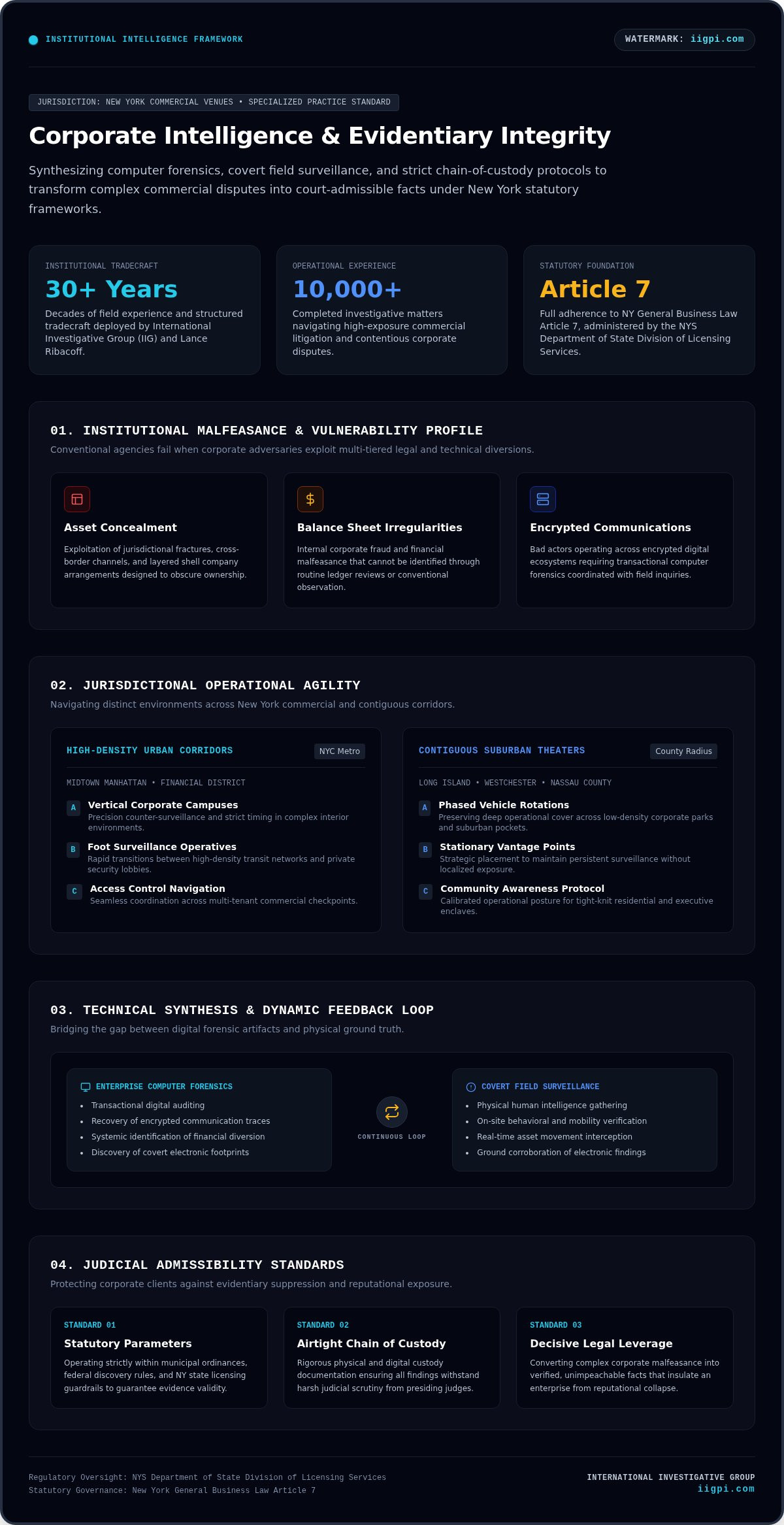
In the hyper-competitive corridors of Manhattan’s financial districts, the distinction between a secure institutional asset and a catastrophic liability often rests upon the depth of one’s strategic intelligence. It’s widely understood that the intricate architecture of New York’s regulatory environment, exemplified by the 2026 SEC transaction fee adjustments to $20.60 per million, demands a level of oversight that transcends conventional internal controls. This analysis provides a definitive examination of the strategic framework surrounding **corporate investigation services in NYC**, highlighting the specialized methodologies employed by experts like **Dan Ribacoff** and the **International Investigative Group** to insulate global organizations against systemic risks such as financial fraud and international partner instability. By reading this framework, you’ll gain an authoritative understanding of how elite investigative protocols translate raw data into definitive evidence for litigation and comprehensive risk assessments for mergers and acquisitions. We’ll begin by deconstructing the strategic pillars of institutional integrity before evaluating the forensic techniques essential for navigating the complex legal landscape of the current fiscal year.

Key Takeaways

  • Analyze the critical intersection between New York’s rigorous regulatory environment and the sophisticated forensic methodologies required for institutional asset protection.
  • Employ the strategic expertise of corporate investigation services nyc, Dan Ribacoff to conduct exhaustive due diligence and trace complex financial structures across international borders.
  • Understand the institutional necessity of third-party oversight to mitigate confirmation bias and ensure the objective integrity of high-stakes investigative reporting.
  • Develop a structured investigative protocol that effectively deploys forensic accountants and global surveillance teams based on precise institutional risk assessments.
  • Leverage three decades of forensic excellence to navigate the complex legal landscape of New York City with the discretion required by elite corporate entities.

The Landscape of Institutional Risk: Corporate Investigation Services in NYC

The operational environment for institutional entities in New York City is defined by an unparalleled concentration of capital and a commensurate density of systemic risk. Within this high-stakes ecosystem, the deployment of specialized corporate investigation services nyc, Dan Ribacoff becomes a fundamental necessity for maintaining institutional equilibrium. These services function as a critical mechanism for identifying and neutralizing threats that emerge from both internal irregularities and sophisticated external actors. By synthesizing forensic analysis with strategic intelligence, organizations can safeguard their reputational capital and ensure continuity amidst the volatile shifts of the global market. The catalysts for professional intervention often range from subtle anomalies in financial reporting to overt threats against intellectual property or executive integrity.

The Strategic Importance of the New York Financial Hub

New York City’s status as the epicenter of global finance creates a unique gravity for sophisticated financial crimes, where the sheer volume of transactions provides a veil for illicit activities. The region’s litigation environment is notably aggressive, demanding that evidence meet the highest standards of forensic integrity to withstand the scrutiny of both state and federal courts. In the specific context of New York City’s economic infrastructure, a corporate investigation represents the authoritative application of forensic methodologies and strategic intelligence to preserve the structural integrity of institutions contributing to a regional gross metropolitan product that currently exceeds $2 trillion. This economic scale necessitates a proactive approach to risk management. The cost of institutional failure in such a dense market often ripples through international supply chains and investment portfolios, making early detection a primary directive for executive leadership.

Regulatory Pressures and Compliance Frameworks

Compliance within the New York jurisdiction requires a nuanced understanding of the intersection between local mandates and federal statutes like the Sarbanes-Oxley Act and Anti-Money Laundering (AML) protocols. While internal audits provide a baseline of oversight, professional private and corporate investigations, such as those facilitated by corporate investigation services nyc, Dan Ribacoff, offer an essential layer of independent verification that addresses the gaps often overlooked by standard bureaucratic processes. These investigations are particularly vital when bridging the divide between internal reporting and the rigorous expectations of the Securities and Exchange Commission (SEC). This is especially true following the 2026 adjustments to transaction fee rates to $20.60 per million dollars, a move that signals heightened federal oversight. Maintaining a litigation-ready posture is no longer a reactive strategy; it’s a continuous requirement for institutional survival. Organizations must engage in persistent intelligence gathering to ensure that their defensive frameworks are robust enough to counter the evolving tactics of financial fraudsters and regulatory non-compliance risks.

Methodologies of Elite Corporate Intelligence and Forensic Analysis

The transition from reactive investigative measures to a proactive intelligence framework is essential for institutional survival within the New York financial ecosystem. Elite corporate investigation services nyc, Dan Ribacoff utilizes a multi-disciplinary approach that synthesizes deep-level reputational analysis with forensic financial rigor. This methodology ensures that decision-makers aren’t merely reacting to crises but are insulated by a comprehensive understanding of the risks inherent in complex global transactions. By adhering to best practices in corporate investigations, professional firms provide the evidentiary depth required for high-stakes litigation and regulatory compliance.

Sophisticated Due Diligence and Business Intelligence

The evaluation of high-value M&A targets and potential joint venture partners, particularly within emerging markets, requires a depth of intelligence that transcends standard public record searches. While basic verification confirms the existence of public records, strategic due diligence provides a multi-dimensional assessment of a target’s reputational integrity and future viability within a specific geopolitical context. Utilizing expansive global networks, investigators verify international asset claims and corporate histories, providing C-suite executives with the clarity necessary to navigate institutional risks. This level of scrutiny is vital when identifying “red flags” that internal departments might overlook due to organizational bias or limited geographic reach.

Forensic financial investigation complements this due diligence by tracing complex transactions across borders to uncover hidden asset structures. In an era where financial fraud often involves sophisticated shell companies and offshore accounts, the ability to reconstruct financial trails is paramount. These methodologies ensure that institutional integrity is maintained even when dealing with the most opaque international business partners. If your organization requires this level of analytical depth, considering a consultation on advanced due diligence protocols can be a decisive step in risk mitigation.

The Application of Digital and Computer Forensics

The integration of digital forensics has become a cornerstone in the identification of intellectual property theft and data breaches. As corporate assets increasingly reside in the digital domain, the preservation of electronic evidence must be executed with surgical precision to remain admissible in legal proceedings. Forensic technicians employ advanced tools to analyze encrypted communications and recover deleted data, often uncovering the “digital fingerprints” of internal malfeasance or external cyber threats. For a more detailed examination of these technical processes, refer to Computer Forensics: A Guide for Corporate and Legal Investigations.

Beyond the digital realm, surveillance remains a critical tool for verifying Arising Out of Employment and Course of Employment (AOE/COE) claims and safeguarding physical corporate assets. Professional surveillance operations provide the objective evidence necessary to mitigate fraudulent insurance claims and protect against internal theft. By combining these traditional investigative techniques with modern digital forensics, organizations can establish a robust defensive posture against a diverse spectrum of institutional threats.

Internal vs. External Investigations: The Strategic Advantage of Third-Party Oversight

The delegation of investigative responsibilities to internal security or human resources departments often introduces a fundamental conflict of interest that can compromise the integrity of a high-stakes inquiry. Within the high-pressure environment of Manhattan’s corporate sector, the deployment of corporate investigation services nyc, Dan Ribacoff provides a necessary layer of separation between the investigative process and internal organizational politics. Third-party oversight isn’t merely a preference; it’s a strategic imperative for institutions seeking to mitigate confirmation bias and insulate themselves from allegations of partiality. By engaging an external authority, a firm ensures that findings are based on objective forensic evidence rather than the subjective interpretations of internal stakeholders who may be influenced by existing power dynamics. This independent approach is essential for maintaining the institutional equilibrium established in the preceding phases of a risk mitigation framework.

Objectivity and the Mitigation of Internal Conflict

External investigators possess the unique ability to navigate complex internal hierarchies without the constraints of professional self-preservation or inter-departmental loyalties. This independence is critical when uncovering the root causes of systemic fraud or addressing whistleblower claims that involve executive-level misconduct. As a neutral arbiter, the professional investigator facilitates a discreet process that prioritizes the preservation of corporate reputation while ensuring that sensitive inquiries don’t disrupt day-to-day operations. Maintaining operational continuity is paramount during active investigations; external oversight allows the institution to continue its mission while the forensic team conducts its work with the necessary autonomy. This discretion prevents the internal destabilization that often accompanies high-profile corporate scandals.

Legal Admissibility and Evidentiary Integrity

The strategic advantage of third-party intervention extends directly into the courtroom, where the admissibility of evidence is determined by rigorous chain-of-custody protocols. Investigations conducted by corporate investigation services nyc, Dan Ribacoff are designed to meet the exacting standards of New York courts, utilizing personnel who adhere to the state’s 2026 licensing requirements, including the $10,000 surety bond mandate. Attorney-client privilege is often more effectively maintained when investigations are directed by external legal counsel through a third-party firm, creating a robust shield against discovery in civil litigation. Internal investigations often fail the litigation test in New York courts because they’re frequently perceived as self-serving exercises that lack the requisite independence and forensic rigor to satisfy judicial scrutiny. By contrast, a professionally managed external inquiry provides a definitive evidentiary record that stands up to the most aggressive cross-examination. If your organization is currently facing potential litigation, securing independent investigative oversight is a critical step in protecting your legal standing.

Implementing a Comprehensive Investigative Protocol for NYC Firms

The execution of a successful institutional defense necessitates a transition from passive observation to a structured, multi-phase investigative protocol. When engaging corporate investigation services nyc, Dan Ribacoff, the initial phase involves identifying the specific scope and objectives of the intelligence operation through a rigorous risk assessment. This preliminary analysis ensures that the investigative trajectory aligns with the organization’s broader strategic goals. Following this, the deployment of specialized resources occurs, including forensic accountants and global surveillance teams who possess the technical proficiency to operate across diverse legal jurisdictions. Real-time intelligence gathering then facilitates the synthesis of disparate data points into actionable insights, allowing for the formulation of a comprehensive report tailored for the board of directors. The final integration with legal counsel ensures that the evidence gathered supports asset recovery or subsequent litigation strategies with absolute forensic integrity. Organizations shouldn’t view these steps as isolated events but as a continuous cycle of institutional fortification.

Asset Search and Recovery: Tracing Hidden Funds

In the context of high-stakes bank fraud, the identification of assets obscured through shell companies or offshore accounts requires a sophisticated understanding of international financial architecture. The protocol for recovery involves coordinating with global agents to freeze and reclaim stolen corporate capital, a process that demands both speed and technical precision. This methodology is explored further in Corporate Fraud Investigation: A Definitive Guide for Business Leaders. For institutions seeking to reclaim lost capital, establishing a strategic asset recovery framework is the most direct path to restitution of misappropriated institutional assets. This phase is critical for restoring financial equilibrium after a significant breach of trust or systemic fraud.

Insurance Fraud Mitigation and Risk Management

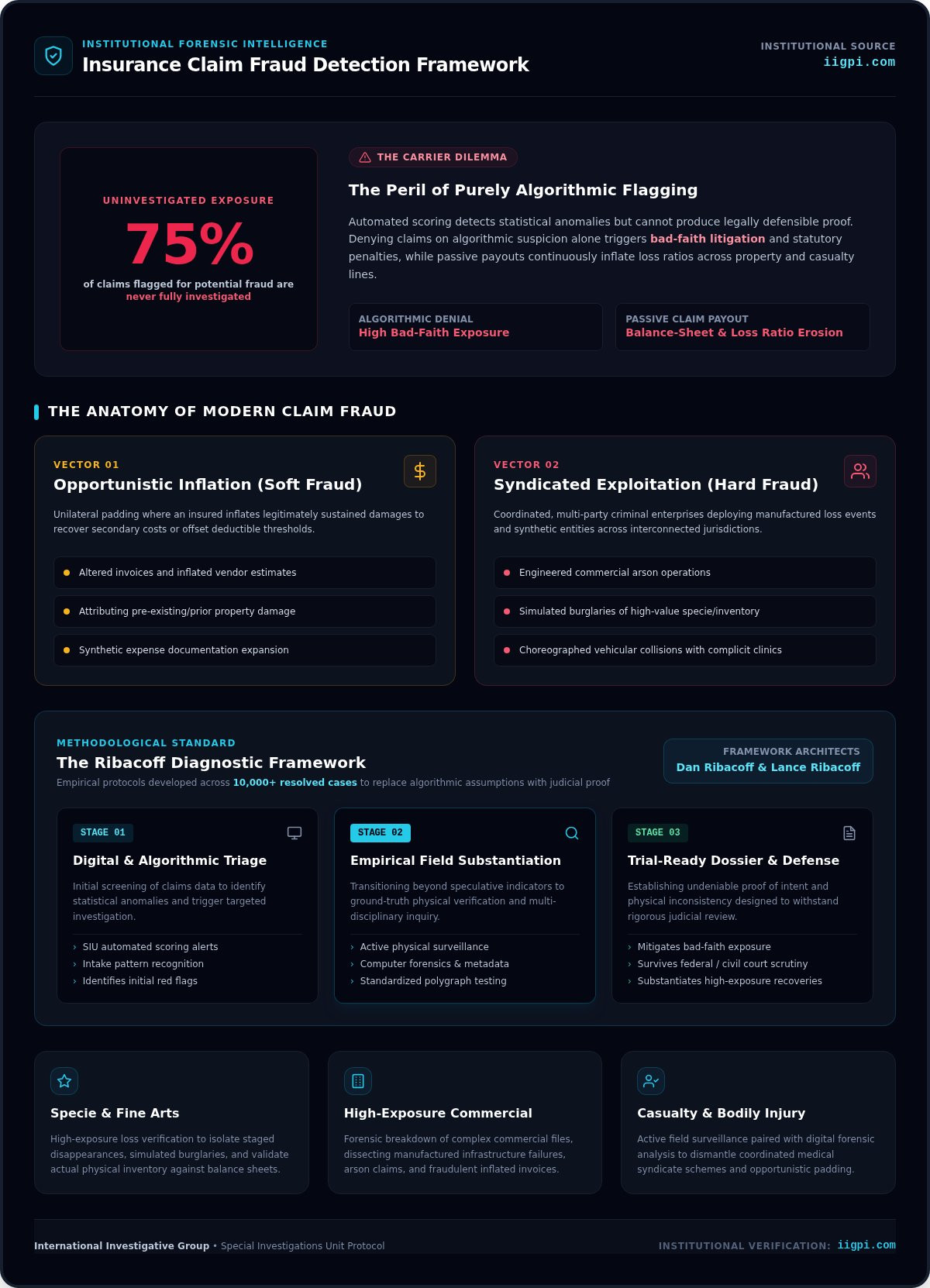
Protecting the corporate bottom line from systemic workers’ compensation fraud necessitates the use of surveillance and forensic analysis to contest inflated AOE/COE claims. These investigations serve as a critical component of a broader risk management strategy, ensuring that institutional resources aren’t depleted by fraudulent activities. A notable benchmark of investigative excellence was established through the successful recovery of $12 million in fraudulent burglary claims, demonstrating the tangible impact of professional oversight. By maintaining this level of scrutiny, firms can deter future malfeasance and preserve their financial stability in the competitive New York market. The integration of these investigative findings into broader risk management policies provides a sustainable defense against the evolving tactics of fraudulent claimants.

International Investigative Group: Decades of Forensic Excellence in NYC

The institutional legacy of International Investigative Group is defined by a unique synthesis of traditional law enforcement rigor and the sophisticated requirements of modern business intelligence. For over three decades, the firm has operated as a definitive authority within the New York City corporate and legal landscape, successfully resolving more than 10,000 cases through an unwavering commitment to forensic precision. The leadership of corporate investigation services nyc, Dan Ribacoff reflects this dual expertise, providing a strategic framework that addresses the complexities of institutional risk with the intellectual depth required by global leaders. By integrating academic rigor with decades of operational experience, the organization has positioned itself as an essential partner for prestigious law firms and C-suite executives who demand more than superficial oversight. This history of excellence ensures that every inquiry is conducted with the gravity and technical proficiency necessary to withstand the highest levels of judicial and regulatory scrutiny.

The Global Reach of an NYC-Based Firm

Operating from its Manhattan headquarters, the firm manages a centralized command structure that oversees worldwide intelligence operations across international borders. This NYC-based nexus allows for the seamless coordination of a global network of agents, ensuring that investigations into international asset structures or cross-border fraud are executed with absolute discretion and speed. The ability to project influence and gather intelligence on a macro-level is what distinguishes an elite firm from localized agencies that lack the infrastructure for global reach. To explore these specialized capabilities further, you may consult with our senior investigators regarding your strategic intelligence needs to develop a tailored response to your organization’s specific vulnerabilities. This centralized command ensures that disparate data points from various jurisdictions are synthesized into a coherent, actionable strategy for the client.

Commitment to Discretion and Intellectual Rigor

The firm’s dedication to intellectual rigor is reflected in its methodology, which prioritizes the transformation of raw data into high-level strategic intelligence for decision-makers. This approach is particularly vital for high-level executives who require objective, defensible findings to protect institutional integrity and long-term reputation. Elite NYC corporations trust International Investigative Group because of its ability to navigate the most sensitive internal matters with surgical precision and total confidentiality. By maintaining this standard of excellence, the firm continues to bridge the gap between complex regulatory requirements and the practical necessity of institutional asset protection. International Investigative Group remains the premier authority in corporate investigations, providing the definitive intelligence necessary to safeguard global institutional interests in an increasingly volatile financial landscape.

Advancing Institutional Resilience Through Strategic Intelligence

The preservation of institutional integrity within New York’s sophisticated financial ecosystem requires a transition from reactive security measures to a comprehensive framework of strategic intelligence. This analysis has demonstrated that the objective oversight provided by elite corporate investigation services nyc, Dan Ribacoff is indispensable for mitigating the inherent biases of internal departments and satisfying the rigorous evidentiary standards of modern litigation. By leveraging a global network of agents and over 30 years of specialized experience in the New York City landscape, organizations can effectively insulate themselves against systemic risks. International Investigative Group has successfully resolved over 10,000 cases, demonstrating a unique capacity to address $100M+ financial fraud and complex insurance claims with surgical precision. It’s through this rigorous commitment to forensic depth that organizations maintain their competitive advantage in an era of heightened regulatory scrutiny. Secure your institutional integrity with International Investigative Group’s elite corporate solutions. Proactive engagement with forensic excellence ensures your institution remains a resilient leader in global commerce.

Frequently Asked Questions

What are the primary benefits of hiring a corporate investigator in NYC compared to using internal resources?

External corporate investigation services nyc, Dan Ribacoff, provide a level of objectivity and forensic depth that internal human resources or security departments often cannot achieve due to inherent organizational hierarchies. Professional investigators utilize specialized methodologies and advanced surveillance tools designed to withstand the aggressive litigation environment of New York. This third-party oversight effectively mitigates confirmation bias and ensures that the final reporting is an impartial, defensible record of facts for the board of directors.

How does a professional firm ensure the confidentiality of a sensitive corporate investigation?

Confidentiality is maintained through the implementation of strict data compartmentalization and the use of secure, encrypted communication channels for all intelligence reporting. When an investigation is directed by external legal counsel, the work product can often be protected under attorney-client privilege, shielding sensitive findings from discovery during civil litigation. This structured approach prevents internal leaks and preserves the organization’s reputation while sensitive executive-level inquiries are conducted with total discretion.

What is the typical duration of a complex financial fraud investigation in a corporate setting?

The timeline for a complex financial fraud investigation typically spans from several weeks to several months, depending on the volume of transactions and the number of international jurisdictions involved. Each operation begins with a precise scope identification to establish a structured investigative trajectory. The synthesis of disparate data points into actionable insights requires a measured, deliberate pace to ensure that the resulting evidence meets the highest standards of forensic integrity.

Can evidence gathered by a private investigator be used in New York City civil and criminal courts?

Evidence gathered by a licensed investigator is fully admissible in New York City courts provided that it’s collected through strict chain-of-custody protocols that meet judicial standards. Investigators must adhere to the 2026 New York State licensing requirements, including the $10,000 surety bond mandate, to ensure their findings are forensically sound. Professional investigators with law enforcement backgrounds are particularly effective as expert witnesses, providing credible testimony that can withstand rigorous cross-examination during high-stakes proceedings.

What specific certifications or backgrounds should I look for in a corporate investigative firm?

Institutional clients should seek firms led by principals with extensive law enforcement backgrounds and specialized expertise in forensic accounting or digital intelligence. It’s critical to verify that the firm and its investigators meet the 2026 New York Department of State requirements, which include at least three years of qualifying experience and successful completion of the state exam. Firms that integrate academic rigor with decades of operational experience are best positioned to serve elite C-suite clients and prestigious law firms.

How do corporate investigation services assist in high-value merger and acquisition due diligence?

Professional investigators provide strategic intelligence that extends far beyond basic public record verification by conducting deep-level reputational and financial analysis of acquisition targets. This process identifies hidden liabilities, undisclosed conflicts of interest, and potential regulatory non-compliance risks that could jeopardize the transaction’s viability. By utilizing global networks to verify international asset claims, investigators provide decision-makers with the clarity necessary to navigate the complex risks inherent in $100M+ mergers.

What is the role of computer forensics in modern corporate investigations?

Computer forensics functions as a critical mechanism for identifying digital malfeasance and preserving electronic evidence related to intellectual property theft or data breaches. Specialized technicians analyze encrypted communications and recover deleted data to establish a “digital fingerprint” of illicit activities. This forensic precision ensures that electronic evidence is collected in a manner that remains admissible in court, providing a robust defense against the evolving tactics of internal and external cyber threats.

How does the International Investigative Group manage investigations that cross international borders?

The International Investigative Group manages worldwide intelligence operations through a centralized NYC command structure that coordinates a global network of specialized agents. This infrastructure allows the firm to execute complex inquiries across borders with the same discretion and forensic rigor applied to domestic matters. By bridging the gap between New York’s regulatory landscape and emerging markets, the firm ensures that institutional assets are protected regardless of their geographic location or the complexity of the local legal environment.

Daniel Ribacoff

Article by

Daniel Ribacoff

Founder and CEO of International Investigations. IIGPI.com

Over 35 years as a Licensed Private Investigator and Certified Polygraph Examiner.

11 June 2026

The efficacy of a modern intelligence operation rests not upon the mere accumulation of raw data, but upon the strategic synthesis of forensic precision and psychological acumen. In an era where sophisticated financial fraud and the clandestine concealment of global assets have become increasingly complex, many organizations find themselves ill-equipped to secure court-admissible evidence that can withstand rigorous legal scrutiny. This article provides an authoritative exploration of elite methodologies and the strategic legacy of Dan Ribacoff, Investigations within the realm of global private intelligence. By examining these advanced frameworks, readers will gain an intellectual understanding of how a structured, expert-led approach facilitates the successful recovery of stolen assets and the comprehensive mitigation of corporate risk. We’ll analyze the specific tactical shifts required to transition from basic surveillance to high-level strategic analysis, ensuring that every intelligence gathering effort produces objective and actionable results. This preview into sophisticated investigative logic serves as a foundation for decision-makers who demand a higher standard of intellectual rigor in their pursuit of truth and asset protection.

Key Takeaways

  • Analyze the strategic evolution of private intelligence through the transition of elite law enforcement expertise into a global corporate framework.
  • Evaluate the critical integration of polygraph testing and computer forensics within the specialized services of Dan Ribacoff, Investigations to mitigate sophisticated financial and digital risks.
  • Examine the rigorous investigative methodologies employed in high-stakes international asset recovery, ranging from significant currency retrievals to the restitution of fine art.
  • Establish a comprehensive criteria for selecting elite investigative representation in New York City by prioritizing licensure, bonding, and profound operational experience.
  • Gain insight into the future of global private intelligence and the systematic application of forensic technology to resolve the most intricate international disputes.

The Genesis of International Investigative Group: Dan Ribacoff’s Strategic Vision

The International Investigative Group (IIGPI) serves as a premier global intelligence firm, operating at the intersection of forensic science and strategic risk management. This institutional character was forged through the transition of Dan Ribacoff from a disciplined background in law enforcement to a position of private sector leadership. By synthesizing rigorous investigative protocols with sophisticated business acumen, the firm has established a formidable presence in the international intelligence landscape. The global reputation of Dan Ribacoff, Investigations is built upon a synthesis of traditional detective work and modern technological analysis. The credibility of this approach is underscored by a record of over 10,000 successfully resolved cases; this metric reflects both operational longevity and a consistent adherence to high-level evidentiary standards. Such a legacy demonstrates that the firm doesn’t merely collect data, but provides a comprehensive analytical framework for its dissemination.

A Legacy in Law Enforcement and Private Intelligence

A former law enforcement perspective serves as the bedrock for modern surveillance and intelligence protocols within the organization. This background ensures that every private investigator operating under the firm’s banner maintains a strict adherence to court-admissible standards. With a 30-year operational history centered in the complex legal and geographic environment of New York City, the firm possesses a deep understanding of urban investigative dynamics. In Manhattan, where the complexity of the environment often necessitates two-person surveillance teams for effective coverage, this experience is vital. This expertise contributed to the recognition of Dan Ribacoff as one of the “Top 15 Investigators in the US.” It’s a distinction that highlights a career defined by intellectual rigor and successful outcomes in high-stakes environments.

The Philosophical Foundations of IIGPI

The philosophical core of International Investigative Group is rooted in a mission to resolve the most intricate and multifaceted investigative challenges. While the firm operates on a global scale, its “Family Owned & Operated” dynamic functions as a critical marker of institutional trust and accountability. This internal structure facilitates a high degree of discretion and personal investment in client outcomes. Trust is foundational. This model contrasts sharply with larger, impersonal corporate entities where the nuance of a case might be lost. From these foundational principles, the firm has cultivated an extensive global network of agents. This allows for the seamless execution of complex investigations across international borders, effectively bridging the gap between local expertise and global reach.

Sophisticated Methodologies in Modern Corporate and Forensic Investigations

The modern investigative paradigm demands a synthesis of scientific verification and empirical data collection to address the complexities of 2026’s corporate landscape. Within the professional sphere of Dan Ribacoff, Investigations, this synthesis is realized through the systematic application of advanced polygraphy, digital analysis, and physical technical countermeasures. The execution of high-level corporate and forensic investigations requires a multifaceted approach that transcends traditional observation. It necessitates an intellectual framework where raw data is transformed into court-admissible evidence. By integrating surveillance as a tool for empirical intelligence gathering alongside electronic bug sweeps, organizations can maintain absolute confidentiality while proactively identifying internal threats. This methodological rigor ensures that corporate theft and fraud are not merely documented, but strategically dismantled through objective findings.

Advanced Polygraph Protocols and Scientific Credibility

The application of polygraphy within a corporate context rests upon the examiner’s adherence to the most stringent scientific standards. Dan Ribacoff received foundational training under Gene Sandacz, a distinguished figure in the field, and operates in strict accordance with American Polygraph Association (APA) standards. This high-level training is essential when evaluating the admissibility of polygraph findings in federal and state matters, where technical precision is scrutinized. In internal corporate investigations, the polygraph serves as a primary instrument for isolating culpability in cases of intellectual property theft or significant financial embezzlement. It provides a level of psychological depth that traditional interviews cannot achieve. Organizations seeking to fortify their internal security protocols often utilize specialized polygraph testing to resolve disputes that lack physical evidence.

Digital Forensics and Cyber-Intelligence

As corporate entities transition into increasingly decentralized digital environments, the necessity of computer forensics has become axiomatic for legal and risk management teams. The process involves the meticulous recovery and analysis of data to establish a chronological chain of events that can withstand cross-examination. In 2026, the intersection of physical surveillance and digital tracking provides a comprehensive view of an subject’s activities, bridging the gap between offline behavior and online footprints. This cyber-intelligence framework allows investigators to identify sophisticated digital fraud that would otherwise remain obscured by encryption or data deletion. The objective is to provide a definitive record of digital interactions, ensuring that corporate assets remain protected against both internal and external actors. This forensic approach ensures that every byte of data serves as a potential pillar of a legal case.

Global Intelligence in Practice: High-Stakes Recoveries and Defense

The transition from theoretical methodology to operational execution is best illustrated by high-stakes asset retrieval. The $8.1 million cash recovery following the Hudson Truck Robbery remains a definitive case study in physical asset tracking. This operation required a synthesis of rapid-response surveillance and deep-network intelligence to secure the currency before it could be laundered or dispersed through clandestine channels. It highlights the capacity of Dan Ribacoff, Investigations to operate under extreme pressure while maintaining the evidentiary chain required for subsequent prosecution. Success in such environments isn’t a matter of chance; it’s the result of a structured analytical framework that anticipates the movements of criminal actors across jurisdictional boundaries.

The Art of the Sting and Fine Arts Recovery

Fine arts restitution involves navigating layers of international extortion and black-market dynamics. When recovering works by Picasso and Monet, the investigative process often mirrors geopolitical negotiations. It’s not just about finding the object. It’s about managing the legal and physical risks of the recovery itself. These operations frequently involve close collaboration with federal law enforcement agencies to ensure that the return of stolen assets is legally sound and the perpetrators are held accountable. The global reach of the firm has facilitated successful outcomes in volatile regions like Haiti and the Dominican Republic, where local socioeconomic instability complicates traditional investigative protocols. Every recovery acts as a testament to the firm’s ability to bridge geographic and cultural divides in the pursuit of justice.

Countering Global Terrorism and Large-Scale Fraud

The firm’s appointment by the US District Court in matters related to state-sponsored terrorism underscores its institutional authority and intellectual depth. Identifying and locating assets belonging to the Iranian government within the United States required a sophisticated understanding of international finance and property law. This work contributed to a $180 million judgment, demonstrating a level of expertise that far exceeds standard private detective work. Such large-scale operations necessitate a comprehensive corporate fraud investigation framework that can parse through complex shell companies and foreign holdings. Beyond financial recoveries, the firm’s contributions to the defense in the Amadou Diallo matter illustrate its role in high-profile litigation support. By providing the empirical intelligence necessary to navigate intense public and legal scrutiny, the firm ensures that the defense is rooted in objective fact rather than conjecture.

The selection of an elite investigator in New York City requires an analytical framework that prioritizes regulatory adherence and operational pedigree. For those engaging with Dan Ribacoff, Investigations, the distinction between a standard agency and an elite firm becomes evident through the lens of institutional credibility. In New York, the regulatory landscape is stringent. An individual license requires a $400 fee while a corporate license is $500, both necessitating a $10,000 surety bond. These aren’t just administrative hurdles. They represent the baseline of professional accountability. Former law enforcement experience acts as a critical differentiator, as it instills a discipline that’s often absent in those without formal training. A global network of agents is no longer a luxury but a necessity for modern intelligence gathering, allowing for the seamless transition of operations across international borders. Media presence, while sometimes viewed as promotional, serves as a marker of public trust and professional validation within a highly scrutinized industry.

Regulatory Compliance and Professional Standards

Professional standards are further solidified by appointments under the Criminal Justice Act, which signifies a high level of trust from the federal judiciary. Ethical boundaries in surveillance services are paramount, particularly in New York where privacy laws are complex and strictly enforced. Specialized certifications in post-conviction testing and polygraphy provide an additional layer of scientific rigor to the investigative process. These credentials ensure that the findings aren’t only accurate but also defensible within the highest levels of the legal system. It’s this commitment to academic and professional excellence that defines the upper echelon of the private intelligence community. Firms must also maintain liability insurance with a minimum of $100,000 per occurrence if they employ security guards, ensuring that corporate clients are protected from secondary risks.

The Importance of a Proven Track Record

The metric of 10,000 cases solved serves as a significant risk-mitigation factor for potential clients. This volume of experience indicates a firm that’s encountered and resolved nearly every conceivable investigative obstacle. Working with a diverse clientele, including celebrities, high-profile attorneys, and government agencies, necessitates a level of discretion and strategic planning that’s rare in the general market. When vetting a private investigator for corporate needs, decision-makers should consider several key factors:

  • Verification of active New York State licensure and the required $10,000 surety bond.
  • Evidence of liability insurance, specifically the $300,000 aggregate minimum required for firms employing guards.
  • A documented history of federal court appointments or work related to the Criminal Justice Act.
  • The existence of a global operational network to handle cross-border asset recovery and due diligence.

Selecting a partner with this level of institutional depth ensures that your organization’s interests are protected by the highest standards of intelligence gathering. To secure elite representation for your most complex challenges, consult with the strategists at International Investigative Group to establish a comprehensive risk mitigation plan.

Conclusion: The Future of Private Intelligence with IIGPI

The evolution of private intelligence under the leadership of Dan Ribacoff represents a fundamental shift toward a more analytical and technology-driven discipline. This transformation has moved the sector away from anecdotal observation toward a structured synthesis of forensic data and strategic intelligence. The ongoing expansion of the firm’s global agent network ensures that Dan Ribacoff, Investigations remains at the forefront of resolving the most intricate international disputes. By prioritizing the integration of emerging investigative technologies, the firm continues to redefine the standards of empirical evidence collection. This commitment to innovation provides a definitive path for engagement for those facing high-stakes corporate or personal challenges. It’s a trajectory defined by the pursuit of objective truth through rigorous, expert-led methodologies.

A Global Paradigm for Investigative Excellence

The organization occupies a unique strategic position at the intersection of international law and corporate risk management. It serves as a primary intelligence resource for insurance companies and self-insured organizations that require objective, court-admissible findings to mitigate significant financial exposure. This institutional depth allows for a comprehensive approach to risk that spans from internal theft to complex global asset location. This “total intelligence” model ensures that every investigative effort is aligned with the broader strategic goals of the client. For direct consultation on these specialized services, visit the International Investigative Group homepage to initiate a formal review of your specific investigative requirements. The firm’s ability to bridge the gap between regional dynamics and global systems remains its most significant operational advantage.

Securing Your Interests in an Uncertain Global Climate

In an increasingly volatile global environment, the necessity for professional security and surveillance solutions has never been more acute. Organizations must leverage the expertise of a “Top 15” US investigator to ensure their strategic interests are protected against both clandestine and overt threats. The firm maintains a posture of constant readiness, offering 24/7 availability to address emerging crises as they develop. By securing elite investigative support, decision-makers can navigate systemic challenges with the confidence that their intelligence is gathered through the most rigorous professional standards. Truth isn’t just discovered; it’s meticulously documented through expert analysis. This proactive stance is essential for any entity seeking to mitigate risk and recover assets in a landscape where sophisticated fraud and digital threats are becoming the norm.

Advancing Global Strategic Intelligence and Risk Mitigation

The synthesis of empirical data collection and high-level strategic analysis remains the definitive standard for navigating modern global complexities. This exploration has established that elite investigative outcomes are predicated upon a rigorous adherence to scientific protocols, such as advanced polygraphy and digital forensics, while maintaining a deep understanding of jurisdictional regulatory frameworks. The methodologies employed by Dan Ribacoff, Investigations demonstrate that successful asset recovery and risk mitigation require an intellectual framework that’s both disciplined and globally minded. By prioritizing former law enforcement expertise and federal court-appointed standards, organizations can ensure their interests are protected by an authoritative presence in the private intelligence sector.

With a distinguished history of over 10,000 cases solved internationally and a reputation as a Top 15 Private Investigator in the United States, the firm provides an unparalleled level of institutional depth for high-level decision-makers. You’re encouraged to leverage this legacy of former law enforcement and federal court-appointed expertise to resolve your most intricate challenges. Consult with Dan Ribacoff and the International Investigative Group for Elite Solutions to fortify your corporate security and intelligence operations. Achieving clarity in the face of sophisticated global fraud is possible with a partner committed to intellectual rigor and objective truth.

Frequently Asked Questions

Who is Dan Ribacoff and what is his role at International Investigative Group?

Dan Ribacoff is the founder and executive director of the International Investigative Group (IIGPI), where he oversees the firm’s global intelligence operations. He’s an elite investigator with over 30 years of experience and serves as a federal court-appointed expert in complex litigation matters. His leadership focuses on the strategic synthesis of law enforcement discipline and modern forensic technology to resolve high-stakes corporate and personal disputes.

What types of investigations does Dan Ribacoff specialize in?

Dan Ribacoff specializes in a broad range of sophisticated services including corporate fraud, computer forensics, and polygraph testing. His expertise is frequently utilized for high-value asset recovery, insurance investigations, and complex matrimonial matters that require precise surveillance. The specialized nature of Dan Ribacoff, Investigations ensures that every case is approached with a focus on securing court-admissible evidence and mitigating significant corporate risk.

Is polygraph testing conducted by Dan Ribacoff admissible in New York courts?

Polygraph results are generally not admissible in New York criminal trials unless all parties involved formally stipulate to their inclusion in the record. However, they’re extensively used in civil litigation, internal corporate investigations, and post-conviction testing to identify culpability or establish credibility. The firm adheres to the American Polygraph Association’s scientific standards to ensure that every examination maintains the highest possible level of professional integrity.

What should I look for when hiring a private investigator in NYC?

Essential criteria for selecting a private investigator in New York include active state licensure, a $10,000 surety bond, and comprehensive liability insurance. Prospective clients should also prioritize firms with a documented history of former law enforcement experience and federal court appointments. Elite agencies demonstrate a global reach and a track record of handling high-profile cases for attorneys, government entities, and large corporate organizations.

How does International Investigative Group handle international asset searches?

International asset searches are managed through a global network of specialized agents who possess deep knowledge of local financial systems and jurisdictional laws. The firm utilizes a synthesis of digital forensics and traditional intelligence gathering to uncover holdings obscured by shell companies or offshore accounts. This methodology allows for the identification and recovery of assets across multiple borders while maintaining the strict evidentiary standards required for legal restitution.

What high-profile cases has Dan Ribacoff and his firm solved?

The firm’s portfolio includes the successful $8.1 million cash recovery following the Hudson Truck Robbery and the restitution of stolen fine art by masters like Picasso and Monet. They’ve also been appointed by the US District Court to locate Iranian government assets within the United States, contributing to a $180 million judgment. These cases illustrate the firm’s capacity to resolve investigative problems of significant geopolitical and financial consequence.

Does IIGPI provide security and armed guard services for corporate events?

Yes, the International Investigative Group provides professional security and armed guard services specifically designed for corporate events and high-risk environments. These services are integrated with the firm’s broader intelligence protocols to provide comprehensive protection for personnel and physical assets. Every security detail is managed by professionals who maintain the highest standards of discretion and operational readiness required for elite corporate and private engagements.

How can I contact Dan Ribacoff for a confidential investigation?

Engagement with the firm begins with a formal consultation through the International Investigative Group’s official digital platform or their New York City headquarters. The organization maintains 24/7 availability to address urgent investigative needs and ensure an immediate strategic response to emerging crises. All inquiries are handled with the absolute discretion and professional confidentiality expected by high-level decision-makers and legal counsel seeking specialized intelligence services.

Daniel Ribacoff

Article by

Daniel Ribacoff

Founder and CEO of International Investigations. IIGPI.com

Over 35 years as a Licensed Private Investigator and Certified Polygraph Examiner.

10 June 2026

During the initial six weeks of 2026, cyberattacks targeting professional services entities within the New York metropolitan area escalated by a staggering 47 percent, a metric that underscores the profound volatility of the current digital threat landscape. For the modern executive, the realization that a corporate data breach investigation nyc has evolved into a critical instrument of risk mitigation is often accompanied by the daunting pressure of the NY SHIELD Act’s mandatory 30-day reporting window. This examination offers an authoritative analysis of the Ribacoff Protocol, an elite forensic methodology engineered to decipher the technical intricacies of contemporary encryption while shielding organizations from the specter of massive class-action liabilities.

You’ll gain a comprehensive understanding of the strategic frameworks necessary to identify sophisticated threat actors and generate definitive forensic reports suitable for rigorous board-level scrutiny. Our discourse previews the essential protocols for maintaining compliance with both state and federal evidentiary standards; this ensures that your organization’s response is as legally unassailable as it’s technically profound. By prioritizing intellectual rigor and forensic precision, we’ll explore how to transform a chaotic digital crisis into a structured, evidence-based defensive posture.

Key Takeaways

  • Examine the paradigm shift in digital exfiltration and the deployment of the four-phase IIGPI Protocol as a structured framework for the mitigation of systemic corporate risk.
  • Comprehend the complex jurisdictional requirements of a corporate data breach investigation nyc to ensure it’s unassailable under the rigorous New York rules of evidence.
  • Discover advanced forensic methodologies designed for the recovery of obscured system logs and the penetration of end-to-end encryption within enterprise communications.
  • Recognize how scholarly forensic reporting and expert witness testimony bridge the gap between technical data and executive-level strategic decision-making.
  • Assess the institutional value of elite investigative partnerships by prioritizing firms that have successfully resolved over 10,000 cases during three decades of professional practice.

The Paradigm of Corporate Data Breach Investigation in the NYC Ecosystem

The nature of digital compromise has transitioned from rudimentary credential theft to sophisticated, multi-stage exfiltration campaigns that prioritize long-term persistence within a network. A formal data breach overview identifies these events as security incidents where sensitive or protected data is viewed, copied, or transmitted without authorization. In the context of a corporate data breach investigation nyc, this process is defined as the systematic identification and analysis of unauthorized network access. It’s an intellectual exercise in reconstructing an adversary’s narrative through the lens of digital artifacts. Every successful corporate data breach investigation nyc requires a synthesis of technical expertise and strategic legal foresight to withstand the scrutiny of the modern judicial system.

Within the Manhattan legal ecosystem, the intersection of digital forensics and corporate liability creates a high-stakes environment where technical findings must be beyond reproach. Standard cybersecurity firms frequently prioritize remediation and network uptime over forensic preservation. This tactical preference often leads to the accidental destruction of volatile memory or the alteration of file metadata. Such oversights render the resulting data inadmissible in formal litigation, leaving the corporation vulnerable to massive class-action liabilities. Forensic investigators, by contrast, utilize write-blockers and bit-stream imaging to ensure that the digital crime scene remains pristine for future testimony.

The NYC Legal and Regulatory Landscape

The NY SHIELD Act mandates that organizations identify breaches in the most expedient time possible, often requiring forensic clarity within 30 days of discovery. Within the Southern District of New York (SDNY), the evidentiary bar is exceptionally high. Digital evidence must be handled with a verified chain of custody to support potential criminal or civil actions. The May 2026 NYC Health + Hospitals breach, which impacted 1.8 million individuals, illustrates the catastrophic liability that follows when forensic discovery is delayed or when third-party vulnerabilities are not investigated with sufficient rigor. Regulatory compliance isn’t a passive state; it’s an active investigative requirement.

Digital Artifacts as Corporate Assets

Modern 2026 encryption standards have transformed digital artifacts into complex repositories of corporate intelligence that require specialized intervention to decrypt and analyze. High-value targets now include biometrics, granular geolocation data, and proprietary intellectual property stored across distributed cloud environments. Mobile devices have transitioned into comprehensive intelligence hubs. They hold encrypted communications that traditional tools often fail to extract. Professional computer forensics is essential to navigate these layers of security without compromising the integrity of the underlying data. By 2026, the proliferation of post-quantum cryptographic standards has made traditional brute-force methods obsolete, requiring investigators to rely on sophisticated memory forensics to retrieve plaintext data.

The IIGPI Investigative Framework: A Synthesis of Forensic Rigor and Strategic Oversight

The IIGPI Protocol represents an elite synthesis of forensic science and strategic intelligence, specifically designed to address the volatility inherent in a corporate data breach investigation nyc. Under the strategic leadership of Dan Ribacoff, the organization leverages decades of specialized law enforcement experience to navigate digital forensic challenges that typically baffle standard cybersecurity firms. This methodology isn’t merely a technical response; it’s a “Think Tank” operation where complex digital puzzles are analyzed through a lens of institutional expertise and historical precedence. By treating every breach as a unique geopolitical event, the protocol ensures that the investigation accounts for both technical anomalies and the human motivations driving the intrusion.

Lance Ribacoff further elevates this framework by integrating global agent networks, allowing for cross-jurisdictional data tracking that transcends geographical boundaries. This global perspective is essential when threat actors operate from decentralized nodes, necessitating a dynamic response that mirrors their complexity. While meeting NYS breach notification requirements remains a fundamental regulatory necessity, the IIGPI framework focuses on the private investigative protocols required to actually resolve the breach and identify the perpetrator. Organizations requiring this level of rigor often initiate corporate investigations to secure their digital perimeter and identify the provenance of an attack before liabilities escalate.

Phases of the IIGPI Protocol

Phase 1 focuses on immediate device isolation and the preservation of the digital state, ensuring that volatile data in RAM or temporary system files remains preserved for judicial review. Phase 2 involves advanced extraction methodologies, where investigators distinguish between logical data acquisition, which captures accessible files, and physical data acquisition, which retrieves raw data from the storage medium. Phase 3 enters the realm of deep-dive analysis, where experts decrypt obscured artifacts and identify ghost applications used for clandestine data exfiltration. This phase is critical for uncovering evidence that sophisticated actors believe they’ve successfully purged from the system.

The Ribacoff Methodology in Practice

The efficacy of this approach is rooted in 30 years of investigative tradecraft, which informs every aspect of modern computer forensics. It bridges the critical gap between raw data extraction and actionable corporate intelligence, providing board-level decision-makers with the clarity needed to manage reputational and legal risks. Strategic coordination between the NYC headquarters and global agents ensures that even the most fragmented digital trails are reconstructed into a cohesive narrative. This process transforms disparate logs into a definitive account of the breach, allowing corporations to move from a defensive posture to an informed, strategic response.

The technical success of a corporate data breach investigation nyc is rendered inconsequential if the resulting evidence fails to meet the stringent admissibility requirements of the New York judicial system. In the high-stakes environment of Manhattan’s commercial divisions, the transition from a digital crime scene to a courtroom exhibit requires a meticulous adherence to the New York Rules of Evidence. Every byte of data retrieved must be accompanied by a comprehensive narrative that accounts for its origin, preservation, and analysis. Securing an elite private investigator nyc isn’t merely a tactical choice for discovery; it’s a strategic necessity to ensure that the evidentiary integrity of the investigation remains unassailable under judicial review.

New York courts historically rely on the Frye standard to determine the admissibility of scientific evidence, requiring that the methodologies employed are generally accepted within the relevant professional community. However, in cases involving federal jurisdictions like the Southern District of New York, the more expansive Daubert factors often apply, demanding a demonstration of peer-reviewed techniques and known error rates. A professional corporate data breach investigation nyc must therefore be conducted with a dual-track awareness of these standards. This ensures that the forensic findings can support a corporation’s defensive posture or facilitate the pursuit of damages against malicious actors without the risk of summary exclusion.

Unassailable Chain of Custody Protocols

Establishing an unassailable chain of custody requires a granular level of documentation for every physical and digital interaction with the evidence. Investigators utilize bit-stream forensic imaging and unique cryptographic hash values, such as SHA-256, to prove that the data remains identical to its original state at the moment of seizure. Any deviation in these protocols, however slight, provides opposing counsel with the leverage needed to argue for the suppression of critical evidence. Procedural errors in the NYC jurisdictional landscape are frequently the primary cause of failed litigation, making the rigorous standards of forensic preservation the foundation of any successful corporate defense.

The Forensic Report as a Legal Instrument

A scholarly forensic report serves as the primary bridge between complex binary data and the decision-makers within the legal system. It translates technical artifacts into a structured, authoritative narrative that judges, juries, and regulatory bodies can comprehend with clarity. The role of the expert witness extends beyond mere data presentation; it involves defending the investigative process against aggressive cross-examination through rigorous technical validation. Utilizing specialized computer forensics allows an organization to validate its cybersecurity safeguards while providing the definitive proof required to mitigate liability or identify internal threats with surgical precision.

Advanced Forensic Methodologies: Uncovering Exfiltrated Data and Obscured Artifacts

Sophisticated threat actors in 2026 don’t merely leave digital traces; they actively employ anti-forensic measures to obfuscate their presence. A robust corporate data breach investigation nyc must consequently move beyond surface-level log analysis to utilize data carving. This technique recovers fragmented artifacts from unallocated space on high-capacity enterprise servers. Such precision is essential when navigating end-to-end encryption in messaging platforms like Signal or WhatsApp, where ephemeral data is often leveraged to coordinate illicit exfiltration. Identifying “ghost” applications or hidden partitions requires a granular examination of system registries, ensuring that no clandestine communication channel remains unscrutinized.

The distinction between data discovery and strategic intelligence is profound. While finding a deleted file is a technical success, interpreting its role within a broader campaign of espionage provides the intellectual depth required for board-level review. This level of analysis allows investigators to reconstruct the adversary’s intent, distinguishing between random opportunistic probes and targeted intellectual property theft. It’s not enough to know that a breach occurred. One must understand the adversary’s narrative to prevent future recurrence.

Data Carving and Unallocated Space Analysis

Data carving bypasses the file system to identify file headers and footers directly within raw disk clusters, allowing for the reconstruction of fragmented documents that were intentionally purged. Establishing precise timelines of unauthorized exfiltration through metadata analysis often reveals that the breach originated through a third-party vendor’s compromised access point. Identifying these supply chain vulnerabilities is a core component of a modern corporate data breach investigation nyc. It requires a meticulous reconstruction of the file system’s state before the intrusion occurred.

Strategic Intelligence in Corporate Fraud

Many digital breaches serve as the primary mechanism for internal collusion or large-scale intellectual property theft. Applying the formal corporate fraud investigation framework ensures that digital forensics are integrated with traditional investigative tradecraft. This holistic approach is necessary to uncover the human elements of a breach while maintaining strict adherence to the legal permissions required for forensic network access. Organizations must prioritize these advanced methodologies to transform raw data into a strategic defensive asset.

If your organization suspects a sophisticated intrusion, you should contact our computer forensics team to initiate a definitive recovery of your exfiltrated intelligence.

Strategic Intelligence Partnerships: Why Global Corporations Mandate the IIGPI Protocol

Selecting a partner for a corporate data breach investigation nyc is a decision that fundamentally defines an organization’s long-term institutional stability and legal resilience. Global corporations and premier law firms prioritize the International Investigative Group because of its unmatched pedigree, having successfully resolved over 10,000 cases during more than 30 years of professional practice. This extensive case history provides a depth of experience that transcends theoretical cybersecurity models, offering instead a battle-tested approach to digital crisis management. The Ribacoff methodology is mandated because it doesn’t just identify technical vulnerabilities; it provides a comprehensive strategic framework that accounts for the geopolitical and socioeconomic factors influencing modern threat actors.

The institutional gravitas of the IIGPI Protocol is rooted in its dual-leadership model, which bridges the gap between traditional investigative tradecraft and sophisticated digital forensics. While many firms offer technical audits, few possess the intellectual depth required to present findings that withstand the scrutiny of Manhattan’s commercial divisions or international regulatory bodies. By maintaining a global network of agents, the firm ensures that a corporate data breach investigation nyc can follow fragmented digital trails across multiple jurisdictions without losing evidentiary integrity. This perspective is vital for organizations that operate at the highest levels of global commerce and require a partner capable of managing complex, multi-layered risks.

The Credibility of Law Enforcement Pedigree

Dan Ribacoff’s background in law enforcement provides a unique intellectual lens through which to analyze criminal digital behavior, allowing the firm to anticipate adversary movements before they escalate. This pedigree ensures that every investigation is conducted with a commitment to absolute transparency and professional conduct, mirroring the standards expected in elite governmental forums. The strategic advantage of this approach lies in the ability to synthesize binary details into a “big picture” narrative that informs executive-level decision-making. It’s this synthesis of technical precision and strategic oversight that defines the firm’s reputation as a leading authority in global investigative discourse.

Initiating the Consultation Process

The engagement begins with a rigorous assessment of the technical and legal feasibility of a forensic intervention, ensuring that the investigative goals align with the client’s specific risk profile. Every plan is customized to address the unique jurisdictional nuances of the NYC corporate landscape, providing a structured path from initial detection to final forensic reporting. This deliberate and measured rhythm ensures that all investigative actions are both purposeful and legally unassailable. For organizations facing a systemic digital crisis, the next step is to consult with International Investigative Group for an authoritative analysis of your corporate data security needs.

Strategic Resilience in the Era of Digital Volatility

The complexity of contemporary digital threats necessitates a transition from passive cybersecurity measures to active forensic rigor. A comprehensive corporate data breach investigation nyc must prioritize the preservation of digital artifacts while ensuring that every finding adheres to the stringent New York Rules of Evidence. By synthesizing advanced data carving with the strategic oversight of the IIGPI Protocol, organizations can transform a catastrophic security failure into a definitive legal and technical defense. This methodology ensures that exfiltrated intelligence is recovered and that the provenance of the attack is identified with surgical precision.

International Investigative Group offers a unique institutional pedigree, led by former law enforcement professional Dan Ribacoff and supported by over 30 years of elite investigative experience in New York City. With more than 10,000 cases successfully resolved through seamless global agent coordination, the firm provides a level of authoritative analysis that’s essential for high-level decision-makers. It’s imperative for corporations to proactively address these vulnerabilities before they manifest as systemic liabilities. You’re invited to Secure Your Corporate Intelligence with the IIGPI Protocol to fortify your organization’s digital perimeter. Achieving total operational integrity is possible when technical expertise meets strategic foresight.

Strategic Inquiries Regarding Digital Forensic Protocols

What is the primary difference between a logical and a physical extraction in cell phone forensics?

A logical extraction captures only the visible files and application data accessible through the device’s operating system API, whereas a physical extraction involves a bit-for-bit duplication of the entire flash memory. This distinction is critical for a corporate data breach investigation nyc because physical extraction allows for the recovery of deleted artifacts and hidden system data that logical methods cannot perceive. By analyzing the raw data on the storage medium, investigators can reconstruct a more comprehensive narrative of unauthorized access.

How does the NY SHIELD Act affect the timeline of a corporate data breach investigation?

The NY SHIELD Act mandates that organizations notify affected residents of a data breach no later than 30 days after the initial discovery of the incident. This regulatory constraint necessitates a compressed investigative timeline, forcing forensic teams to identify the scope of compromised data with extreme expediency to avoid significant civil penalties. Failure to provide timely notification can result in fines of up to $20 per failed instance, which underscores the importance of rapid forensic clarity.

Can deleted encrypted messages truly be recovered from a modern smartphone in 2026?

Recovery of deleted encrypted communications remains technically feasible through advanced memory forensics and the analysis of SQLite database fragments found in unallocated space. While end-to-end encryption secures data during transit, artifacts of the plaintext message often persist in the device’s volatile memory or within temporary system logs before they’re overwritten. Specialized forensic intervention is required to reconstruct these fragmented communications from high-security enterprise devices used in 2026.

Is forensic evidence gathered by a private investigator admissible in New York City courts?

Forensic evidence gathered by a licensed private investigator is fully admissible in New York City courts provided that the practitioner maintains a verified chain of custody. The methodology must meet the Frye or Daubert standards, which require a demonstration that the techniques used for data acquisition are generally accepted within the scientific community. Professional investigators ensure that the digital evidence is handled with the rigor necessary to withstand aggressive cross-examination during Manhattan legal proceedings.

What is the “Think Tank” approach used by Dan and Lance Ribacoff?

The “Think Tank” approach is a collaborative analytical framework where Dan and Lance Ribacoff synthesize traditional investigative tradecraft with high-level digital forensics to interpret the strategic motivations of threat actors. This model moves beyond simple data extraction to provide an intellectual analysis of complex digital puzzles, involving multiple experts in the reconstruction of the breach narrative. It ensures that board-level intelligence accounts for both technical anomalies and the human behaviors driving the intrusion.

How long does a comprehensive corporate data breach investigation typically take at IIGPI?

The duration of a corporate data breach investigation nyc varies depending on the complexity of the network architecture, but initial forensic clarity is often achieved within the 72-hour window required for certain regulatory reports. A full reconstruction of the event and the generation of a final scholarly report may extend over several weeks as investigators penetrate deep partitions and analyze global exfiltration trails. Each engagement is structured to meet the specific reporting deadlines mandated by New York state and federal authorities.

Who are Dan and Lance Ribacoff, and what is their role in the forensic process?

Dan Ribacoff is a former law enforcement professional who provides the strategic leadership and institutional pedigree required for high-stakes corporate investigations. Lance Ribacoff directs the technical integration of global agent networks, ensuring that digital tracking remains seamless across international jurisdictions. Their combined roles facilitate a synthesis of raw binary data into actionable intelligence, providing a unique dual-leadership model that addresses both technical and human elements of a breach.

Can IIGPI perform forensic analysis on encrypted messaging apps like Telegram or WhatsApp?

IIGPI performs sophisticated forensic analysis on encrypted messaging platforms by extracting data directly from the physical storage layer of the device, bypassing application-level encryption. This process involves analyzing database logs, media caches, and temporary system files where plaintext artifacts or metadata may reside even after a message is deleted. Such methodologies are essential for uncovering clandestine internal collusion or the unauthorized exfiltration of proprietary intellectual property.

Daniel Ribacoff

Article by

Daniel Ribacoff

Founder and CEO of International Investigations. IIGPI.com

Over 35 years as a Licensed Private Investigator and Certified Polygraph Examiner.

9 June 2026

Projected fraud losses of $308 billion within the global insurance industry by 2026 underscore the critical necessity for sophisticated forensic data analysis for fraud detection within the contemporary judicial system. While technical recovery is often viewed as a commodity, the strategic preservation of digital assets represents a complex intellectual discipline where the slightest chain-of-custody error can render vital evidence inadmissible. Legal professionals in Manhattan and surrounding jurisdictions recognize that the technical complexity of encrypted or deleted data requires more than mere retrieval; it demands a rigorous adherence to formal evidentiary standards. The integrity of the record is paramount.

Much like an elite institution bridging the gap between disparate global systems, the framework utilized by Lance Ribacoff and the International Investigative Group synthesizes law enforcement rigor with private sector agility. This article provides an authoritative analysis of how these methodologies ensure the integrity of digital evidence in high-stakes litigation. We will examine the processes used to transform raw data into secure, court-ready forensic reports that withstand rigorous judicial scrutiny. This approach ensures that recovered data remains a strategic legal asset, fully compliant with the evolving regulations of the New York State Unified Court System and established digital forensic protocols.

Key Takeaways

  • Identify the technical protocols, such as the use of write-blocking technology, required to maintain the absolute integrity of original digital media during the recovery process.
  • Analyze the application of Daubert and Frye standards within the New York judicial system to ensure that digital evidence meets the most stringent criteria for admissibility.
  • Develop a strategic framework for forensic data analysis for fraud detection to identify systemic anomalies and secure vital digital assets within high-stakes corporate environments.
  • Evaluate the synthesis of law enforcement expertise and private-sector agility in establishing an unbreakable chain of custody from the field to the courtroom.
  • Formulate proactive organizational responses to suspected data tampering by integrating elite forensic methodologies into a broader corporate investigative strategy.

The Imperative of Forensic Data Analysis for Fraud Detection in Modern Litigation

Digital evidence recovery represents a specialized branch of forensic science that transcends the rudimentary technical functions of IT departments. In the contemporary legal environment of 2026, digital footprints serve as the primary repositories of institutional intent and personal conduct. While simple data retrieval focuses on the mere extraction of files, forensic data analysis for fraud detection involves a rigorous, scientific interpretation of data to establish its authenticity and provenance. Within the sophisticated New York judicial system, the mishandling of metadata isn’t merely a technical oversight; it’s a catastrophic failure that often results in the summary exclusion of vital evidence. The field of Digital forensics provides the intellectual framework necessary to convert raw electronic signals into a narrative that’s both legally sound and factually indisputable.

The Taxonomy of Digital Evidence

A sophisticated investigative framework requires a precise categorization of digital assets based on their persistence and accessibility. Volatile data, such as information stored in system memory or active network caches, requires immediate preservation before it’s lost upon power termination or system refreshes. Conversely, non-volatile data remains on physical storage media, yet its integrity depends on the preservation of hidden metadata and system logs. These artifacts are essential for establishing the chronological sequence of events and the intent of the actors involved. As we progress through 2026, investigators must also account for fragmented cloud-based assets and encrypted communication remnants that require specialized decryption protocols to become actionable in court.

The Risks of Non-Specialized Data Handling

The utilization of non-specialized personnel for evidence collection introduces systemic vulnerabilities into the litigation process. Industry reports indicate a 27 percent increase in inadmissibility risks when evidence is handled by individuals who lack formal forensic training. A common error involves improper boot sequences that inadvertently alter original file timestamps or system registry entries, thereby compromising the evidentiary hash value. In corporate settings, “self-help” evidence collection efforts by internal staff often create legal liabilities, as the lack of a neutral, third-party chain of custody makes the findings susceptible to challenges of bias or contamination. Professional computer forensics services provide the necessary intellectual and technical distance to ensure that the recovered data remains bulletproof under cross-examination. This rigorous approach is the only way to safeguard the integrity of the record against the sophisticated maneuvers of opposing counsel.

Advanced Methodologies for Forensic Data Recovery and Analysis

The IIGPI protocol establishes a rigorous standard for the preservation of original digital media; it ensures that every byte of information remains untouched by the investigative process itself. Central to this methodology is the deployment of hardware write-blocking technology, which acts as a physical barrier to prevent any write-commands from reaching the source drive. This level of precision is indispensable when conducting forensic data analysis for fraud detection, as even the most minute alteration to system metadata can provide opposing counsel with grounds for a motion to suppress. By treating the digital storage device as a crime scene, investigators can reconstruct fragmented files and interrogate hidden partitions that standard IT utilities can’t access. This strategic approach transforms raw data into a narrative of institutional conduct that’s both technically sound and legally resilient.

Phase I: Forensic Acquisition and Imaging

The initial stage of any elite investigation involves the creation of bit-for-bit forensic clones. This process captures not only active files but also unallocated space where deleted data may reside. Every image is validated through cryptographic hashing, utilizing MD5 or SHA-256 algorithms to generate a unique digital signature that proves data fidelity between the original and the clone. When dealing with physically compromised hardware, specialized laboratory protocols are employed to stabilize the media before imaging. This ensures that vital assets aren’t lost to mechanical failure. The objective is the creation of a perfect digital duplicate, allowing the original evidence to be secured in an evidentiary vault while the analysis proceeds on the clone.

Phase II: Sophisticated Forensic Analysis

Once a secure image is obtained, the focus shifts to sophisticated timeline analysis. This reconstructs user activity across multiple platforms to identify patterns of behavior that indicate fraudulent intent. This stage incorporates keyword indexing to isolate privileged communications and the interrogation of anti-forensic measures, such as intentional data wiping or the use of steganography. These proactive measures in preventing fraud allow for the identification of sophisticated internal threats that traditional audits might overlook. Deep-dive analysis often reveals hidden volumes or encrypted containers that bad actors use to conceal illicit transactions. For organizations facing complex litigation, securing a professional computer forensics evaluation is a critical step in building a resilient legal strategy that survives judicial scrutiny.

Adhering to NYC Judicial Requirements for Forensic Data Analysis

The intersection of technological sophistication and jurisprudential rigor necessitates a profound understanding of the evidentiary standards governing the admissibility of electronic records within New York’s distinct judicial tiers. While the Southern District of New York operates under the federal Daubert standard, which emphasizes the scientific validity and peer-reviewed reliability of methodologies, the New York State Supreme Court traditionally applies the Frye standard, focusing on general acceptance within the relevant scientific community. Successfully conducting forensic data analysis for fraud detection requires an investigator who possesses the intellectual dexterity to satisfy both frameworks simultaneously without compromising the technical integrity of the findings. Within these jurisdictions, the forensic report functions not merely as a summary of technical observations but as a foundational legal instrument that must withstand the most aggressive motions to preclude. Navigating these jurisdictional nuances is critical, particularly following the New York State Unified Court System’s implementation of Part 161 on June 1, 2026, which mandates rigorous attorney oversight to ensure that submissions don’t contain fabricated or fictitious material generated by unverified automated systems.

The Ribacoff Standard for Chain of Custody

The preservation of evidentiary integrity depends upon an uncompromising adherence to documentation protocols that track the movement and handling of digital assets from the moment of seizure to their presentation in court. The chain of custody is the chronological documentation of evidence handling. Within the strategic framework established by Lance Ribacoff, every evidence hand-off is recorded with granular precision, ensuring that no gap in possession exists that could be exploited by opposing counsel to suggest data contamination. In 2026, the role of high-security digital vaults has become central to this process, providing an immutable environment for the storage of forensic clones and original media. This institutionalized approach to computer forensics ensures that the provenance of every data point is verifiable and beyond reproach, establishing a level of credibility that’s expected by the most prestigious law firms in Manhattan.

Expert Testimony and Judicial Scrutiny

The ultimate utility of forensic findings is determined by the expert’s ability to translate complex technical architectures into persuasive and accessible judicial testimony during high-stakes litigation. Expert witnesses from IIGPI are prepared to withstand intense cross-examination regarding the reliability of specific forensic tools and the validity of the underlying methodologies used to recover encrypted or deleted assets. Credibility is established through impartial, research-driven reporting that prioritizes objective truth over partisan advocacy, ensuring that the testimony remains resilient under the scrutiny of the bench. This sober and analytical presence in the courtroom reinforces the organization’s status as an elite authority, providing judges and juries with the clarity required to adjudicate complex corporate disputes where digital evidence is the primary arbiter of truth.

The Strategic Role of Lance Ribacoff and IIGPI in Fraud Detection

The efficacy of modern investigations depends on the synthesis of law enforcement precision and private-sector agility, a dynamic that mirrors the strategic coordination required between elite global institutions and localized regulatory frameworks. Lance Ribacoff’s legacy in pioneering computer forensics services in New York City has established a paradigm where technical data is transformed into actionable strategic intelligence. As a premier investigative “Think-Tank,” IIGPI addresses complex international and domestic challenges through customized forensic solutions that transcend the capabilities of traditional security firms. Whether navigating the intricacies of corporate espionage or the high-stakes environment of matrimonial disputes, the organization applies a rigorous framework of forensic data analysis for fraud detection to ensure that digital evidence remains an indisputable asset within the judicial record. Technical proficiency alone is insufficient; it must be coupled with an intellectual understanding of the legal landscape to be truly effective.

A Legacy of Investigative Excellence

More than 30 years of specialized experience informs the modern digital forensic strategies employed by the firm, providing a historical perspective that is essential for identifying sophisticated data-tampering patterns. This depth of expertise allows investigators to anticipate anti-forensic maneuvers that less experienced practitioners don’t recognize. A global network of IIGPI agents facilitates cross-border data recovery, ensuring that investigative reach remains unconstrained by geographical boundaries or jurisdictional complexities. This expansive operational capacity allows for the seamless integration of global intelligence with local evidentiary requirements. For a broader exploration of these methodologies and their application in high-stakes environments, consult our comprehensive Computer Forensics pillar, which delineates the technical and strategic foundations of our investigative approach.

High-Stakes Corporate and Legal Support

The organization’s track record includes the successful resolution of multi-million dollar fraud cases through the meticulous extraction and interpretation of fragmented digital assets. By providing elite support to NYC legal teams in high-stakes Manhattan litigation, IIGPI delivers the technical weight necessary to establish a clear narrative of facts that survives the intensity of the courtroom. It’s this commitment to securing the future of digital integrity that ensures corporate entities and legal counsel can operate with confidence, even when faced with the most sophisticated internal and external threats. The synthesis of technical mastery and strategic foresight positions the organization as a critical partner in the pursuit of justice. Organizations requiring elite investigative support should engage our team for a professional Corporate Investigations consultation to secure their strategic interests and maintain the integrity of their digital environment.

Implementing a Comprehensive Forensic Data Analysis Strategy

The implementation of a sophisticated investigative strategy requires a transition from reactive technical recovery to a proactive, institutional framework. When an organization suspects a data breach or evidence tampering, the immediate protocols must prioritize the stabilization of the digital environment to prevent the permanent loss of non-volatile assets. Any delay in the forensic timeline increases the risk of data degradation or the accidental overwriting of unallocated clusters where deleted fragments reside. Integrating forensic data analysis for fraud detection into a broader corporate investigative framework ensures that technical findings aren’t isolated data points but serve as the empirical foundation of the legal strategy. Securing a legal position in 2026 demands that high-level decision-makers engage expert consultation at the earliest possible stage to preserve the integrity of the record.

Initial Assessment and Strategic Planning

The initial phase of a forensic audit involves determining the precise scope of recovery and identifying critical data targets that align with the objectives of the litigation. This intellectual exercise requires balancing the depth of the investigation with the aggressive timelines often imposed by Manhattan courts or federal jurisdictions. Investigators must evaluate which devices, cloud repositories, and encrypted communication channels are most likely to yield evidence of institutional misconduct or fraudulent intent. For leadership teams seeking to align these technical efforts with organizational risk management, the Corporate Fraud Investigation guide provides a definitive roadmap for integrating forensic science into broader business protections. This strategic planning ensures that the resulting forensic report is both comprehensive and focused on the facts most relevant to the case.

Engagement and Consultation

Initiating a forensic audit with International Investigative Group begins with a high-level consultation to establish the parameters of the engagement and ensure that all confidentiality protocols are strictly observed. Given the sensitive nature of high-stakes corporate and matrimonial investigations, non-disclosure agreements and secure communication channels are established before any technical work commences. This disciplined approach protects the organization from the risks of premature disclosure or the compromise of privileged information. The expertise of Dan and Lance Ribacoff provides the authoritative oversight necessary to navigate the complexities of digital evidence recovery within the most demanding legal environments. Organizations facing sophisticated threats or complex litigation shouldn’t leave their digital integrity to chance. We encourage legal counsel and corporate leaders to engage our team for a professional Computer Forensics evaluation to ensure their evidence is recovered with the precision and authority required for a successful judicial outcome.

Securing the Integrity of the Digital Record

The successful adjudication of contemporary legal disputes depends on the transformation of volatile digital artifacts into immutable evidence. It’s a process that requires more than technical proficiency; it demands a deep alignment with the jurisprudential standards of the New York court system. Implementing forensic data analysis for fraud detection within this strategic framework ensures that recovered data remains a resilient legal asset that withstands the most aggressive cross-examination.

IIGPI brings over 30 years of investigative excellence and former law enforcement leadership to every engagement, utilizing a global network of specialized forensic agents to address the most complex data challenges. Organizations shouldn’t leave the integrity of their evidence to chance when the stakes involve multi-million dollar liabilities or institutional reputation. By prioritizing the scientific rigor of the Ribacoff framework, legal teams can proceed with the confidence that their digital narrative is beyond reproach. Consult with Lance Ribacoff and the IIGPI team for elite digital evidence recovery. A secure digital future is the foundation of institutional justice.

Frequently Asked Questions

What constitutes court-admissible digital evidence in 2026?

Court-admissible digital evidence in 2026 must demonstrate absolute authenticity, relevance, and a verifiable chain of custody that remains unbroken from the point of seizure. Under the New York State Unified Court System’s Rule Part 161, effective June 1, 2026, attorneys are specifically required to independently ensure that submissions don’t contain fabricated or fictitious material. Admissibility also depends on the use of authorized tools, such as those identified in the 2026 NYPD Digital Forensic Access Tools Policy, to ensure that the data hasn’t been contaminated during the extraction process.

How does IIGPI ensure the integrity of recovered digital data?

The organization ensures data integrity by employing hardware write-blocking technology that prevents any modification of the source media during the imaging process. This rigorous approach to forensic data analysis for fraud detection involves the creation of bit-for-bit clones that are validated through cryptographic hashing, such as SHA-256, to prove that the evidence remains a mirror image of the original. By maintaining this elite standard of technical precision, the firm ensures that every digital asset is prepared to withstand the most intense judicial scrutiny.

Can deleted messages and encrypted files be recovered for court?

Sophisticated forensic methodologies allow for the reconstruction of deleted messages and the interrogation of encrypted volumes that standard IT utilities can’t access. Investigators analyze unallocated space and system registry artifacts to identify fragments of communication that were intentionally removed to conceal fraudulent conduct. These recovered assets are then processed through specialized decryption protocols to ensure they’re presented in a format that’s both technically accurate and legally admissible within high-stakes corporate litigation.

What is the Daubert standard and why is it critical for forensic testimony?

The Daubert standard is a jurisprudential framework used by federal courts to determine the admissibility of expert witness testimony based on the scientific validity of the underlying methodology. It’s critical because it requires that forensic techniques be peer-reviewed, generally accepted, and have a known error rate, ensuring that the evidence presented is technically sound. This standard serves as a safeguard against “junk science,” requiring an elite level of intellectual rigor from investigators who provide expert testimony in complex legal disputes.

How long does the digital evidence recovery process typically take?

The duration of the recovery process varies based on the volume of data and the physical condition of the hardware, typically ranging from several business days to multiple weeks for complex investigations. This timeline is necessary to perform a comprehensive forensic data analysis for fraud detection, which involves the meticulous interrogation of encrypted volumes and fragmented system logs. While the firm prioritizes efficiency, the primary focus remains on the absolute integrity of the forensic report to ensure it meets the requirements of the court.

Why is a private investigator often more effective than law enforcement for digital forensics?

Private investigators offer a level of dedicated intellectual focus and procedural agility that law enforcement agencies, often burdened by resource constraints and public sector silos, can’t consistently provide in civil matters. They operate with a specific mandate to support the client’s strategic legal objectives, ensuring a more granular and responsive analysis of digital assets. This specialized approach allows for a deeper interrogation of data within the context of corporate espionage or matrimonial disputes where law enforcement mightn’t have the jurisdiction to intervene.

What geographic regions does International Investigative Group serve for computer forensics?

The International Investigative Group provides specialized computer forensics services throughout the New York City metropolitan area, with a primary focus on high-stakes litigation in Manhattan and surrounding jurisdictions. The firm also maintains a global network of agents to facilitate cross-border investigations, ensuring that data recovery efforts remain seamless across disparate international regions. This expansive reach is essential for addressing the complexities of modern corporate fraud, which frequently involves data repositories located in multiple geographic territories.

How does Lance Ribacoff’s background influence IIGPI’s forensic protocols?

Lance Ribacoff’s extensive legacy in the investigative field and his former law enforcement leadership infuse the organization’s protocols with a unique synthesis of institutional rigor and private-sector innovation. This background ensures that every forensic procedure is designed with the ultimate goal of judicial admissibility, reflecting an elite standard of excellence that defines the firm’s character. His experience allows the team to anticipate the sophisticated maneuvers of opposing counsel, ensuring that the evidence recovered remains a resilient strategic asset throughout the litigation lifecycle.

Daniel Ribacoff

Article by

Daniel Ribacoff

Founder and CEO of International Investigations. IIGPI.com

Over 35 years as a Licensed Private Investigator and Certified Polygraph Examiner.

8 June 2026

U.S. enterprises currently suffer an estimated $50 billion in annual losses due to internal theft, a figure that underscores the systemic vulnerability of modern corporate architectures. When unexplained capital loss occurs, the immediate necessity for robust internal theft investigation procedures becomes a matter of institutional survival rather than mere administrative concern. It’s a reality that the erosion of internal trust is often more damaging than the fiscal deficit itself. This article demonstrates how elite polygraph examinations, conducted under the specialized expertise of Dan Ribacoff and the International Investigative Group (IIGPI), serve as a decisive instrument in resolving complex fraud.

By integrating advanced forensic methodology with a deep understanding of the Employee Polygraph Protection Act (EPPA), organizations can identify perpetrators with high confidence while maintaining strict legal compliance. We’ll examine the rigorous standards established by the American Polygraph Association, including the 90% accuracy threshold required for evidentiary examinations. Our analysis provides a comprehensive overview of how these sophisticated diagnostic tools facilitate asset recovery and establish a formidable deterrent against future malfeasance. Readers will gain an intellectual framework for navigating the complexities of internal security and the strategic application of truth verification technology.

Key Takeaways

  • Analyze how Dan Ribacoff’s adherence to American Polygraph Association standards and his experience with over 10,000 cases transforms polygraphy into a rigorous forensic discipline.
  • Identify the specific legal requirements of the Employee Polygraph Protection Act, focusing on the “Ongoing Loss” exception to ensure that internal theft investigation procedures remain compliant and defensible.
  • Explore the strategic synergy between digital forensics, surveillance, and polygraphy to establish the “reasonable suspicion” necessary for effective corporate investigations.
  • Discover why leading NYC law firms and global corporations utilize elite investigative protocols to recover stolen assets and mitigate the erosion of internal trust.
  • Understand the critical role of specialized examiner training in achieving the evidentiary-grade accuracy required for high-stakes corporate decision-making.

The Strategic Role of Polygraph Testing in Addressing Corporate Theft

The fiscal impact of internal malfeasance is staggering. U.S. enterprises currently face an estimated $50 billion in annual losses due to workplace theft. These figures demand more than passive monitoring; they require a proactive architectural response. Organizations must implement rigorous internal theft investigation procedures that transcend basic accounting or superficial background checks. The corporate polygraph serves as a primary diagnostic instrument within this framework. It provides a structured, forensic methodology for asset protection and institutional security. It isn’t merely a reactive measure. It’s a strategic necessity for maintaining the fiscal health of a global enterprise.

Professional discourse often replaces the colloquial “lie detector” with the more precise term: psychophysiological veracity examinations. This nomenclature reflects the scientific rigor inherent in the process. By monitoring autonomic nervous system responses through specialized sensors, examiners identify significant deviations from physiological baselines. This intellectual approach elevates the investigation from subjective suspicion to empirical analysis. It also creates a profound psychological deterrent. Employees who understand that the organization possesses the sophisticated means to verify truth are statistically less likely to engage in fraudulent activities. The deterrent effect is a cornerstone of comprehensive risk management.

The Anatomy of Internal Corporate Fraud

Internal fraud manifests through diverse and often overlapping vectors. Inventory shrinkage and intellectual property theft represent significant risks to competitive advantage. Financial embezzlement often eludes standard audits because sophisticated actors can manipulate digital trails. Traditional surveillance systems frequently capture the physical act but fail to identify the underlying orchestrator or the full extent of the conspiracy. Polygraphy remains the most efficient mechanism for narrowing a pool of potential suspects during a crisis. It bridges the gap between data-driven anomalies and human testimony. Under the Employee Polygraph Protection Act (EPPA), specific legal protocols allow for this focused inquiry during ongoing loss investigations. This legal framework ensures that the rights of the innocent are preserved while the guilty are identified.

IIGPI’s Legacy in Global Asset Recovery

Success in high-stakes recovery requires a synthesis of law enforcement rigor and private sector agility. IIGPI, under the direction of Dan Ribacoff, has established a benchmark with the $8.1 million Hudson Truck Robbery recovery. This achievement underscores the efficacy of integrating polygraphy into broader investigative strategies. The firm utilizes a global network of specialized agents to corroborate findings and execute recoveries across jurisdictions. This extensive infrastructure ensures that internal theft investigation procedures are supported by actionable intelligence rather than mere conjecture. By leveraging these elite resources, corporations can secure their institutional integrity and recover significant capital assets. The firm’s history of solving complex cases provides a foundation of credibility that few others can match.

The Forensic Methodology of Dan Ribacoff: Elevating Polygraphy to a Science

The efficacy of modern internal theft investigation procedures depends heavily on the technical proficiency and ethical standards of the lead examiner. Dan Ribacoff has conducted over 10,000 examinations across a distinguished thirty-year career. He has successfully transitioned the rigorous protocols of law enforcement into the specialized theater of corporate investigations. This methodological evolution isn’t merely a change in venue; it represents an elevation of polygraphy into a structured forensic science. By applying high-level diagnostic standards to corporate environments, Ribacoff provides a level of certainty that traditional management audits cannot replicate.

Precision in truth verification requires more than basic equipment. It demands a deep understanding of human physiology and psychological triggers. Ribacoff’s approach utilizes advanced instrumentation that captures data with surgical accuracy. This ensures that every examination is a reflection of empirical reality rather than subjective interpretation. The transition from legacy investigative techniques to these scientifically grounded methods allows corporations to address internal fraud with the same rigor found in high-level geopolitical intelligence operations.

The Preceptor Advantage in High-Stakes Testing

Dan Ribacoff holds the prestigious status of a preceptor within the American Polygraph Association (APA) community. A preceptor isn’t just an examiner; they’re an elite instructor authorized to mentor and certify other professionals. This status reflects a mastery of chart analysis developed through training under industry legends like Gene Sandacz. It ensures that the interpretation of physiological data remains objective and defensible. Ribacoff’s findings are frequently utilized as expert testimony in both State and Federal court matters. This level of judicial scrutiny requires a commitment to procedural perfection that exceeds standard industry benchmarks. It’s this elite pedigree that allows IIGPI to provide definitive results in the most complex corporate cases.

A Multi-Disciplinary Approach to Veracity

A truly scientific approach integrates multiple disciplines to ensure accuracy. Before the sensors are ever applied, Ribacoff utilizes behavioral analysis and statement profiling during the pre-test interview. This phase identifies linguistic anomalies and non-verbal cues that inform the subsequent examination. While scientific evidence suggests that polygraph tests are highly accurate when conducted by experts, the transition from legacy analog systems to modern computerized instrumentation has significantly enhanced data precision. These digital systems capture minute physiological fluctuations with far greater sensitivity than their mechanical predecessors. Objectivity is further fortified through standardized scoring and peer-reviewed chart analysis. This multi-layered verification process ensures that every result is rooted in empirical data. Organizations seeking to implement these elite polygraph testing services can rely on this scientific framework to resolve internal disputes with absolute clarity.

The regulatory framework governing truth verification within private industry is defined primarily by the Employee Polygraph Protection Act (EPPA) of 1988. This federal mandate establishes stringent parameters that corporations must navigate to avoid significant civil liabilities, which can reach up to $10,000 per violation as of 2026. Integrating these legal requirements into standard internal theft investigation procedures is essential for maintaining institutional defensibility. While the act generally prohibits the use of lie detector tests for pre-employment screening or random testing, it provides a critical legal gateway known as the “Ongoing Loss” exception. This provision allows for the targeted application of polygraphy when an employer is conducting an investigation into a specific incident involving economic loss or injury to the business.

Adherence to the EPPA requires meticulous documentation and the coordination of internal security teams with expert examiners. It’s often necessary for legal counsel to oversee the preparation of the “Notice to Employee,” a document that outlines the specific incident under investigation and the basis for the examination request. This statement must clearly articulate the “reasonable suspicion” that justifies the inquiry. By partnering with IIGPI, corporations ensure that their investigative actions are corroborated by a forensic methodology that respects federal protections. This high-level alignment between legal strategy and investigative rigor minimizes the risk of litigation while maximizing the potential for asset recovery.

Compliance Requirements for Private Sector Testing

Execution of a legally defensible polygraph examination involves a tripartite burden of proof. First, the organization must establish a specific incident of economic loss, such as inventory shrinkage, theft of trade secrets, or financial embezzlement. Second, the employer must demonstrate that the employee in question had “access” to the property or assets that are the subject of the investigation. Finally, the corporation must document “reasonable suspicion” that transcends mere access. This could include behavioral anomalies, contradictory statements, or physical evidence. IIGPI assists clients in auditing these internal theft investigation procedures to ensure each step meets the rigorous standards required by the Department of Labor.

Rights of the Examinee and Employer Liabilities

The EPPA guarantees several fundamental rights to the examinee that an employer cannot abridge without facing legal consequences. An employee retains the right to refuse the test, and while this refusal may inform the broader investigation, it cannot serve as the sole basis for termination or disciplinary action. A mandatory 48-hour written notice period must precede the examination, providing the individual sufficient time to consult with legal counsel. IIGPI ensures that all examinations are conducted with the highest ethical standards, maintaining a sober and impartial environment. By strictly following these notification protocols and respecting the examinee’s rights, an organization protects itself from claims of coercion or wrongful termination while pursuing the truth.

Integrating Lie Detector Tests into a Comprehensive Investigative Framework

Corporate intelligence requires a multi-modal architecture where disparate forensic disciplines converge to provide a singular, verified narrative. Just as international security councils rely on multi-source intelligence to verify geopolitical threats, modern corporate entities must adopt a unified forensic stance. Effective internal theft investigation procedures don’t treat polygraphy as an isolated event; instead, they utilize it as the final corroborative layer in a broader investigative framework. This integration ensures that the physiological data captured during an examination is contextualized by empirical evidence gathered through digital analysis and physical observation. By centralizing the investigative lead, IIGPI eliminates information silos that often allow sophisticated internal actors to exploit organizational blind spots.

Computer Forensics and the Digital Paper Trail

Digital environments provide a persistent record of intent and action. Identifying unauthorized data access or anomalous financial transfers prior to the polygraph interview allows examiners to develop highly specific control questions. This digital evidence serves as a baseline for veracity testing, forcing the examinee to reconcile their testimony with the immutable record of their online activity. For organizations requiring deeper technical insight into these processes, IIGPI’s computer forensics services offer the necessary sophistication to recover deleted metadata and trace illicit encrypted communications. This synergy between human and digital forensics creates a comprehensive evidentiary profile that is difficult to challenge in a legal or corporate setting.

The Role of Professional Surveillance

Professional surveillance acts as the primary mechanism for establishing the reasonable suspicion required for EPPA compliance. By establishing behavioral patterns that suggest internal collusion or unauthorized asset movement, investigators gather the necessary justification for subsequent veracity testing. The transition from overt clandestine monitoring to internal veracity testing must be seamless and legally documented. Our professional surveillance guide details the tactical context needed to observe suspects without compromising the integrity of the broader investigation. This observational data often provides the critical leverage needed during the pre-test interview phase of internal theft investigation procedures.

A prime example of this multi-modal efficacy occurred when IIGPI resolved a $12 million fraudulent burglary claim. By integrating surveillance, digital forensics, and elite polygraph examinations, the firm identified the internal orchestrators who had fabricated physical evidence to deceive insurance adjusters. The centralized management of these diverse tools allowed for the rapid cross-verification of conflicting data points. Organizations facing similar high-value risks should consult with IIGPI to implement elite corporate investigations that secure their assets and institutional reputation.

Securing Corporate Integrity with IIGPI’s Elite Investigative Protocols

The preservation of institutional integrity within the global marketplace necessitates a partnership with investigative entities that possess both technical mastery and a historical legacy of success. NYC’s most prestigious law firms and multinational corporations consistently engage Dan Ribacoff and the International Investigative Group (IIGPI) to manage their most sensitive internal crises. This institutional preference is rooted in the firm’s unrivaled experience, exemplified by the 10,000 cases benchmark. This significant volume of casework represents over three decades of refined forensic application in high-value asset recovery and truth verification. IIGPI operates as a premier intelligence forum, offering a global reach that allows for the execution of complex polygraphs and internal theft investigation procedures across diverse international jurisdictions. Within these high-stakes environments, discretion and absolute confidentiality serve as the fundamental cornerstone of every corporate partnership; this ensures that sensitive organizational data remains protected from public or competitor scrutiny.

The IIGPI Advantage: Law Enforcement Heritage

Superior investigative outcomes are often the direct result of a formal law enforcement heritage. IIGPI’s leadership brings a background in traditional police and government agency protocols, which translates to a level of investigative rigor that is rarely found in the purely private sector. This expertise is critical when a corporate matter transitions into a criminal case, requiring seamless coordination with public authorities. The firm maintains a meticulous chain of custody for all evidence, ensuring that findings are robust enough to withstand the scrutiny of Federal court proceedings. This commitment to procedural perfection guarantees that every investigation is conducted with the intellectual depth and authority necessary for high-level decision-making. It’s this fusion of public-sector discipline and private-sector agility that defines our investigative standard.

Initiating a Corporate Theft Investigation

The path to resolving internal fraud begins with a structured consultation process designed to assess the specific viability of polygraphy for a given case. IIGPI doesn’t apply a generic solution; instead, the firm customizes its investigative protocols to match the unique scale and complexity of the corporate loss. This diagnostic phase identifies the most effective internal theft investigation procedures for the current crisis, whether it involves inventory shrinkage, financial embezzlement, or intellectual property theft. By aligning investigative strategy with organizational goals, IIGPI provides a clear path toward asset recovery and the restoration of internal trust. To secure your organization’s future and resolve ongoing losses, Contact International Investigative Group for an expert consultation today.

Fortifying Institutional Integrity Through Forensic Excellence

The integration of forensic veracity testing into a broader security architecture represents the pinnacle of modern risk management. By aligning internal theft investigation procedures with the scientific rigor of the American Polygraph Association and the legal mandates of the Employee Polygraph Protection Act, organizations can effectively mitigate the systemic threat of internal fraud. The transition from suspicion to empirical certainty requires the expertise of a preceptor-level examiner who understands the nuanced intersections of human physiology and digital evidence. It’s a strategic necessity that transcends basic auditing to provide definitive resolution for complex corporate losses.

Dan Ribacoff and the International Investigative Group offer an unrivaled pedigree, characterized by over 30 years of investigative excellence and more than 10,000 successfully resolved cases. This legacy of success has earned recognition in prestigious global forums, including features in The New York Times and The Wall Street Journal. For high-level decision-makers, the choice of an investigative partner is a strategic determination that impacts the long-term stability of the enterprise. We invite you to secure your organization’s assets with an elite investigation by IIGPI and establish a definitive deterrent against future malfeasance. The restoration of institutional trust is an achievable objective when supported by elite forensic methodology.

Frequently Asked Questions

Is a lie detector test for corporate theft legal in New York?

Lie detector tests for corporate theft are legal in New York when conducted in strict adherence to federal and state mandates. While New York labor laws provide significant protections, they don’t supersede the federal “ongoing loss” exemption which allows private employers to investigate specific economic injuries. Organizations must ensure that their internal theft investigation procedures include the required 48-hour notice and a signed statement articulating the reasonable suspicion that justifies the inquiry.

Can an employee be fired for refusing a polygraph test?

An employee cannot be terminated solely for refusing to submit to a polygraph examination under the Employee Polygraph Protection Act. Federal law mandates that refusal may not serve as the primary basis for adverse employment actions; however, an employer may proceed with disciplinary measures if independent evidence corroborates the suspicion of malfeasance. The refusal is a protected right that requires the organization to rely on broader forensic findings rather than a single point of non-compliance.

How accurate are Dan Ribacoff’s polygraph examinations for theft cases?

Dan Ribacoff’s examinations adhere to American Polygraph Association (APA) standards, which require techniques to demonstrate an average accuracy rate of 90% or greater for evidentiary purposes. His methodology utilizes advanced computerized instrumentation to monitor autonomic responses with surgical precision. By integrating these examinations into comprehensive internal theft investigation procedures, IIGPI provides a level of technical reliability that is recognized by elite law firms and international corporations.

What is the Employee Polygraph Protection Act (EPPA) and how does it apply?

The Employee Polygraph Protection Act of 1988 is the primary federal statute regulating the administration of lie detector tests in the private sector. It generally prohibits the use of such devices for pre-employment screening but grants a specific exemption for ongoing investigations into economic loss or injury to the business. This application is subject to rigorous procedural requirements, including the documentation of the employee’s access to the missing assets and the formal establishment of reasonable suspicion.

What happens if an employee fails a polygraph test during an investigation?

If an employee fails a polygraph examination, the employer is prohibited from taking adverse action based exclusively on that result. The EPPA requires that the test findings be treated as a corroborative element within a larger evidentiary framework. Decisions regarding termination or asset recovery must be supported by additional documentation, such as surveillance footage, digital forensic trails, or witness testimony, to ensure the legal defensibility of the organization’s actions and minimize liability.

How much does a professional corporate lie detector test cost?

The fiscal commitment for a professional corporate polygraph examination varies based on the complexity of the case and the examiner’s specialized expertise. While national industry averages for single-issue private examinations typically range between $500 and $2,500, corporate entities should prioritize the examiner’s credentials and adherence to APA standards over baseline costs. IIGPI provides customized investigative protocols that reflect the scale of the corporate loss and the forensic depth required to resolve the matter.

Can polygraph results be used in a corporate court case?

The admissibility of polygraph results in corporate court cases depends upon the jurisdiction and the specific legal standards applied, such as the Daubert or Frye tests. While federal courts may allow such evidence at the discretion of the judge, many state courts often require prior stipulation by both parties. Regardless of courtroom admissibility, the results serve as a powerful internal tool for asset recovery and for narrowing the scope of suspicion during complex fraud inquiries.

What is the difference between a screening test and a specific incident polygraph?

A screening test is a broad assessment often used for pre-employment, whereas a specific incident polygraph focuses on a singular event of economic loss. The EPPA strictly prohibits most private employers from conducting screening examinations, making the specific incident polygraph the only legal gateway for corporate investigations. This distinction is vital for ensuring that internal security measures remain compliant with federal civil rights protections while effectively addressing inventory shrinkage or embezzlement.

Daniel Ribacoff

Article by

Daniel Ribacoff

Founder and CEO of International Investigations. IIGPI.com

Over 35 years as a Licensed Private Investigator and Certified Polygraph Examiner.

7 June 2026

The scale of global illicit financial activity reached an unprecedented $4.4 trillion in 2025, a figure that underscores the profound systemic challenges inherent in modern capital recovery. It’s clear that conventional investigative protocols remain fundamentally inadequate when they’re confronted by the deliberate obfuscation of assets through multi-jurisdictional shell structures. This sophisticated analysis delineates the rigorous methodologies required to identify, verify, and recover obscured interests across disparate international legal frameworks. By engaging with elite corporate asset tracing services, organizations can transcend the limitations of standard database searches to secure tangible results in high-stakes litigation.

We’ll examine the synthesis of forensic accounting and human intelligence necessary to transform opaque financial trails into admissible evidence for global proceedings. This framework provides a strategic blueprint for judgment enforcement, ensuring that recovery targets aren’t merely identified but successfully liquidated within the evolving 2026 regulatory environment, including the nuanced reporting requirements for foreign entities under the Corporate Transparency Act. Through this lens, the recovery of capital becomes a disciplined exercise in institutional intelligence rather than a speculative legal pursuit.

Key Takeaways

  • Analyze the evolution of institutional obfuscation from traditional havens to multi-jurisdictional nominee structures that demand a rigorous investigative response.
  • Synthesize forensic accounting methodologies with cryptocurrency forensics to effectively reconstruct fragmented financial narratives and locate hidden corporate capital.
  • Understand how elite corporate asset tracing services utilize clandestine surveillance and human intelligence to identify tangible assets that remain invisible to automated data analytics.
  • Implement a strategic two-phase framework encompassing jurisdictional assessment and deep-dive verification to facilitate successful judgment enforcement in international proceedings.
  • Evaluate the necessity of leveraging investigators with former law enforcement expertise to navigate the complexities of high-stakes global recovery operations.

The Evolution of Institutional Obfuscation and the Necessity of Tracing

Corporate asset tracing constitutes the systematic identification and verification of seizable value within increasingly intricate legal and financial frameworks. This discipline transcends mere record retrieval, functioning instead as a rigorous forensic synthesis designed to penetrate layers of intentional institutional shielding. With global illicit financial activity reaching $4.4 trillion in 2025, the scale of capital diversion has necessitated a paradigm shift in recovery tactics. We’ve witnessed a decisive shift from the relatively transparent offshore havens of the late twentieth century toward sophisticated, multi-jurisdictional nominee structures that exploit the inherent fragmentation of the global regulatory landscape. These elite corporate asset tracing services are now essential for identifying interests that are intentionally obscured through complex corporate veils.

Passive database inquiries remain fundamentally inadequate for addressing “institutional-grade obfuscation,” a term describing the deliberate use of professional intermediaries and layered entities to sever the visible nexus between a debtor and their capital. This level of concealment characterizes the majority of modern financial fraud and high-stakes commercial disputes. Standard database searches frequently miss the $579.4 billion in global fraud losses recorded in 2025 because they’re not designed to pierce institutional veils. Relying on standard electronic searches in 2026 is an exercise in futility for global recovery mandates, as these systems don’t capture the fluid movement of capital or the nuanced realities of beneficial ownership in jurisdictions that prioritize financial secrecy.

The Anatomy of Modern Corporate Shielding

Modern shielding strategies utilize tiered shell corporations and trust-based ownership models that effectively decouple legal title from beneficial control. The proliferation of decentralized autonomous organizations (DAOs) has introduced a new dimension of complexity, as these entities often lack a centralized physical presence or a traditional corporate registry. Sophisticated actors leverage these legal loopholes to construct barriers that appear non-immune to standard enforcement, requiring a sophisticated investigative approach to reveal the underlying economic reality. It’s no longer enough to identify a parent company; one must map the entire ecosystem of shadow entities that facilitate capital flight.

The Strategic Mandate for Asset Intelligence

The implementation of a strategic mandate for asset intelligence necessitates conducting pre-litigation asset searches to inform the broader legal strategy. This process enables decision-makers to calculate the “Recovery ROI,” ensuring that the expenditures associated with International asset recovery align with the presence of tangible, seizable value. In an era where investment fraud accounted for over $8.6 billion in losses in the U.S. alone during 2025, the transition from informational awareness to the generation of actionable legal evidence is paramount. Organizations seeking rigorous methodologies often turn to established institutions like IIG to facilitate this transition, ensuring that corporate asset tracing services deliver the evidentiary weight required for successful judgment enforcement in any sophisticated recovery operation.

Methodologies for Penetrating Complex Corporate Structures

The efficacy of corporate asset tracing services in 2026 depends on the investigator’s ability to deconstruct meticulously engineered financial facades. While traditional searches might identify registered property, they often fail to account for the sophisticated use of cross-border legal discovery mechanisms designed to compel institutional transparency. Effective recovery mandates require a shift from observing static records to utilizing dynamic investigative protocols that verify beneficial ownership far beyond surface-level filings, especially since a 2025 FinCEN rule exempted U.S. persons from certain reporting requirements. It’s insufficient to merely identify a legal titleholder when the true economic interest remains shielded by layers of nominee directors and discretionary trusts. Standard searches don’t account for these deep-seated layers, necessitating a more rigorous analytical framework.

Forensic Accounting and Financial Reconstruction

The application of forensic accounting rigor allows for the reconstruction of fragmented financial narratives that have been intentionally obscured to facilitate capital flight. Investigators must employ methodologies for tracing commingled funds across multiple corporate entities, often identifying subtle discrepancies in ledger entries that signal the diversion of assets. Forensic reconstruction is the process of reverse-engineering illicit financial flows to reveal the ultimate beneficiary. This analytical depth is frequently supplemented by the identification of lifestyle indicators, which serve as critical proxies for hidden corporate wealth when direct financial trails appear cold. For instance, the acquisition of high-value personal assets by corporate officers, despite modest reported incomes, often provides the necessary evidentiary nexus to justify further judicial inquiry.

Digital Asset Forensics in the Corporate Sphere

As decentralized finance becomes a standard tool for institutional obfuscation, the integration of cryptocurrency forensics within traditional searches has become a non-negotiable requirement. Tracing blockchain-based transactions back to physical seizable entities requires a synthesis of distributed ledger analysis and traditional intelligence gathering. The role of computer forensics is particularly vital in this context, as it enables the recovery of deleted financial records and clandestine communications that reside within compromised hardware. Modern corporate asset tracing services must therefore account for the $20.9 billion lost to cybercrime in 2025, ensuring that digital evidence is extracted from encrypted environments to support recovery efforts. Organizations that require this level of technical sophistication often engage with IIG to ensure their investigative frameworks are robust enough to withstand the scrutiny of international legal proceedings.

The Intelligence-Led Synthesis: Human Intuition vs. Data Analytics

While the proliferation of algorithmic data processing has fundamentally altered the investigative landscape, it remains insufficient for interrogating the psychological nuances of intentional institutional fraud. Data analytics can identify anomalous patterns within vast datasets, but it’s incapable of interpreting the underlying intent or the “human element” that drives sophisticated capital diversion. In an era where 90% of financial professionals report an increase in AI-driven attacks as of 2026, the reliance on automated systems alone creates a dangerous vulnerability. Elite corporate asset tracing services recognize that high-level recovery requires a synthesis of “hard” digital evidence and “soft” human intelligence to construct a definitive recovery map. This approach ensures that investigative efforts aren’t merely reactive but are instead guided by an intellectual rigor that anticipates the debtor’s next move.

The strategic advantage of a former law enforcement perspective is particularly evident when anticipating reactionary maneuvers from sophisticated debtors during active litigation. These individuals don’t simply wait for a judgment; they actively engage in asset dissipation, often utilizing the same multi-jurisdictional structures discussed in previous sections to move capital beyond the reach of the courts. By integrating clandestine surveillance and direct source inquiries, investigators can identify tangible assets that exist outside the digital record. This synthesis allows for the transformation of abstract financial leads into admissible evidence that can withstand the scrutiny of international legal proceedings, bridging the gap between informational awareness and successful capital repatriation.

Leveraging Global Intelligence Networks

The utility of “boots-on-the-ground” agents in high-risk jurisdictions can’t be overstated when dealing with obscured corporate interests. Establishing the credibility of human sources in international corporate settings requires a level of professional discretion and regional expertise that automated tools simply don’t possess. By utilizing Professional Surveillance Services, organizations can verify the physical existence of assets and the actual activities of nominee directors. This human-centric intelligence provides the necessary context to interpret fragmented financial data, ensuring that the investigative narrative remains grounded in physical reality rather than digital obfuscation.

Anticipatory Intelligence in Asset Recovery

Anticipatory intelligence focuses on predicting asset dissipation patterns before they manifest as permanent losses. The “cat-and-mouse” dynamic between investigators and sophisticated debtors requires a proactive defense of investigative integrity. This includes the strategic use of electronic countermeasures and bug sweeps to ensure that sensitive recovery strategies remain confidential. In a landscape where global fraud losses reached $579.4 billion in 2025, protecting the secrecy of the investigative process is as critical as the tracing itself. By maintaining this high level of operational security, corporate asset tracing services can secure the element of surprise, which is often the deciding factor in successful judgment enforcement.

Strategic Protocols for Pre-Litigation and Judgment Enforcement

Successful capital recovery is predicated on a structured, multi-phased investigative protocol that begins long before a judicial filing occurs. This procedural rigor ensures that legal maneuvers aren’t merely symbolic but are directed toward verifiable, seizable interests. By utilizing professional corporate asset tracing services, organizations can ensure that their litigation strategy is grounded in the reality of seizable value. The following five phases constitute the elite framework for modern recovery:

  • Phase I: Preliminary Asset Profiling and Jurisdictional Assessment to map the debtor’s global footprint and identify potential points of entry.
  • Phase II: Deep-Dive Forensic Analysis and Source Verification to pierce the corporate veil and confirm beneficial ownership beyond nominee structures.
  • Phase III: Evidentiary Compilation for Legal Mandates, transforming raw intelligence into court-admissible documentation and forensic reports.
  • Phase IV: Strategic Coordination with Legal Counsel for Seizure, aligning investigative findings with jurisdictional enforcement mechanisms.
  • Phase V: Post-Judgment Monitoring and Continuous Asset Tracing to identify newly acquired or previously undiscovered assets during the collection period.

Optimizing Pre-Litigation Due Diligence

The determination of seizable asset availability before initiating high-cost legal action is a fundamental requirement for maintaining a positive recovery ROI. This process involves a comprehensive evaluation of Asset Search and Recovery: Tracing Hidden Funds, focusing on jurisdictions that offer the greatest transparency and enforcement potential. New York City, as a global financial nexus, provides unique jurisdictional leverage; the presence of correspondent banking accounts often allows for the discovery of international transaction data that would otherwise remain shielded. Utilizing these financial hubs as investigative anchors enables corporate asset tracing services to compel a level of institutional transparency that decentralized havens cannot easily replicate.

The Mechanics of Judgment Enforcement

Identifying non-immune assets capable of satisfying complex financial judgments requires an analytical depth that transcends basic public records. Private investigators play a critical role in supporting writ of execution filings by providing the specific location and legal status of high-value interests, including real property, specialized equipment, and intellectual property rights. Judgment enforcement is the culmination of rigorous tracing, turning investigative findings into tangible financial recovery. Organizations facing complex recovery challenges should consult with our corporate investigations team to establish a definitive enforcement path. This coordination ensures that once a judgment is secured, the path to liquidation is already clearly mapped and legally substantiated.

The International Investigative Group: Elite Global Recovery Solutions

International Investigative Group (IIG) maintains an unparalleled position as a premier institution for capital recovery, underpinned by a thirty-year history of navigating the most complex financial disputes. This institutional pedigree is defined by a commitment to academic rigor and the presentation of objective, empirically verified evidence in every mandate we undertake. By leveraging corporate asset tracing services that are grounded in decades of specialized experience, IIG provides a strategic advantage that standard investigative firms can’t replicate. Our global network of agents operates within critical financial hubs to provide localized intelligence, ensuring that recovery efforts are informed by regional nuances and the latest shifts in international regulatory frameworks. We don’t just find data; we synthesize it into a definitive map for recovery.

The distinctive advantage of our organization lies in the integration of former law enforcement expertise into every high-stakes investigation. This background allows our team to anticipate the maneuvers of sophisticated debtors with a level of precision that only those who’ve operated at the highest levels of criminal justice can achieve. It’s not merely about following a paper trail. It’s about understanding the psychological and systemic mechanics of capital flight. This perspective ensures that every investigative step is taken with a view toward the ultimate goal of successful repatriation, transforming complex financial data into a coherent narrative of accountability. Our clients benefit from an elite level of intuition that’s been refined through decades of real-world application.

Unrivaled Expertise in Corporate Intelligence

Our history is marked by the successful resolution of multi-million dollar bank fraud and embezzlement cases, where the identification of seizable value required an exhaustive synthesis of diverse investigative disciplines. We integrate sophisticated polygraph testing and computer forensic services to ensure that no lead remains unexamined and no digital record remains obscured. This multi-faceted approach is detailed in The Definitive Guide to Corporate Investigations, which serves as a foundational resource for leaders facing institutional threats. By combining these technical capabilities with traditional intelligence gathering, we offer corporate asset tracing services that satisfy the most stringent evidentiary requirements of international legal proceedings, providing the intellectual depth necessary for high-stakes litigation.

Contacting the Authority in Global Asset Tracing

Engagement with an elite investigative entity must be characterized by immediate action to prevent the further dissipation of assets. As established in the strategic protocols discussed earlier, the speed at which capital can be moved across jurisdictions necessitates a proactive and confidential response. Organizations seeking to secure their financial interests should initiate your confidential corporate inquiry with International Investigative Group to establish a rigorous path toward recovery. Our team is prepared to conduct a comprehensive assessment of your specific mandate, ensuring that the transition from loss to liquidation is managed with the professional discretion and analytical precision that your case requires. Time is the ally of the debtor; decisive intelligence is the ally of the creditor.

Securing Capital in an Era of Institutional Obfuscation

The identification of seizable value in the 2026 regulatory landscape requires more than rudimentary database queries. Organizations must adopt a synthesized approach that merges forensic accounting with human intelligence to penetrate the sophisticated multi-jurisdictional veils that shield illicit capital. By establishing a rigorous evidentiary nexus through elite corporate asset tracing services, creditors can transform fragmented financial leads into actionable legal targets. This disciplined process ensures that recovery efforts aren’t merely reactive but are instead directed toward tangible assets that can satisfy a final judgment. It’s the difference between a symbolic victory and the actual repatriation of lost capital.

International Investigative Group offers a sophisticated framework for global recovery, drawing upon over 30 years of elite investigative experience. Founded by former law enforcement professionals, our institution leverages a global network of specialized agents to provide localized intelligence in the most critical financial hubs. This synthesis of institutional knowledge and technical expertise is essential for navigating the “cat-and-mouse” dynamics of modern asset dissipation. We encourage high-level decision-makers to secure your institutional assets with the expertise of International Investigative Group to ensure the integrity of their recovery mandates. Decisive action remains the most effective deterrent against the deliberate concealment of corporate capital.

Frequently Asked Questions

What is the primary difference between a basic asset search and corporate asset tracing?

Basic asset searches typically involve the retrieval of accessible public records, while corporate asset tracing services constitute a rigorous forensic synthesis designed to penetrate intentional institutional obfuscation. This process transcends simple data collection by identifying the underlying economic reality that’s frequently shielded by multi-layered shell structures and nominee directors. It’s a method of reverse-engineering financial narratives to reveal beneficial ownership that remains invisible to standard inquiries.

Can corporate asset tracing services identify assets hidden in offshore jurisdictions?

Professional tracing protocols are specifically designed to identify interests obscured within international financial havens. By utilizing global intelligence networks and localized source inquiries, investigators can reveal the nexus between a debtor and their capital in jurisdictions that prioritize financial secrecy. This often involves leveraging correspondent banking data and cross-border discovery mechanisms to compel a level of transparency that decentralized structures attempt to avoid.

How long does a comprehensive corporate asset tracing investigation typically take?

The duration of an investigation is contingent upon the complexity of the corporate shielding and the number of jurisdictions involved. While preliminary asset profiling may be completed within several weeks, a deep-dive forensic analysis often requires several months of sustained effort. This measured pace ensures that the resulting evidence is sufficiently robust to withstand the scrutiny of international legal proceedings and support judgment enforcement mandates.

Is the evidence gathered during asset tracing admissible in international courts?

Evidence gathered through professional tracing is admissible provided it’s collected in accordance with established forensic standards and jurisdictional legal requirements. Maintaining a definitive chain of custody and documenting the methodology used to reconstruct financial narratives is essential for transforming raw intelligence into court-ready evidence. This evidentiary rigor is what allows organizations to successfully secure writs of execution and other judicial enforcement tools.

What types of assets can be identified through professional corporate tracing?

Tracing identifies a broad spectrum of seizable interests, including real property, specialized equipment, intellectual property rights, and correspondent bank accounts. Investigators also focus on intangible interests and “lifestyle indicators” that serve as proxies for hidden corporate wealth. By mapping these diverse assets, corporate asset tracing services provide a comprehensive recovery map that accounts for both physical and digital capital across international borders.

How does cryptocurrency impact the modern corporate asset tracing process?

The rise of decentralized finance necessitates the integration of blockchain forensics to identify capital diverted through distributed ledgers. With cybercrime losses reaching $20.9 billion in 2025, de-anonymizing these transactions is a critical component of the modern recovery process. Investigators must bridge the gap between anonymous digital wallets and the physical entities that control them to ensure that digital assets can be successfully liquidated.

Why is a former law enforcement background critical for high-stakes asset recovery?

Professionals with a law enforcement background possess an investigative intuition that’s essential for anticipating the reactionary maneuvers of sophisticated debtors. This experience allows them to predict asset dissipation patterns and maintain operational security through electronic countermeasures. Their ability to interpret the psychological nuances of intentional fraud ensures that the investigative strategy remains proactive rather than merely reactive during high-stakes litigation.

What is the cost structure for elite corporate asset tracing services?

The financial commitment for elite investigative mandates is generally determined by the jurisdictional scope and the depth of forensic reconstruction required. Factors such as the complexity of the shell structures and the necessity for localized human intelligence agents influence the overall resource allocation. This tiered approach ensures that the expenditure remains aligned with the potential recovery ROI, focusing efforts on the most viable seizable targets.

Daniel Ribacoff

Article by

Daniel Ribacoff

Founder and CEO of International Investigations. IIGPI.com

Over 35 years as a Licensed Private Investigator and Certified Polygraph Examiner.

6 June 2026

Can the involuntary oscillations of the human autonomic nervous system serve as a definitive arbiter of truth within the most complex litigation and corporate disputes? While skepticism regarding the accuracy of lie detection remains prevalent in some sectors, the rigorous application of psychophysiological principles offers a path toward empirical clarity. You likely recognize that in environments where internal theft or legal ambiguity persists, the absence of objective data creates an untenable risk for high-level decision-makers. For those requiring elite polygraph testing services nyc, Dan Ribacoff provides a forensic methodology that represents a fusion of traditional investigative acumen and advanced psychophysiological science.

This article provides an authoritative analysis of the elite investigative protocols and forensic methodologies established by Daniel D. Ribacoff. We’ll examine how APA-certified examinations achieve aggregated decision accuracy rates of approximately 87 percent through the implementation of advanced scoring algorithms like PolyScore and OSS-3. By addressing the strictures of New York Labor Law §735 and the specific requirements for court-admissible expert testimony, this discourse will illustrate how professional examinations facilitate definitive clarity in a discrete and scholarly environment. You’ll gain a comprehensive understanding of the specialized frameworks used to resolve disputed facts with intellectual rigor and professional discretion.

Key Takeaways

  • Understand the scholarly transition from rudimentary lie detection to the sophisticated forensic discipline of Psychophysiological Detection of Deception within high-stakes environments.
  • Evaluate the authoritative credentials and academic lineage of polygraph testing services nyc, Dan Ribacoff, including advanced certification from the Academy for Scientific Investigative Training.
  • Assess the tactical utility of forensic polygraphy in mitigating corporate internal theft and navigating the complex requirements of New York 18b and Criminal Justice Act proceedings.
  • Discern the methodical, multi-phased protocols of a professional examination designed to provide definitive clarity through a serious and objective forensic lens.
  • Recognize the unique intelligence advantage of integrating three decades of elite investigative experience with sophisticated psychophysiological analysis for superior risk management.

The Paradigm of Polygraph Testing Services in NYC

In the hyper-competitive socioeconomic ecosystem of New York City, the requirement for empirical truth verification has become a prerequisite for effective risk management. High-stakes corporate disputes and intricate legal proceedings demand a level of objective certainty that traditional, subjective methods fail to deliver. International Investigative Group (IIG), leveraging a 30-year legacy of investigative excellence, has established a premier center for polygraph testing services nyc, Dan Ribacoff acting as the intellectual architect of the firm’s forensic protocols. This methodology is defined as Forensic Psychophysiological Detection of Deception (PDD), a scholarly discipline that distinguishes itself from the colloquialisms of “lie detection” through its rigorous application of scientific principles. You can explore the firm’s broader capabilities at learn more, where forensic precision meets strategic corporate intelligence.

The Evolution of Truth Verification in Manhattan

The paradigm of truth verification in Manhattan has evolved from rudimentary interrogation toward the sophisticated monitoring of autonomic nervous system responses. Historically, the pursuit of truth relied on the intuition of investigators; however, the modern legal landscape requires a more robust, scientifically-validated approach to mitigate institutional risks. This transition is vital for mitigating corporate internal theft and resolving complex litigation where ambiguity is unacceptable. By utilizing advanced polygraph technology, forensic examiners provide a data-centric framework that supports high-level decision-making. It’s this commitment to empirical data that allows the organization to bridge the gap between uncertainty and definitive clarity in high-pressure environments.

Foundational Principles of the Modern Polygraph

The forensic efficacy of a psychophysiological examination is predicated on the simultaneous recording of multiple physiological indicators. These include respiratory patterns, galvanic skin conductance, and cardiovascular activity, all of which are monitored to detect specific deviations from a subject’s homeostatic baseline. A fundamental component of this methodology is the Pre-Test interview, which serves to establish a psychological baseline and ensure the examinee’s cognitive readiness for the procedure. This phase isn’t merely a formality; it’s a critical investigative tool that ensures the integrity of the data collected during the in-test phase. By strictly adhering to the professional standards of the American Polygraph Association (APA), Dan Ribacoff ensures that every examination projects the intellectual depth and investigative rigor necessary for professional environments.

Dan Ribacoff: A Pedigree of Forensic Excellence

The intellectual foundation of elite investigative practice is rooted in a rigorous academic lineage. Dan Ribacoff’s professional trajectory was significantly shaped by his immersion in the forensic methodologies of Nathan Gordon at the Academy for Scientific Investigative Training (ASIT). This institution is globally recognized for its exacting standards in the psychophysiological detection of deception. Ribacoff’s status as an Advanced Certified APA School Trained examiner isn’t merely a credential; it’s a testament to his mastery of complex forensic frameworks. His specialized certification in Advanced Post-Conviction Sex Offender Testing (PCSOT) further illustrates the depth of his expertise, as this discipline requires an exceptional understanding of both behavioral science and physiological monitoring protocols.

Scholarly Training and APA Accreditation

Forensic validity within the legal and corporate utility of polygraphy is inextricably linked to the accreditation of the training institution. By adhering to American Polygraph Association (APA) standards, an examiner ensures that their methodology remains resilient under intense judicial scrutiny. Ribacoff’s commitment to these standards is evidenced by his firm’s successful resolution of over 10,000 cases, a metric that serves as empirical proof of his methodological precision. Ongoing educational mandates aren’t merely a requirement for him; they’re a mechanism for maintaining a position at the vanguard of global forensic intelligence. Those seeking definitive results through polygraph testing services nyc, Dan Ribacoff provides a level of intellectual rigor that bridges the gap between suspicion and verified fact.

Global Influence and Media Contributions

The authority of the International Investigative Group (IIG) brand is reinforced by Ribacoff’s extensive role as a consultant for prestigious media entities including NBC, The Wall Street Journal, and The New York Times. These contributions to the global investigative discourse serve as a marker of his peer-recognized expertise and intellectual influence. This elite positioning is further solidified by the family’s multi-generational commitment to the field, most notably through Lisa J. Ribacoff’s service on the APA Board of Directors. This legacy of influence ensures that the organization remains a central figure in the evolution of forensic science. IIG’s reputation as a serious, research-driven institution is a direct reflection of this pedigree of excellence. For organizations requiring this level of sophisticated analysis, the elite investigative protocols at iigpi.com represent the industry standard.

The application of Forensic Psychophysiological Detection of Deception (PDD) within the New York legal landscape represents a critical juncture where scientific methodology intersects with judicial necessity. The Paradigm of Polygraph Testing serves as a vital instrument for resolving high-stakes disputes, ranging from complex immigration proceedings to intricate family law matters involving child custody or divorce. In these contexts, the ability to provide an empirical basis for truth verification is indispensable for high-level decision-makers. For those requiring the specialized expertise of polygraph testing services nyc, Dan Ribacoff represents a forensic framework that supports the resolution of New York 18b indigent defense cases and Criminal Justice Act (CJA) federal matters with unparalleled precision.

Mitigating Corporate Risk and Financial Fraud

Within the corporate sector, PDD is a cornerstone of strategic risk mitigation, particularly in instances of internal theft or sophisticated financial fraud. The integration of polygraphy with Computer Forensics allows for the synthesis of digital evidence with psychophysiological data, creating a comprehensive intelligence profile for high-value asset search cases. This multi-disciplinary approach is detailed extensively in our Definitive Guide to Corporate Investigations, which outlines the systematic protocols required for business leaders. Business leaders must understand that while the Employee Polygraph Protection Act (EPPA) restricts general pre-employment screening, specific exemptions exist for ongoing investigations involving economic loss. Professional examinations conducted under these strict federal guidelines ensure that corporate entities maintain compliance while effectively identifying bad actors within their organizations.

Legal Standing and Admissibility in New York

The legal standing of polygraph results in New York State is characterized by a nuanced reliance on the ‘Stipulated Polygraph’, where parties mutually agree to the admissibility of the findings. While results aren’t universally admissible, the weight of expert examiner testimony remains a formidable factor in administrative hearings and civil litigation. The firm’s extensive history of presenting forensic findings to State and Federal authorities underscores the institutional credibility that Dan Ribacoff brings to the stand. For legal professionals seeking polygraph testing services nyc, Dan Ribacoff delivers the authoritative presence essential for attorneys who require a discrete and scholarly expert to interpret complex physiological data within a courtroom setting. By providing a sober analysis of the data, the examiner assists the court in navigating the intricacies of human deception, ultimately fostering a more informed judicial process.

Protocols of a Professional Polygraph Examination

The execution of a professional forensic examination is a methodical process that demands an environment characterized by gravitas and intellectual depth. At the New York City headquarters of International Investigative Group, the procedure is conducted with the seriousness of a scientific inquiry. The firm utilizes sophisticated instrumentation to ensure data integrity and objective analysis, which is paramount for high-level decision-makers who cannot afford the risks of inconclusive results. While the primary laboratory provides a controlled environment, the organization maintains the capability for mobile testing within correctional facilities or attorney offices, ensuring that forensic intelligence is available regardless of geographic or institutional constraints. This mobility serves as a hallmark of the high-level service associated with polygraph testing services nyc, Dan Ribacoff acting as the lead examiner. For those requiring immediate forensic intervention, the elite investigative protocols at iigpi.com provide the necessary strategic clarity.

Phase I: The Comprehensive Pre-Test Interview

The initial phase of a forensic inquiry involves the comprehensive Pre-Test interview, where the ‘issue-at-hand’ is defined with scholarly precision to eliminate linguistic or conceptual ambiguity. It’s during this time that the examiner prepares the examinee psychologically to ensure that physiological responses are valid and not contaminated by external stressors or misunderstandings of the inquiry’s scope. A critical component of this protocol is the exhaustive review of every question with the examinee prior to the data collection phase, a step that ensures the examinee’s cognitive framework is aligned with the investigative objectives. By ensuring the examinee understands the parameters of the inquiry, the examiner minimizes the risk of false positives or inconclusive results, thereby safeguarding the integrity of the final findings.

Phase II: Data Acquisition and Psychophysiological Monitoring

Once the psychological foundation is established, the process transitions into the data acquisition phase, which involves the non-invasive placement of precision sensors and the meticulous calibration of the polygraph instrument. This phase is characterized by the implementation of the ‘Question Series,’ typically utilizing the Comparison Question Technique (CQT) to differentiate between relevant and comparison responses with statistical significance. The examiner’s role during this period is to maintain an impartial and objective atmosphere, ensuring that the examinee’s physiological signals are the sole focus of the analysis. Professional examiners don’t rely on subjective intuition; instead, they utilize algorithmic scoring systems to interpret the data. This dedication to procedural rigor is why elite clients prioritize the polygraph testing services nyc, Dan Ribacoff provides for their most sensitive matters.

The IIG Advantage: Elite Forensic Intelligence

The synthesis of thirty years of high-level private investigative experience with advanced psychophysiological detection of deception creates a unique value proposition for the discerning client. While many providers offer rudimentary testing, the integration of these disciplines allows for a macro-level perspective on risk management. International Investigative Group functions as a premier research-driven entity, positioning itself as the logical conclusion for decision-makers who require definitive clarity in the face of systemic challenges. The firm’s global network has proven its efficacy in resolving complex international cases, including the successful investigation of a $120 million bank fraud, illustrating the scale and sophistication of its operational reach. For those seeking polygraph testing services nyc, Dan Ribacoff and his team provide the intellectual depth necessary to handle the most sensitive and high-stakes matters.

Bridging the Gap Between Uncertainty and Evidence

The organization’s mission is centered on bridging the gaps between uncertainty and empirical evidence, much like a strategic forum facilitates discourse between emerging markets and established global powers. This “Serious and Sober” personality distinguishes the firm from casual investigative agencies that lack the rigor required for elite corporate and legal environments. When a case demands a multi-layered approach, the integration of Professional Surveillance Services with forensic polygraphy ensures that no investigative stone is left unturned. This holistic methodology reflects a commitment to global-minded solutions that address the nuanced dynamics of regional and international disputes. It’s this level of sophistication that transforms raw data into actionable intelligence for the firm’s prestigious clientele.

Initiating a Formal Forensic Inquiry

The transition from an initial consultation to the delivery of a formal, authoritative report is a deliberate and measured journey. Every stage of the forensic inquiry is handled with the utmost confidentiality and exclusivity, ensuring that the client experience remains as prestigious as the institution itself. The final report doesn’t just present data; it provides a definitive analysis that serves as a cornerstone for subsequent legal or corporate actions. For leaders who demand a research-driven partner to navigate the complexities of truth and deception, engaging with the International Investigative Group is the first step toward achieving absolute clarity. By choosing polygraph testing services nyc, Dan Ribacoff ensures that your most sensitive matters are resolved with the gravitas and intellectual influence they deserve.

Advancing Empirical Clarity in Forensic Inquiries

The evolution from rudimentary truth-seeking toward the sophisticated application of Forensic Psychophysiological Detection of Deception represents a critical advancement for the New York legal and corporate sectors. By prioritizing the rigorous standards of the American Polygraph Association and utilizing advanced algorithmic scoring, organizations can effectively mitigate the risks associated with internal theft and complex litigation. When navigating the intricacies of the autonomic nervous system, the requirement for an examiner with a proven pedigree of forensic excellence becomes paramount. For those seeking the most authoritative polygraph testing services nyc, Dan Ribacoff delivers a synthesis of academic training and decades of practical investigative experience.

International Investigative Group leverages over 30 years of elite experience and a global network of agents to resolve the most challenging cases, having successfully navigated more than 10,000 inquiries to date. Our Advanced APA School Trained and Certified Examiners provide the intellectual depth and methodological rigor necessary to provide definitive clarity in high-stakes environments. We invite you to engage the elite forensic services of International Investigative Group to address your organization’s most sensitive challenges with professional discretion. Achieving objective certainty isn’t merely a goal; it’s a prerequisite for effective leadership in a complex global landscape.

Frequently Asked Questions

Are polygraph results admissible in New York State courts?

Polygraph results are generally inadmissible in New York State courts unless all parties involved enter into a formal written stipulation prior to the examination. While the results themselves face significant evidentiary hurdles, the testimony of a qualified expert can be influential in administrative hearings or civil litigation where the burden of proof differs from criminal matters. This nuanced legal standing requires a sophisticated understanding of judicial protocols to ensure the data is utilized effectively within the permitted frameworks.

What is the specific expertise of Dan Ribacoff in federal court matters?

Dan Ribacoff possesses extensive experience in providing forensic analysis for Federal Court matters, specifically within the framework of the Criminal Justice Act (CJA) and 18b indigent defense cases. His expertise involves delivering psychophysiological data that assists defense counsel and the judiciary in evaluating the veracity of statements in complex federal investigations. This specialized knowledge ensures that the examination protocols meet the rigorous standards required for federal oversight and scholarly scrutiny during high-stakes legal proceedings.

How does the Employee Polygraph Protection Act (EPPA) affect corporate testing in NYC?

The Employee Polygraph Protection Act (EPPA) prohibits most private employers from using polygraph tests for pre-employment screening or random testing. However, specific exemptions allow for examinations during ongoing investigations involving economic loss or injury to the employer’s business, such as internal theft or embezzlement. When seeking polygraph testing services nyc, Dan Ribacoff ensures that all corporate protocols strictly adhere to these federal mandates to protect institutional integrity and maintain legal compliance throughout the investigative process.

Can a polygraph test be utilized in New York divorce or child custody cases?

Polygraph examinations are frequently utilized in New York matrimonial and child custody disputes to resolve specific allegations of misconduct or to facilitate settlement negotiations. While the court may not mandate the test, parties often agree to the procedure to provide a basis for mutual trust or to refute unsubstantiated claims. These examinations are conducted in a discrete and scholarly environment to maintain the sensitivity required for family law matters while providing definitive clarity for all involved parties.

What distinguishes an ‘Advanced Certified’ APA examiner from a standard practitioner?

An Advanced Certified APA examiner has completed specialized postgraduate training beyond the foundational requirements of the American Polygraph Association, often involving advanced scoring algorithms. This designation signifies mastery of specialized testing formats, such as Post-Conviction Sex Offender Testing (PCSOT), which requires an exceptional understanding of behavioral science. For those requiring polygraph testing services nyc, Dan Ribacoff represents this elite tier of practitioners, offering a level of forensic precision that standard practitioners typically cannot provide.

How long does a professional forensic polygraph examination typically last?

A professional forensic polygraph examination typically requires between two and four hours to complete successfully. This duration is necessary to facilitate a comprehensive Pre-Test interview, ensure proper sensor calibration, and conduct the multiple data acquisition charts required for statistical significance. The process is deliberate and measured, reflecting the intellectual depth necessary for a scientifically-validated forensic inquiry that can withstand intense scrutiny from legal or corporate authorities.

Is it possible to conduct a polygraph test at a private residence or attorney’s office in Manhattan?

Mobile forensic testing is available for clients who require examinations to be conducted at an attorney’s office, corporate boardroom, or private residence in Manhattan. While the International Investigative Group headquarters provides an optimal controlled environment, the team can establish a temporary forensic suite in external locations to meet client needs. This service ensures that high-level decision-makers and legal counsel can access elite investigative protocols without compromising confidentiality or the convenience of their specific operational requirements.

What physiological metrics are precisely monitored during a Dan Ribacoff examination?

During a forensic examination, the instrument precisely monitors four primary physiological metrics: thoracic and abdominal respiratory patterns, electrodermal activity, and cardiovascular activity, including heart rate and blood volume. These data points are recorded simultaneously to detect involuntary oscillations in the autonomic nervous system that occur during the cognitive process of deception. The resulting charts are then analyzed using sophisticated decision-support algorithms to provide a definitive and objective assessment of the subject’s veracity.

Daniel Ribacoff

Article by

Daniel Ribacoff

Founder and CEO of International Investigations. IIGPI.com

Over 35 years as a Licensed Private Investigator and Certified Polygraph Examiner.

5 June 2026

With incidents of executive targeting reaching a record zenith in 2025, the traditional paradigm of the visible bodyguard has transitioned into an architectural relic of a less complex era. You likely recognize that standard security details often fail to address the nuanced digital and physical stalking maneuvers that characterize modern asymmetric threats. When evaluating the landscape of executive protection services New York, Dan Ribacoff, IIGPI, and contemporary investigative frameworks provide a critical case study in the necessity of professional rigor and intelligence-led protocols. This analysis presents a sophisticated framework for 2026, demonstrating how an investigative pedigree transforms security into a proactive, discreet operation.

While 42% of corporate security chiefs reported a significant increase in threats of violence against executives by late 2025, the solution lies in superior data rather than mere physical presence. We’ll examine the transition toward a model where threat profiling and life-pattern analysis replace reactive measures. By accessing a global intelligence network and employing sophisticated protocols, organizations can achieve absolute mitigation of identified risks while maintaining the discretion required for high-level decision-makers. This exploration details the essential shift toward comprehensive, cyber-physical integration within the global center of commerce.

Key Takeaways

  • Analyzing the convergence of physical vulnerabilities and digital footprints is essential for neutralizing the asymmetric threats prevalent in the modern New York City landscape.
  • The integration of a sophisticated investigative pedigree distinguishes elite executive protection services New York, particularly through the methodologies associated with Dan Ribacoff and the IIGPI global network of agents.
  • Implementing comprehensive site surveys and advanced surveillance techniques provides a proactive defense mechanism against sophisticated stalking maneuvers and corporate espionage.
  • Establishing a rigorous baseline of vulnerability through initial risk assessments ensures that protective details are customized to the specific lifestyle and operational requirements of the principal.
  • Prioritizing an intelligence-led framework allows for the seamless mitigation of risks by leveraging institutional longevity and specialized expertise in high-value asset protection.

The Asymmetric Threat Landscape in New York City (2026)

Asymmetric threats in the context of urban executive security represent a strategic paradigm shift where non-traditional actors utilize unconventional methods to exploit the vulnerabilities of high-profile individuals. In the dense, vertically integrated environment of Manhattan, Executive Protection Professionals must account for a landscape where digital footprints and physical presence are inextricably linked. The demand for sophisticated executive protection services New York has evolved, requiring the specific investigative pedigree associated with figures like Dan Ribacoff and organizations such as IIGPI to address these multi-dimensional risks. New York City remains a premier global target for corporate and personal litigation, creating a theater where legal harassment often precedes physical confrontation. Traditional security models, which rely heavily on visible deterrence, prove insufficient against 21st-century risks that prioritize data exploitation and psychological leverage over direct kinetic action.

The convergence of physical vulnerabilities and digital footprints has fundamentally altered the security calculus for leadership roles. Research indicates that incidents of executive targeting doubled in 2025, reaching the highest point on record. This escalation is driven by the ease with which metadata and real-time social indicators are harvested to map an individual’s pattern of life. When these digital precursors are ignored, the principal remains exposed to coordinated efforts that bypass standard armed guard protocols. Effective mitigation now requires a synthesis of surveillance services and deep-tier background investigations to identify threats before they manifest in the physical realm.

Identifying Modern Vulnerabilities for HNWIs

High-net-worth individuals face unprecedented exposure due to real-time data leakage from interconnected devices and social engineering tactics that target family members or close associates. These digital vulnerabilities often have immediate physical consequences, such as the facilitation of stalking or unauthorized home incursions. New York City’s unique infrastructure, characterized by high-traffic transit hubs and complex subterranean networks, presents geographical challenges that render standard escort procedures obsolete. Security details must navigate these architectural complexities while maintaining absolute discretion to prevent the principal from becoming a focal point of unwanted attention.

The Shift from Reactive Guarding to Proactive Mitigation

The 2026 standard for executive safety rejects the limitations of “observe and report” methodologies in favor of anticipatory intelligence. Reactive guarding is inherently flawed because it cedes the initiative to the adversary, whereas proactive mitigation utilizes strategic surveillance and computer forensics to dismantle threat vectors in their infancy. By the end of 2025, 42% of corporate security chiefs reported a significant increase in threats, confirming that the strategic advantage lies in intelligence-led frameworks. This shift ensures that security is not a disruptive barrier but a seamless, integrated component of the executive’s global operational requirements.

The IIGPI Investigative Pedigree: Beyond Standard Protective Services

The efficacy of elite security in a metropolitan environment depends on the seamless integration of multi-decade law enforcement experience with proactive threat detection. While conventional firms often prioritize physical stature, the provision of executive protection services New York, Dan Ribacoff, IIGPI, and their associated frameworks emphasize an investigative pedigree that identifies vulnerabilities before they escalate. By synthesizing thirty years of rigorous investigative work with active security protocols, the organization ensures that every protective detail is informed by empirical data. It’s this reliance on strategic surveillance and computer forensics that allows a detail to function as an intelligence unit rather than a simple physical barrier.

Surveillance expertise is the cornerstone of this approach. It transforms a standard security team into a sophisticated counter-surveillance operation capable of identifying sophisticated digital and physical stalking patterns. When forensic analysis is paired with physical threat assessment, the result is a comprehensive shield that accounts for both the principal’s public profile and their private digital footprint. Consequently, the protective strategy isn’t merely reactive; it’s a continuous cycle of analysis and mitigation designed to preserve the principal’s lifestyle without compromising their safety.

The Dan Ribacoff Methodology: A Legacy of Precision

The methodology established by Dan Ribacoff prioritizes behavioral analysis and polygraph testing as essential tools for personnel vetting and threat evaluation. Having addressed over 10,000 cases, the framework relies on a deep understanding of human intent to refine protective protocols. This experience bridges the gap between traditional investigation and active protection, ensuring that every agent operates with the precision of a high-level investigator. It’s a standard that demands intellectual rigor and an unwavering focus on the nuances of risk mitigation.

Global Intelligence as a Local Asset

Operations in New York benefit significantly from a global network of agents who provide real-time data on emerging international threats. This intelligence-led model ensures that local executive safety is informed by broader geopolitical dynamics and cross-border risk factors. The International Investigative Group leverages this worldwide reach to manage risks for global leaders, proving that local security is most effective when it’s supported by a macro-level perspective. Principals requiring this level of strategic depth often find that conducting thorough background investigations is the foundational step toward establishing a truly secure environment.

Strategic Methodologies for High-Value Risk Mitigation

The implementation of a superior security framework necessitates a systematic analysis of the physical and digital perimeters surrounding a principal. A comprehensive site survey serves as the primary diagnostic tool, meticulously examining residential and corporate environments to identify structural vulnerabilities that could be exploited by sophisticated adversaries. In the context of executive protection services New York, Dan Ribacoff, IIGPI, and their strategic partners emphasize that the perimeter is not merely a wall but a complex intersection of access points and technical signatures. By integrating computer forensics into this protective architecture, specialists can identify digital breaches that frequently precede physical incursions. This dual-layered approach ensures that the presence of security and armed guards remains the final tier of a much larger, intelligence-driven operation.

Advanced surveillance techniques are indispensable for effective counter-stalking and the early detection of hostile intent. Rather than relying on static observation, elite details employ mobile and technical surveillance to map the movements of potential threats within the urban density of Manhattan. This methodology allows for the identification of surveillance “tells” that indicate an adversary is attempting to establish a principal’s pattern of life. When these technical insights are combined with the tactical deployment of armed guards in high-stakes environments, the resulting security posture is both formidable and discreet. It’s a standard that prioritizes intellectual dominance over traditional, reactive guarding.

Technical Surveillance Counter-Measures (TSCM)

Securing executive boardrooms and private residences requires rigorous Technical Surveillance Counter-Measures to neutralize the risk of electronic eavesdropping. As corporate espionage becomes increasingly sophisticated, the deployment of electronic bug sweeps is essential for maintaining the integrity of sensitive discourse. This protocol involves a deep-tier sweep of all telecommunications and physical structures to detect clandestine recording devices or unauthorized signals. It’s an essential component of an elite framework that recognizes the intersection of cyber and physical security as the primary battleground for executive safety.

Behavioral Threat Assessment and Management

Effective risk mitigation relies on analyzing potential adversaries through a specialized investigative lens to manage threats before they reach physical proximity. Behavioral threat assessment utilizes psychological profiling and historical data to evaluate the likelihood of an individual transitioning from ideation to action. By leveraging professional surveillance services, security teams can monitor high-risk subjects without escalating the situation. This pre-emptive strategy ensures that the protective detail remains one step ahead of the adversary, maintaining a secure environment through analytical rigor.

Protocols for Implementing an Elite Protection Framework

Implementing an elite protection framework requires establishing a rigorous baseline of vulnerability through a comprehensive initial risk assessment. This diagnostic phase identifies systemic weaknesses within the principal’s professional and private spheres, ensuring that subsequent measures are rooted in empirical data rather than speculation. Unlike generic security models, the provision of executive protection services New York, Dan Ribacoff, IIGPI, and their strategic methodologies prioritize the integration of private investigator protocols into daily operational security. This allows the protective detail to function as a continuous investigative unit, performing ongoing due diligence and background investigations on emerging third-party contacts. As the threat landscape evolves through 2026, this model facilitates the adaptation to asymmetric risks that exploit the convergence of a principal’s physical and digital presence.

Customization is the defining characteristic of a sophisticated protective detail. A principal’s lifestyle, whether characterized by high-frequency international travel or complex corporate engagements, dictates the specific configuration of the security architecture. By moving beyond the static ‘bodyguard’ archetype, the framework ensures that security is a facilitator of productivity rather than a disruptive barrier. This requires an ongoing cycle of evaluation where protocols are refined based on real-time intelligence and behavioral threat assessments. It’s a dynamic process that maintains the integrity of the protective shield while respecting the principal’s operational requirements.

Selection Criteria for Elite Security Personnel

The efficacy of a protective detail is predicated on the investigative competence and emotional intelligence of its members. Elite personnel must possess a background in specialized military units or high-level law enforcement to ensure they can manage complex tactical scenarios with intellectual rigor. Beyond technical proficiency, absolute discretion is mandatory to maintain the principal’s privacy within high-stakes corporate and social environments. Vetting processes often include polygraph testing and deep-tier background checks to ensure professional alignment and unwavering loyalty to the principal’s mission.

Operational Integration and Principal Normalcy

Maintaining a low-profile presence is critical for preserving principal normalcy in high-profile urban settings. The standard for 2026 involves an ‘invisible’ security layer facilitated by tech-enabled protection and sophisticated surveillance services that identify threats at a distance. This approach allows the principal to conduct business without the intrusive presence of traditional armed guards. Clear communication channels between the principal and the detail ensure that security remains fluid and responsive to changing environmental conditions. Organizations seeking to fortify their leadership’s safety should secure an elite investigative-led detail to develop a tailored intelligence-led framework.

The International Investigative Group Advantage: Elite Security for Global Leaders

The distinction of an investigative-led firm lies in its ability to perceive security as a multi-layered intelligence operation rather than a mere physical presence. With over thirty years of experience in the New York metropolitan area, the institutional longevity of the International Investigative Group provides a foundation of credibility that standard security firms cannot replicate. For those seeking executive protection services New York, Dan Ribacoff, IIGPI, and their global network represent the pinnacle of risk mitigation through rigorous analytical standards. By leveraging a history of solving complex cases, the organization ensures that every protective detail is backed by a sophisticated understanding of adversary behavior and structural vulnerabilities. This experience ensures that security isn’t just a barrier but a strategic asset.

Accessing a comprehensive suite of services, including corporate fraud investigation and high-stakes surveillance, allows global leaders to address threats that are often invisible to traditional guards. The empirical data gathered from ten thousand successfully resolved cases informs the protocols used to secure modern principals against asymmetric risks. This investigative depth ensures that the security detail isn’t just reacting to physical threats but is proactively dismantling the financial and digital precursors to violence. It’s this commitment to data-driven protection that allows for the absolute mitigation of identified risks in the world’s most complex urban environments.

Institutional Credibility and Global Reach

The organization’s foundation in law enforcement provides a rigorous framework for operating at the highest levels of corporate and personal influence. This elite pedigree ensures a commitment to solving the most difficult security problems through strategic intelligence and global coordination. By maintaining a perspective that is both macro-level and highly localized, the group bridges the gap between international risk dynamics and the specific challenges of the New York infrastructure. It’s an approach that appeals to high-level decision-makers who require intellectual rigor and a proven track record of success in global discourse.

Engagement and Consultation Protocols

Initiating a high-level security audit involves a systematic review of all physical and digital perimeters to establish a bespoke strategy for the principal. Confidentiality and non-disclosure serve as the foundational pillars of every engagement, ensuring that the principal’s privacy remains absolute throughout the investigative process. This structured approach moves from broad mission statements to specific area initiatives, building a case for the organization’s importance step by step. Principals and organizations requiring a sophisticated, intelligence-led approach should contact IIGPI to begin the development of a tailored framework for 2026.

Securing the Future through Analytical Dominance

The evolution of executive safety in 2026 demands a departure from traditional reactive models in favor of a sophisticated, intelligence-driven architecture. This framework relies on the convergence of physical security and deep-tier investigative rigor to neutralize threats before they manifest in a principal’s immediate environment. When evaluating the current environment of executive protection services New York, Dan Ribacoff, IIGPI, and the associated investigative pedigree serve as the definitive benchmark for elite risk mitigation. By leveraging a global network of agents and thirty years of specialized experience, leadership can manage the complexities of modern urban risk with absolute confidence. This proactive approach ensures that the mitigation of risk is achieved through intellectual precision rather than mere physical presence. It’s this commitment to analytical excellence that defines the modern standard for high-value asset protection. To establish a baseline of security that aligns with these elite standards, organizations should initiate a confidential consultation with International Investigative Group for elite executive protection. Empowering your leadership with strategic intelligence is the definitive step toward enduring safety.

Frequently Asked Questions

What is the primary difference between a bodyguard and executive protection services in New York?

The fundamental distinction lies in the strategic depth and intelligence-led nature of the operation. While a bodyguard typically functions as a reactive physical deterrent, executive protection services New York utilize proactive threat assessment and life-pattern analysis to neutralize risks before they escalate. This shift ensures that security is integrated seamlessly into the principal’s lifestyle, prioritizing intellectual dominance and strategic surveillance over mere physical presence.

How does Dan Ribacoff’s investigative background influence IIGPI’s security protocols?

The investigative pedigree of Dan Ribacoff and IIGPI anchors security protocols in thirty years of law enforcement rigor and behavioral analysis. This background ensures that every protective detail is informed by the same precision used in high-level corporate investigations and polygraph testing. By treating security as a continuous investigative cycle, the organization identifies subtle threat precursors that standard protective services frequently overlook.

Are executive protection services in New York strictly for physical safety?

Modern protective frameworks encompass a broader spectrum of risk mitigation beyond immediate physical safety. These services address the convergence of digital vulnerabilities and physical threats, utilizing computer forensics and electronic bug sweeps to secure the principal’s intellectual property and reputation. In the litigious environment of Manhattan, an elite framework also serves as a critical defense against legal harassment and sophisticated social engineering tactics.

Can IIGPI provide executive protection for international travel originating in NYC?

IIGPI leverages a global network of agents to provide seamless protective coverage for international travel originating from New York. This worldwide reach ensures that the same intelligence-led protocols applied in NYC are maintained across various geographic and socioeconomic regions. By coordinating with local investigative assets globally, the organization manages cross-border risk factors and varying threat levels with institutional precision.

What role does digital forensics play in modern executive protection?

Digital forensics serves as a primary diagnostic tool for identifying precursors to physical danger within the asymmetric threat landscape. By analyzing metadata and real-time data exposure, specialists can detect stalking patterns or unauthorized data harvesting that often precede a physical confrontation. This integration of technical surveillance counter-measures ensures that the principal’s digital footprint does not become a roadmap for potential adversaries.

How does IIGPI ensure the discretion and privacy of high-profile clients?

Absolute discretion is maintained through the implementation of a low-profile security presence and the utilization of tech-enabled, invisible protective layers. This approach avoids the intrusive optics of traditional guarding, allowing high-profile clients to operate within their corporate and social spheres without public scrutiny. Foundationally, strict non-disclosure agreements and rigorous personnel vetting ensure that the principal’s privacy remains uncompromised at all times.

Is a threat assessment necessary before hiring a protective detail?

A comprehensive threat assessment is a non-negotiable prerequisite for establishing an effective protective detail. This diagnostic phase establishes the baseline of vulnerability by analyzing the principal’s specific risk profile, including their digital footprint and pattern of life. Without this empirical data, security measures remain generic and potentially ineffective against the sophisticated, targeted threats prevalent in 2026.

What qualifications should I look for in an elite security provider in 2026?

Elite providers should possess an investigative-led foundation rooted in high-level law enforcement or specialized military backgrounds. The standard for 2026 requires a synthesis of physical tactical expertise and technical proficiency in areas like computer forensics and surveillance. Additionally, institutional longevity and access to a global intelligence network are essential markers of a provider capable of managing complex, multi-dimensional risks.

Daniel Ribacoff

Article by

Daniel Ribacoff

Founder and CEO of International Investigations. IIGPI.com

Over 35 years as a Licensed Private Investigator and Certified Polygraph Examiner.

4 June 2026

While the aggregate frequency of criminal activity against jewelry firms experienced a decline in 2025, the economic impact intensified to $144.7 million, with violent encounters rising to characterize 27.1% of these incidents. This paradox suggests that contemporary threats are becoming more targeted and sophisticated, rendering the standard jewelers loss investigation insufficient if it lacks specialized forensic depth.

You likely recognize that the failure of conventional adjusting methods to trace high-value assets across international borders leaves your firm vulnerable to profound financial exposure. It’s evident that standard protocols don’t adequately address the nuances of internal theft or organized global syndicates. This article promises an authoritative examination of the rigorous investigative protocols essential for resolving complex jewelry and specie losses with intellectual and technical precision. We will provide a comprehensive overview of the strategic framework for 2026, focusing on the integration of digital forensics, global intelligence networks like the FBI’s Jewelry and Gem program, and the methodologies required for definitive asset recovery.

Key Takeaways

  • Grasp the systemic challenges inherent in tracing high-value assets across global borders within the complex 2026 economic landscape.
  • Learn how a specialized jewelers loss investigation employs computer forensics to reveal digital trails that standard adjusters often miss.
  • Identify the behavioral indicators and financial pressures that differentiate legitimate claims from sophisticated internal theft or corporate fraud.
  • Implement rigorous protocols for the initial 48-hour window to secure physical premises and initiate professional surveillance services.
  • Understand the “Elite Evaluation” framework required for the strategic recovery of stolen jewelry and specie.

The Complexity of Jewelers Loss Investigation in the Global Market

A rigorous jewelers loss investigation serves as a specialized vertical within the broader architecture of insurance fraud investigation services. It’s not merely an administrative review; it’s a forensic discipline designed to withstand the scrutiny of global underwriters and high-court jurisdictions. In 2026, the systemic challenges of high-value asset tracing have reached a critical juncture. While the Jewelers’ Security Alliance (JSA) reported a 13.2% decrease in the total number of jewelry crimes in 2025, the total dollar loss actually rose to $144.7 million. This data indicates that while volume has dropped, the sophistication and financial impact of each incident have escalated. For claims exceeding the $1 million threshold, an elite investigative response is no longer optional. It’s a strategic necessity to prevent significant financial exposure from organized theft rings that operate with paramilitary precision.

The Evolution of High-Value Specie Loss

Distinguishing between standard retail loss and high-value specie or wholesale theft is fundamental to a successful recovery strategy. Retail incidents are often localized, but specie losses involve the movement of bulk gemstones and precious metals across international borders. The 2026 landscape is further complicated by the proliferation of high-quality synthetic diamonds and the sophisticated tampering of laser inscriptions. These technological advancements allow criminals to mask the identity of stolen stones, making traditional identification methods obsolete. Geopolitical volatility also plays a decisive role. Stolen assets often migrate toward emerging markets where regulatory oversight is fragmented, requiring investigators to possess a macro-level understanding of global trade routes and regional dynamics.

The Stakeholders of an Investigative Mandate

The resolution of a high-stakes claim requires a coordinated effort between underwriters, adjusters, and specialized forensic investigators. Within the context of a “Jewelers Block” insurance policy, the burden of proof is substantial. In jurisdictions such as NYC, the legal necessity for a rigorous evidentiary trail is paramount to satisfy both policy conditions and local regulatory requirements. Investigators must employ Forensic accounting techniques to verify the legitimacy of the inventory records and the financial health of the claimant. This multi-layered approach ensures that every stakeholder has a definitive, data-driven analysis of the loss circumstances. Without this level of academic rigor, the risk of facilitating fraudulent claims or failing to recover stolen specie remains unacceptably high.

Technical Protocols: The Anatomy of a Modern Forensic Investigation

The execution of a high-stakes jewelers loss investigation necessitates a multi-disciplinary framework that transcends traditional inquiry, integrating advanced scientific methodologies with strategic intelligence. This rigorous approach is essential because modern theft scenarios often involve internal actors or sophisticated external syndicates that understand the limitations of standard adjusting. A comprehensive jewelers loss investigation protocol begins with exhaustive background checks on all individuals within the chain of custody, seeking to identify vulnerabilities or previous patterns of financial instability. By employing spectral analysis and microscopic imaging, investigators can verify the specific identity of assets, ensuring that the claimed items haven’t been substituted with inferior synthetics prior to the reported incident.

Digital and Financial Forensic Integration

The contemporary liquidation of stolen jewelry frequently occurs within clandestine marketplaces and dark web forums where anonymity is prioritized. The integration of computer forensics allows for the systematic tracing of digital signatures, communication logs, and cryptocurrency transactions that facilitate these black-market sales. Forensic auditors examine financial records to uncover “paper losses,” which are often manufactured to conceal existing inventory shortages or to generate illicit liquidity. Data from the Jewelers’ Security Alliance underscores the necessity of this digital oversight, as criminals increasingly use encrypted platforms to coordinate high-value specie thefts. Identifying these digital breadcrumbs is often the only viable path toward asset recovery in a globalized economy.

Physical Evidence and Site Analysis

Physical scene reconstruction is a critical component of verifying the legitimacy of a loss event. Investigators conduct detailed evaluations of security systems to determine if professionals used bypass techniques, such as cellphone Wi-Fi jammers or GPS trackers, which are increasingly common in high-value burglaries. Strategic surveillance services are deployed to monitor persons of interest, providing visual documentation of associations or activities that contradict the reported circumstances of the loss. “Time and Motion” studies are utilized to verify theft timelines, ensuring that the reported sequence of events is physically possible within the documented window. This level of site analysis often reveals inconsistencies that simple interviews fail to capture. To achieve definitive resolution in these complex scenarios, it’s vital to employ professional theft investigations that provide the evidentiary depth required for high-court scrutiny.

Identifying Red Flags: The Distinction Between Loss and Deception

The transition from technical site analysis to the evaluation of human intelligence (HUMINT) represents a critical phase in any comprehensive jewelers loss investigation. While physical evidence provides a skeletal framework of the event, the psychological and behavioral indicators displayed by claimants often reveal the underlying veracity of the narrative. Sophisticated theft rings and internal actors frequently attempt to “stage” losses to mirror legitimate burglaries, yet these fabrications often fail to account for the nuanced linguistic and behavioral baselines that elite investigators identify. A rigorous jewelers loss investigation must move beyond the superficial review of security footage to examine the cognitive dissonance inherent in fraudulent claims. Identifying these anomalies requires a synthesis of behavioral science and strategic inquiry to ensure that insurance settlements aren’t diverted to facilitate illicit gain.

Financial distress serves as a primary catalyst for the orchestration of staged losses, necessitating a thorough corporate fraud investigation when inventory anomalies arise. When a firm’s liabilities begin to eclipse its liquidity, the temptation to liquidate high-value specie through a reported theft becomes a systemic risk. Investigators analyze debt-to-equity ratios and recent credit inquiries to establish a motive for deception. This financial scrutiny is paired with advanced linguistic analysis during claimant interviews to detect verbal markers of evasion. In high-value personal or domestic scenarios, the strategic application of polygraph testing remains a definitive tool for establishing truthfulness regarding the chain of custody. These methodologies are particularly effective in resolving the “mysterious disappearance” of individual assets that lack a clear digital or physical trail.

Behavioral and Circumstantial Indicators

Inconsistencies between reported inventory and historical sales records often serve as the first material red flag in complex jewelry cases. The “mysterious disappearance” clause in many Jewelers Block policies presents a significant investigative challenge, as it lacks the clear forensic markers of a forced entry. While specific percentages vary by regional dynamic, a significant proportion of high-value losses involve some degree of internal compromise or “inside job” facilitation. Investigators scrutinize the timing of insurance coverage increases and the specific selection of stolen items, as the selective theft of high-margin stones while leaving lower-value inventory untouched often suggests a pre-meditated liquidation rather than a random external robbery.

Advanced Interviewing and Interrogation Techniques

The IIGPI approach prioritizes non-confrontational but high-yield interviewing techniques designed to elicit information through strategic disclosure rather than intimidation. Establishing a baseline for truthfulness is essential in specie loss cases, where the absence of physical evidence places a greater premium on the claimant’s testimony. Within the New York jurisdiction, investigators must navigate specific legal boundaries regarding the questioning of claimants to ensure that all gathered evidence remains admissible in future litigation. It’s not enough to identify a lie; one must document the contradiction with the intellectual rigor required to withstand the scrutiny of global underwriters and legal scholars alike.

Actionable Guidance: Immediate Protocols Following a Reported Loss

The immediate aftermath of a high-value theft is characterized by a state of operational volatility that requires a disciplined, hierarchical response. Securing the physical premises and digital records is the primary objective to ensure that evidence isn’t inadvertently compromised during the initial chaos. A professional jewelers loss investigation establishes a communication hierarchy that prioritizes the flow of information between legal counsel, the insurer, and the lead investigator. This structure prevents the fragmentation of the evidentiary trail; it ensures that all stakeholders are operating from a unified data set. Preparing a comprehensive dossier of documentation, including purchase invoices, tax records, and vault access logs, is essential for the investigative team to begin their analysis with precision. Failure to act decisively during this period often results in the permanent dilution of the recovery potential.

The First 48 Hours: Critical Response Phase

The first 48 hours following a reported incident constitute a high-risk period where the probability of asset liquidation and cross-border movement is at its apex. In global jewelry hubs, stolen specie can be transitioned through illicit channels with remarkable speed, necessitating the immediate implementation of “stop-loss” measures. This phase requires the strategic deployment of surveillance services to monitor local fences and known clandestine marketplaces. Simultaneously, the protocol for notifying international gemstone registries and law enforcement agencies, such as the FBI’s Jewelry and Gem program, must be executed to flag stolen certifications globally. Rapid intervention during this window often determines the feasibility of asset recovery before the items are dismantled or recut.

Evidence Preservation and Documentation

Preserving the integrity of the crime scene and associated digital data is a prerequisite for any successful forensic inquiry. High-resolution inventory photography and detailed GIA certification records must be compiled immediately to facilitate the global tracking of specific stones. The role of the private investigator is central to maintaining the chain of custody for all physical evidence, ensuring that every piece of data is documented with the rigor required for judicial scrutiny. This includes the following essential items:

  • Complete GIA or AGS laboratory reports for all high-value stones.
  • Unedited surveillance footage from the 72 hours preceding the incident.
  • Comprehensive biometric and digital access logs for all secure areas.
  • Detailed personnel schedules and visitor logs for the period in question.

The preservation of encrypted communication records is equally vital, as these may contain digital breadcrumbs left by the perpetrators. If you’re currently facing a high-value asset deficit, initiating a jewelers loss investigation with IIGPI ensures that these critical protocols are managed with elite precision and intellectual depth.

The IIGPI Advantage: Elite Intelligence and Global Recovery

The strategic efficacy of a jewelers loss investigation is fundamentally predicated on the intellectual caliber and operational experience of the lead investigative entity. At the vanguard of this discipline, the International Investigative Group operates under the strategic leadership of Lance Ribacoff, whose tenure in high-stakes investigative operations has defined the firm’s “Elite Evaluation” philosophy. This framework isn’t a mere checklist; it’s a sophisticated analytical model designed to dissect the systemic vulnerabilities within the jewelry and specie sectors. By maintaining a global network of specialized agents in primary diamond and gold trading centers, the firm ensures that the reach of an inquiry isn’t constrained by geographic borders. This international perspective allows for the real-time monitoring of asset movement across the most opaque markets, positioning the organization as a premier authority in resolving complex financial and physical losses that exceed the capabilities of standard adjusters.

Bridging Law Enforcement Expertise with Corporate Strategy

The integration of a law enforcement background significantly enhances the evidentiary standards applied to every jewelers loss investigation conducted by the firm. This professional lineage ensures that all gathered intelligence is processed with the forensic rigor required to withstand the most demanding judicial scrutiny. The International Investigative Group possesses the ability to navigate the intricate socioeconomic dynamics of the NYC Diamond District and international bourses, providing a unique operational advantage. Unlike generalist firms, this organization utilizes the specialized lexicon and industry-specific intelligence necessary to penetrate the insular networks that often facilitate high-value theft. The firm’s track record in multi-million dollar asset recovery serves as a testament to its capacity for managing the intersection of corporate risk and criminal enterprise with academic precision.

Concluding the Strategic Mandate for Specie Security

In an era where the sophistication of global theft syndicates continues to escalate, the necessity of proactive investigative partnerships becomes a strategic mandate for specie security. The 2026 framework established in this analysis underscores that asset recovery and fraud mitigation require more than technical skill; they demand a macro-level understanding of global systems. We invite high-level decision-makers and stakeholders to engage with the International Investigative Group for a confidential loss assessment to address their most significant financial exposures. The commitment to providing definitive solutions for the most difficult investigative challenges remains absolute. By prioritizing intellectual depth and forensic precision, the organization continues to bridge the gap between systemic risk and strategic resolution in the global jewelry market.

Strengthening the Global Architecture of Specie Security

The resolution of high-value jewelry claims in the 2026 landscape requires a fundamental transition from passive observation to proactive forensic engagement. It’s established that the integration of digital forensics and behavioral analysis is essential to navigate the complexities of organized theft and internal fraud. A successful jewelers loss investigation depends on maintaining a rigorous evidentiary trail that satisfies both global underwriters and high-court legal standards. IIGPI provides over 30 years of elite investigative experience in NYC and international bourses to resolve these systemic challenges. Led by former law enforcement professional Lance Ribacoff, the firm maintains a proven track record in $100M+ corporate and insurance fraud cases. This depth of expertise ensures that high-value assets are protected with intellectual rigor and global reach. Secure your high-value assets with an elite jewelers loss investigation from IIGPI. You can move forward with confidence knowing that even the most difficult investigative challenges have definitive solutions.

Frequently Asked Questions

What is the primary difference between a standard insurance adjuster and a jewelers loss investigator?

A standard insurance adjuster primarily functions to quantify the financial extent of a loss within the parameters of policy coverage, whereas a specialized investigator evaluates the legitimacy of the claim itself. A jewelers loss investigation utilizes forensic methodologies to identify inconsistencies that administrative reviews often overlook. This includes the application of behavioral analysis and site reconstruction to verify that the reported event aligns with physical evidence and historical inventory data.

Can a professional investigation detect jewelry that has been broken down or the stones recut?

Professional investigations utilize high-resolution imaging and spectral analysis to identify unique inclusions or “fingerprints” of stones even after they’ve been recut. By cross-referencing GIA certification data with clandestine market intelligence, investigators can trace the lineage of a gemstone back to its original state. This forensic capability is essential for identifying substituted assets or stones that have been dismantled to facilitate illicit liquidation through international bourses.

How long does a comprehensive jewelers loss investigation typically take to resolve?

The resolution timeline for a jewelers loss investigation is contingent upon the geographic complexity and the number of stakeholders involved. While localized incidents might be resolved within a period of weeks, cases involving cross-border specie movement or organized syndicates often require several months of sustained intelligence gathering. The duration is dictated by the necessity of establishing a definitive evidentiary trail that can withstand the scrutiny of global underwriters and legal scholars.

Are the findings of an IIGPI investigation admissible in New York State courts?

Findings from an IIGPI investigation are admissible in New York State courts provided that the evidence is gathered in strict accordance with jurisdictional legal standards. The firm prioritizes the maintenance of a rigorous chain of custody and adheres to the evidentiary requirements mandated by NY law. This ensures that the documentation of fraud or asset recovery efforts serves as a credible basis for litigation or the formal denial of a claim.

What role does digital forensics play in a physical jewelry theft case?

Digital forensics identifies the clandestine communication logs and financial transactions that frequently precede or follow a physical burglary. By analyzing encrypted data and vault access logs, investigators uncover digital signatures that reveal internal compromise or pre-meditated coordination between actors. This technical oversight is vital for tracing assets that are liquidated through dark web marketplaces or facilitated via cryptocurrency platforms that bypass traditional banking oversight.

How does Lance Ribacoff’s background enhance the firm’s ability to handle specie loss?

Lance Ribacoff’s tenure in law enforcement provides the firm with a sophisticated understanding of criminal psychology and the strategic inquiry techniques required for high-stakes cases. This background ensures that specie loss investigations are conducted with a level of intellectual rigor that standard private firms typically lack. His expertise in navigating complex regulatory environments allows for the seamless integration of investigative findings with corporate risk management strategies and global recovery protocols.

What industries besides jewelry are covered under specie loss investigations?

Specie loss investigations encompass a broad spectrum of high-value assets beyond the jewelry sector, including fine arts, numismatics, and precious metal bullion. The methodology also applies to negotiable instruments and high-density wealth stored in private repositories or transitioned through global logistics networks. Each of these categories requires a specialized understanding of global market dynamics and the unique vulnerabilities inherent in the transport and storage of high-value specie.

Is it possible to recover stolen jewelry once it has left the country?

Asset recovery remains feasible after international transit through the utilization of global gemstone registries and a network of intelligence agents in major trading centers. While the complexity increases once assets cross borders, the systematic flagging of stolen certifications ensures that items become difficult to liquidate within legitimate bourses. Rapid intervention and the notification of international law enforcement agencies are critical factors in achieving successful cross-border recovery before assets are dismantled.

Daniel Ribacoff

Article by

Daniel Ribacoff

Founder and CEO of International Investigations. IIGPI.com

Over 35 years as a Licensed Private Investigator and Certified Polygraph Examiner.

3 June 2026

In 2025, 76% of organizations reported experiencing attempted or actual payments fraud, a statistic that reveals a profound systemic vulnerability within the global financial architecture. You likely recognize that as adversaries leverage sophisticated AI-driven social engineering and the deliberate opacity of offshore shell companies, the execution of a professional business fraud investigation requires more than rudimentary database queries. The anxiety surrounding the location of concealed capital is currently compounded by the evolving 2026 regulatory environment, which includes the Phase 2 Nacha Operating Rules taking effect on June 22 and the adjusted loss tables within the Federal Sentencing Guidelines effective November 1.

This article presents an authoritative analysis of modern asset recovery methodologies, synthesizing the forensic expertise of Dan Ribacoff with the expansive global reach of IIGPI to address the complexities of identifying both tangible and intangible assets. We’ll examine a strategic framework designed to produce evidentiary reports that withstand the rigorous standards of New York judicial scrutiny, particularly in light of new evidentiary standards for AI-generated evidence. This preview of institutional protocols offers a pathway to restoring financial equilibrium by navigating the intricate intersections of corporate investigations, due diligence, and international digital asset regulation.

Key Takeaways

  • Examine the multi-layered forensic architecture of the Ribacoff Methodology, which synthesizes high-level data analysis with surveillance services to identify concealed capital.
  • Learn to manage the complexities of a modern business fraud investigation by tracing wealth through decentralized autonomous organizations and global digital asset ecosystems.
  • Understand the stringent evidentiary protocols and chain of custody requirements necessary to ensure investigative findings remain admissible within the New York judicial system.
  • Discover how leveraging a global intelligence network facilitates the restoration of financial equilibrium across multiple jurisdictions through professional corporate investigations and due diligence.
  • Identify the specialized protocols required to locate and recover intangible assets, such as intellectual property and crypto-assets, amidst increasing geopolitical volatility.

The Paradigm Shift in Business Fraud Investigation and Asset Recovery

Asset investigation is no longer a static exercise in ledger verification; it has evolved into a multi-layered forensic process designed to identify and repatriate concealed wealth. In the current 2026 fiscal environment, characterized by an effective federal funds rate of 3.62% and significant geopolitical volatility, the mechanisms utilized to obscure capital have become increasingly sophisticated. This evolution necessitates The Paradigm Shift in Business Fraud Investigation and Asset Recovery, transitioning from simple database queries to a strategic architecture of human intelligence and digital forensics. While standard inquiries may identify surface-level holdings, a professional business fraud investigation is required to dismantle the layers of shell companies and decentralized structures that characterize modern corporate theft.

The imperative for professional intervention is underscored by the reality that 76% of organizations reported experiencing payments fraud in 2025. As the 2026 regulatory landscape shifts, particularly with the implementation of Phase 2 Nacha Operating Rules on June 22, the threshold for successful recovery has heightened. Traditional database searches don’t suffice when dealing with adversaries who exploit the opacity of global financial systems. A strategic framework must instead prioritize the identification of both tangible and intangible assets through a synthesis of surveillance services and computer forensics. It’s essential for high-stakes litigation where the admissibility of findings can determine the restoration of financial equilibrium, especially as first-party fraud doubled in the year leading up to 2026.

From Passive Detection to Proactive Forensic Recovery

Standard due diligence protocols don’t usually account for the deliberate obfuscation employed by sophisticated adversaries who operate outside of good-faith reporting structures. The transition from passive detection to proactive forensic recovery demands a shift from identifying “what is owned” to an exhaustive analysis of “how it was hidden.” Establishing financial transparency is not merely a legal strategy but a core requirement for robust corporate governance. This methodology ensures that the identification of assets remains resilient against the opacity of offshore jurisdictions and the complexities of modern embezzlement schemes. The urgency of recovery is also intensified by the U.S. Sentencing Commission’s adjustments to the loss tables for economic crimes, effective November 1, 2026, which may alter the legal leverage available during restitution negotiations.

The Role of IIGPI in Mitigating 2026 Financial Opacity

IIGPI maintains a 30-year legacy as a cornerstone of New York investigative excellence, providing the intellectual rigor necessary to navigate today’s opaque financial landscapes. By integrating the precision of law enforcement methodologies into private sector asset tracing, the organization addresses the specific needs of high-stakes litigation. For those seeking a deeper understanding of these systemic defenses, the Corporate Fraud Investigation Pillar provides an essential framework for institutional protection. The organization’s expertise in due diligence and surveillance services ensures that every business fraud investigation is conducted with the gravity and technical depth required to withstand judicial scrutiny.

The Ribacoff Methodology: A Forensic Architecture for Identifying Concealed Capital

The Ribacoff Methodology represents a formalized investigative framework derived from over 10,000 successfully adjudicated cases, providing a structured approach to a business fraud investigation that ensures the pursuit of concealed capital isn’t left to chance. Central to this architecture is the deliberate synthesis of tactical surveillance services and high-level data analysis. This dual-track strategy acknowledges that while digital footprints provide a baseline skeleton of financial activity, physical observation provides the necessary context to confirm asset possession. The methodology prioritizes intellectual rigor over simple data collection, ensuring every investigative action serves a specific strategic end.

In specialized instances involving fine arts loss investigations or high-value jewelers loss investigations, the methodology employs a proactive ‘Sting’ philosophy. This posture involves orchestrating controlled scenarios where the subject is compelled to reveal the location or existence of physical assets that have been omitted from official disclosures. Such operations require extreme precision and a deep understanding of the criminal psychology behind specie loss. The initial intelligence assessment remains the most critical juncture of the process, as it defines the strategic trajectory and resource allocation for the entire recovery effort, preventing the waste of capital on low-probability leads.

Phase I: Intelligence Synthesis and Risk Mapping

Phase I focuses on the exhaustive synthesis of available data to create a comprehensive risk map of the subject’s financial ecosystem. Investigators establish known associations and baseline financial footprints by utilizing proprietary intelligence networks that bypass traditional information silos. This phase ensures that the scope of the investigation is precisely calibrated, maximizing the return on investment for the client by focusing resources on high-probability recovery vectors. Adhering to Judicial Rigour: Maintaining Evidentiary Admissibility is paramount during this initial data gathering to prevent the contamination of future legal proceedings or the dismissal of critical evidence.

Phase II: Tactical Field Operations and Human Intelligence

Phase II transitions into tactical field operations where elite teams are deployed to provide professional surveillance services. These operations aim to observe lifestyle indicators and physical assets that contradict the subject’s reported financial status. Human intelligence (HUMINT) plays a decisive role here, as it often uncovers assets that lack a digital paper trail, such as physical holdings in private vaults or undocumented luxury acquisitions. These field findings are seamlessly integrated into a cohesive evidentiary report, providing legal counsel with the authoritative documentation required to achieve financial restoration. Organizations seeking to initiate this process can leverage the specialized surveillance services offered by IIGPI to establish the necessary groundwork for recovery.

Tracing Intangible Assets within Complex Digital and Corporate Ecosystems

In the 2026 financial paradigm, intangible assets, encompassing intellectual property, digital proprietary data, and complex crypto-assets, represent the primary frontier for asset concealment. A professional business fraud investigation must navigate the intricate architecture of Decentralized Autonomous Organizations (DAOs), where traditional notions of ownership are obscured by smart contracts and algorithmic governance. Tracing wealth through these decentralized ecosystems requires a sophisticated understanding of both international digital asset regulation, such as the CLARITY Act, and the technical mechanisms of blockchain obfuscation. As adversaries increasingly utilize these systems to bypass traditional banking oversight, the ability to synthesize digital forensics with corporate intelligence becomes the decisive factor in financial restoration.

The complexity of modern fraud necessitates a methodology that transcends surface-level ledger examination, focusing instead on the systemic frameworks used to hide capital. Digital forensics plays a central role in this process, particularly in the recovery of deleted financial records and encrypted communication that subjects believe to be permanently erased. These recovered data points often serve as the primary evidence required to link a subject to a specific asset or offshore entity. By dismantling these digital defenses, investigators provide the evidentiary weight necessary to withstand the rigorous standards of high-stakes litigation.

Cryptocurrency Forensics and Decentralized Wealth Tracing

The identification of digital wealth necessitates the application of advanced blockchain analysis to delineate transaction paths and establish definitive wallet ownership. While adversaries frequently utilize “tumblers” or privacy coins to anonymize capital flow, forensic protocols allow for the de-anonymization of specific entry and exit nodes within the ecosystem. For an exhaustive technical overview of these investigative standards, professionals should consult the Computer Forensics Guide, which outlines the procedural requirements for maintaining digital integrity. This technical rigor ensures that findings regarding decentralized wealth are both accurate and legally defensible.

Piercing the Corporate Veil of Multi-Layered Shell Entities

The strategic deployment of nominee directors and offshore trusts creates a facade of legitimacy that often masks the true beneficial owners of fraudulent proceeds. Piercing this veil requires an analytical protocol that maps global corporate affiliations and identifies hidden subsidiaries across disparate jurisdictions. IIGPI agents specialize in identifying “lifestyle-to-income” discrepancies, a critical metric where the observed physical assets of a subject contradict their documented corporate earnings. This synthesis of human intelligence and corporate mapping is essential for uncovering the proceeds of corporate theft. The Association of Certified Fraud Examiners (ACFE) emphasizes that such investigations must be conducted with the highest degree of procedural correctness to ensure that findings regarding beneficial ownership remain admissible in court.

Judicial Rigour: Maintaining Evidentiary Admissibility in Business Fraud Litigation

The efficacy of a business fraud investigation is ultimately determined by the admissibility of its findings within the rigorous jurisprudential standards of the New York judicial system, where the failure to maintain absolute procedural integrity can result in the summary dismissal of critical evidence. Unlike “rogue” operators who may bypass ethical boundaries for immediate results, professional firms operate within a framework of judicial rigour that ensures every data point is beyond reproach. This institutional commitment to legal standards is essential in high-stakes federal cases where the opposition will aggressively challenge the provenance of every document and digital artifact. Establishing a defensible foundation isn’t merely a procedural necessity; it’s the primary mechanism for ensuring that financial restoration is achieved through legitimate channels.

Chain of Custody and Forensic Documentation Standards

Phase I and II methodologies, as previously discussed, rely heavily on the integrity of forensic documentation standards to withstand cross-examination. In multi-million dollar recovery cases, the chain of custody for both digital and physical evidence must be documented with a granularity that excludes any possibility of tampering or unauthorized access. IIGPI maintains these rigorous standards by ensuring all surveillance and computer forensics data are collected and stored according to strict courtroom protocols. The firm’s status as a licensed, bonded, and insured entity in New York City provides an additional layer of institutional accountability, confirming that its operations are conducted under the oversight of regulatory authorities. It’s this level of technical precision that transforms raw data into actionable legal intelligence.

Expert Testimony: The Strategic Influence of Dan Ribacoff

The strategic influence of an expert witness often serves as the tipping point in complex litigation, providing the evidentiary leverage necessary to secure favorable settlements or judicial rulings. Dan Ribacoff’s extensive history as an expert witness in high-stakes federal cases demonstrates how authoritative testimony can synthesize complex investigative findings into a coherent and persuasive narrative for the court. This level of expertise provides legal counsel with the technical depth required to challenge sophisticated concealment tactics effectively. For a more comprehensive understanding of these professional parameters, one should examine The Role and Function of a Private Investigator. Organizations facing significant capital loss can secure their recovery efforts by engaging the professional corporate investigations services of IIGPI to ensure their evidence remains unimpeachable.

Strategic Execution: Leveraging Global Intelligence Networks for Asset Restoration

Global intelligence networks serve as the primary mechanism for bridging the gap between domestic litigation and international asset pools, providing the reach necessary to penetrate opaque financial jurisdictions. While public law enforcement entities prioritize criminal prosecution, the restoration of capital for private victims of corporate theft requires a specialized business fraud investigation that operates with a focus on civil recovery. IIGPI’s multi-jurisdictional network has demonstrated its capability through landmark recoveries, most notably a $120 million bank fraud case that necessitated the simultaneous coordination of tactical surveillance services and computer forensics across several continents. This level of strategic execution ensures that assets hidden within complex global systems are identified and secured before they’re further dissipated by sophisticated actors.

The organization’s ability to operate within the highest levels of power and influence allows for the identification of tangible and intangible assets that traditional database queries consistently overlook. By leveraging a research-driven architecture, investigators can dismantle the systemic frameworks used by adversaries to conceal wealth. This process isn’t merely about data collection; it’s an intellectual exercise in understanding how capital flows through international systems. It’s this global-minded perspective that positions the organization as a leading authority in the pursuit of financial restoration for elite institutions and decision-makers.

Navigating Multi-Jurisdictional Legal Nuances

Tracing capital through the European Union, the Caribbean, and Asia requires a profound understanding of local privacy laws and financial regulations to ensure that evidentiary findings remain admissible within the New York judicial system. Having professional operatives in major global financial hubs allows the organization to bypass the limitations of remote data analysis, providing the human intelligence necessary to confirm the location of physical holdings. A significant case study involved the successful location of foreign government entity assets within the United States, a process that demanded the synthesis of due diligence and tactical surveillance to overcome institutional opacity. These operations highlight the necessity of an elite investigative presence that can navigate the specific socioeconomic and geographic dynamics of diverse regions without compromising the integrity of the findings.

Initiating the Recovery Protocol with IIGPI

The restoration of financial equilibrium is heavily dependent on the immediacy of the response, as delays often provide adversaries with the opportunity to facilitate asset “flight” or further concealment. Initiating a high-stakes business fraud investigation involves a transition from internal audit to an external forensic architecture designed for judicial success and the identification of concealed wealth. During the initial consultation with Dan Ribacoff, clients can expect a rigorous intellectual assessment of their case to define the most effective recovery vectors and strategic resource allocation. To secure institutional assets and begin the process of forensic restoration, decision-makers should Contact International Investigative Group for a confidential consultation regarding their specific investigative requirements.

Securing Financial Restoration through Forensic Excellence

The evolution of global financial structures necessitates a corresponding advancement in investigative protocols to ensure the successful recovery of capital. As we’ve explored, the transition from rudimentary inquiries to a multi-layered business fraud investigation is the only viable path toward navigating the complexities of 2026’s regulatory and digital landscapes. By synthesizing the proprietary Ribacoff Methodology with the expansive reach of a global agent network, organizations can bypass the inherent opacity of offshore entities and decentralized systems.

International Investigative Group remains a definitive authority in this discipline, having successfully adjudicated over 10,000 cases and recovered millions in assets for a prestigious clientele. Led by Dan Ribacoff, who’s recognized as one of the top 15 investigators in the United States, our firm provides the technical depth and judicial rigor required to ensure that every finding withstands the highest levels of legal scrutiny. This institutional expertise offers a strategic advantage in the pursuit of financial restoration and systemic equilibrium. To protect your organization’s future and recover what’s been obscured, we invite you to Secure Your Financial Interests with a Confidential Asset Consultation. It’s possible to overcome even the most sophisticated concealment tactics when leveraging elite forensic intelligence.

Frequently Asked Questions

What exactly is a business fraud investigation, and how does it differ from a background check?

A professional business fraud investigation is a multi-layered forensic architecture designed to identify concealed wealth and dismantle systemic obfuscation, which distinguishes it from a background investigation that typically focuses on a static review of public records. While background checks provide a historical baseline of an individual’s professional or personal trajectory, a fraud inquiry actively pursues the mechanisms utilized to hide capital through complex corporate structures and offshore jurisdictions. This process requires a sophisticated synthesis of human intelligence and digital forensics to uncover the truth behind deliberate financial deception.

Can Dan Ribacoff and IIGPI locate assets hidden in offshore bank accounts or tax havens?

Dan Ribacoff and the IIGPI global network possess the multi-jurisdictional reach required to identify assets obscured within offshore bank accounts and international tax havens. By leveraging on-the-ground human intelligence in major financial hubs, the organization bypasses the limitations of domestic database queries to uncover the beneficial ownership of assets held in opaque jurisdictions. This global capability is essential for dismantling the facades created by shell companies and international trusts that are specifically designed to frustrate traditional investigative efforts.

How long does a comprehensive asset investigation typically take to complete?

The duration of a comprehensive asset investigation depends on the complexity of the subject’s financial ecosystem and the degree of deliberate concealment employed by the adversary. While preliminary intelligence synthesis can be completed relatively quickly, the exhaustive tracing of wealth through multi-layered shell companies and international trusts often requires a more sustained commitment of forensic resources. Each case presents unique jurisdictional challenges that dictate the timeline for achieving a definitive identification of all tangible and intangible holdings.

Is the information gathered by a private investigator admissible in a New York court?

Evidence gathered during a business fraud investigation is admissible in New York courts provided it’s collected in strict adherence to established evidentiary standards and chain of custody protocols. IIGPI ensures that all surveillance findings and computer forensics data are documented with the technical precision necessary to withstand the rigorous scrutiny of high-stakes litigation and federal oversight. This commitment to judicial rigour transforms raw investigative data into authoritative legal intelligence that can be used to secure favorable settlements or judgments.

What types of assets can be uncovered during a professional business fraud investigation?

Professional inquiries uncover a diverse spectrum of holdings, ranging from tangible assets like high-value real estate and luxury specie to intangible assets such as intellectual property and corporate subsidiaries. The investigative process aims to identify every component of a subject’s financial footprint, including those obscured by nominee directors or held within decentralized autonomous organizations. By mapping these diverse asset classes, investigators provide a comprehensive overview of the subject’s true net worth, which is essential for financial restoration.

How does IIGPI handle the tracing of cryptocurrency and other digital assets?

IIGPI utilizes advanced computer forensics and blockchain analysis to de-anonymize wallet ownership and trace the movement of cryptocurrency across decentralized networks. This methodology addresses the technical challenges posed by privacy coins and mixers, ensuring that digital wealth is identified and documented for potential recovery or judicial freezing. As the regulatory landscape for digital assets continues to evolve in 2026, maintaining this level of technical expertise is critical for successfully navigating the intersection of traditional and decentralized finance.

What is the cost structure for a high-stakes corporate asset search?

The financial commitment required for a high-stakes corporate asset search is determined by the scope of the investigation and the geographic diversity of the asset pools being pursued. Because every case involves unique levels of obfuscation and jurisdictional complexity, clients should examine the specific requirements of their situation during an initial consultation. This approach ensures that the resource allocation is precisely calibrated to the probability of recovery and the overall scale of the financial restoration effort.

Why is Dan Ribacoff considered one of the top 15 investigators in the United States?

Dan Ribacoff’s designation as one of the premier investigators in the United States is a result of his 30-year legacy of excellence and his successful adjudication of over 10,000 cases. His extensive experience as an expert witness in federal court and his development of proprietary forensic methodologies have established him as a leading authority in the identification and recovery of concealed wealth. This reputation is further reinforced by his ability to lead a global network of agents in executing complex, multi-jurisdictional recoveries.

Daniel Ribacoff

Article by

Daniel Ribacoff

Founder and CEO of International Investigations. IIGPI.com

Over 35 years as a Licensed Private Investigator and Certified Polygraph Examiner.

Call Now