
A payroll discrepancy is a reason to examine the records, not proof of wrongdoing. Knowing how to handle suspected payroll fraud starts with preserving relevant payroll and timekeeping records, documenting apparent inconsistencies, and promptly reporting the concern through an appropriate internal or external channel. Payroll fraud involves manipulating payroll or related records to obtain improper payments, such as by changing pay rates or creating fictitious employees.
It is understandable to hesitate before raising a concern. An unexplained change may have an innocent explanation, while overlooking a genuine scheme can allow losses to continue. A careful, evidence-based response helps distinguish between the two without treating suspicion as a conclusion.
This article covers common forms of payroll fraud, warning signs that warrant closer review, and practical steps for documenting and reporting concerns. It also explains when to notify authorities or an insurer, helping you identify an appropriate next step and maintain a clear record of what you observed.
Key Takeaways
- Compare pay-rate changes with approved records and restrict payroll access so unusual adjustments are easier to identify.
- Use regular internal reviews and periodic independent audits to examine payroll controls and uncover irregularities.
- Document the concern and report it promptly through an appropriate internal channel, to relevant authorities, or to the insurer when applicable.
- Review duplicate employee details, unexplained record changes, unusual payroll access, and other warning signs before drawing conclusions.
1. Pay-rate manipulation
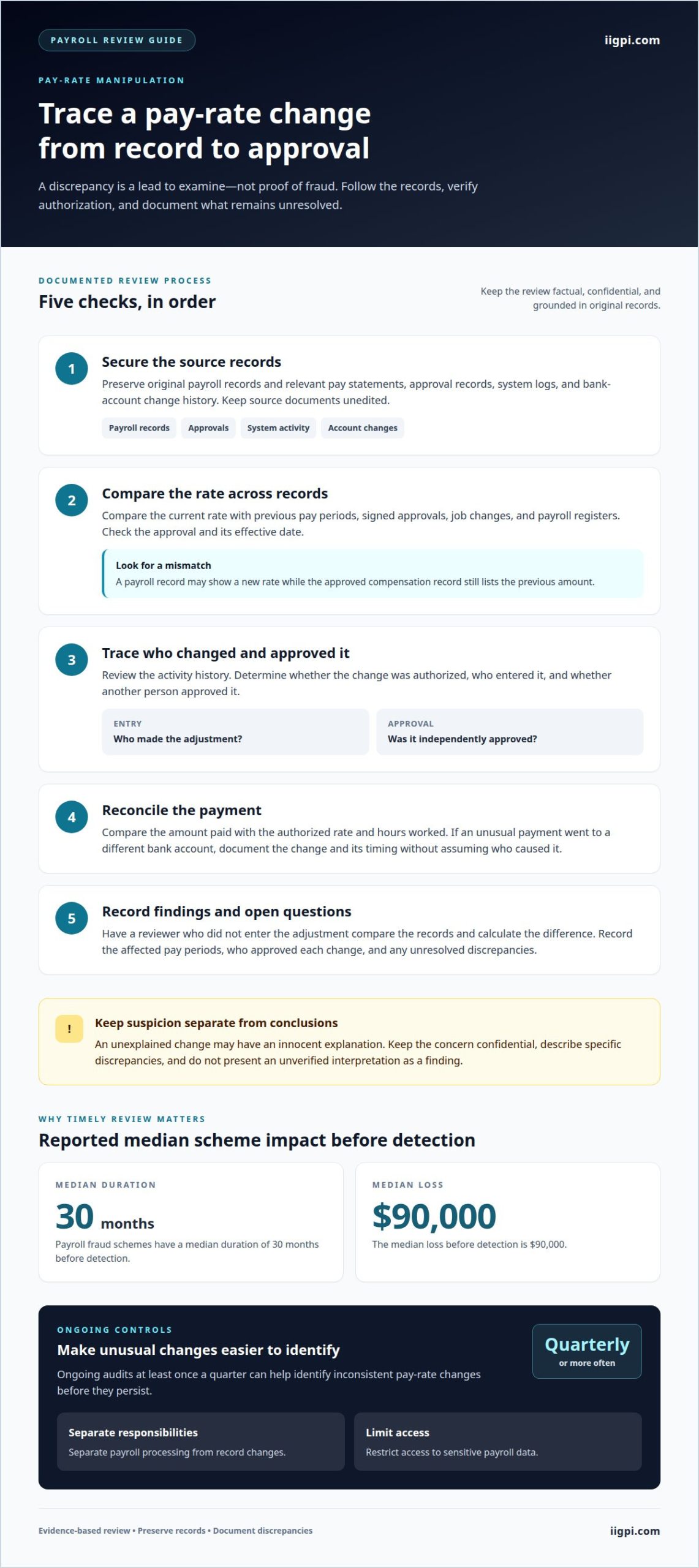
Pay-rate manipulation occurs when someone changes an employee’s wage without proper authorization and directs the resulting payments. A rate change might raise hourly pay, add unapproved overtime, or alter a salary before payroll processing. For example, an employee’s pay record may show a new rate while the approved compensation record still lists the previous amount. Compare each payroll change with its supporting approval, effective date, and employee record. A discrepancy is a lead to examine, not proof of fraud.
To assess a suspected pay-rate alteration, preserve the original payroll records and review the activity history. Compare the employee’s current rate with previous pay periods, signed approvals, job changes, and payroll registers. Check whether the change was authorized, who entered it, and whether another person approved it. Then reconcile the amount paid with the authorized rate and hours worked. If an unusual payment went to a different bank account, document the change and its timing without assuming who caused it.
What are the risks of accusing an employee without sufficient evidence? An unsupported accusation can damage trust, harm the employee’s reputation, and disrupt workplace relationships. It can also divert attention from the records and controls that need review. Keep the concern confidential, describe specific discrepancies, and do not present an unverified interpretation as a finding.
Use a documented review process. First, secure the relevant pay statements, approval records, system logs, and bank-account change history. Next, have a reviewer who did not enter the adjustment compare the records and calculate the difference. Record the affected pay periods, the person who approved each change, and any unresolved discrepancies. Payroll fraud schemes have a median duration of 30 months and a median loss of $90,000 before detection. Ongoing audits at least once a quarter can help identify inconsistent pay-rate changes before they persist. Separate payroll processing from record changes, and limit access to sensitive payroll data.
2. What is Payroll Fraud?
Payroll fraud involves manipulating payroll records or processes to obtain improper payments or benefits. Examples include adding a fictitious worker, diverting an employee’s pay, changing compensation without approval, or misclassifying workers to avoid employment-related costs. The method matters because each scheme leaves different records and control gaps.
Internal payroll audits can compare payroll-system data with employee files, approved compensation, time records, and payment details. Review who entered and approved changes, whether terminated workers remain active, and whether payment records match the employee roster. Surprise audits can make it harder to prepare records to conceal irregularities. Periodic third-party reviews from accountancy practices like Stewart Accounting Services offer another check on payroll controls, while internal reviews can identify discrepancies during routine processing. Document each finding and the records used to assess it.
What federal and state laws apply to payroll fraud in the United States? Applicable rules depend on the conduct and jurisdiction and may involve payroll taxes, wages, workers’ compensation, or fraud. Employers may intentionally misclassify workers to avoid unemployment tax, payroll taxes, or workers’ compensation insurance, which can be punishable by law.
How can you preserve payroll records and other evidence? Save original files, payroll reports, approval messages, time records, and system activity logs in a restricted, read-only location. Note when each item was collected and preserve its original timestamp. Do not edit or annotate source documents.
What payroll records and controls should be reviewed to detect fraud? Compare the employee roster, pay rates, hours, deductions, bank-account changes, and payment records with approvals and company policies. Examine access permissions and payroll-system logs for unusual edits, missing approvals, or activity by users whose roles do not require payroll changes.
3. Reporting fraud to authorities and insurers
If you suspect payroll fraud, preserve relevant records and promptly report the concern to a trusted manager who is not implicated. Describe the specific discrepancy, such as an unexplained pay-rate change or a payment sent to an unfamiliar account. Separate what the documents show from conclusions about who may be responsible. A prompt, factual report helps the organization assess the concern and determine appropriate next steps.
Use the company’s established reporting channel, but do not route the concern through anyone connected to the suspected activity. Provide payroll reports, approval records, time entries, and a clear account of when you noticed the issue. Keep a copy of your report and note when and to whom you submitted it. Limit access to sensitive employee information to keep the review appropriately controlled.
Managers should review payroll reports before employees or supervisors approve them. Compare the employee roster, pay rates, hours, and payment details with authorized records, then investigate changes that lack clear support. Review payroll-system activity logs for access or edits that could indicate an attempt to manipulate records. Document the checks performed, discrepancies found, and any corrective steps taken.
Businesses can report suspected payroll fraud to their state attorney general’s office or the FBI. Include a concise timeline, relevant records, the people or roles involved, and the suspected nature and duration of the activity. Keep original materials intact and distinguish documented facts from estimates or unanswered questions. If the matter involves multiple jurisdictions or suspected schemes, explain those details clearly in the report.
If suspected losses may involve insurance coverage, notify the insurer through its established claims or reporting process. Provide relevant records and keep copies of correspondence, while avoiding unsupported statements about the cause or amount of the loss. Coordinate internal reporting, reports to authorities, and insurer communications so each account remains consistent and traceable. A dated record of every report, contact, and document shared helps maintain an orderly response as the investigation develops.
4. Payroll fraud warning signs
Warning signs are most meaningful when several independent records point to the same irregularity. Compare employee addresses and bank accounts; matching details among workers who do not live together may warrant review. Check payroll records for unexplained omissions or changes, then compare each entry with its approval and supporting documents. A mismatch is a signal to investigate, not proof that an employee manipulated payments.
Patterns in work practices can also warrant attention. An employee who consistently avoids time off or refuses to share duties may be limiting others’ access to sensitive activity. Review responsibilities and timesheets to see whether one person controls entries, approvals, and payroll processing. That concentration creates an opportunity for concealment, but managers should assess documented conduct rather than rely on impressions about an individual.
Review unusual sick-leave use alongside the organization’s policies and relevant records. Repeated discrepancies between reported absences and available documentation can prompt closer examination. Consistent procedures, including requesting a doctor’s note where appropriate, help ensure the same standard is applied. Also check employee records for duplicate Social Security numbers or other irregularities that could indicate a fictitious worker. Verify identities against authorized employment records before drawing conclusions.
Payroll login activity and account changes can reveal attempts to redirect payments. Compare unusual access times or edits with assigned duties, approved changes, and payment destinations. Monitor bonus and commission claims against supporting calculations, and ask supervisors to review overtime on each timesheet. To implement prevention measures, separate payroll processing from record changes, remove former employees through a consistent offboarding process, and use alerts for employees with no HR activity for 12 or more months. Document the specific indicator, date, record, and follow-up step; this makes later review evidence-based and helps distinguish an isolated error from a recurring pattern.
International Investigative Group: Corporate Investigations
International Investigative Group conducts Corporate Investigations when payroll discrepancies call for a structured, independent examination beyond routine internal review. This may be appropriate when records suggest recurring unauthorized changes, suspected employee involvement, or a broader pattern affecting company operations. Its Insurance Investigations may also be relevant when suspected payroll activity is part of an insurance matter. The appropriate investigative focus depends on the records, suspected conduct, and questions the organization needs answered. An investigation can help organize relevant information and clarify what the available evidence supports, without treating an allegation as an established finding. For concerns involving suspected payroll fraud, contact International Investigative Group to discuss an investigative inquiry.
Make the Next Step Evidence-Led
The next decision should follow the evidence, not pressure to reach a quick conclusion. A clear record of what is established, what remains uncertain, and which questions need independent examination helps decision-makers respond proportionately. Knowing how to handle suspected payroll fraud means keeping allegations distinct from substantiated findings and protecting the integrity of the review.
For leaders assessing how to handle suspected payroll fraud, an independent examination may help clarify unresolved questions. International Investigative Group offers Corporate Investigations and Insurance Investigations. Security and Armed Guards address separate workplace protection needs. The appropriate next step depends on the concern and the investigative questions involved. Contact International Investigative Group to discuss an investigative inquiry and determine a considered path forward.
Frequently Asked Questions
What is Payroll Fraud?
Payroll fraud is deliberate deception involving compensation, employee status, time reporting, or payroll payments. For example, an employee might submit hours that were never worked, or someone might create a false worker profile to receive wages. Intent is the key distinction: a processing mistake may result in an incorrect payment, but fraud involves knowingly manipulating information or controls for improper gain.
What Is Ghost Employee Fraud?
Ghost employee fraud occurs when a fictitious or former worker remains on payroll and someone directs the resulting wages elsewhere. For example, a false profile may contain fabricated employment details and a payment account controlled by the person arranging the scheme. Comparing active payroll profiles with current hiring, termination, and work-assignment records can help identify entries without a genuine employment basis.
Who’s Most at Risk?
Organizations with concentrated payroll authority may face greater exposure because one person can create workers, alter records, and process payments without independent review. Small businesses may also have limited staff to separate those duties, which is why external business advisors like thespheregroup.com.au often assist in structuring proper financial oversight. Risk depends on the controls and access structure, not simply on company size or industry. Review who can create, edit, approve, and release payroll to identify vulnerabilities.
What are common signs of payroll fraud?
Potential indicators include payments for people managers cannot identify, repeated payments after a worker leaves, unexplained differences between scheduled and paid hours, or a payment destination changed without clear support. Repeated missing approvals can also warrant closer examination. None of these signs alone establishes fraud. Compare the records with employment and payment documentation before reaching a conclusion.
Who should investigate suspected payroll fraud: HR, legal, compliance, or an outside auditor?
The investigator should be independent of the people and payroll decisions under review. HR can clarify employment records, while finance or compliance can examine transaction processes. An outside auditor may add independence when internal roles overlap. If the concern involves senior management or a conflict of interest, assign the review to an uninvolved decision-maker and involve appropriate legal counsel for legal questions.
How can a company investigate payroll fraud without alerting or retaliating against the suspected employee?
Restrict case details to people who need them, and preserve ordinary access logs and payroll records before making changes. A reviewer can compare transactions with routine records without prematurely confronting an employee. Use neutral descriptions, such as “payroll control review,” when requesting documents, and document decisions consistently. Avoid punitive action based solely on suspicion; distinguish verified facts from untested explanations.