
Take a former employee’s threat seriously, document it, and report it promptly when it may involve criminal conduct. If violence is happening or seems imminent, seek emergency assistance immediately. Otherwise, preserve messages and record each contact before reporting the concern to law enforcement.
Knowing how to handle threats from a former employee in NYC means acting on the threat while creating a clear record of what happened, when, and how it was communicated. This guide explains how to report violent conduct, preserve emails, texts, voicemails, and other evidence, and respond when danger may be immediate. It also outlines practical steps for limiting access and communicating concerns to employees, so an organization can respond in a measured, coordinated way without allowing important details to be lost.
Key Takeaways
- Report credible threats to law enforcement promptly, and keep a clear record of each incident, including when and where it occurred and who was involved.
- Preserve threatening emails, texts, voicemails, and social media posts so relevant evidence is available when the threat is reported.
- If violence is occurring or appears imminent, seek emergency assistance immediately and communicate the threat clearly.
- Understand that court-order options depend on the circumstances; a restraining order may not be available to address threats to a company’s business interests or reputation.
1. Reporting violent crimes to law enforcement
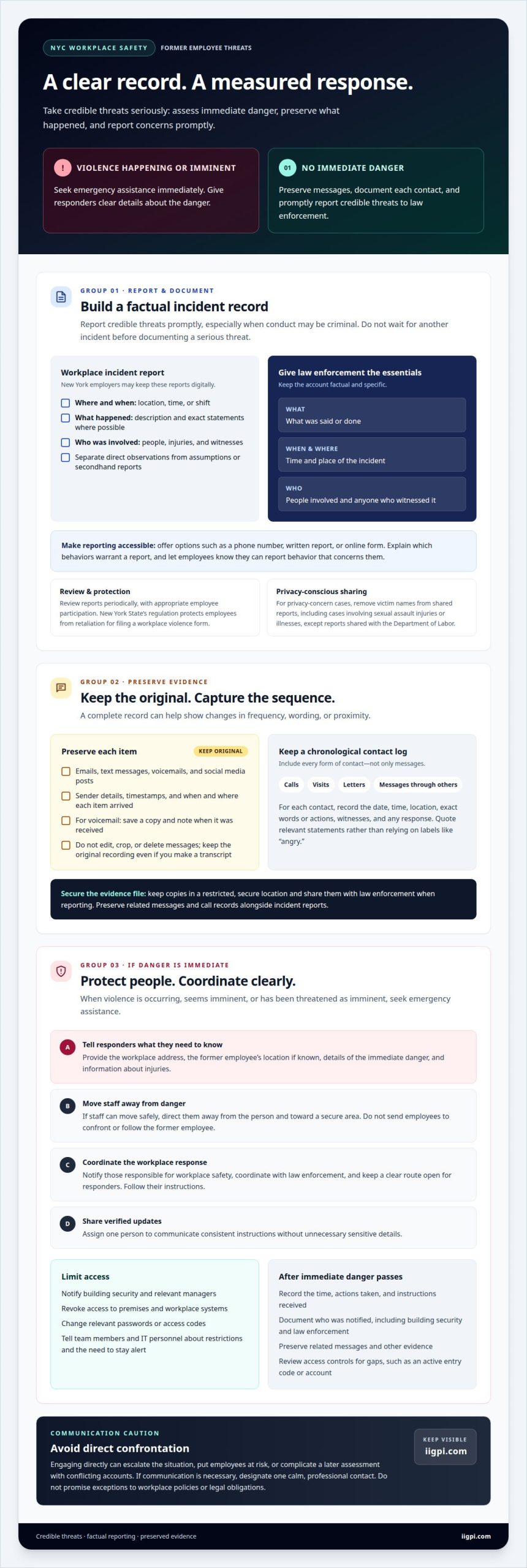
Report credible threats to law enforcement promptly, especially when the conduct may be criminal. If violence is occurring or seems imminent, seek emergency assistance immediately. Do not wait for another incident before documenting and reporting a serious threat. Give officers a factual account of what was said or done, when and where it happened, and who witnessed it.
A workplace violence incident report creates an organized record for follow-up. In New York, employers may keep these reports digitally. Each report must record the incident’s location, time or shift, description, people involved, injuries, and witnesses. Record observable behavior and exact statements where possible, separating direct observations from assumptions. Preserve the report with related evidence, such as messages or call records, so investigators can review the events together.
Make it straightforward for employees to report concerns. Employers should offer several reporting options, such as a phone number, written report, or online form, and explain which behaviors warrant a report. Employees should also know they can report any behavior that concerns them. Training can help staff recognize warning signs, understand reporting channels, and raise concerns promptly instead of dismissing a threat as workplace conflict.
Employers should review workplace violence incident reports periodically, with appropriate employee participation. They must also explain how employees can engage law enforcement and provide contact information for employees who want to file a criminal complaint after an incident. New York State’s Workplace Violence Prevention regulation protects employees from retaliation for filing a workplace violence form. These procedures support consistent reporting and review while giving employees a clear way to raise concerns. When sharing reports, employers must remove victim names in privacy-concern cases, including sexual assault injuries or illnesses, except in reports shared with the Department of Labor.
2. Documenting threats from a former employee
Preserve every threatening email, text message, voicemail, and social media post in its original form. Do not edit, crop, or delete messages. Note when and where each item arrived, and retain sender details and timestamps. If a voicemail remains on a phone system, save a copy and record when it was received. A written transcript can help with review, but keep the original recording too.
Keep a chronological log of every contact, including calls, in-person visits, letters, and messages delivered through other people. Record the date, time, location, exact words or actions, witnesses, and any response. Distinguish what a witness observed directly from what someone else reported. For example, note when a former employee left a message, then quote the relevant statement rather than describing it only as “angry.”
What are the risks of contacting or confronting a threatening former employee? Direct engagement can escalate the situation, put employees at risk, or complicate a later assessment by creating conflicting accounts. Avoid arguing. If communication is necessary, designate one calm, professional contact, and do not promise exceptions to workplace policies or legal obligations.
Assess the record as a whole rather than treating incidents in isolation. A late-evening visit, threatening voicemail, and anonymous letter may carry more significance together than separately. In one reported case, a former employee visited a supervisor’s apartment and made threatening statements; an anonymous letter later said the threat was not over. Detailed notes and saved messages helped present the sequence to police.
Keep copies in a restricted, secure location, and share them with law enforcement when reporting the conduct. A consistent evidence file helps clarify changes in frequency, wording, or proximity, while preserving a reliable account for follow-up. For a structured review of concerning conduct, consider professional investigative support.
3. Emergency assistance for imminent threats
Seek emergency assistance when violence is occurring, seems imminent, or has been threatened as imminent. Give responders the workplace address, the former employee’s location if known, details of the immediate danger, and information about any injuries. If staff can move safely, direct them away from the person and toward a secure area. Do not send employees to confront or follow the former employee. Keep a clear route open for responders and follow their instructions.
How should an NYC employer protect staff and secure the workplace after a former employee makes threats? Move employees away from the threatened area, notify those responsible for workplace safety, and coordinate with law enforcement. Assign one person to share verified updates so staff receive consistent instructions without unnecessary sensitive details.
Can an employer notify building security, change access credentials, or alert coworkers about a former employee threat? Yes. Notify building security and relevant managers, revoke the former employee’s access to the premises and workplace systems, and change relevant passwords or access codes. Tell team members and IT personnel about the restrictions and the need to stay alert.
Where can NYC businesses and workers get help with threats, stalking, or workplace violence? Report credible criminal threats to local law enforcement and seek support from victim assistance organizations. Employees can also raise concerns through designated workplace contacts, such as a supervisor or human resources representative, and receive internal safety updates.
Once immediate danger has passed, record the time, actions taken, and instructions received. Preserve messages and other evidence related to the incident, and document who was notified, including building security and law enforcement. Review access controls for gaps, such as an active entry code or account, and tell responsible staff what changed. If the threat continues, inform responders about new contact or behavior rather than treating each event as unrelated. Clear records help connect the emergency response with later safety decisions.
4. Can I get an order of protection or restraining order against a former employee in New York?
A court order may restrict contact by a former employee, but the available remedy depends on who seeks protection and what conduct is involved. Do not assume a company can obtain a harassment restraining order to address threats to its business interests or reputation. Those concerns differ from threats directed at an individual employee, and the distinction matters when considering possible relief.
In one reported case, a supervisor requested an order prohibiting a former employee from personal contact or any communication. The former employee was later arrested for violating the order two months after it was issued. This example shows how a court order can set clear restrictions in an individual situation; it does not mean every employer or threatened worker qualifies for the same order.
In a New York workplace, preserve threatening messages and incident records, then identify who is targeted and what conduct the order would need to address. Distinguish direct threats toward a supervisor from statements aimed only at the company’s reputation or operations. This factual record can help clarify the issue for legal counsel and law enforcement. A court order is not a substitute for reporting an immediate threat.
If threats persist or escalate, consult an employment-law professional about the options available in the specific circumstances. Ask whether the requested protection concerns personal contact, workplace access, or communications, and document the reason for each restriction. A company seeking to protect business interests may face different limits from an individual seeking protection from personal threats. Continue workplace safety measures while a request is considered, and report new threats or violations to law enforcement. A court order is a specific legal measure, not a guarantee against further conduct. Staff should know whom to notify if the former employee returns or contacts them again.
International Investigative Group
International Investigative Group can help organizations examine reported conduct and assess workplace security needs after a former employee makes threats. Corporate Investigations can support fact-finding, while Security and Armed Guard Services can address on-site protection needs. These services complement, but do not replace, reporting imminent danger to law enforcement or seeking legal advice about court orders.
Consider investigative support when incidents need a structured review or an organization is assessing additional security measures as part of its response. The appropriate approach depends on the circumstances, including the reported behavior, available documentation, and workplace concerns. International Investigative Group can discuss how its services may support the situation.
Contact International Investigative Group to discuss your concerns.
Build a Deliberate Response Plan
Preparation gives an organization a clearer basis for decisions if a former employee’s conduct changes. Decide who will coordinate internal communication, preserve incoming information, and authorize workplace security measures. A concise plan can also explain how employees report new concerns and how managers share verified updates, reducing confusion during a stressful event.
Understanding how to handle threats from a former employee in NYC means separating immediate safety needs from longer-term investigative and legal decisions. Keep responsibilities clear: report emergencies to law enforcement, and seek appropriate professional support for the organization’s response. Review the plan when workplace conditions or access arrangements change, and ensure designated staff understand their roles.
If your organization needs support assessing its situation and next steps, discuss your concerns with International Investigative Group. A thoughtful, coordinated response can help your team move forward with greater clarity.
Frequently Asked Questions
What should I do immediately if a former employee threatens me in NYC?
Move away from the person and seek emergency help if violence is happening or seems imminent. To handle threats from a former employee in NYC, do not confront them. Tell a responsible supervisor or workplace contact and describe the threat plainly. For example, explain whether the former employee is nearby, what they said or did, and whether anyone is injured. Preserve any message you received.
How do I report threats or harassment to the NYPD in New York City?
Contact law enforcement and describe the specific conduct, including the former employee’s exact words or actions and whether it has happened before. Identify where and when the incidents occurred, and share any witness information or preserved communications. If separate incidents appear connected, explain their sequence rather than presenting each as unrelated. This gives officers a clearer picture of the pattern and the reported concern.
When should I call 911 versus file a police report for a threat in NYC?
Seek emergency assistance when violence is occurring, seems imminent, or has been threatened as imminent. If there is no immediate danger, report credible threats to law enforcement promptly and explain the facts behind your concern. For example, a threat naming someone’s location or an imminent planned confrontation requires urgent attention. Repeated unwanted messages without immediate danger should still be documented and reported.
How can I preserve texts, emails, voicemails, and other evidence of threats?
Keep original messages and recordings, and do not delete or alter them. Take screenshots showing the sender, date, time, and surrounding conversation, while retaining the original text or email on its device or account. Save voicemail recordings where possible. Store copies securely and keep a brief chronology linking each item to the incident it records, such as a call followed by a threatening text.
What legal options apply to workplace threats from a former employee in New York State?
Possible legal options depend on the target and the conduct. Someone facing personal threats may seek advice about whether an order restricting contact is available. A company seeking to stop conduct affecting its business interests or reputation may face different limits, and a harassment restraining order may not address those concerns. An employment-law professional can assess the facts and explain the relevant options.