
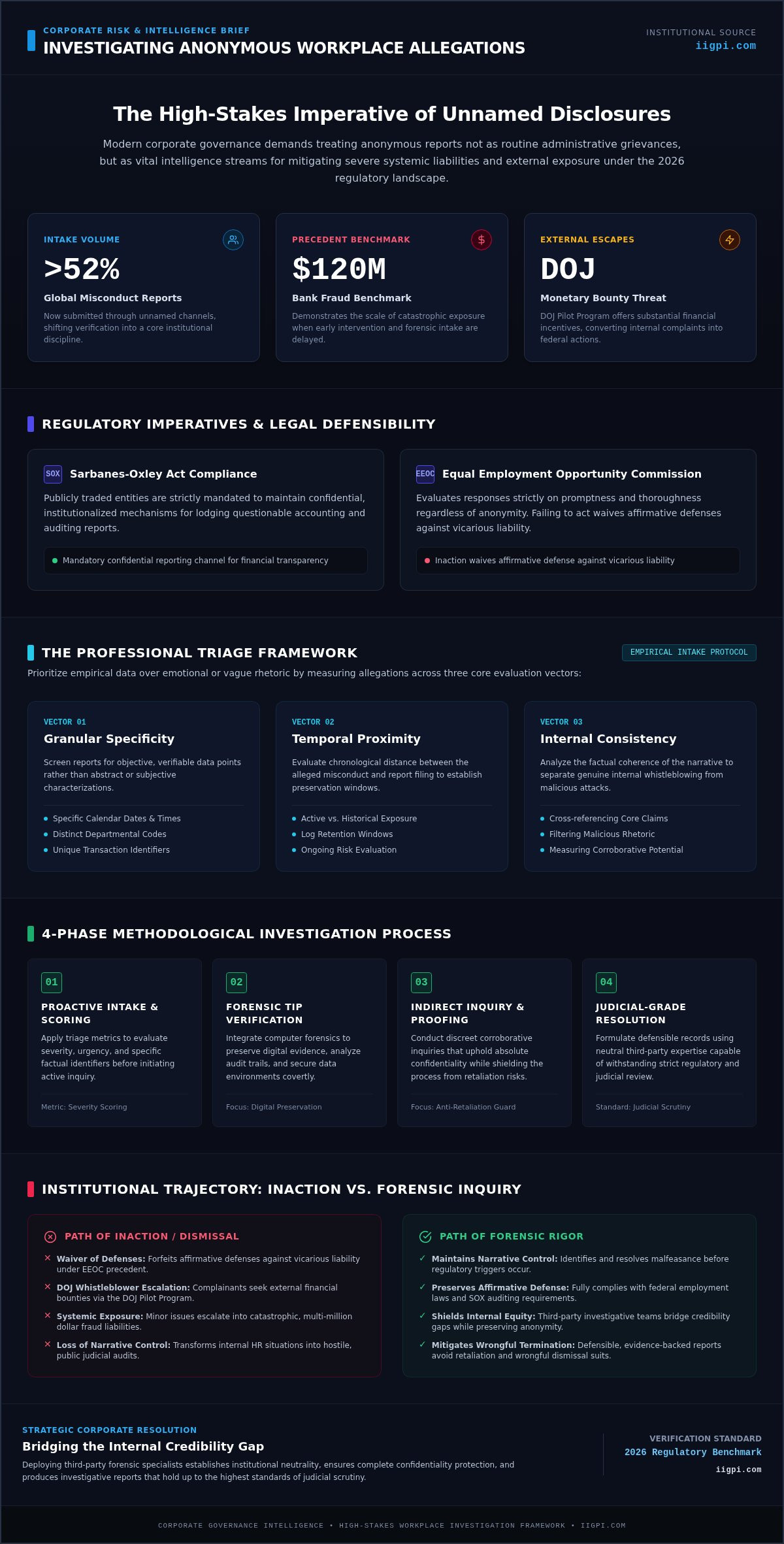
With more than 52 percent of global misconduct reports now submitted through unnamed channels, the challenge of investigating anonymous complaints in the workplace has shifted from an ancillary human resources concern to a foundational element of corporate risk management. Since the Department of Justice offers significant monetary incentives for external whistleblowing, failing to address internal tips with professional rigor isn’t merely an oversight; it’s a profound institutional liability. You likely recognize the inherent tension between the necessity for absolute confidentiality and the legal requirement to maintain a defensible, objective record. Verifying the credibility of a source you can’t identify, while avoiding the pitfalls of wrongful termination or retaliation suits, remains one of the most complex tasks for modern leadership.
This article provides the scholarly methodologies and strategic frameworks you need to transform these ambiguous allegations into actionable corporate intelligence. Precision is mandatory. Utilizing benchmarks from high-stakes cases like the 120 million dollar bank fraud investigation, we’ll show you how to mitigate organizational risk and resolve issues without triggering systemic disruption. We examine the integration of computer forensics for digital tip verification, the nuances of the 2026 regulatory landscape, and the specific procedures required to produce an investigative report that stands up to the highest levels of judicial scrutiny.
Key Takeaways
- Establish a systematic approach to corporate governance by recognizing that it’s a critical institutional duty to investigate anonymous tips to mitigate legal exposure and maintain regulatory compliance.
- Master a professional triage framework for investigating anonymous complaints in the workplace that prioritizes the identification of granular, verifiable facts and internal consistency over emotional or vague rhetoric.
- Implement a multi-phased methodological framework that utilizes computer forensics to secure the environment and preserve digital evidence while conducting indirect inquiries to maintain the integrity of the process.
- Navigate the complex legal intersection of confidentiality mandates and anti-retaliation protections to ensure that all investigative outcomes are robustly defensible if there’s a risk of subsequent litigation.
- Recognize the strategic value of engaging elite third-party investigative expertise to bridge the internal credibility gap and ensure a neutral, forensic-grade resolution for high-value corporate allegations.
The Strategic Necessity of Investigating Anonymous Allegations
In the sophisticated architecture of modern corporate governance, the anonymous complaint acts as a critical, albeit complex, intelligence stream. It’s no longer sufficient to categorize these reports as mere administrative grievances. Instead, investigating anonymous complaints in the workplace must be viewed as a foundational component of a robust risk management strategy. These allegations often serve as the first indication of systemic failures, ranging from cultural toxicity to high-level financial malfeasance. While the absence of a named complainant introduces procedural hurdles, it doesn’t diminish the institution’s obligation to scrutinize the underlying facts. Professional intake protocols now focus on distinguishing between malicious intent, designed to destabilize leadership, and legitimate internal whistleblowing channels that aim to protect the organization’s long-term viability.
Legal Imperatives and Regulatory Compliance
The regulatory landscape of 2026 demands absolute transparency and responsiveness. Under the Sarbanes-Oxley Act (SOX), publicly traded entities are mandated to maintain confidential mechanisms for reporting questionable accounting or auditing matters. The Equal Employment Opportunity Commission (EEOC) similarly evaluates the adequacy of a firm’s response to harassment allegations based on the promptness and thoroughness of the inquiry, regardless of the reporter’s anonymity. The duty to investigate is a fundamental obligation established by federal employment law precedents requiring employers to take reasonable care in addressing potential harassment or misconduct once they are put on notice. Failing to meet this standard effectively waives the affirmative defenses that protect a corporation from vicarious liability in subsequent litigation.
The Cost of Inaction: Case Studies in Corporate Negligence
Ignoring a credible anonymous tip is a precursor to catastrophic financial and reputational fallout. When leadership dismisses reports due to a lack of attribution, they inadvertently foster an environment where misconduct can escalate into multi-million dollar liabilities. High-stakes precedents, such as the $120 million bank fraud investigations managed by elite Corporate Investigations firms, demonstrate that early intervention is the only viable method for mitigating exposure. Beyond the direct legal costs, unresolved complaints erode organizational morale and degrade the brand’s standing in the global marketplace. A single unaddressed allegation can transform from an internal HR matter into a federal investigation if the whistleblower seeks external recourse through the DOJ’s Pilot Program. Ensuring a professional response isn’t just about compliance; it’s a strategic maneuver to retain control over the narrative and the resolution process.
Evaluating the Credibility and Scope of Anonymous Reports
The initial assessment of an anonymous tip requires a transition from reactive intake to proactive triage. Investigating anonymous complaints in the workplace necessitates a methodological framework that prioritizes empirical data over subjective sentiment. A rigorous triage framework evaluates three primary dimensions: the specificity of the allegations, the temporal proximity to the reported events, and the internal consistency of the narrative. Vague or emotionally charged reports aren’t dismissed outright; they’re parsed for verifiable facts such as specific dates, departmental codes, or unique transaction identifiers. By determining the corroborative potential of a report early, institutional leadership may strategically deploy investigative capital toward high-value intelligence rather than pursuing vexatious claims designed to harass rather than inform.
Quantitative vs. Qualitative Assessment
Professional protocols utilize a scoring matrix to categorize complaints by severity and urgency, ensuring that allegations of systemic fraud receive immediate forensic attention. This phase often involves analyzing the digital footprint of the report, including metadata or submission patterns, to identify potential coordination among multiple reporters. When allegations involve financial impropriety, investigators integrate Asset Search and Recovery methodologies to trace potential capital flight or hidden funds. These quantitative measures balance the qualitative analysis required to understand whistleblower legal protections and the potential for retaliatory litigation. Identifying patterns of malicious intent involves cross-referencing intake data against known internal conflicts, yet valid claims must never be discarded simply because the reporter’s motives appear complex.
Determining the Scope of the Inquiry
Establishing clear investigative boundaries for investigating anonymous complaints in the workplace is essential to prevent scope creep, which often dilutes the effectiveness of the inquiry and increases corporate risk. A professional investigator distinguishes between hearsay, which constitutes unverified secondhand accounts, and circumstantial evidence, which comprises a constellation of objective facts that logically infer a specific conclusion. Resource allocation is then predicated on the potential impact on corporate assets and the likelihood of regulatory intervention. To ensure your organization maintains a defensible record during this sensitive phase, engaging an objective third-party for Corporate Investigations provides the necessary distance from internal biases. This structured approach ensures that the depth of the inquiry remains proportional to the risk while satisfying the institutional duty to maintain a safe and compliant environment.
A Methodological Framework for Conducting Workplace Investigations
Transitioning from the initial triage of an allegation to the formal execution of an inquiry requires a structured, four-phase methodology that prioritizes evidentiary integrity and operational discretion. Investigating anonymous complaints in the workplace demands a protocol that moves beyond surface-level HR inquiries toward a forensic-grade intelligence operation. This systematic approach ensures that every finding is substantiated by empirical data, providing a foundation that can withstand intense legal scrutiny and corporate auditing. By adhering to a rigorous framework, organizations can effectively transform vague tips into actionable intelligence while mitigating the risk of premature exposure or evidence spoliation.
Forensic Evidence Collection Protocols
Phase I focuses on securing the environment and the immediate preservation of digital evidence before any administrative action is taken. The integration of Computer Forensics is paramount in this stage, as it allows investigators to verify anonymous digital claims by identifying and securing metadata that corroborates or debunks a reported timeline. In jurisdictions such as NYC, adherence to strict chain of custody requirements for both digital and physical evidence is a non-negotiable standard for maintaining legal defensibility. Once the environment is secured, Phase II involves the indirect inquiry. This stage is characterized by gathering evidence through audit logs, communication records, and document reviews without alerting the subject of the investigation, thereby preventing the destruction of critical files or the intimidation of potential witnesses.
Interviewing Techniques for Hostile or Evasive Subjects
Phase III involves the transition to strategic interviews, where the objective shifts to extracting factual truth from witnesses and the accused. Professional investigators often favor the ‘Cognitive Interview’ model over traditional interrogation techniques because it enhances witness recall through psychological retrieval cues while minimizing the risk of false confessions or coerced statements. It’s essential to maintain absolute neutrality during these sessions while remaining cognizant of the legal boundaries of employee interviews. This includes respecting Weingarten rights for unionized personnel and adhering to state-specific protections that govern the presence of counsel or representatives. A failure to navigate these procedural nuances can render even the most compelling testimony inadmissible in a court of law.
The final stage, Phase IV, is the synthesis of all gathered intelligence into a definitive investigative report. This document doesn’t merely summarize findings; it provides a comprehensive analysis of the facts, cross-referencing witness testimony with forensic data. This report serves as the ultimate resolution tool, allowing high-level decision-makers to address the underlying issue with the confidence that their actions are supported by a defensible record. By following this methodological protocol, leadership can resolve sensitive cases without triggering the organizational disruption that often follows poorly managed inquiries.
Mitigating Risk and Ensuring Legal Defensibility
The preservation of institutional integrity during the resolution of anonymous allegations necessitates a sophisticated understanding of the legal friction between reporter confidentiality and the due process rights of the accused. When investigating anonymous complaints in the workplace, leadership must navigate the ‘Anti-Retaliation’ trap, a precarious scenario where even the most justified administrative actions can be reframed as retaliatory by opportunistic litigants. Judicial bodies in NYC and Nassau County don’t demand perfection, but they do require adherence to the ‘Reasonable Investigation’ standard. This metric evaluates whether the organization’s inquiry was sufficiently thorough, impartial, and timely to justify the resulting corporate response. Failure to meet this standard often results in the summary dismissal of affirmative defenses, leaving the organization vulnerable to significant compensatory and punitive damages. Understanding the legal limits of ‘anonymous’ investigations is equally vital, as confidentiality is not an absolute privilege and must be balanced against the necessity of full disclosure during formal litigation.
Documentation and Reporting Standards
Professional reporting standards dictate that an investigative report must be constructed as a defensible legal instrument capable of surviving the rigors of cross-examination. It’s vital to maintain a clear demarcation between privileged communications, which are protected under the umbrella of legal counsel, and the factual findings of the investigation itself. A definitive resolution is predicated on a preponderance of evidence, a standard that requires the investigator to synthesize forensic data and witness testimony into a conclusion that is more likely true than not. This rigorous approach ensures that the final determination is intellectually sound and legally robust, providing the organization with a decisive shield against claims of wrongful termination or procedural bias. Every document generated during the inquiry should be treated as a potential exhibit, requiring a level of precision that eliminates ambiguity and reinforces the objectivity of the firm’s findings.
Jurisdictional Nuances in New York
Operating within the regulatory environment of New York requires an intimate knowledge of specific NYC labor laws that govern workplace surveillance and private inquiries. Engaging Professional Surveillance Services allows for the legal monitoring of misconduct while ensuring that all gathered evidence remains admissible in state and local courts. The involvement of former law enforcement professionals is particularly advantageous here, as their familiarity with local prosecutorial standards and evidentiary rules provides an elite level of oversight. These professionals ensure that investigative tactics don’t inadvertently violate privacy statutes, which could otherwise lead to the suppression of critical evidence. If you require a defensible resolution for high-stakes allegations, you should consult with an elite investigative team to secure your corporate interests and ensure your protocols meet these exacting jurisdictional requirements.
The Role of Elite Investigative Expertise in Resolution
Internal human resources departments, while proficient in administrative management, often possess systemic limitations when confronted with high-value or technically complex allegations. Investigating anonymous complaints in the workplace requires a level of evidentiary neutrality that internal personnel, who are embedded within the organizational hierarchy, can’t provide without inviting claims of institutional bias. This ‘Credibility Gap’ is bridged through the engagement of objective third-party investigators who operate outside the political and interpersonal dynamics of the firm. By integrating Corporate Fraud Investigation with advanced digital forensics, elite firms provide a 360-degree view of the misconduct, ensuring that no facet of the allegation remains unexamined. The value of a professional investigative entity extends throughout the full lifecycle of the case, transitioning from the initial data sweep to expert witness testimony during formal litigation.
When to Engage a Private Investigative Firm
Determining the appropriate moment to outsource an inquiry is a critical function of risk management. Organizations should prioritize external expertise when the complexity of the case suggests potential criminal charges or when a profound conflict of interest threatens the integrity of the findings. Firms led by former law enforcement professionals with 30 plus years of experience offer a level of intellectual and tactical rigor that is essential for resolving high-stakes matters like the 120 million dollar bank fraud benchmark. Since many modern enterprises operate across various jurisdictions, the necessity for a global network of agents becomes a mandatory requirement for investigating anonymous complaints in the workplace that involve international branches or cross-border asset transfers. These elite resources ensure that the inquiry maintains its momentum regardless of geographic or jurisdictional hurdles.
Final Resolution and Organizational Aftercare
The conclusion of an investigation doesn’t terminate the institution’s responsibility; it marks the commencement of the aftercare phase. Corrective actions must be implemented with precision, utilizing the investigative report as a strategic roadmap for structural or personnel adjustments. Closing the institutional loop with the anonymous reporter, provided a secure communication channel exists, is a vital step in reinforcing a culture of trust and transparency. This feedback mechanism demonstrates that the organization treats every credible tip as a priority, discouraging the ‘leakage’ of allegations to external regulatory bodies. If your leadership team is currently assessing a sensitive allegation, you can secure your organization’s integrity by contacting International Investigative Group for a confidential consultation.
Advancing Institutional Integrity Through Professional Scrutiny
The evolution of corporate reporting mechanisms necessitates a transition from administrative passivity to a proactive, forensic-grade intelligence model. Mastering the scholarly methodologies required for investigating anonymous complaints in the workplace ensures that institutional leadership remains insulated from legal retaliation while resolving systemic threats. By prioritizing empirical data and adhering to rigorous jurisdictional standards, organizations transform ambiguous allegations into defensible corporate intelligence. This strategic approach mitigates the risk of catastrophic litigation and preserves the brand’s global standing in an increasingly transparent marketplace.
When internal resources face the limitations of bias or technical complexity, the intervention of an elite third-party becomes essential. International Investigative Group, founded by former law enforcement with over 30 years of expertise, provides the global reach and intellectual rigor necessary to handle high-value fraud and sensitive cases. Having solved over 10,000 cases globally, our firm delivers the forensic-grade resolution your institution requires to maintain absolute legal defensibility. It’s time to ensure your protocols are robust and your assets are protected. Partner with International Investigative Group for Elite Corporate Investigations to secure your organizational future. Proactive scrutiny is the cornerstone of a resilient and transparent corporate culture.
Frequently Asked Questions
Are employers legally required to investigate every anonymous complaint?
Employers are generally required to investigate any anonymous complaint that provides sufficient detail to suggest a violation of statutory obligations or internal policies. Under the Faragher/Ellerth framework, an organization’s failure to exercise reasonable care in addressing potential harassment once placed on notice can result in the loss of affirmative defenses in court. This duty is particularly stringent when investigating anonymous complaints in the workplace involving protected classes or systemic financial irregularities that trigger regulatory oversight.
How do you maintain the confidentiality of an anonymous reporter during a workplace investigation?
Maintaining confidentiality requires a transition from direct interrogation to an indirect inquiry model centered on documentary and digital evidence. Investigators utilize secure, encrypted reporting portals to facilitate two-way communication without compromising the reporter’s identity. By prioritizing the analysis of audit logs, communication records, and physical surveillance, the inquiry proceeds without signaling the reporter’s involvement to the subject. This methodological approach ensures that the reporter remains insulated from potential retaliation during the fact-finding phase.
Can an employer be sued for investigating a baseless anonymous tip?
An employer may face litigation for defamation or invasion of privacy if an investigation is conducted with malice or gross procedural negligence. However, judicial bodies typically uphold the employer’s right to investigate when the inquiry is predicated on a legitimate business interest and conducted with professional discretion. Maintaining a defensible record of the “Reasonable Investigation” standard is essential to mitigate these risks. Professional investigative protocols ensure that the inquiry remains proportional to the allegation’s severity.
What happens if an anonymous complaint leads to evidence of criminal activity?
If an inquiry uncovers evidence of criminal activity, the organization must immediately transition to a forensic preservation protocol to ensure the chain of custody remains intact. Leadership should consult with legal counsel to determine the necessity of a formal referral to law enforcement or regulatory bodies like the DOJ. Utilizing elite investigators with law enforcement backgrounds ensures that the evidence is gathered according to prosecutorial standards. This proactive stance facilitates a structured hand-off to authorities while protecting the firm’s assets.
How long should a typical investigation into an anonymous workplace complaint take?
The duration of an inquiry is dictated by the complexity of the allegations and the volume of forensic data requiring analysis. While North American organizations average a median closure time of 26 days, high-stakes cases involving international branches or complex financial fraud may extend several months. Expediency must be balanced against the requirement for a thorough, defensible report that satisfies judicial scrutiny. Delays often occur when internal HR departments lack the specialized tools necessary for rapid digital evidence synthesis.
What is the ‘preponderance of evidence’ standard in corporate investigations?
The preponderance of evidence is the primary evidentiary standard utilized in civil and corporate inquiries to determine the validity of an allegation. This standard requires that the gathered facts and forensic data demonstrate that the reported misconduct is more likely than not to have occurred. It’s a lower threshold than the “beyond a reasonable doubt” requirement found in criminal law. Achieving this standard requires a meticulous synthesis of witness testimony, digital metadata, and physical evidence to form a cohesive, logical conclusion.
Can computer forensics identify an anonymous internal whistleblower?
Computer forensics can often identify the origin of an anonymous report by analyzing metadata, network logs, and digital timestamps associated with the submission. While the objective of investigating anonymous complaints in the workplace is typically to verify the allegation rather than unmask the reporter, identifying the source is sometimes necessary to assess motive or potential coordination. Expert technicians can trace digital footprints across internal servers to provide leadership with a comprehensive view of how the information was extracted and transmitted.
When should an organization bring in an outside private investigator instead of using HR?
Organizations should engage an outside private investigator when an allegation involves high-level executives, potential criminal activity, or specialized technical requirements like computer forensics. Internal HR departments often lack the forensic tools and the perceived neutrality required for high-stakes resolutions. Bringing in a firm with 30 plus years of law enforcement expertise ensures that the inquiry is conducted with the rigor necessary for litigation support. This external oversight bridges the credibility gap and provides a defensible shield against institutional bias.