
Does the exponential proliferation of encrypted, fragmented electronically stored information render traditional discovery protocols obsolete in high-stakes Manhattan litigation? In a judicial landscape where the e-discovery market is projected to exceed 16 billion dollars in 2026, the margin for procedural error has effectively vanished. You likely recognize that the mere acquisition of data is insufficient if the forensic synthesis fails to meet the stringent requirements of the New York State Unified Court System’s Part 161 or the established Frye standard. To secure a definitive chain of custody that survives rigorous scrutiny, legal counsel requires advanced e-discovery services for litigation, Lance Ribacoff and IIGPI provide the specialized intellectual rigor necessary to transform complex digital footprints into court-admissible evidence.
This analysis provides an authoritative examination of how sophisticated digital forensics and investigative intelligence secure evidence in the complex litigation environment of 2026. You’ll gain a comprehensive understanding of navigating the specific legal rigors of NYC courts while ensuring expert testimony remains resilient under aggressive cross-examination. We will explore the methodological frameworks that reduce litigation risk through forensic precision and strategic data synthesis.
Key Takeaways
- Analyze the paradigm shift from static data to dynamic, AI-integrated Electronically Stored Information and its profound impact on 2026 jurisprudence.
- Explore the proprietary methodology of e-discovery services for litigation, Lance Ribacoff, which synthesizes digital forensics with investigative intelligence to identify critical evidentiary leads.
- Master the protocols required to maintain an immutable digital chain of custody that adheres to the stringent Daubert standards of modern federal and state judiciaries.
- Navigate the intricate jurisdictional demands of the Manhattan court system while effectively managing the complexities of global privacy statutes and cross-border discovery.
- Identify the strategic advantages of establishing forensic resilience through elite partnerships to mitigate institutional risk in high-stakes legal environments.
The Systemic Proliferation of Electronically Stored Information (ESI) in 2026 Jurisprudence
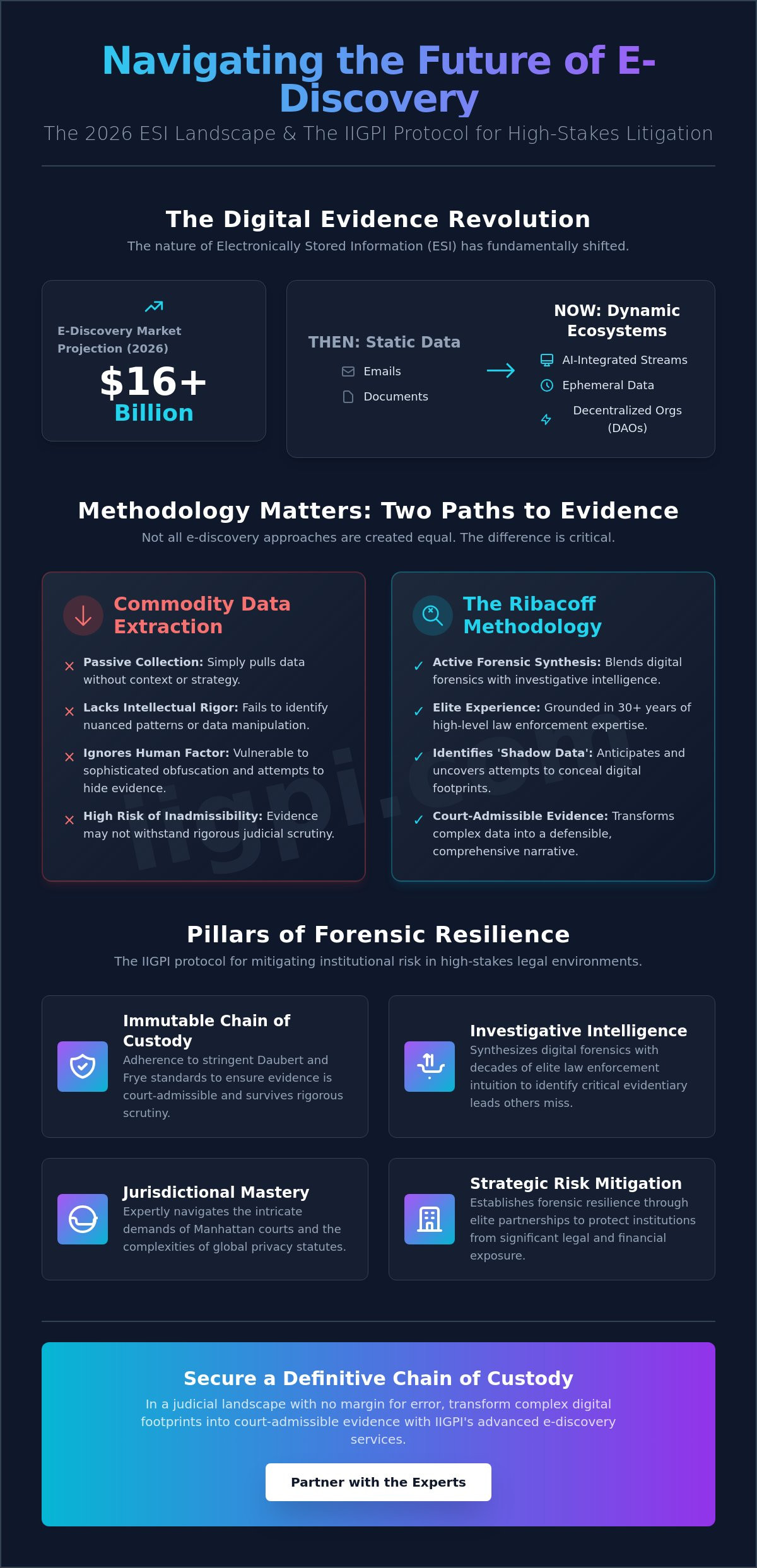
The contemporary legal landscape is defined by an unprecedented expansion of digital artifacts, moving beyond the traditional silos of static emails and documents toward a dynamic ecosystem of AI-integrated data streams. In this environment, e-discovery services for litigation, Lance Ribacoff serves as a critical arbiter of digital truth, establishing the necessary intellectual framework to identify and authenticate evidence that is increasingly obscured by sophisticated encryption and automated generative processes. The systemic risks inherent in fragmented data architectures, which often span multiple global cloud environments, necessitate a shift from passive collection to active forensic synthesis. Without such leadership, institutions face significant legal exposure as critical evidence is lost within the noise of decentralized digital structures. The foundational principles of Electronic discovery must now account for these hyper-complex variables to ensure that judicial proceedings remain grounded in verifiable fact rather than algorithmic inference.
The Evolution of Digital Evidence Complexity
The technical challenges of 2026 are punctuated by the rise of ephemeral data and decentralized autonomous organizations (DAOs), where traditional notions of data ownership and retention are frequently subverted. Ephemeral communication platforms and encrypted channels require real-time forensic intervention to capture volatile evidence before it’s permanently purged by automated protocols. DAOs present a unique jurisdictional hurdle; their lack of a centralized physical entity complicates the service of discovery requests and the identification of responsible data custodians. ESI resilience in the context of 2026 judicial review is defined by the immutable integrity of its metadata and the verifiable provenance of its generative origin.
Forensic Leadership vs. Commodity Data Extraction
Distinguishing between elementary data retrieval and sophisticated investigative analysis is essential for maintaining the integrity of the evidentiary record. While commodity vendors may offer high-volume extraction, they often lack the intellectual rigor to identify the nuanced patterns of data manipulation that a former law enforcement perspective provides. By integrating Computer Forensics into a broader litigation strategy, legal teams can ensure that the digital evidence isn’t only collected but is also contextually analyzed to withstand the most aggressive judicial scrutiny. This strategic oversight is the hallmark of the IIGPI protocol, ensuring that every byte of information is positioned within a defensible, comprehensive narrative of truth.
The Ribacoff Methodology: A Synthesis of Digital Forensics and Investigative Intelligence
The Ribacoff Methodology represents a paradigm shift in the procurement of digital evidence, moving beyond the mechanical extraction of data toward a sophisticated intellectual synthesis. By utilizing e-discovery services for litigation, Lance Ribacoff and the International Investigative Group establish a framework where investigative intuition precedes and directs technical execution. This methodology is grounded in over 30 years of elite law enforcement experience, which allows for the framing of digital artifacts within a broader context of criminal or civil culpability. Standardized software solutions often fail to account for human obfuscation. In contrast, this approach identifies ‘shadow data’ by anticipating the behavioral patterns of those attempting to circumvent judicial oversight. Intellectual rigor guides the process.
Leveraging HUMINT as a Discovery Multiplier
The integration of Human Intelligence (HUMINT) acts as a critical multiplier in the discovery process, particularly when high-value assets are at stake. By conducting strategic witness interviews and tactical debriefings, investigators can locate hidden digital repositories that automated crawlers would never encounter. A notable instance of this synthesis involved the resolution of a 120 million dollar bank fraud. Investigators utilized HUMINT to pinpoint specific encrypted servers that had been intentionally omitted from standard discovery disclosures. The psychological advantage of an investigator-led process lies in its ability to adapt to real-time revelations. It ensures the discovery scope remains dynamic rather than static.
Advanced Metadata Analysis and Data Recovery
Forensic precision is paramount when recovering files that have been deleted, overwritten, or intentionally sabotaged to obstruct justice. The methodology employs advanced techniques to reconstruct fragmented data, placing a heavy emphasis on the analysis of metadata timestamps to establish a definitive timeline of intent. These forensic markers are often the decisive factor in a Corporate Fraud Investigation. They reveal the precise moment of unauthorized access or data exfiltration. Establishing this level of forensic resilience is vital for any organization facing complex legal challenges. To explore how these methodologies can be applied to your specific requirements, you may review the comprehensive investigative protocols established by IIGPI.
Mitigating Institutional Risk through Rigorous Chain of Custody and Daubert Compliance
Institutional risk in 2026 is no longer solely a matter of litigation outcome but is increasingly defined by the procedural integrity of the discovery phase. The inherent fragility of digital evidence necessitates an immutable chain of custody to prevent the exclusion of critical findings under judicial review. When utilizing e-discovery services for litigation, Lance Ribacoff ensures that every byte of Electronically Stored Information (ESI) is captured through a methodology that prioritizes forensic provenance and technical transparency. This rigorous documentation is essential for adhering to the stringent Daubert standards mandated by federal judiciaries, which were significantly reinforced following the late 2025 amendments to Federal Rules of Civil Procedure 16 and 26. These amendments require parties to establish comprehensive plans for handling privileged information and discovery protocols at the initial Rule 26(f) conference. Failure to provide a transparent, verifiable record of data acquisition can render even the most incriminating evidence inadmissible, exposing organizations to catastrophic legal and reputational consequences.
The Architecture of Court-Admissible Evidence
Securing ESI from mobile devices and IoT sensors requires specialized technical protocols that account for the volatile nature of real-time data streams and automated overwriting functions. Forensic practitioners must document every interaction with the source media, ensuring that the hash values remain consistent throughout the investigative lifecycle to prove that no data alteration occurred. This level of precision is particularly vital for international data transfers, where practitioners must navigate the complex intersection of domestic litigation requirements and foreign privacy statutes. A Daubert-resilient forensic report is a comprehensive technical document that establishes the scientific validity of the methodologies employed while providing a transparent, step-by-step account of the data’s journey from acquisition to analysis.
Expert Testimony and Forensic Resilience
The efficacy of forensic findings is ultimately tested through the crucible of expert witness testimony. As a veteran expert witness in the NYC court system, Lance Ribacoff possesses the specialized ability to translate complex technical data into a persuasive legal narrative that withstands the aggressive scrutiny of opposing counsel. Preparing for the technical challenges posed by adversarial forensic experts requires a proactive strategy that anticipates potential critiques of the collection methodology and the tools utilized. The strategic integration of Professional Surveillance Services often serves to corroborate digital evidence, providing a multi-dimensional view of subject activity that reinforces the credibility of the forensic record. This synthesis of physical and digital intelligence creates a level of forensic resilience that is indispensable in high-stakes corporate and matrimonial disputes where the truth is often intentionally obscured.
Navigating Jurisdictional Complexity in Manhattan and Global Corporate Litigation
Manhattan serves as the primary nexus for global corporate jurisprudence, requiring a sophisticated understanding of both localized court mandates and international privacy frameworks. In high-stakes corporate and matrimonial disputes, the discovery process often extends beyond domestic borders, necessitating a multi-layered approach to data acquisition. For those seeking e-discovery services for litigation, Lance Ribacoff provides the strategic oversight required to navigate the unique procedural nuances of the Southern District of New York (SDNY). These rules demand a proactive stance on data preservation and disclosure that often exceeds standard federal requirements. Success in this environment is predicated on the ability to harmonize aggressive discovery goals with the stringent privacy expectations of institutional clients.
The Manhattan Corporate Landscape
The Southern District of New York maintains a distinct set of discovery protocols that require meticulous adherence to avoid judicial sanctions. Institutional clients within the city operate under heightened data privacy expectations, making the role of the forensic investigator one of both discovery and protection. Integrating Insurance Fraud Investigation Services into complex litigation allows legal teams to identify fraudulent patterns that might otherwise be obscured by the sheer volume of corporate ESI. This integration ensures that the investigative narrative remains cohesive across all facets of the dispute, particularly when addressing the specific data privacy expectations of NYC based institutional entities.
Global Reach and Investigative Intelligence
Managing cross-border e-discovery in 2026 involves navigating a labyrinth of sovereign data laws and international privacy statutes such as the GDPR. IIGPI utilizes a global network of agents to facilitate localized data acquisition, ensuring that forensic protocols comply with the specific legal requirements of each jurisdiction. This global reach is essential for asset tracing within intricate financial infrastructures, where funds are often dispersed across multiple international accounts to evade detection. A recent multi-jurisdictional financial fraud case successfully recovered significant assets by mapping digital transactions across three continents, illustrating the necessity of a globally minded forensic strategy. For enterprises navigating other complex regulatory or financial recovery landscapes, Trump Tariff Relief provides essential guidance for claiming IEEPA tariff refunds. To optimize your litigation support in these complex environments, you can consult with the experts at IIGPI to establish a defensible discovery plan.
The IIGPI framework for NYC litigation support excellence follows a rigorous five step process:
- Jurisdictional Scoping: Identifying the specific legal and privacy mandates of the relevant courts.
- Localized Acquisition: Deploying on-the-ground agents for physical and digital data collection.
- Statutory Harmonization: Ensuring all forensic procedures align with international privacy laws.
- Forensic Asset Mapping: Utilizing advanced analytics to trace financial movements globally.
- Defensible Reporting: Producing court-admissible documentation that survives judicial scrutiny.
Establishing Forensic Resilience: The IIGPI Protocol for High-Stakes Legal Support
Establishing forensic resilience requires more than the deployment of sophisticated software; it demands an institutional commitment to the highest standards of evidentiary integrity. In the high-stakes environment of 2026, the long-term value of the e-discovery services for litigation, Lance Ribacoff and the International Investigative Group provide is found in the creation of a defensible digital perimeter. By transitioning from a reactive posture to one of litigation readiness, global organizations can mitigate the systemic risks associated with data fragmentation and regulatory flux. Partnering with an elite forensic firm ensures that the investigative process remains unbiased and rigorous, establishing a foundation of truth that is indispensable for successful judicial outcomes. This strategic foresight protects the digital future of the organization while providing a decisive advantage in the courtroom.
Institutional Integrity in Modern Jurisprudence
The ethical imperative of unbiased, rigorous forensic investigation is a cornerstone of modern jurisprudence. Building a culture of litigation readiness within corporate structures involves more than just policy; it requires the integration of forensic protocols into the daily operational fabric of the entity. The legacy of Dan and Lance Ribacoff within the NYC investigative community is built upon this dedication to intellectual rigor and procedural precision. This historical context provides a unique depth of expertise that informs every engagement, ensuring that the forensic narrative is both technically sound and contextually accurate. When institutional integrity is at risk, the choice of an investigative partner becomes a defining factor in the preservation of corporate reputation and legal standing.
Engaging IIGPI for Litigation Excellence
Engaging with IIGPI begins with a comprehensive consultation process designed to define the specific forensic scope of the case. This initial phase identifies the critical data repositories and potential jurisdictional hurdles that require specialized intervention. The legal team can leverage customized security and surveillance solutions to provide a comprehensive support structure for complex proceedings, ensuring that all facets of the investigation are harmonized. This multi-disciplinary approach allows for the identification of evidence that traditional methods often overlook. To secure the digital future of your organization and ensure the highest level of forensic resilience in upcoming 2026 proceedings, you should Contact International Investigative Group for expert e-discovery and investigative support. The transition from raw data to court-admissible truth requires a partner with the intellectual depth to navigate the complexities of the modern legal landscape.
Securing the Future of Digital Jurisprudence
The paradigm shift toward dynamic, AI-integrated electronically stored information necessitates a transition from passive data collection to a sophisticated forensic synthesis. By prioritizing the Ribacoff Methodology, legal professionals ensure that their evidentiary record remains resilient against the rigorous technical and jurisdictional challenges of the Manhattan court system. Maintaining an immutable chain of custody isn’t merely a procedural requirement; it’s the foundational element of institutional integrity in a landscape defined by fragmented global data architectures. When you utilize the specialized e-discovery services for litigation, Lance Ribacoff provides, you’re leveraging a legacy of former law enforcement leadership and over 30 years of elite investigative experience. With a record of over 10,000 cases solved globally, the International Investigative Group offers the intellectual rigor necessary to transform complex digital footprints into definitive judicial truth. Don’t leave your procedural success to chance when forensic precision is within reach. Secure your litigation outcome with the elite e-discovery services of Lance Ribacoff and IIGPI and ensure your evidence withstands the most aggressive scrutiny.
Frequently Asked Questions
What are the primary e-discovery services for litigation provided by Lance Ribacoff?
The primary e-discovery services for litigation, Lance Ribacoff and IIGPI provide encompass comprehensive computer forensics, corporate fraud investigations, and the strategic preservation of electronically stored information. These services are designed to address the complexities of modern digital ecosystems, including encrypted communication platforms and decentralized data structures. By utilizing former law enforcement leadership, the organization ensures that every investigative lead is pursued with the intellectual rigor required for high-stakes corporate disputes.
How does IIGPI ensure the admissibility of digital evidence in Manhattan courts?
IIGPI ensures evidentiary admissibility by maintaining an immutable chain of custody and adhering to the specific mandates of the New York State Unified Court System, including the June 1, 2026, adoption of Part 161. This protocol involves the meticulous documentation of every interaction with digital media to satisfy the Frye standard. The organization’s focus on procedural integrity prevents the exclusion of critical findings during the rigorous scrutiny of Manhattan’s specialized commercial divisions.
What is the difference between standard data recovery and forensic e-discovery?
Standard data recovery is limited to the restoration of accessible files, while forensic e-discovery involves the scientific extraction and authentication of metadata to establish intent and provenance. Forensic protocols utilize specialized tools to reconstruct overwritten or sabotaged data, ensuring that the resulting artifacts are court-admissible. This level of technical precision is essential for litigation where the integrity of the digital record is subject to adversarial challenge.
How do the Daubert standards impact e-discovery services for litigation in 2026?
In 2026, the Daubert standards require forensic practitioners to demonstrate the scientific validity of their methodologies under the updated Federal Rules of Civil Procedure. These standards necessitate that e-discovery services for litigation, Lance Ribacoff and other elite providers establish a transparent, defensible framework for data acquisition early in the litigation lifecycle. This proactive adherence to federal mandates reduces institutional risk and ensures that forensic findings remain resilient during judicial review.
Can International Investigative Group assist with cross-border e-discovery challenges?
International Investigative Group assists with cross-border challenges by utilizing a global network of agents to facilitate localized data acquisition while navigating the intricacies of the GDPR. This approach ensures that discovery remains compliant with sovereign data privacy laws that often conflict with domestic litigation requirements. By harmonizing these disparate legal frameworks, the organization allows global institutions to conduct comprehensive discovery without exposing themselves to international regulatory sanctions.
What role does Lance Ribacoff play in providing expert witness testimony?
Lance Ribacoff provides expert witness testimony that bridges the gap between complex forensic data and the persuasive narratives required in court. This role involves defending the scientific integrity of the discovery process and ensuring that forensic findings are presented with the authority of a veteran investigator. His 30 plus years of experience allow him to withstand aggressive cross-examination, providing a decisive advantage in high-stakes NYC corporate and matrimonial disputes.
How does the synthesis of HUMINT and digital forensics improve litigation outcomes?
The synthesis of HUMINT and digital forensics allows investigators to use witness insights to locate ‘shadow data’ that automated discovery tools frequently fail to identify. This methodology ensures that forensic queries are strategically targeted, moving beyond commodity data extraction to identify the psychological patterns of data obfuscation. The resulting synthesis provides a multi-dimensional view of the evidence, significantly improving the probability of a favorable litigation outcome.
What should a law firm look for when hiring an e-discovery investigator in NYC?
NYC law firms should seek investigators who possess former law enforcement leadership and specific expertise in navigating the Southern District of New York (SDNY) discovery rules. It’s essential to partner with a firm that offers a synthesis of investigative intelligence and technical forensics to ensure the definitive chain of custody of digital evidence. The specialized framework provided by IIGPI offers the intellectual depth necessary to manage the unique jurisdictional complexities of Manhattan litigation.