
Does the traditional reliance on physical bulk in executive protection represent an obsolete paradigm in an era defined by sophisticated digital surveillance and systemic reputational volatility? For the global elite, the realization that physical safety is inextricably linked to digital integrity and reputational preservation has become a central tenet of institutional risk management. You likely recognize that standard corporate security services nyc often fail to address the nuanced intersection of international travel vulnerabilities and the requirement for absolute, yet unobtrusive, safeguarding. This article provides an authoritative analysis of the strategic frameworks necessary for elite risk mitigation as we approach 2026.
We’ll examine how intelligence-led strategies replace reactive measures, shifting the focus toward data-driven risk assessments and the integration of zero-trust architectures within existing corporate protocols. You’ll discover a methodology that moves beyond the visible guard to a comprehensive system of investigative protocols designed to neutralize threats before they manifest. By scrutinizing the convergence of physical and digital security, this framework offers a blueprint for maintaining organizational stability and executive safety in an increasingly complex global sphere.
Key Takeaways
- Transition from a reactive bodyguarding model to a proactive, intelligence-led framework that prioritizes systemic risk mitigation over mere physical deterrence.
- Understand how elite corporate security services nyc utilize deep-background investigations and surveillance to identify vulnerabilities before they manifest as active threats.
- Develop a comprehensive risk profile that extends beyond the individual executive to encompass family members and high-exposure domestic environments.
- Evaluate the critical role of Technical Surveillance Counter-Measures and the deployment of personnel with law enforcement pedigrees in maintaining secure mobility.
- Identify the strategic advantages of long-term security partnerships rooted in New York’s unique operational landscape and global intelligence networks.
The Paradigm of Executive Protection: Beyond Physical Security
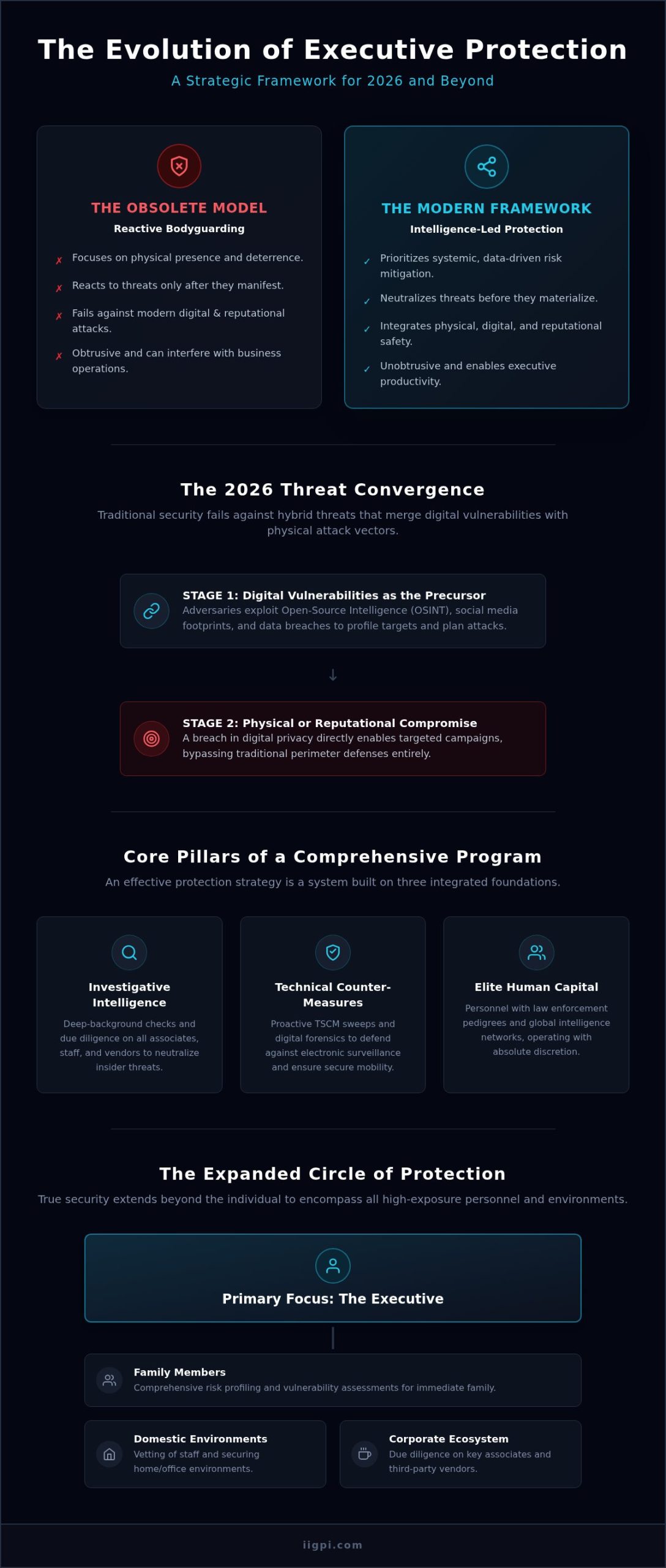
The conceptualization of executive safety has undergone a fundamental transformation, shifting from the visible deterrent of physical presence to a sophisticated, multi-layered framework. This evolution is encapsulated in The Paradigm of Executive Protection, which prioritizes the identification of systemic vulnerabilities before they are exploited by adversarial actors. Within the context of high-stakes corporate governance, boards of directors recognize a profound fiduciary duty to safeguard not only the physical well-being of key personnel but also the intellectual assets and reputational capital they represent. This necessity is particularly acute when evaluating corporate security services nyc, where the density of global financial interests demands a more rigorous, investigative approach to safety. Protective intelligence serves as the cornerstone of this strategy, enabling specialists to analyze threat vectors and neutralize risks in their nascent stages.
A critical distinction exists between reactive bodyguarding and proactive executive protection protocols. While the former focuses on immediate physical response to an active threat, the latter is an investigative discipline rooted in rigorous planning and intelligence gathering. Effective protection requires an understanding of the client’s unique risk profile, incorporating historical data and real-time surveillance to build a comprehensive shield. It’s not merely about the presence of personnel; it’s about the systemic integration of security into the executive’s operational environment. This methodology ensures that safety is absolute yet remains secondary to the executive’s ability to conduct business without interference.
The Evolution of Threat Landscapes in 2026
The contemporary threat environment is defined by the convergence of physical and digital risks. Adversaries leverage open-source intelligence (OSINT) and social media footprints to orchestrate targeted campaigns that bypass traditional perimeter defenses. These hybrid threats render conventional, reactive models obsolete. A modern strategy must account for the digital exhaust of high-profile individuals, recognizing that a breach in privacy is often the precursor to a physical compromise. Traditional security models fail because they don’t address the intellectual and digital vulnerabilities that define the current era.
Core Pillars of a Comprehensive Protection Program
An elite protection program rests on the integration of physical presence, technical surveillance, and digital forensics. Intelligence-led protocols ensure that security remains unobtrusive, facilitating executive productivity rather than impeding it. By employing specialists with a law enforcement pedigree who understand the nuances of discretion, organizations can maintain a low-profile posture that is nonetheless absolute in its efficacy. This culture of security aligns organizational resilience with the operational requirements of global leadership. It’s a partnership that prioritizes long-term stability over short-term deterrence.
The Investigative Foundation: Intelligence-Led Risk Mitigation
Proactive protection begins long before the principal arrives at a venue. It’s predicated on an investigative methodology that leverages over 30 years of professional experience to identify and neutralize potential threats. This foundation requires deep-background investigations on all potential associates, domestic staff, and third-party vendors. By scrutinizing the integrity and history of those within the inner circle, specialized corporate security services nyc ensure that human-element vulnerabilities are minimized. These protocols align with established executive protection best practices, which emphasize that intelligence is the primary deterrent against systemic risk. Relying on physical barriers alone is insufficient; true safety is built upon a bedrock of exhaustive due diligence and continuous monitoring.
The integration of investigative intelligence allows for a more nuanced understanding of the threat landscape. When elite corporate security services nyc are deployed, they don’t simply react to incidents. Instead, they utilize a global network of agents to gather data on local regional dynamics and potential adversarial groups. This research-driven approach ensures that the protection detail is prepared for the specific socioeconomic and geographic challenges of any given mission. It’s this commitment to intellectual rigor that distinguishes professional protection from standard security offerings.
Pre-Deployment Surveillance and Reconnaissance
Professional surveillance services provide the real-time intelligence necessary to map routes and venues with tactical precision. By conducting exhaustive site surveys, protection teams identify choke points, such as narrow corridors or predictable traffic patterns, where the principal is most vulnerable. Counter-surveillance is equally critical; it involves the subtle detection of adversarial actors who may be monitoring the executive’s movements. This investigative layer transforms a static security detail into a dynamic, responsive shield that adapts to evolving environmental factors before the principal ever sets foot on-site.
Digital Forensics as a Protective Tool
Digital forensics serves as a vital protective tool in an era where physical threats are often preceded by digital leaks or targeted harassment campaigns. Monitoring the dark web for mentions of corporate leadership or high-net-worth family members allows for the pre-emptive mitigation of coordinated attacks. The application of computer forensics secures sensitive communications and identifies compromised hardware before electronic espionage can occur. Regular digital hygiene audits are essential to maintain this posture, ensuring that the executive’s digital footprint doesn’t become a roadmap for physical harm. Organizations seeking to fortify their leadership should consider how an integrated investigative strategy can address these modern complexities.
Assessing Vulnerability: A Framework for High-Profile Personnel
A principal’s vulnerability is a dynamic reflection of their socioeconomic footprint rather than a static variable. The determination of a rigorous risk profile requires an analytical assessment of net worth, public exposure, and the specific industry sectors in which an individual operates. Elite corporate security services nyc recognize that a high-profile executive’s risk extends beyond the boardroom, necessitating a family-wide protection strategy that encompasses spouses and children. These dependents often represent softer targets for adversarial actors seeking leverage or financial gain. By extending investigative oversight to the domestic sphere, organizations ensure that the executive’s focus remains on institutional objectives without the distraction of familial insecurity.
Strategic protection is increasingly positioned within the broader corporate fraud investigation landscape. Physical threats or extortion attempts are frequently symptomatic of underlying systemic breaches or internal malfeasance. Evaluating the risk of ‘specie loss’ and the theft of fine arts in residential settings is a critical component of this framework. High-value assets require specialized safeguarding to prevent catastrophic financial and cultural loss. This investigative approach ensures that security isn’t a reactive expense but a proactive preservation of wealth and legacy. It’s a method that aligns personal safety with the long-term stability of the corporation’s most vital assets.
Travel Security and Global Mobility
Geographic risk levels must be assessed using real-time geopolitical intelligence and localized data sets. Secure air and ground transport in high-risk territories follow strict protocols, including armored vehicle deployment and advanced route planning. Liaising with local authorities and a global network of agents ensures seamless transitions across international borders. This macro-level perspective is essential for executives navigating emerging markets or volatile regions where traditional security structures may be compromised or absent. It’s about maintaining operational continuity regardless of the destination’s stability.
Residential and Estate Security Operations
Securing high-value properties requires the deployment of armed guard services and the integration of electronic bug sweeps to maintain absolute domestic privacy. Establishing safe rooms and emergency evacuation protocols provides a final layer of defense for the family unit. These measures are designed to be unobtrusive, preserving the sanctity of the home while ensuring that the residence remains a fortified environment. It’s a comprehensive strategy that addresses both the physical and technical vulnerabilities inherent in elite estate management, providing peace of mind through intellectual and tactical rigor.
Operational Protocols: Secure Mobility and Technical Counter-Measures
The execution of elite protection relies on the deployment of personnel who possess a significant law enforcement pedigree. These officers don’t simply provide a physical presence; they operate as tactical analysts capable of navigating the complex urban environments of Manhattan with intellectual and situational precision. When selecting corporate security services nyc, the tenure and specialized training of the protective detail are paramount. Officers with extensive investigative backgrounds are uniquely equipped to identify pre-attack indicators that standard security personnel might overlook. This expertise is particularly vital during high-profile public appearances or shareholder meetings, where the coordination with existing event security must be seamless and authoritative to maintain a secure environment.
Secure mobility extends beyond the mere provision of a vehicle and driver. It involves the integration of highly trained operators who specialize in defensive driving and vehicular threat mitigation. These drivers are trained to recognize and evade surveillance, neutralize potential ambushes, and ensure the principal’s transit remains uninterrupted. The risk of vehicular interference remains a primary concern for high-net-worth individuals navigating dense metropolitan areas. By utilizing armored transport and conducting pre-route reconnaissance, protection teams minimize the window of vulnerability during transit. This operational layer ensures that the principal’s movement through congested urban centers is both safe and efficient, preserving the executive’s schedule and security simultaneously.
Technical Surveillance Counter-Measures (TSCM)
The necessity of executing Technical Surveillance Counter-Measures (TSCM) has become a fundamental requirement for modern corporate governance. Illicit listening devices and sophisticated electronic eavesdropping equipment are frequently utilized in competitive intelligence gathering and industrial espionage. Professional electronic bug sweeps in boardrooms and private residences are essential to prevent the compromise of sensitive organizational data or private familial conversations. Maintaining a secure perimeter requires constant vigilance against both physical intrusion and electronic interception. This investigative layer ensures that the privacy of the executive’s environment remains absolute, safeguarding the corporation’s most sensitive intellectual assets from adversarial actors.
Crisis Management and Emergency Response
Robust protection protocols must include immediate response strategies for medical emergencies or physical attacks. Establishing these protocols involves the coordination of a global agent network capable of extracting personnel from volatile situations regardless of geographic location. Post-incident analysis is a vital component of this framework, allowing for the continuous refinement of security measures based on real-world data and investigative findings. This iterative process ensures that the protective shield evolves in response to emerging threats rather than remaining static. Organizations seeking to fortify their leadership against these sophisticated risks should consult with an elite investigative firm to implement a comprehensive safeguarding strategy.
Establishing an Elite Security Partnership in New York City
The selection of a strategic partner for corporate security services nyc necessitates an analytical evaluation of institutional heritage and operational depth. Partnering with a firm that possesses a New York law enforcement pedigree offers a distinct tactical advantage, as these professionals understand the localized jurisdictional complexities and environmental nuances that define the city’s risk landscape. Tenure is a vital metric; it reflects a sustained capacity to manage systemic volatility across diverse sectors. International Investigative Group bridges the gap between investigative intelligence and physical safeguarding, ensuring that protection is never a static presence but a dynamic, data-driven shield. This integration is essential for global leaders who require a partner capable of operating at the highest levels of power and influence while maintaining a discrete, elite posture.
Selecting the Right Firm: A Checklist for Decision-Makers
Decision-makers must scrutinize a firm’s historical success rate, specifically looking for more than 30 years of proven success in high-stakes cases. A comprehensive provider should offer a diverse suite of capabilities, ranging from personal detective services to complex corporate investigations. This breadth ensures that all potential threat vectors, whether domestic or institutional, are addressed within a unified framework. Confidentiality and professional ethics are non-negotiable pillars of this partnership, as the preservation of executive privacy is as critical as physical safety. A firm’s commitment to these standards is often reflected in its longevity and the caliber of its clientele, making tenure a primary indicator of reliability in corporate security services nyc.
The IIG Advantage: Law Enforcement Pedigree and Global Reach
The efficacy of a protection strategy is fundamentally linked to the experience of its operators. Former law enforcement professionals are uniquely suited for executive protection, as they bring an analytical lens to the identification and neutralization of criminal intent. With over 10,000 solved cases informing current security strategies, the depth of knowledge available is unparalleled. This research-driven approach allows for a global reach that maintains a localized, boutique focus on the specific needs of elite clients. It’s this combination of macro-level intelligence and micro-level attention to detail that defines an elite security partnership. Organizations or families requiring this level of rigorous oversight should initiate a confidential consultation to evaluate their current risk mitigation protocols and establish a framework for absolute safety.
Advancing Institutional Resilience through Strategic Safeguarding
The landscape of executive safety in 2026 demands a departure from traditional, static security models toward a dynamic, investigative discipline. By prioritizing intelligence-led risk mitigation and the integration of technical surveillance counter-measures, organizations can neutralize threats before they manifest as active crises. The complexity of the modern threat environment requires a nuanced understanding of geographic risk and digital vulnerabilities, ensuring that protection remains both absolute and unobtrusive. Selecting a partner for corporate security services nyc is a strategic decision that impacts the long-term stability and reputational integrity of the enterprise. International Investigative Group offers a framework rooted in 30+ years of professional experience and former law enforcement leadership, supported by a global network of investigative agents. This methodology ensures that the safeguarding of leadership is treated as an essential component of institutional risk management. We invite you to secure your leadership with elite executive protection from IIG and establish a new standard for organizational resilience. Your legacy deserves the precision of a research-driven, elite defense.
Frequently Asked Questions
What is the difference between a bodyguard and executive protection?
The primary distinction lies in the investigative methodology; while a bodyguard focuses on reactive physical intervention, executive protection utilizes a proactive, intelligence-led framework to identify and neutralize threats before they materialize. This advanced paradigm incorporates rigorous site surveys, route reconnaissance, and protective intelligence to ensure a principal’s safety without necessitating a visible confrontation. It’s a systemic approach that prioritizes prevention over reaction.
Do executive protection officers carry firearms?
Executive protection officers carry firearms when legally authorized and tactically indicated by the prevailing risk assessment. These specialists often possess a law enforcement pedigree, ensuring they maintain the highest standards of proficiency and legal compliance in the deployment of armed assets. The decision to employ armed guards is a strategic one, based on the specific threat vectors identified during the initial vulnerability analysis conducted by the firm.
How much does executive protection cost for a corporate leader?
The financial investment required for comprehensive protection is determined by a nuanced assessment of the client’s risk profile and the operational complexity of the required safeguards. Factors influencing the total expenditure include the necessity for constant coverage, the inclusion of specialized technical counter-measures, and the geographic scope of the mission. Organizations seeking corporate security services nyc should view these costs as a proactive measure to preserve institutional stability and executive continuity.
Can executive protection be provided during international travel?
Elite protection firms facilitate secure global mobility through a combination of real-time geopolitical intelligence and a global network of investigative agents. These protocols ensure seamless transitions across international borders by coordinating with local authorities and conducting pre-deployment reconnaissance. This macro-level approach allows executives to navigate volatile regions with the same degree of safety they experience within their primary domestic environments, regardless of the destination’s inherent stability.
Does executive protection include digital security and bug sweeps?
A comprehensive protection strategy must integrate physical safeguarding with technical surveillance counter-measures and computer forensics to address the hybrid nature of modern threats. This includes the execution of professional electronic bug sweeps to detect illicit listening devices and the monitoring of digital footprints to prevent industrial espionage. By addressing both physical and electronic vulnerabilities, firms provide a holistic shield that preserves the integrity of sensitive organizational data and private communications.
How do you ensure the privacy and discretion of the executive?
Ensuring absolute privacy requires the implementation of low-profile operational protocols that allow the executive to conduct business without the intrusion of a visible security presence. Strict confidentiality agreements and the utilization of sophisticated communication encryption are standard components of this framework. Professional agents are trained to maintain a discrete posture, ensuring that the safeguarding process supports rather than hinders the principal’s public and private activities through intellectual and tactical rigor.
What qualifications should I look for in an executive protection firm?
When evaluating a potential firm, decision-makers should prioritize entities with a significant law enforcement pedigree and a documented history of success in high-stakes investigative cases. Essential qualifications include a tenure of 30 or more years, a global network of agents, and the capacity to provide a full suite of corporate and personal investigative services. These credentials indicate an institutional depth capable of managing the most complex risk environments found in corporate security services nyc.
Is executive protection necessary for high-net-worth families?
Executive protection is a critical requirement for high-net-worth families because their socioeconomic status renders them prime targets for extortion, kidnapping, and domestic compromise. Extending security protocols to spouses and children ensures that the family unit remains resilient against adversarial actors who might seek leverage through familial vulnerabilities. This proactive safeguarding is an essential component of preserving both personal safety and generational wealth in an increasingly volatile global landscape.