
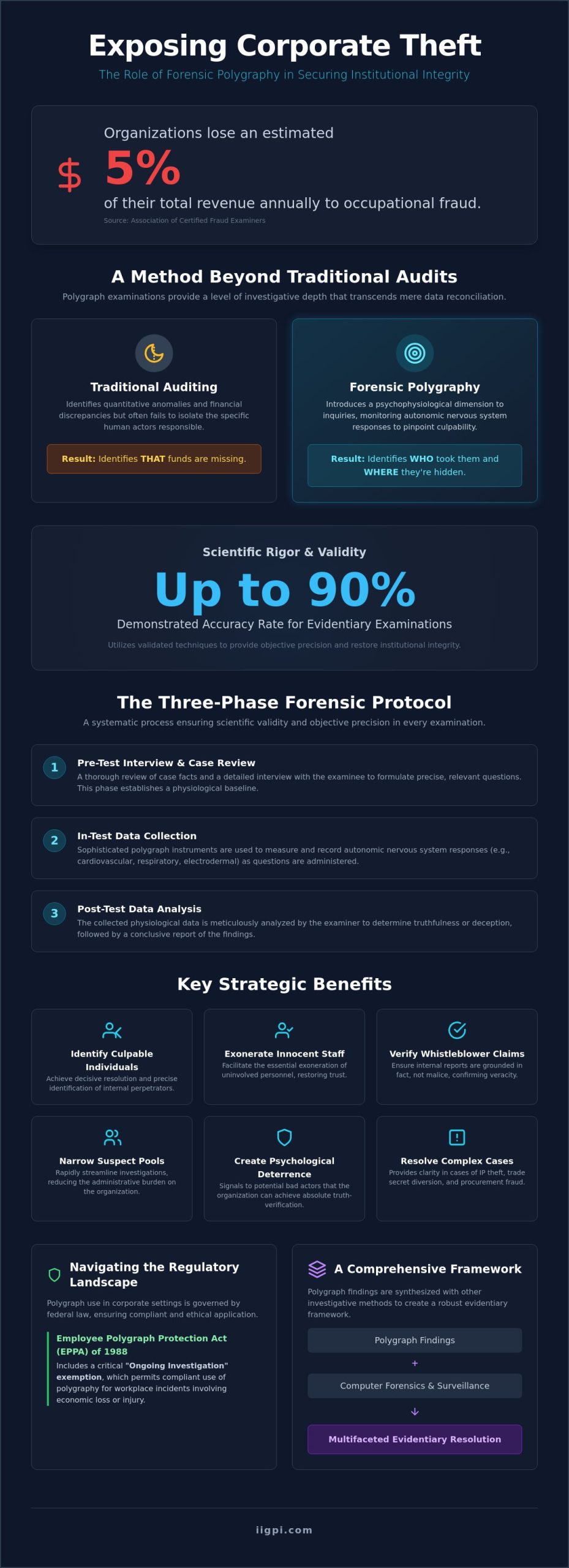
The Association of Certified Fraud Examiners reports that organizations lose an estimated 5% of their total revenue annually to occupational fraud, a statistic that underscores the profound systemic risk posed by internal bad actors. You likely understand that traditional auditing mechanisms frequently prove insufficient for securing the concrete evidence required to address these vulnerabilities, which often results in significant financial depletion and persistent organizational anxiety regarding the legality of internal inquiries. This article provides an authoritative analysis of how a specialized lie detector test for corporate theft administered by Dan Ribacoff serves as a sophisticated instrument of truth-seeking that transcends basic interrogation.
By leveraging forensic polygraph examinations, corporations can achieve a decisive resolution to complex investigations, ensuring the precise identification of culpable individuals while facilitating the essential exoneration of innocent staff members. We’ll examine the scientific rigor of these examinations and the strategic role of a preceptor-level expert in establishing a framework for future deterrence. This exploration details how the application of validated polygraph techniques, which maintain demonstrated accuracy rates of up to 90% for evidentiary examinations, provides the intellectual and procedural depth necessary for high-level decision-makers to restore institutional integrity.
Key Takeaways
- Analyze the professional tenure and methodological rigor of Dan Ribacoff, whose 30-year career as an APA-trained preceptor establishes a premier standard for forensic psychophysiological examinations.
- Evaluate the strategic implementation of a lie detector test for corporate theft, Dan Ribacoff’s specialized approach, which facilitates the identification of internal perpetrators while simultaneously ensuring the exoneration of innocent personnel.
- Comprehend the legal parameters established by the Employee Polygraph Protection Act (EPPA) of 1988, specifically the “Ongoing Investigation” exemption that allows for the compliant use of polygraphy in workplace incidents.
- Examine the three-phase forensic protocol utilized to measure autonomic nervous system responses, a process that ensures the scientific validity and objective precision of each examination.
- Explore the integration of polygraph findings with computer forensics and surveillance services to synthesize a multifaceted evidentiary framework capable of resolving complex corporate losses.
The Efficacy of Polygraphy in Mitigating Corporate Theft and Internal Diversion
The modern global enterprise exists within a geopolitical and economic environment defined by intricate supply chains and decentralized operational structures, which, while facilitating efficiency, simultaneously expand the surface area for internal diversion and occupational fraud. Traditional fiscal oversight mechanisms, such as forensic accounting, typically identify the quantitative anomalies associated with loss but often fail to isolate the specific human actors responsible for non-linear deception. A specialized lie detector test for corporate theft, Dan Ribacoff’s area of expertise, addresses this diagnostic gap by introducing a psychophysiological dimension to internal inquiries. This methodology relies on the sophisticated application of Polygraph technology to monitor autonomic nervous system responses, providing a level of investigative depth that transcends mere data reconciliation. Forensic accounting identifies that funds are missing, but polygraphy identifies who took them and where they’re hidden. Beyond its reactive utility, the mere availability of high-level forensic examinations serves as a powerful psychological deterrent, signaling to potential bad actors that the organization possesses the intellectual and technical resources to achieve absolute truth-verification.
Defining the Scope of Corporate Theft Investigations
The parameters of internal theft extend far beyond simple inventory shrinkage or physical asset misappropriation. In the contemporary knowledge economy, the diversion of proprietary trade secrets and intellectual property represents a far more significant existential threat to institutional stability. The implementation of a lie detector test for corporate theft, Dan Ribacoff’s hallmark service, provides the forensic clarity required to resolve these sophisticated procurement fraud schemes that traditional auditing cannot easily penetrate. These investigations require a rigorous framework capable of identifying both the tangible loss of assets and the intangible breach of fiduciary duty. Whether the issue involves the illicit transfer of digital assets or the physical removal of high-value inventory, the investigative approach must be as multifaceted as the crime itself.
The Investigative Value Proposition
The primary utility of forensic polygraphy lies in its capacity for the rapid narrowing of the suspect pool during high-stakes internal investigations. When a significant loss occurs, the administrative burden of vetting every individual with access can be prohibitive; however, a targeted examination protocol facilitates a more streamlined resolution. This process is equally critical for confirming the veracity of whistleblower claims, ensuring that internal reports are grounded in fact rather than malice. By integrating these protocols, leadership teams establish a culture of accountability where truth isn’t merely an aspiration but a verifiable standard of conduct. This proactive stance ensures that corporate resources are protected and that the integrity of the workforce remains uncompromised.
The Professional Paradigm of Daniel D. Ribacoff: A Preceptor in Forensic Psychophysiology
Daniel D. Ribacoff’s professional trajectory represents a sophisticated synthesis of traditional law enforcement rigor and advanced forensic science. With a tenure spanning three decades in private investigations and police work, his expertise isn’t merely anecdotal; it’s grounded in the highest levels of formal training. As an American Polygraph Association (APA) school-trained examiner, he served as a preceptor under the late Gene Sandacz, a legendary figure in the psychophysiological community. This lineage of mentorship ensures that every lie detector test for corporate theft Dan Ribacoff conducts adheres to a standard of precision that distinguishes his work from that of standard practitioners. His frequent involvement in state and federal court matters further validates his standing as a leading authority in credibility assessment within the legal and corporate sectors.
Academic and Regulatory Credentials
Beyond general polygraphy, Mr. Ribacoff holds advanced certification in Post-Conviction Sex Offender Testing (PCSOT), a specialized discipline requiring extreme psychophysiological accuracy and adherence to strict ethical boundaries. His professional affiliations include membership in the APA and the City of New York Police Department Honor Legion, reflecting a career-long commitment to institutional excellence and public service. These instructional roles have defined the modern standard for polygraph methodology, ensuring that examinations remain compliant with the Employee Polygraph Protection Act (EPPA) while delivering actionable intelligence for corporate leadership. Organizations facing internal crises often find that his credentials provide the necessary gravitas to settle disputes that traditional HR protocols cannot resolve.
The “Lie Detective” and Global Influence
While the media often refers to him as “The Lie Detective,” this public recognition is a byproduct of his rigorous forensic application rather than its foundation. His international television features have a strategic impact on subject cooperation. His perceived authority often encourages truthfulness before the sensors are even attached. For Fortune 500 organizations and federal agencies, he provides strategic consultation that integrates polygraphy into broader risk management frameworks. This global perspective is essential for modern enterprises operating across diverse jurisdictional boundaries. Those seeking to secure their internal operations can explore the comprehensive corporate investigations offered through his firm to address systemic vulnerabilities at the source.
The distinction between a standard examiner and a media-recognized expert lies in the depth of their analytical capabilities. Mr. Ribacoff’s approach involves a nuanced understanding of human behavior and autonomic physiology that goes beyond simple chart reading. This level of expertise is critical when the financial and reputational stakes of a corporate investigation are at their highest. By providing a definitive resolution to internal theft, he allows organizations to move past suspicion and return to operational stability.
Methodological Rigor: The Three-Phase Protocol of a Forensic Polygraph Examination
The efficacy of a lie detector test for corporate theft, Dan Ribacoff’s specialized instrument of inquiry, is predicated upon the scientific measurement of autonomic nervous system responses. Unlike subjective interrogations, this forensic protocol utilizes computerized systems that, as of 2026, achieve high statistical reliability through the exclusion of external environmental variables. The process is a structured psychophysiological assessment designed to isolate deception by monitoring involuntary biological shifts that occur when a subject perceives a threat to their wellbeing. This analytical rigor transforms a lie detector test for corporate theft, Dan Ribacoff’s preferred diagnostic tool, into a decisive evidentiary document that allows leadership to proceed with confidence.
The Pre-Test Interview and Credibility Assessment
Initial phases involve a comprehensive conversational period where the examiner identifies verbal and non-verbal cues that may signal deceptive intent before the sensors are applied. This period is crucial for formulating the “test of issue,” ensuring that every question possesses the psychological salience necessary to elicit a measurable response. Examiners must also establish a physiological baseline and verify the subject’s medical fitness to ensure that the data collected is not confounded by preexisting conditions or pharmacological influences. This phase aligns with the broader scientific evidence on polygraph tests, which emphasizes the necessity of standardizing the subject’s psychological state to achieve valid outcomes.
The Instrumentation and Data Collection Phase
During the data collection phase, the examiner monitors three distinct physiological subsystems to capture a holistic view of the subject’s reaction to stimuli. Thoracic and abdominal respiration patterns are tracked via pneumograph tubes to detect suppressed breathing or deliberate countermeasures. Concurrently, the system analyzes electrodermal activity, specifically skin conductance, which serves as a primary indicator of sympathetic nervous system arousal. Cardiovascular monitoring completes the data set by recording subtle fluctuations in blood pressure and pulse rate, providing a dense matrix of information that reflects the subject’s internal state with objective precision.
The Post-Test Analysis and Reporting
Final stages involve the numerical scoring of the captured charts, a process that intentionally removes subjective bias from the investigative conclusion. By applying validated algorithms and peer-review standards, the examiner classifies the results as either Deception Indicated (DI) or No Deception Indicated (NDI). In high-stakes corporate cases, this quality control mechanism ensures that the findings are defensible and accurate. This structured approach provides the intellectual depth required for high-level decision-makers to resolve internal crises without relying on circumstantial evidence.
Navigating the Regulatory Landscape: EPPA Compliance in Corporate Theft Cases
The Employee Polygraph Protection Act (EPPA) of 1988 establishes the statutory framework governing the use of psychophysiological examinations within the private sector, serving as a critical safeguard for employee rights while providing necessary avenues for corporate asset protection. While the general rule prohibits the use of such instruments for pre-employment screening, the “Ongoing Investigation” exemption provides a vital procedural pathway for organizations suffering from specific economic losses or injuries to their business operations. Utilizing a lie detector test for corporate theft, Dan Ribacoff’s methodology, ensures that every aspect of the examination remains compliant with these federal mandates. This compliance is essential for mitigating the risk of future litigation and ensuring that the investigative results hold substantive weight during internal administrative reviews. The act mandates specific procedural requirements, including written notices that must be provided to the employee at least 48 hours prior to the examination, detailing the nature of the investigation and the specific basis for the request. Precision in these documents is non-negotiable.
Establishing Reasonable Suspicion
Establishing a legally defensible “reasonable suspicion” requires more than mere proximity to a loss; it demands a documented link between the employee and the specific assets or information that have been diverted. Implementing a lie detector test for corporate theft, Dan Ribacoff’s hallmark service, requires that leadership record the nature of the economic injury to the entity and demonstrate that the subject had access to the property under investigation through a rigorous chain of custody or access logs. A preliminary internal investigation is an indispensable precursor to the formal request for an examination, as it provides the factual foundation required to justify the procedure. This preparatory phase ensures that the organization possesses the requisite evidentiary basis to proceed under the EPPA’s narrow exemptions while respecting the individual’s legal standing within the enterprise. Documentation remains the ultimate defense.
Admissibility and Legal Standing
The role of polygraph results varies significantly between internal disciplinary actions and formal court proceedings, requiring a nuanced understanding of jurisdictional standards. In most jurisdictions, results are primarily utilized for internal resolution, pre-trial negotiations, and the narrowing of investigative focuses rather than as direct evidence in a criminal courtroom. However, by engaging a professional examiner who adheres to the APA Code of Ethics and maintains the 90% accuracy standards for evidentiary exams, organizations ensure that their protocols meet the highest federal benchmarks. This procedural integrity is vital for protecting the institution’s reputation and establishing a culture of accountability. To secure your organization’s legal standing and navigate these complex regulatory requirements during an internal crisis, you should consult with an expert polygraph examiner who specializes in regulatory compliance and forensic truth-verification.
Strategic Resolution: Integrating Polygraphy into a Comprehensive Investigative Framework
Achieving a definitive resolution in high-stakes internal investigations demands the strategic alignment of diverse forensic disciplines to ensure that no evidentiary gap remains. While the psychophysiological data provided by a lie detector test for corporate theft, Dan Ribacoff’s specialized contribution, offers unparalleled insight into subject credibility, its value is maximized when integrated into a broader institutional framework. This synthesis involves the meticulous correlation of autonomic responses with the empirical findings of computer forensics, allowing leadership to bridge the gap between technical anomalies and human intent. By utilizing such a multi-layered approach, a corporate fraud investigation moves beyond circumstantial suspicion toward a scientifically validated conclusion that supports both disciplinary actions and long-term risk mitigation strategies.
The Multi-Disciplinary Approach
The efficacy of modern investigative protocols rests on the ability to validate psychophysiological findings through external corroboration. Professional surveillance services often provide the necessary physical context to support the results of a lie detector test for corporate theft, Dan Ribacoff’s hallmark procedure, by documenting behavioral patterns that align with deceptive indicators. A single-source investigative partner facilitates this coordination, ensuring that digital footprints, physical observations, and polygraph data are analyzed within a unified command structure. For instance, in complex matters where losses exceed the $145,000 median reported by the ACFE, the integration of digital audit trails with targeted polygraph examinations has allowed for the recovery of diverted assets that traditional auditing had failed to locate for over 18 months. This holistic perspective is essential for addressing systemic vulnerabilities that a singular investigative method might overlook.
Next Steps for Corporate Leadership
For organizations currently facing significant financial depletion due to internal bad actors, the immediate priority is the initiation of a confidential consultation to assess the scope of the loss and the potential for recovery. Developing a customized investigative protocol tailored to the specific operational environment ensures that every forensic tool is deployed with maximum efficiency and legal compliance. Leadership teams can secure their institutional integrity and protect their 2026 revenue targets by engaging with a premier entity capable of delivering these sophisticated services. Contact International Investigative Group to establish an elite investigative framework that provides the decisive resolution required to restore organizational stability and deter future internal diversion.
Securing Institutional Integrity through Forensic Psychophysiology
The resolution of internal diversion requires a paradigm shift from simple suspicion to empirical verification. By synthesizing psychophysiological data with advanced digital forensics, organizations can establish a definitive evidentiary chain that protects fiduciary interests. Implementing a sophisticated lie detector test for corporate theft, Dan Ribacoff’s hallmark contribution, ensures that these inquiries remain compliant with federal standards while delivering the intellectual depth required by global leadership. This methodology provides the clarity necessary to exonerate the innocent and identify culpable actors with scientific precision.
This level of precision is only achievable through the expertise of an APA Preceptor-level examiner with over 30 years of investigative excellence. Recognized by prestigious outlets such as The New York Times, NBC, and ABC News, Mr. Ribacoff provides the authoritative oversight necessary to navigate complex internal crises. To secure your institutional assets and restore operational stability, you should Consult with Daniel D. Ribacoff and the International Investigative Group for Elite Polygraph Services. Your organization possesses the capacity to overcome internal challenges and emerge with a reinforced culture of accountability.
Frequently Asked Questions
Can an employer force an employee to take a lie detector test for corporate theft?
Employers can’t legally compel an employee to undergo an examination; participation must remain entirely voluntary under federal law. The Employee Polygraph Protection Act ensures that an individual retains the right to refuse or terminate the procedure at any point without immediate termination. Before requesting consent, the organization must provide a formal written statement that details the specific economic loss under investigation and the explicit basis for the employee’s suspicion.
How accurate are the polygraph tests conducted by Dan Ribacoff?
Examinations conducted by an APA-trained preceptor achieve accuracy rates between 87% and 95% for single-issue forensic inquiries. This high degree of precision is contingent upon the examiner’s adherence to validated scoring algorithms and the exclusion of external variables. A lie detector test for corporate theft, Dan Ribacoff’s area of specialization, utilizes these rigorous standards to ensure that the resulting data meets the highest professional and evidentiary benchmarks.
What is the Employee Polygraph Protection Act (EPPA) and how does it affect my business?
The EPPA is a federal statute that restricts the use of lie detector tests by private employers, primarily prohibiting pre-employment screening and random testing. For a business entity, it establishes the specific “Ongoing Investigation” exemption, which allows for testing only when there’s an identifiable economic loss and reasonable suspicion of an employee’s involvement. Strict adherence to its notice requirements and procedural safeguards is mandatory to avoid significant federal sanctions and litigation.
What happens if an employee refuses to take a polygraph test during a theft investigation?
An employee’s refusal to participate in an examination can’t be the sole basis for discharge, discipline, or any adverse employment action. While the refusal may be documented as part of a broader investigative record, the EPPA protects the individual from punitive measures based exclusively on the exercise of their right to decline. Employers must rely on independent evidence, such as digital forensics or surveillance, to justify any subsequent disciplinary decisions regarding the loss.
How long does a typical corporate polygraph examination take to complete?
A comprehensive forensic examination generally requires between two and three hours to conclude with the necessary scientific rigor. This duration encompasses the pre-test interview, the actual data collection phases, and the subsequent numerical analysis of the physiological charts. Rushed examinations represent a significant departure from professional standards, as the psychological and physiological stabilization of the subject is essential for achieving the accuracy rates required for high-stakes corporate matters.
Are polygraph results admissible in a New York court for corporate theft cases?
Polygraph results aren’t generally admissible as direct evidence in New York state courts unless all parties stipulate to their introduction before the proceeding. However, they remain highly effective for pre-trial negotiations, internal resolution, and establishing a factual basis for administrative actions. A lie detector test for corporate theft, Dan Ribacoff’s professional standard, provides the intellectual depth needed for leadership to make informed decisions regardless of the specific courtroom admissibility.
What metrics are measured during a Dan Ribacoff lie detector test?
The examination monitors four primary physiological subsystems: thoracic and abdominal respiration, electrodermal activity, and cardiovascular patterns. These metrics capture involuntary responses of the autonomic nervous system to specific stimuli, which are then scored numerically to determine the presence of deception. This objective data set allows the examiner to distinguish between generalized situational anxiety and the specific psychophysiological arousal associated with deceptive intent during the inquiry.
How should a corporation prepare for a polygraph examination of its employees?
Preparation involves the meticulous documentation of the specific economic loss and the formal establishment of reasonable suspicion for each subject. Corporations must coordinate with their legal counsel to ensure that all EPPA-mandated notices are served within the required 48-hour timeframe. Providing the examiner with comprehensive access to internal investigative files, including surveillance logs and computer forensic reports, is critical for formulating accurate and psychologically salient test questions.