
The decision to enter into a marital union represents one of the most significant personal and financial commitments an individual can undertake. While this commitment is founded on emotional trust, it is increasingly recognized that a comprehensive understanding of a partner’s history is a critical component of prudent long-term planning. The potential for undisclosed financial liabilities, past legal entanglements, or significant misrepresentations of personal history presents a substantial risk to one’s financial security and personal well-being. It is within this complex framework that matrimonial background checks have emerged as an indispensable instrument of pre-marital due diligence, moving beyond sentiment to establish a foundation of factual certainty.
An individual’s financial history provides significant insight into their stability, responsibility, and honesty. A thorough financial assessment within matrimonial background checks aims to create a clear picture of a person’s fiscal health and character. This involves identifying potential red flags such as undisclosed bankruptcies, tax liens, and civil judgments that could impact a shared future. The investigation also seeks to uncover significant hidden debts, patterns of financial distress, undisclosed business ownerships, or corporate affiliations that represent potential liabilities or conflicts of interest. Since they are a critical component of this process, it can be helpful to find out more about Credit Reports and what they reveal.
This comprehensive guide is designed to elucidate the critical components, legal parameters, and ethical methodologies governing these sensitive investigations. We will analyze the scope of what can be legally and ethically uncovered, providing a definitive roadmap for individuals seeking to protect significant personal or family assets and make an informed decision based on facts, not just emotion. By engaging with this analysis, you will be empowered to achieve complete peace of mind before making a lifelong commitment, ensuring your future is built upon a foundation of verified truth.
Key Takeaways
- Reframe pre-marital due diligence as a strategic measure for the protection of personal and financial assets, moving beyond perceptions of mistrust.
- Identify the core components of a comprehensive investigation, from financial and civil record verification to an assessment of one’s digital footprint.
- Recognize the critical distinction between professional investigative methodologies and the significant limitations of superficial online databases for effective matrimonial background checks.
- Navigate the complex legal and ethical frameworks governing pre-marital inquiries to ensure all due diligence is conducted lawfully and with appropriate discretion.
The Rationale for Pre-Marital Due Diligence
In the contemporary socio-legal landscape, the decision to enter into marriage constitutes one of the most significant financial and personal contracts an individual can undertake. Consequently, the rationale for pre-marital due diligence has shifted from a paradigm of suspicion to one of prudent risk management. A matrimonial background check is best understood not as an expression of distrust, but as a proactive and necessary verification process designed to safeguard significant personal assets and ensure long-term emotional security. This process, which is a specialized application of what is a background check, substantiates the information provided by a prospective partner, ensuring a foundation of transparency.
The imperative for such verification is underscored by the documented rise in relational deception and financial fraud. For instance, data from regulatory bodies consistently highlights substantial financial losses attributed to romance-based scams, illustrating the severe consequences of misplaced trust. What an individual does not know about a partner’s financial history, previous marital statuses, or potential criminal record can manifest as profound legal and financial liabilities post-nuptials. Therefore, conducting comprehensive matrimonial background checks serves as a critical mechanism for mitigating these risks, thereby fostering a marital union based on verifiable honesty and mutual understanding.
Identifying Key Risk Factors
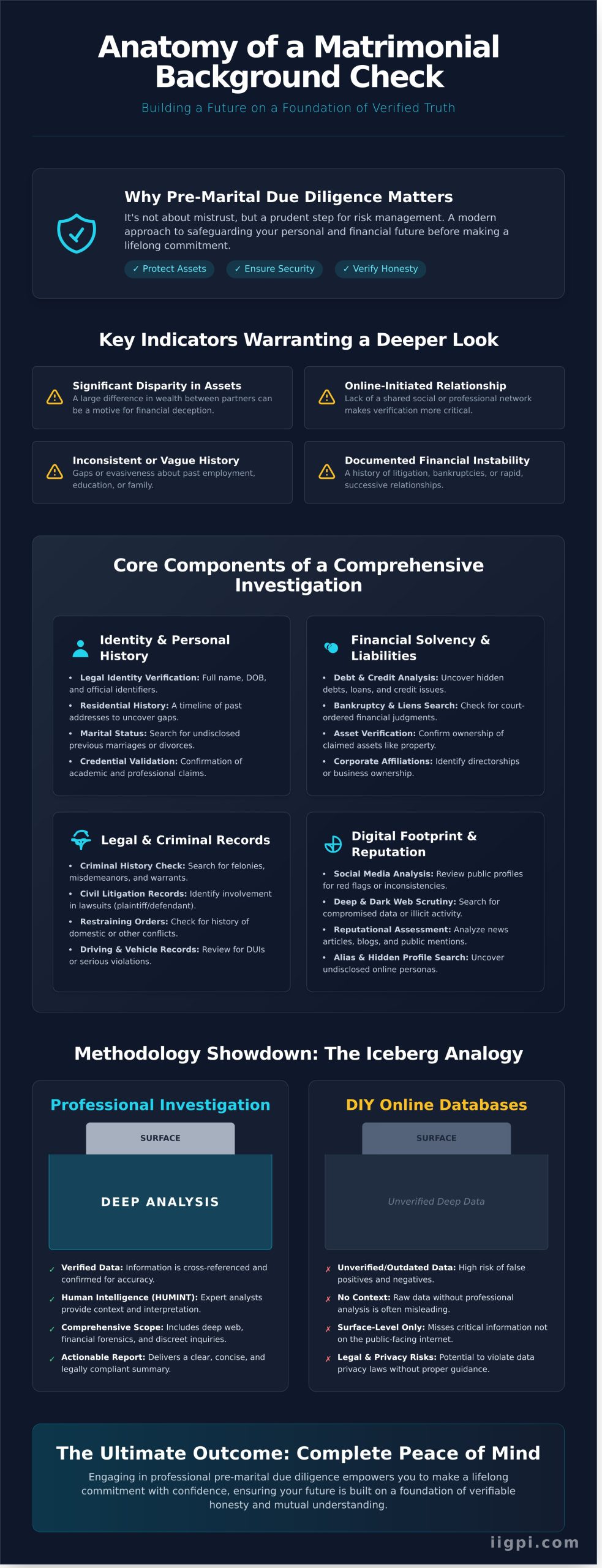
Certain circumstances present a heightened need for formal verification, as they correlate with an increased potential for undisclosed information. These risk factors do not inherently signify deception but warrant a more structured approach to due diligence. Key indicators include:
- A significant disparity in wealth or financial assets between partners.
- Relationships initiated online or where partners lack a substantive, shared social or professional network.
- Inconsistent or vague disclosures regarding past employment, educational credentials, or familial history.
- A documented history of financial instability, litigation, or rapid, successive romantic engagements.
Ethical Considerations and Discretion
The execution of a pre-marital investigation necessitates a sophisticated balance between the imperative for factual verification and the foundational principle of trust. The primary objective is to confirm material facts-such as identity, financial solvency, and legal history-rather than to engage in intrusive surveillance of a partner’s private life. Professional discretion is paramount throughout this process, ensuring that all inquiries are conducted legally and ethically, with the utmost respect for the privacy and dignity of all individuals involved.
Core Components of a Comprehensive Matrimonial Investigation
A rigorous matrimonial investigation is a systematic process designed to construct a complete and verified profile of an individual. This endeavor is not founded on suspicion but on the principle of due diligence, ensuring that a life-altering decision is based on substantiated facts rather than unverified claims. A comprehensive inquiry synthesizes data from publicly available records with human intelligence to corroborate the information provided by a prospective partner. The objective is to build a foundation of trust through transparency, confirming that the person you are committing to is precisely who they represent themselves to be. Each component of the investigation serves as a critical checkpoint in this validation process.
Identity and Personal History Verification
The foundational layer of any investigation is the unequivocal confirmation of an individual’s identity and personal history. This phase moves beyond surface-level details to authenticate the core facts of a person’s life. Key areas of verification include:
- Legal Identity: Confirming the full legal name, date of birth, and other official identifiers to rule out identity misrepresentation.
- Residential History: Verifying past addresses to establish a timeline and identify any undisclosed periods or locations of residence.
- Marital Status: Searching official records for evidence of previous, undisclosed marriages or divorces, which is fundamental to the legality and integrity of a new union.
- Professional and Academic Credentials: Validating claimed educational degrees, professional licenses, and certifications from issuing institutions.
Financial Solvency and Liabilities Assessment
An individual’s financial history provides significant insight into their stability, responsibility, and honesty. A thorough financial assessment within matrimonial background checks aims to create a clear picture of a person’s fiscal health and character. This involves identifying potential red flags such as undisclosed bankruptcies, tax liens, and civil judgments that could impact a shared future. The investigation also seeks to uncover significant hidden debts, patterns of financial distress, undisclosed business ownerships, or corporate affiliations that represent potential liabilities or conflicts of interest.
Criminal and Civil Litigation Records
For reasons of personal safety and long-term security, a review of criminal and civil court records is an indispensable component. This involves conducting comprehensive searches for felony and misdemeanor convictions at local, state, and federal levels. Critically, this search also includes reviewing court dockets for any history of restraining orders, domestic violence charges, or other patterns of behavior that could pose a threat. While these personal inquiries are distinct, it is useful to understand the principles of fairness that underpin the legal framework for background checks in employment contexts to ensure information is interpreted responsibly. Examining involvement in civil litigation, either as a plaintiff or defendant, can further illuminate an individual’s temperament and history of conflict.
Methodology: Professional Investigation vs. Online Databases
In the domain of due diligence, particularly concerning pre-matrimonial verification, the methodology employed is of paramount importance. Not all background checks are created equal; the distinction between automated online database searches and a comprehensive professional investigation is substantial. While instant checks offer expediency, they often sacrifice accuracy and depth, providing a superficial overview that can be dangerously misleading. A professional inquiry, conversely, is a multi-faceted process that synthesizes data with human intelligence to construct a verified, contextualized, and actionable profile of an individual.
Limitations of DIY and Instant Online Checks
Commercially available online background checks frequently rely on aggregated public records, which can be fraught with inaccuracies. These systems are ill-equipped to provide the certainty required for significant life decisions, as their operational deficiencies can produce critical errors.
- Data Integrity: Databases are often incomplete or outdated, leading to false negatives (failing to report existing records) or false positives (incorrectly associating records with the subject).
- Access Restrictions: Such services cannot access non-digitized court records, sealed documents, or information from jurisdictions with limited online infrastructure.
- Identity Verification: Automated systems may fail to distinguish between individuals with common names, potentially pulling data for the wrong person without a robust verification protocol.
- Lack of Analysis: They deliver raw, uninterpreted data, leaving the user to decipher complex legal, financial, or corporate filings without professional context or analysis.
The Value of a Licensed Private Investigator
A licensed private investigator transcends the limitations of automated searches by employing a rigorous, analytical methodology. Their value lies not only in superior access to information but also in the expert interpretation of that data. For truly comprehensive matrimonial background checks, this level of professional scrutiny is indispensable. Investigators can conduct discreet field inquiries, interview knowledgeable sources, and perform surveillance to verify lifestyle claims-actions that are impossible for any database to replicate. They utilize proprietary, professional-grade databases and possess the expertise to connect disparate pieces of information, ensuring all investigative activities are conducted legally and ethically.
Digital Footprint and Social Media Analysis
In the contemporary digital landscape, a significant portion of an individual’s life is documented online. A professional analysis of a subject’s digital footprint can reveal crucial insights. This involves meticulous examination of social media profiles for inconsistencies between a presented lifestyle and verifiable reality, searching for undisclosed alternate personas or dating profiles, and analyzing online activities for indicators of character, undisclosed habits, or affiliations. This digital due diligence provides a modern, essential layer to the investigative process. For a truly thorough understanding of a potential partner, it is critical to engage a professional for a discreet, comprehensive investigation.
Navigating the Legal and Interpersonal Framework
Upon the conclusion of an investigation, the most critical phases of the process commence: legal interpretation, objective analysis, and strategic communication. The ultimate value of matrimonial background checks is not merely in the data acquired but in its ethical and constructive application. Navigating this terrain requires a clear understanding of legal boundaries and a deliberate approach to interpersonal dialogue, ensuring that the findings serve to fortify, rather than destabilize, a potential lifelong partnership.
Legal Compliance in Background Screening
A professionally conducted investigation operates within a stringent legal and ethical framework. Investigators must comply with national and state-level privacy laws that dictate the lawful acquisition of information; methods such as pretexting-obtaining private data under false pretenses-are illegal and invalidate findings. It is also critical to distinguish these private inquiries from those governed by the Fair Credit Reporting Act (FCRA), which requires subject consent for employment or credit purposes. Engaging a reputable firm ensures all information is procured through legally defensible channels, safeguarding the integrity of the process.
Interpreting the Investigative Report
The investigative report must be analyzed with objectivity and context. The primary objective is to distinguish between minor, human discrepancies and patterns of significant deception. A past financial misstep, for instance, must be weighed differently than an ongoing, undisclosed history of litigation or a concealed criminal record. It is advisable to consult directly with the investigator to understand the nuances and potential implications of the findings. This professional clarification helps prepare you for a difficult but necessary conversation should substantive red flags be discovered.
Communication Strategies Post-Investigation
The handling of the report’s findings is a delicate matter of strategic communication. While the decision to disclose the investigation itself is personal, the information gleaned should be used to foster transparency. Rather than presenting findings as accusations, frame them as catalysts for essential conversations. For example, knowledge of undisclosed debt can prompt a broader discussion about financial planning and honesty. The ultimate goal is to establish that complete transparency is a prerequisite for marriage. Should the findings from matrimonial background checks reveal significant financial or legal complexities, particularly in an international context, seeking counsel from a specialized practice like the Israel Cross Border Law Firm to draft a prenuptial agreement becomes a prudent and logical step in mitigating future risk.
Strategic Due Diligence: Securing Your Marital Future
The undertaking of pre-marital due diligence represents a strategic, rather than emotional, approach to one of life’s most significant commitments. As this guide has articulated, a comprehensive investigation transcends superficial data aggregation, focusing instead on a legally and ethically sound verification of a potential partner’s history, financial standing, and character. Ultimately, professional matrimonial background checks serve as an essential instrument for mitigating future risks and fostering a partnership grounded in verified truth. For those seeking to implement this rigorous standard of due diligence, the International Investigative Group offers unparalleled expertise. With over 30 years of investigative experience, our team of licensed, bonded, and insured professional investigators leverages a global network of agents to conduct thorough inquiries for even the most complex international cases. We invite you to contact International Investigative Group for a confidential consultation to discuss your specific requirements. Embark on your future with the confidence and clarity that only comprehensive knowledge can provide.
Frequently Asked Questions
Is it legal to conduct a background check on a potential spouse without their consent?
The legality of conducting a pre-marital investigation without the subject’s consent is contingent upon the jurisdiction and the specific information being accessed. Generally, examining publicly available records, such as criminal histories, civil litigation records, and property ownership, is permissible. However, accessing protected data classes, including financial credit reports or medical histories, is strictly governed by statutory frameworks like the Fair Credit Reporting Act (FCRA), which mandates explicit consent from the individual under investigation.
What are the most common and alarming red flags discovered in matrimonial background checks?
The most consequential discoveries in matrimonial background checks typically involve significant discrepancies between an individual’s self-representation and documented facts. Alarming red flags include undisclosed criminal convictions, particularly those related to violence or financial fraud; substantial undisclosed liabilities, such as bankruptcies or court-ordered judgments; falsified academic or professional credentials; and the existence of concealed prior marriages or dependents. These findings represent material misrepresentations that can fundamentally alter the perceived character and stability of a potential spouse.
How much does a professional pre-marital investigation typically cost?
The financial outlay for a professional pre-marital investigation is highly variable, contingent upon the scope and complexity of the inquiry. A rudimentary verification of domestic public records may command a fee of several hundred dollars. Conversely, a comprehensive investigation involving multi-jurisdictional record searches, detailed financial asset tracing, and international verification can escalate into several thousand dollars. The final cost is a direct function of the required depth, geographic reach, and investigative resources deployed for the case.
How do I approach my partner about wanting a background check without destroying trust?
This delicate discourse necessitates a strategic and transparent approach, framing the check as a mechanism for mutual assurance rather than an expression of personal distrust. It is advisable to position the investigation as a pragmatic, bilateral process, analogous to the prudent establishment of a prenuptial agreement, where both partners participate to ensure complete transparency. Emphasizing that the objective is to build a secure foundation for the marital union, free from future unforeseen complications, can mitigate potential relational friction.
What is the difference between a matrimonial check and a standard employment background check?
The primary distinction between these two investigations lies in their regulatory frameworks and investigative scope. Employment background checks are rigorously governed by statutes such as the FCRA, require candidate consent, and are narrowly focused on verifying professional qualifications and criminal history relevant to job performance. In contrast, matrimonial inquiries possess a broader, more personal mandate, often delving into an individual’s character, family history, social affiliations, and overall lifestyle to assess suitability for a lifelong partnership.
How long does a comprehensive matrimonial background investigation take?
The temporal parameters for a comprehensive matrimonial investigation are dictated by its complexity and geographic scope. A standard domestic inquiry, confined to public records within a single country, may conclude within one to two weeks. However, an extensive investigation involving international record retrieval, financial asset tracing, or discreet surveillance can necessitate a timeline extending from several weeks to over a month, contingent upon the accessibility and responsiveness of various official and private data repositories across multiple jurisdictions.
Can an investigation uncover hidden assets or financial accounts overseas?
Indeed, the discovery of concealed domestic or offshore financial assets is a principal objective of advanced pre-marital investigations, although it presents considerable complexity. Uncovering such accounts requires the deployment of specialized forensic investigators who utilize sophisticated asset tracing methodologies and navigate international legal frameworks. While success is not guaranteed, particularly in jurisdictions with stringent bank secrecy laws, a thorough investigation can often identify undisclosed real estate, corporate interests, and other significant financial holdings.