
A convincing online profile is not proof of a real identity. If you’re trying to find out whether someone in NYC is catfishing you, look for signs that their photos, personal details, and behavior do not align or cannot be independently supported. Catfishing involves using a false online identity to deceive someone, often for financial gain.
It’s understandable to feel uncertain when someone’s messages seem genuine but important details are hard to verify. This article explains how profile photos and identity clues can reveal inconsistencies, which behaviors may signal catfishing, and what to do if your concerns grow.
You’ll also learn how to end contact and report a suspected fake account, while distinguishing warning signs from proof. Reviewing the available information carefully can clarify what you may be dealing with and which next steps make sense.
Key Takeaways
- A professional image search can help identify whether profile photos appear elsewhere online or conflict with the person’s claimed identity.
- Preserve relevant messages and profile details, then block the account and report it through the platform if you suspect deception.
- Changing stories, pressure to keep a relationship secret, and requests for money or sensitive details are warning signs to take seriously.
- Catfishing involves using a false online identity to deceive someone; understanding that distinction helps you assess the situation and decide what support to seek.
1. How a professional checks profile photos with image search
For someone asking how to find out if you are being catfished by someone in NYC, an image search can be a useful starting point. A professional reviews photos attached to a dating profile and searches for matching images elsewhere online. A photo appearing under another name, on unrelated accounts, or alongside a different biography raises a question worth investigating. It does not prove deception by itself. The image may have been reposted, used without permission, or separated from its original context. A professional compares the result with other profile details before drawing conclusions.
Profile checks can also compare public-facing accounts for consistency. A professional reviews names, occupations, locations, and relationship details across available profiles, then notes meaningful contradictions. For example, a claimed NYC neighborhood may not match locations associated with someone’s public posts. Old posts or travel could explain the discrepancy, so context matters. Language patterns can also be compared: a sudden shift in spelling, grammar, or writing style may conflict with earlier messages.
To assess how to find out if you are being catfished by someone in NYC, a professional can review public social media posts and check-ins for patterns. They compare dates, locations, and descriptions with the person’s claims, distinguishing an isolated inconsistency from repeated conflicts. This review relies on information accessible without entering private accounts or contacting people under false pretenses.
Questions can help test consistency without asking for sensitive details. A professional may suggest asking, “Which neighborhood do you live in?” or “What did you enjoy about the place you mentioned?” They compare the answers with earlier statements and visible account history. A phone number, email address, or profile can also be assessed against publicly accessible scam-related results. Searching an identifier with “dating scam” may surface complaints or conflicting identities, but each result needs context before it informs an assessment.
2. How professionals help clients stop contact and report fake accounts
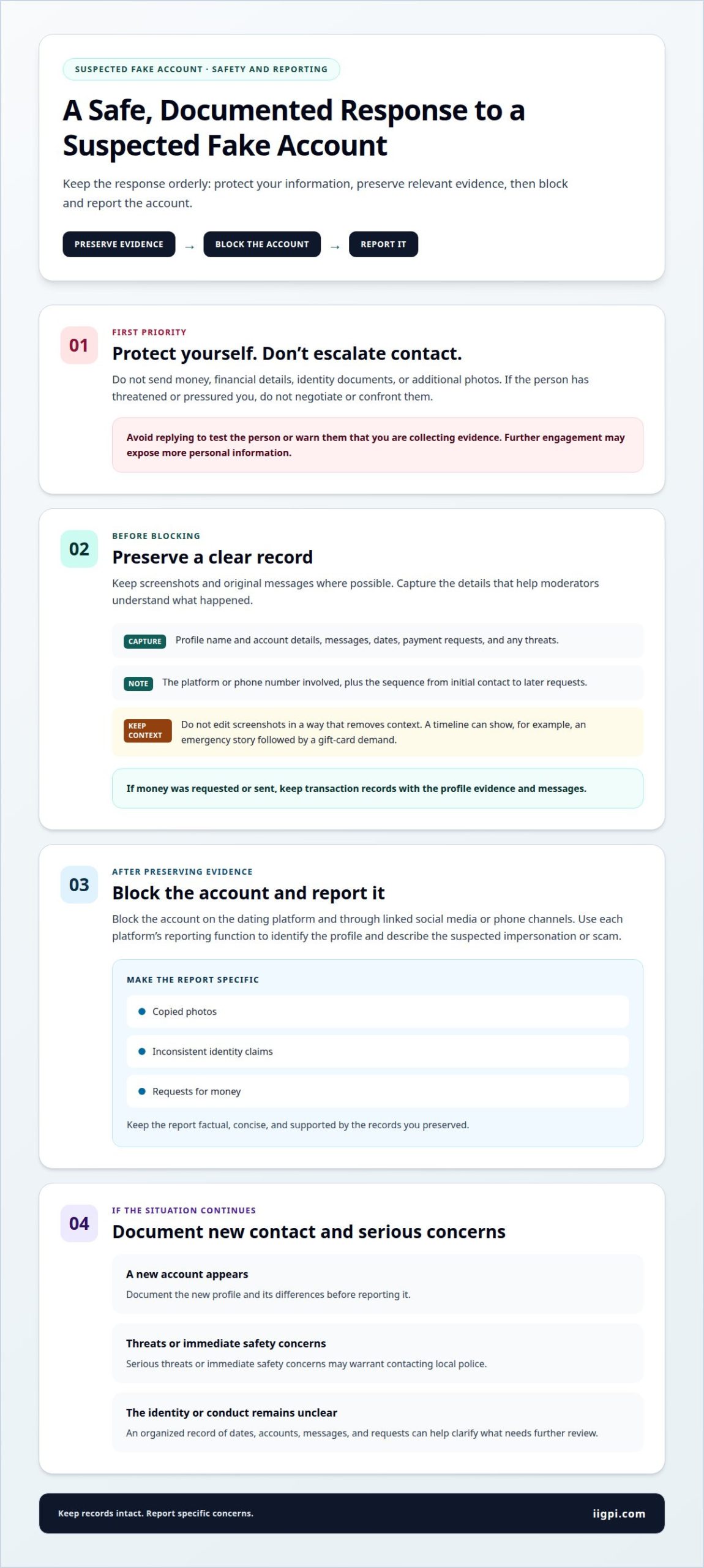
Once a profile appears deceptive, a professional can help organize next steps without escalating contact. Prioritize safety: don’t send money, financial details, identity documents, or additional photos. If the suspected catfish has threatened or pressured you, don’t negotiate or confront them. A professional can review available messages and help determine what to preserve before you block the account.
Documentation gives platform moderators a clearer record to assess. Preserve screenshots showing the profile name, account details, messages, dates, payment requests, and any threats. Keep original messages where possible, and note the platform or phone number involved. A timeline can distinguish the initial contact from later requests, such as an emergency story followed by a gift-card demand. Don’t edit screenshots in ways that remove context.
After preserving relevant evidence, block the account on the dating platform and through any linked social media or phone channel. Use each platform’s reporting function to identify the profile and describe the suspected impersonation or scam. Include specific examples, such as copied photos, inconsistent identity claims, or requests for money. A professional can help organize the report so it is factual, concise, and supported by the records you have kept.
If the account returns under another name, document the new profile and its differences before reporting it. Don’t reply to test the person or warn them that you’ve collected evidence; further engagement may expose more personal information. If money was requested or sent, preserve transaction records and messages alongside the profile evidence. Serious threats or immediate safety concerns may warrant contacting local police.
When a suspected dating scam involves repeated contact, impersonation, or financial pressure, personal investigations can help examine the available information and organize the documented pattern. This support is most relevant when the identity or conduct remains unclear after platform reporting. A clear record of dates, accounts, messages, and requests helps define what needs investigation and supports a more orderly response.
3. Elaborate stories and unrealistic promises
If you’re trying to find out whether someone in NYC is catfishing you, examine how their explanations change over time. Common signs include a relationship becoming serious unusually quickly, repeated shifts in personal stories, requests for secrecy, or pressure to distance yourself from friends. Behavior may also conflict with the identity presented in a profile. One inconsistency alone doesn’t prove deception; the pattern across conversations matters.
To understand how to find out if someone in NYC is catfishing you, consider whether personal crises repeatedly lead to financial requests. Someone may describe sudden hardship, promise a future together, then ask for money, cryptocurrency, gift cards, or gaming credits. Requests for your address, date of birth, or bank details also warrant caution, particularly when the person avoids explaining why they need them.
A professional can organize claims into a timeline, comparing when each story appeared with later explanations. For example, a demanding work assignment might first prevent a meeting, then become a sudden emergency requiring financial help. Investigators assess whether explanations remain consistent, plans repeatedly change, or requests follow emotional pressure. The sequence can reveal more than a single message.
Scrutinize promises that seem implausible or are used to discourage questions. Someone might promise an imminent move to Manhattan, then introduce a new obstacle whenever plans become specific. A professional examines the wording, timing, and context, distinguishing contradictions from reasonable changes in circumstances. Useful details include dated messages, shifting explanations, and the nature of each request. If you’re working out how to find out whether someone in NYC is catfishing you, notice when their account repeatedly conflicts with their actions and consider whether the overall pattern warrants closer assessment.
4. Meaning of catfishing
Catfishing means creating or using a false online identity to deceive someone, often in a romantic context. A catfish may use another person’s photos, invent a name, or fabricate details about work and location. The deception may aim to gain affection, personal information, or money. For example, someone posing as a New York City resident may build trust before inventing an emergency and requesting financial help.
The key distinction is deliberate deception, not simply an incomplete profile. Someone using a nickname for privacy is not automatically catfishing, and an old photo alone doesn’t prove a false identity. Concern grows when profile details, messages, and behavior repeatedly conflict. An investigator considers the surrounding evidence, such as inconsistent accounts of personal history or a photo connected to another identity.
Catfishing also differs from a relationship that moves quickly but involves genuine identities. A false persona may be maintained through fabricated stories, avoidance of direct identity checks, or efforts to isolate the other person from friends. A request for cryptocurrency after a claim of sudden financial trouble can signal financial exploitation, especially when the supposed partner refuses other ways to verify the story.
In NYC, the meaning doesn’t change by borough or neighborhood: the central issue is whether someone knowingly misrepresents their identity online. Location claims can be one part of the picture, but a Manhattan address or familiar local reference doesn’t establish identity. A professional assessment looks at the pattern across the claimed identity, available records, communications, and conduct, rather than treating one inconsistency as decisive.
Understanding the term helps separate suspicion from substantiated deception. Record the specific discrepancies, such as a profile photo linked to another name or a changing account of where someone lives, and consider how those details fit together. If you need help assessing a suspected false identity, request a professional review.
International Investigative Group
International Investigative Group can help assess suspected catfishing when conflicting identity details, repeated deception, or financial pressure remain unresolved. Through Personal & Domestic Investigations, the firm can examine information relevant to your concern and help clarify whether the available details support further inquiry. This may help when profile checks and platform reports haven’t answered who you’re communicating with, or when you need a structured review of documented interactions.
Before seeking assistance, organize the profile details, messages, and timeline you already have. This context helps define the question to investigate without requiring you to continue contact or confront the suspected catfish. An investigation can assess evidence, but it cannot guarantee a particular finding.
For a professional discussion about your situation, contact International Investigative Group.
Make your next decision with clarity
Uncertainty can make every new message seem significant, but a sound decision separates what you can substantiate from what remains an assumption. If you’re considering how to find out if you are being catfished by someone in NYC, focus on the question that matters now: would a professional assessment help you decide how to proceed? You don’t need to resolve every unknown before setting a boundary or seeking support.
International Investigative Group’s Personal & Domestic Investigations can help examine concerns about an online identity. The information you’ve already preserved, along with the specific questions you need answered, can help define the next step. The goal is to give you a clearer basis for making your own decision, not to pressure you toward a particular outcome.
If you’d like to discuss your situation, contact International Investigative Group. A considered next step can help you move forward with greater confidence.
Frequently Asked Questions
What is catfishing?
Catfishing means deliberately presenting a false online identity to deceive another person. The falsehood may involve someone else’s photos, an invented biography, or a misleading claim about location or intentions. A nickname or limited public profile alone doesn’t establish catfishing; the central issue is intentional misrepresentation. Consider whether the person’s claims and conduct show a consistent pattern, rather than treating one unusual detail as proof.
Are the photos really them?
A profile photo alone can’t establish who is behind an account. A reverse image search may show that the same picture appears under another name, but that finding needs context: images can be reposted, outdated, or used without the subject’s knowledge. Compare several photos with the person’s account of them. A video call may provide another identity clue, though it cannot verify every claim.
How can a professional reverse image search a dating profile photo?
A professional uses the available profile image as a search reference, then examines matching results for different names, biographies, or unrelated account contexts. They compare image details and surrounding information instead of treating a visual match as a final conclusion. A cropped or altered picture may not return a result, so investigators can assess more than one available image and consider other identity evidence.
What should I do if someone online asks for money, gift cards, or financial details?
Don’t send money, gift cards, cryptocurrency, or financial information to someone you haven’t met and independently identified. A story about urgent travel costs or a sudden emergency doesn’t make a payment request safe. Pause the exchange, keep the messages, and don’t share account access codes or banking details. If the person applies pressure or insists on secrecy, end contact and report the account through its platform.
How can I safely arrange an in-person meeting with an online date in NYC?
Choose a public place during the daytime, tell someone you trust where you’re going, and arrange for a friend to accompany you or stay nearby. Keep control of your transportation and avoid sharing your home address until you feel safe. If the person objects to a public meeting or pressures you to change locations, postpone the date. You’re not obligated to meet someone whose behavior makes you uncomfortable.
What should I do if I shared personal information or sent money to a suspected catfish?
Stop sending money and preserve messages, account details, and payment records before blocking the person. If you shared banking information or account credentials, contact your financial institution and change affected passwords, especially if you reused them. Report the profile to its platform and tell someone you trust. A clear record of what you shared, when, and through which channel can help you explain the situation when seeking assistance.