
A discreet investigation should start with a specific business concern and rely on verifiable information, not assumptions or rumor. Knowing how to discreetly investigate a business partner in NYC means defining what you need to clarify, reviewing relevant business records and agreements, and documenting findings that can inform a decision or dispute.
It’s reasonable to seek clarity without escalating tensions or damaging a working relationship. Start by framing the inquiry, reviewing relevant records and communications, and preserving useful findings. Distinguish routine due diligence from an investigation prompted by suspected misconduct so you can choose an appropriate next step.
Key Takeaways
- Define the concern you need to resolve before gathering information, so the inquiry stays focused on a business decision rather than speculation.
- Assess a prospective partner through relevant background information and business records, then distinguish documented facts from assumptions.
- Use discretion responsibly by limiting access to sensitive information and avoiding methods that could compromise privacy or the integrity of findings.
- Understand what public entity records can establish, and when a more comprehensive due diligence review or investigation may be appropriate.
Business-partner background checks
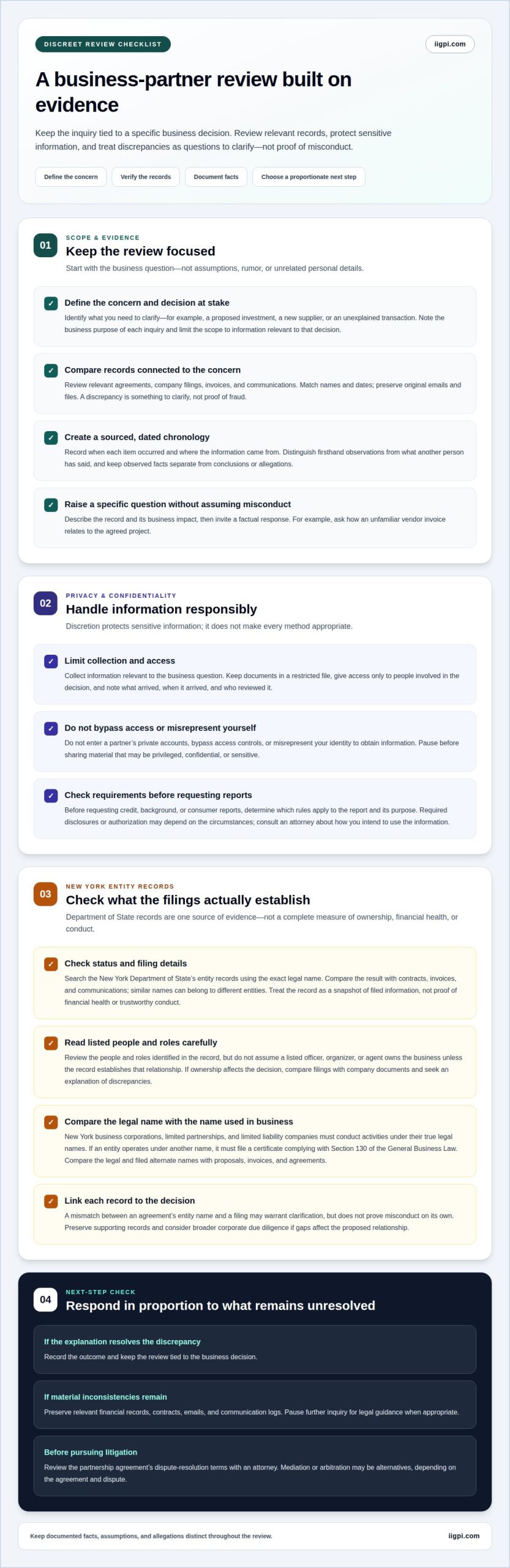
Begin with a defined concern, such as a proposed investment or an unexplained transaction. To investigate a business partner discreetly in NYC, separate documented facts from assumptions and keep the inquiry tied to a specific business decision.
- Define the concern and scope. Identify the decision at stake and the information needed to assess it. If a partner proposes a new supplier, for example, focus on relevant business history and disclosed relationships, not unrelated personal details. Note the business purpose of each inquiry to keep the review proportionate and useful.
- Review relevant records. Compare agreements, company filings, invoices, and communications related to the concern. Match dates and names, and document discrepancies without treating them as proof of fraud. Preserve original emails and files. Before requesting credit, background, or consumer reports, determine which rules apply to the report and its purpose; required disclosures or authorization may depend on the circumstances. Consult an attorney about how you intend to use the information.
- Document and raise concerns carefully. Create a dated chronology and note the source of each entry. Separate firsthand observations from what others have said. To reduce conflict, describe the specific record and its business impact, then invite a factual response. For instance, ask how an unfamiliar vendor invoice relates to the agreed project without alleging misconduct before the facts are established.
- Choose a proportionate next step. If the explanation resolves the discrepancy, record the outcome. If material inconsistencies remain, preserve relevant financial records, contracts, emails, and communication logs. Before pursuing litigation, review the partnership agreement’s dispute-resolution terms with an attorney; mediation or arbitration may be alternatives, depending on the agreement and dispute. Knowing how to discreetly investigate a business partner in NYC also means recognizing when to pause further inquiry for legal guidance.
Confidentiality and privacy
Discretion should protect sensitive information, not justify obtaining it by any means. In New York, the limits depend on applicable privacy and other laws, the information sought, and the methods used. Keep inquiries lawful; an experienced investigator can help structure due diligence without treating confidential records as freely accessible.
- Set a narrow purpose. Identify the business question and limit collection to information relevant to it. If the concern involves a vendor relationship, for example, focus on related records rather than unrelated personal matters. A defined scope reduces unnecessary exposure and makes each investigative step easier to explain.
- Control access to documents. Store contracts, messages, and notes in a restricted file, and give access only to people involved in the decision. Record what was received, when it arrived, and who reviewed it. Do not enter a partner’s private accounts, bypass access controls, or misrepresent your identity to obtain information.
- Separate facts from allegations. Describe observed conduct precisely and identify the supporting source. An unexplained payment is a documented discrepancy, not proof of criminal conduct. Preserve original records, avoid editing emails, and distinguish direct evidence from another person’s account. If information may be privileged, confidential, or sensitive, pause before sharing it.
- Escalate carefully. Before collecting sensitive material or confronting a partner, arrange a consultation with counsel about the purpose, methods, and intended use of the findings. Counsel can assess legal questions; an investigation should not substitute for legal advice. For a discreet, focused inquiry, consider a confidential investigative review that keeps the scope tied to the business concern.
Corporate due diligence
Use New York entity records as one source of evidence, not a complete measure of a partner’s conduct. Compare filed information with the proposed business relationship and its supporting records.
-
Check the Entity’s Status
Search the New York Department of State’s entity records using the business’s exact legal name. Compare the result with the name on contracts, invoices, and communications, since similar names can belong to different entities. Record the status and filing details shown, but treat them as a snapshot of filed information, not proof of financial health or trustworthy conduct.
-
Review the Entity’s Ownership
Review the Department of State record for the people and roles it identifies, but don’t mistake those entries for a complete ownership picture. Do not infer that a listed officer, organizer, or agent owns the business unless the record establishes that relationship. If ownership affects your decision, compare filed information with company documents and seek a clear explanation of any discrepancy.
- Check the name used in business. New York business corporations, limited partnerships, and limited liability companies must conduct activities under their true legal names. If an entity operates under another name, it must file a certificate complying with Section 130 of the General Business Law. Compare the legal name and any filed alternate name with the name used in proposals, invoices, and agreements.
- Assess what the records establish. Create a short chronology linking each record to the decision at hand. For example, a mismatch between an agreement’s entity name and a filing may warrant clarification, but it does not prove misconduct on its own. Separate observations from conclusions, preserve the underlying evidence, and consider corporate due diligence if gaps affect the proposed relationship or call for a broader review.
How do I check a New York business entity’s status and ownership with the NY Department of State?
Use New York Department of State records to identify the entity and examine its filings. Treat these records as evidence about filings, not a complete account of ownership or business conduct.
- Search by the exact legal name. Start with the name shown on the agreement, invoice, or proposal. Search the Department of State’s entity records, then compare the result with the document you received. If several entities have similar names, compare their listed details before attributing a filing to your partner’s business.
- Review the filing status and history. Note the status displayed and the filings associated with the entity. Compare available filing details with the dates and names in your transaction documents. A filing record can help identify inconsistencies, but it does not establish that the business is financially sound or that a partner acted properly.
- Distinguish listed roles from ownership. Record the names and roles in available filings, but don’t assume an officer, agent, or other listed person owns the entity. Public entity records may not show the full ownership picture. If ownership matters to the proposed relationship, compare the filings with the company’s own agreements and records.
- Check amendments and alternate names. A New York business corporation uses a Biennial Statement Amendment to change its chief executive officer’s name or address, or its principal executive office address. The statutory filing fee is $9. New York corporations, limited partnerships, and limited liability companies using a name other than their true legal name must file a certificate complying with Section 130 of the General Business Law.
- Record findings with limits. Save the entity name searched, the filing details reviewed, and any mismatch with a contract or invoice. A difference warrants clarification; by itself, it does not prove misconduct. For a focused assessment of entity records and related concerns, request a discreet business review.
International Investigative Group
International Investigative Group conducts corporate investigations when public records and internal documents leave important questions about a prospective or current business partner unresolved. A focused inquiry can organize relevant information, examine specific concerns, and distinguish documented findings from assumptions, giving decision-makers a clearer basis for next steps. The right scope depends on the business question and information available.
Concerns about unexplained conduct or a disputed business relationship may call for a structured investigation rather than more informal speculation. Corporate investigations and surveillance services can support an inquiry when those methods are relevant. Findings can inform business decisions, while legal questions remain for qualified counsel.
Contact International Investigative Group to discuss an investigation concerning a business partner.
Make the Next Decision With Greater Clarity
Knowing how to discreetly investigate a business partner in NYC ultimately means making a sound decision based on information gathered for a defined business purpose. Determine whether the unresolved concern calls for more documentation, a measured conversation, or a structured investigation. Keep the objective specific, and consider how findings will inform the business relationship before expanding the inquiry.
For concerns involving corporate conduct, insurance matters, or protection needs, International Investigative Group offers Corporate Investigations, Insurance Investigations, and Security and Armed Guards. Each addresses a different need, so the right direction depends on the issue. A focused discussion can help define the inquiry’s scope and how it relates to your decision.
Contact International Investigative Group to discuss your concerns and determine a practical next step. A clear, considered approach can help you move forward with confidence.
Frequently Asked Questions
What public records can you legally search on a New York City business partner?
Publicly accessible New York records may include entity filings, court matters, property records, and tax-lien entries, each answering a different question. Entity filings help identify a registered business, while a court entry indicates a proceeding, not a finding of liability. A property record may concern an entity or someone with a similar name. Match names, addresses, and dates before drawing conclusions, and treat consumer reports as a separate category.
How can I search NYC property, tax lien, court, and bankruptcy records for a business partner?
Search using the partner’s exact legal name and any documented alternate business name, then include a known address when the record system allows it. Review property records for ownership links, tax-lien entries for recorded claims, court indexes for proceedings, and bankruptcy records for filed cases. Check relevant jurisdictions and dates. Compare identifiers before treating a possible match as meaningful, and record filing or case references for follow-up.
How do I verify a business partner’s licenses and professional credentials in New York?
Identify the claimed credential and the authority responsible for issuing it, then use that authority’s public verification channel if available. Match the person’s full name, credential type, and identifier, and distinguish an active credential from experience or professional membership. If the business advertises regulated work, confirm the credential applies to that person and activity. Keep a dated record of the result; a résumé or certificate image alone may not establish current standing.
How can I verify a partner’s references, business history, and financial claims discreetly?
Ask for professional references connected to comparable work, and seek permission before approaching them if confidentiality matters. Ask neutral questions about project dates, scope, delivery, and the reference’s direct experience. Compare financial claims with underlying statements, agreements, or transaction records, noting what each document establishes. For example, distinguish signed contracts from collected payments and projections. Don’t disclose allegations or imply misconduct during routine reference inquiries.
What privacy, defamation, trespassing, and recording laws should I consider in New York?
Treat privacy, reputational harm, property access, and recording as separate legal issues; applicable requirements depend on the circumstances and method. Avoid trespassing, accessing private accounts, or presenting unverified accusations as fact. Separate suspicion from evidence and limit disclosure to people with a business need. Before recording a conversation or collecting sensitive personal information, consult New York counsel about the specific situation and intended use.