
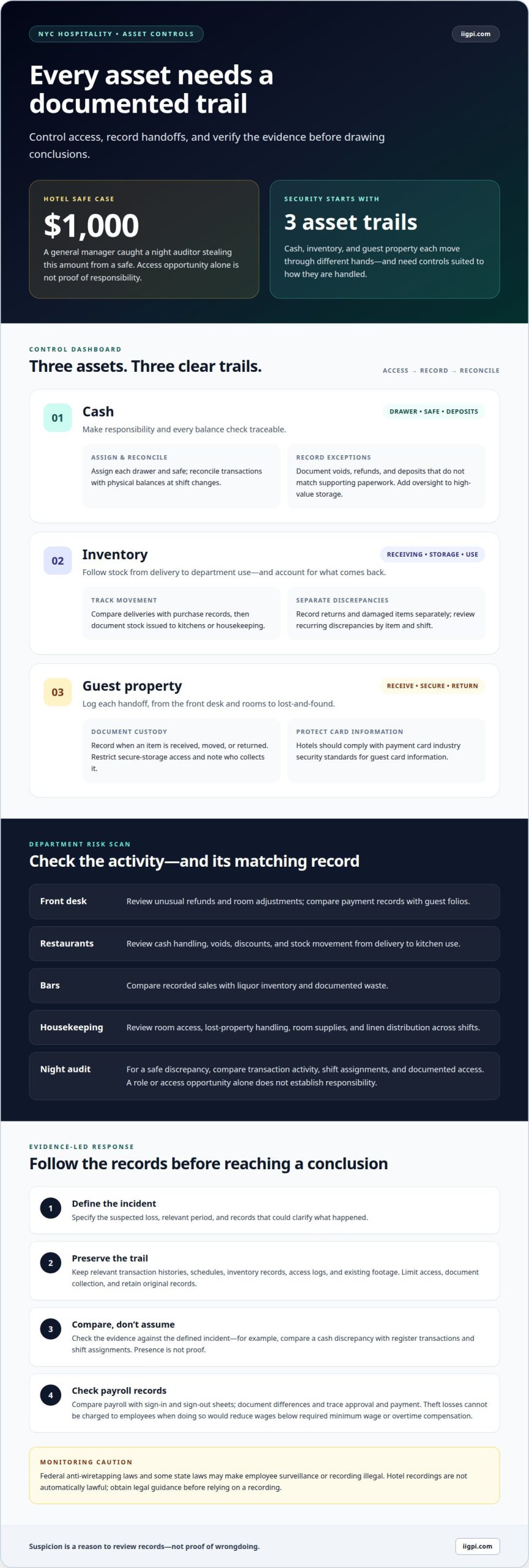
A hotel general manager caught a night auditor stealing $1,000 from a safe, demonstrating why trusted access still requires effective controls. Employee theft in NYC’s hospitality industry can affect cash, inventory, payroll, and guest property; reducing exposure calls for controlled access, clear records, and a careful, evidence-led investigation when concerns arise. Suspicion alone is not proof, so the response should protect people and preserve relevant information without rushing to conclusions.
Hotels and restaurants rely on employees to handle valuable assets across busy, interconnected operations, so practical safeguards matter. This article explains how to protect cash, stock, and guest belongings, investigate suspected theft methodically, and assess risks in different hotel departments. It also shows why records matter and why an allegation must be established through evidence, not assumption.
Key Takeaways
- Limit access to cash, inventory, and guest property, and keep clear records of who handles each asset.
- When concerns arise, preserve relevant records and assess evidence systematically before drawing conclusions.
- Review hotel departments individually to identify where access, transactions, and handoffs may create theft risks.
- Compare payroll and timekeeping records to spot inconsistencies that may warrant closer investigation.
1. Cash, inventory, and guest-property security
Employee theft is common in hospitality workplaces, and businesses lose billions of dollars each year to it. In New York City hotels, cash drawers, storerooms, and guest belongings require distinct controls because each asset moves through different hands. A useful starting point is to map who can access each location, what they handle, and which records document the transfer.
For cash, assign responsibility for each drawer and safe, then reconcile recorded transactions with physical balances at shift changes. Record exceptions promptly, including voids, refunds, and deposits that do not match supporting paperwork. After a hotel experienced a safe theft, its general manager decided to install a surveillance camera at the safe. The example shows why access records and oversight should cover high-value storage, not just public areas.
Inventory controls should link receiving, storage, and use. Compare deliveries with purchase records, document stock issued to kitchens or housekeeping, and investigate recurring discrepancies by item and shift. For example, a hotel can track linens from a storeroom to housekeeping carts, then record returns and damaged items separately. Clear procedures help distinguish routine loss and recording errors from conduct that merits further review.
Guest property requires controlled handling at the front desk, in rooms, and through lost-and-found. Log each item when staff receive, move, or return it; restrict access to secure storage and document the recipient at collection. For guest card information, hotels should comply with payment card industry security standards. New York hotels are also using data and integrated platforms to address evolving theft risks in 2026, but technology works best when staff follow consistent procedures.
Understaffing and inadequate training can contribute to workplace problems, including theft. Managers can reduce confusion by explaining ethical expectations, training staff on asset-handling procedures, and applying the same documentation process across shifts. If a cash, stock, or property record raises concern, preserve relevant records and examine the transaction trail before accusing an employee.
2. Investigating suspected employee theft
Concerns about NYC hospitality industry employee theft should be investigated using documented evidence, not assumptions about an employee’s role or access. Federal anti-wiretapping laws and some state laws may make employee surveillance or recording illegal, so recordings made inside a hotel are not automatically lawful. For specific monitoring questions, obtain legal guidance before relying on a recording.
Start by defining the suspected loss, the relevant period, and the records that could clarify what happened. Preserve transaction histories, schedules, inventory records, access logs, and existing footage. Limit access to these materials, document who collected them, and retain the original records. Then compare the evidence with the defined incident. For example, review a cash discrepancy alongside register transactions and shift assignments, without treating an employee’s presence as proof.
For NYC hospitality industry employee theft allegations involving payroll, compare payroll records with sign-in and sign-out sheets to see whether recorded hours match time worked. Document differences and trace the records through approval and payment. The U.S. Department of Labor states that employers cannot make employees pay theft losses when doing so would reduce wages below required minimum wage or overtime compensation. A suspected loss alone does not establish that a deduction is permitted.
Penalties for employee theft in New York City depend on the conduct, evidence, and offense charged. Workplace discipline is different from criminal penalties imposed through the applicable legal process. Do not describe an allegation as a proven offense before assessing the evidence.
Workers and employers seeking legal help with workplace theft can consult an employment attorney or legal aid organization. An attorney can assess wage, monitoring, and employment questions; someone facing a criminal allegation can consult a criminal defense attorney. Keep schedules, pay statements, and investigation notes available for that discussion.
New York hospitality employers can compare sample payroll records with sign-in and sign-out sheets to verify that work hours are captured correctly.
3. Theft risks by hotel department
Employee theft risks vary with a workplace’s transactions and access points. In restaurants, review cash handling, voids, discounts, and stock movement from delivery to kitchen use. In bars, compare recorded sales with liquor inventory and documented waste. Hotels also involve room access, guest property, housekeeping supplies, and overnight financial duties, so one control rarely covers every department.
At the front desk, examine unusual refunds, room adjustments, and discrepancies between payment records and guest folios. In one hotel case, a general manager caught a night auditor stealing $1,000 from the safe. That example makes the night audit and safe-access records relevant evidence, but a job title or access opportunity alone doesn’t establish responsibility. Compare transaction activity, shift assignments, and documented access before drawing conclusions.
Housekeeping involves movement among guest rooms, carts, and supply areas. Review procedures for lost property, room supplies, and linen distribution, then compare inventory records with the locations and shifts involved. If an item is reported missing after checkout, for example, establish a timeline of room access and property handling rather than assuming responsibility rests with the last employee assigned there. Consistent handoff records can show where the trail changes.
Food and beverage teams handle sales, stock, and waste across several points of service. A restaurant manager can compare point-of-sale voids with receipts and shift records, while a bar inventory review can focus on differences between recorded use and remaining stock. These checks help distinguish an unexplained variance from an identifiable transaction or recording error.
To assess a hotel concern, map the asset’s path through departments: who received it, who accessed it, and where each handoff was recorded. Compare records from connected operations, such as front desk adjustments and night audit entries, rather than isolating one employee’s activity. If theft is suspected across a department, preserve relevant records and objectively examine the sequence of transactions and access.
4. What are the most common types of employee theft in NYC hospitality businesses?
Common forms of employee theft include cash theft, inventory diversion, misuse of guest property, and payroll fraud. Each leaves a different record trail. A missing cash deposit may point to a register or safe discrepancy, while unexplained stock loss may occur between receiving and use. Treat these patterns as investigative leads, not proof against a particular employee.
Cash-related conduct can include taking receipts, manipulating refunds, or recording a transaction inaccurately. Compare register entries with receipts, voids, and shift records to identify transactions that need review. Inventory concerns may involve food, beverages, linens, or supplies that disappear between storage and department use. Guest-property concerns involve belongings handled during room service, housekeeping, or lost-and-found transfers.
Payroll fraud is another potential form, involving wages paid for work that was not performed or an employee who should no longer be on payroll. In one hotel case, a general manager kept a former employee on payroll for 2 years and pocketed the wages. Reviewing employee status, approved hours, payroll entries, and payment records together can expose inconsistencies requiring investigation.
Misuse of discounts, room adjustments, or complimentary items may warrant scrutiny when a supporting reason or approval record is missing. In a hotel, compare folio changes with guest records and authorization logs. In a restaurant or bar, review voids and discounts alongside transaction details. One unusual entry may have an ordinary explanation; repeated patterns tied to the same process merit closer examination.
Distinguish theft of employer property from wage theft against employees. New York investigators identified more than 13,000 wage-theft cases from 2017 through 2021, and hospitality workers can face payroll concerns as well. Review hours, pay statements, and scheduling records separately from missing cash or stock. Clear categories help managers investigate the right transaction trail without confusing employee misconduct allegations with unpaid-wage claims.
International Investigative Group: Corporate Investigations
International Investigative Group conducts Corporate Investigations when hospitality businesses need an independent examination of suspected employee theft. A review can help organize relevant records, clarify transaction patterns, and assess how evidence connects across departments. Theft Investigations are relevant when unexplained cash, inventory, payroll, or guest-property discrepancies require focused fact-finding. The goal is to establish a clear account of the concern, not to treat suspicion as proof. Where physical security risks also require attention, Security and Armed Guards may address that distinct need. These services support businesses facing complex concerns that internal records alone have not resolved. For assistance with a suspected workplace theft matter, contact International Investigative Group.
Build a Response That Protects Trust
Addressing employee theft in NYC’s hospitality industry means more than tracing a missing asset. It also requires protecting fair treatment, guest confidence, and the integrity of workplace decisions. Apply a consistent standard to documenting concerns, assessing evidence, and separating verified discrepancies from assumptions. This helps leadership respond proportionately while preserving trust in operations.
When internal records leave important questions unresolved, International Investigative Group provides Corporate Investigations for suspected workplace misconduct and Insurance Investigations when a loss raises an insurance concern. Security and Armed Guards can address a separate need to protect people or property. These services have different purposes, so choose the next step based on the issue that needs attention.
For support with an investigation or related security concern, contact International Investigative Group. A careful, evidence-led response can help your organization move forward with greater clarity.
Frequently Asked Questions
What steps should a NYC hospitality employer take when investigating suspected employee theft?
Define the concern, assign a neutral investigator, and set a clear scope before interviewing staff. For example, trace a disputed refund through the transaction, approval, and guest folio rather than treating it as proof against the employee who processed it. Keep interview notes factual, document explanations consistently, and separate established findings from unresolved questions before deciding on a workplace response.
What evidence can NYC hospitality employers legally use in theft investigations?
Employers can examine relevant business records, including transaction histories, payroll documents, schedules, inventory records, access logs, and witness accounts. Whether a recording can be used depends on how it was obtained: federal anti-wiretapping laws and some state laws may make employee surveillance or recording illegal. Do not assume that recording is lawful simply because it took place at work. Get legal guidance on specific recording or monitoring questions.
How can NYC restaurants and hotels prevent employee theft?
Prevention depends on clear standards, trained staff, and processes that make unusual activity visible. Explain what conduct is unacceptable, show employees how to document exceptions, and review whether staffing or training gaps leave procedures unclear. For example, managers can periodically check whether staff know how to report a disputed guest charge or missing item. Consistent expectations help employees understand the rules and reporting process.
What NYC and New York State laws apply to employee theft at work?
Federal anti-wiretapping laws and some state laws may restrict employee surveillance or recording. The Fair Labor Standards Act also limits deductions for theft losses if they would reduce pay below required minimum wage or overtime compensation.