
A routine errand can become evidence in a disability claim. Insurers may hire a disability insurance claim surveillance investigator on Long Island to compare reported symptoms or functional limits with observed activity. Investigators may document claimants in public areas, near their homes, or during errands and medical appointments. Insurers may also review social media.
It’s understandable to worry that a brief glimpse of ordinary activity could be mistaken for a complete picture of your health. This article explains why insurers use surveillance, what investigators may record, and how everyday activities or appointment-related observations may be viewed in relation to a claim. A short recording may not capture the pain, recovery time, or limitations that shape your experience beyond that moment.
Key Takeaways
- Understand the privacy boundaries that apply to observation around a claimant’s home, and how location affects what an investigator may document.
- Keep your account of symptoms and limitations consistent across medical care, insurance communications, and daily activities.
- Consider how mobility, posture, and other visible details during an appointment may be interpreted alongside your stated restrictions.
- Recognize that online material can become part of a claim review, and preserve context that explains when and how a post or image was created.
Why Did My Disability Insurance Company Hire a Surveillance Company?
Insurers may use surveillance to compare a claimant’s reported limitations with observable activity. In New York, that monitoring has privacy boundaries, especially around a person’s home.
Why Insurers Use Private Investigators
Private investigators gather observations that insurers may consider when assessing a long-term disability claim. On Long Island, a disability insurance claim surveillance investigator may conduct physical surveillance and review publicly accessible social media. The purpose is to compare reported limitations with visible activity, not to establish a complete medical picture. A brief observation may lack context about symptoms, recovery, or what the claimant can sustain throughout the day.
This matters if an insurer relies on an observation to question a claim. Keep descriptions of your symptoms and daily abilities accurate and consistent with what you tell your treating doctors. If an investigator’s conduct concerns you, document what happened and discuss it with your lawyer.
Physical Surveillance Around the Home
Surveillance near a home may document ordinary activities, such as checking the mail or taking out the trash. Investigators may observe from public areas, but they cannot trespass onto private property or enter without permission. Investigators should respect privacy and avoid intrusive efforts to obtain access to private spaces or information.
These boundaries matter because a driveway, yard, or doorway may raise different privacy concerns from a public sidewalk. Investigators may conduct video surveillance outside a claimant’s home over multiple days, but that does not authorize entry onto private property. Surveillance must not involve harassment, intimidation, or conduct that threatens personal safety or well-being.
Surveillance in Public Places
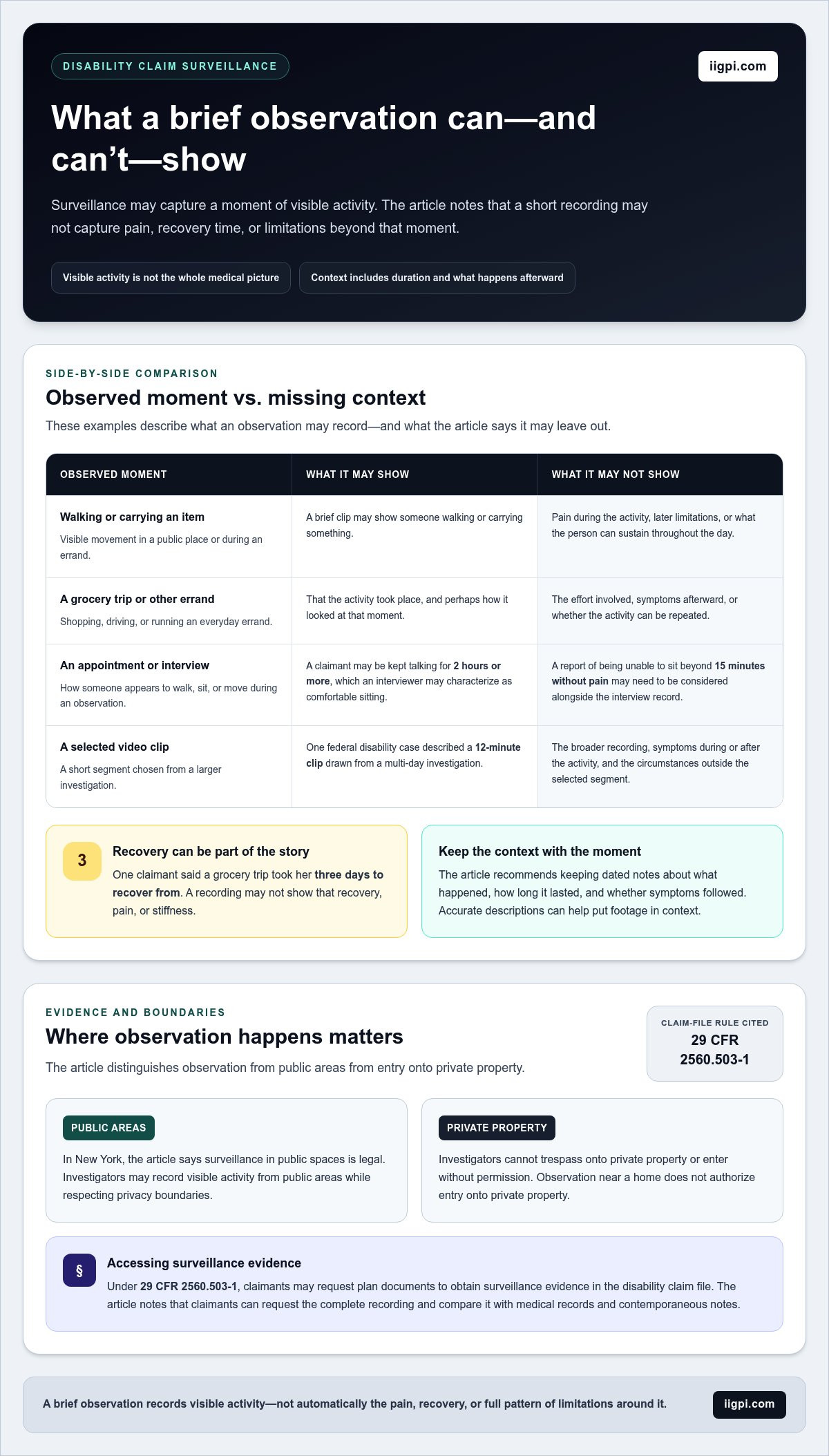
In New York, surveillance in public spaces is legal, and insurers may use public footage in claim disputes. Investigators may record visible activity from public areas, while respecting privacy boundaries. A short clip of someone walking or carrying an item, for example, may show movement without showing pain or later limitations.
If surveillance contributes to a denial, appeal by addressing the evidence and its context with your lawyer. Under 29 CFR 2560.503-1, claimants may request plan documents to obtain surveillance evidence in the disability claim file. You can also challenge selected footage by requesting the complete recording, then explain how it relates to medical records and reported limitations.
Common activities insurers may interpret as inconsistent with a claim
An insurance company may compare reported symptoms and limitations with visible activity, but a brief observation cannot show the full context. Driving, walking, carrying groceries, exercising, or running errands may prompt questions if the activity appears inconsistent with claimed restrictions. The activity alone does not explain pain, recovery time, or whether it can be sustained repeatedly.
Long-term disability surveillance often occurs before an interview or independent medical examination. An interviewer may keep a claimant talking for 2 hours or more, then characterize that duration as evidence of comfortable sitting. If you have told the insurer you cannot sit beyond 15 minutes without pain, that account and the interview record may become important points of comparison.
Footage can also compress a complicated experience into a short clip. An insurer may rely on a few seconds to question a claim, although a federal disability case described a 12-minute clip drawn from a multi-day investigation. A claimant who reports being unable to sit at a desk for twenty minutes without pain may need to explain what the recording omits, including symptoms during activity and afterward.
Keep a dated record of insurer calls, interviews, and how your condition affects daily activities and work capabilities. Note what happened, how long it lasted, and whether symptoms followed. Continue following medical guidance, describe your limitations accurately, and avoid exaggeration. These details can put footage in context rather than leaving one moment to stand alone.
Yes. Under 29 CFR 2560.503-1, claimants may request plan documents to obtain surveillance evidence in a disability claim file. Ask for the complete footage, not only selected clips, and compare it with your medical records and contemporaneous notes. For investigation-related documentation, insurance investigations provide a relevant professional service.
Investigators documenting daily activities and medical appointments
Observations can show isolated movements, not the full effect of a condition. The setting, duration, and recovery afterward shape what those images represent.
Everyday Activities Under Observation
Investigators may observe claimants driving, walking, shopping, carrying groceries, doing yard work, exercising, or running errands. They may also document social events or ask neighbors about someone’s daily activities. Each observation records visible conduct, but not necessarily the effort required to perform it.
That distinction matters when a short activity appears inconsistent with reported limitations. A grocery trip, for example, may take only minutes but require substantial recovery afterward. One claimant said a grocery trip took her three days to recover from. A recording may not show that recovery, pain, stiffness, or whether the same activity can be repeated.
Consider what the footage can and cannot show. Walking from a car to a store may show movement, but not the claimant’s symptoms later that day. Accurate notes about the activity and its effects can preserve that context and support a fair challenge to an incomplete interpretation.
Medical Appointments During Surveillance
Investigators may follow claimants to medical appointments and document how they walk, sit, or move. They may also observe activity before or after an appointment, such as entering a building or returning to a vehicle. These details may be compared with reported limitations, although they do not reveal what happened during the medical visit.
A brief view of someone walking into a clinic cannot establish what assistance they need at other times. Arriving for an appointment also does not show how symptoms affect the person throughout the day. Investigators may record visible actions, but the footage does not explain medical findings, pain levels, or the reason for a particular movement.
For a useful record, note appointment dates, symptoms, mobility changes, and recovery afterward. Tell treating doctors how limitations affect daily life, including changes that may not be visible during a brief observation. These records provide context for the footage and help distinguish an isolated action from a person’s broader functional ability.
Insurance surveillance of disability claimants
Insurers may conduct surveillance when reported symptoms or functional limits appear inconsistent with a claim. Surveillance is used more commonly in high-benefit claims and claims involving invisible disabilities, including chronic pain or mental illness. Investigators may also review social media posts, photographs, and publicly available online material for activities they believe conflict with reported limitations. A post may not establish when an image was taken or how the person felt afterward.
Online privacy settings don’t make every post inaccessible. During litigation, material from private accounts may be accessed through mutual connections or legal process, and courts have allowed social media evidence in disability disputes. Don’t delete existing posts, since deletion could raise spoliation concerns. Instead, preserve relevant context, including when a photo was created, and avoid presenting activities in a way that misrepresents your condition.
Surveillance may continue after an insurer denies long-term disability benefits, and evidence gathered during an appeal may be added to the administrative record. Footage can contribute to a benefits denial, but a claimant can challenge its interpretation by seeking the complete recording and comparing it with medical records. If you suspect monitoring, avoid confronting investigators. Document what you observed and inform your attorney or disability attorney.
Continue following your doctor’s recommendations, use prescribed assistive equipment, and describe symptoms consistently to your doctor and insurer. Keep records of changes in limitations and how activities affect you; these details can help explain why a brief image does not show your overall ability to function. If you need professional investigative support related to surveillance, discuss surveillance concerns with an investigation professional.
International Investigative Group: Corporate Investigations
International Investigative Group conducts Insurance Investigations and Surveillance Services for matters requiring documented investigative findings. When a disability claim dispute turns on what was observed, these services can help clarify the activity and evidence relevant to the investigation.
Consider investigative support when an insurer needs surveillance conducted and documented, or when a claim review requires careful examination of observed events. The focus is on gathering information, not interpreting medical conditions or providing legal advice. Claimants should discuss denials and appeals with their attorney.
For information about investigative support relevant to your matter, contact International Investigative Group or visit iigpi.com.
Take a Clear Next Step
Move from concern to a documented understanding of the evidence. If an insurer’s use of a disability insurance claim surveillance investigator on Long Island raises questions, organize the relevant footage, correspondence, medical records, and notes before deciding what needs attention. A disability attorney can advise how evidence relates to a denial or appeal. Investigative support serves a different purpose: addressing fact-finding needs.
International Investigative Group offers Corporate Investigations, Insurance Investigations, and Security and Armed Guards. These services support distinct investigative and security needs, including matters where clear documentation is important. For a discussion about investigative support, contact International Investigative Group. A measured next step can help you approach the matter with greater clarity and confidence.
Frequently Asked Questions
How Surveillance Can Affect Your LTD Claim?
Surveillance can influence an LTD claim when an insurer views recorded activity as inconsistent with reported functional limits. It does not, by itself, establish the full extent of a person’s medical condition. For example, footage of someone lifting a light object may prompt questions about a stated lifting restriction, but it cannot show the object’s weight, symptoms afterward, or whether the task can be repeated safely.
How often does disability spy on you?
There is no set schedule for disability claim surveillance. Investigators may follow someone for a few days, stop, and resume later; they generally don’t monitor claimants 24/7. The timing and duration can vary with the insurer’s inquiry and what investigators observe. A gap in observation therefore doesn’t establish that surveillance has ended or will continue.
Is Surveillance Legal?
Surveillance is generally permissible when investigators observe activity without invading a person’s privacy. Public observation differs from entering a home or other private property: investigators cannot trespass or enter private areas without permission. Their conduct must not involve harassment, intimidation, or misrepresentation to gain access. If you believe those boundaries were crossed, record what occurred and discuss it with your attorney.
Can disability insurance companies legally conduct surveillance in New York?
Yes, insurers may film claimants in public spaces in New York and use footage in claim disputes, provided surveillance respects privacy boundaries. That permission does not authorize trespassing onto private property, entering without consent, or peering through windows. If an investigator’s conduct concerns you, document the location and circumstances rather than confronting the person.
How do insurers use surveillance footage to evaluate disability claims?
Insurers may compare footage with a claimant’s reported limitations and other claim information, then use perceived inconsistencies to question eligibility or benefits. For instance, a clip showing a claimant driving may be considered alongside statements about mobility, but it doesn’t reveal pain, medication effects, or what assistance was needed before or afterward. The recorded action is one piece of evidence, not a complete account of daily functioning.
What should I do if an insurer says surveillance contradicts my disability claim?
Preserve the denial notice and related insurer correspondence, then discuss the stated concerns with a disability attorney. Ask about obtaining the complete surveillance evidence and identifying the specific activity the insurer considers inconsistent. Compare that material with relevant medical records and the limitations you reported at the time. Avoid contacting or confronting an investigator; keep your response factual and focused on the claim record.