
The efficacy of a forensic polygraph examination rests not within the mechanical sensors of the apparatus but within the intellectual precision and diagnostic acumen of the examiner. For those entangled in high-stakes legal or corporate disputes, the uncertainty surrounding the scientific validity of a lie detector test, Dan Ribacoff’s primary domain of forensic practice, often generates significant psychological distress. It’s a common concern that the distinction between a rigorous forensic inquiry and an amateurish assessment remains opaque to the untrained observer. This guide serves to demystify these complex methodologies by providing an authoritative examination of the protocols established by Daniel Ribacoff, an APA-trained preceptor with over three decades of experience in resolving the most intricate investigative challenges.
You’ll gain a thorough understanding of how elite examiners mitigate the risk of false positives through systematic, research-validated techniques. We’ll explore the specific forensic standards required for federal court matters and determine if such an evaluation is the appropriate instrument for your specific case requirements. By analyzing the intersection of physiological data and psychological interviewing, this article previews the essential criteria for verifying professional credentials and ensuring that the results of your examination meet the highest thresholds of credibility and academic rigor.
Key Takeaways
- Distinguish between rudimentary deception detection and the sophisticated forensic analysis of autonomic physiological responses utilized by elite practitioners.
- Understand the rigorous protocols of a professional lie detector test, Dan Ribacoff’s specialized methodology that integrates psychological baselining with multi-channel data acquisition.
- Evaluate the statistical accuracy of modern polygraphy and examine why expert examiners are uniquely equipped to identify and neutralize deliberate countermeasures.
- Determine the strategic application of polygraph examinations within corporate and legal frameworks to mitigate internal risks or facilitate criminal defense objectives.
- Recognize the institutional advantages of an integrated investigative approach that synthesizes decades of forensic expertise with advanced computer forensics and surveillance.
The Scientific Foundation of Modern Polygraphy and the Expertise of Dan Ribacoff
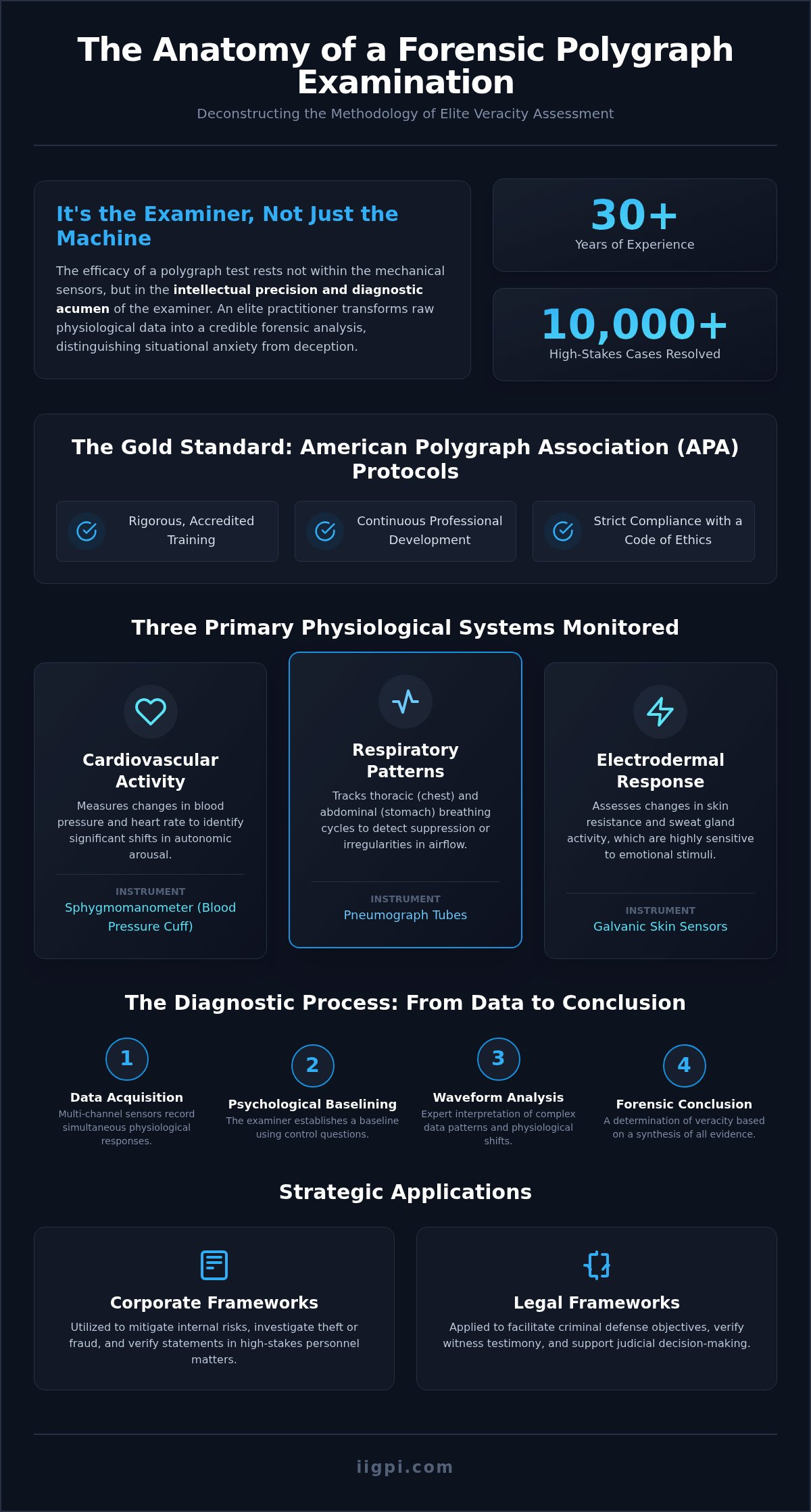
The discipline of psychophysiological veracity examination transcends the simplistic cultural trope of “lie detection” by functioning as a rigorous forensic application of physiological monitoring. A modern The Scientific Foundation of Modern Polygraphy is defined as a multi-channel instrument designed to record simultaneous autonomic nervous system responses. These include fluctuations in cardiovascular activity, respiratory cycles, and electrodermal conductivity. Within this specialized field, the expertise of Dan Ribacoff represents the pinnacle of investigative precision. As an examiner trained by an American Polygraph Association (APA) accredited institution, he’s transitioned the practice from traditional analog methodologies to the sophisticated digital systems utilized today. His career, spanning over three decades and encompassing more than 10,000 cases, demonstrates a commitment to the intellectual rigor required to resolve high-stakes legal and corporate disputes.
The Role of the American Polygraph Association (APA) Standards
Adherence to the standards set by the American Polygraph Association serves as the primary benchmark for forensic credibility in the investigative sector. These protocols mandate not only rigorous initial training but also continuous professional development and strict compliance with a formal Code of Ethics. Dan Ribacoff functions as a preceptor within this framework, ensuring that every lie detector test, Dan Ribacoff conducts in the New York City region adheres to global evidentiary standards. This institutional alignment ensures that the data collected is both scientifically sound and ethically obtained, providing a reliable foundation for judicial and corporate decision-making. The transition from law enforcement to elite private investigations necessitates this level of academic and professional discipline to maintain the integrity of the findings.
Physiological Indicators of Veracity and Deception
The efficacy of the polygraph relies on the analysis of specific physiological indicators that reflect the subject’s “psychological set.” This concept suggests that individuals focus their cognitive and emotional resources on questions that pose the greatest threat to their well-being. Examiners monitor three primary systems to determine veracity:
- Cardiovascular Activity: Measuring changes in blood pressure and heart rate through a sphygmomanometer to identify significant shifts in autonomic arousal.
- Respiratory Patterns: Tracking thoracic and abdominal breathing cycles via pneumograph tubes to detect suppression or irregularities in airflow.
- Electrodermal Response: Assessing changes in skin resistance and sweat gland activity through galvanic skin sensors, which are highly sensitive to emotional stimuli.
While digital sensors provide high-fidelity data, the instrument remains a tool for the analyst. Interpreting complex waveforms requires a human expert capable of distinguishing between situational anxiety and the specific physiological arousal associated with deceptive responses. Without the oversight of an APA-trained examiner, the raw data lacks the necessary context for forensic application.
Advanced Methodologies in Physiological Data Acquisition
The acquisition of forensic data during a polygraph examination is a structured procedural sequence that demands absolute neutrality and technical precision. This process moves beyond mere data collection; it functions as a controlled diagnostic environment where the examiner serves as an objective fact-finder. The integrity of a lie detector test, Dan Ribacoff oversees, is maintained through a rigorous adherence to established forensic protocols that begin long before the first physiological recording is captured. This methodology ensures that the final determination is based on a comprehensive synthesis of case facts and quantified physiological markers rather than subjective intuition.
The Clinical Importance of the Pre-Test Interview
The pre-test phase is perhaps the most critical component of the examination, as it establishes the psychological baseline necessary for accurate data interpretation. During this period, the examiner conducts an extensive review of the case facts with the subject to ensure a shared understanding of the inquiry’s scope. This phase is designed to minimize situational anxiety that might arise from confusion or ambiguity. Questions are meticulously refined to be binary, clear, and non-ambiguous, allowing the subject’s autonomic nervous system to respond specifically to the target stimuli. Daniel Ribacoff’s extensive background in law enforcement provides a unique advantage in this arena, as his experience allows for the sophisticated navigation of complex narratives while maintaining a clinical, impartial atmosphere.
Chart Analysis and Data Quantification
Once the instrumentation phase is complete and the sensors have captured the requisite physiological waveforms, the process shifts to the post-test analysis. Modern forensic polygraphy has transitioned from subjective chart observation to objective numerical scoring systems. These quantitative models assign specific values to physiological deviations in cardiovascular, respiratory, and electrodermal channels. By utilizing state-of-the-art digital algorithms to support the human analyst’s conclusion, firms like IIGPI enhance the reliability of their findings. This focus on quantification is essential when considering the Admissibility of Lie Detector Tests in various legal jurisdictions, where the standard of evidence is exceptionally high.
To further ensure the accuracy of the results, IIGPI emphasizes a peer review protocol where findings are subjected to secondary verification by independent examiners. This institutional commitment to double-blind verification mitigates the risk of examiner bias and reinforces the intellectual depth of the final report. For organizations requiring this level of forensic scrutiny, engaging with an elite investigative firm ensures that the results are defensible in both corporate and legal settings. This systematic approach transforms raw physiological data into actionable forensic intelligence.
Deconstructing Common Misconceptions: Accuracy and Admissibility
The diagnostic accuracy of a lie detector test, Dan Ribacoff’s primary forensic instrument, is often subject to intense scrutiny within both academic and legal circles. While critics frequently cite laboratory studies conducted in low-stakes environments, empirical field research indicates a meta-analytic accuracy rate of approximately 89% for single-issue diagnostic examinations. This high degree of precision positions polygraphy as a viable forensic discipline, comparable in its systematic approach to ballistics or latent fingerprint analysis. A prevalent misconception involves the efficacy of countermeasures, which are deliberate attempts by a subject to manipulate physiological data. Professional examiners identify these anomalies through specialized motion sensors and sophisticated chart analysis, rendering most amateur attempts at deception ineffective and detectable.
Polygraph Admissibility in New York and Federal Jurisdictions
The legal standing of polygraph results is governed by complex Legal Frameworks for Polygraphy, specifically the Daubert standard in federal courts. This standard grants trial judges the discretion to admit scientific evidence based on its methodological reliability and relevance to the case. Within the New York judicial system, Dan Ribacoff is frequently appointed by federal court judges to assist in Criminal Justice Act (CJA) and 18b matters. His expertise is utilized not only for potential trial evidence but also in pre-sentencing reports and plea negotiations. Even in jurisdictions where results aren’t directly admissible at trial, the strategic value of an examination lies in its ability to guide investigative resources and provide leverage during complex legal proceedings.
Debunking the ‘Magic Box’ Narrative
It’s essential to understand that a polygraph is a sophisticated investigative tool rather than a definitive verdict machine. The “magic box” narrative, often perpetuated by amateur practitioners or online scams, undermines the forensic integrity of the field. Reliable outcomes depend entirely on the examiner’s adherence to rigorous APA protocols and their ability to synthesize physiological data with case facts. Relying on unverified practitioners poses a significant risk to the credibility of a case. For a comprehensive approach to truth verification, many elite clients integrate polygraphy with Professional Surveillance Services to establish a holistic evidentiary record. This multi-faceted strategy ensures that physiological data is supported by concrete behavioral evidence, providing a definitive resolution to the most challenging investigative problems.
Strategic Implementation: Utilizing Polygraphy in Corporate and Legal Frameworks
The application of forensic veracity examinations within institutional frameworks requires a sophisticated understanding of both physiological science and the prevailing legal statutes. When deploying a lie detector test, Dan Ribacoff ensures that the methodology aligns with the strategic objectives of the client, whether they’re navigating the complexities of a criminal defense or managing internal corporate vulnerabilities. This section examines the integration of polygraphy into formal investigative strategies, emphasizing its role as a catalyst for objective resolution in high-stakes environments. The transition from suspicion to substantiated fact requires more than mere observation; it demands the synthesis of physiological data and investigative expertise.
Corporate Integrity and the Employee Polygraph Protection Act (EPPA)
Private sector entities must navigate the stringent requirements of the Employee Polygraph Protection Act (EPPA) when addressing internal economic losses. While the act generally prohibits pre-employment screening for most private firms, it permits testing for current employees who are reasonably suspected of involvement in a specific incident resulting in economic injury to the employer. Utilizing an expert examiner is essential to ensure that the administration of the test complies with federal mandates, thereby protecting the organization from potential liability. For a broader analysis of institutional risks, leaders should consult our Corporate Fraud Investigation Guide to understand how polygraphy fits into a comprehensive security posture. This strategic tool is particularly effective in cases of embezzlement or large-scale inventory theft where traditional evidence may be circumstantial.
The Polygraph as a Tool for Legal Counsel
Legal professionals utilize polygraphy as a critical instrument for influencing prosecutorial discretion and refining defense strategies. In criminal defense, the objective is often the exoneration of the innocent through the presentation of research-validated physiological data. By conducting a private examination under the protection of attorney-client privilege, counsel can determine the veracity of a client’s claims before disclosing results to the prosecution. This strategic foresight is particularly valuable in federal court matters where Dan Ribacoff’s reputation for academic rigor carries significant weight. Beyond criminal matters, expert testing serves a vital role in insurance fraud mitigation, specifically for high-value claims involving fine arts or jewelers’ loss investigations. In sensitive domestic disputes, such as child custody or matrimonial investigations, the provision of objective data can de-escalate emotional conflicts and facilitate data-driven legal outcomes.
If your organization requires the highest level of forensic intelligence to resolve complex disputes, contact the International Investigative Group to secure the services of an elite examiner. Our firm specializes in providing the definitive clarity needed for the most difficult problems.
The International Investigative Group Standard: Elite Forensic Intelligence
The International Investigative Group (IIGPI) represents a paradigm shift in private intelligence, where the traditional investigative model is augmented by rigorous forensic science. Central to this institutional excellence is the extensive professional history of Daniel Ribacoff, whose three decades of experience distinguish the firm from conventional detective agencies. Unlike organizations that offer singular investigative services, IIGPI synthesizes polygraphy with advanced Computer Forensics and sophisticated surveillance protocols. This multidisciplinary approach ensures that the data yielded from a lie detector test, Dan Ribacoff facilitates, is supported by a comprehensive digital and behavioral evidentiary record. By integrating these disparate forensic channels, the firm provides a level of intelligence that’s essential for global corporations and legal entities managing high-stakes risks across international jurisdictions.
A Legacy of Solving High-Profile Cases
The institutional character of IIGPI is defined by its involvement in some of the most significant investigative challenges of the modern era. Daniel Ribacoff’s professional trajectory includes critical contributions to matters of global significance, such as the Bin Laden trial and the recovery of high-value stolen art. His transition from a law enforcement professional to an elite private investigator has informed the development of a proprietary investigative standard that prioritizes intellectual depth and tactical precision. This legacy ensures that every lie detector test, Dan Ribacoff oversees, is conducted with an understanding of the nuances inherent in complex, high-profile litigation. The firm’s commitment to “Finding a Way” reflects an analytical mindset that refuses to accept investigative stagnation, focusing instead on the systematic resolution of the most difficult forensic problems.
Securing Expert Testimony and Forensic Analysis
Beyond the administration of examinations, IIGPI provides the intellectual infrastructure necessary for the presentation of forensic findings in judicial settings. Daniel Ribacoff is available to provide expert witness testimony in both state and federal courts, where his credentials as an APA-trained preceptor lend significant weight to the evidentiary record. This capability is vital for counsel who’ve required a defensible analysis of physiological data during trial or pre-sentencing phases. For organizations seeking a definitive resolution to internal or legal disputes, the NYC headquarters serves as a hub for confidential forensic inquiry. We encourage high-level decision-makers to Consult with Dan Ribacoff and the IIGPI Team to establish a tailored investigative strategy that meets the highest standards of academic and professional rigor.
Establishing a Definitive Standard for Forensic Veracity
The transition from speculative investigation to substantiated forensic intelligence requires a synthesis of advanced physiological monitoring and superior analytical expertise. As established throughout this examination, the efficacy of a modern lie detector test, Dan Ribacoff’s specialized domain, resides in the rigorous application of APA-accredited protocols and the objective quantification of autonomic data. By moving beyond the rudimentary misconceptions of “lie detection,” institutional leaders can utilize these sophisticated methodologies to resolve the most intricate corporate and legal disputes with intellectual depth and scientific precision.
Daniel Ribacoff’s legacy, characterized by over 10,000 successfully resolved cases and frequent citations in premier publications such as The New York Times and The Wall Street Journal, underscores the firm’s position as a leading authority in global investigative discourse. His dual role as a former law enforcement professional and an APA preceptor ensures that every inquiry meets the highest thresholds of forensic rigor. To address your organization’s most critical investigative challenges, we invite you to Secure Elite Forensic Intelligence with Dan Ribacoff and the IIGPI team. Achieving clarity in high-stakes environments is possible through the systematic application of expert forensic analysis.
Frequently Asked Questions
Is a lie detector test admissible in court in New York?
In New York state courts, polygraph results are generally inadmissible as evidence unless both parties enter into a formal stipulation prior to the examination. However, in federal jurisdictions, the Daubert standard allows trial judges the discretion to admit such evidence based on its methodological reliability. Dan Ribacoff is frequently appointed by federal court judges to assist in Criminal Justice Act and 18b matters, where results may influence pre-sentencing reports or plea negotiations.
How accurate is a polygraph test when conducted by Dan Ribacoff?
The statistical accuracy of a single-issue diagnostic lie detector test, Dan Ribacoff’s primary forensic instrument, is approximately 89% according to meta-analytic surveys by the American Polygraph Association. This high degree of precision is achieved through the synthesis of over 30 years of investigative experience and the resolution of more than 10,000 cases. Every examination adheres to rigorous APA standards, ensuring that the physiological data is interpreted with the highest level of diagnostic acumen.
Can someone ‘beat’ a professional lie detector test using countermeasures?
The narrative that individuals can successfully manipulate a polygraph through physical or mental countermeasures is largely a misconception when applied to elite forensic examinations. Professional examiners utilize specialized motion sensors and sophisticated chart analysis to identify the specific physiological anomalies associated with deliberate manipulation. Daniel Ribacoff’s extensive background in law enforcement and preceptor-level training allows for the detection of these attempts, ensuring that the final veracity determination remains scientifically sound.
What happens if a polygraph result is ‘inconclusive’?
An inconclusive result indicates that the physiological data captured during the examination did not meet the established numerical threshold for either veracity or deception. This outcome doesn’t imply failure on the part of the subject or the examiner; rather, it reflects a lack of definitive physiological arousal. In such instances, the International Investigative Group may recommend a follow-up examination or the integration of additional forensic channels, such as computer forensics or surveillance, to achieve resolution.
How should I prepare for a polygraph examination at IIGPI?
Preparation for an examination at our NYC headquarters requires the subject to maintain their typical physiological baseline. Examinees should ensure adequate rest the night before and continue taking prescribed medications as directed by their physician, provided these are disclosed during the pre-test interview. It’s advisable to avoid excessive caffeine or other stimulants that could artificially elevate heart rate. The examiner provides a comprehensive briefing during the instrumentation phase to ensure the subject’s complete understanding.
Does Dan Ribacoff conduct polygraph tests for private family matters?
Yes, the firm provides specialized veracity examinations for personal and domestic investigations, including matrimonial and child custody disputes. These sensitive matters require the same level of academic rigor and objective data acquisition as high-stakes corporate cases. By providing an impartial record of physiological responses, an examination can offer the definitive clarity necessary for families to resolve complex personal conflicts and move forward with data-driven legal or personal decisions.
What is the difference between an APA-trained examiner and other testers?
An APA-trained examiner has completed a curriculum at an accredited institution that meets the stringent benchmarks for forensic psychophysiology. This training involves rigorous instruction in physiological monitoring, psychological interviewing, and standardized scoring systems. Unlike amateur testers, an APA preceptor like Dan Ribacoff must adhere to a formal Code of Ethics and participate in continuous professional development. This institutional alignment ensures that the examination meets the highest global standards for forensic reliability and intellectual integrity.
How long does a standard polygraph examination take?
A comprehensive forensic polygraph examination typically requires between two and four hours to complete. This duration encompasses the extensive pre-test interview, the systematic attachment of physiological sensors, and the multiple phases of chart collection. The post-test analysis and quantitative scoring of the physiological waveforms occur immediately following the data acquisition phase. This deliberate pace ensures that every detail of the case is addressed and that the final report reflects a thorough investigative inquiry.